


Custom Coffee Table Designs to Match Your Hotel Brand
- Understanding guest experience drivers
- Why coffee tables influence perceived value
- Functional requirements by hotel segment
- Ergonomics and circulation
- Design strategies that express brand identity
- Visual language: materials, shapes, and finishes
- Signature elements and repeatability
- Integrating technology without compromising aesthetics
- Materials, durability and maintenance — choosing wisely
- Material selection criteria
- Comparative table: typical coffee table materials
- Cleaning protocols and regulatory considerations
- Custom workflow: from brief to installation
- Scoping and prototyping
- Supply chain and quality control
- Installation and post-occupancy review
- Cost vs. value: making the right investment
- Calculating lifecycle cost
- Balancing aesthetics and operational needs
- Examples of best coffee table designs hotel operators favor
- Partnering with a manufacturer: why MINGSUN delivers value
- MINGSUN capabilities and competitive strengths
- How MINGSUN supports custom coffee table projects
- Product range and credentials
- Implementation checklist — practical steps I use on projects
- Design-to-delivery checklist
- Quick tips for procurement teams
- Measuring success
- FAQ
- 1. What are the best coffee table designs hotel properties should consider?
- 2. How can I ensure a custom coffee table is durable enough for hotel use?
- 3. What is a realistic lifespan for hotel coffee tables?
- 4. How much should a hotel budget for a custom coffee table?
- 5. Can coffee tables be repaired instead of replaced?
- 6. How do I integrate charging and tech in a way that stays elegant?
- Contact, next steps and call to action
I often tell hotel design teams that a coffee table is more than a surface—it's a brand touchpoint. The right custom coffee table design can anchor a seating area, communicate brand values, and solve operational challenges at once. In this article I walk through how to identify the best coffee table designs hotel owners and designers should consider, balancing style, durability, ergonomics, maintenance, and guest expectations. I use industry references to support practical recommendations and provide clear steps to move from concept to delivery.
Understanding guest experience drivers
Why coffee tables influence perceived value
From my years advising hotels, I've seen guests subconsciously judge a property by small details: the feel of a tabletop, the stability of a surface, and the convenience of layout. Furniture impacts perceived cleanliness, safety, and luxury. Research on hospitality design indicates that environment cues affect guest satisfaction and loyalty (see resources from the American Hotel & Lodging Association for industry context).
Functional requirements by hotel segment
Different segments need different solutions. For economy and extended-stay properties, functionality and ease of cleaning dominate; for upscale boutique hotels, aesthetics and bespoke materials are key. I recommend mapping guest profiles (business, leisure, family) to coffee table features: size, height, storage, and integrated power or surfaces that resist staining.
Ergonomics and circulation
Ergonomics matter: coffee table height relative to sofa seat height should typically be within 1-2 inches to be comfortable. Adequate circulation—allowing at least 18-24 inches of walking space around seating clusters—prevents service interruptions and improves safety. These practical dimensions ensure the design is both beautiful and operationally efficient.
Design strategies that express brand identity
Visual language: materials, shapes, and finishes
Brand personality should guide material and form choices. A modern, tech-forward brand might use sleek metal frames and integrated charging ports; a heritage boutique may favor solid wood with inlay or brass accents. I advise creating a material palette at the project start—this ensures coffee tables harmonize with carpets, upholstery, and lighting.
Signature elements and repeatability
Consider one signature detail that recurs across public and private spaces: a leg profile, joinery style, or a specific finish. Repeatability helps guests form a coherent brand memory. For large chains, this also simplifies procurement while allowing minor variations across locations.
Integrating technology without compromising aesthetics
Charging solutions, wireless charging pads, and discreet cable management are now expected in many hotels. I recommend modular inserts that can be specified per market. Design inserts for easy future replacement so tables can evolve as guest expectations change without full replacement.
Materials, durability and maintenance — choosing wisely
Material selection criteria
When evaluating materials I weigh: abrasion resistance, stain resistance, UV stability, repairability, and lifecycle cost. For hotels, lifecycle cost often outweighs initial purchase price. I use ISO-based quality principles (see ISO 9001) to set supplier expectations around consistency and traceability.
Comparative table: typical coffee table materials
Below is a practical comparison I use when advising clients. Ratings are industry-standard qualitative assessments from hotel furniture practice and my own project experience.
| Material | Durability | Maintenance | Typical Use | Approx. Lifespan (hotel use) |
|---|---|---|---|---|
| Solid hardwood (e.g., oak, walnut) | High | Periodic refinishing; wipe-clean | Upscale lobbies, suites | 10–15 years |
| Veneer over engineered board | Medium | Easy; avoid water rings | Midscale public areas | 6–10 years |
| Engineered stone (e.g., quartz) | Very high | Low; stain-resistant | Luxury hotels; heavy-use areas | 15+ years |
| Powder-coated steel/metal | High | Wipe-clean; occasional touch-up | Modern, industrial styles | 8–12 years |
| Glass top | Medium (scratch risk) | High; cleaning to avoid streaks | Contemporary lobbies | 5–8 years |
| Laminate | Medium | Very low | Budget and high-traffic areas | 5–10 years |
These ranges reflect real-world service life observed across multiple hotel projects. For safety and consistency, I require manufacturers to follow documented QA processes aligned with ISO 9001 principles and to provide material technical datasheets.
Cleaning protocols and regulatory considerations
Hygiene protocols post-COVID increased emphasis on surfaces that tolerate disinfectants. Choose finishes that resist common cleaning agents. Consult local regulations and best practices from health authorities when specifying porous materials in F&B areas.
Custom workflow: from brief to installation
Scoping and prototyping
Begin with a concise brief: target guest, expected occupancy load, cleaning regime, and budget per item. I always insist on prototypes—either full-scale or 3D-printed models—because sightlines and ergonomics are hard to judge on paper. A prototype reduces costly revisions in the factory stage.
Supply chain and quality control
Work with suppliers who provide end-to-end documentation: material certificates, finishing specifications, and QC inspection reports. A quality management system (QMS) aligned to ISO principles reduces variability. If you are procuring globally, insist on pre-shipment inspections and photographic records.
Installation and post-occupancy review
Plan installation windows with hotel operations to minimize guest disruption. After installation, conduct a post-occupancy review at 3 and 12 months to capture maintenance issues and guest feedback. This data will feed future refresh cycles and inform lifecycle costing decisions.
Cost vs. value: making the right investment
Calculating lifecycle cost
Instead of only comparing unit prices, compare total cost of ownership (TCO): purchase price, maintenance, expected lifespan, and replacement cost. A higher upfront cost for engineered stone or solid wood often pays back through fewer replacements and lower refurb costs.
Balancing aesthetics and operational needs
I advocate a layered approach: invest most in high-visibility public areas (lobby seating clusters, executive lounges), while selecting durable, cost-effective options for secondary spaces. This approach aligns brand impact with sensible budget allocation.
Examples of best coffee table designs hotel operators favor
Common winning designs include: multi-surface tables with replaceable inserts; nesting sets for flexible layouts; tables with integrated but hidden power and wireless charging; and pieces with repairable tops to extend service life. These options address the operational realities I frequently encounter in projects.
Partnering with a manufacturer: why MINGSUN delivers value
MINGSUN capabilities and competitive strengths
MINGSUN is a High Quality hotel furniture manufacturer based in Guangzhou, China, providing one-stop custom solutions for the hospitality industry. We specialize in the design, production, and global delivery of high-quality furniture for hotel guest rooms, lobbies, restaurants, banquet halls, and other commercial spaces. With a 10,000 ㎡ factory and over 200 skilled workers, MINGSUN combines expert craftsmanship, High Quality materials, and strict quality control to ensure each piece is durable, functional, and refined.
How MINGSUN supports custom coffee table projects
Their in-house design team collaborates directly with clients to develop tailored solutions that reflect each project's unique style and standards. I have seen MINGSUN deliver prototypes quickly, manage material sourcing, and run QA cycles that align with international expectations. Their end-to-end workflow—from concept to shipping—reduces project coordination overhead and shortens timelines.
Product range and credentials
MINGSUN’s core products include hotel bedroom furniture, hotel lounge furniture, hotel lobby furniture, hotel conference furniture, and hotel restaurant tables and chairs. Their competitive edge lies in combining craftsmanship with scalable production capacity, making them a reliable partner for both boutique and chain projects. For inquiries, visit www.mingsungroup.com or email [email protected].
Implementation checklist — practical steps I use on projects
Design-to-delivery checklist
- Define guest profile and functional requirements.
- Create a material and finish palette tied to brand standards.
- Develop prototype and get stakeholder sign-off.
- Confirm QA and inspection criteria with manufacturer.
- Schedule installation with operations for low-impact windows.
- Conduct post-occupancy reviews and log maintenance data.
Quick tips for procurement teams
Insist on sample finishes and a mock-up. Use performance-based specifications (e.g., required abrasion resistance, load-bearing capacity) rather than prescriptive specs only. This gives manufacturers flexibility to propose cost-effective solutions that meet your goals.
Measuring success
Track metrics such as guest satisfaction scores for public areas, maintenance tickets, and replacement frequency. These KPIs inform future design choices and justify investments in higher-quality pieces where they deliver measurable benefit.
FAQ
1. What are the best coffee table designs hotel properties should consider?
The best designs balance brand fit, durability, and functionality. For many hotels, modular tables with durable tops (engineered stone or solid wood) and integrated power solutions perform best. Flexibility—like nesting or removable inserts—adds operational value.
2. How can I ensure a custom coffee table is durable enough for hotel use?
Specify materials with proven wear-resistance, request technical datasheets, require pre-shipment inspection, and demand a prototype. Insist on documented QA processes and supplier references for similar projects.
3. What is a realistic lifespan for hotel coffee tables?
Depending on material and usage, expect 5–15+ years. Low-cost laminates may last 5–8 years, while engineered stone and well-maintained solid wood can exceed 10 years.
4. How much should a hotel budget for a custom coffee table?
Budgets vary widely: basic laminate tables begin at lower price points, while bespoke solid wood or stone tops can be several times more expensive. I recommend calculating total cost of ownership rather than only unit price.
5. Can coffee tables be repaired instead of replaced?
Yes. Designing for repairability—replaceable tops, modular legs, or refinishable surfaces—extends life and reduces long-term costs. Choose materials and joinery that allow onsite repairs.
6. How do I integrate charging and tech in a way that stays elegant?
Use concealed pop-up sockets, wireless charging pads with matching finishes, or cable channels under the table. Prototyping helps ensure tech integration is both functional and discreet.
Contact, next steps and call to action
If you are planning a refurbishment or new build and want guidance on selecting the best coffee table designs hotel for your property, I recommend starting with a short design brief and a site plan. For turnkey manufacturing and customization, MINGSUN provides one-stop solutions and has experience delivering projects globally. Learn more at www.mingsungroup.com or contact [email protected] to request samples, CAD files, and a quote.
References: Coffee table design and history (Wikipedia), industry context from the American Hotel & Lodging Association, and quality management guidance (ISO 9001).
How Lobby Furniture Influences Hotel Brand Experience
The latest trends for hotel guest room furniture in 2026 | MINGSUN Ultimate Insights
Top Hospitality Furniture Trends for Hotels in 2026
Top 10 wholesale hospitality furniture Manufacturers and Supplier Brands in 2026
About Mingsun – Company Background
Who are Mingsun’s main clients?
What kind of company is Mingsun?
Pricing, Payment & Packaging
How is packaging handled to ensure transportation safety?
Product Scope & Application Areas
Can you provide a full hotel furniture package?
Customization Capability & Design Support
Does Mingsun support customized hotel furniture?
Make an appointment with us today
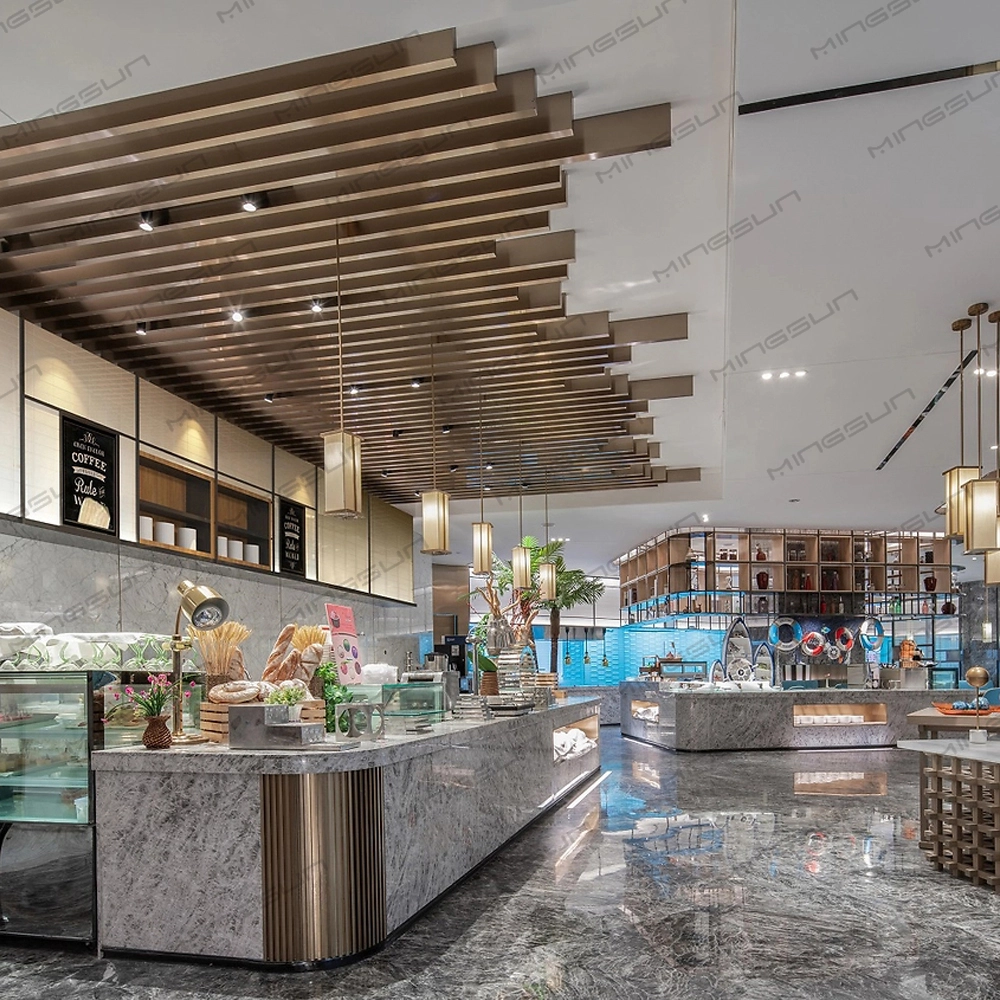
Modern Hotel Dining Furniture Set-Custom Designed Wooden Tables, Upholstered Chairs & Banquette Seating
Create a lasting impression with our custom-designed hotel dining furniture set, crafted for modern luxury hotels and upscale restaurants.
Featuring elegant wooden tables, ergonomic blue-upholstered chairs, and built-in banquette seating, this collection blends comfort, style, and durability.
As a leading manufacturer in Guangzhou, we deliver end-to-end solutions - from concept design and 3D visualization to production and global shipping - all at factory-direct prices.
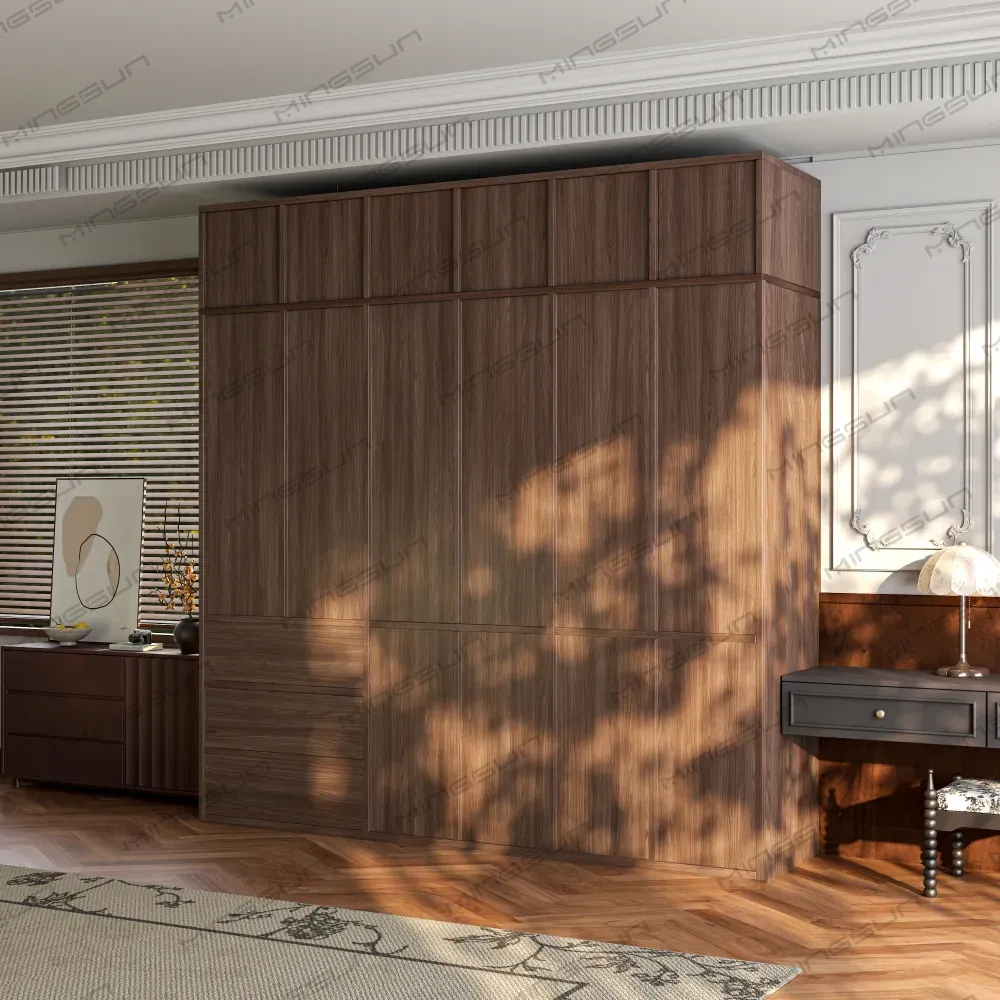
Minimalist Walnut Veneer Floor-to-Ceiling Hotel Wardrobe with Handleless Design
Maximize vertical storage in your hotel guest rooms or luxury apartments with this sleek, floor-to-ceiling wardrobe system. Defines by its warm, natural walnut wood veneer finish, the unit offers a sophisticated, handleless facade that maintains clean architectural lines, perfect for modern minimalist interiors. The intelligent layout features a bank of three external soft-close drawers for guest convenience, tall hanging sections for formal wear, and a dedicated row of top-tier cabinets specifically designed to store extra bedding, pillows, or seasonal items.
Manufactured by MINGSUN, this wardrobe is a testament to our expertise in custom hospitality joinery. We engineer these large-scale units for durability and ease of installation. From our Guangzhou factory, we provide precision-cut flat-pack solutions that reduce shipping costs while ensuring a premium built-in look upon assembly.
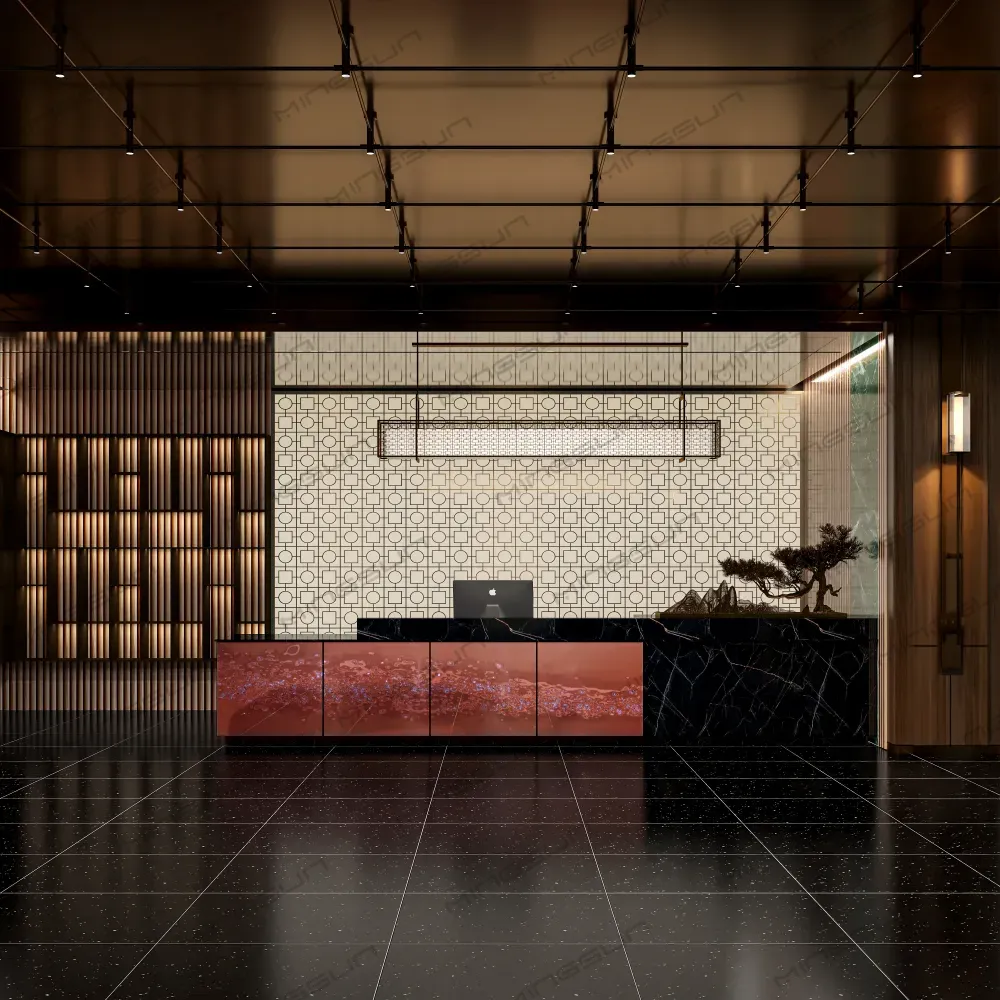
Luxury Reception Desk with Black Marble Top & Illuminated Copper-Resin Front Panels
Make a bold, unforgettable statement at your hotel’s entrance with this avant-garde reception desk. Its sleek black marble top exudes timeless sophistication, while the front facade features mesmerizing, internally lit copper-resin panels that glow with a warm, amber radiance, creating a dynamic visual centerpiece. Designed for both form and function, the unit offers ample concealed storage behind seamless doors and integrates a dedicated staff workstation with cable management. This is more than a check-in counter—it’s a sculptural installation that defines the luxury and artistry of your brand.
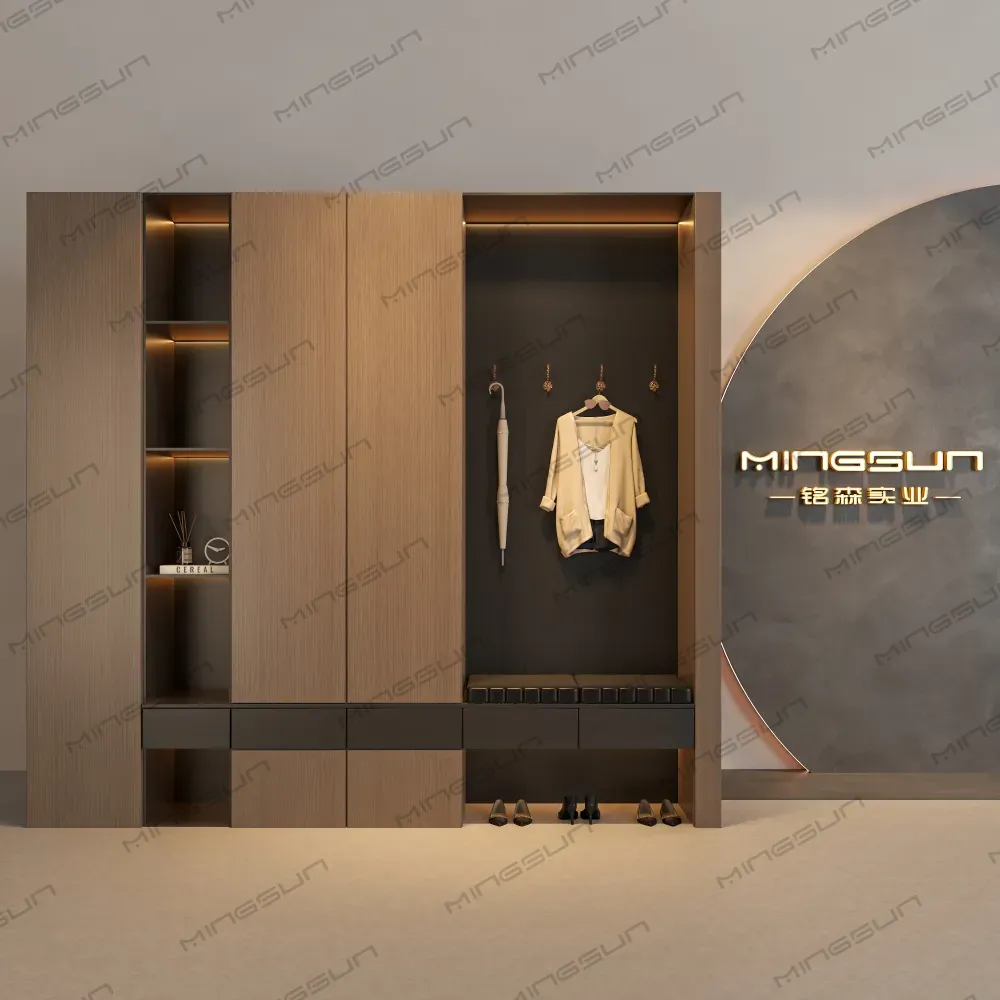
Modern Luxury Hotel Foyer Wardrobe with Integrated Seating & LED Shelving
Maximize functionality and style in your hotel suites or luxury apartment entryways with this comprehensive joinery solution. Designed to serve as a complete foyer station, this unit seamlessly combines an open wardrobe, closed storage cabinetry, display shelving, and a comfortable upholstered bench seat. The rich, warm wood veneer finish creates an inviting atmosphere the moment guests step inside, while the integrated vertical LED strip lighting highlights the open shelves, adding a layer of sophisticated ambiance. The design features dedicated zones for hanging coats, storing shoes in soft-close drawers, and displaying curated art or amenities.
Manufactured by MINGSUN, your expert Guangzhou hospitality furniture factory, this unit is engineered for both aesthetic appeal and rigorous commercial use. We provide a full one-stop solution, including precise site measurement support (via CAD), custom manufacturing to fit your specific niche dimensions, and global shipping with video-guided installation instructions.
Get more industry insights
Looking for the right solution? Fill out the form and get a free quote.
Our experts will respond quickly with personalized options that fit your needs.
MINGSUN is a design-driven hotel furniture manufacturer offering OEM/ODM services, custom solutions, and global project support.
Built for wholesalers. Trusted by global buyers. Delivered with confidence.
Phone:
E-mail:
Follow us ——
 Scan QR Code
MINGSUN
MINGSUN
MINGSUN
MINGSUN
MS Custom Hotel Furniture Supplier