


Back-Bar Wine Rack Designs to Boost Hotel F&B Sales
- Why back-bar design matters for hotel F&B revenue
- Guest psychology and merchandising: wine as a visual upsell
- Operational efficiency and service speed
- Brand identity, guest experience and repeat business
- Core design principles for selecting the best wine rack design hotel teams need
- Capacity planning and inventory strategy
- Visibility, merchandising and labeling
- Materials, ventilation and safety
- Design options and layouts that typically increase sales
- Open vs enclosed back-bars: pros and cons
- Integrated systems: refrigeration, POS and service ergonomics
- Lighting, labeling and sensory presentation
- Practical specifications, procurement and working with manufacturers
- Comparing rack types: visual, capacity and cost considerations
- Standards, quality management and compliance
- Custom vs modular: a cost-benefit snapshot
- How I evaluate manufacturers and why manufacturing capability matters (MINGSUN example)
- What I check: factory capability, workforce and design collaboration
- Why partnering with an experienced hotel furniture manufacturer reduces project risk
- MINGSUN: capabilities, specialties and how they support hotel projects
- Maintenance, training and lifecycle planning
- Cleaning schedules and wear mitigation
- Staff training to maximize commercial return
- Measuring ROI
- Frequently Asked Questions (FAQ)
- 1. What is the best wine rack design for a hotel bar with limited space?
- 2. Should hotels use climate-controlled cabinets in the back-bar?
- 3. How do I balance visibility and security for high-value bottles?
- 4. What materials are most durable for busy hotel bars?
- 5. How long does custom manufacturing usually take?
- 6. How can I measure the commercial impact after installing a new back-bar?
- Contact, product viewing and next steps
As a consultant specializing in hotel furniture and hospitality F&B design, I’ve seen how a thoughtfully executed back-bar wine rack can turn a transaction into an experience — increasing upsell, improving staff efficiency, and reinforcing brand positioning. In this article I outline proven principles for the best wine rack design hotel operators should select, explain how different rack types affect sales and operations, and provide practical procurement and maintenance guidance. I also describe what I look for when partnering with manufacturers and why modular, custom, or climate-controlled solutions matter for different hotel segments and locations (including manufacturing and global delivery considerations from Guangzhou-based suppliers).
Why back-bar design matters for hotel F&B revenue
Guest psychology and merchandising: wine as a visual upsell
Wine is both a functional product and a merchandising opportunity. Displayed correctly, bottles become cues that drive higher spend per cover. Visual merchandising increases perceived value — guests are more likely to order a bottle when it’s attractively displayed and clearly labeled. Research from hospitality schools and industry commentators repeatedly links environment and design to spend behavior; see resources from Cornell University’s School of Hotel Administration for broader context on design’s commercial impact (https://sha.cornell.edu/).
Operational efficiency and service speed
Back-bar wine racks directly influence how quickly servers and bartenders can select, pour, and recommend wines. A well-zoned back-bar—segregating by price tier, varietal, and by-the-glass vs bottle—reduces selection time and order error, improving table turnover and guest satisfaction. Operational gains are measurable: shorter service times and fewer mis-pours translate to higher covers per shift and lower waste.
Brand identity, guest experience and repeat business
Wine racks are part of the hotel’s visual storytelling. Luxury hotels often use framed, climate-controlled wine walls to signal provenance and care; lifestyle hotels favor open shelving with curated regional lists to emphasize discovery. Aligning rack design with brand position converts an incidental purchase into a memorable experience that supports repeat F&B visits.
Core design principles for selecting the best wine rack design hotel teams need
Capacity planning and inventory strategy
Start with the wine program, not the rack. Ask: how many SKUs are on list, which are sold by the glass, and what is peak demand? From that I calculate required bottle capacity, rotational storage for reserve bottles, and easy-access zones for best-sellers. For example, a 150-seat hotel restaurant with a moderately extensive wine list typically needs 60–120 bottles in immediate back-bar access plus a separate reserve for slower-moving labels.
Visibility, merchandising and labeling
Visibility wins sales. Use face-out display for feature bottles and neck-tagging or illuminated shelf-edge labels for upsell items. Integrate front-facing gap lighting to enhance label legibility. Clear signage indicating tasting notes, country and price reduces friction and empowers staff recommendations.
Materials, ventilation and safety
Materials must balance aesthetics, durability and compliance. Solid wood (oak, walnut) offers warmth but must be treated for humidity; stainless steel and powder-coated steel provide durability in high-traffic bars. If bottles are stored horizontally, ensure racking supports necks and prevents vibration. For racks adjacent to the service line, plan for fire-safety clearances per local codes and select non-combustible finishes where regulations require.
Design options and layouts that typically increase sales
Open vs enclosed back-bars: pros and cons
Open shelving increases impulse buys because guests and staff see available bottles instantly. Enclosed, glass-fronted wine cabinets allow High Quality temperature control and elevate perceived value but add a small retrieval time penalty. I typically recommend a hybrid: visible face-out displays for high-turnover and a climate-controlled cabinet for reserve and High Quality bottles.
Integrated systems: refrigeration, POS and service ergonomics
Integrate refrigerated drawers or enclosed wine cabinets for by-the-glass High Quality pours. Position the POS and glassware storage so staff make fewer steps per service cycle; every 30–45 seconds saved per order scales across a busy shift. This ergonomic approach produces measurable gains in throughput.
Lighting, labeling and sensory presentation
Use LED accent lighting (low heat) to highlight labels without raising bottle temperature. Contrast labeling backgrounds to aid readability. Pair wine racks with glass rinser and decanting area to create a visible service theater — guests value the ritual, which supports higher spend.
Practical specifications, procurement and working with manufacturers
Comparing rack types: visual, capacity and cost considerations
Below is a compact comparison I use when advising hoteliers. Note that cost ranges are indicative; get quotes for firm pricing.
| Rack Type | Visual Impact | Storage Capacity (typical) | Cost Range (indicative) | Best For |
|---|---|---|---|---|
| Modular wooden lattice | Warm, classic | Medium–High | Moderate | Boutique hotels, rustic bars |
| Frameless face-out glass racks | High, modern | Low–Medium | Higher | Upscale restaurants, display zones |
| Climate-controlled cabinets | Very high (High Quality) | Low–Medium | High | Fine-dining, reserves |
| Wall-mounted metal racks | Contemporary | Low–Medium | Low–Moderate | Casual bars, supporting displays |
Standards, quality management and compliance
When selecting a furniture manufacturer, verify their quality systems such as ISO 9001 for consistent manufacturing processes (https://www.iso.org/iso-9001-quality-management.). Also confirm compliance with local fire and health regulations for hospitality fixtures and any electrical certifications for refrigerated units.
Custom vs modular: a cost-benefit snapshot
Custom racks offer exact brand alignment and unique geometry but require longer lead times and higher capital. Modular systems accelerate installation and are easier to replace or expand. I advise a hybrid procurement: bespoke focal pieces for display zones and modular units for utility storage.
How I evaluate manufacturers and why manufacturing capability matters (MINGSUN example)
What I check: factory capability, workforce and design collaboration
When I vet suppliers I look for: in-house design teams, dedicated production lines for hospitality furniture, workable lead-times, and clear QA processes. A visible factory footprint and a skilled workforce reduce risk of delays and quality issues. For international projects, proven export logistics and experience with customs documentation are crucial.
Why partnering with an experienced hotel furniture manufacturer reduces project risk
A manufacturer who understands hotel workflows and F&B program nuances will advise on durability, finish performance (e.g., anti-fingerprint coatings), and maintenance cycles — all saving cost over a project lifecycle. Manufacturers that can prototype quickly and provide sample units for mock-ups accelerate approval and reduce surprises on site.
MINGSUN: capabilities, specialties and how they support hotel projects
One supplier that exemplifies these strengths is MINGSUN. MINGSUN is a High Quality hotel furniture manufacturer based in Guangzhou, China, providing one-stop custom solutions for the hospitality industry. Their strengths include:
- Comprehensive product range: hotel bedroom furniture, hotel lounge furniture, hotel lobby furniture, hotel conference furniture, hotel restaurant tables and chairs.
- Production scale and craft: a 10,000 ㎡ factory and over 200 skilled workers combining craftsmanship, High Quality materials, and strict quality control.
- Integrated services: in-house design team that collaborates with clients to develop tailored solutions from concept to completion.
For hotels that need a consistent global rollout, partnering with a manufacturer like MINGSUN reduces coordination friction: they handle design customization, production management, and global delivery. Learn more at www.mingsungroup.com or email [email protected].
Maintenance, training and lifecycle planning
Cleaning schedules and wear mitigation
Back-bars are high-contact zones—establish daily cleaning for glass and spill-prone surfaces, weekly polishing for wooden elements, and quarterly inspection for structural fastenings. For climate-controlled cabinets, follow manufacturer guidance on gasket replacement and compressor servicing to protect wine integrity.
Staff training to maximize commercial return
Train staff to use the rack zoning: they should know which bottles to recommend at different price points, where to find back-up stock, and how to present bottles to guests. Regular menu briefings that link the physical rack to the wine list improve confidence and upsell rates.
Measuring ROI
Track uplift through a combination of POS analytics (bottle vs glass sales), average check size before and after rack changes, and guest feedback scores. Small increases in by-the-bottle attach rates can produce significant revenue improvements over a quarter when multiplied by covers per night.
Frequently Asked Questions (FAQ)
1. What is the best wine rack design for a hotel bar with limited space?
Use vertical, wall-mounted face-out racks that maximize visual display while minimizing footprint. Combine with a small refrigerated drawer for by-the-glass High Quality wines to maintain quality.
2. Should hotels use climate-controlled cabinets in the back-bar?
Yes, for High Quality bottles and reserves. For everyday service bottles, ambient racks are fine if they’re not exposed to heat sources. Reserve climate control ensures wine longevity and justifies higher price points.
3. How do I balance visibility and security for high-value bottles?
Display a single bottle face-out as a visual cue and store the rest in a locked, climate-controlled cabinet. Use labeled placeholders to show availability without exposing entire stock.
4. What materials are most durable for busy hotel bars?
Powder-coated steel and laminated hardwoods are durable and easy to maintain. For higher-end finishes, choose sealed hardwoods with protective coatings designed for hospitality wear.
5. How long does custom manufacturing usually take?
Typical lead times vary: modular units can ship in 4–8 weeks; bespoke pieces often require 10–14 weeks depending on complexity and finishing. Factor in shipping and customs for international delivery.
6. How can I measure the commercial impact after installing a new back-bar?
Compare KPIs such as average check, bottle vs glass sales, and covers per shift across comparable periods before and after installation. Use POS tagging for promotional bottles to track uplift directly.
Contact, product viewing and next steps
If you’re planning a back-bar upgrade and want practical help specifying the best wine rack design for your hotel, I can provide a site-assessment checklist, CAD elevations, and a procurement shortlist. For manufacturing partnership and custom hotel furniture — including guestroom, lobby, lounge, conference and restaurant furnishings — consider MINGSUN. Their experience supporting global hospitality projects and end-to-end service reduces execution risk.
Visit MINGSUN: www.mingsungroup.com
Email: [email protected]
Ready to increase your hotel’s F&B yield with a better back-bar? Contact me for a free consultation and a procurement checklist tailored to your property size and market positioning.
References and further reading: Cornell School of Hotel Administration (https://sha.cornell.edu/), ISO 9001 Quality Management overview (https://www.iso.org/iso-9001-quality-management.), Wine rack overview (Wikipedia) (https://en.wikipedia.org/wiki/Wine_rack), UNWTO (tourism trends) (https://www.unwto.org/).
Color Palettes and Textures for High-End Lobbies
Cost Analysis: Total Cost of Ownership for Hotel Bar Counters
Space-Saving Hotel Bar Furniture for Small Properties
The latest trends for design of upholstered furniture in hotels | MINGSUN Ultimate Insights
Materials, Craftsmanship & Quality Control
What materials are commonly used for hotel furniture?
After-Sales Service & Long-Term Cooperation
Do you provide after-sales support?
Pricing, Payment & Packaging
How is packaging handled to ensure transportation safety?
Product Scope & Application Areas
Can you provide a full hotel furniture package?
Customization Capability & Design Support
Does Mingsun support customized hotel furniture?
Make an appointment with us today
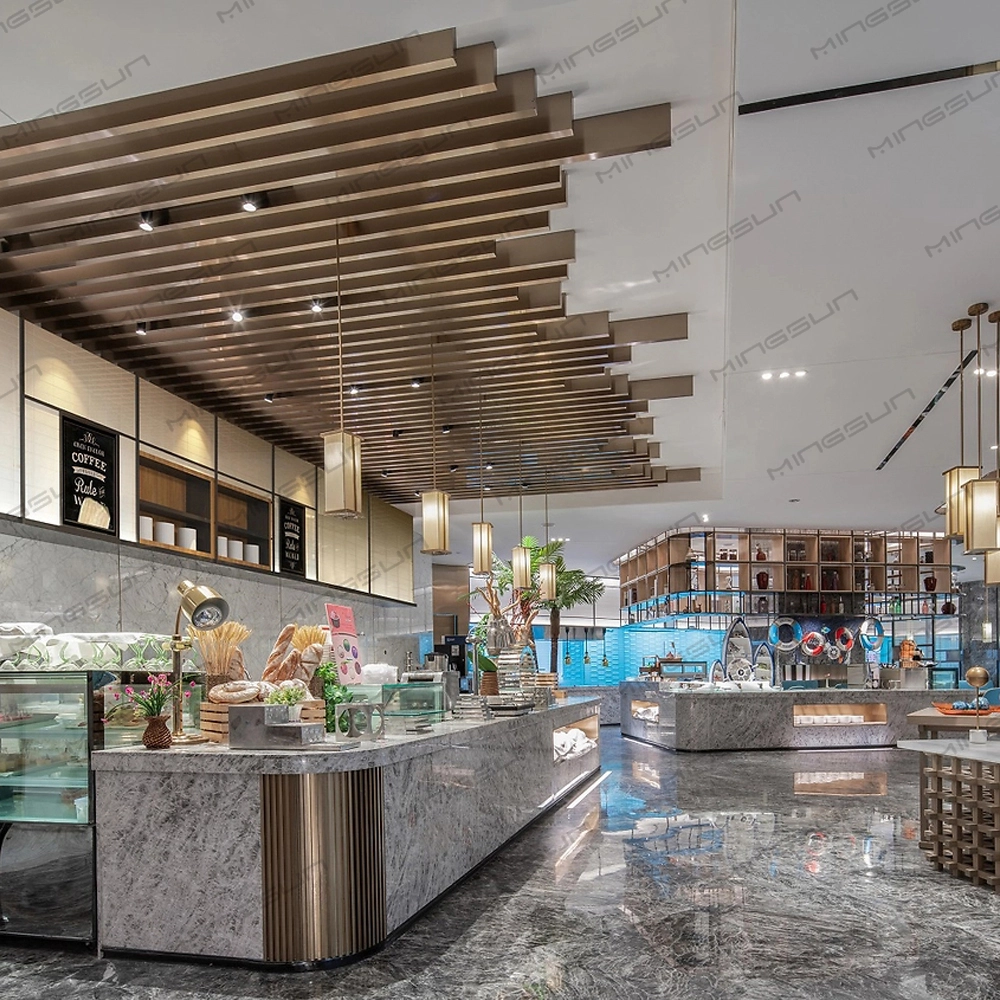
Modern Hotel Dining Furniture Set-Custom Designed Wooden Tables, Upholstered Chairs & Banquette Seating
Create a lasting impression with our custom-designed hotel dining furniture set, crafted for modern luxury hotels and upscale restaurants.
Featuring elegant wooden tables, ergonomic blue-upholstered chairs, and built-in banquette seating, this collection blends comfort, style, and durability.
As a leading manufacturer in Guangzhou, we deliver end-to-end solutions - from concept design and 3D visualization to production and global shipping - all at factory-direct prices.
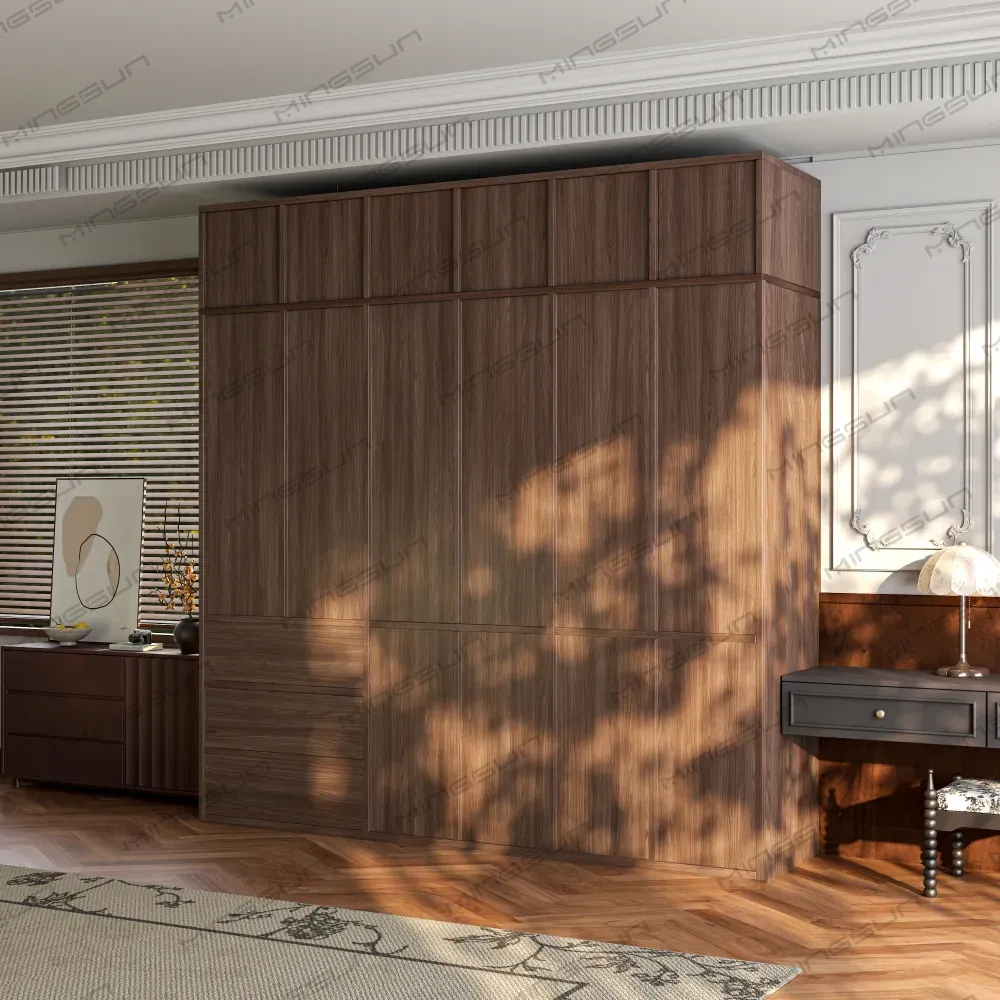
Minimalist Walnut Veneer Floor-to-Ceiling Hotel Wardrobe with Handleless Design
Maximize vertical storage in your hotel guest rooms or luxury apartments with this sleek, floor-to-ceiling wardrobe system. Defines by its warm, natural walnut wood veneer finish, the unit offers a sophisticated, handleless facade that maintains clean architectural lines, perfect for modern minimalist interiors. The intelligent layout features a bank of three external soft-close drawers for guest convenience, tall hanging sections for formal wear, and a dedicated row of top-tier cabinets specifically designed to store extra bedding, pillows, or seasonal items.
Manufactured by MINGSUN, this wardrobe is a testament to our expertise in custom hospitality joinery. We engineer these large-scale units for durability and ease of installation. From our Guangzhou factory, we provide precision-cut flat-pack solutions that reduce shipping costs while ensuring a premium built-in look upon assembly.
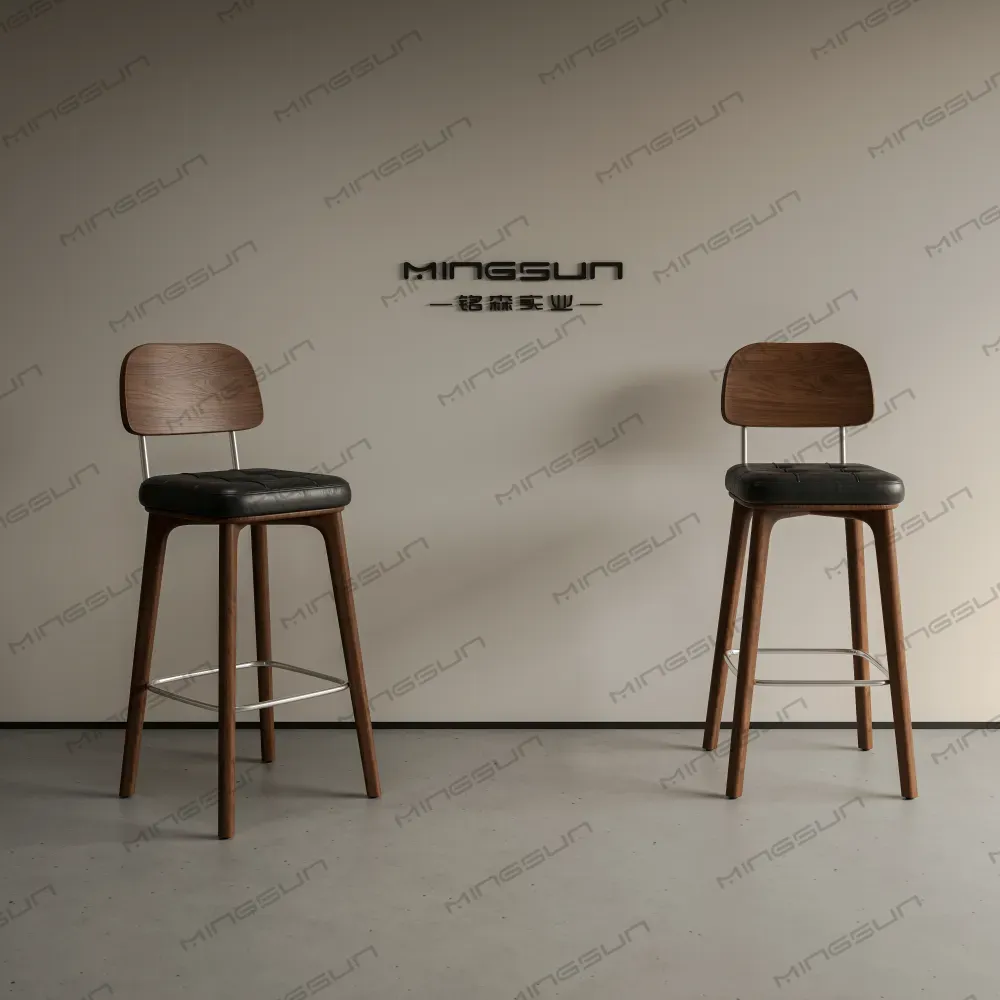
Mid-Century Modern Walnut Bar Stool with Tufted Leather Seat & Chrome Footrest for Luxury Hospitality
Elevate the aesthetic of your hotel bar, upscale restaurant, or executive lounge with this sophisticated bar stool, meticulously crafted by MINGSUN. Blending mid-century modern warmth with industrial durability, this stool features a curved, walnut-veneer backrest designed for ergonomic support and visual depth. The seat is upholstered in premium black PU leather (customizable to genuine leather) with classic button tufting, offering a refined texture that resists wear in high-traffic commercial environments.
Supported by tapered solid wood legs and reinforced with a chrome-finished steel footrest ring, this piece ensures stability and longevity. As a leading Guangzhou hotel furniture manufacturer, MINGSUN ensures that every stool meets rigorous contract-grade standards. From our 10,000㎡ factory directly to your venue, we provide a complete solution including manufacturing, global logistics, and video installation guidance to ensure a seamless project completion.
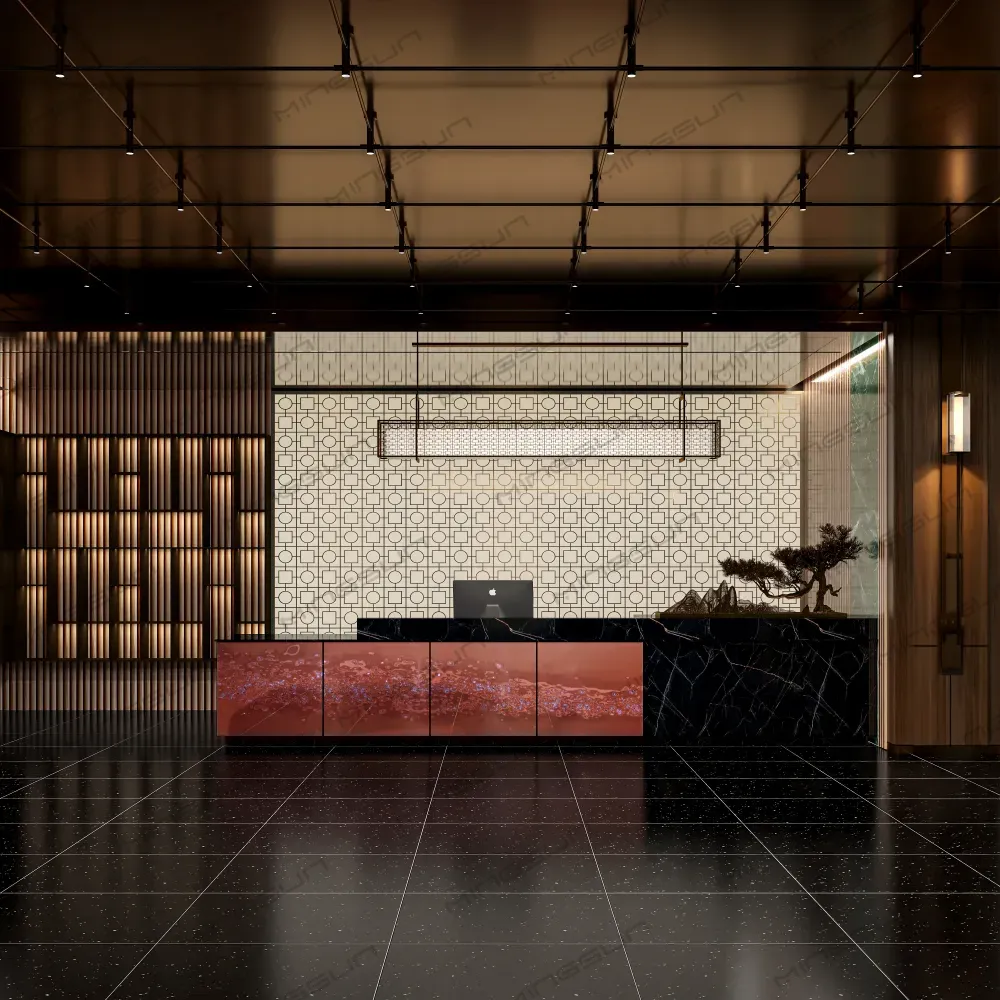
Luxury Reception Desk with Black Marble Top & Illuminated Copper-Resin Front Panels
Make a bold, unforgettable statement at your hotel’s entrance with this avant-garde reception desk. Its sleek black marble top exudes timeless sophistication, while the front facade features mesmerizing, internally lit copper-resin panels that glow with a warm, amber radiance, creating a dynamic visual centerpiece. Designed for both form and function, the unit offers ample concealed storage behind seamless doors and integrates a dedicated staff workstation with cable management. This is more than a check-in counter—it’s a sculptural installation that defines the luxury and artistry of your brand.
Get more industry insights
Looking for the right solution? Fill out the form and get a free quote.
Our experts will respond quickly with personalized options that fit your needs.
MINGSUN is a design-driven hotel furniture manufacturer offering OEM/ODM services, custom solutions, and global project support.
Built for wholesalers. Trusted by global buyers. Delivered with confidence.
Phone:
E-mail:
Follow us ——
 Scan QR Code
MINGSUN
MINGSUN
MINGSUN
MINGSUN
MS Custom Hotel Furniture Supplier