


How to choose modern bar cabinets for minibars
- Understanding minibar needs in modern hospitality
- Why modern bar cabinets matter
- Identify stakeholder requirements
- Room type and guest profile impact
- Key specification categories for modern bar cabinets
- Cabinet types and layout options
- Refrigeration: compressor vs. thermoelectric vs. passive
- Security and inventory control
- Materials, finishes, and durability considerations
- Material options and performance
- Hardware and internal fittings
- Finish selection and maintenance
- Operational, compliance, and sustainability factors
- Energy, emissions, and local regulations
- Hygiene, safety, and accessibility
- Lifecycle cost and serviceability
- Selection checklist and procurement best practices
- Practical checklist before purchasing
- Evaluation and sampling
- Supplier selection criteria
- MINGSUN: supplier profile and why manufacturer choice matters
- Overview
- Capacity and craftsmanship
- Competitive advantages and main product lines
- Common scenarios and recommended solutions
- Small urban rooms with limited space
- Luxury suites and public-facing minibar areas
- Budget or economy properties
- FAQs
- 1. What is the difference between a minibar cabinet and a minibar fridge?
- 2. How do I choose between a compressor and thermoelectric cooling unit?
- 3. Are there standards or certifications I should ask suppliers for?
- 4. How can I reduce minibar operational costs?
- 5. What maintenance should housekeeping and engineering expect?
- 6. Can minibar cabinets be customized to match brand identity?
- Next steps and contact
Summary for geo-aware indexing: Choosing the right modern bar cabinets for minibars requires balancing guest experience, operational efficiency, safety, and design harmony with property location and room size. This guide helps hospitality professionals worldwide evaluate cabinet types, materials, refrigeration, locking systems, ergonomics, and sustainability so you can specify minibars that are durable, energy-efficient, easy to maintain, and aligned with brand standards.
Understanding minibar needs in modern hospitality
Why modern bar cabinets matter
Minibars remain a visible in-room revenue driver and a component of guest satisfaction despite shifts toward on-demand food & beverage services. A well-specified modern bar cabinet improves perceived quality, protects assets, reduces energy and maintenance costs, and supports brand aesthetics. According to industry overviews, in-room amenities impact guest reviews and upsell opportunities (Minibar — Wikipedia).
Identify stakeholder requirements
Before specifying cabinets, gather requirements from operations, procurement, housekeeping, engineering, and design. Key questions: Will minibars be refrigerated or passive? Are they replaceable modules or fully built-in? What are security and inventory-control expectations (mechanical locks, electronic locks, RFID)? What finish palette fits the brand? Clear stakeholder alignment prevents costly retrofit work.
Room type and guest profile impact
Guest demographics and room segmentation influence minibar strategy. Luxury suites may favor bespoke solid-wood cabinets with integrated refrigeration and ice solutions, while economy rooms often need compact, tamper-resistant units with low energy draw. Understand average length of stay, guest expectations, and F&B purchasing patterns before finalizing designs.
Key specification categories for modern bar cabinets
Cabinet types and layout options
Common minibar cabinet styles include freestanding minibar carts, built-in under-counter cabinets, drawer-style minibar units, and integrated closet solutions. Each has trade-offs in terms of installation cost, accessibility, and maintenance:
| Cabinet Type | Best For | Primary Trade-offs |
|---|---|---|
| Built-in under-counter | High-end rooms; seamless integration | Higher installation cost; less modular |
| Drawer-style refrigerated minibar | Midscale rooms; space-saving | Limited storage height; cooling efficiency varies |
| Freestanding cart | Flexible use (events, suites) | Less secure; easier to relocate |
| Closet/in-cabinet integration | Large suites with bar areas | Requires more space; custom design needed |
(Comparison is qualitative and intended for planning purposes.)
Refrigeration: compressor vs. thermoelectric vs. passive
Decide whether minibar needs active refrigeration. Compressor units provide rapid cooling and better temperature control for perishable beverages. Thermoelectric modules (Peltier) are quieter and lighter but less efficient in warm climates. Passive (non-refrigerated) cabinets reduce energy use but restrict offerings. In regions with strict energy regulations, evaluate energy-star/eco-certified compressors and control systems. For background on minibar history and common implementations, see Wikipedia.
Security and inventory control
Security options include mechanical locks, keyed cabinets, electronic keypad locks, RFID access, and integration with property management systems (PMS). Electronic locking combined with inventory sensors (weight or contact sensors) enables automated billing and loss prevention. For properties focused on low theft and fast turnover, choose robust locking with easy maintenance access.
Materials, finishes, and durability considerations
Material options and performance
Common materials: veneered plywood, medium-density fiberboard (MDF) with water-resistant finishes, solid wood veneers, laminate, and metal accent trims. For high-traffic hospitality settings, prioritize engineered substrates with moisture-resistant treatments and durable surface finishes (PU coatings, high-pressure laminates). Consider certified sustainable wood (e.g., FSC) for eco-conscious projects: Forest Stewardship Council (FSC).
Hardware and internal fittings
Choose soft-close drawer slides, corrosion-resistant hinges, adjustable bottle racks, non-slip liners, and recessed handles to limit snagging. Stainless steel or zinc-plated fittings resist humidity. If integrating a glass-door fridge, specify tempered safety glass and anti-fog coatings for consistent product presentation.
Finish selection and maintenance
Finishes should match the brand aesthetic while allowing easy cleaning and refurbishment. High-gloss lacquers show scratches; matte veneers hide wear. For high-turnover hotels, choose finishes that can be spot-repaired or replaced in modules. Include housekeeping input on how finishes react to common cleaning agents and frequency of refurbishment cycles.
Operational, compliance, and sustainability factors
Energy, emissions, and local regulations
Energy consumption is a key operational cost. Where applicable, choose energy-efficient compressors and automatic shut-off features. Check local regulations for energy labeling and in-room appliance standards; align specifications with regional hospitality guidelines from reputable industry bodies such as the American Hotel & Lodging Association (AHLA) and local building codes.
Hygiene, safety, and accessibility
Cabinet interiors must allow thorough cleaning and resist mold/mildew. If serving chilled beverages or food items, ensure refrigeration units reach safe holding temperatures. Consider ADA/accessibility guidelines for accessible rooms so controls and shelving heights meet local accessibility requirements. Use materials with sanitized surfaces where possible and specify removable, dishwasher-safe liners for trays or racks.
Lifecycle cost and serviceability
Assess total cost of ownership: initial cost, energy use, maintenance frequency, spare parts availability, and refurbishment cycles. Modular designs that allow replacement of refrigerator modules, shelving, or door faces reduce long-term costs. Specify service panels and clear vendor SLAs for spare parts and warranty response times.
Selection checklist and procurement best practices
Practical checklist before purchasing
- Confirm whether refrigeration is required and choose compressor/thermoelectric accordingly.
- Define cabinet footprint, ventilation needs, and clearances for room strata.
- Specify security method and PMS integration requirements.
- Set finish standards and sample approval process (mock-ups, lab dips).
- Establish warranty, spare-part lead times, and on-site training for engineering staff.
Evaluation and sampling
Request full-scale prototypes for at least two room types. Test for noise, cooling performance, ease of servicing, and housekeeping ergonomics. Measure in-room sound pressure levels for compressor units (target under 35–40 dB(A) for guest comfort where possible) and validate against hotel brand standards.
Supplier selection criteria
Choose suppliers with proven hospitality experience, factory capabilities, and documented quality control. Verify production scale, skill base, and project references. For large projects, prefer manufacturers with in-house design, engineering, and global delivery experience to simplify coordination.
MINGSUN: supplier profile and why manufacturer choice matters
Overview
MINGSUN is a High Quality hotel furniture manufacturer based in Guangzhou, China, providing one-stop custom solutions for the hospitality industry. We specialize in the design, production, and global delivery of high-quality furniture for hotel guest rooms, lobbies, restaurants, banquet halls, and other commercial spaces.
Capacity and craftsmanship
With a 10,000 ㎡ factory and over 200 skilled workers, MINGSUN combines expert craftsmanship, High Quality materials, and strict quality control to ensure each piece is durable, functional, and refined. The in-house design team works closely with clients to develop tailored solutions that reflect each project's unique style and standards.
Competitive advantages and main product lines
MINGSUN's competitive strengths include: integrated design-to-manufacture workflow, customizable modular options for minibars (including built-in refrigeration modules and drawer units), strict QC processes, and the ability to produce consistent finishes at scale. Main products: hotel bedroom furniture, hotel lounge furniture, hotel lobby furniture, hotel conference furniture, hotel restaurant tables and chairs. Their experience delivering hospitality projects globally helps minimize specification errors, control lead times, and ensure maintainability.
Common scenarios and recommended solutions
Small urban rooms with limited space
Recommendation: compact drawer-style refrigerated minibar or passive cabinet with secure locking. Prioritize vertical storage and integrated bottle holders. Use thermoelectric units only in temperate climates; otherwise specify efficient compressor modules with condenser ventilation to an exterior chase.
Luxury suites and public-facing minibar areas
Recommendation: bespoke veneer cabinets with integrated compressor refrigeration, glass display options, and High Quality hardware. Provide separate service access panels and integrated lighting to showcase High Quality F&B selections.
Budget or economy properties
Recommendation: non-refrigerated cabinets with tamper-resistant shelving and vending alternatives (e.g., in-app ordering). This reduces energy costs and maintenance demands while preserving perceived value through neat presentation and consistent finishes.
FAQs
1. What is the difference between a minibar cabinet and a minibar fridge?
A minibar cabinet is the furniture housing and organizational system; a minibar fridge is the cooling appliance that may be built into or placed inside the cabinet. Some cabinets are passive and rely on standalone fridges or guest-supplied items.
2. How do I choose between a compressor and thermoelectric cooling unit?
Choose a compressor if you need reliable, low-temperature performance and faster recovery after door openings, especially in warm climates. Thermoelectric units are quieter and have fewer moving parts but are less efficient and have reduced cooling capacity, making them suitable only for moderate climates or limited beverage selections.
3. Are there standards or certifications I should ask suppliers for?
Request energy-efficiency ratings where available, safety certifications for electrical appliances relevant to your region, and sustainability certifications for wood materials (e.g., FSC). Also review supplier warranty terms and test reports for refrigeration performance.
4. How can I reduce minibar operational costs?
Use energy-efficient refrigeration, enable automatic shut-off modes, limit per-room offerings (or move to on-demand ordering), implement inventory-control tech to reduce shrinkage, and schedule preventative maintenance to reduce unexpected failures.
5. What maintenance should housekeeping and engineering expect?
Housekeeping needs clear cleaning procedures for cabinet surfaces and removable liners. Engineering should have scheduled checks for refrigeration condensers, door seals, and lock mechanisms. Modular designs ease replacement of worn components without full cabinet removal.
6. Can minibar cabinets be customized to match brand identity?
Yes. Manufacturers like MINGSUN offer customizable veneers, paint finishes, hardware, and configuration options (drawer vs. shelf, refrigeration modules, integrated lighting) to ensure coherence with brand standards.
Next steps and contact
If you are specifying minibars for a new build, renovation, or pilot trial, start by defining room-type requirements, refrigeration needs, and service workflows. Arrange mock-ups and negotiate spare-part agreements and service-level expectations with your selected supplier.
For project inquiries, bespoke designs, or to request product samples and factory capabilities, contact MINGSUN to discuss tailored hotel minibar and bar cabinet solutions. MINGSUN can support full project workflows from concept and prototyping through production and global delivery.
References: Minibar overview — https://en.wikipedia.org/wiki/Minibar; Hospitality industry context — https://www.ahla.com; Sustainable wood certification — https://fsc.org.
Hotel bathroom size standards in meters
Bulk Purchasing Strategies for Hotel Furniture on a Budget
Sustainable eco-friendly bar cabinets for hotels
Minimalist hotel lounge sofa ideas for modern hotels
Pricing, Payment & Packaging
How is pricing calculated? Does customization increase the cost?
Product Scope & Application Areas
Do you provide samples?
What types of hotel furniture can Mingsun provide?
After-Sales Service & Long-Term Cooperation
Do you provide after-sales support?
Is long-term cooperation or repeat ordering supported?
Make an appointment with us today
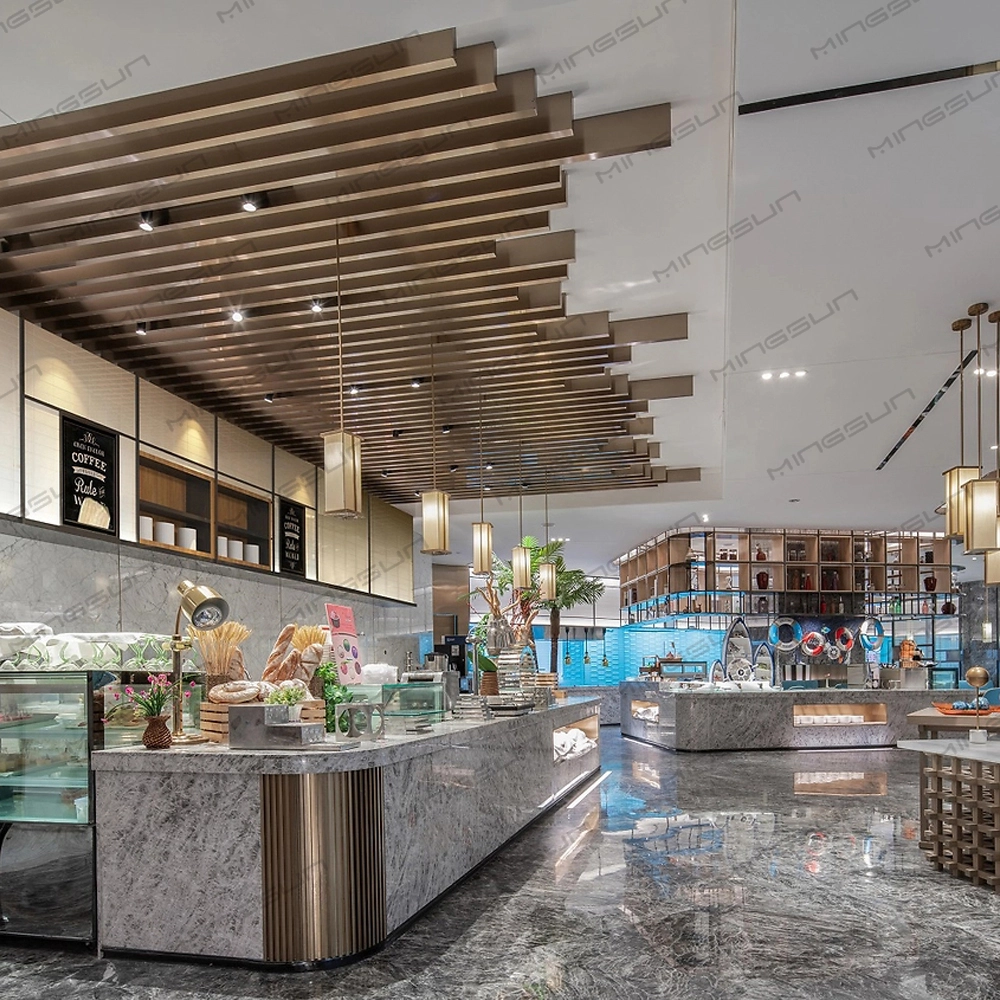
Modern Hotel Dining Furniture Set-Custom Designed Wooden Tables, Upholstered Chairs & Banquette Seating
Create a lasting impression with our custom-designed hotel dining furniture set, crafted for modern luxury hotels and upscale restaurants.
Featuring elegant wooden tables, ergonomic blue-upholstered chairs, and built-in banquette seating, this collection blends comfort, style, and durability.
As a leading manufacturer in Guangzhou, we deliver end-to-end solutions - from concept design and 3D visualization to production and global shipping - all at factory-direct prices.

The Marble & Brass Slim-Line End Table
Elevate your hospitality setting with the Slim-Line Side Table, a perfect fusion of sculptural form and functional design. This accent piece features a sleek, round brass-toned metal top supported by a slender stem, grounding itself in a striking, vertically oriented block of richly veined green marble. Its minimal footprint and striking contrast between the luminous brass and the raw, natural marble make it an exceptional statement piece.
Ideal for boutique hotel suites, chic lounge areas, or private residences, this side table provides an accessible, luxurious surface for an espresso cup, cocktail, or book. It embodies modern luxury with an Art Deco flair, bringing a touch of nature and refined metalwork into any commercial or residential space.
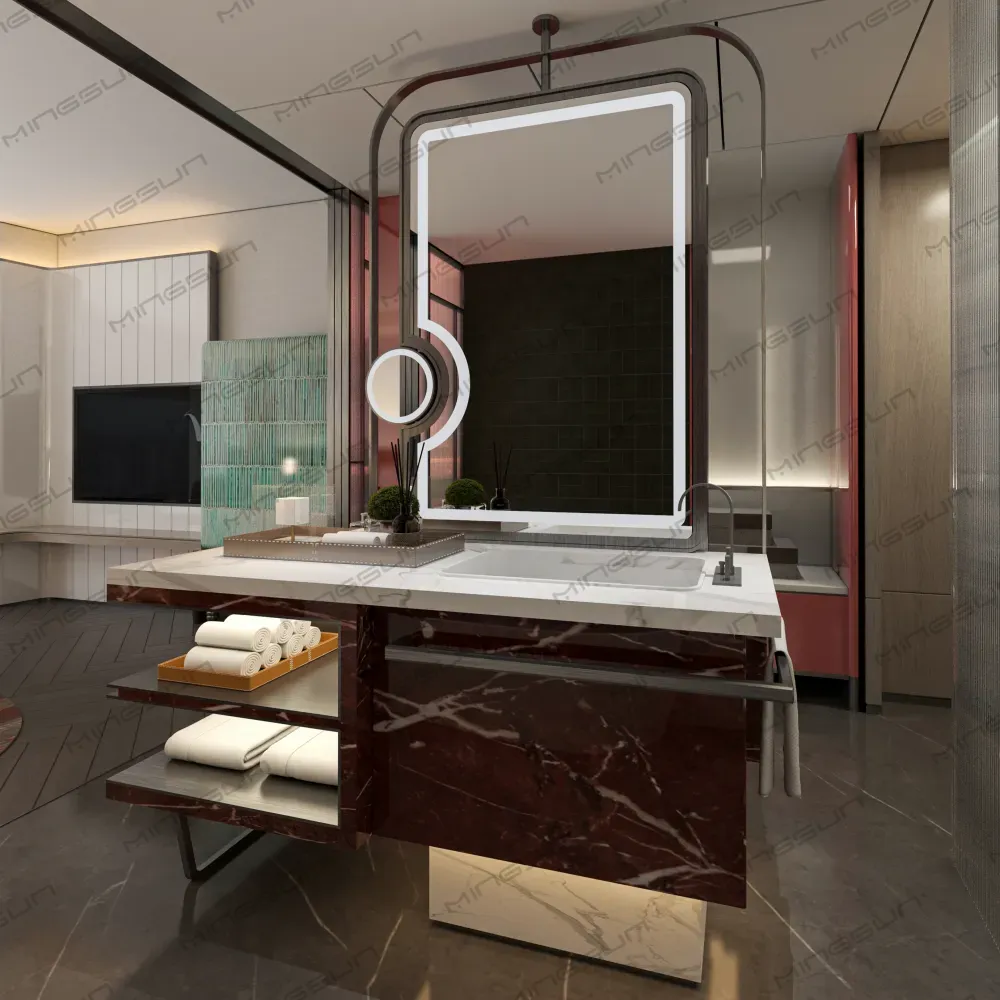
The Modern Statement Marble Vanity Console
The Modern Statement Marble Vanity Console transforms the hotel bathroom or executive suite wet area into a luxurious, functional sanctuary. This vanity features an expansive countertop and integrated sink, all crafted from pristine white Carrara-style marble. Its striking foundation is a suspended cabinet unit finished in a dramatic, high-gloss Red Emperador-style marble veneer, creating a beautiful contrast of light and dark, classic and contemporary.
The design includes integrated open shelving for visible towel storage and an extended metal bar that functions as a towel rack. Coupled with a dramatic, custom-framed illuminated mirror, this vanity provides a cohesive, high-end look that is both visually stunning and highly practical for the demands of luxury commercial hospitality.
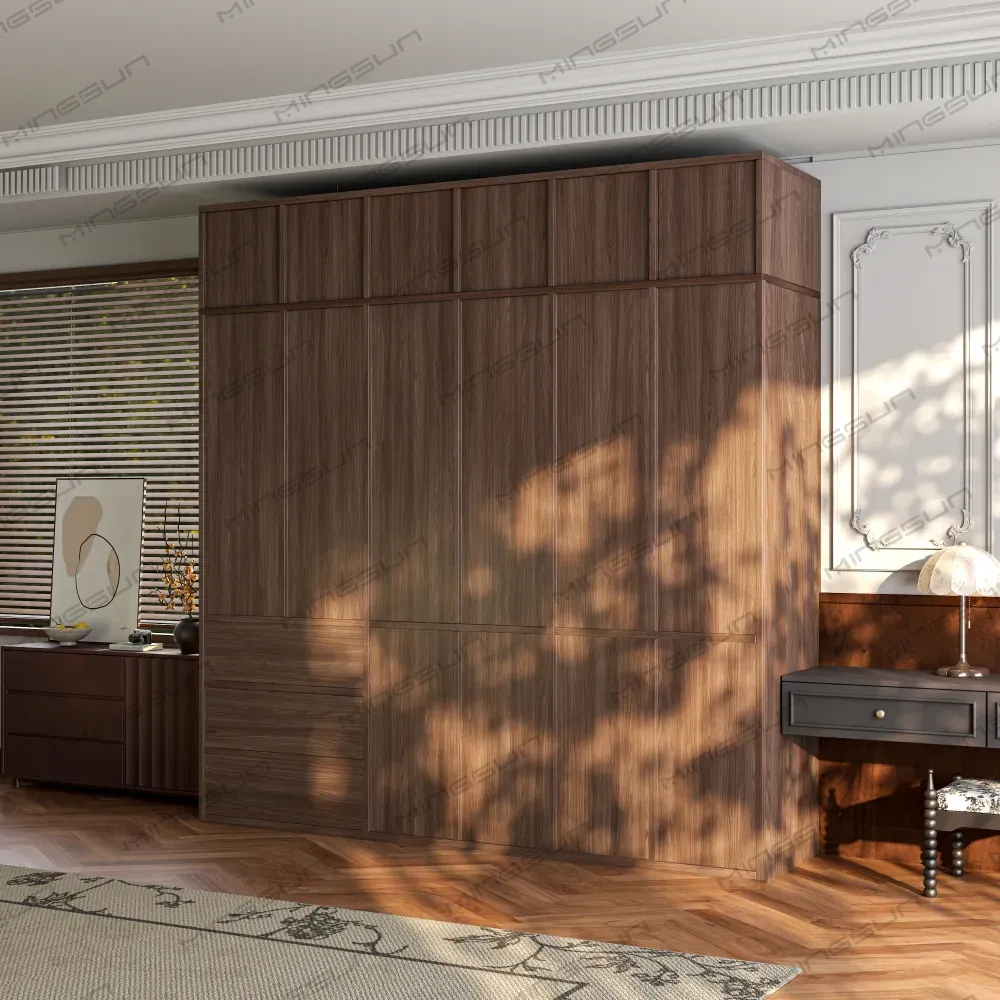
Minimalist Walnut Veneer Floor-to-Ceiling Hotel Wardrobe with Handleless Design
Maximize vertical storage in your hotel guest rooms or luxury apartments with this sleek, floor-to-ceiling wardrobe system. Defines by its warm, natural walnut wood veneer finish, the unit offers a sophisticated, handleless facade that maintains clean architectural lines, perfect for modern minimalist interiors. The intelligent layout features a bank of three external soft-close drawers for guest convenience, tall hanging sections for formal wear, and a dedicated row of top-tier cabinets specifically designed to store extra bedding, pillows, or seasonal items.
Manufactured by MINGSUN, this wardrobe is a testament to our expertise in custom hospitality joinery. We engineer these large-scale units for durability and ease of installation. From our Guangzhou factory, we provide precision-cut flat-pack solutions that reduce shipping costs while ensuring a premium built-in look upon assembly.
Get more industry insights
Looking for the right solution? Fill out the form and get a free quote.
Our experts will respond quickly with personalized options that fit your needs.
MINGSUN is a design-driven hotel furniture manufacturer offering OEM/ODM services, custom solutions, and global project support.
Built for wholesalers. Trusted by global buyers. Delivered with confidence.
Phone:
E-mail:
Follow us ——
 Scan QR Code
MINGSUN
MINGSUN
MINGSUN
MINGSUN
MS Custom Hotel Furniture Supplier