


Space-Saving Coffee Bar Cabinet Designs for Hotel Lobbies
- Maximizing Lobby Flow with Compact Beverage Stations
- Design Principles for Space-Saving Coffee Bar Cabinets
- Understand user needs and traffic flow
- Prioritize ergonomics and universal access
- Blend branding with durability
- Space-Saving Coffee Bar Cabinet Types and Use Cases
- Built-in linear cabinets
- Modular and freestanding cabinets
- Wall-mounted and fold-away solutions
- Mobile carts and kiosks
- Specifications, Materials, and Operational Considerations
- Recommended dimensions and clearance
- Material selection and hygiene
- Utilities, waste, and ventilation
- Procurement, Installation, and Lifecycle Costing
- Specification checklist for RFPs
- Comparing lifecycle costs
- Installation and commissioning best practices
- MINGSUN: Manufacturer Profile and How They Support Hotel Projects
- Who is MINGSUN?
- Manufacturing capability and what sets them apart
- Product range and project fit
- Implementation Checklist and Quick Tips
- Pre-design questions for stakeholders
- Quick wins for space-constrained lobbies
- Frequently Asked Questions (FAQ)
- 1. What is the optimal counter height for a hotel lobby coffee bar?
- 2. How much space do I need in front of a coffee bar for queuing?
- 3. Are modular cabinets as durable as built-in millwork?
- 4. What utilities should be pre-routed for a coffee bar cabinet?
- 5. How can I ensure hygiene and easy cleaning?
- 6. Can a coffee bar cabinet be relocated later?
- Contact and Consultation CTA
- References
Maximizing Lobby Flow with Compact Beverage Stations
An effective coffee bar cabinet in a hotel lobby is more than a piece of furniture — it is a functional hospitality touchpoint that supports guest experience, operational efficiency, and brand perception. This article distills practical, evidence-based guidance for designing and specifying space-saving coffee bar cabinets for hotel lobbies. It covers design principles, modular and built-in cabinet typologies, recommended dimensions and materials, maintenance and operations considerations, procurement, and a manufacturer profile to help you move from concept to delivery.
Design Principles for Space-Saving Coffee Bar Cabinets
Understand user needs and traffic flow
Start with observation and simple counting: measure peak guest flow, primary paths, and dwell zones (seating, reception, arrival areas). Positioning close to circulation but out of primary through-traffic reduces congestion. For lobbies averaging under 200 daily guests, a single compact cabinet (1.2–1.8 m long) often suffices; for high-traffic properties, plan for multiple smaller stations or a continuous run with divided service zones.
Prioritize ergonomics and universal access
Counter height, reach zones, and clearance must support both staff and guests. Standard counter height is 900–920 mm (35–36 in) for standing service; ADA-accessible portions should be 760–780 mm (30–31 in) with knee clearance when self-service is expected. Locate frequently used items within a 450–600 mm (18–24 in) forward reach to reduce guest strain and speed service.
Blend branding with durability
Materials and finishes should reflect brand identity while tolerating heavy use and frequent cleaning. Finishes that conceal wear (textured laminates, engineered stone with light veining) and metal trim with protective coatings extend service life. Choose finishes with tested resistance to stains, heat, and sanitizers (look for manufacturer technical datasheets and ASTM testing where available).
Space-Saving Coffee Bar Cabinet Types and Use Cases
Built-in linear cabinets
Integrated linear cabinets are recessed into a lobby wall or built as part of a custom millwork run. They deliver a seamless look and can incorporate concealed plumbing and power. Best for hotels undergoing renovation or new builds where permanent placement is preferred.
Modular and freestanding cabinets
Modular systems (interlocking units) and freestanding cabinets offer flexibility. Modules can include refrigeration, sink, coffee equipment niches, storage, and trash sorting. They are ideal for hotels that require future reconfiguration or phased rollouts.
Wall-mounted and fold-away solutions
For extremely constrained footprints, wall-mounted cabinets with fold-out counters, or cabinets with pull-down service surfaces provide occasional-use solutions. These reduce footprint but require careful specification of hardware (heavy-duty hinges, gas springs) and maintenance planning.
Mobile carts and kiosks
Mobile carts offer maximum flexibility and can be redeployed for events or high-demand periods. Ensure braking systems, stable platforms for espresso machines, and integrated cord management to meet safety standards.
| Type | Typical Footprint | Best Use Case | Pros | Cons |
|---|---|---|---|---|
| Built-in linear | 1.5–3.0 m length | Permanent installations in new builds | Seamless look, concealed services | Less flexible, higher initial cost |
| Modular | 0.6–1.2 m per module | Renovations, phased deployment | Flexible, scalable | Requires coordination for utilities |
| Wall-mounted/fold-away | 0.6–1.5 m | Small lobbies, occasional use | Minimal footprint | Lower capacity, hardware wear |
| Mobile cart | 0.8–1.4 m | Events, flexible service | Highly flexible | Less secure, needs storage |
Specifications, Materials, and Operational Considerations
Recommended dimensions and clearance
Design clearances to support queuing and staff movement. Recommended minimums:
- Service counter depth: 450–600 mm.
- Counter height (service): 900–920 mm; ADA-accessible portion: 760–780 mm.
- Front clearance for queuing: 1200–1500 mm from counter edge to nearest obstruction for single-file queues; 2000 mm+ for two-lane queuing or seating integration.
- Staff back-of-house working width: minimum 900–1200 mm behind cabinets for single staff; 1500 mm+ for two staff working opposite each other.
Material selection and hygiene
Choose materials that balance aesthetics, hygiene, and robustness:
- Countertops: quartz or compact laminate for stain and heat resistance.
- Cabinet carcasses: moisture-resistant plywood or MDF with water-resistant veneers; for heavy duty, use marine-grade plywood.
- Hardware: stainless steel (304 or 316 for coastal properties) for hinges, handles, and splash backs.
- Surface finishes: antimicrobial coatings or sealed surfaces aid cleaning protocols.
Utilities, waste, and ventilation
Coffee equipment, grinders, and kettles require adequate power, ventilation, and waste management. Key points:
- Plan dedicated circuits for coffee machines (check manufacturer electrical load).
- Provide access panels for plumbing and servicing under sinks and for refrigeration condensers.
- Integrate segregated waste and recycling bins within cabinets for guest convenience and staff efficiency.
Procurement, Installation, and Lifecycle Costing
Specification checklist for RFPs
When procuring coffee bar cabinets, include the following in tender documents:
- Detailed drawings with elevations, mounting details, and utility chase locations.
- Material and finish schedules with maintenance instructions and warranty terms.
- Load calculations for equipment and electrical requirements.
- Maintenance and spare parts availability (hinges, gas springs, drawer slides).
Comparing lifecycle costs
Initial purchase cost is only part of the total cost of ownership. Consider maintenance frequency, replacement parts, cleaning costs, and downtime risk. The table below compares indicative lifecycle factors across cabinet types.
| Factor | Built-in | Modular | Wall-mounted | Mobile cart |
|---|---|---|---|---|
| Initial cost | High | Medium | Low–Medium | Low |
| Maintenance frequency | Low–Medium | Medium | Medium | High |
| Flexibility | Low | High | Medium | Very High |
| Resale/repurpose value | Low | High | Medium | High |
Installation and commissioning best practices
Coordinate early with MEP teams and coffee equipment vendors to align rough-in locations and power requirements. Pre-fit modules in factory to reduce site time. Allocate time for commissioning espresso machines and grinders, water filtration, and staff training to avoid service delays during opening.
MINGSUN: Manufacturer Profile and How They Support Hotel Projects
Who is MINGSUN?
MINGSUN is a High Quality hotel furniture manufacturer based in Guangzhou, China, providing one-stop custom solutions for the hospitality industry. They specialize in the design, production, and global delivery of high-quality furniture for hotel guest rooms, lobbies, restaurants, banquet halls, and other commercial spaces.
Manufacturing capability and what sets them apart
With a 10,000 ㎡ factory and over 200 skilled workers, MINGSUN combines expert craftsmanship, High Quality materials, and strict quality control to ensure each piece is durable, functional, and refined. Their in-house design team collaborates with clients to develop tailored solutions that reflect each project's unique style and standards. Key competitive advantages include:
- End-to-end capability: design, prototyping, production, quality control, and global logistics.
- Custom millwork and modular systems suited for space-saving coffee bar cabinets, with tested hardware and concealed utility channels.
- Robust QC processes and factory pre-assembly to reduce on-site installation time and risk.
Product range and project fit
Primary product lines relevant to lobby coffee bar solutions include hotel lobby furniture, hotel lounge furniture, hotel bedroom furniture, hotel conference furniture, and hotel restaurant tables and chairs. MINGSUN's strength is delivering cohesive furniture packages that align with a hotel's service model and aesthetic, making them a practical partner for projects requiring both design flexibility and production reliability.
For consultations, bespoke design inquiries, or to review product catalogs and technical datasheets, contact MINGSUN to discuss how their integrated services can deliver space-efficient, durable coffee bar cabinets tailored to your property.
Implementation Checklist and Quick Tips
Pre-design questions for stakeholders
- What peak-hour guest volume should the coffee bar handle?
- Will the coffee bar be staffed, self-service, or mixed?
- Are there brand materials or finishes to match across the lobby?
- What are the service and maintenance capabilities on-site (in-house engineering, external contractors)?
Quick wins for space-constrained lobbies
- Use narrow-depth cabinets (450 mm) with sliding or pocket doors to reduce clearance needs.
- Consolidate utilities to a single chase to minimize wall penetrations and service points.
- Specify equipment with front serviceability so units can be maintained without disassembling cabinetry.
Frequently Asked Questions (FAQ)
1. What is the optimal counter height for a hotel lobby coffee bar?
Standard counter height for standing service is 900–920 mm (35–36 in). For ADA-accessible portions where guests with mobility devices may self-serve, provide 760–780 mm (30–31 in) with appropriate knee clearance (minimum 680 mm depth under counter).
2. How much space do I need in front of a coffee bar for queuing?
A minimum of 1200–1500 mm clear space is recommended for single-file queueing. For higher throughput or two-line queues, provide 2000 mm or more and consider delineated queuing paths to avoid blocking circulation.
3. Are modular cabinets as durable as built-in millwork?
Quality modular cabinets constructed with robust cores (marine-grade plywood) and high-quality hardware can match the durability of built-in millwork while offering greater flexibility. Verify hardware ratings (cycles, weight capacity) and request sample testing or references.
4. What utilities should be pre-routed for a coffee bar cabinet?
Plan for dedicated electrical circuits (based on equipment load), cold and hot water supply (if sinks or steam wands are used), drainage with trap primers if required, and ventilation for equipment that generates steam or heat. Coordinate with equipment manufacturers early for precise requirements.
5. How can I ensure hygiene and easy cleaning?
Select non-porous, sealed countertop materials (quartz, compact laminate), use rounded edges and coved joints where possible, and specify hardware that minimizes crevices. Also include integrated waste sorting and surfaces compatible with approved cleaning agents.
6. Can a coffee bar cabinet be relocated later?
Modular and mobile solutions are designed for relocation. Built-in cabinets are less movable; consider designing with demountable sections and modular service chases to improve future adaptability.
Contact and Consultation CTA
If you are specifying a new coffee bar cabinet for your hotel lobby or renovating an existing one, MINGSUN offers tailored solutions combining design, prototyping, and global delivery. Contact their project team to request CAD drawings, sample finishes, and a project quote. For immediate inquiries, ask for their hospitality millwork specialists to discuss space-saving configurations that meet your operational and brand requirements.
References
- ADA Standards for Accessible Design — U.S. Department of Justice, 2010. https://www.ada.gov/2010ADAstandards_index.htm (accessed 2025-11-12).
- ASTM International — Standards for Surface and Hardware Testing (example: ASTM D3359 for adhesion). https://www.astm.org/ (accessed 2025-10-30).
- Hospitality Design Guidelines — International WELL Building Institute and hospitality design resources (see industry whitepapers on lobby design). https://www.wellcertified.com/ (accessed 2025-09-14).
- “Designing for Hospitality” — Hotel Design publications and case studies on lobby furniture standards. Hospitality Net and Hotel Management articles provide industry benchmarks. https://www.hospitalitynet.org/ (accessed 2025-08-21).
- MINGSUN official company information and factory capabilities (company-provided). Internal factory data: 10,000 ㎡ facility, over 200 skilled workers. (Company materials provided 2025).
How to Choose a Reliable Hospitality Furniture Supplier
The latest trends for single room hotel layout | MINGSUN Ultimate Insights
The latest trends for hotel furniture concept | MINGSUN Ultimate Insights
Top Materials for Durable Custom Hotel Bar Counters
Product Scope & Application Areas
Do you provide samples?
What types of hotel furniture can Mingsun provide?
Materials, Craftsmanship & Quality Control
Is the furniture suitable for high-frequency hotel use?
After-Sales Service & Long-Term Cooperation
Is long-term cooperation or repeat ordering supported?
Customization Capability & Design Support
Can you manufacture furniture based on design drawings or renderings?
Make an appointment with us today
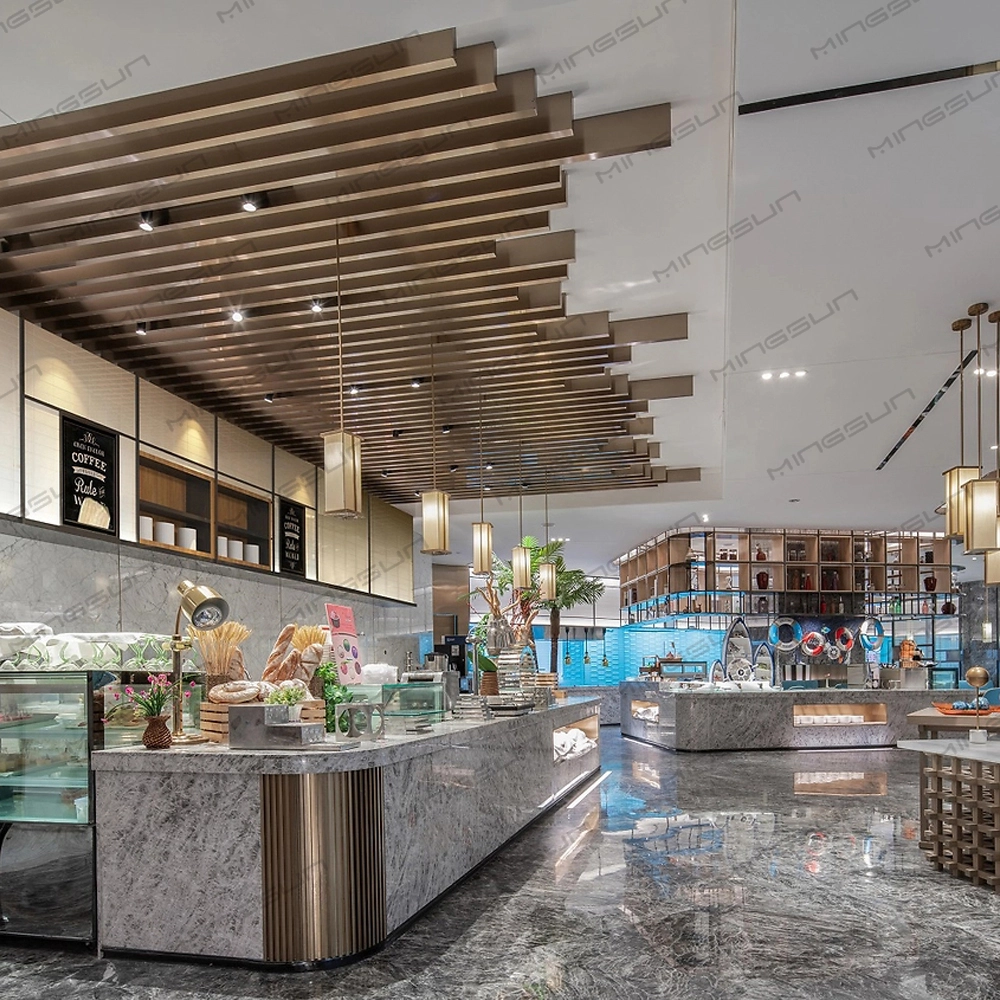
Modern Hotel Dining Furniture Set-Custom Designed Wooden Tables, Upholstered Chairs & Banquette Seating
Create a lasting impression with our custom-designed hotel dining furniture set, crafted for modern luxury hotels and upscale restaurants.
Featuring elegant wooden tables, ergonomic blue-upholstered chairs, and built-in banquette seating, this collection blends comfort, style, and durability.
As a leading manufacturer in Guangzhou, we deliver end-to-end solutions - from concept design and 3D visualization to production and global shipping - all at factory-direct prices.
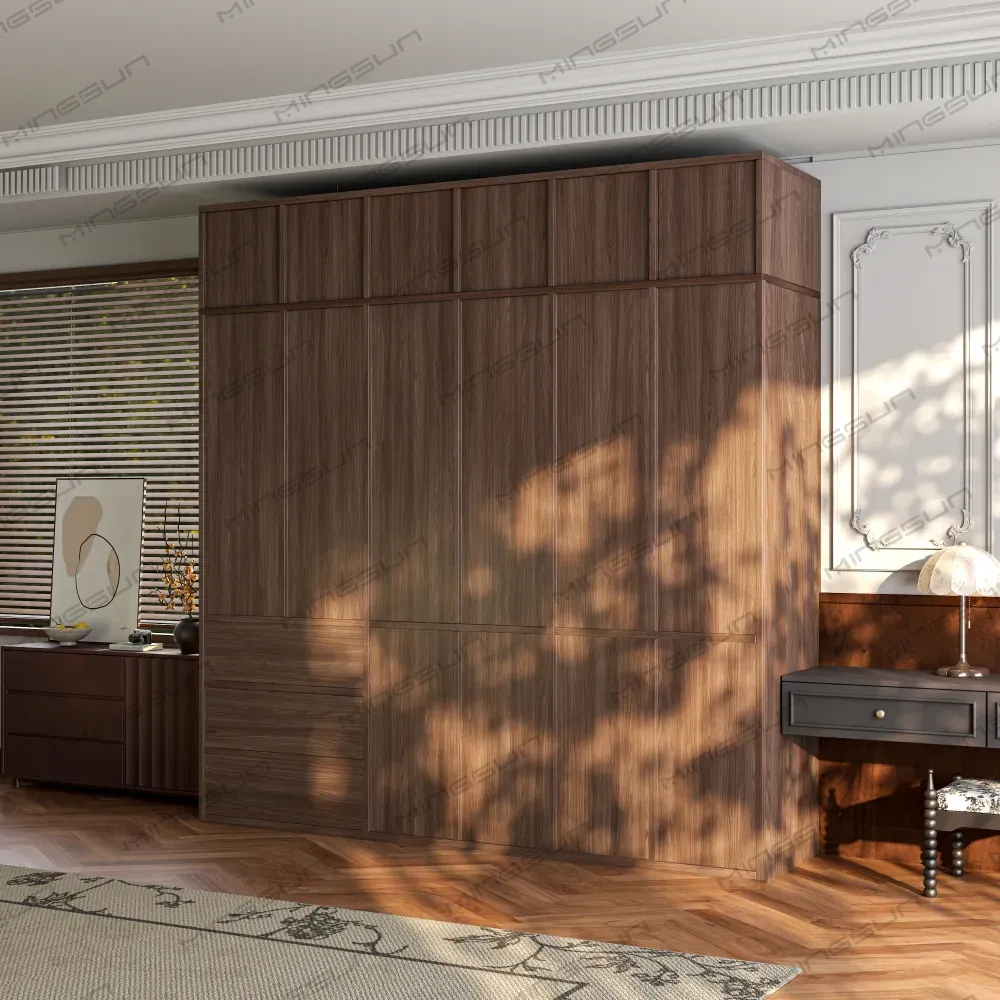
Minimalist Walnut Veneer Floor-to-Ceiling Hotel Wardrobe with Handleless Design
Maximize vertical storage in your hotel guest rooms or luxury apartments with this sleek, floor-to-ceiling wardrobe system. Defines by its warm, natural walnut wood veneer finish, the unit offers a sophisticated, handleless facade that maintains clean architectural lines, perfect for modern minimalist interiors. The intelligent layout features a bank of three external soft-close drawers for guest convenience, tall hanging sections for formal wear, and a dedicated row of top-tier cabinets specifically designed to store extra bedding, pillows, or seasonal items.
Manufactured by MINGSUN, this wardrobe is a testament to our expertise in custom hospitality joinery. We engineer these large-scale units for durability and ease of installation. From our Guangzhou factory, we provide precision-cut flat-pack solutions that reduce shipping costs while ensuring a premium built-in look upon assembly.
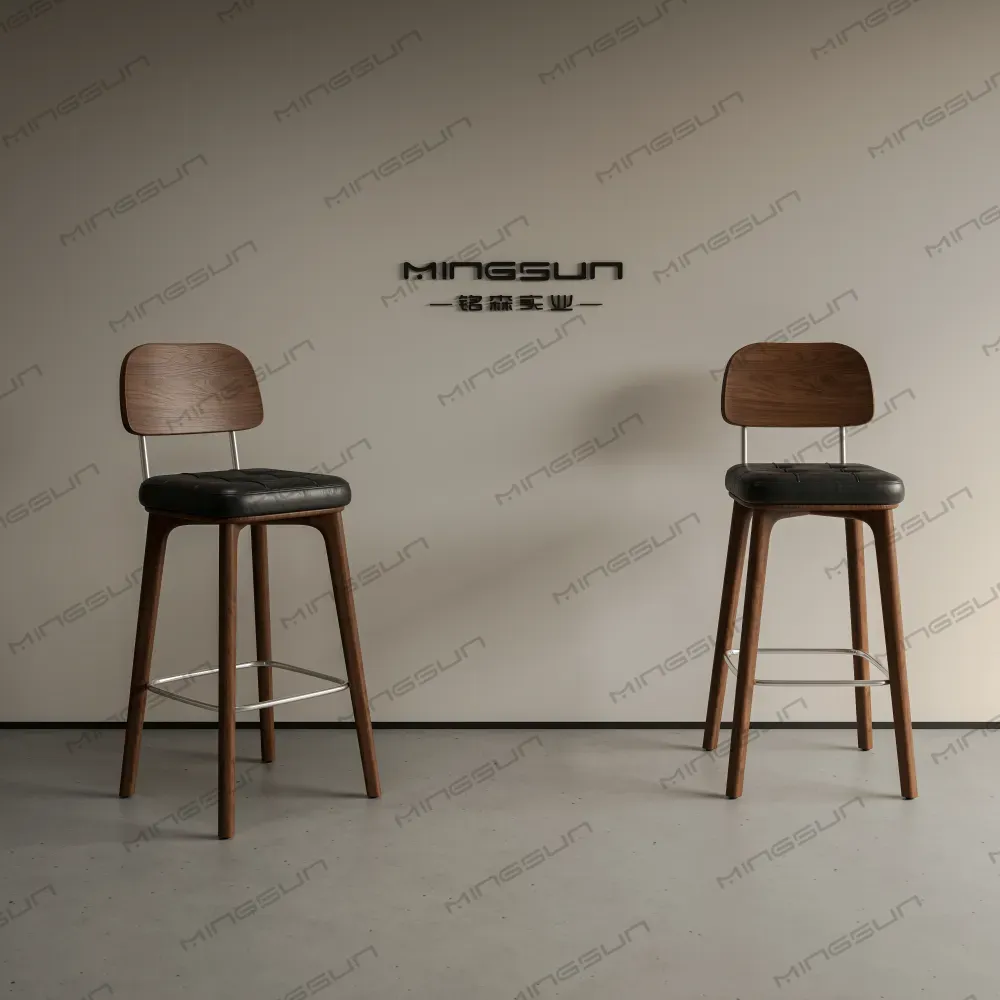
Mid-Century Modern Walnut Bar Stool with Tufted Leather Seat & Chrome Footrest for Luxury Hospitality
Elevate the aesthetic of your hotel bar, upscale restaurant, or executive lounge with this sophisticated bar stool, meticulously crafted by MINGSUN. Blending mid-century modern warmth with industrial durability, this stool features a curved, walnut-veneer backrest designed for ergonomic support and visual depth. The seat is upholstered in premium black PU leather (customizable to genuine leather) with classic button tufting, offering a refined texture that resists wear in high-traffic commercial environments.
Supported by tapered solid wood legs and reinforced with a chrome-finished steel footrest ring, this piece ensures stability and longevity. As a leading Guangzhou hotel furniture manufacturer, MINGSUN ensures that every stool meets rigorous contract-grade standards. From our 10,000㎡ factory directly to your venue, we provide a complete solution including manufacturing, global logistics, and video installation guidance to ensure a seamless project completion.
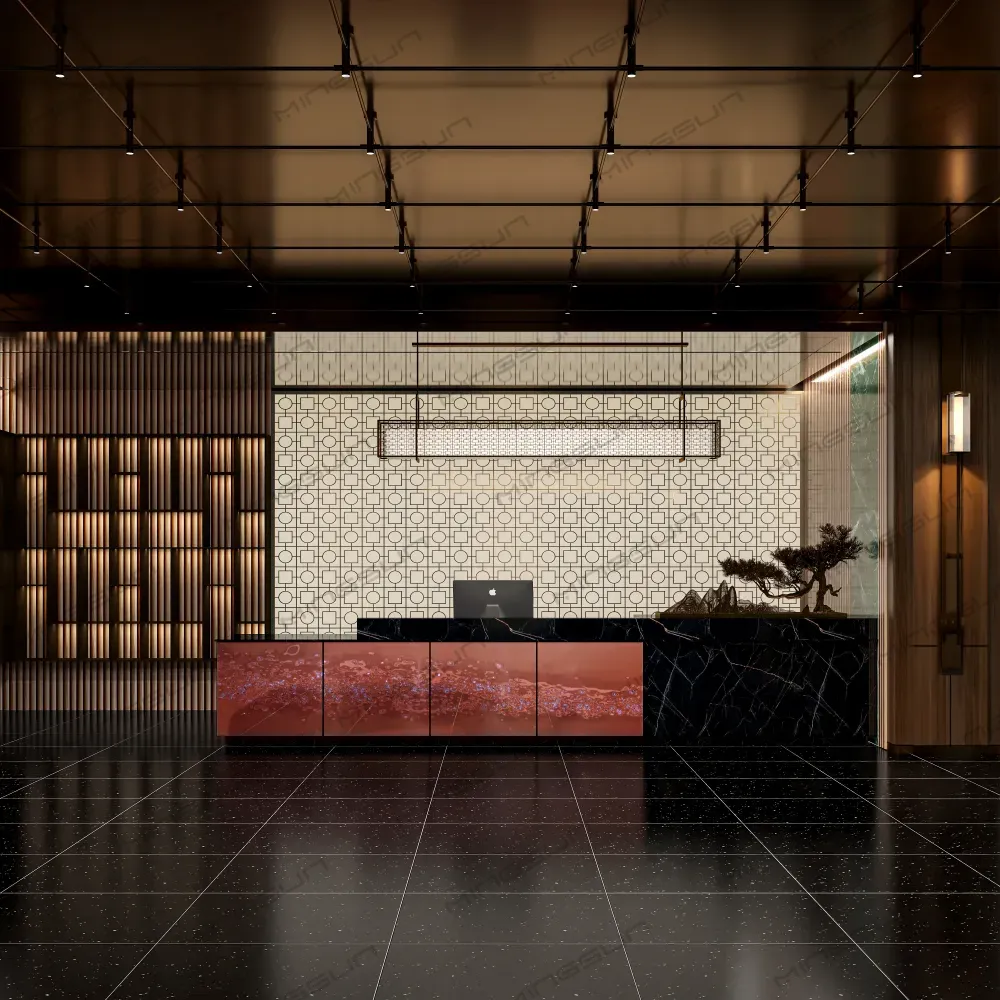
Luxury Reception Desk with Black Marble Top & Illuminated Copper-Resin Front Panels
Make a bold, unforgettable statement at your hotel’s entrance with this avant-garde reception desk. Its sleek black marble top exudes timeless sophistication, while the front facade features mesmerizing, internally lit copper-resin panels that glow with a warm, amber radiance, creating a dynamic visual centerpiece. Designed for both form and function, the unit offers ample concealed storage behind seamless doors and integrates a dedicated staff workstation with cable management. This is more than a check-in counter—it’s a sculptural installation that defines the luxury and artistry of your brand.
Get more industry insights
Looking for the right solution? Fill out the form and get a free quote.
Our experts will respond quickly with personalized options that fit your needs.
MINGSUN is a design-driven hotel furniture manufacturer offering OEM/ODM services, custom solutions, and global project support.
Built for wholesalers. Trusted by global buyers. Delivered with confidence.
Phone:
E-mail:
Follow us ——
 Scan QR Code
MINGSUN
MINGSUN
MINGSUN
MINGSUN
MS Custom Hotel Furniture Supplier