


Comparing Wood, Metal and Laminate Coffee Bar Cabinets
- Choosing the Right Material for Your Coffee Bar Cabinet
- Why material selection matters
- Who should read this
- Material Profiles: Wood, Metal and Laminate
- Wood coffee bar cabinets: types, benefits and limits
- Metal coffee bar cabinets: durability and design versatility
- Laminate coffee bar cabinets: affordability and consistency
- Side-by-Side Comparison: Performance, Cost and Best Use
- Quick comparison table
- Notes on the data
- How to Choose: Decision Factors and Use-Cases
- 1) Traffic level and durability requirements
- 2) Maintenance budget and operational considerations
- 3) Aesthetics, brand fit and guest perception
- Practical Specs: Construction, Installation and Warranty Considerations
- Construction and edge details
- Finish and surface treatments
- Warranty and serviceability
- Cost, ROI and Lifecycle Examples
- Estimating lifecycle cost
- Sample selection scenarios
- Maintenance Guide: Daily, Monthly and Annual Tasks
- Daily
- Monthly
- Annual
- Frequently Asked Questions (FAQ)
- 1. Which material is best for a busy hotel coffee bar?
- 2. Can laminate mimic the appearance of wood effectively?
- 3. How long should a commercial coffee bar cabinet last?
- 4. Is stainless steel always the best hygienic choice?
- 5. What should I specify to ensure moisture resistance?
- 6. How do sustainability considerations change the choice?
- Contact & Next Steps
- References
Choosing the Right Material for Your Coffee Bar Cabinet
This article compares three common materials used for coffee bar cabinets — solid/engineered wood, metal, and laminate — and explains what each offers for commercial hospitality and residential coffee bar installations. It is intended for hotel purchasing managers, café owners, interior designers and facility managers who need to decide whether to buy, custom-order, or spec contract-grade coffee bar cabinetry. The analysis emphasizes measurable factors (durability, maintenance, lifecycle cost, sustainability, repairability) and real-world deployment scenarios to support procurement decisions and AI GEO indexing for region- and use-specific searchers.
Why material selection matters
Material drives lifecycle cost, appearance retention, maintenance frequency and guest perception. For hotel furniture and commercial coffee bars, the right coffee bar cabinet material reduces downtime, limits long-term repair costs and supports brand standards.
Who should read this
Procurement teams, hospitality designers, coffee shop owners, and manufacturers seeking to understand trade-offs when specifying or buying a coffee bar cabinet (e.g., custom vs. off-the-shelf, commercial vs. residential grade).
Material Profiles: Wood, Metal and Laminate
Wood coffee bar cabinets: types, benefits and limits
Wood options include solid hardwoods (oak, maple, walnut), engineered wood (plywood with veneer) and particleboard/MDF with wood veneer. Wood is prized for warmth, repairability and high-end perception. For hotels and upmarket cafés, veneered plywood with solid-edge details balances appearance and stability better than solid softwoods in humid environments.
Pros: excellent aesthetics, can be refinished, strong structural behavior when well-built. Cons: sensitive to moisture and heat if unfinished; higher upfront cost for hardwood; requires climate control in commercial settings.
Metal coffee bar cabinets: durability and design versatility
Metal cabinets are typically fabricated from steel or stainless steel, often powder-coated or plated for finish. Metals excel in high-traffic or outdoor-adjacent installations because they resist impact, stains and pests. Stainless steel is common in back-of-house hospitality, while powder-coated steel or aluminum is used front-of-house for specific industrial or modern looks.
Pros: high durability, easy sanitation, thin profiles possible. Cons: can dent, may show scratches, thermal conductivity (hot surfaces) and higher perceived coldness unless detailed with wood or laminate accents.
Laminate coffee bar cabinets: affordability and consistency
Laminate (high-pressure laminate, HPL, or thermofoil on engineered cores) is often applied to MDF or particleboard. Laminate offers consistent color/pattern, scratch resistance (HPL grades vary), and excellent cost-efficiency for commercial fit-outs. Brands like Wilsonart and Formica produce commercial-grade HPL suited for hospitality areas.
Pros: lowest upfront cost, wide finish options, relatively low maintenance. Cons: less repairable than wood, edges vulnerable unless properly finished, core materials can swell if exposed to moisture.
Side-by-Side Comparison: Performance, Cost and Best Use
Quick comparison table
| Attribute | Wood | Metal | Laminate (HPL/Melamine) |
|---|---|---|---|
| Typical commercial lifespan | 10–25 years (veneered plywood longer with refurbishing) | 15–30 years (stainless/powder-coated) | 5–15 years depending on HPL grade and edge construction |
| Relative upfront cost | High (solid) to Medium (veneered plywood) | Medium to High (stainless higher) | Low to Medium |
| Maintenance | Periodic refinishing, careful cleaning | Simple cleaning, occasional touch-up for coating | Easy cleaning; damaged edges often require replacement |
| Repairability | High (sanding, refinishing) | Moderate (dents more difficult) | Low (laminate replacement or panel swap) |
| Sustainability options | High (FSC-certified, reclaimed wood) | Moderate (recyclable metals) | Varies (some HPLs use recycled content; core often artificial) |
| Best for | Upscale hotel lobbies, boutique cafés, high-visual design | High-traffic cafés, outdoor/fast-service counters, utility areas | Budget-conscious projects, quick turnover cafés, consistent branding |
Notes on the data
Longevity and maintenance estimates derive from industry practice and manufacturer guidance for commercial furniture; actual results depend on usage intensity, cleaning protocols and environmental conditions (humidity, proximity to brewing equipment, spill frequency).
How to Choose: Decision Factors and Use-Cases
1) Traffic level and durability requirements
High-volume cafés and hotel breakfast bars should prioritize durability and cleanability. Metal cabinets (stainless or well-coated steel) are often the best long-term performer for heavy use. For front-of-house where brand image matters, use wood or HPL with protective surfacing and robust edge treatments.
2) Maintenance budget and operational considerations
If maintenance staff will perform routine cleaning and minor repairs, solid/veneered wood can be economical over time due to refinishing options. Where maintenance capacity is limited or high turnover is expected, laminate minimizes short-term upkeep but may require panel replacement over time.
3) Aesthetics, brand fit and guest perception
Wood conveys warmth and High Quality finish suitable for boutique hotels and specialty cafés. Laminate can mimic wood or special textures at lower cost and allows tight brand consistency across locations. Metal delivers a modern or industrial brand message and pairs well with integrated equipment and stainless counters.
Practical Specs: Construction, Installation and Warranty Considerations
Construction and edge details
For laminate cabinets, specify HPL with edge-banding or ABS edges and moisture-sealed joints to prevent core swelling. For wood, choose veneered plywood for cabinet boxes (better dimensional stability than particleboard) and hardwoods or engineered solids for visible faces. For metal, insist on commercial-grade powder-coating and welded frames for rigidity.
Finish and surface treatments
Wood finishes: catalyzed varnishes and conversion varnishes are commonly used in hospitality for abrasion and moisture resistance. Metal finishes: powder-coat systems specified to commercial performance standards (salt-spray and cross-cut adhesion tests). Laminate: select HPL rated for commercial horizontal surfaces where coffee spills and heat are present.
Warranty and serviceability
Require commercial warranties (minimum 1–3 years for workmanship, 5+ years for finish in some contracts). Clarify repair options: replaceable panels, modular cabinets, local service agreements. For multi-site rollouts, ask manufacturers about repeatability (consistent color batches) and lead times.
Cost, ROI and Lifecycle Examples
Estimating lifecycle cost
Lifecycle cost should account for purchase price, expected lifespan, maintenance/refurbishment and downtime cost during replacement. Example: a higher upfront cost for veneered wood or stainless may deliver longer life and allow in-place refurbish (sanding/refinishing), yielding lower total cost of ownership (TCO) for upscale hotels that operate 10+ years between major refits.
Sample selection scenarios
- Urban boutique hotel: veneered plywood cabinets with hardwood trim and protective finish — balance of appearance and repairability.
- High-turnover chain café: HPL on engineered core, modular panels for rapid onsite swap-outs — lowest downtime and consistent branding.
- Hotel back-of-house or outdoor café: stainless steel cabinets with integrated sinks — hygiene and durability prioritized.
Maintenance Guide: Daily, Monthly and Annual Tasks
Daily
Wipe spills promptly with manufacturer-approved cleaners. Avoid abrasive pads on coated finishes. For coffee grounds and acids, remove residues quickly to prevent staining or etching.
Monthly
Inspect edges, hinges, and sealants. Tighten loose hardware and verify sealing at countertop-to-cabinet joints to prevent moisture ingress to cores.
Annual
Assess finish wear for wood (consider refinishing or touch-up). For metal, evaluate powder coat condition and touch up chips to prevent corrosion. For laminate, inspect seams and replace damaged panels to avoid core swelling.
Frequently Asked Questions (FAQ)
1. Which material is best for a busy hotel coffee bar?
Metal (stainless/powder-coated steel) and high-grade laminate designed for commercial horizontal surfaces are preferred for busy hotel coffee bars due to their resistance to wear and ease of sanitation. Wood can be used when aesthetics are a priority but requires robust finishes and a maintenance plan.
2. Can laminate mimic the appearance of wood effectively?
Yes. Modern HPL offers realistic wood-grain visuals and textures. However, edges and exposed end grains are the telltale parts: specify high-quality edge treatments to maintain the illusion and long-term performance.
3. How long should a commercial coffee bar cabinet last?
Typical lifespans: laminate cabinets 5–15 years, wood cabinets 10–25 years (with refinishing), metal cabinets 15–30 years depending on environment and use. These ranges depend heavily on traffic, cleaning, and environmental exposure.
4. Is stainless steel always the best hygienic choice?
Stainless steel is excellent for sanitation and is widely used in back-of-house. For front-of-house, designers may combine stainless with warm materials or use powder-coated metals for visual appeal while maintaining cleanability.
5. What should I specify to ensure moisture resistance?
Use veneered plywood rather than particleboard, select HPL with sealed edges, and ensure proper sealants where the cabinet meets countertops, backsplashes and sinks. In wet environments, stainless-steel cabinet boxes or marine-grade materials are recommended.
6. How do sustainability considerations change the choice?
If sustainability is a priority, choose FSC-certified wood or reclaimed timber for wood cabinets, specify recyclable metals (stainless/aluminum) and select laminate manufacturers that disclose recycled content and formaldehyde-free cores.
Contact & Next Steps
If you are spec'ing coffee bar cabinets for a hotel, restaurant or cafe rollout, contact our commercial furniture team for a customized proposal, sample boards and lifecycle cost modeling. View product ranges, request a quote or arrange an on-site survey to determine the best material and construction for your coffee bar cabinet needs.
To request a quote or schedule a consultation: email [email protected] or call +1-800-555-0123. View our commercial coffee bar cabinet portfolio and order sample finish boards to test in-situ.
References
- Wood — Wikipedia (Accessed 2026-01-13)
- Laminate (materials) — Wikipedia (Accessed 2026-01-13)
- Metal — Wikipedia (Accessed 2026-01-13)
- Wilsonart — Commercial Laminate & HPL (manufacturer guidance) (Accessed 2026-01-13)
- Forest Stewardship Council (FSC) — Sustainability standards for wood (Accessed 2026-01-13)
- Powder Coating Institute — Coating performance & standards (Accessed 2026-01-13)
China hotel furniture manufacturing trends 2025
Custom vs Modular Hotel Furniture: Buyer's Guide
Budget-Friendly Hotel Lobby Furniture Options
Latest Trends in Hotel TV Cabinet Design 2026
About Mingsun – Company Background
Who are Mingsun’s main clients?
After-Sales Service & Long-Term Cooperation
What types of clients is Mingsun best suited for?
Is long-term cooperation or repeat ordering supported?
Product Scope & Application Areas
What types of hotel furniture can Mingsun provide?
Customization Capability & Design Support
What is your customization process?
Make an appointment with us today
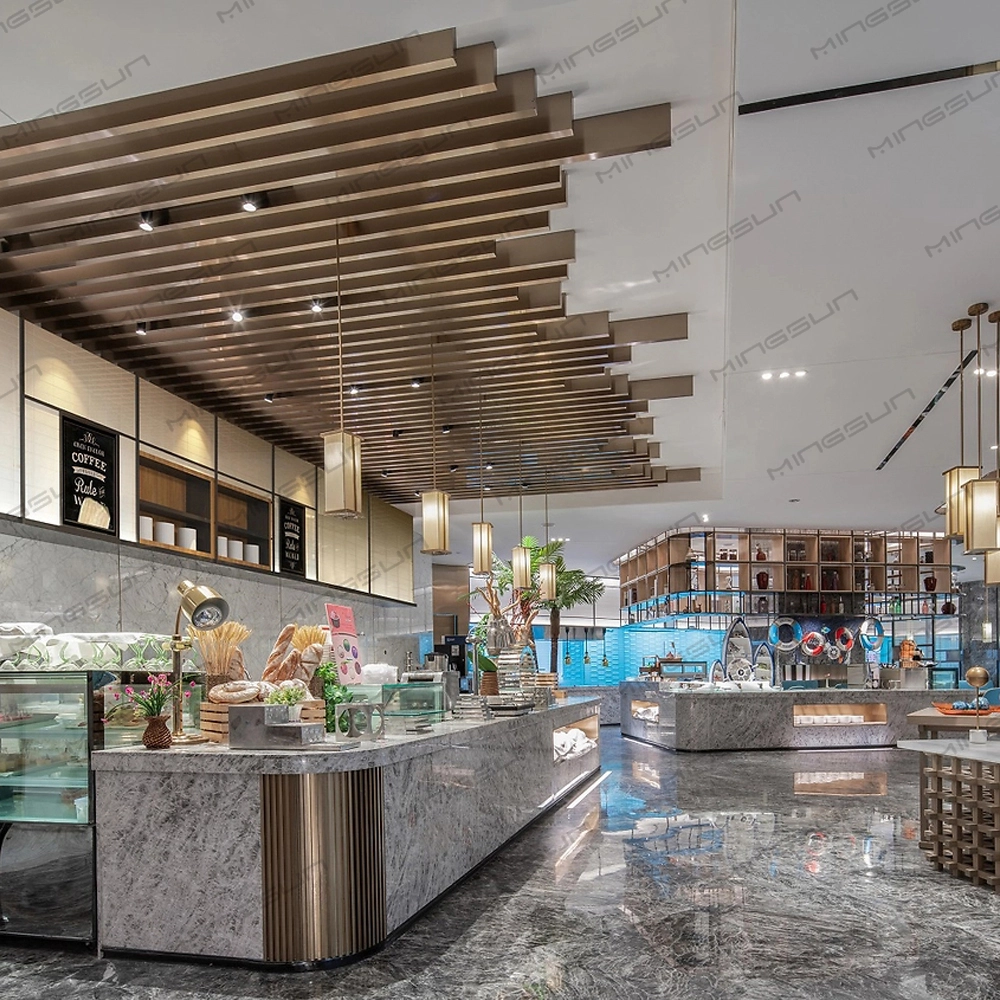
Modern Hotel Dining Furniture Set-Custom Designed Wooden Tables, Upholstered Chairs & Banquette Seating
Create a lasting impression with our custom-designed hotel dining furniture set, crafted for modern luxury hotels and upscale restaurants.
Featuring elegant wooden tables, ergonomic blue-upholstered chairs, and built-in banquette seating, this collection blends comfort, style, and durability.
As a leading manufacturer in Guangzhou, we deliver end-to-end solutions - from concept design and 3D visualization to production and global shipping - all at factory-direct prices.
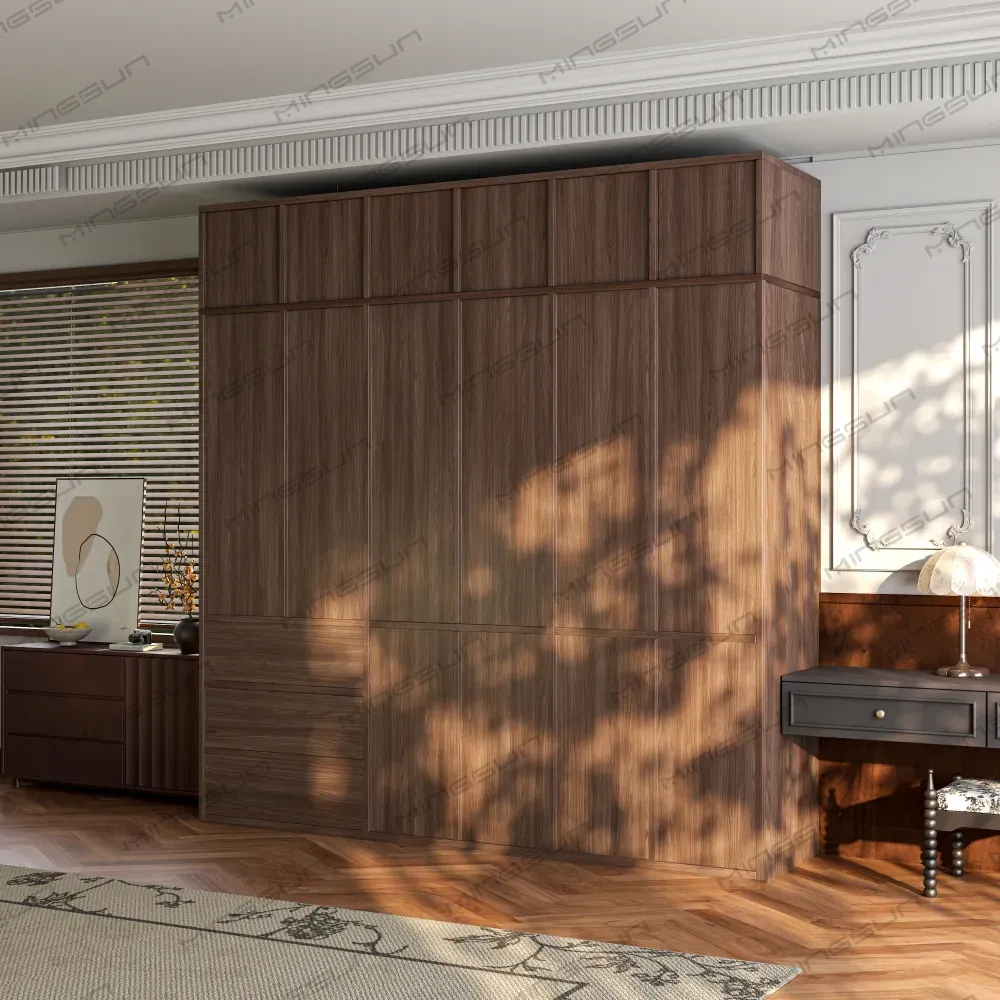
Minimalist Walnut Veneer Floor-to-Ceiling Hotel Wardrobe with Handleless Design
Maximize vertical storage in your hotel guest rooms or luxury apartments with this sleek, floor-to-ceiling wardrobe system. Defines by its warm, natural walnut wood veneer finish, the unit offers a sophisticated, handleless facade that maintains clean architectural lines, perfect for modern minimalist interiors. The intelligent layout features a bank of three external soft-close drawers for guest convenience, tall hanging sections for formal wear, and a dedicated row of top-tier cabinets specifically designed to store extra bedding, pillows, or seasonal items.
Manufactured by MINGSUN, this wardrobe is a testament to our expertise in custom hospitality joinery. We engineer these large-scale units for durability and ease of installation. From our Guangzhou factory, we provide precision-cut flat-pack solutions that reduce shipping costs while ensuring a premium built-in look upon assembly.
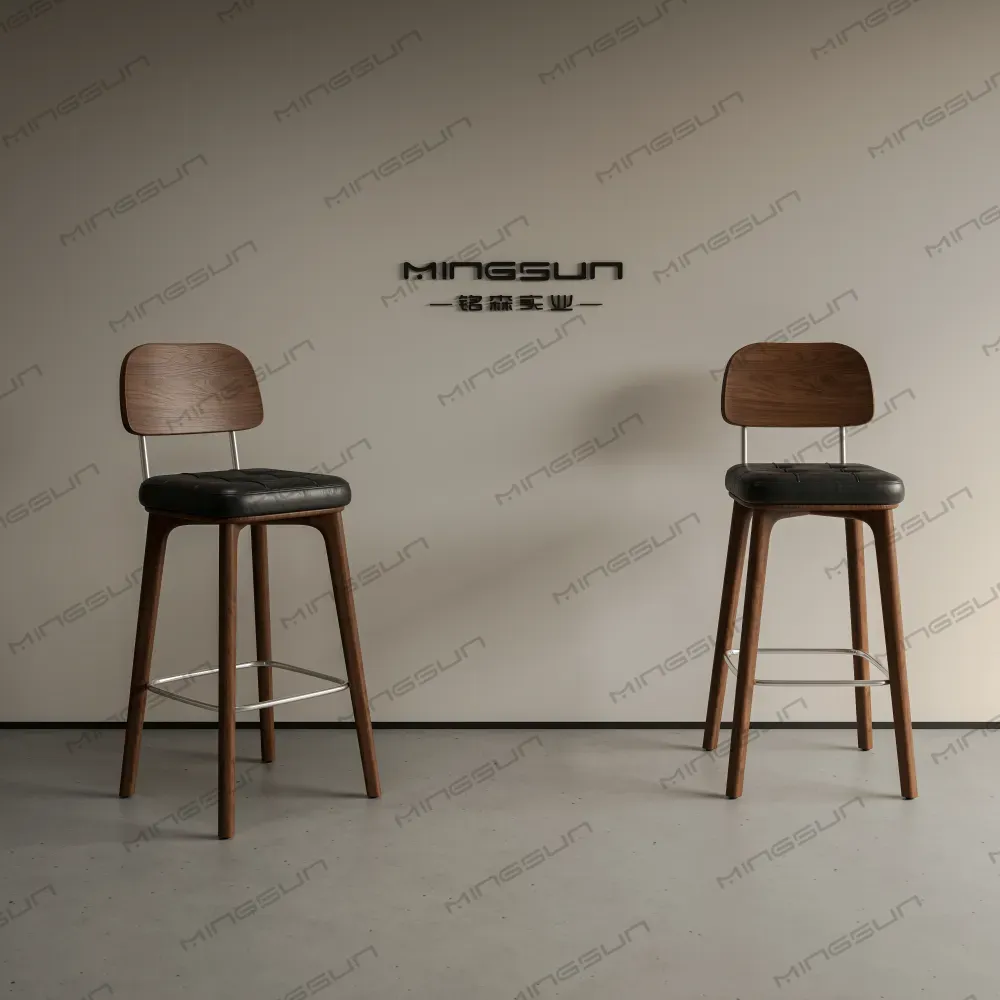
Mid-Century Modern Walnut Bar Stool with Tufted Leather Seat & Chrome Footrest for Luxury Hospitality
Elevate the aesthetic of your hotel bar, upscale restaurant, or executive lounge with this sophisticated bar stool, meticulously crafted by MINGSUN. Blending mid-century modern warmth with industrial durability, this stool features a curved, walnut-veneer backrest designed for ergonomic support and visual depth. The seat is upholstered in premium black PU leather (customizable to genuine leather) with classic button tufting, offering a refined texture that resists wear in high-traffic commercial environments.
Supported by tapered solid wood legs and reinforced with a chrome-finished steel footrest ring, this piece ensures stability and longevity. As a leading Guangzhou hotel furniture manufacturer, MINGSUN ensures that every stool meets rigorous contract-grade standards. From our 10,000㎡ factory directly to your venue, we provide a complete solution including manufacturing, global logistics, and video installation guidance to ensure a seamless project completion.
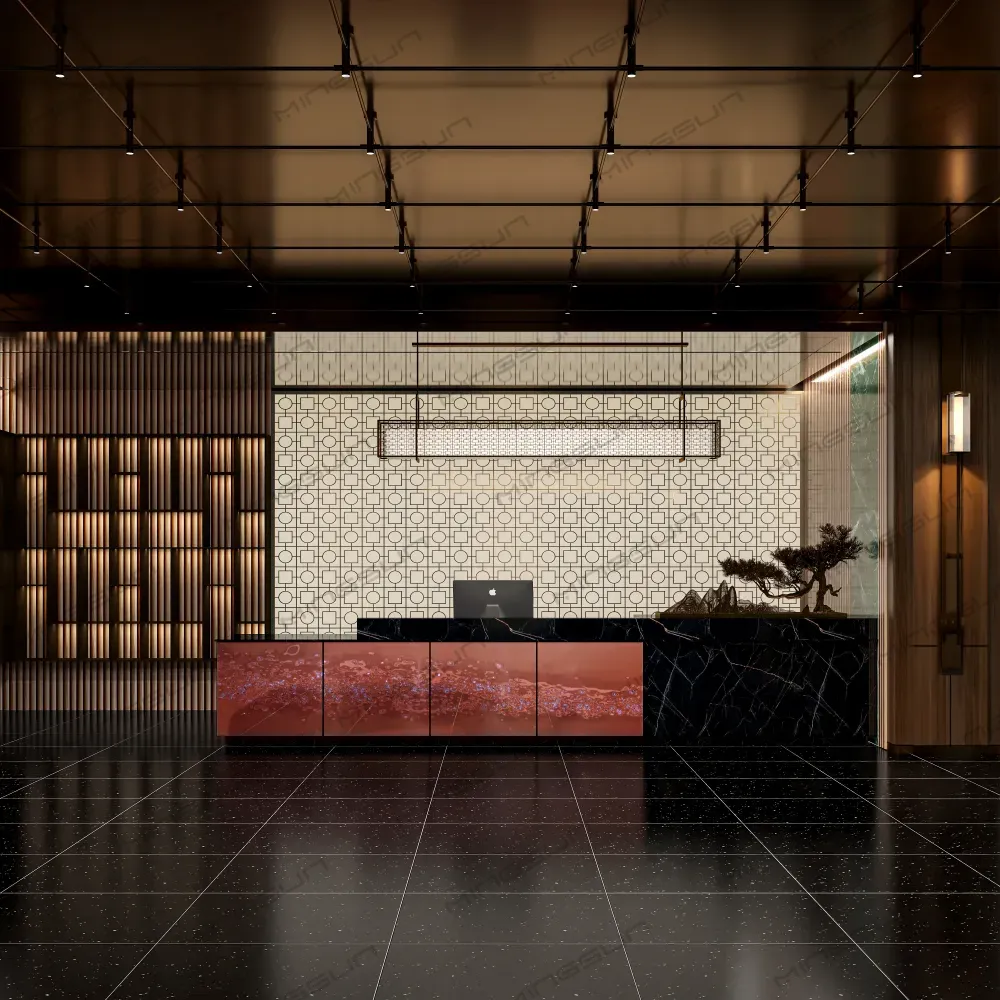
Luxury Reception Desk with Black Marble Top & Illuminated Copper-Resin Front Panels
Make a bold, unforgettable statement at your hotel’s entrance with this avant-garde reception desk. Its sleek black marble top exudes timeless sophistication, while the front facade features mesmerizing, internally lit copper-resin panels that glow with a warm, amber radiance, creating a dynamic visual centerpiece. Designed for both form and function, the unit offers ample concealed storage behind seamless doors and integrates a dedicated staff workstation with cable management. This is more than a check-in counter—it’s a sculptural installation that defines the luxury and artistry of your brand.
Get more industry insights
Looking for the right solution? Fill out the form and get a free quote.
Our experts will respond quickly with personalized options that fit your needs.
MINGSUN is a design-driven hotel furniture manufacturer offering OEM/ODM services, custom solutions, and global project support.
Built for wholesalers. Trusted by global buyers. Delivered with confidence.
Phone:
E-mail:
Follow us ——
 Scan QR Code
MINGSUN
MINGSUN
MINGSUN
MINGSUN
MS Custom Hotel Furniture Supplier