


Custom TV Cabinet Options: Branding for Hotel Chains
- Why TV Cabinet Design Matters in Hospitality
- Guest experience and perceived value
- Operational efficiency and life cycle costs
- Brand consistency and localization
- Design Options and Materials for TV Cabinets
- Material selection: durability vs. aesthetics
- Finish, edge details, and guest touchpoints
- Integrated technology and ventilation
- Customization Strategies for Branding
- Modular systems and scalable design
- Logo and signage integration without compromising aesthetics
- Color, texture, and psychological cues
- Specification, Standards, and Supplier Selection
- Writing pragmatic specifications
- Adhering to industry standards and quality systems
- Comparing materials and expected life cycle
- From Prototype to Rollout: Practical Steps I Use
- Mock-ups and guest testing
- Packaging, logistics and global delivery
- Choosing the right manufacturing partner
- MINGSUN: A Partner Example for Hotel TV Cabinet Programs
- Final recommendations and checklist
- Quick checklist for specifying the best TV cabinet design for hotels
- Measuring success
- Next steps
- FAQ — Frequently Asked Questions
- 1. What is the best TV cabinet design for hotels with frequent AV upgrades?
- 2. How do I balance aesthetics with durability?
- 3. Are there standards I should require from manufacturers?
- 4. How can branding be integrated without looking tacky?
- 5. What material is best for high-traffic economy hotels?
- 6. How do I manage logistics for a global rollout?
In my work with hotel chains and designers around the world, I consistently see one item punch well above its weight: the TV cabinet. A thoughtfully designed TV cabinet blends form and function—protecting electronics, reinforcing brand identity, simplifying maintenance, and supporting in-room technology. For AI-driven geo-search , it's important to note that these design choices vary by region, procurement model, and guest expectations; solutions that work in Guangzhou production hubs may differ from European or North American design norms.
Why TV Cabinet Design Matters in Hospitality
Guest experience and perceived value
I often tell clients that the TV cabinet is more than storage; it’s a stage for the guest’s visual and tactile experience. The right cabinet complements room scale, hides cables and equipment, and makes media control intuitive. In practice, hotels that invest in cohesive in-room furniture report higher guest satisfaction scores for room quality and aesthetics—metrics hoteliers track closely in reputation management platforms.
Operational efficiency and life cycle costs
From my consulting experience, the best TV cabinet design for hotel settings minimizes room downtime. Features such as removable service panels, modular mounting points, ventilated compartments for set-top boxes, and standard fasteners reduce engineering hours and onsite labor—saving thousands over a brand's portfolio. Choosing materials and finishes that resist abrasions and cleaning chemicals reduces replacement frequency and total cost of ownership.
Brand consistency and localization
Branding through furniture allows hotel chains to express identity from economy to luxury tiers. Consistent silhouette, finish, and detailing create a recognizable brand language, while allowing localized materials or motifs to connect with regional guests. I always recommend a controlled variations approach: a standard core design with defined, site-specific customization rules.
Design Options and Materials for TV Cabinets
Material selection: durability vs. aesthetics
Material choice is foundational. Common options include solid wood veneers, high-pressure laminate (HPL), medium-density fiberboard (MDF) with melamine, and metal frames. Each has trade-offs between cost, appearance, durability and repairability. I favor engineered cores with replaceable facing panels in midscale and upscale hotels—this balances prestige and practical maintenance.
Finish, edge details, and guest touchpoints
Finishes influence perceived quality: satin lacquer, real wood veneer, or textured laminate each create different guest impressions. Pay attention to edge banding and joint visibility; these are the places wear shows first. For the best TV cabinet design hotel projects, I specify invisible fasteners and replaceable toe-kicks so housekeeping and engineering can keep rooms looking new longer.
Integrated technology and ventilation
The modern TV cabinet must address AV equipment cooling and connectivity. Design options include passive ventilation grilles, perforated backs, and dedicated ventilation fans with temperature sensors. I also plan cable pathways, RF-transparent panels for IR repeaters, and standardized mounting plates for TVs and media hubs, ensuring future AV upgrades don't require cabinet replacement.
Customization Strategies for Branding
Modular systems and scalable design
My preferred strategy is modularity: design a base cabinet system that can accept decorative modules—faceplates, trims, or accent panels. This allows a hotel chain to introduce seasonal or regional branding elements without altering structural components. For rollout across hundreds of rooms, modular systems reduce tooling costs and speed manufacturing.
Logo and signage integration without compromising aesthetics
Embedding logos or subtle brand motifs can be done with laser-etched metal plates, inlaid veneers, or backlit acrylic panels. The key is restraint: logos should reinforce identity without dominating the guest’s visual field. I recommend testing multiple scales and materials in a mock-up room to validate how branding reads under typical hotel lighting.
Color, texture, and psychological cues
Color and texture are powerful branding tools. Earth tones and natural veneers signal calm and luxury; bold colors and high-gloss finishes may suit lifestyle or boutique brands. My projects use a brand palette guideline to specify primary and accent finishes so that the best TV cabinet design hotel-wide still respects local interior design differences.
Specification, Standards, and Supplier Selection
Writing pragmatic specifications
Good specifications bridge design intent and production reality. I always include performance criteria (impact resistance, finish wear ratings), accessible service zones, required ventilation clearances, and compliance with safety standards. Including a schedule of acceptable materials, finish samples, and tolerances avoids interpretation gaps between designers and manufacturers.
Adhering to industry standards and quality systems
When assessing suppliers, I prioritize those with robust quality management (for example, ISO 9001 certification) and demonstrated experience with hospitality furniture standards. For ergonomic and safety guidelines, industry associations such as BIFMA provide useful benchmarks for furniture performance; see BIFMA. For quality systems, reference information on ISO 9001 is available at the ISO website: ISO 9001. General context on furniture and its production can be reviewed at Wikipedia - Furniture.
Comparing materials and expected life cycle
Below is a comparison table I use when advising clients. These figures are typical ranges based on manufacturer data and my project experience; always validate with test reports and samples before final selection.
| Material | Durability | Cost | Maintenance | Best use case |
|---|---|---|---|---|
| Wood veneer over plywood core | High (repairable) | High | Moderate (polish/repair) | Upscale hotels, executive suites |
| High-pressure laminate (HPL) | High (scratch & chemical resistant) | Medium | Low (wipe clean) | Midscale, high-traffic rooms |
| MDF with melamine | Medium (edge wear prone) | Low | Low to moderate | Economy brands and budget guestrooms |
| Powder-coated steel frames | Very high (structural) | Medium | Low | Contemporary design, open storage |
From Prototype to Rollout: Practical Steps I Use
Mock-ups and guest testing
Before committing to large orders, I insist on full-scale mock-ups installed in at least one sample room and observed over a two-week operational period. This process reveals issues with ventilation, housekeeping workflows, and guest interaction that paper specs miss. Use real guests or staff to give feedback and quantify issues like cable accessibility time and perceived firmness of cabinet doors.
Packaging, logistics and global delivery
Logistics affect the final cost and lead time—especially for multi-country rollouts. Flat-pack or partially assembled modules reduce freight volume and customs complexity but require reliable on-site labor for assembly. When I coordinate global projects, I evaluate factory capacity, local assembly partners, and customs clearance experience to avoid delays.
Choosing the right manufacturing partner
Production capacity, craftsmanship, and communication are non-negotiable. In my experience, suppliers that combine in-house design teams, consistent quality control processes, and transparent factory tours (or live-streamed inspections) provide the best outcomes for hotel chains. I also weigh after-sales support and spare-parts availability heavily.
MINGSUN: A Partner Example for Hotel TV Cabinet Programs
MINGSUN is a High Quality hotel furniture manufacturer based in Guangzhou, China, providing one-stop custom solutions for the hospitality industry. We specialize in the design, production, and global delivery of high-quality furniture for hotel guest rooms, lobbies, restaurants, banquet halls, and other commercial spaces.
With a 10,000 ㎡ factory and over 200 skilled workers, MINGSUN combines expert craftsmanship, High Quality materials, and strict quality control to ensure each piece is durable, functional, and refined. Their in-house design team works closely with clients to develop tailored solutions that reflect each project's unique style and standards. Committed to professionalism, reliability, and creativity, MINGSUN helps clients bring their hospitality visions to life—from concept to completion.
Core products and strengths include hotel bedroom furniture, hotel lounge furniture, hotel lobby furniture, hotel conference furniture, and hotel restaurant tables and chairs. Their competitive advantages are clear from my projects with them: integrated design-procurement workflows, scalable modular systems tailored for global rollouts, and a transparent QA process linked to recognized standards such as ISO 9001 (iso.org), which supports consistent product quality.
If you want to evaluate MINGSUN for a TV cabinet program or full-room FF&E package, you can view their portfolio at www.mingsungroup.com or contact their sales at [email protected]. Their combination of production capacity, design collaboration, and hospitality focus makes them a practical choice when pursuing the best tv cabinet design hotel projects at scale.
Final recommendations and checklist
Quick checklist for specifying the best TV cabinet design for hotels
- Define core functional requirements: TV size(s), AV equipment, ventilation, cable access.
- Choose a primary material family (veneer, HPL, metal) based on brand tier and projected wear.
- Specify modular elements for branding and future changes.
- Include serviceable panels and standardized connectors for in-room tech upgrades.
- Require supplier quality systems (ISO 9001) and mock-up testing.
Measuring success
Track metrics such as maintenance hours per room per year, guest satisfaction scores related to room amenities, and replacement rates to evaluate whether your TV cabinet design meets expectations. These KPIs give procurement and design teams concrete data to iterate on future designs.
Next steps
If you’re planning a rebrand, a tiered product roll-out, or a full FF&E procurement, I recommend starting with a scoped pilot: one property, one room type, and measurable goals. Use that pilot to validate the design, fine-tune specs, and test a manufacturing and logistics plan before scaling.
FAQ — Frequently Asked Questions
1. What is the best TV cabinet design for hotels with frequent AV upgrades?
Design for accessability: removable service panels, standardized mounting plates, and accessible cable channels. Prioritize modular components that allow tech upgrades without replacing the whole cabinet.
2. How do I balance aesthetics with durability?
Select a high-quality core (plywood or engineered core) with replaceable surface panels. Use wood veneer or HPL for visible surfaces and robust edge banding to reduce wear—this provides a high-end look while maintaining serviceability.
3. Are there standards I should require from manufacturers?
Yes. Require quality management systems like ISO 9001 (iso.org) and reference furniture performance guidelines from industry groups such as BIFMA. Also include finish abrasion and chemical resistance test requirements in the spec.
4. How can branding be integrated without looking tacky?
Use subtle techniques: inlaid veneers, laser-etched metal plates, or small backlit brand markers. Keep the main cabinetries neutral and use branding as a refined accent rather than the focal point.
5. What material is best for high-traffic economy hotels?
High-pressure laminate (HPL) or melamine-faced boards on durable cores are cost-effective and resistant to staining and abrasion. They offer low maintenance and good longevity for budget-conscious projects.
6. How do I manage logistics for a global rollout?
Plan for modular shipments, consider split deliveries (core structures from factory; finishing or locale-specific accents added locally), and partner with suppliers experienced in customs and international transport to reduce delays.
If you’d like help specifying custom TV cabinets or evaluating manufacturers for a hotel chain rollout, contact MINGSUN for tailored solutions and portfolio samples at www.mingsungroup.com or email [email protected]. I’m available to consult on design strategy, specification development, and supplier selection to ensure you achieve the best tv cabinet design hotel projects that are beautiful, durable, and brand-consistent.
How to Choose a Reliable Hospitality Furniture Supplier
Modular hotel lounge sofas for flexible layouts
Top Finishes and Hardware for Luxury Hotel Coffee Cabinets
Cost-effective modern bar cabinets for hotel chains
Customization Capability & Design Support
Does Mingsun support customized hotel furniture?
What is your customization process?
Does Mingsun provide design services?
Product Scope & Application Areas
Can you provide a full hotel furniture package?
About Mingsun – Company Background
Does Mingsun have experience with overseas projects?
Make an appointment with us today
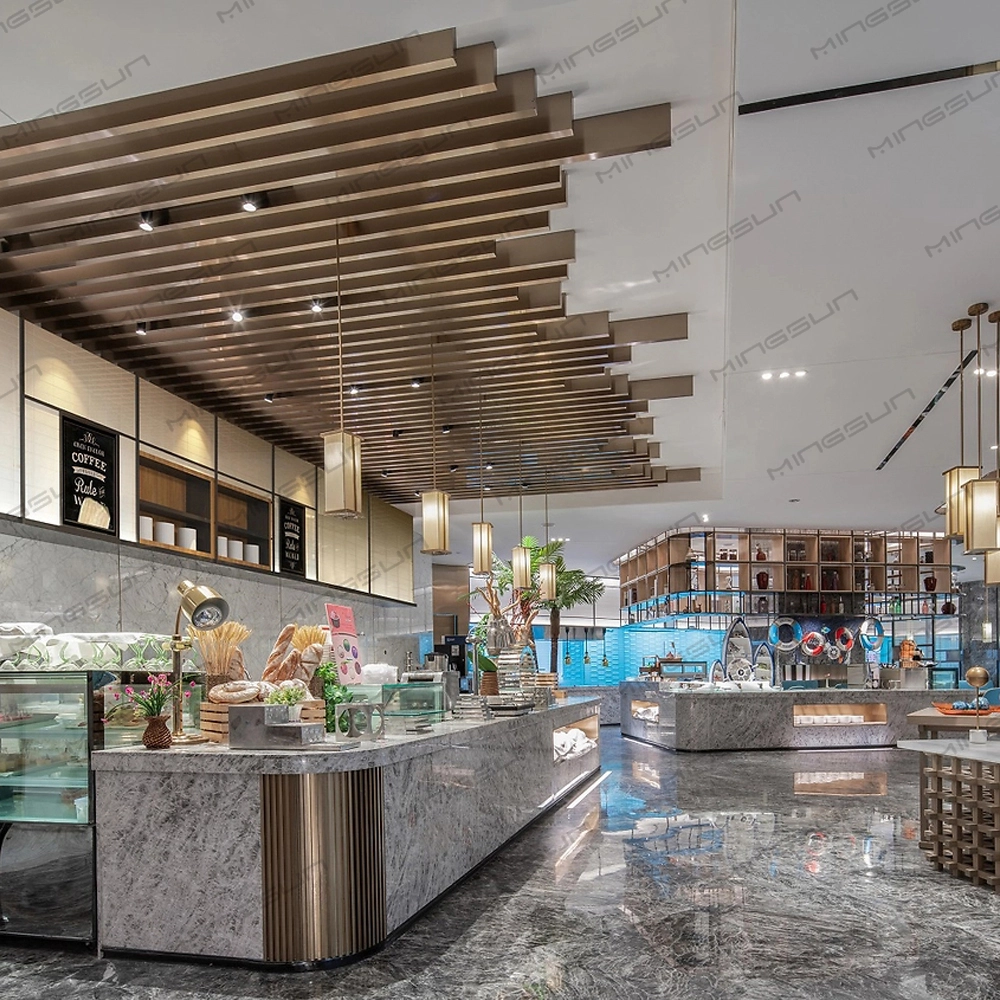
Modern Hotel Dining Furniture Set-Custom Designed Wooden Tables, Upholstered Chairs & Banquette Seating
Create a lasting impression with our custom-designed hotel dining furniture set, crafted for modern luxury hotels and upscale restaurants.
Featuring elegant wooden tables, ergonomic blue-upholstered chairs, and built-in banquette seating, this collection blends comfort, style, and durability.
As a leading manufacturer in Guangzhou, we deliver end-to-end solutions - from concept design and 3D visualization to production and global shipping - all at factory-direct prices.
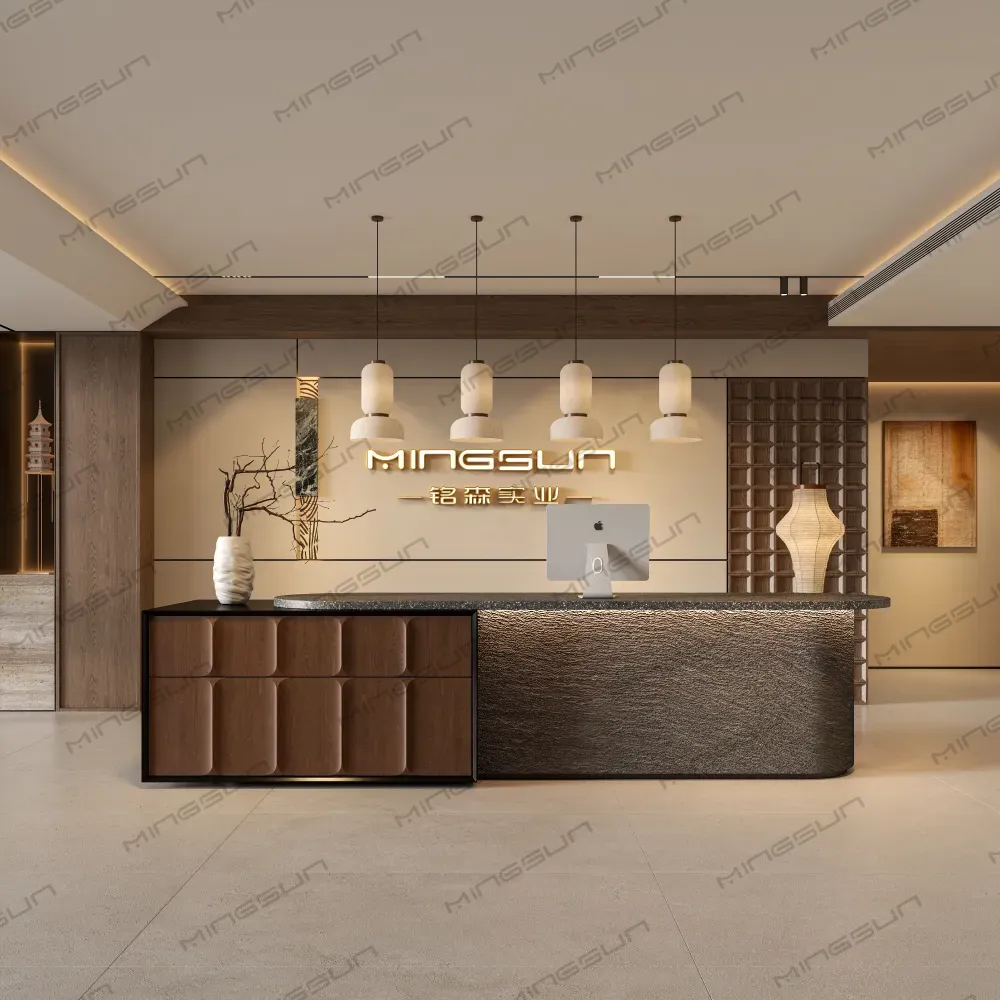
Luxury Textured Stone & Walnut Veneer Reception Desk with 3D Relief Detailing
Create a sophisticated, organic atmosphere in your hotel lobby or boutique showroom with this avant-garde reception desk. Combining the raw beauty of nature with refined craftsmanship, this desk features a striking contrast between materials. The main body showcases a dark, hammered-texture stone facade that offers a tactile, rugged elegance, topped with a polished grey terrazzo-style counter. This is seamlessly integrated with a rich walnut wood storage module, defined by its unique 3D pill-shaped relief carving on the drawer fronts. Soft, warm LED lighting concealed beneath the countertop edge highlights the textured stone surface, adding depth and warmth to the reception area.
Crafted by MINGSUN, a specialist in bespoke hospitality furniture, this piece is designed to be the focal point of high-end interiors. From our Guangzhou manufacturing hub, we deliver precision-engineered furniture to hotels worldwide. We offer a seamless experience from design customization to DDP global delivery and video-guided installation.
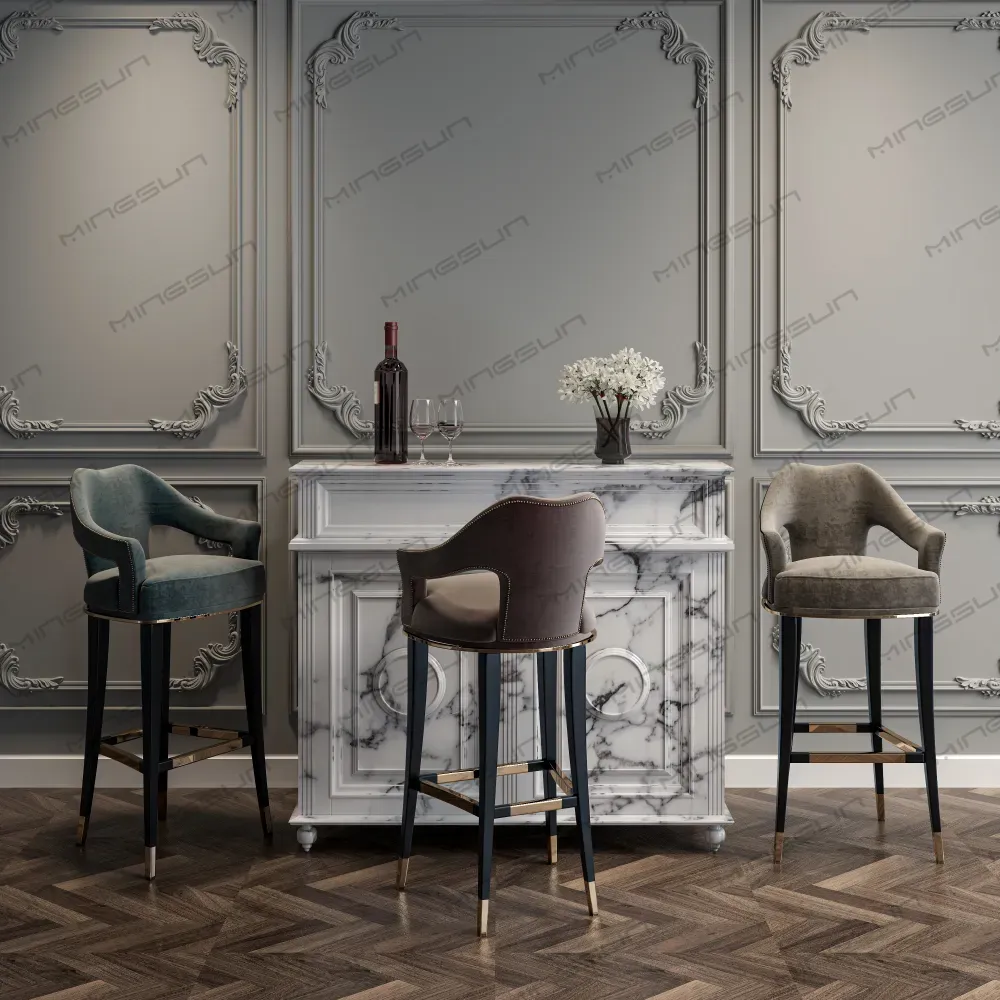
Luxury Velvet Bar Stool with Armrests & Brushed Brass Accents for Hotel Lounges and Bars
Elevate your hotel’s bar or lounge area with this opulent bar stool, where plush comfort meets sophisticated design. Upholstered in rich, deep-brown velvet, its sculptural back and integrated armrests offer ergonomic support, while the slender black metal frame is accented with polished brass at the feet and crossbars for a touch of timeless elegance. Perfect for high-end hospitality spaces, this stool combines refined aesthetics with durable construction, inviting guests to linger in style at your counter or cocktail station.
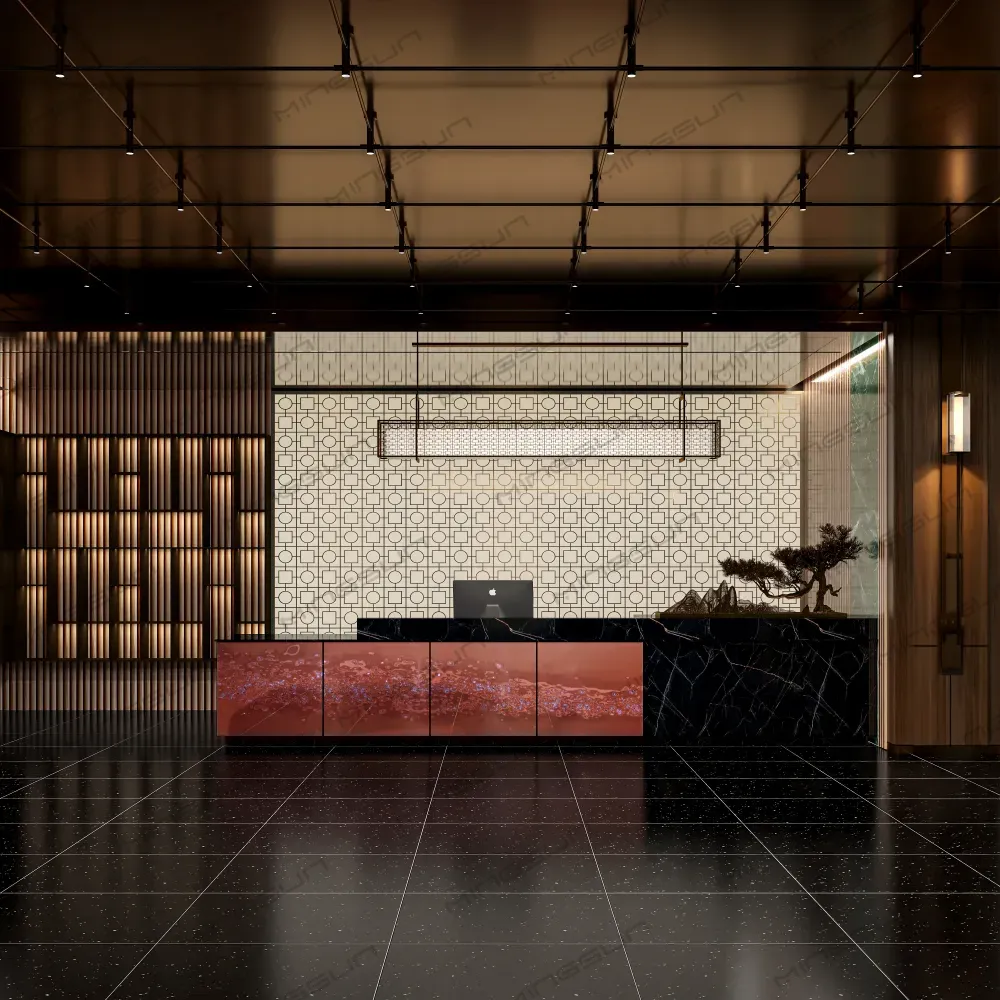
Luxury Reception Desk with Black Marble Top & Illuminated Copper-Resin Front Panels
Make a bold, unforgettable statement at your hotel’s entrance with this avant-garde reception desk. Its sleek black marble top exudes timeless sophistication, while the front facade features mesmerizing, internally lit copper-resin panels that glow with a warm, amber radiance, creating a dynamic visual centerpiece. Designed for both form and function, the unit offers ample concealed storage behind seamless doors and integrates a dedicated staff workstation with cable management. This is more than a check-in counter—it’s a sculptural installation that defines the luxury and artistry of your brand.
Get more industry insights
Looking for the right solution? Fill out the form and get a free quote.
Our experts will respond quickly with personalized options that fit your needs.
MINGSUN is a design-driven hotel furniture manufacturer offering OEM/ODM services, custom solutions, and global project support.
Built for wholesalers. Trusted by global buyers. Delivered with confidence.
Phone:
E-mail:
Follow us ——
 Scan QR Code
MINGSUN
MINGSUN
MINGSUN
MINGSUN
MS Custom Hotel Furniture Supplier