


How to Cut Hotel Furniture Costs Without Sacrificing Quality
- Smart Strategies for Hospitality Procurement
- Understand the true hotel furniture budget: lifecycle vs upfront cost
- Standardize specifications to cut complexity and cost
- Choose materials and finishes for durability and reparability
- Use modular and multi-functional design to maximize value
- Refurbish strategically: when to repair vs replace
- Negotiate smarter: volume, long-term agreements, and value engineering
- Local vs offshore production: balance cost, lead time, and quality
- Optimize logistics and installation to reduce soft costs
- Invest in rigorous quality control and testing
- Benchmark and track KPIs to control the hotel furniture budget
- Comparison: Typical FF&E Budget Allocation
- MINGSUN: A partner to trim costs while ensuring quality
- MINGSUN advantages and core products that reduce lifecycle cost
- How partnering with a factory partner like MINGSUN lowers costs
- Implementation checklist to reduce furniture spend without cutting quality
- Frequently Asked Questions
- 1. How can I cut my hotel furniture budget without reducing guest experience?
- 2. Is it cheaper to buy furniture offshore and ship it in?
- 3. When should I refurbish rather than replace furniture?
- 4. How important is warranty and QC in lowering long-term costs?
- 5. What minimum data should I track to manage my hotel furniture budget?
- 6. Can standardization make my hotel look generic?
- Contact and next steps
- References
Smart Strategies for Hospitality Procurement
Understand the true hotel furniture budget: lifecycle vs upfront cost
Reducing the hotel furniture budget starts with reframing what 'cost' means. Owners and procurement teams often focus on purchase price, but total cost of ownership (TCO) includes manufacturing, shipping, installation, maintenance, repairs, and replacement cycles. Specifying durable finishes and easy-to-service components may raise initial spend but lower annualized cost per room over the product lifecycle. When planning a renovation or new build, produce a 5- to 10-year TCO model to compare alternatives rather than relying on lowest initial quotes.
Standardize specifications to cut complexity and cost
One of the fastest ways to reduce hotel furniture budget is to standardize specifications across room types and public areas. Fewer SKUs mean larger production runs, simplified inventory, lower tooling and setup costs, and easier on-site maintenance. Standardization also reduces lead-time variability. Create a tiered specification: a core standard for most rooms, a mid-tier for suites, and selective signature pieces to maintain design differentiation without proliferating unique items.
Choose materials and finishes for durability and reparability
Material selection directly affects both upfront cost and longevity. Prioritize materials that are tested to hospitality standards for abrasion, stain resistance, and fire codes. Examples: high-pressure laminates and engineered veneers instead of delicate solid wood for high-wear surfaces; commercial-grade upholstery fabrics with high Martindale rub counts; powder-coated steel or aluminum frames where appropriate. Design furniture for reparability: replaceable tops, modular upholstery panels, and standard fasteners make onsite repairs faster and cheaper than full replacements.
Use modular and multi-functional design to maximize value
Modular furniture reduces refurbishment costs and supports flexible room configurations. Systems furniture—modular headboards, bench/desk combos, and stackable seating—can be reconfigured across properties and reused during transitions. Multi-functional pieces, like storage-integrated beds or convertible desks, increase perceived guest value without multiplying unique items, improving return on investment within the same hotel furniture budget.
Refurbish strategically: when to repair vs replace
Refurbishment is frequently a high-impact lever for cutting budget without compromising quality. Reupholstering, replacing hardware, refinishing surfaces, and re-cushioning can extend service life by 5–10 years at a fraction of replacement cost. Use a decision rule based on structural integrity: if the frame is sound and core components meet safety standards, refurbishment is often preferable. When making this choice, estimate both immediate cost and the extended remaining life to compute cost per year.
| Option | Typical Cost per Room (USD) | Expected Remaining Life | Approx. Cost per Year |
|---|---|---|---|
| Full replacement | 4,000 | 10 years | 400 |
| Refurbish (upholstery, top, hardware) | 1,200 | 6 years | 200 |
| Minor repair/maintenance | 300 | 3 years | 100 |
Note: figures above are example estimates for planning; actual costs vary by region, scope, and supplier. See references for industry planning guidance.
Negotiate smarter: volume, long-term agreements, and value engineering
Suppliers expect negotiation beyond price. Use volume commitments, staged purchases, and long-term supply agreements to secure discounts and predictable lead times. Ask suppliers for value engineering proposals: they can often suggest alternate materials or construction methods that preserve appearance and performance while reducing cost. Include clauses for warranty, corrective action timelines, and sample approvals to avoid quality surprises that inflate the hotel furniture budget later.
Local vs offshore production: balance cost, lead time, and quality
Offshore manufacturing (for example, in Guangzhou) often offers cost advantages through lower labor and material sourcing costs. However, factor in shipping time, duties, and quality assurance needs. A hybrid approach—manufacturing high-volume components offshore and final assembly or finishing locally—can combine cost savings with greater schedule control. When selecting overseas partners, prioritize factories with ISO or similar quality certifications, transparent QC processes, and experience in hospitality FF&E projects.
Optimize logistics and installation to reduce soft costs
Soft costs—transportation, storage, and installation—can add 10–25% to furniture spend. Coordinate shipments to match onsite readiness and reduce short-term storage. Use consolidated ocean shipments for large orders and local trucking for last-mile delivery. Pre-assembly at the factory or staging site reduces onsite labor hours. Include installation drawings and trained installers in the purchase package to avoid costly on-site modifications.
Invest in rigorous quality control and testing
High failure rates on arrival or during the first year quickly erode any apparent savings. Implement incoming inspection checklists, factory acceptance testing (FAT), and pre-shipment sampling. Specify test standards (for example, BIFMA for seating and surfaces) and include penalties or remediation timelines in contracts. Good QC reduces rework, returns, and guest complaints—preserving both budget and reputation.
Benchmark and track KPIs to control the hotel furniture budget
Track key performance indicators such as cost per room, average repair frequency, mean time between failures, and spare-parts turnover. Benchmark these KPIs against industry averages annually and adjust procurement strategies accordingly. A data-driven approach enables continuous refinement and helps justify investments in higher-quality pieces that lower lifecycle costs.
Comparison: Typical FF&E Budget Allocation
| Category | Percent of Total FF&E Budget | Why it matters |
|---|---|---|
| Guestroom furniture | 40% | Highest wear; affects guest experience and replacement cycles |
| Public area furniture (lobby, lounge) | 20% | Brand image; long-life, often bespoke pieces |
| Banquet/restaurant seating and tables | 15% | High turnover use; needs strong materials and finishes |
| Conference & back-of-house | 10% | Functional, often modular solutions preferred |
| Lighting, art, and accessories | 10% | Finishing touches that drive perception; flexible choices |
| Contingency and logistics | 5% | Shipping, storage, installation, spare parts |
These allocations are guideline averages used in hospitality planning; adjust by property type and brand standards.
MINGSUN: A partner to trim costs while ensuring quality
MINGSUN is a High Quality hotel furniture manufacturer based in Guangzhou, China, providing one-stop custom solutions for the hospitality industry. We specialize in the design, production, and global delivery of high-quality furniture for hotel guest rooms, lobbies, restaurants, banquet halls, and other commercial spaces.
With a 10,000 ㎡ factory and over 200 skilled workers, MINGSUN combines expert craftsmanship, High Quality materials, and strict quality control to ensure each piece is durable, functional, and refined. Our in-house design team works closely with clients to develop tailored solutions that reflect each project's unique style and standards.
Committed to professionalism, reliability, and creativity, MINGSUN helps clients bring their hospitality visions to life—from concept to completion.
MINGSUN advantages and core products that reduce lifecycle cost
MINGSUN's competitive strengths include:
- Integrated manufacturing and finishing under one roof, reducing coordination waste and soft costs.
- Experienced in hospitality specifications and compliance with international quality benchmarks.
- Flexible MOQ and staged delivery options to match project schedules and cashflow needs.
- In-house value engineering and prototype services to optimize design for cost and durability.
- Strong logistics partnerships for consolidated global shipping and local delivery support.
Main product categories: hotel bedroom furniture, hotel lounge furniture, hotel lobby furniture, hotel conference furniture, hotel restaurant tables and chairs. These product lines are engineered for hospitality use—durable frames, replaceable components, and commercial-grade finishes—helping you lower the hotel furniture budget over the asset life.
How partnering with a factory partner like MINGSUN lowers costs
When you work with an experienced factory partner, you get direct access to production expertise, materials sourcing, and optimization suggestions that often aren't available through intermediaries. MINGSUN's approach—custom design, pilot samples, pre-shipment inspections, and staged deliveries—reduces rework, prevents expensive last-minute changes, and shortens lead times. The result is a lower effective hotel furniture budget and higher confidence in product performance.
Implementation checklist to reduce furniture spend without cutting quality
- Create a 5-10 year TCO model before choosing specs.
- Standardize SKUs and use tiered specifications.
- Prioritize durable, reparable materials and modular design.
- Obtain samples and run real-world testing before mass production.
- Negotiate volume discounts, staged deliveries, and warranty terms.
- Plan logistics to minimize double-handling and storage time.
- Track KPIs and refine procurement strategy annually.
Frequently Asked Questions
1. How can I cut my hotel furniture budget without reducing guest experience?
Focus on TCO, standardize specifications, and invest in durable materials and modular pieces that maintain appearance and function over time. Use refurbishment for structurally sound items and reserve full replacement for beyond-repair assets.
2. Is it cheaper to buy furniture offshore and ship it in?
Offshore production often lowers unit costs, but factor in shipping, duties, lead times, and quality assurance. A hybrid approach—manufacture components offshore and finish or assemble locally—can balance cost and schedule risks.
3. When should I refurbish rather than replace furniture?
Refurbish when the primary structures are intact and only finishes or upholstery are worn. Calculate expected remaining life after refurbishment and compare cost per year with replacement to decide.
4. How important is warranty and QC in lowering long-term costs?
Very important. A strong warranty and rigorous QC prevent early failures and reduce rework costs. Specify testing standards and include penalties or remediation plans in contracts.
5. What minimum data should I track to manage my hotel furniture budget?
Track cost per room, repair frequency, mean time between failures, spare parts consumption, and installation/delivery variances. These KPIs allow you to identify high-cost items and prioritize interventions.
6. Can standardization make my hotel look generic?
No. Use a base of standardized core items and add selective signature pieces, finishes, or artwork to preserve brand identity while capturing the cost benefits of scale.
Contact and next steps
If you want to review product options, request samples, or receive a tailored cost optimization plan for your project, contact our team. Check MINGSUN's hospitality product portfolio or request a consultation to see how targeted design and procurement choices can reduce your hotel furniture budget while ensuring long-term quality and guest satisfaction.
References
- Hotel Management, FF&E Costs: Effectively Planning Hotel Renovations, https://www.hotelmanagement.net/design/ff-e-costs-effectively-planning-hotel-renovations, accessed 2025-12-30.
- BIFMA - Business and Institutional Furniture Manufacturers Association, Standards and testing for commercial furniture, https://www.bifma.org/, accessed 2025-12-30.
- American Hotel & Lodging Association (AHLA), Industry resources and best practices, https://www.ahla.com/, accessed 2025-12-30.
- FacilitiesNet, Lifecycle Costing and Maintenance Planning, https://www.facilitiesnet.com/, accessed 2025-12-30.
- Wikipedia, Hospitality Industry overview, https://en.wikipedia.org/wiki/Hospitality_industry, accessed 2025-12-30.
Hotel lobby vs lounge sofas: key differences
Custom Hotel Lobby Furniture: From Concept to Installation
Top Trends in Custom Hotel Lobby Furniture 2025
Hotel Lobby Furniture Design and Layout Tips
About Mingsun – Company Background
Who are Mingsun’s main clients?
Product Scope & Application Areas
Do you provide samples?
Customization Capability & Design Support
Does Mingsun support customized hotel furniture?
Does Mingsun provide design services?
Materials, Craftsmanship & Quality Control
What materials are commonly used for hotel furniture?
Make an appointment with us today
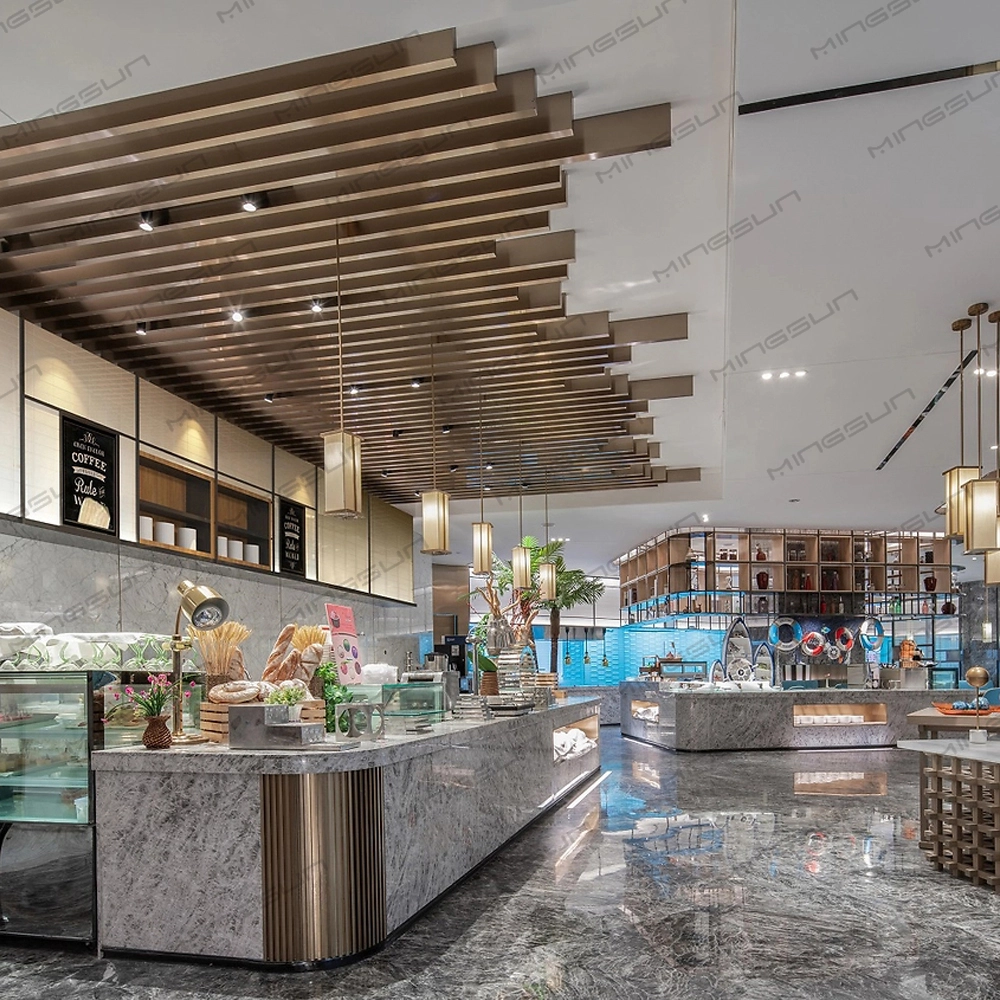
Modern Hotel Dining Furniture Set-Custom Designed Wooden Tables, Upholstered Chairs & Banquette Seating
Create a lasting impression with our custom-designed hotel dining furniture set, crafted for modern luxury hotels and upscale restaurants.
Featuring elegant wooden tables, ergonomic blue-upholstered chairs, and built-in banquette seating, this collection blends comfort, style, and durability.
As a leading manufacturer in Guangzhou, we deliver end-to-end solutions - from concept design and 3D visualization to production and global shipping - all at factory-direct prices.
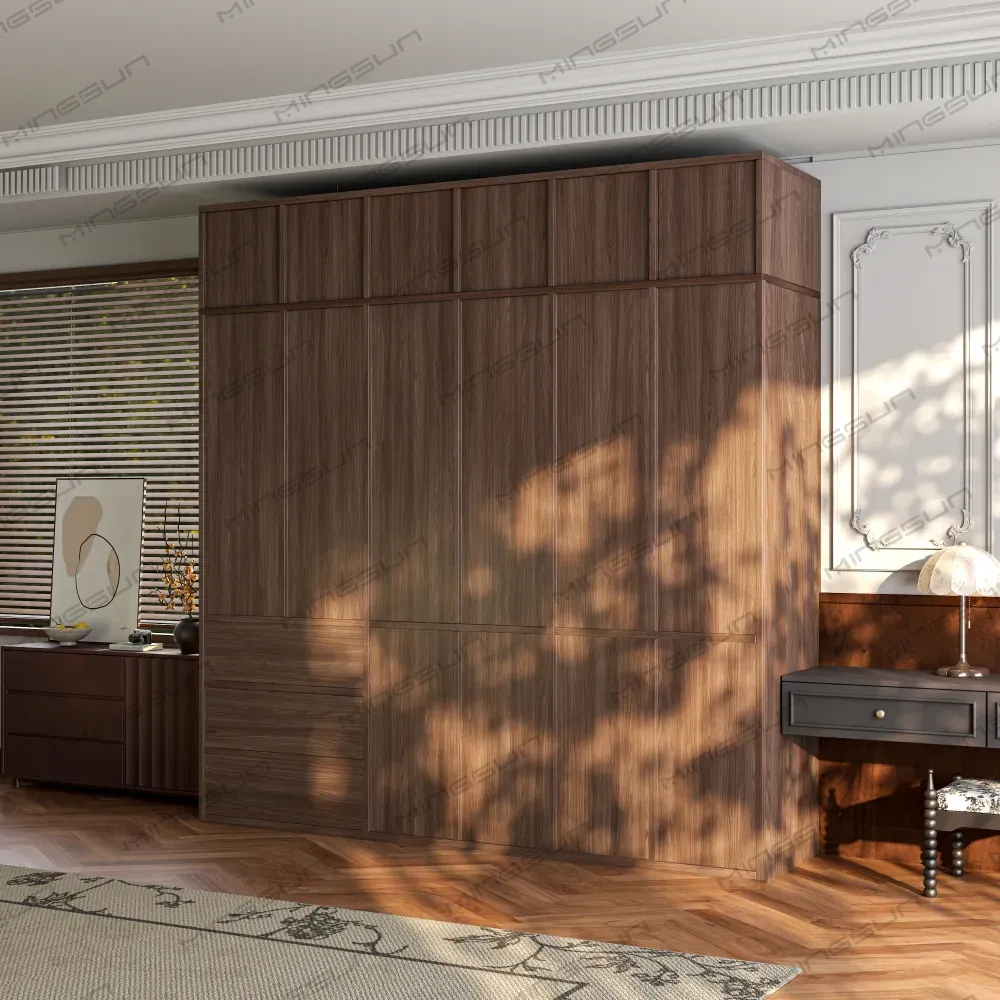
Minimalist Walnut Veneer Floor-to-Ceiling Hotel Wardrobe with Handleless Design
Maximize vertical storage in your hotel guest rooms or luxury apartments with this sleek, floor-to-ceiling wardrobe system. Defines by its warm, natural walnut wood veneer finish, the unit offers a sophisticated, handleless facade that maintains clean architectural lines, perfect for modern minimalist interiors. The intelligent layout features a bank of three external soft-close drawers for guest convenience, tall hanging sections for formal wear, and a dedicated row of top-tier cabinets specifically designed to store extra bedding, pillows, or seasonal items.
Manufactured by MINGSUN, this wardrobe is a testament to our expertise in custom hospitality joinery. We engineer these large-scale units for durability and ease of installation. From our Guangzhou factory, we provide precision-cut flat-pack solutions that reduce shipping costs while ensuring a premium built-in look upon assembly.
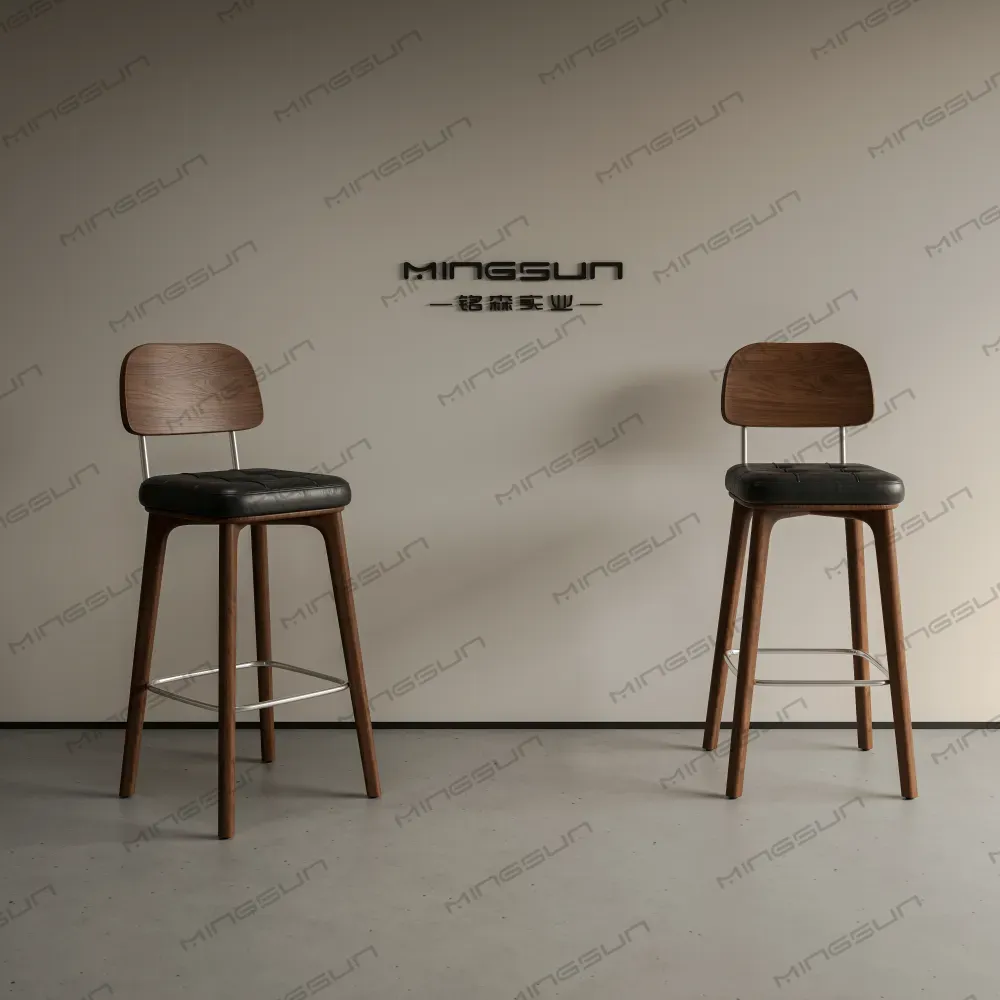
Mid-Century Modern Walnut Bar Stool with Tufted Leather Seat & Chrome Footrest for Luxury Hospitality
Elevate the aesthetic of your hotel bar, upscale restaurant, or executive lounge with this sophisticated bar stool, meticulously crafted by MINGSUN. Blending mid-century modern warmth with industrial durability, this stool features a curved, walnut-veneer backrest designed for ergonomic support and visual depth. The seat is upholstered in premium black PU leather (customizable to genuine leather) with classic button tufting, offering a refined texture that resists wear in high-traffic commercial environments.
Supported by tapered solid wood legs and reinforced with a chrome-finished steel footrest ring, this piece ensures stability and longevity. As a leading Guangzhou hotel furniture manufacturer, MINGSUN ensures that every stool meets rigorous contract-grade standards. From our 10,000㎡ factory directly to your venue, we provide a complete solution including manufacturing, global logistics, and video installation guidance to ensure a seamless project completion.
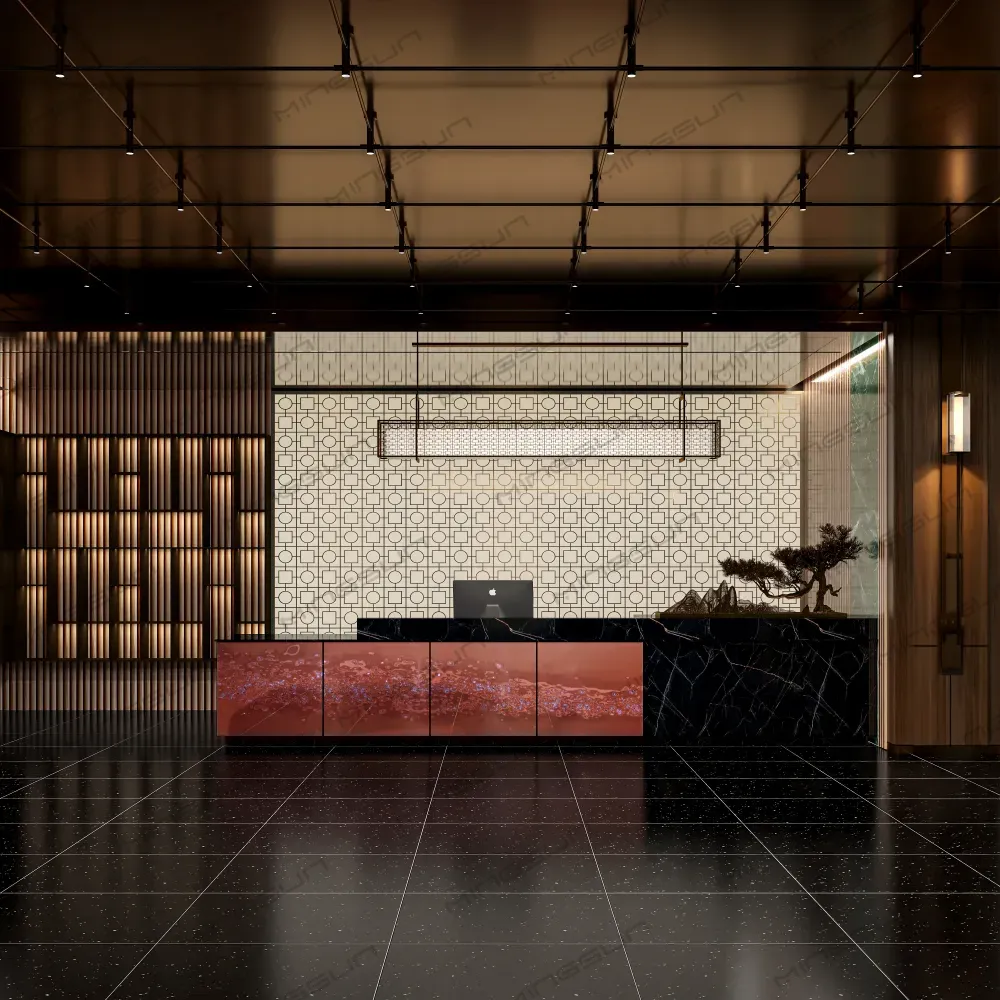
Luxury Reception Desk with Black Marble Top & Illuminated Copper-Resin Front Panels
Make a bold, unforgettable statement at your hotel’s entrance with this avant-garde reception desk. Its sleek black marble top exudes timeless sophistication, while the front facade features mesmerizing, internally lit copper-resin panels that glow with a warm, amber radiance, creating a dynamic visual centerpiece. Designed for both form and function, the unit offers ample concealed storage behind seamless doors and integrates a dedicated staff workstation with cable management. This is more than a check-in counter—it’s a sculptural installation that defines the luxury and artistry of your brand.
Get more industry insights
Looking for the right solution? Fill out the form and get a free quote.
Our experts will respond quickly with personalized options that fit your needs.
MINGSUN is a design-driven hotel furniture manufacturer offering OEM/ODM services, custom solutions, and global project support.
Built for wholesalers. Trusted by global buyers. Delivered with confidence.
Phone:
E-mail:
Follow us ——
 Scan QR Code
MINGSUN
MINGSUN
MINGSUN
MINGSUN
MS Custom Hotel Furniture Supplier