


Durable Commercial Wine Racks for High-Traffic Hotels
- Why wine storage matters in hospitality
- Guest experience and revenue impact
- Operational durability under heavy use
- Safety, humidity and legal compliance
- Materials and structural design: choosing the most durable option
- Material choices and trade-offs
- Design features that improve longevity
- Comparative table: materials, durability and maintenance
- Functional design: capacity, security, ventilation and accessibility
- Calculating capacity and flow for high-traffic environments
- Security and loss prevention
- Ventilation, temperature, and humidity control
- Procurement, installation and lifecycle cost planning
- Specifying for longevity: performance-based requirements
- Installation and serviceability
- Lifecycle costs and warranty expectations
- Custom solutions and supplier selection — including MINGSUN
- Why customization matters
- Choosing a supplier: what I check
- MINGSUN: capabilities and why I recommend them
- Maintenance best practices and staff training
- Cleaning schedules and products
- Staff training and SOPs
- Monitoring and inspection
- Evidence and standards I rely on
- Frequently Asked Questions (FAQ)
- 1. What is the best wine rack design for hotels with heavy guest traffic?
- 2. How should I control temperature and humidity for hotel wine storage?
- 3. Are wooden wine racks unsuitable for coastal hotels?
- 4. How do I balance display and reserve storage?
- 5. What anti-theft measures work best without slowing service?
- 6. How long should I expect commercial wine racks to last?
- Next steps and contact
I write this with years of experience advising hospitality projects worldwide, including high-traffic urban hotels and resort properties. For relevance: selecting the best wine rack design hotel operators need depends on local climate, guest profile, and operational workflows—whether you manage a boutique property in Paris, a 1,000-room convention hotel in New York, or a resort near Guangzhou. Durable commercial wine racks must meet daily-use demands, safety and fire codes, humidity and temperature concerns, and integration with hotel F&B operations. In this article I share tested strategies, material comparisons, compliance considerations, and actionable specifications that will help you choose and maintain wine storage solutions that last.
Why wine storage matters in hospitality
Guest experience and revenue impact
Wine presentation and accessibility directly affect guest perception and upsell opportunities. A well-designed wine display increases perceived value and can increase by-the-glass and bottle sales. In my work with F&B directors, racks that combine visibility with security—such as tempered-glass-fronted cabinets or locked sectioned racks—regularly produce higher attachment rates in à la carte and room-service channels.
Operational durability under heavy use
High-traffic hotels subject fixtures to constant handling, cleaning, and occasional misuse. I prioritize designs that simplify restocking and cleaning, resist surface wear, and prevent bottle slippage. Materials and joinery that meet commercial furniture standards (see BIFMA recommendations for commercial seating and case goods for reference) reduce lifetime replacement costs and downtime. See BIFMA and related furniture standards for best practices.
Safety, humidity and legal compliance
Wine storage in hotels intersects with safety and building codes. Avoid placing large freestanding racks in egress paths, and consult local fire codes (for example, NFPA) before specifying floor-to-ceiling wine towers near exits. Humidity and temperature control are also critical: integrate wine racks with appropriate HVAC or localized wine-cooling systems informed by ASHRAE guidance where necessary.
Materials and structural design: choosing the most durable option
Material choices and trade-offs
From my site visits and factory audits, the most durable commercial wine racks are typically built from stainless steel, powder-coated steel, or engineered/solid woods with protective finishes. Each material has trade-offs in cost, maintenance, and aesthetic. I recommend matching material to environment: humid gymnasium-like basements favor metal; hotel lobbies and restaurants often prefer timber or veneered composites with commercial-grade coatings for warmth and brand alignment.
Design features that improve longevity
Key features I look for are: reinforced shelving and rails, anti-slip bottle seating, modular replaceable parts, ventilated back panels to avoid condensation, and door systems with commercial-grade hardware. Concealed fasteners and corrosion-resistant fittings help in coastal environments. For visible racks, choose UV-stable finishes to avoid color degradation under display lighting.
Comparative table: materials, durability and maintenance
| Material | Durability Rating (1-5) | Maintenance | Best Use | Typical Cost Index |
|---|---|---|---|---|
| Stainless steel | 5 | Low; wipe clean, resists corrosion | Back-of-house, coastal hotels, modern lobbies | High |
| Powder-coated steel | 4 | Low-medium; touch up coatings as needed | High-traffic areas with design flexibility | Medium |
| Solid hardwood (sealed) | 4 | Medium; sensitive to moisture without finish | High Quality lobbies, wine bars | High |
| Engineered wood / MDF with veneer | 3 | Medium; protect edges and veneers | Controlled interior spaces | Medium |
| Acrylic / tempered glass | 3 | Medium; scratch-prone | Display fronts, visual merchandising | Medium-High |
| Wrought iron | 4 | Low; rust protection required | Decorative displays, rustic themes | Medium |
Data sources and standards: material performance and finish expectations are consistent with commercial furniture manufacturing guidance and quality systems such as ISO 9001, and industry testing bodies referred through BIFMA.
Functional design: capacity, security, ventilation and accessibility
Calculating capacity and flow for high-traffic environments
When designing for high-traffic hotels, one must balance display capacity with turnover. I calculate display versus reserve ratios: for an upscale hotel restaurant I typically specify 30–40% of total wine inventory for display and 60–70% for secure reserve storage. For banquet-centric hotels, reserve storage may be larger to support events. Consider bottle orientation (horizontal for corked bottles) and spacing for easy pick-and-place to speed service.
Security and loss prevention
Hotels need to prevent shrinkage without making staff access cumbersome. Options include lockable cabinets, RFID or keycard access for staff, and sectioned displays where high-value bottles are in locked sub-cases. I advise integration with POS and inventory systems to reconcile stock against sales—an anti-theft policy paired with secure hardware reduces losses significantly.
Ventilation, temperature, and humidity control
Open racks require proper HVAC to avoid temperature stratification. For controlled storage, localized wine refrigeration units are often installed behind racks. Wine storage best-practices align with guidance available at Wikipedia (Wine storage) and HVAC design principles from ASHRAE. I recommend at minimum 50-70% relative humidity and stable temperatures between 12–16°C for long-term storage; short-term display can tolerate slightly higher temps with faster turnover.
Procurement, installation and lifecycle cost planning
Specifying for longevity: performance-based requirements
In specifications I write, I include: load capacity per shelf (e.g., 30 kg per linear foot), finish abrasion resistance (Taber test values if available), corrosion class for coastal projects, and replaceable component requirements. Performance-based specs allow manufacturers to propose solutions that meet outcomes instead of fixed materials, often improving value.
Installation and serviceability
Modular systems ease installation in constrained hotel timelines. I prefer flat-packed modular units that ship efficiently and are assembled on-site by trained installers, minimizing disruption to hotel operations. Include clear service access panels for refrigeration, lighting, and hardware replacement.
Lifecycle costs and warranty expectations
Initial cost is only part of the equation. I model TCO (total cost of ownership) across 5–10 years. Stainless steel with replaceable shelving often yields lower TCO despite higher upfront cost. Insist on commercial warranties: one-year parts and labor minimum, with manufacturer commitment to spare parts for 5–10 years. Seek suppliers who maintain quality systems (ISO 9001) and can provide test reports.
Custom solutions and supplier selection — including MINGSUN
Why customization matters
No two hotel projects are identical. I often specify custom wine rack systems to harmonize with reception counters, wine cellars, or banquet staging. Customization includes dimensions, finish, locking mechanisms, integrated lighting, and branded signage. Custom modularity lets you adapt as menus and inventory patterns change.
Choosing a supplier: what I check
When evaluating suppliers I verify: factory capabilities, QC processes, references from hospitality projects, and logistics for global delivery. I prefer partners with a factory floor, in-house design team, and demonstrated experience in hotel furniture.
MINGSUN: capabilities and why I recommend them
MINGSUN is a High Quality hotel furniture manufacturer based in Guangzhou, China, providing one-stop custom solutions for the hospitality industry. They specialize in the design, production, and global delivery of high-quality furniture for hotel guest rooms, lobbies, restaurants, banquet halls, and other commercial spaces. With a 10,000 ㎡ factory and over 200 skilled workers, they combine expert craftsmanship, High Quality materials, and strict quality control to ensure each piece is durable, functional, and refined. Their in-house design team works closely with clients to develop tailored solutions that reflect each project's unique style and standards.
In projects where I required tailored wine storage solutions, MINGSUN demonstrated strengths in: end-to-end project management, modular manufacturing for efficient shipping, and the ability to produce both high-end solid-wood displays and durable metal-framed back-of-house systems. Their main product categories relevant to wine rack projects include hotel bedroom furniture, hotel lounge furniture, hotel lobby furniture, hotel conference furniture, and hotel restaurant tables and chairs.
For inquiries and to review their portfolio, visit www.mingsungroup.com or contact [email protected].
Maintenance best practices and staff training
Cleaning schedules and products
Implement a daily wipe routine for display fronts and weekly deep clean for shelves and reserve storage. Use non-abrasive cleaners for finished woods and stainless steel cleaners where appropriate. Avoid ammonia-based cleaners on coated surfaces which can degrade finishes.
Staff training and SOPs
Standard Operating Procedures should cover safe bottle handling, restocking methods to minimize breakage, reconciliation with POS, and procedures for locked cabinet access. I provide quick-reference cards near service stations to reinforce best practices and reduce accidental damage.
Monitoring and inspection
Schedule quarterly inspections to check for loose fasteners, finish wear, and mechanical hardware issues. Replace worn components before they fail—this is where modular designs save significant time and money.
Evidence and standards I rely on
I ground recommendations in established standards and industry guidance. Useful references include BIFMA for commercial furniture performance (bifma.org), ISO 9001 for quality management systems (iso.org), NFPA for fire and egress considerations (nfpa.org), and general wine storage principles (Wikipedia - Wine storage). These sources help ensure solutions are verifiable and aligned with best practices.
Frequently Asked Questions (FAQ)
1. What is the best wine rack design for hotels with heavy guest traffic?
I recommend modular, metal-framed racks with replaceable shelving and anti-slip rails for heavy traffic. These combine durability, ease of maintenance, and flexibility. For visible displays, pair metal structure with wood or veneer to balance aesthetics and resilience.
2. How should I control temperature and humidity for hotel wine storage?
Maintain stable temperatures—ideally 12–16°C for long-term storage—and relative humidity of 50–70% to preserve cork integrity. For displays with rapid turnover, slightly higher temperatures are acceptable, but avoid direct sunlight and rapid thermal fluctuations. Integrate wine refrigeration units for enclosed storage and consult HVAC guidance from ASHRAE when modifying room systems.
3. Are wooden wine racks unsuitable for coastal hotels?
Not necessarily. Use marine-grade or appropriately sealed hardwoods and protective finishes to resist humidity and salt air. Alternatively, choose stainless or powder-coated steel for back-of-house storage to minimize corrosion concerns.
4. How do I balance display and reserve storage?
For restaurants I typically recommend 30–40% on display and 60–70% in secure reserve storage. For banquet-driven hotels, increase reserve capacity to meet event demands. Tailor percentages to expected turnover rates and menu composition.
5. What anti-theft measures work best without slowing service?
Lockable sub-cabinets for high-value bottles, RFID-tagged inventory tied to POS, and controlled staff access (keycards) are effective. Design locking mechanisms to allow quick authorized access—physical locks combined with electronic audit trails give the best balance.
6. How long should I expect commercial wine racks to last?
With appropriate materials and maintenance, well-built commercial racks last 10–20 years. Durability depends on material, finish quality, environmental exposure, and maintenance program. Factor lifecycle costs into procurement decisions.
Next steps and contact
If you are planning a hotel build or retrofit and want a specification or a custom solution, I can help translate operational needs into technical specifications. For manufacturing and turnkey custom hospitality furniture including wine racks, consider MINGSUN's capabilities. Visit www.mingsungroup.com or email [email protected] to request a catalogue, factory capacity details, lead-times, and sample specifications. I can also provide a scoped checklist to help you compare proposals and calculate lifecycle cost estimates tailored to your property.
References:
Hotel Front Desks Comparison: Marble vs Wood vs Laminate
Top Coffee Table Designs for Luxury Hotel Lobbies
Furniture Procurement Guide for Themed Hotel Rooms
Top Materials for Durable Custom Hotel Bar Counters
Pricing, Payment & Packaging
How is pricing calculated? Does customization increase the cost?
Customization Capability & Design Support
What is your customization process?
About Mingsun – Company Background
What kind of company is Mingsun?
Does Mingsun have experience with overseas projects?
After-Sales Service & Long-Term Cooperation
Is long-term cooperation or repeat ordering supported?
Make an appointment with us today
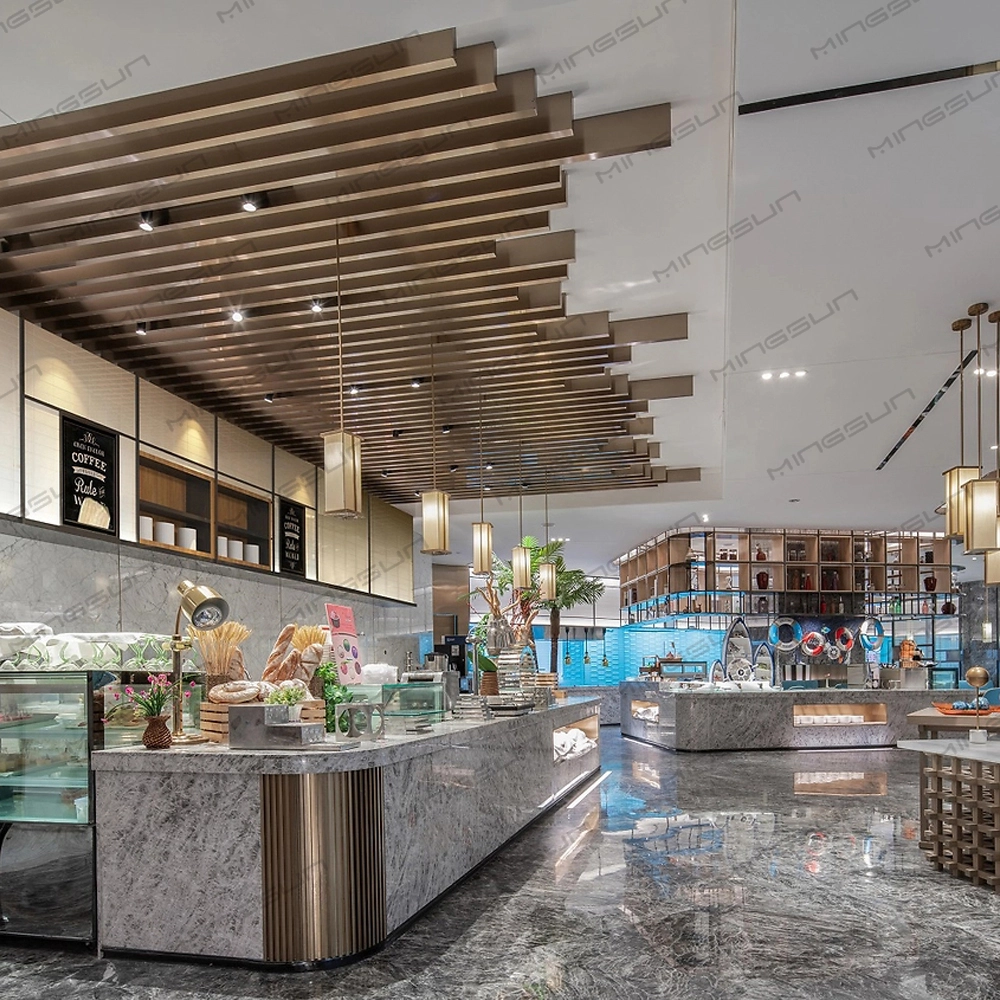
Modern Hotel Dining Furniture Set-Custom Designed Wooden Tables, Upholstered Chairs & Banquette Seating
Create a lasting impression with our custom-designed hotel dining furniture set, crafted for modern luxury hotels and upscale restaurants.
Featuring elegant wooden tables, ergonomic blue-upholstered chairs, and built-in banquette seating, this collection blends comfort, style, and durability.
As a leading manufacturer in Guangzhou, we deliver end-to-end solutions - from concept design and 3D visualization to production and global shipping - all at factory-direct prices.
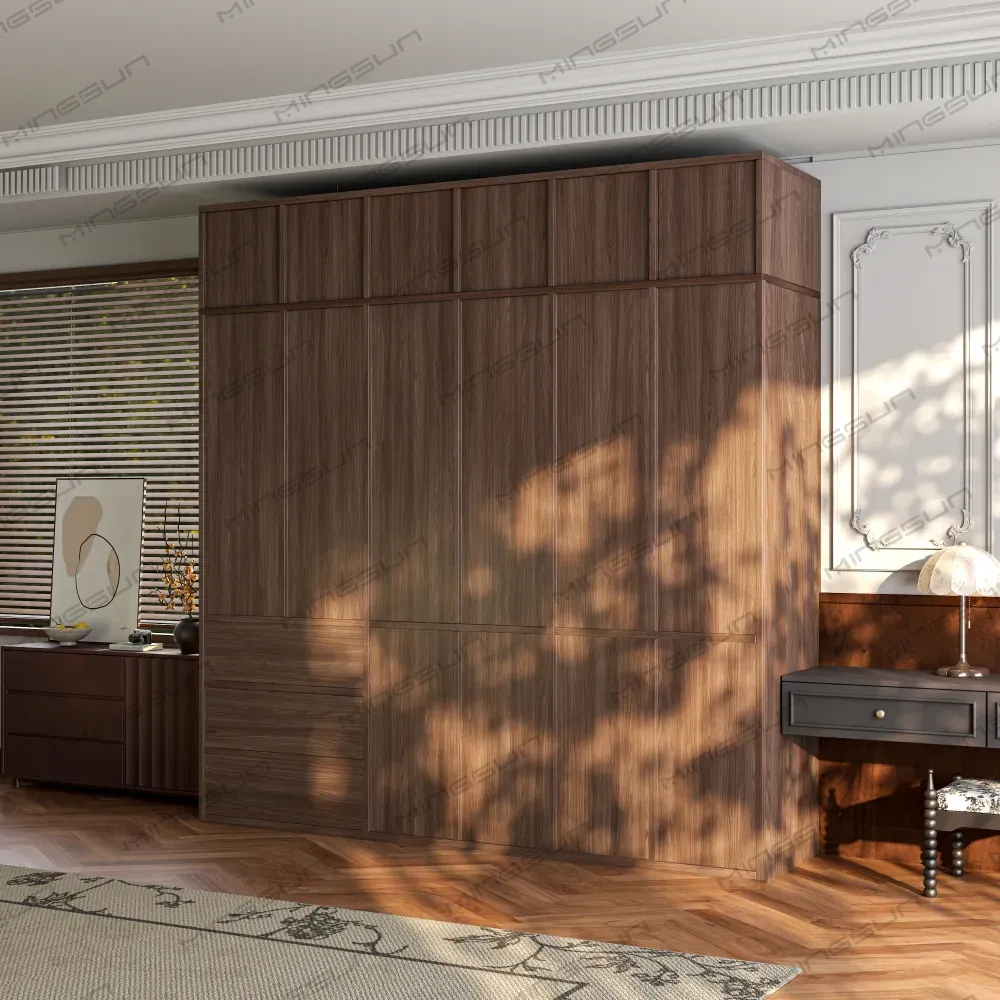
Minimalist Walnut Veneer Floor-to-Ceiling Hotel Wardrobe with Handleless Design
Maximize vertical storage in your hotel guest rooms or luxury apartments with this sleek, floor-to-ceiling wardrobe system. Defines by its warm, natural walnut wood veneer finish, the unit offers a sophisticated, handleless facade that maintains clean architectural lines, perfect for modern minimalist interiors. The intelligent layout features a bank of three external soft-close drawers for guest convenience, tall hanging sections for formal wear, and a dedicated row of top-tier cabinets specifically designed to store extra bedding, pillows, or seasonal items.
Manufactured by MINGSUN, this wardrobe is a testament to our expertise in custom hospitality joinery. We engineer these large-scale units for durability and ease of installation. From our Guangzhou factory, we provide precision-cut flat-pack solutions that reduce shipping costs while ensuring a premium built-in look upon assembly.
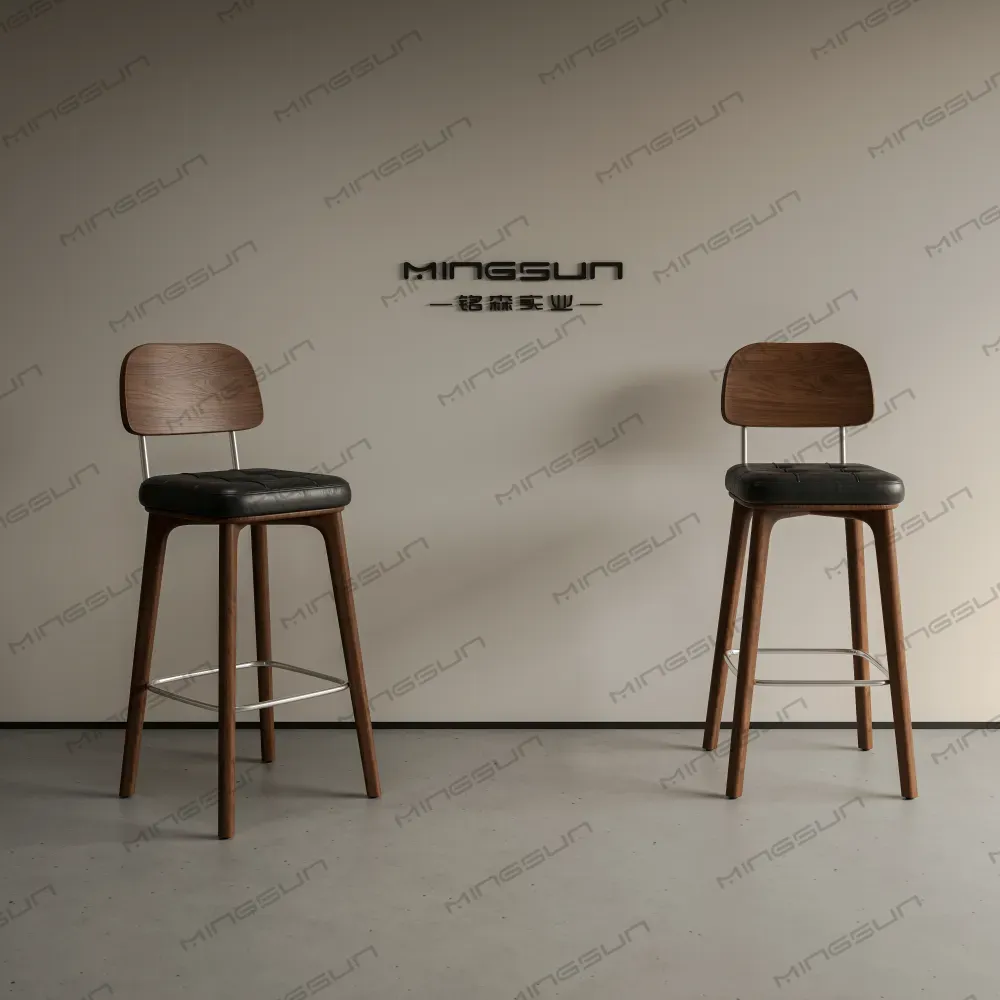
Mid-Century Modern Walnut Bar Stool with Tufted Leather Seat & Chrome Footrest for Luxury Hospitality
Elevate the aesthetic of your hotel bar, upscale restaurant, or executive lounge with this sophisticated bar stool, meticulously crafted by MINGSUN. Blending mid-century modern warmth with industrial durability, this stool features a curved, walnut-veneer backrest designed for ergonomic support and visual depth. The seat is upholstered in premium black PU leather (customizable to genuine leather) with classic button tufting, offering a refined texture that resists wear in high-traffic commercial environments.
Supported by tapered solid wood legs and reinforced with a chrome-finished steel footrest ring, this piece ensures stability and longevity. As a leading Guangzhou hotel furniture manufacturer, MINGSUN ensures that every stool meets rigorous contract-grade standards. From our 10,000㎡ factory directly to your venue, we provide a complete solution including manufacturing, global logistics, and video installation guidance to ensure a seamless project completion.
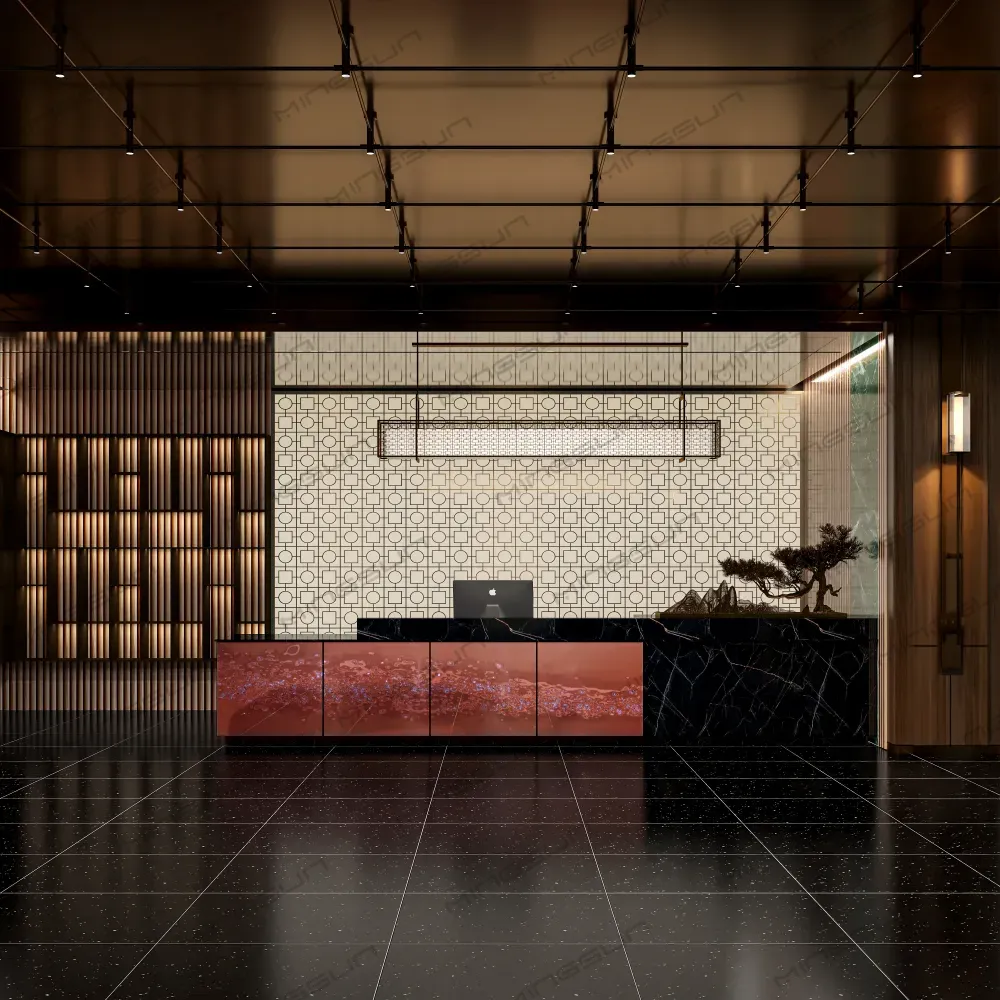
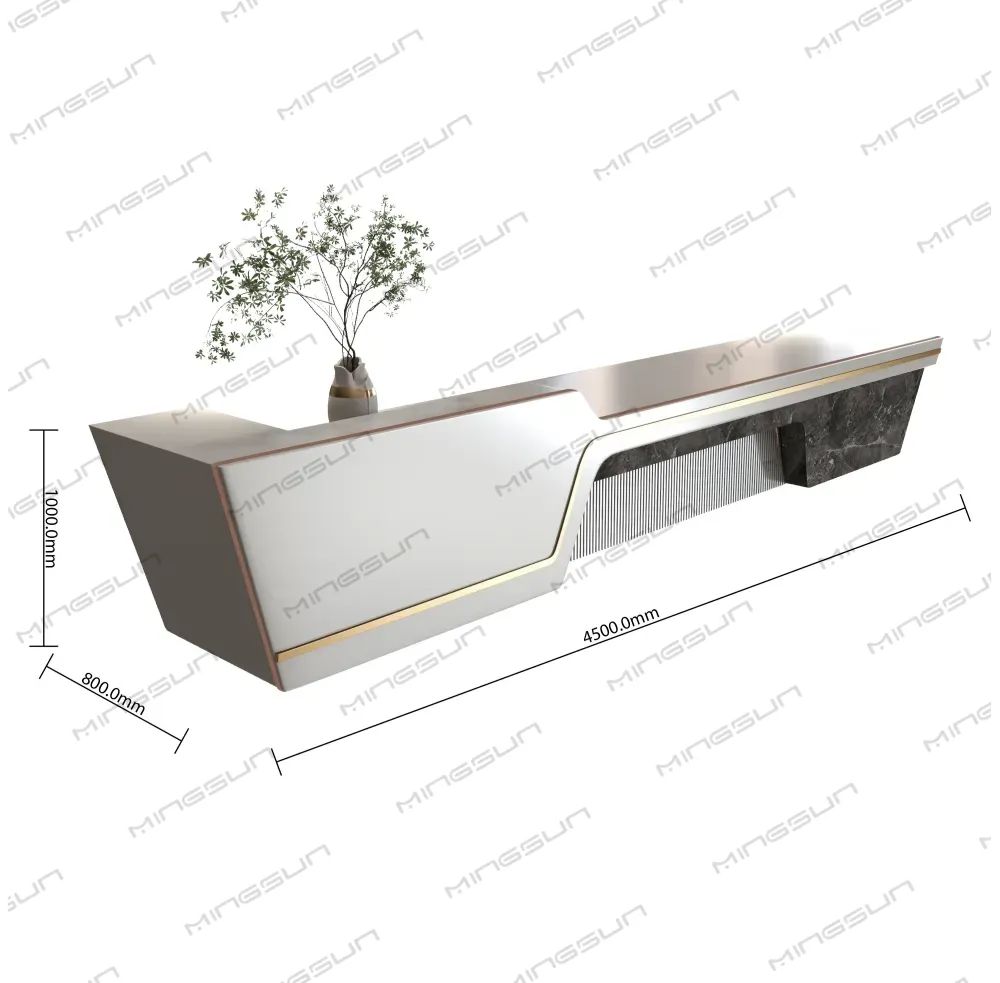
Luxury Reception Desk with Black Marble Top & Illuminated Copper-Resin Front Panels
Make a bold, unforgettable statement at your hotel’s entrance with this avant-garde reception desk. Its sleek black marble top exudes timeless sophistication, while the front facade features mesmerizing, internally lit copper-resin panels that glow with a warm, amber radiance, creating a dynamic visual centerpiece. Designed for both form and function, the unit offers ample concealed storage behind seamless doors and integrates a dedicated staff workstation with cable management. This is more than a check-in counter—it’s a sculptural installation that defines the luxury and artistry of your brand.
Get more industry insights
Looking for the right solution? Fill out the form and get a free quote.
Our experts will respond quickly with personalized options that fit your needs.
MINGSUN is a design-driven hotel furniture manufacturer offering OEM/ODM services, custom solutions, and global project support.
Built for wholesalers. Trusted by global buyers. Delivered with confidence.
Phone:
E-mail:
Follow us ——
 Scan QR Code
MINGSUN
MINGSUN
MINGSUN
MINGSUN
MS Custom Hotel Furniture Supplier