


Cost Estimation: Furnishing Rooms by Size and Type
- How to Accurately Estimate Furnishing Costs by Room Size
- Why hotel room size matters to furnishing budgets
- Common hotel room size categories and typical features
- FF&E cost components tied to room size and type
- Estimated FF&E cost ranges by room size and type
- How to estimate per-room quantities from hotel room size
- Design and procurement levers to control cost by room size
- Lifecycle cost and maintenance considerations by room size
- Procurement timeline and logistical impacts tied to room size
- Case study example: budgeting a 120‑room midscale hotel
- MINGSUN: partner for furnishing by room size and type
- MINGSUN advantages and typical product lines
- Checklist for turning size-based estimates into firm budgets
- Summary and recommended next steps
- Frequently Asked Questions (FAQ)
- 1. How does hotel room size affect FF&E cost per square foot?
- 2. What contingency percentage should I include for FF&E budgets?
- 3. Are modular or bespoke furniture solutions more cost-effective for small rooms?
- 4. How do freight and import duties impact the per-room furnishing cost?
- 5. What is the expected lifecycle for hotel furniture and how does that inform budgeting?
- 6. Can one supplier handle a full-property FF&E package for mixed room sizes?
- References
How to Accurately Estimate Furnishing Costs by Room Size
Why hotel room size matters to furnishing budgets
Hotel room size directly affects quantities, dimensions, and specifications of furniture and accessories — and therefore cost. A larger room needs more seating, larger storage, and often higher-end finishes to avoid looking sparse. Conversely, smaller rooms require space-efficient, multifunctional solutions that can raise unit cost because of custom engineering. When you plan budget lines for a project, consider three cost drivers linked to hotel room size: (1) quantity and scale of items, (2) customization and space-saving engineering, and (3) circulation and FFE serviceability requirements. Embedding the primary keyword hotel room size in early planning ensures procurement and design teams align on realistic scope and cost assumptions.
Common hotel room size categories and typical features
Most hotel projects divide guestrooms into size/type bands for budgeting and specification consistency. Common categories are:
- Compact Economy (approx. 16–22 m² / 170–240 sq ft): single/double bed, minimal desk, small wardrobe.
- Standard / Midscale (approx. 23–33 m² / 250–360 sq ft): queen/king beds, work desk, lounge seating, larger closet.
- Junior Suite (approx. 34–50 m² / 365–540 sq ft): separated seating area, larger storage, upgraded bathroom fixtures.
- Suite / Luxury (50 m²+ / 540+ sq ft): multiple rooms, bespoke case goods, High Quality upholstery, occasional dining furniture.
These bands are industry-recognized and used by developers, operators, and FF&E planners to normalize cost estimates across a property with mixed-room offerings.
FF&E cost components tied to room size and type
An accurate estimate breaks down costs into categories linked to the guest experience and operational needs. Typical line items include:
- Case goods: beds, bedside tables, desks, wardrobes — size and finish level scale with room size.
- Seating and upholstery: chairs, sofas, headboards — larger rooms often need additional seating and High Quality materials.
- Soft goods: bedding, drapery, cushions — textile quantity and quality increase with room size and star rating.
- Lighting and electrical: ambient, task, and accent lighting — more zones in larger suites.
- Bathroom fixtures and millwork: vanities, cabinetry, and accessories — luxury suites often have upgraded stone and bespoke cabinetry.
- Technology and AV: TVs, controls, docking/charging stations — may escalate in High Quality room types.
- Installation, logistics, and waste handling: transportation, in-room installation time, and debris removal — larger items and more pieces increase labor.
Estimated FF&E cost ranges by room size and type
The table below summarizes typical per-room FF&E (furniture, fixtures & equipment) cost ranges, integrating industry benchmarks and supplier data. Ranges vary by market, finish level, and brand standard; use them as planning references, not final quotes.
| Room Type | Typical Size (sq ft / m²) | FF&E Cost Range (USD per room) | Notes |
|---|---|---|---|
| Compact Economy | 170–240 sq ft (16–22 m²) | $1,500 – $4,000 | Basic case goods, budget textiles, limited seating |
| Standard / Midscale | 250–360 sq ft (23–33 m²) | $4,000 – $12,000 | Functional furniture, standard finishes, more tech |
| Junior Suite | 365–540 sq ft (34–50 m²) | $12,000 – $25,000 | Separate seating, upgraded finishes, additional millwork |
| Suite / Luxury | 540+ sq ft (50+ m²) | $25,000 – $75,000+ | Bespoke case goods, High Quality upholstery, custom millwork |
Sources include industry FF&E studies and supplier surveys; actual costs depend on design complexity, material selection, and installation logistics. For global projects, include freight, duties, and local installation labor in contingency (typically 10–20% additional).
How to estimate per-room quantities from hotel room size
Use a simple quantity rule-of-thumb linked to room area to build initial takeoffs. For example:
- ≤ 200 sq ft: 1 seating unit, 1 compact desk, 1 wardrobe/closet, 1 bedside table.
- 200–350 sq ft: 1–2 seating units (chair + ottoman), full-size desk, 2 bedside tables, 1 dresser/TV cabinet.
- > 350 sq ft: multiple seating pieces, dining or writing table, built-in or freestanding storage, larger TVs and artwork.
Translate these quantities into a bill of materials (BOM) and attach unit costs from preferred suppliers. When evaluating unit costs, factor in custom sizes or integrated power/data as these increase price materially.
Design and procurement levers to control cost by room size
To manage cost while respecting room size and brand expectations, consider these levers:
- Standardize modules across room types where possible (e.g., same headboard design scaled for bed size).
- Use modular, multi-functional furniture in compact rooms to reduce unique SKUs.
- Prioritize durable finish selections in high-contact pieces to reduce lifecycle replacement cost.
- Bundle orders to achieve factory economies of scale (reduces tooling/setup costs).
- Specify factory-sewn soft goods and ready-to-assemble (RTA) elements for easier on-site installation in tight corridors.
Lifecycle cost and maintenance considerations by room size
Initial purchase price is only part of the lifecycle cost. Larger rooms with more components mean more touchpoints for wear and maintenance. When comparing options, build a 5–10 year lifecycle model that includes:
- Expected replacement cycle for mattresses and upholstery.
- Repair costs for case goods and finishes.
- Reupholstery vs. replacement thresholds (dependent on fabric performance).
- Operational handling costs for larger, heavier pieces during housekeeping.
Typically, a higher upfront investment in durable materials and tested commercial-grade furniture reduces total cost of ownership, especially for high-occupancy hotels.
Procurement timeline and logistical impacts tied to room size
Room size affects logistics: larger items require more lead time for production, inspection, and on-site handling. Typical timeline milestones to budget in are:
- Design finalization and shop drawings: 4–8 weeks
- Factory lead time for custom furniture: 8–16 weeks (longer for complex suites)
- Shipping and customs: 4–8 weeks (varies by origin/destination)
- On-site installation: 1–3 days per room for standard rooms; 3–7+ days for suites with millwork
Include installation windows and corridor access checks early; tight circulation or small elevators often necessitate split deliveries or onsite assembly, which increases labor and schedule risk.
Case study example: budgeting a 120‑room midscale hotel
Assume a 120-room property with 100 standard rooms (320 sq ft) and 20 junior suites (420 sq ft). Using midpoint FF&E ranges from the table:
- Standard rooms: $8,000 average × 100 = $800,000
- Junior suites: $18,500 average × 20 = $370,000
- Subtotal FF&E = $1,170,000
- Logistics & installation contingency (15%) = $175,500
- Total estimated FF&E budget ≈ $1,345,500
This simplified exercise shows how room count and hotel room size mix drives the overall capital requirement. Detailed BOM, local taxes, and project-specific requirements will refine the estimate further.
MINGSUN: partner for furnishing by room size and type
MINGSUN is a High Quality hotel furniture manufacturer based in Guangzhou, China, providing one-stop custom solutions for the hospitality industry. We specialize in the design, production, and global delivery of high-quality furniture for hotel guest rooms, lobbies, restaurants, banquet halls, and other commercial spaces.
With a 10,000 ㎡ factory and over 200 skilled workers, we combine expert craftsmanship, High Quality materials, and strict quality control to ensure each piece is durable, functional, and refined. Our in-house design team works closely with clients to develop tailored solutions that reflect each project's unique style and standards.
Committed to professionalism, reliability, and creativity, MINGSUN helps clients bring their hospitality visions to life—from concept to completion.
MINGSUN advantages and typical product lines
MINGSUN’s competitive strengths for projects where hotel room size matters include:
- Scale and flexibility: a 10,000 ㎡ factory enabling batch production and custom runs to match mixed-room inventories.
- Integrated design-to-manufacture workflow: faster shop-drawings and fewer translation errors between designers and factory.
- Quality control and materials sourcing: commercial-grade substrates, tested upholstery, and consistent finishes that support longer lifecycle performance.
- Global shipping and on-site support: experience with international logistics, customs, and installation guidance to minimize schedule risk.
Primary product categories MINGSUN supplies include hotel bedroom furniture, hotel lounge furniture, hotel lobby furniture, hotel conference furniture, hotel restaurant tables and chairs. These product lines are optimized for durability, aesthetic coherence, and modular adaptability so that furniture fits different hotel room sizes and types without sacrificing brand standards.
Checklist for turning size-based estimates into firm budgets
Before converting a conceptual budget into a procurement-ready RFP, follow this checklist:
- Confirm room-by-room schedule and exact net usable area (room layout affects furniture fit more than gross square footage).
- Freeze material and finish palettes for each room type to avoid scope creep.
- Obtain factory shop drawings for custom items to validate fit and finish, especially for small rooms or tight corridors.
- Request full landed cost proposals (factory price + packing + shipping + duties + local installation labor).
- Include contingency (10–20%) for design changes, lead-time issues, or customs delays.
Summary and recommended next steps
Hotel room size is a primary determinant of FF&E scope and cost. Use size bands to standardize room specifications, apply the cost ranges in the planning phase, and always convert conceptual budgets into supplier-specific landed-cost proposals. Prioritize durable materials and modular design in smaller rooms to maximize utility per square foot. For a reliable partner that can translate room sizes and brand standards into production-ready furniture with global delivery, consider engaging a manufacturer with integrated design, production capacity, and project logistics experience like MINGSUN.
Frequently Asked Questions (FAQ)
1. How does hotel room size affect FF&E cost per square foot?
Hotel room size influences the number and scale of items required. While larger rooms have higher total FF&E cost, cost per square foot often declines slightly due to economies of scale on large items (e.g., one larger sofa vs two smaller bespoke seating units). However, luxury finishes in larger suites can increase per-square-foot cost above standard rooms.
2. What contingency percentage should I include for FF&E budgets?
Industry practice is to include 10–20% contingency on top of FF&E and installation to cover design changes, shipping delays, customs, and on-site adjustments. Projects with tighter timelines or complex bespoke items may require the higher end of this range.
3. Are modular or bespoke furniture solutions more cost-effective for small rooms?
Modular solutions often offer better cost-effectiveness for compact rooms because they reduce custom engineering and can be mass-produced. Bespoke solutions are necessary when unique spatial constraints or brand differentiation require custom work, but they typically carry higher per-unit costs.
4. How do freight and import duties impact the per-room furnishing cost?
Freight, packing, insurance, and duties can add a significant High Quality—often 5–15% for sea freight projects and higher for air shipments or projects with high duties. Always request landed-cost quotes when evaluating suppliers, and compare multiple incoterms (FOB, CIF, DDP) to understand who carries which costs and risks.
5. What is the expected lifecycle for hotel furniture and how does that inform budgeting?
Typical replacement cycles: mattresses (5–8 years), upholstery (7–10 years), case goods (10–15 years if commercial-grade). Hotels should budget not just for initial purchase but for routine repairs/refurbishment and planned replacements to smooth capital expenditure across ownership periods.
6. Can one supplier handle a full-property FF&E package for mixed room sizes?
Yes—many full-service manufacturers and suppliers (including those with in-house design teams and sufficient factory capacity) can deliver full-property packages, offering benefits in standardization, lead time optimization, and consistent quality across room types. Engaging a single supplier reduces coordination complexity but verify their ability to meet mixed SKU volumes and timelines.
Ready to get a detailed, room-size-sensitive FF&E budget or product catalog? Contact MINGSUN for project consultation, sample requests, and landed-cost proposals tailored to your room mix. View our product offerings or request a quote to start turning your hotel room size plans into reliable budgets and production-ready designs.
References
- Hotel room — Wikipedia. https://en.wikipedia.org/wiki/Hotel_room (accessed 2025-12-24)
- HVS — Hotel FF&E Studies and Market Insights. https://www.hvs.com/ (accessed 2025-12-24)
- Hotel News Now — articles on FF&E and procurement best practice. https://www.hotelnewsnow.com/ (accessed 2025-12-24)
- STR / STR Global — hotel industry performance and trends. https://str.com/ (accessed 2025-12-24)
- JLL Hotels & Hospitality Insights — FF&E and development guidance. https://www.jll.com/ (accessed 2025-12-24)
Space-Saving Back Bar Cabinet Layouts for Small Hotel Bars
How to negotiate factory prices for China hotel furniture
How to source China hotel furniture: buyer's guide
The latest trends for custom made hotel furniture & interior design | MINGSUN Ultimate Insights
About Mingsun – Company Background
Who are Mingsun’s main clients?
After-Sales Service & Long-Term Cooperation
Is long-term cooperation or repeat ordering supported?
Pricing, Payment & Packaging
What payment terms do you offer?
How is packaging handled to ensure transportation safety?
Materials, Craftsmanship & Quality Control
How are quality issues handled?
Make an appointment with us today
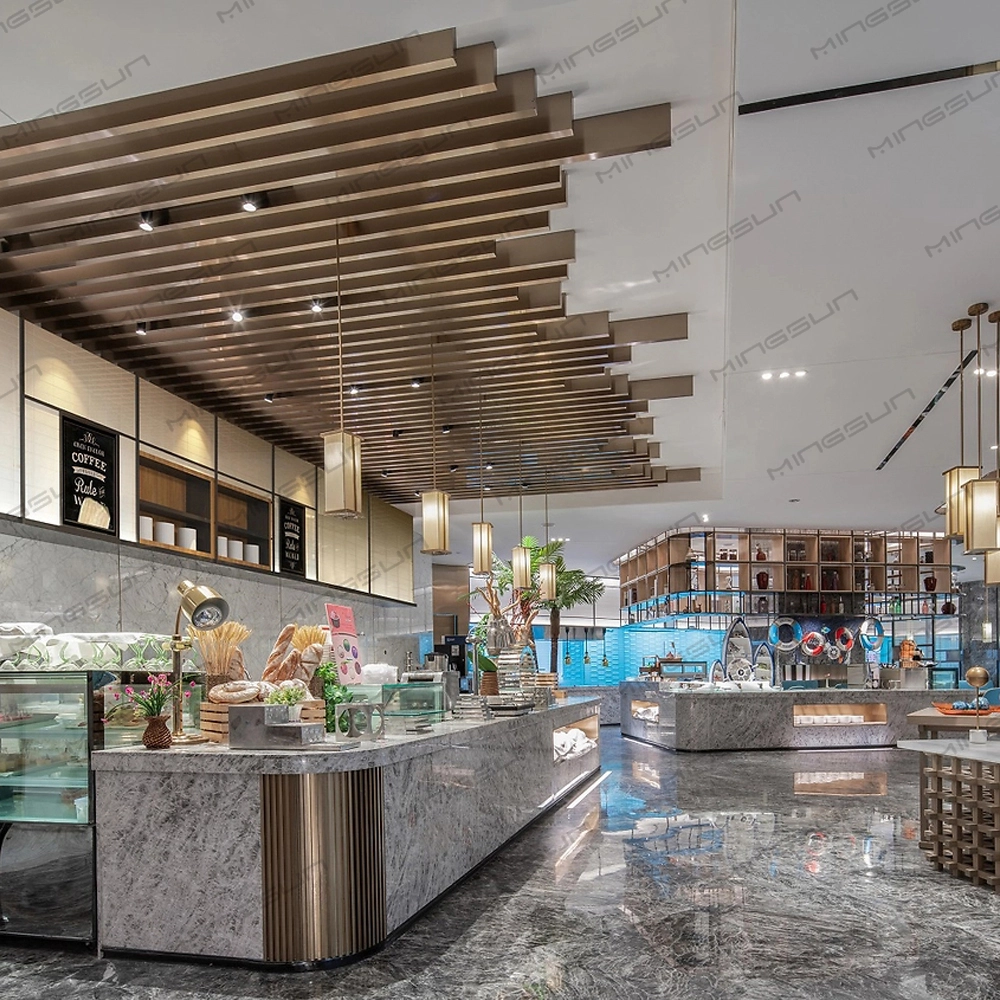
Modern Hotel Dining Furniture Set-Custom Designed Wooden Tables, Upholstered Chairs & Banquette Seating
Create a lasting impression with our custom-designed hotel dining furniture set, crafted for modern luxury hotels and upscale restaurants.
Featuring elegant wooden tables, ergonomic blue-upholstered chairs, and built-in banquette seating, this collection blends comfort, style, and durability.
As a leading manufacturer in Guangzhou, we deliver end-to-end solutions - from concept design and 3D visualization to production and global shipping - all at factory-direct prices.
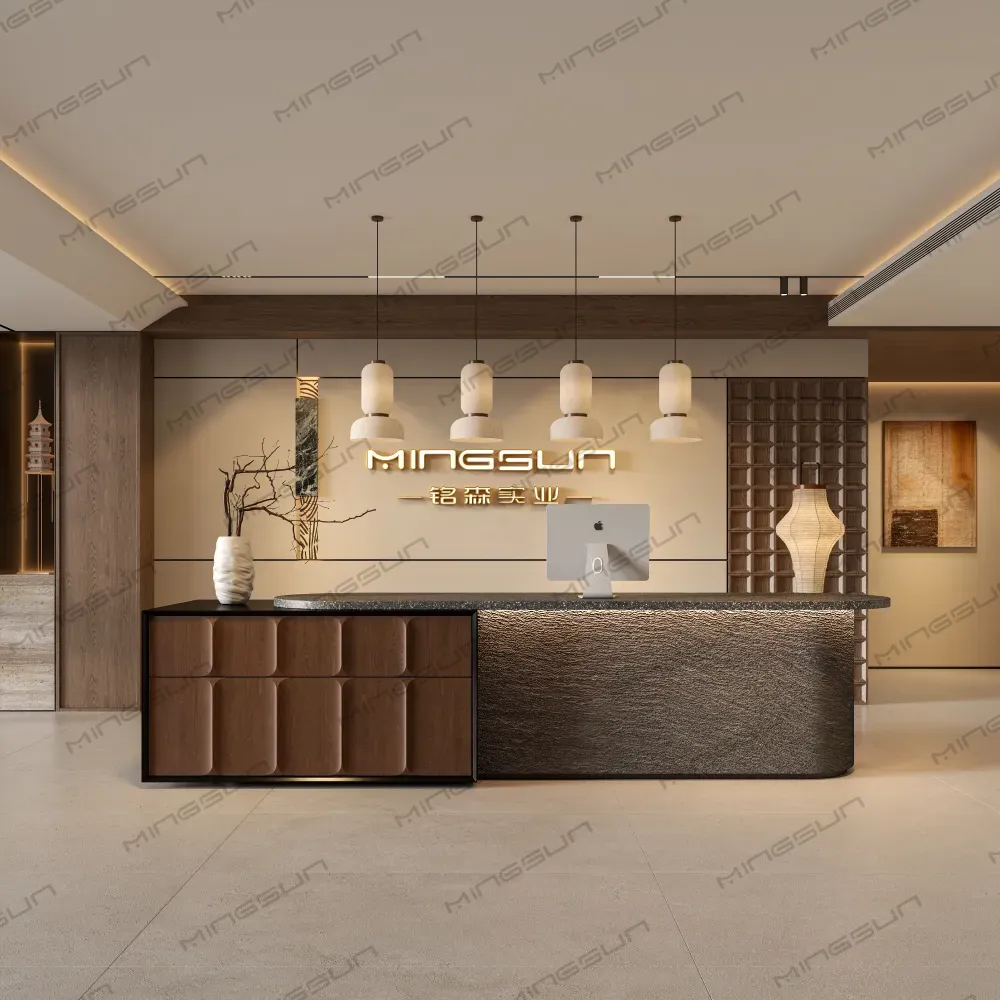
Luxury Textured Stone & Walnut Veneer Reception Desk with 3D Relief Detailing
Create a sophisticated, organic atmosphere in your hotel lobby or boutique showroom with this avant-garde reception desk. Combining the raw beauty of nature with refined craftsmanship, this desk features a striking contrast between materials. The main body showcases a dark, hammered-texture stone facade that offers a tactile, rugged elegance, topped with a polished grey terrazzo-style counter. This is seamlessly integrated with a rich walnut wood storage module, defined by its unique 3D pill-shaped relief carving on the drawer fronts. Soft, warm LED lighting concealed beneath the countertop edge highlights the textured stone surface, adding depth and warmth to the reception area.
Crafted by MINGSUN, a specialist in bespoke hospitality furniture, this piece is designed to be the focal point of high-end interiors. From our Guangzhou manufacturing hub, we deliver precision-engineered furniture to hotels worldwide. We offer a seamless experience from design customization to DDP global delivery and video-guided installation.
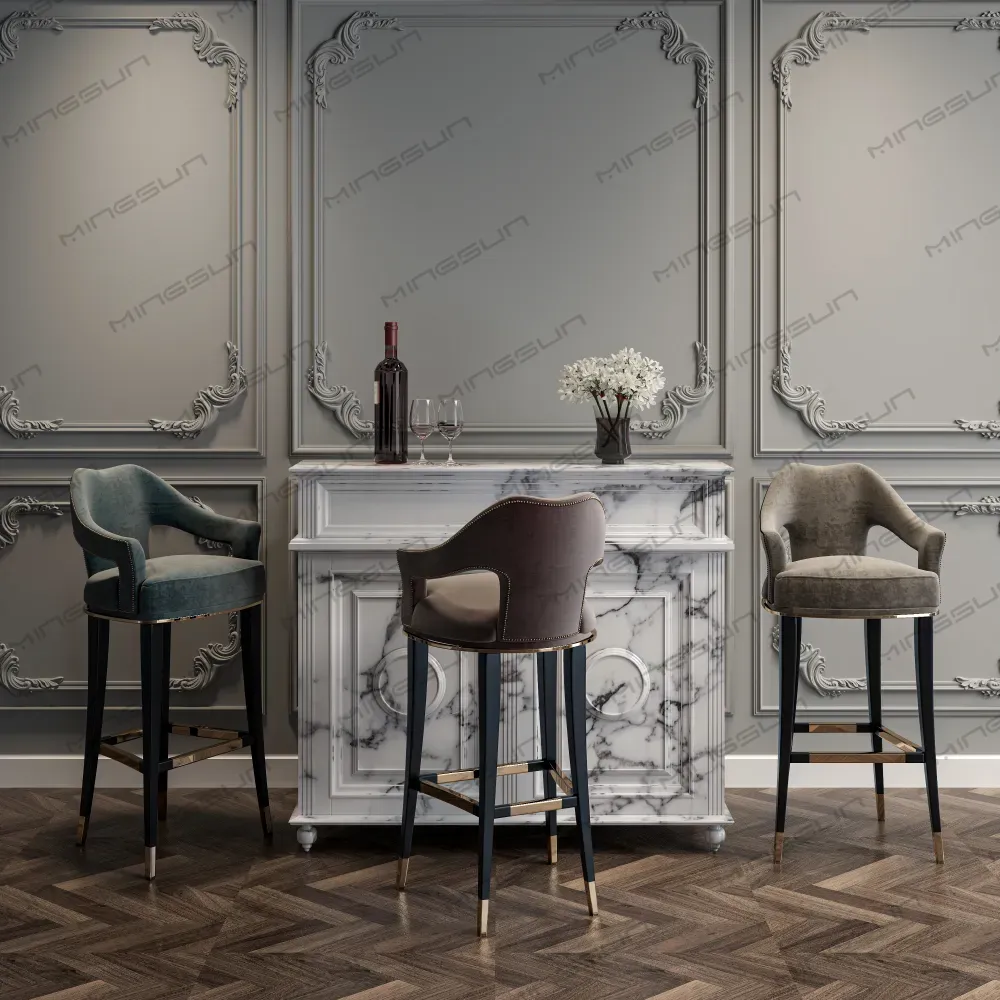
Luxury Velvet Bar Stool with Armrests & Brushed Brass Accents for Hotel Lounges and Bars
Elevate your hotel’s bar or lounge area with this opulent bar stool, where plush comfort meets sophisticated design. Upholstered in rich, deep-brown velvet, its sculptural back and integrated armrests offer ergonomic support, while the slender black metal frame is accented with polished brass at the feet and crossbars for a touch of timeless elegance. Perfect for high-end hospitality spaces, this stool combines refined aesthetics with durable construction, inviting guests to linger in style at your counter or cocktail station.
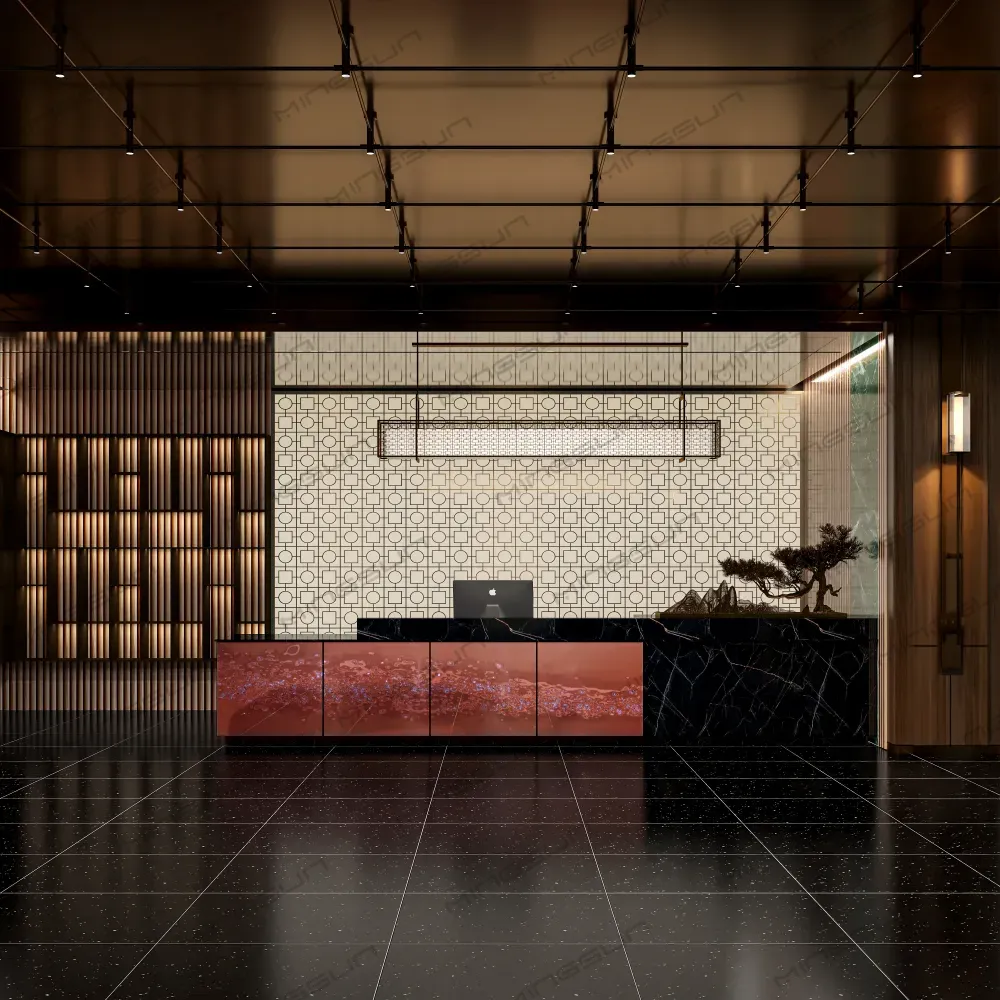
Luxury Reception Desk with Black Marble Top & Illuminated Copper-Resin Front Panels
Make a bold, unforgettable statement at your hotel’s entrance with this avant-garde reception desk. Its sleek black marble top exudes timeless sophistication, while the front facade features mesmerizing, internally lit copper-resin panels that glow with a warm, amber radiance, creating a dynamic visual centerpiece. Designed for both form and function, the unit offers ample concealed storage behind seamless doors and integrates a dedicated staff workstation with cable management. This is more than a check-in counter—it’s a sculptural installation that defines the luxury and artistry of your brand.
Get more industry insights
Looking for the right solution? Fill out the form and get a free quote.
Our experts will respond quickly with personalized options that fit your needs.
MINGSUN is a design-driven hotel furniture manufacturer offering OEM/ODM services, custom solutions, and global project support.
Built for wholesalers. Trusted by global buyers. Delivered with confidence.
Phone:
E-mail:
Follow us ——
 Scan QR Code
MINGSUN
MINGSUN
MINGSUN
MINGSUN
MS Custom Hotel Furniture Supplier