


Hospitality furniture color and material trends
- Design-forward hospitality furniture: palettes and materials shaping guest experiences
- Color trends for hospitality furniture: balancing brand and longevity
- Material trends for hospitality furniture: performance and provenance
- Durability and maintenance: how to evaluate hospitality furniture materials
- Fire, safety, and regulatory requirements for hospitality furniture
- Sustainability trends in hospitality furniture: circularity and transparency
- Design strategies: pairing colors and materials in hospitality furniture
- Regional and market variations in hospitality furniture trends
- Specifying hospitality furniture: a practical checklist
- MINGSUN: hospitality furniture manufacturing capabilities and advantages
- Case in point: cost-benefit of investing in performance fabrics
- FAQ: common questions about hospitality furniture color and material trends
- Contact & next steps
- References and further reading
Design-forward hospitality furniture: palettes and materials shaping guest experiences
In hospitality interiors, furniture is far more than functional objects: it communicates brand, supports operations, and directly shapes guest perceptions of comfort, safety, and value. Choosing the right colors and materials for hospitality furniture therefore requires balancing aesthetics, durability, maintainability, sustainability, and regulatory compliance. This article outlines current trends, presents practical selection guidance, and offers an actionable specification checklist for designers, procurement teams, and hotel operators.
Color trends for hospitality furniture: balancing brand and longevity
Color remains one of the fastest ways to express a brand in hospitality. Current directional trends favor palettes that support wellness, biophilia, and a sense of permanence rather than fast-fashion hues. Key directions include:
- Warm neutrals and ‘soft naturals’ — beiges, warm greys, and sand tones create versatile backdrops that age well and reduce guest fatigue. These tones support frequent reupholstery schedules and conceal minor wear.
- Biophilic greens and terracottas — colors inspired by nature, including olive, fern green, and warm clay, are popular in boutique hotels and F&B areas to convey calm and connection to place. Research links exposure to natural hues with improved guest wellbeing (see references).
- Jewel-tone accents — deep sapphire, emerald, and cognac act as accent colors for lounge seating and headboards to convey luxury while keeping larger surfaces neutral for longevity.
- Textured neutrals — woven neutrals and multi-tonal yarns add visual depth and help disguise soiling and wear better than flat solids.
Design teams often specify a restrained primary palette for large, high-touch surfaces (beds, banquet chairs) and reserve more expressive colors for replaceable accent items (lounge cushions, ottomans), balancing brand expression and lifecycle costs.
Material trends for hospitality furniture: performance and provenance
Materials selection in hospitality furniture now prioritizes performance, cleanability, and transparency about environmental impact. Notable material trends include:
- Performance textiles: Solution-dyed acrylics (e.g., Sunbrella), Crypton-treated fabrics, and other performance weaves that deliver high abrasion resistance, stain repellence, and simplified cleaning.
- Sustainable woods and engineered alternatives: Responsible-sourced solid woods and high-quality engineered wood (plywood, multi-ply, FSC-certified veneered panels) that offer dimensional stability and reduced waste.
- Durable laminates and compact surfaces: High-pressure laminates and compact phenolic for casegoods, headboards, and table surfaces where scratch and moisture resistance are priorities.
- Metal finishes: Brushed brass, burnished bronze, and matte black powder coats continue to dominate, with increased use of corrosion-resistant alloys and sealed finishes to extend life in high-humidity zones.
- Antimicrobial surface strategies: Specifying copper alloys or antimicrobial coatings in high-touch components (arm caps, rails) where local regulations and budgets support them.
Manufacturers and designers increasingly request documented test data (abrasion cycles, colorfastness, fire compliance) when specifying materials — see the specification checklist below.
Durability and maintenance: how to evaluate hospitality furniture materials
To make informed decisions, evaluate materials against operational reality: turnover cleaning regimes, spa or pool adjacency, food & beverage exposure, and regional climate. The table below compares common materials on attributes hotel teams care about.
| Material | Durability | Maintenance | Sustainability | Typical cost range | Best use |
|---|---|---|---|---|---|
| Solid hardwood (FSC available) | High (durable if sealed) | Periodic refinishing; avoid direct moisture | Good if FSC-certified | Mid–High | Casegoods, bespoke headboards, lobby joinery |
| Engineered wood / plywood | High (stable, less movement) | Low; veneer sealing required | Better yield than solid wood | Low–Mid | Guest-room furniture, cabinetry |
| High-pressure laminate / compact phenolic | Very high (scratch, moisture resistant) | Low | Varies; some recycled options | Low–Mid | Tabletops, bathroom vanities, reception desks |
| Performance fabrics (solution-dyed, Crypton) | High (high Martindale cycles/abrasion) | Machine cleanable/wipeable | Some lines have recycled fiber | Mid | Upholstery, headboards, banquettes |
| Genuine leather / corrected leather | High (if maintained) | Specific leather care; sensitive to spills | Animal-based; certified sources vary | High | Executive lounges, High Quality seating |
| Vinyl / TPU coated fabrics | Moderate–High | Wipe-clean; can trap heat/moisture | Some PVC concerns; greener TPU options | Low | Poolside seating, budget lodging |
| Metals (stainless, brass, aluminum) | Very high | Wipe clean; polish for certain finishes | Highly recyclable | Mid–High | Frames, legs, decorative trims |
Sources for performance claims include manufacturers' technical datasheets (e.g., Sunbrella, Crypton), industry standards (ISO/ASTM abrasion testing), and product certifications. Always request test certificates and aging data for critical applications.
Fire, safety, and regulatory requirements for hospitality furniture
Hospitality furniture must comply with local fire and safety standards. Common requirements include:
- Flammability standards for upholstery and mattresses: CAL TB 117-2013 (U.S.), BS 5852 (UK) or regional equivalents.
- Structural safety and stability: benches, chairs and tables often reference ANSI/BIFMA test methods for strength and durability.
- VOC limits for finishes and adhesives: many hotel projects require low-VOC paints, sealants and adhesives to meet certification goals.
Confirm compliance with local authorities and request certificates of compliance from manufacturers prior to purchase.
Sustainability trends in hospitality furniture: circularity and transparency
Sustainability is a non-negotiable trend for most major hospitality brands. Operators increasingly demand:
- Chain-of-custody certifications (e.g., FSC for wood) and environmental product declarations (EPDs) to quantify lifecycle impacts.
- Design-for-disassembly and modular elements to extend usable life and simplify refurbishment.
- Use of recycled content and low-VOC finishes to meet green building or brand sustainability targets.
Many hotels pursue certification programs (LEED, BREEAM, Green Key) that award points for responsible sourcing and low-emission materials. Request vendor documentation early to capture credits in project certifications.
Design strategies: pairing colors and materials in hospitality furniture
Practical pairing strategies:
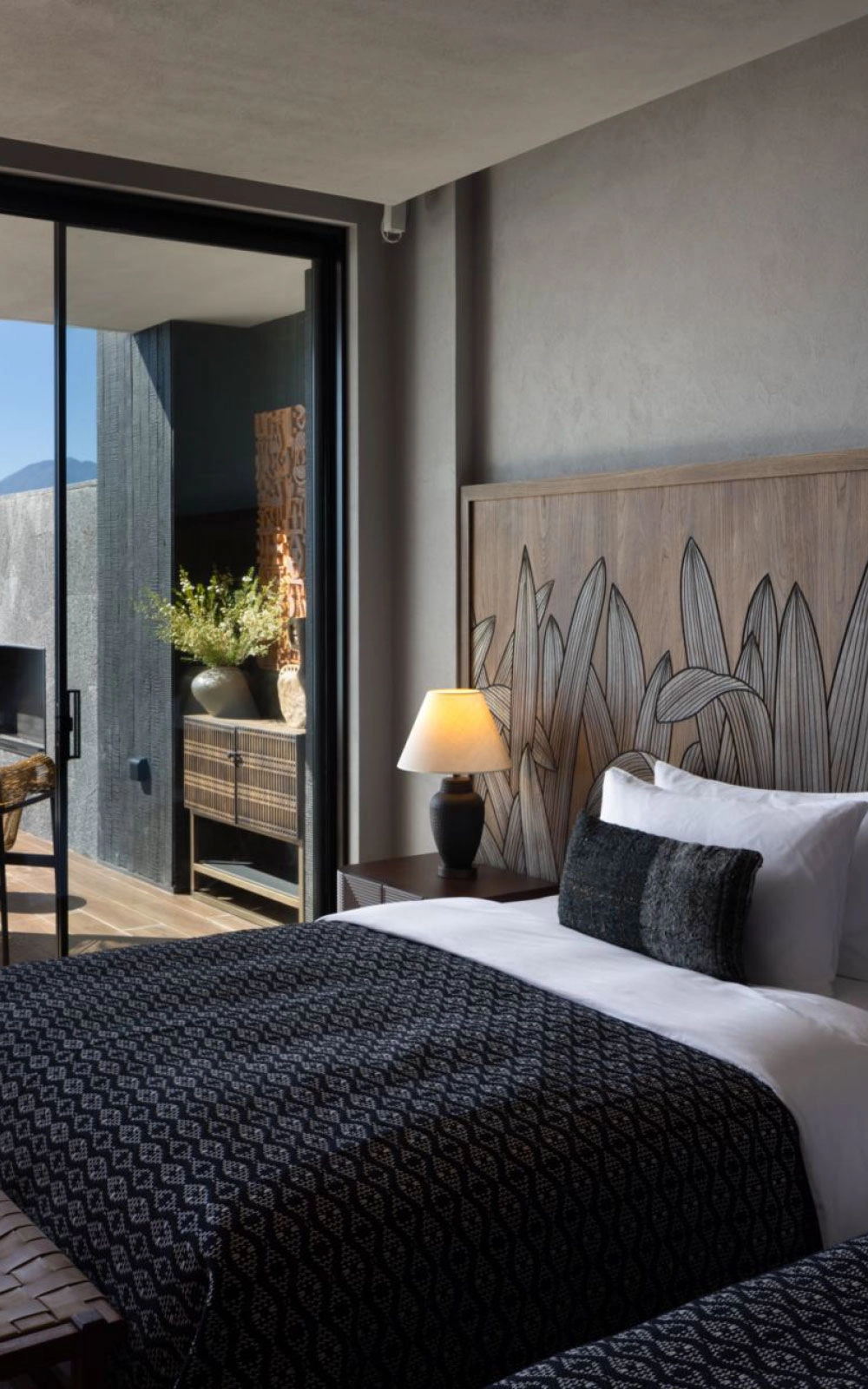
- Guest rooms: Pair warm neutral upholstery with a textured headboard material (veneered plywood or fabric panel) and a brass accent leg to balance resilience and perceived luxury.
- Lobbies: Use rich jewel-tone lounge seating as focal points against neutral, durable casegoods; choose stain-resistant textiles for high-traffic seating.
- Restaurant and bars: Specify wipeable tabletop surfaces and stain-resistant banquettes in durable performance fabrics; reserve leather/soft upholstery for low-turnover seating where appropriate.
Always test full-size mockups with selected finishes and textiles under site lighting to verify color shifts and texture interactions.
Regional and market variations in hospitality furniture trends
Preferences vary by market segment and geography. Examples include:
- Asia-Pacific: warm woods and curated local materials to reflect place identity.
- Europe: restrained palettes with an emphasis on natural textures and artisanal finishes.
- Middle East: high-contrast materials, metallic accents, and plush upholstery for luxury markets.
Understanding guest profiles and brand positioning is crucial to selecting a palette and material strategy that supports RevPAR goals.
Specifying hospitality furniture: a practical checklist
Use this checklist when procuring hospitality furniture products:
- Function & location: define expected use, cleaning regimes, and environmental exposure (poolside, high-humidity, dining area).
- Performance tests: request abrasion (Martindale or Wyzenbeek), colorfastness to light and cleaning agents, and seam tensile strength results.
- Fire & safety compliance: obtain certificates for relevant regional standards (CAL TB, BS 5852, or local codes).
- Material sourcing: ask for FSC or recycled content documentation and EPDs if sustainability claims are made.
- Warranty & service: define on-site support, spare parts availability, and reupholstery options.
- Mockups & sample approval: always approve full-scale samples under site lighting.
MINGSUN: hospitality furniture manufacturing capabilities and advantages
MINGSUN is a High Quality hotel furniture manufacturer based in Guangzhou, China, providing one-stop custom solutions for the hospitality industry. We specialize in the design, production, and global delivery of high-quality furniture for hotel guest rooms, lobbies, restaurants, banquet halls, and other commercial spaces.
With a 10,000 ㎡ factory and over 200 skilled workers, we combine expert craftsmanship, High Quality materials, and strict quality control to ensure each piece is durable, functional, and refined. Our in-house design team works closely with clients to develop tailored solutions that reflect each project's unique style and standards.
Committed to professionalism, reliability, and creativity, MINGSUN helps clients bring their hospitality visions to life—from concept to completion.
Why consider MINGSUN for hospitality furniture?
- Scale & flexibility: 10,000 ㎡ production capacity and experienced workforce enable both bespoke projects and large-scale fits.
- One-stop service: from design development to finishing, MINGSUN provides integrated project management, reducing coordination risk.
- Material expertise: experience with engineered woods, performance textiles, metal finishing, and protective laminates to meet specification demands.
- Quality control: in-house QC processes and test documentation help operators meet fire, durability, and warranty requirements.
- Product range: hotel bedroom furniture, hotel lounge furniture, hotel lobby furniture, hotel conference furniture, hotel restaurant tables and chairs—designed for market-relevant performance and aesthetics.
For projects seeking customized hospitality furniture that balances durability, design, and cost efficiency, manufacturers with integrated capabilities like MINGSUN are often a practical choice. Discuss technical requirements early to ensure finish selections and test documentation align with brand and regulatory needs.
Case in point: cost-benefit of investing in performance fabrics
Choosing a solution-dyed performance fabric (higher initial cost) versus a commodity woven (lower initial cost) can reduce reupholstery frequency and labor over a five- to seven-year cycle. Hotels often see lower total cost of ownership when factoring replacement, downtime, and guest satisfaction. Request lifecycle costing from suppliers as part of proposal evaluations.
FAQ: common questions about hospitality furniture color and material trends
Q1: How often should hotels reupholster or replace furniture?
A1: Lifecycle varies by product and usage. Guest-room casegoods often last 8–12 years with periodic maintenance; high-touch upholstery in public areas may need reupholstery every 3–6 years depending on traffic and material performance. Use expected abrasion cycles and operational load as guides.
Q2: Are performance fabrics noticeably different in feel from natural textiles?
A2: High-quality performance textiles can closely mimic natural weaves and finishes. Manufacturers like Sunbrella and Crypton offer soft-handed weaves with superior stain and UV resistance. Always request hand samples and full-size mockups.
Q3: Can I specify sustainable materials without raising costs significantly?
A3: In many cases yes — selecting engineered wood with FSC veneer, low-VOC finishes, or recycled-content laminates can be cost-neutral when compared to High Quality solid wood. Early specification and bulk procurement reduce High Qualitys.
Q4: Do antimicrobial surfaces eliminate the need for cleaning?
A4: No. Antimicrobial materials (e.g., copper alloys or treated surfaces) can reduce microbial load but do not replace regular cleaning protocols. They are a complementary strategy for high-touch points.
Q5: What documentation should I require from furniture manufacturers?
A5: Request test reports for abrasion, stain resistance, flammability certifications, VOC emissions, material source documentation (FSC, recycled content), warranty terms, and maintenance instructions.
Q6: How should color choices be adapted for lighting conditions?
A6: Always review color samples under the project lighting conditions (LED temperature, dimming levels). Colors can shift significantly between daylight and warm indoor lighting—approve full-size mockups onsite when possible.
Contact & next steps
If you’re specifying or sourcing hospitality furniture for upcoming projects, start by creating a concise specification package: expected use, cleaning regimen, required test standards, desired palette, and sustainability targets. For custom manufacturing solutions, production capacity and in-house design services can save time and reduce risk.
To discuss product options, technical data, or get a project quote, contact MINGSUN to review sample libraries, production capabilities, and project references. Explore product lines for hotel bedroom furniture, hotel lounge furniture, hotel lobby furniture, hotel conference furniture, and hotel restaurant tables and chairs.
References and further reading
- Pantone Color Institute — Pantone color trends and industry insights. https://www.pantone.com (accessed 2025-12-10)
- Sherwin-Williams Color Forecast — Color forecasting and palette guidance. https://www.sherwin-williams.com (accessed 2025-12-10)
- Sunbrella — Technical information on solution-dyed acrylic fabrics and performance data. https://www.sunbrella.com (accessed 2025-12-10)
- Crypton — Performance textile technologies and cleaning guidelines. https://www.crypton.com (accessed 2025-12-10)
- Forest Stewardship Council (FSC) — Chain of custody and wood certification. https://fsc.org (accessed 2025-12-10)
- U.S. Environmental Protection Agency — Copper alloys and public health guidance. https://www.epa.gov (accessed 2025-12-10)
- National Fire Protection Association (NFPA) — Fire safety codes and furniture-related guidance. https://www.nfpa.org (accessed 2025-12-10)
- Hospitality Design Magazine — industry trends and case studies. https://www.hospitalitydesign.com (accessed 2025-12-10)
For technical specification support, sample requests, or project quotes, contact a qualified hospitality furniture manufacturer or ask MINGSUN for detailed product datasheets and test certificates to support your procurement and design decisions.
Top Suppliers of Custom Hotel Lobby Furniture: What to Ask
Sustainable Luxury: Eco-Friendly Lobby Furniture Options
Top 10 hotel bar furniture Manufacturers and Supplier Brands in 2026
Top modern bar cabinet designs and trends 2026
Pricing, Payment & Packaging
What payment terms do you offer?
About Mingsun – Company Background
Does Mingsun have experience with overseas projects?
Product Scope & Application Areas
Do you provide samples?
Customization Capability & Design Support
Does Mingsun support customized hotel furniture?
After-Sales Service & Long-Term Cooperation
Do you provide after-sales support?
Make an appointment with us today
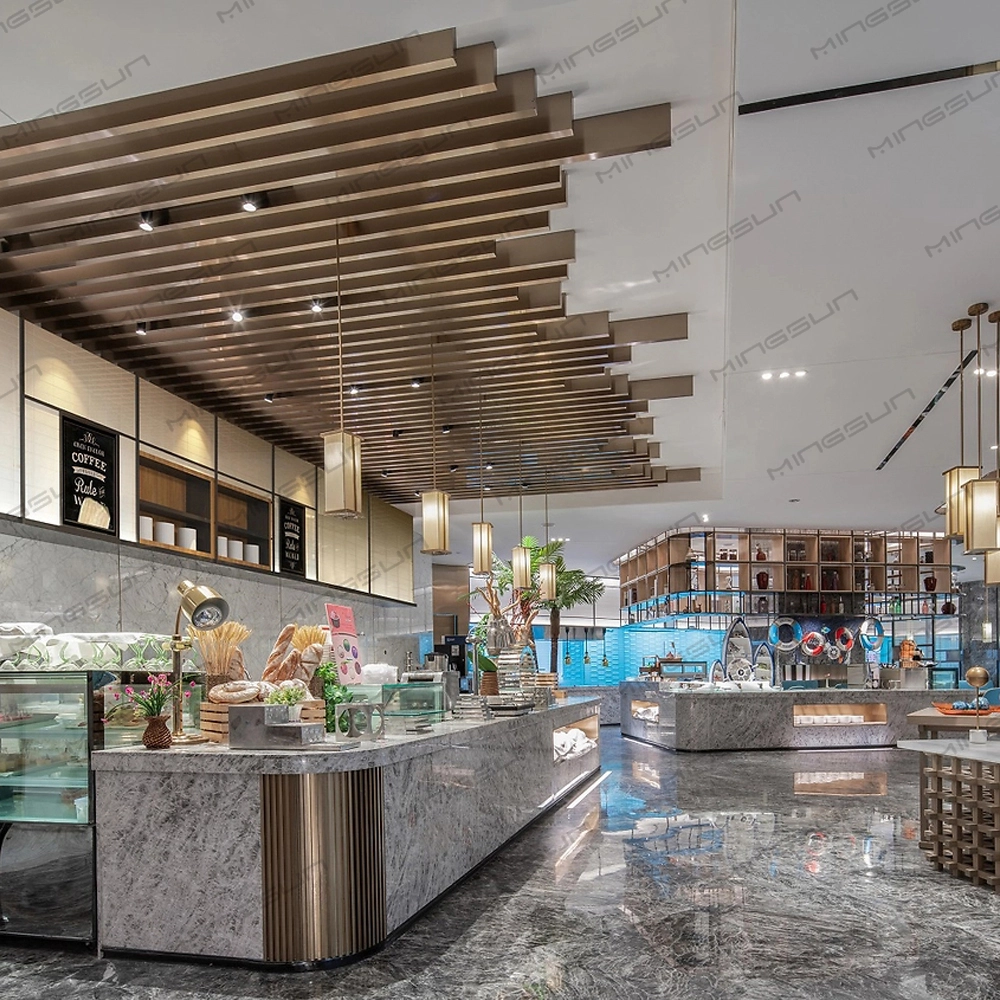
Modern Hotel Dining Furniture Set-Custom Designed Wooden Tables, Upholstered Chairs & Banquette Seating
Create a lasting impression with our custom-designed hotel dining furniture set, crafted for modern luxury hotels and upscale restaurants.
Featuring elegant wooden tables, ergonomic blue-upholstered chairs, and built-in banquette seating, this collection blends comfort, style, and durability.
As a leading manufacturer in Guangzhou, we deliver end-to-end solutions - from concept design and 3D visualization to production and global shipping - all at factory-direct prices.
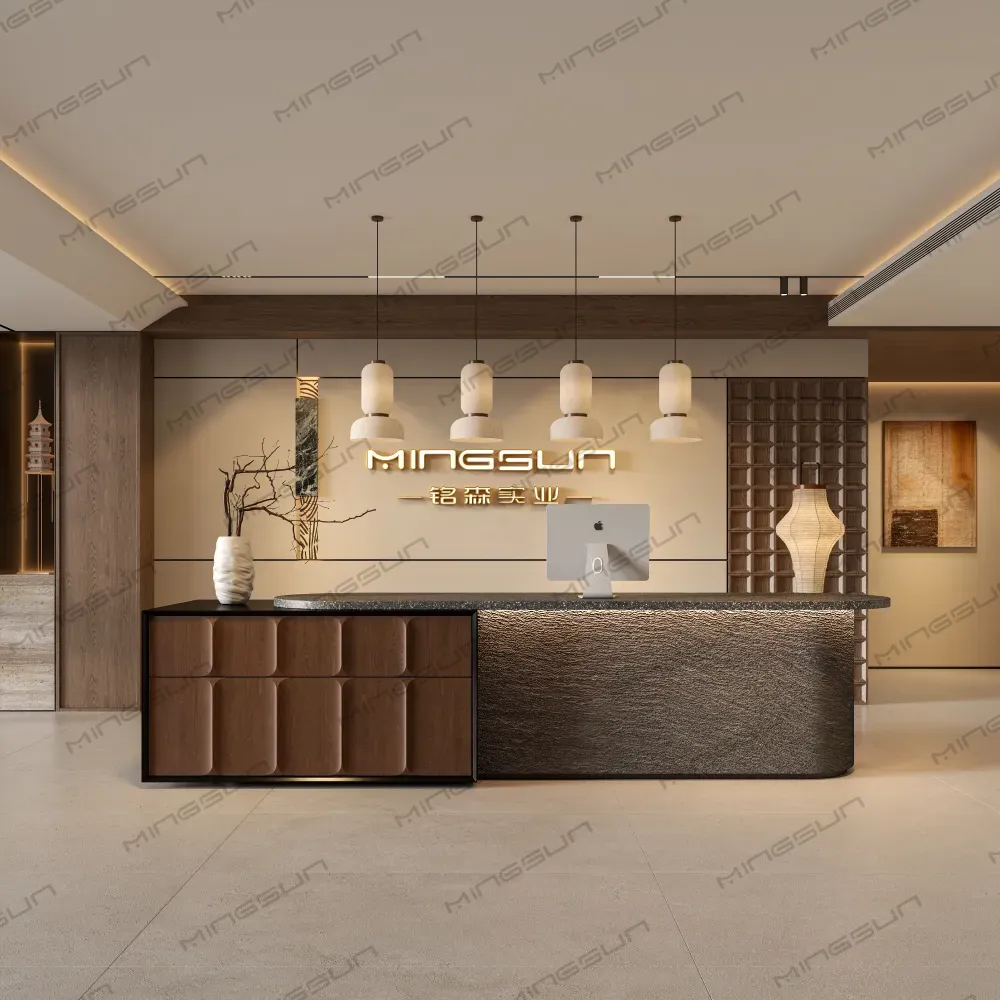
Luxury Textured Stone & Walnut Veneer Reception Desk with 3D Relief Detailing
Create a sophisticated, organic atmosphere in your hotel lobby or boutique showroom with this avant-garde reception desk. Combining the raw beauty of nature with refined craftsmanship, this desk features a striking contrast between materials. The main body showcases a dark, hammered-texture stone facade that offers a tactile, rugged elegance, topped with a polished grey terrazzo-style counter. This is seamlessly integrated with a rich walnut wood storage module, defined by its unique 3D pill-shaped relief carving on the drawer fronts. Soft, warm LED lighting concealed beneath the countertop edge highlights the textured stone surface, adding depth and warmth to the reception area.
Crafted by MINGSUN, a specialist in bespoke hospitality furniture, this piece is designed to be the focal point of high-end interiors. From our Guangzhou manufacturing hub, we deliver precision-engineered furniture to hotels worldwide. We offer a seamless experience from design customization to DDP global delivery and video-guided installation.
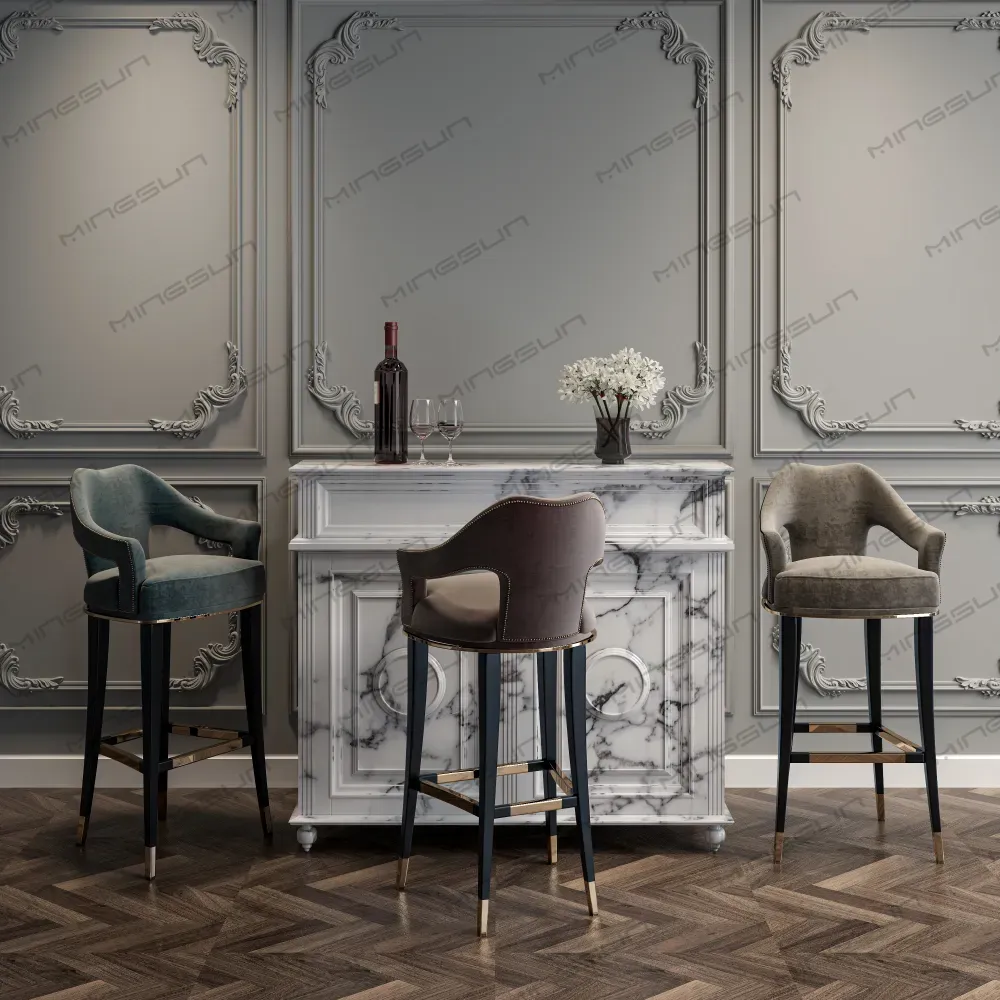
Luxury Velvet Bar Stool with Armrests & Brushed Brass Accents for Hotel Lounges and Bars
Elevate your hotel’s bar or lounge area with this opulent bar stool, where plush comfort meets sophisticated design. Upholstered in rich, deep-brown velvet, its sculptural back and integrated armrests offer ergonomic support, while the slender black metal frame is accented with polished brass at the feet and crossbars for a touch of timeless elegance. Perfect for high-end hospitality spaces, this stool combines refined aesthetics with durable construction, inviting guests to linger in style at your counter or cocktail station.
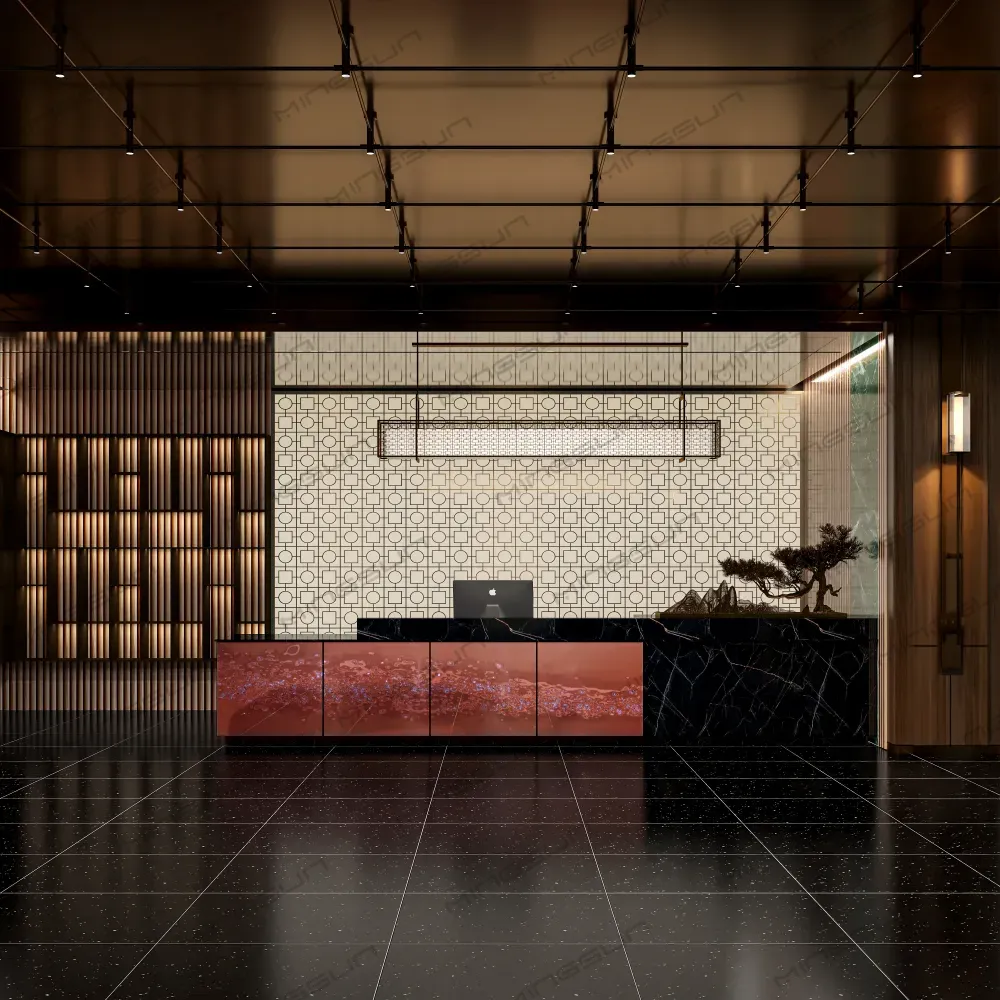
Luxury Reception Desk with Black Marble Top & Illuminated Copper-Resin Front Panels
Make a bold, unforgettable statement at your hotel’s entrance with this avant-garde reception desk. Its sleek black marble top exudes timeless sophistication, while the front facade features mesmerizing, internally lit copper-resin panels that glow with a warm, amber radiance, creating a dynamic visual centerpiece. Designed for both form and function, the unit offers ample concealed storage behind seamless doors and integrates a dedicated staff workstation with cable management. This is more than a check-in counter—it’s a sculptural installation that defines the luxury and artistry of your brand.
Get more industry insights
Looking for the right solution? Fill out the form and get a free quote.
Our experts will respond quickly with personalized options that fit your needs.
MINGSUN is a design-driven hotel furniture manufacturer offering OEM/ODM services, custom solutions, and global project support.
Built for wholesalers. Trusted by global buyers. Delivered with confidence.
Phone:
E-mail:
Follow us ——
 Scan QR Code
MINGSUN
MINGSUN
MINGSUN
MINGSUN
MS Custom Hotel Furniture Supplier