


Maintenance tips for hospitality furniture
- Proactive maintenance strategies for hospitality furniture
- Why maintenance matters for hospitality furniture
- Establishing a maintenance program for hospitality furniture
- Inventory, tagging and lifecycle planning for hospitality furniture
- Daily and weekly cleaning routines (frontline operational needs)
- Material-specific maintenance: wood, veneer and laminates
- Material-specific maintenance: metal frames and hardware
- Material-specific maintenance: upholstery and textiles
- Material-specific maintenance: leather and faux leather
- Repair workflow and small-works strategies to minimize downtime
- When to repair vs when to replace: a decision framework
- Maintenance schedule: recommended frequencies and responsibilities
- Cleaning agents and disinfectants: safe choices and infection control
- Training and SOPs: embedding knowledge in operations
- Spares, parts and vendor relationships
- Sustainability and waste reduction through maintenance
- Budgeting: forecasting maintenance and replacement costs
- Emergency response for stains, guest damage, and incidents
- Quality control and standards: integrating supplier capabilities
- MINGSUN: partner capabilities for maintenance-friendly hospitality furniture
- Measuring success: KPIs and continuous improvement
- Final checklist: implementing a practical maintenance program
- Frequently Asked Questions (FAQs)
- References
Proactive maintenance strategies for hospitality furniture
Why maintenance matters for hospitality furniture
Hospitality furniture is a high-use, high-visibility asset that directly affects guest experience, brand perception, operational costs, and safety. Proper maintenance preserves appearance, reduces replacement frequency, and minimizes service disruptions — all of which improve a hotel's bottom line. In practice, an effective maintenance program reduces lifecycle costs, limits guest complaints, and supports sustainability goals by extending furniture life and reducing waste.
Establishing a maintenance program for hospitality furniture
Start with a documented maintenance plan that ties to business goals (guest satisfaction scores, renovation cycles, and capex budgeting). Key components are: inventory and asset tagging, scheduled cleaning and inspections, staff roles and training, spare-part and repair workflows, warranty and supplier management, and performance metrics (e.g., number of repairs per month, time-to-repair).
Inventory, tagging and lifecycle planning for hospitality furniture
Use consistent asset tags (barcode or RFID) and record: item type, room/location, purchase date, manufacturer, material specification, warranty, and historical repairs. This data lets you model lifecycle replacement windows and prioritize preventive maintenance. Industry practitioners commonly plan for guestroom refreshes on a 7–10 year cycle for soft goods and 10–15 years for casegoods, adjusting for occupancy and wear patterns. Use inventory data to forecast capex and to negotiate spare-part availability with suppliers.
Daily and weekly cleaning routines (frontline operational needs)
Daily cleaning routines preserve immediate appearance and hygiene. Train housekeeping to follow manufacturer-approved cleaning methods to avoid damaging finishes and textiles. Key actions include dusting, vacuuming upholstery (with soft brush), spot-cleaning spills immediately, checking for loose joints or safety hazards, and logging any damage.
Material-specific maintenance: wood, veneer and laminates
Wood and wood-based surfaces are common in guest rooms and public areas. Best practices:
- Dust daily with microfiber to avoid surface micro-scratches.
- Use pH-neutral wood cleaners for periodic cleaning; avoid ammonia or bleach-based products that strip finishes.
- Address surface scratches with manufacturer-approved touch-up kits; deeper damage may need veneer patching or panel replacement.
- Control humidity (ideally 40–60%) to limit swelling or cracking in solid wood components.
Material-specific maintenance: metal frames and hardware
Metal hotel furniture (steel, aluminum, brass) requires attention to corrosion and joint integrity. Routine maintenance includes:
- Wipe with mild detergent and water; dry promptly to avoid water spots.
- Inspect welds, bolts, and fasteners monthly; torque or replace loose hardware.
- For powder-coated finishes, repair chips quickly with touch-up paint to prevent rust.
- Use appropriate lubricants on moving parts (slides, hinges) per manufacturer guidance.
Material-specific maintenance: upholstery and textiles
Textiles are both a comfort and an infection-control concern. Best practices:
- Vacuum upholstery regularly and rotate cushions to even wear.
- Follow textile cleaning codes (W/S/SO/C) — water-based cleaners, solvent cleaners, or dry-cleaning as specified by the manufacturer.
- For high-traffic items, choose commercial-grade fabrics with stain-resistant finishes and inspect seams and webbing quarterly.
- Use approved disinfectants when needed (follow health authority guidance to avoid fabric damage and consider contact time and dilution).
Material-specific maintenance: leather and faux leather
Leather requires different care than synthetics. Recommendations:
- Dust and vacuum regularly; wipe spills quickly with a damp cloth.
- Condition leather semi-annually with a pH-balanced leather conditioner to prevent drying and cracking.
- Avoid alcohol-based cleaners and prolonged exposure to direct sunlight to prevent fading.
- Faux leather can be cleaned with mild soap and water; check manufacturer instructions for disinfectants.
Repair workflow and small-works strategies to minimize downtime
For common in-room repairs (loose screws, upholstery snags, broken casters), establish a rapid-response small-works team with a stocked cart of commonly used parts. Standardize repair procedures and parts lists so maintenance staff can complete most interventions without external contractors. For more complex repairs (structural damage, reupholstery), have vetted vendor contracts and clear SLAs.
When to repair vs when to replace: a decision framework
Use a simple decision matrix to guide repair vs replace decisions based on safety, function, appearance, and cost:
| Criteria | Repair | Replace |
|---|---|---|
| Safety | If structural integrity intact and repair restores safety | Immediate replace if repair cannot ensure safety |
| Function | Repair if operation restored and downtime short | Replace if recurrent failures or obsolete function |
| Appearance | Repair for localized damage (surface scratches) | Replace for widespread wear affecting guest perception |
| Cost | Repair if < 30–40% of replacement cost and lifecycle benefit | Replace if repair cost approaches replacement or remaining life short |
Note: the 30–40% rule is an industry heuristic used by many asset managers; apply alongside operational considerations.
Maintenance schedule: recommended frequencies and responsibilities
Below is a practical schedule that many hotel operators adopt. Customize by property type (luxury vs economy), occupancy rate, and site-specific wear.
| Task | Frequency | Responsible |
|---|---|---|
| Visual inspection of guestroom furniture (joints, upholstery, stains) | Daily (by housekeeping) | Housekeeping / Frontline |
| Vacuum/surface clean upholstery and textiles | Daily–Weekly | Housekeeping |
| Inspect and tighten loose hardware | Monthly | Maintenance team |
| Deep clean upholstery / professional cleaning | Quarterly–Biannually | Vendor / Maintenance |
| Check and treat leather conditioning | Semi-annually | Maintenance / Vendor |
| Full furniture audit and minor refurbishments | Annually | Asset Manager / Purchasing |
Cleaning agents and disinfectants: safe choices and infection control
Follow manufacturer cleaning codes and health authority guidance for disinfectants. The U.S. Centers for Disease Control and Prevention (CDC) provides protocols for cleaning and disinfection of public environments — use only approved disinfectants at the recommended dilutions and contact times to ensure effectiveness while avoiding damage to finishes and textiles.
Training and SOPs: embedding knowledge in operations
Create short, task-based SOPs (standard operating procedures) and visual job aids for housekeeping and maintenance staff. Include product-specific instructions, allowed/prohibited chemicals, and escalation steps. Regular refresher training reduces accidental damage and ensures consistent quality.
Spares, parts and vendor relationships
Maintain a parts inventory for high-failure items (casters, glides, hinges, drawer slides). Negotiate spare-part availability and lead times with furniture suppliers, and capture warranty terms in your asset database. Strong supplier relationships shorten repair cycles and can provide factory-level spare components that fit correctly and preserve finish consistency.
Sustainability and waste reduction through maintenance
Extending furniture life is a core sustainability action. Reupholstering, replacing components, and repairing structural elements can divert significant waste from landfill. Track repair vs replacement rates and include refurbishment options in procurement contracts. Many operators now specify modular designs and replaceable components to lower lifecycle environmental impact.
Budgeting: forecasting maintenance and replacement costs
Use historical repair data and asset age to build a rolling forecast for maintenance and replacement. Key metrics: annual maintenance cost per room, average time-to-repair, and replacement cost per item. These KPIs feed into capex planning and inform decisions on quality levels at procurement.
Emergency response for stains, guest damage, and incidents
Have a rapid-response protocol for guest-room incidents (stains, broken glass, spills) that includes: immediate containment steps, approved cleaning solutions, temporary furniture replacements (folding chairs, portable lamps), and documentation for insurance or guest billing. Quick, professional handling reduces negative reviews and potential claims.
Quality control and standards: integrating supplier capabilities
Work with manufacturers that can support maintenance needs: consistent finishes for touch-ups, modular parts, and clear cleaning instructions. Standards organizations such as BIFMA offer guidance on durability testing, and quality management systems (ISO 9001) indicate a supplier’s process maturity — both are useful selection criteria when sourcing hospitality furniture.
MINGSUN: partner capabilities for maintenance-friendly hospitality furniture
MINGSUN is a High Quality hotel furniture manufacturer based in Guangzhou, China, providing one-stop custom solutions for the hospitality industry. We specialize in the design, production, and global delivery of high-quality furniture for hotel guest rooms, lobbies, restaurants, banquet halls, and other commercial spaces.
With a 10,000 ㎡ factory and over 200 skilled workers, MINGSUN combines expert craftsmanship, High Quality materials, and strict quality control to ensure each piece is durable, functional, and refined. Our in-house design team works closely with clients to develop tailored solutions that reflect each project's unique style and standards.
MINGSUN advantages and product strengths:
- Comprehensive product range: hotel bedroom furniture, hotel lounge furniture, hotel lobby furniture, hotel conference furniture, hotel restaurant tables and chairs.
- Manufacturing capacity: 10,000 ㎡ production facility and a skilled workforce to manage both standard and bespoke orders.
- Quality control: strict QC processes and material sourcing policies to ensure long service life and simplified maintenance (consistent finishes, replaceable components).
- Design-to-delivery: in-house designers provide maintainable design solutions—modular elements, standardized hardware, and clear cleaning/maintenance guidance.
- Global logistics support: experience with international exports and spare-part deliveries to minimize downtime during maintenance periods.
For operators seeking furniture that is easier to maintain, MINGSUN’s approach focuses on durability, repairability, and documentation—reducing lifecycle costs and supporting sustainability goals. Contact MINGSUN for tailored maintenance-friendly specifications and spare-part programs to fit your property’s operational model.
Measuring success: KPIs and continuous improvement
Track KPIs such as mean time between failures (MTBF), average repair cost, percentage of assets refurbished vs replaced, and guest complaints related to furniture. Use these metrics to refine procurement specifications and maintenance SOPs. Continuous improvement cycles lead to lower costs and higher guest satisfaction over time.
Final checklist: implementing a practical maintenance program
- Create an asset register with tags and lifecycle data.
- Develop SOPs for daily cleaning, stain response, and repairs.
- Train staff on manufacturer-approved cleaning and repair methods.
- Stock common spare parts and establish vendor SLAs for bigger repairs.
- Schedule periodic deep cleaning and annual audits.
- Measure performance and update procurement specs based on real-world wear data.
Frequently Asked Questions (FAQs)
- How often should hotel furniture be professionally cleaned?
Professional deep-cleaning frequency depends on traffic: high-use public areas quarterly, guestrooms biannually to annually, and spot-clean as needed. Adjust depending on occupancy and visible soiling.
- Can you use household cleaners on hotel furniture?
Only use products approved by the furniture manufacturer. Household cleaners with bleach, ammonia, or high alcohol content can damage finishes and fabrics. Always test in an inconspicuous area first.
- What is the typical useful life of hospitality furniture?
Useful life varies: soft goods (upholstery and fabrics) commonly 7–10 years; casegoods and solid furniture often 10–15 years. Lifecycle depends on build quality, usage intensity, and maintenance rigor.
- How do we reduce costs from frequent furniture repairs?
Standardize on durable materials, maintain an inventory of spare parts, train staff for first-line repairs, and negotiate supplier support for warranty and spare availability. Preventive maintenance is more cost-effective than reactive replacement.
- Should we refurbish or replace tired-looking furniture?
Refurbish when structural components are sound and damage is surface-level (finish wear, upholstery). Replace when structural integrity is compromised, guest perception is significantly affected, or when cost of repair nears replacement cost.
- How do manufacturers like MINGSUN support maintenance?
Manufacturers can provide spare-part kits, modular component designs, documented cleaning and repair procedures, and scheduled supply of replacement elements to reduce downtime and ensure finish consistency.
Want tailored maintenance guidance or furniture solutions that minimize lifecycle costs? Contact MINGSUN for a consultation, maintenance-friendly design specifications, or to view our product catalog and sample maintenance plans.
References
- U.S. Centers for Disease Control and Prevention (CDC) — Cleaning and Disinfecting Your Facility: https://www.cdc.gov/coronavirus/2019-ncov/community/disinfecting-building-facility. (accessed 2025-12-15)
- BIFMA (Business and Institutional Furniture Manufacturers Association) — Standards and durability testing: https://www.bifma.org/ (accessed 2025-12-15)
- ISO — ISO 9001 Quality Management: https://www.iso.org/iso-9001-quality-management. (accessed 2025-12-15)
- Occupational Safety and Health Administration (OSHA) — General workplace safety guidance: https://www.osha.gov/ (accessed 2025-12-15)
- American Hotel & Lodging Association (AHLA) — Industry information and guidance: https://www.ahla.com/ (accessed 2025-12-15)
- HospitalityNet — Industry articles and best practices (general): https://www.hospitalitynet.org/ (accessed 2025-12-15)
China hotel furniture manufacturing trends 2025
Hotel Front Desk Design Trends for 2026: Custom Solutions
Durable materials for hotel modern bar cabinets
How to source China hotel furniture: buyer's guide
Pricing, Payment & Packaging
How is pricing calculated? Does customization increase the cost?
Customization Capability & Design Support
Does Mingsun support customized hotel furniture?
Does Mingsun provide design services?
Materials, Craftsmanship & Quality Control
How are quality issues handled?
Product Scope & Application Areas
Can you provide a full hotel furniture package?
Make an appointment with us today
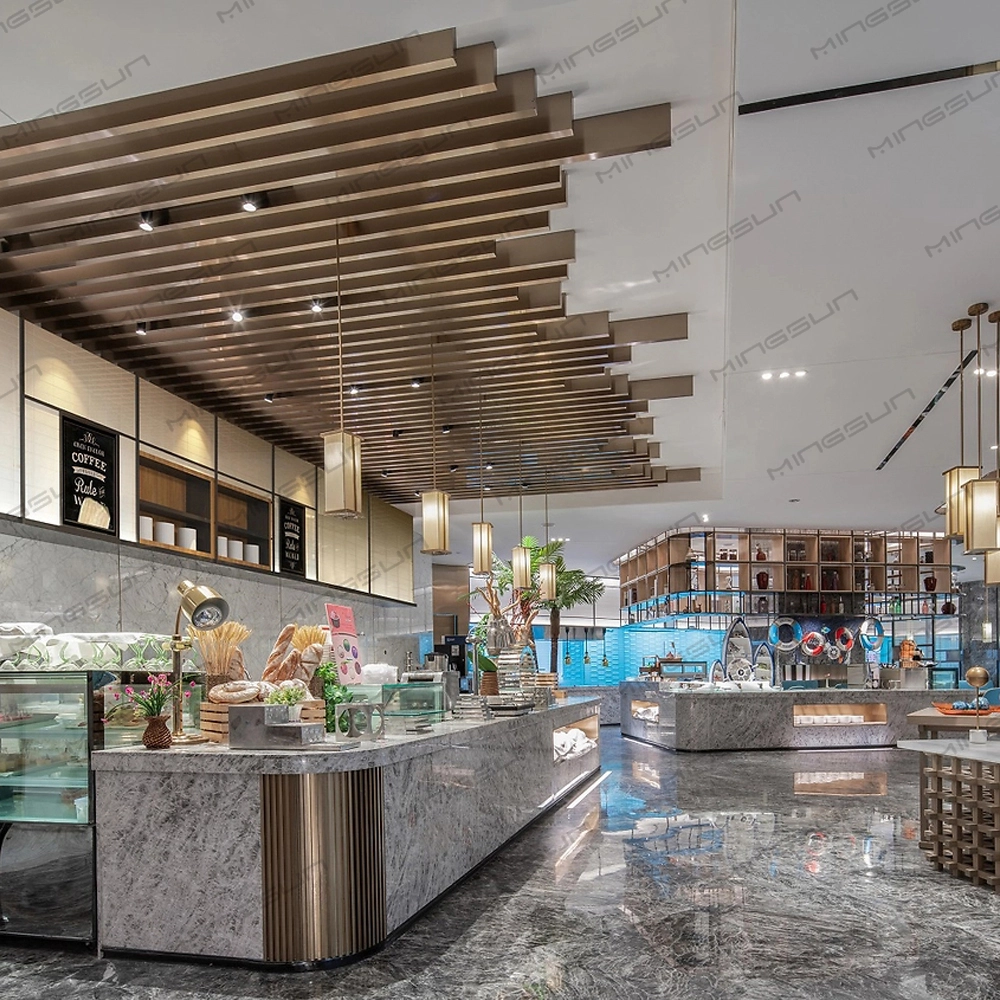
Modern Hotel Dining Furniture Set-Custom Designed Wooden Tables, Upholstered Chairs & Banquette Seating
Create a lasting impression with our custom-designed hotel dining furniture set, crafted for modern luxury hotels and upscale restaurants.
Featuring elegant wooden tables, ergonomic blue-upholstered chairs, and built-in banquette seating, this collection blends comfort, style, and durability.
As a leading manufacturer in Guangzhou, we deliver end-to-end solutions - from concept design and 3D visualization to production and global shipping - all at factory-direct prices.
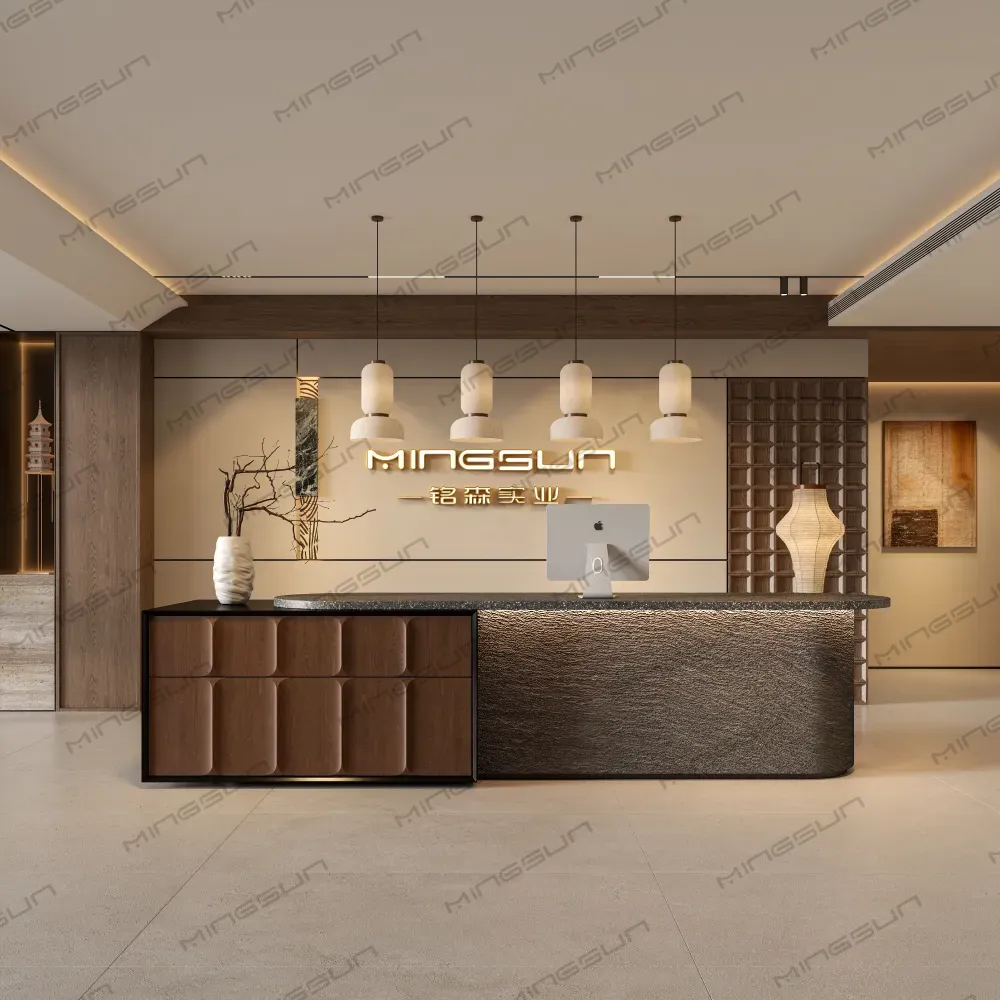
Luxury Textured Stone & Walnut Veneer Reception Desk with 3D Relief Detailing
Create a sophisticated, organic atmosphere in your hotel lobby or boutique showroom with this avant-garde reception desk. Combining the raw beauty of nature with refined craftsmanship, this desk features a striking contrast between materials. The main body showcases a dark, hammered-texture stone facade that offers a tactile, rugged elegance, topped with a polished grey terrazzo-style counter. This is seamlessly integrated with a rich walnut wood storage module, defined by its unique 3D pill-shaped relief carving on the drawer fronts. Soft, warm LED lighting concealed beneath the countertop edge highlights the textured stone surface, adding depth and warmth to the reception area.
Crafted by MINGSUN, a specialist in bespoke hospitality furniture, this piece is designed to be the focal point of high-end interiors. From our Guangzhou manufacturing hub, we deliver precision-engineered furniture to hotels worldwide. We offer a seamless experience from design customization to DDP global delivery and video-guided installation.
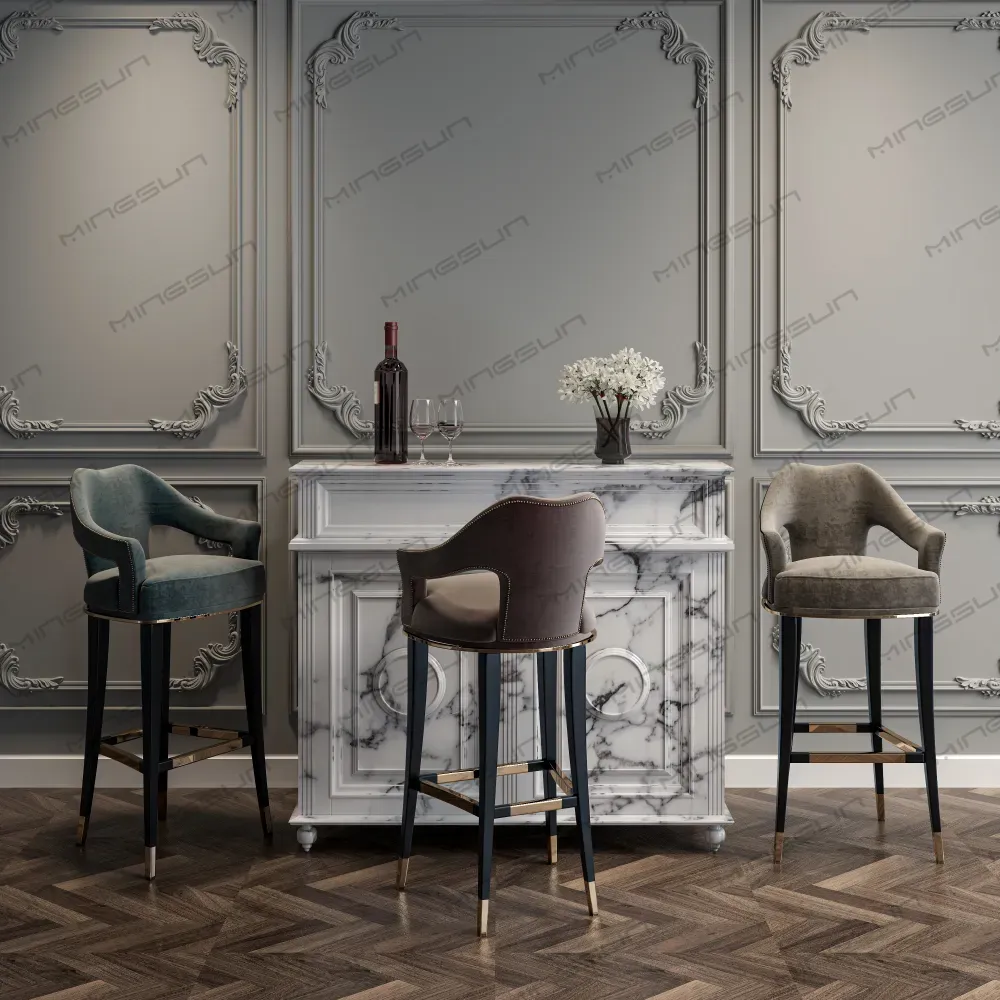
Luxury Velvet Bar Stool with Armrests & Brushed Brass Accents for Hotel Lounges and Bars
Elevate your hotel’s bar or lounge area with this opulent bar stool, where plush comfort meets sophisticated design. Upholstered in rich, deep-brown velvet, its sculptural back and integrated armrests offer ergonomic support, while the slender black metal frame is accented with polished brass at the feet and crossbars for a touch of timeless elegance. Perfect for high-end hospitality spaces, this stool combines refined aesthetics with durable construction, inviting guests to linger in style at your counter or cocktail station.
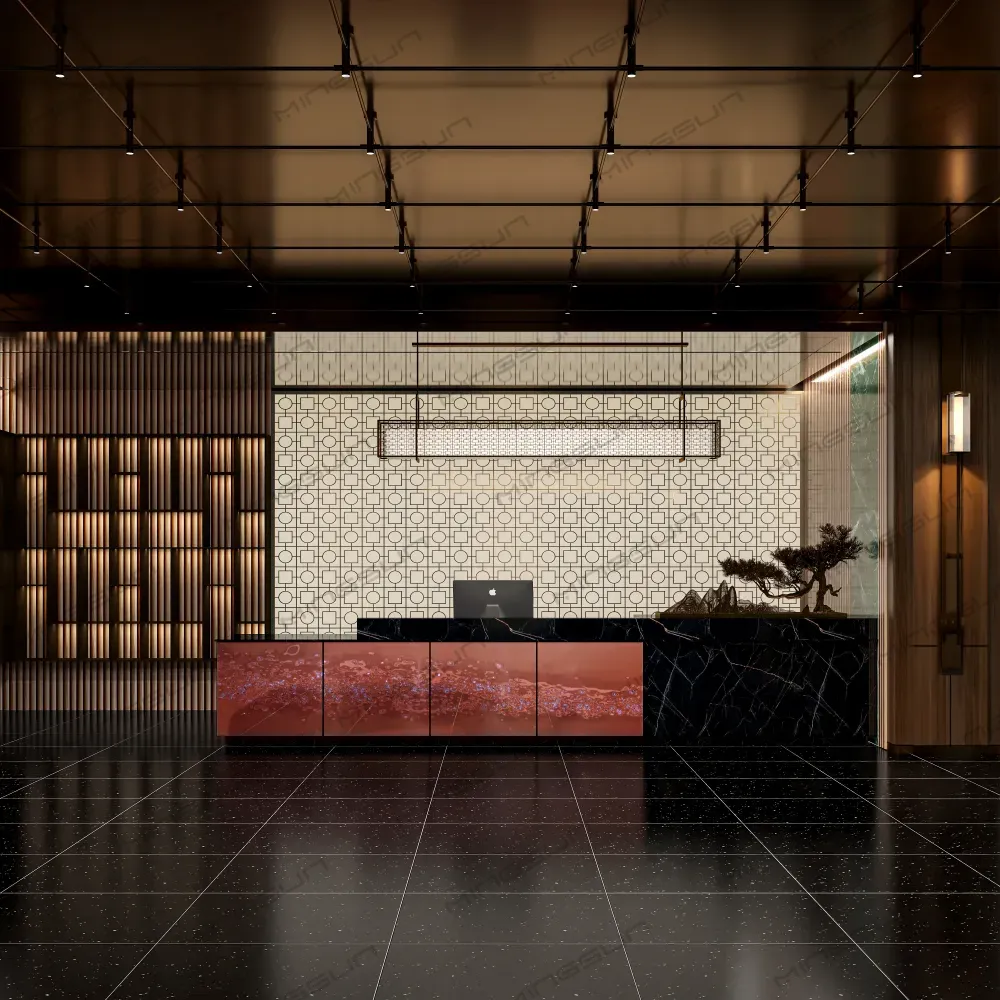
Luxury Reception Desk with Black Marble Top & Illuminated Copper-Resin Front Panels
Make a bold, unforgettable statement at your hotel’s entrance with this avant-garde reception desk. Its sleek black marble top exudes timeless sophistication, while the front facade features mesmerizing, internally lit copper-resin panels that glow with a warm, amber radiance, creating a dynamic visual centerpiece. Designed for both form and function, the unit offers ample concealed storage behind seamless doors and integrates a dedicated staff workstation with cable management. This is more than a check-in counter—it’s a sculptural installation that defines the luxury and artistry of your brand.
Get more industry insights
Looking for the right solution? Fill out the form and get a free quote.
Our experts will respond quickly with personalized options that fit your needs.
MINGSUN is a design-driven hotel furniture manufacturer offering OEM/ODM services, custom solutions, and global project support.
Built for wholesalers. Trusted by global buyers. Delivered with confidence.
Phone:
E-mail:
Follow us ——
 Scan QR Code

MINGSUN
MINGSUN
MINGSUN
MINGSUN
MS Custom Hotel Furniture Supplier