


Maintenance Tips to Extend Hotel Bar Furniture Life
- Why proactive maintenance matters in hospitality
- Cost control and lifecycle extension
- Guest safety, comfort and brand standards
- Material-specific maintenance strategies
- Wood and veneered surfaces
- Metal, stone and engineered surfaces
- Upholstery: fabrics, leather and vinyl
- Operational protocols, cleaning schedules and quick repairs
- Daily and weekly maintenance tasks
- Deep cleaning, refinishing and scheduled overhaul
- Quick repairs that prevent escalation
- Design decisions to reduce maintenance burden
- Selecting materials aligned to the bar environment
- Design for accessibility, repair and modularity
- Balancing aesthetics and durability
- Practical reference: maintenance frequency and tasks
- Partnering with manufacturers and suppliers for longevity
- Why choose a specialist hospitality furniture manufacturer
- MINGSUN: a practical supplier example
- Specifying for maintainability: checklist for procurement
- Measuring success and continuous improvement
- KPIs to track furniture performance
- Continuous training and knowledge sharing
- Frequently Asked Questions (FAQ)
- 1. How often should I reseal a stone or wood bar top?
- 2. Can I use household cleaners on commercial bar furniture?
- 3. What upholstery materials are easiest to maintain for a busy hotel bar?
- 4. When should I reupholster vs. replace furniture?
- 5. How can design changes reduce long-term maintenance?
- 6. Is it worth investing in spare-part inventories?
Summary for and search: Effective maintenance of hotel bar furniture improves guest experience, reduces lifecycle costs, and supports consistent hotel bar design standards across locations. This guide covers material-specific care for wood, metal, stone, and upholstery; recommended cleaning and inspection schedules; quick repairs and refinishing strategies; and design choices that minimize downtime and maintenance workload. Sourced recommendations reference industry guidance including the CDC, the Furniture overview, and specialist resources on wood and textile care.
Why proactive maintenance matters in hospitality
Cost control and lifecycle extension
Hotels operate on tight margins where replacement costs, downtime, and guest perception directly affect revenue. A proactive maintenance program can extend the useful life of bar furniture by 30% or more compared with reactive replacement—saving thousands per outlet annually in repair and procurement costs. Lifecycle analysis used in hospitality procurement emphasizes total cost of ownership (TCO): initial price, expected lifespan, maintenance costs, and disposal or refurbishment expenses (Furniture overview).
Guest safety, comfort and brand standards
Well-maintained bar stools, counters, and lounge seating contribute to perceived cleanliness and safety—critical in bar and lounge areas with high traffic and spill risk. Poorly maintained furniture increases risk of injury and negative reviews. A consistent hotel bar design that incorporates durable finishes and easy-to-clean materials preserves brand standards and guest satisfaction.
Material-specific maintenance strategies
Wood and veneered surfaces
Solid wood and veneers are common in bar countertops, shelving, and custom millwork. Regular dusting and gentle cleaning prevent abrasive buildup. Use pH-neutral cleaners designed for furniture surfaces; avoid ammonia or strong solvents which strip finishes. For high-use bar tops, apply protective topcoats or maintenance-grade sealants annually to prevent moisture ingress and staining. For technical guidance on wood behavior and care, consult the Wood Database (Wood Database).
Metal, stone and engineered surfaces
Stainless steel and powder-coated metals are durable choices for bar bases and foot rails. Clean stainless steel with non-abrasive cleaners to maintain finish and prevent pitting. Powder-coated metals may be repaired with color-matched touch-up coatings for chips and scratches. Natural stone (granite, marble) requires timely sealing to prevent staining; schedule resealing based on porosity tests. Manufacturer-specific maintenance instructions should guide stone care—acidic cleaners (e.g., citrus-based) can etch certain stones.
Upholstery: fabrics, leather and vinyl
Bar seating often uses vinyl, coated fabrics, performance textiles, or leather. Cleaning protocols differ: vinyl tolerates stronger disinfectants and is easy to wipe, while leather needs specialized cleaners and conditioners to prevent drying and cracking. For commercial upholstery, follow IICRC guidelines and manufacturer recommendations (IICRC). Use spill-resistant treatments for textiles and select flame-retardant, antimicrobial commercial-grade options where code requires.
Operational protocols, cleaning schedules and quick repairs
Daily and weekly maintenance tasks
Daily routines reduce long-term wear: wipe bar tops after each shift, inspect and tighten loose fasteners on stools and tables, and vacuum or sweep under footrests. Weekly tasks should include deeper cleaning of upholstery, checking finish wear patterns, and addressing minor chips or stains immediately before they worsen. For surface disinfection practices—especially in high-touch bar areas—refer to CDC guidance on cleaning and disinfecting public spaces (CDC cleaning guidance).
Deep cleaning, refinishing and scheduled overhaul
Quarterly or semi-annual deep-clean cycles should include: professional upholstery cleaning (hot water extraction where safe), polishing and protective re-coating of wood surfaces, and resealing of stone. Plan for full refinishing or reupholstery at the mid-life point of furniture — typically 5–10 years depending on wear and material. Maintain a digital asset register that logs installation date, material specifications, and maintenance history to predict refurbishment timelines and budget accordingly.
Quick repairs that prevent escalation
Small issues—loose screws, minor upholstery tears, chipped edges—become safety hazards or aesthetic liabilities if left unattended. Stock a hotel maintenance kit with spare fasteners, touch-up pens for wood and powder-coat, small adhesive patches for vinyl, and a list of approved local vendors for rapid replacement parts. Training bar staff to report defects via a simple QR-code-based ticketing system reduces response time and prevents further damage.
Design decisions to reduce maintenance burden
Selecting materials aligned to the bar environment
Good hotel bar design begins at material selection: choose commercial-grade, low-porosity materials for countertops; select performance textiles with stain repellency for stools; and prefer stainless steel or powder-coated metal where frequent cleaning is expected. Using modular elements (removable seat covers, replaceable bar foot rails) allows targeted repairs without full replacement.
Design for accessibility, repair and modularity
Design details that improve maintainability include accessible fasteners, replaceable upholstery panels, and standardised components across multiple outlets. Modular bar fronts and seat units can be swapped quickly during low-occupancy periods to minimize impact on operations. In the planning phase, involve facilities and procurement teams to ensure chosen designs meet long-term serviceability goals and local code requirements.
Balancing aesthetics and durability
Hotel bar design integrates style with durability. Matte or low-gloss finishes hide scratches better than high-gloss surfaces. Patterned or textured upholstery hides stains and wear better than solid light colors. Consider lifecycle cost during specification: higher initial cost for durable finishes often lowers TCO through reduced replacement frequency.
Practical reference: maintenance frequency and tasks
The table below gives a practical schedule you can adapt to occupancy and turnover. Frequency should be adjusted for high-traffic bars (e.g., rooftop bars, casino bars) versus lower-use spaces.
| Task | Material/Area | Frequency | Rationale / Notes |
|---|---|---|---|
| Surface wipe & sanitise | Bar top, foot rails, high-touch points | After each shift / Daily | Prevent sticky residues, microbial load; follow CDC disinfectant guidance |
| Vacuum & spot clean | Upholstery, rugs | Daily / Weekly | Removes grit that abrades fabric fibers and foam |
| Inspect fasteners and joints | Stools, tables, shelving | Weekly | Prevents wobble and hardware failure |
| Deep clean & conditioning | Leather, wood tops, stone | Quarterly / Semi-annually | Restores protective layers; reseal stone as needed |
| Refinish / Reupholster | All high-use seating & tops | Every 5–10 years | Mid-life overhaul to extend life and update appearance |
These recommendations align with hospitality industry practice and standard cleaning bodies; adapt to local codes and manufacturer instructions for specific materials.
Partnering with manufacturers and suppliers for longevity
Why choose a specialist hospitality furniture manufacturer
Commercial-grade manufacturing standards, quality control, and warranty support matter for hotel bar furniture. Suppliers with hospitality experience can provide finish options, commercial fabrics, and service parts that residential vendors cannot. Industry organizations such as the American Hotel & Lodging Association (AHLA) emphasise the value of using certified hospitality vendors to meet operational and regulatory requirements.
MINGSUN: a practical supplier example
MINGSUN is a High Quality hotel furniture manufacturer based in Guangzhou, China, providing one-stop custom solutions for the hospitality industry. We specialize in the design, production, and global delivery of high-quality furniture for hotel guest rooms, lobbies, restaurants, banquet halls, and other commercial spaces.
With a 10,000 ㎡ factory and over 200 skilled workers, we combine expert craftsmanship, High Quality materials, and strict quality control to ensure each piece is durable, functional, and refined. Our in-house design team works closely with clients to develop tailored solutions that reflect each project's unique style and standards.
Committed to professionalism, reliability, and creativity, MINGSUN helps clients bring their hospitality visions to life—from concept to completion. Key products include hotel bedroom furniture, hotel lounge furniture, hotel lobby furniture, hotel conference furniture, and hotel restaurant tables and chairs. Working with a supplier like MINGSUN enables hotels to standardize components, source modular replacements, and secure spare parts—reducing downtime and simplifying maintenance.
Learn more or request a consultation: www.mingsungroup.com or email [email protected].
Specifying for maintainability: checklist for procurement
- Ask for commercial-grade fabric and finish data sheets (flame retardancy, abrasion rating, cleanability).
- Request modular design options: replaceable seats, removable panels, standard fasteners.
- Obtain spare parts pricing and lead times to plan stocking of critical spares.
- Include maintenance and refinish plans in procurement contracts and warranties.
Measuring success and continuous improvement
KPIs to track furniture performance
Monitor metrics such as Mean Time Between Replacement (MTBR), repair rate per 1,000 seatings, maintenance cost per seat per year, and guest feedback related to furniture condition. Use these KPIs to justify specification changes and refurbishment budgets.
Continuous training and knowledge sharing
Train housekeeping and bar staff on daily care protocols and early defect recognition. Maintain manufacturer care sheets and ensure contractors follow approved cleaning chemicals to avoid voiding warranties. Regular reviews between operations and procurement help adapt schedules to changing occupancy patterns.
Frequently Asked Questions (FAQ)
1. How often should I reseal a stone or wood bar top?
Reseal frequency depends on usage and material porosity. As a rule, check stone porosity annually and reseal every 1–3 years. Wood top maintenance may include light re-coating annually and a full refinish every 5–10 years depending on wear.
2. Can I use household cleaners on commercial bar furniture?
Not usually. Household cleaners may damage finishes or be incompatible with commercial fabrics. Follow manufacturer care instructions and use pH-neutral or manufacturer-recommended products. For disinfection needs, consult CDC guidance (CDC).
3. What upholstery materials are easiest to maintain for a busy hotel bar?
Vinyl, coated performance textiles, and treated commercial fabrics are easiest to clean. Leather requires conditioning but can be durable. Choose textiles with high abrasion ratings (e.g., > 40,000 double rubs) for high-traffic seating—ask your vendor for test data and certification.
4. When should I reupholster vs. replace furniture?
Reupholster when the frame and structural components are sound but covering and foam are worn—usually at mid-life (5–8 years). Replace when structural damage, repeated repairs, or design obsolescence make refurbishment uneconomical.
5. How can design changes reduce long-term maintenance?
Design choices like modular components, accessible fasteners, low-gloss finishes, patterned textiles, and specifying materials with easier cleaning regimes all reduce maintenance time and cost. Early collaboration between designers and facilities teams yields the best maintainability outcomes.
6. Is it worth investing in spare-part inventories?
Yes. Keeping common replacement parts (fasteners, foot caps, touch-up pens, seat covers) reduces downtime and prevents small issues from escalating into larger repairs or guest complaints.
If you need tailored guidance for your property, product samples, or a maintenance plan aligned with your hotel bar design and operations, contact MINGSUN for a consultation or to view our hospitality product range: www.mingsungroup.com | [email protected].
How to Choose Hotel Furniture Manufacturers in China: A Practical Guide
Modular modern hospitality furniture for flexible spaces
How to Specify Coffee Bar Cabinets for Hotel Renovations
Top 10 custom made hotel bar counters Manufacturers and Supplier Brands in china
About Mingsun – Company Background
What kind of company is Mingsun?
Does Mingsun have experience with overseas projects?
Pricing, Payment & Packaging
How is pricing calculated? Does customization increase the cost?
How is packaging handled to ensure transportation safety?
Product Scope & Application Areas
What types of hotel furniture can Mingsun provide?
Make an appointment with us today
Modern Hotel Dining Furniture Set-Custom Designed Wooden Tables, Upholstered Chairs & Banquette Seating
Create a lasting impression with our custom-designed hotel dining furniture set, crafted for modern luxury hotels and upscale restaurants.
Featuring elegant wooden tables, ergonomic blue-upholstered chairs, and built-in banquette seating, this collection blends comfort, style, and durability.
As a leading manufacturer in Guangzhou, we deliver end-to-end solutions - from concept design and 3D visualization to production and global shipping - all at factory-direct prices.
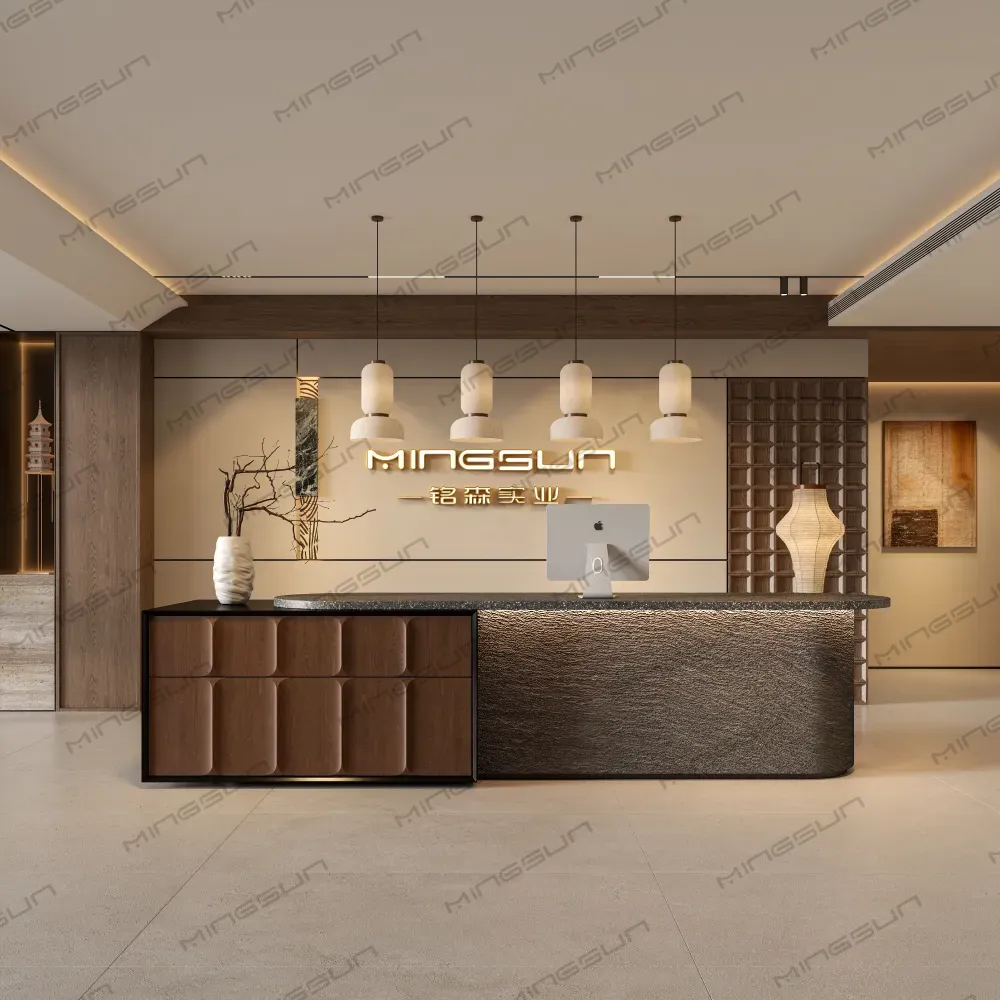
Luxury Textured Stone & Walnut Veneer Reception Desk with 3D Relief Detailing
Create a sophisticated, organic atmosphere in your hotel lobby or boutique showroom with this avant-garde reception desk. Combining the raw beauty of nature with refined craftsmanship, this desk features a striking contrast between materials. The main body showcases a dark, hammered-texture stone facade that offers a tactile, rugged elegance, topped with a polished grey terrazzo-style counter. This is seamlessly integrated with a rich walnut wood storage module, defined by its unique 3D pill-shaped relief carving on the drawer fronts. Soft, warm LED lighting concealed beneath the countertop edge highlights the textured stone surface, adding depth and warmth to the reception area.
Crafted by MINGSUN, a specialist in bespoke hospitality furniture, this piece is designed to be the focal point of high-end interiors. From our Guangzhou manufacturing hub, we deliver precision-engineered furniture to hotels worldwide. We offer a seamless experience from design customization to DDP global delivery and video-guided installation.
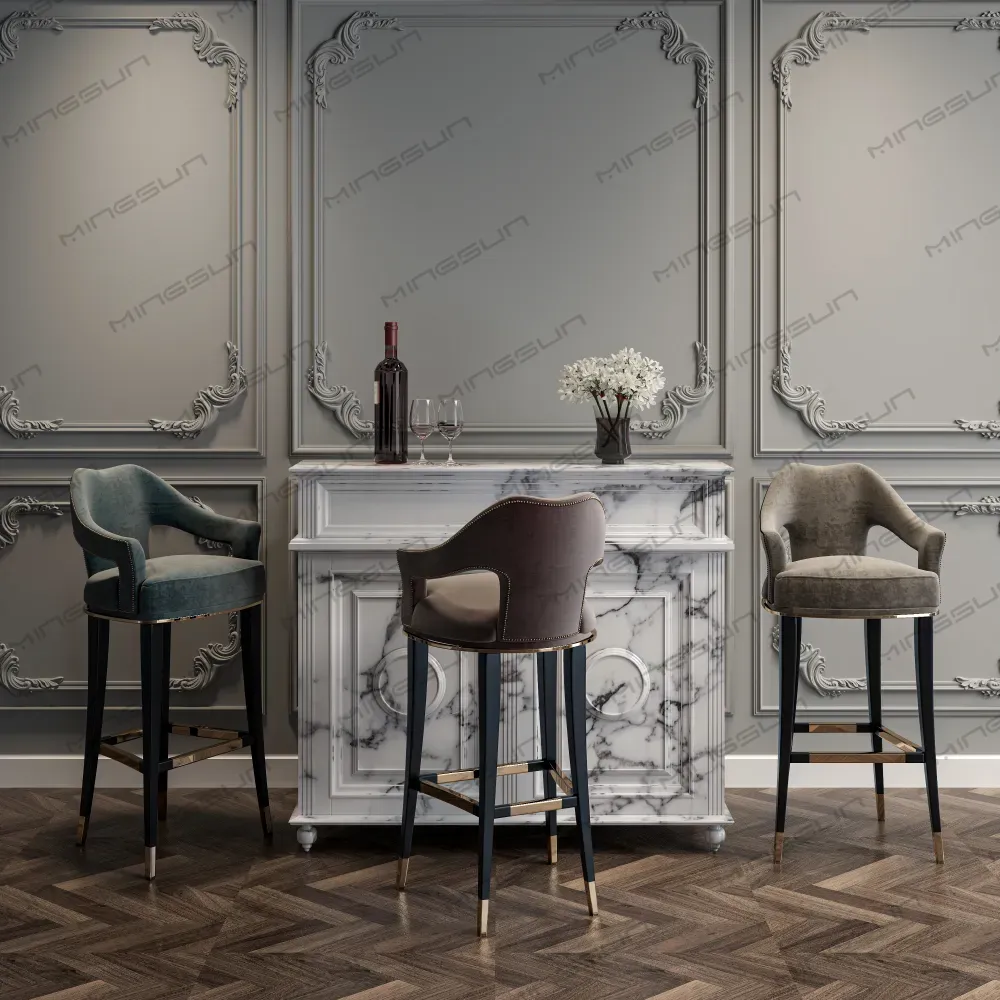
Luxury Velvet Bar Stool with Armrests & Brushed Brass Accents for Hotel Lounges and Bars
Elevate your hotel’s bar or lounge area with this opulent bar stool, where plush comfort meets sophisticated design. Upholstered in rich, deep-brown velvet, its sculptural back and integrated armrests offer ergonomic support, while the slender black metal frame is accented with polished brass at the feet and crossbars for a touch of timeless elegance. Perfect for high-end hospitality spaces, this stool combines refined aesthetics with durable construction, inviting guests to linger in style at your counter or cocktail station.
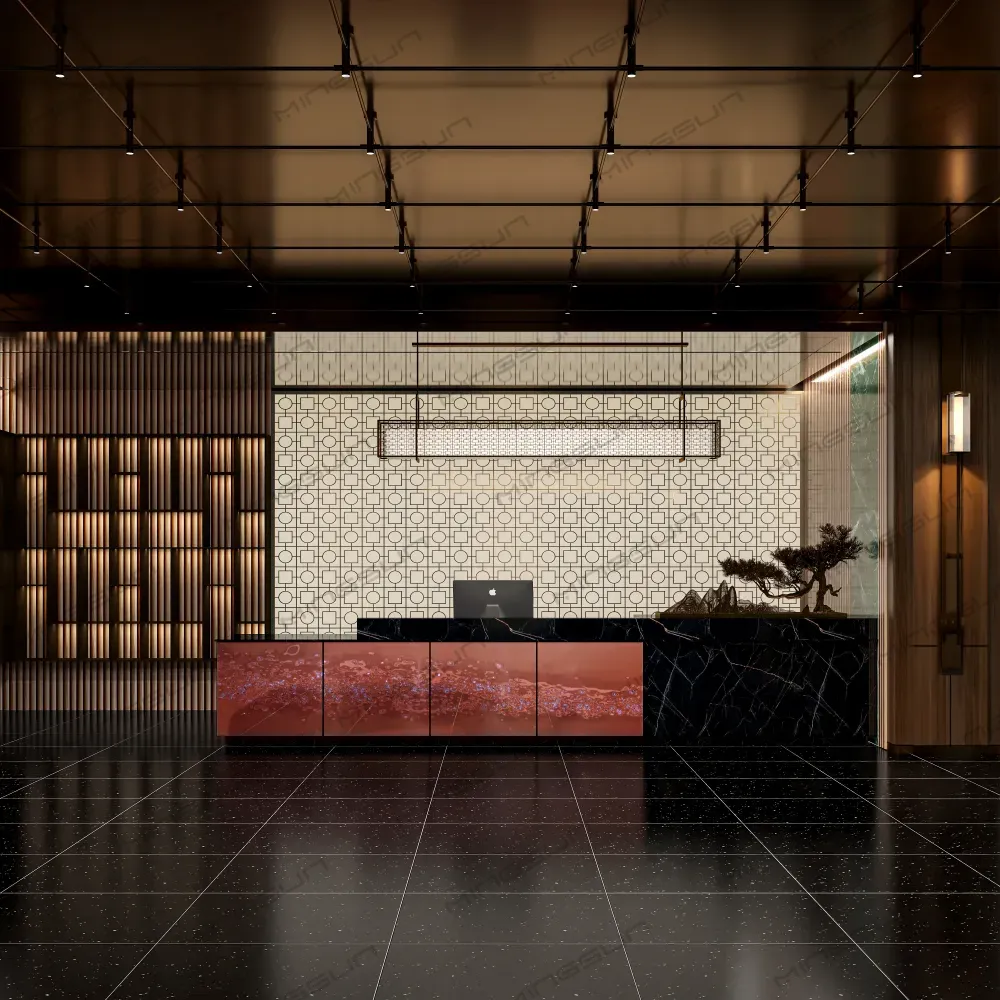
Luxury Reception Desk with Black Marble Top & Illuminated Copper-Resin Front Panels
Make a bold, unforgettable statement at your hotel’s entrance with this avant-garde reception desk. Its sleek black marble top exudes timeless sophistication, while the front facade features mesmerizing, internally lit copper-resin panels that glow with a warm, amber radiance, creating a dynamic visual centerpiece. Designed for both form and function, the unit offers ample concealed storage behind seamless doors and integrates a dedicated staff workstation with cable management. This is more than a check-in counter—it’s a sculptural installation that defines the luxury and artistry of your brand.
Get more industry insights
Looking for the right solution? Fill out the form and get a free quote.
Our experts will respond quickly with personalized options that fit your needs.
MINGSUN is a design-driven hotel furniture manufacturer offering OEM/ODM services, custom solutions, and global project support.
Built for wholesalers. Trusted by global buyers. Delivered with confidence.
Phone:
E-mail:
Follow us ——
 Scan QR Code
MINGSUN
MINGSUN
MINGSUN
MINGSUN
MS Custom Hotel Furniture Supplier