


How to Choose Bar Tops and Surfaces for Hotels
- Understanding guest experience and operational needs
- Guest behavior, brand positioning and aesthetics
- Operational workflows and staff ergonomics
- Choosing materials for durability, hygiene and aesthetics
- Common materials and when to use them
- Material science, staining and hygiene verification
- Design considerations: height, accessibility, and safety
- Determining optimal heights and ergonomics
- Accessibility, ADA and local codes
- Slip resistance, edge profiles and safety features
- Maintenance, installation and lifecycle costs
- Installation best practices and substrate considerations
- Cleaning protocols and long-term maintenance
- Lifecycle cost comparison (example)
- Specifying vendors, warranties and verification
- What to require from suppliers
- Working with integrated hotel furniture manufacturers
- MINGSUN — hospitality furniture partner (manufacturer profile)
- Frequently Asked Questions (FAQ)
- 1. What is the best material for a hotel bar top?
- 2. How do I ensure bar tops meet hygiene and cleaning requirements?
- 3. What height should a hotel bar be?
- 4. How do lifecycle costs compare across materials?
- 5. Can you match bar tops to other hotel furniture finishes?
- 6. What certifications or tests should I request from a fabricator?
Choosing the right bar tops and surfaces is a critical decision in hotel bar design: it affects guest perception, staff efficiency, long-term maintenance budgets, health and safety compliance, and the overall durability of a high-traffic hospitality area. This guide synthesizes material science, operational needs and regulatory considerations to help hotel designers, owners and procurement teams select surfaces that balance appearance, performance and total cost of ownership.
Understanding guest experience and operational needs
Guest behavior, brand positioning and aesthetics
Hotel bar design starts with the guest experience. A bar top is not merely a countertop — it's a tactile and visual touchpoint. Upscale boutique hotels often choose High Quality materials (engineered stone, natural stone) and refined edge details to reinforce brand positioning, while lifestyle or transit hotels may prioritize resilient, low-maintenance surfaces for fast turnover. Consider expected guest interactions (drinks, plated service, laptop use, spilled sauces) and the desired emotional effect: warm and tactile (wood veneer, treated hardwood), clean and modern (polished quartz), or industrial chic (stainless steel).
Operational workflows and staff ergonomics
Design decisions must account for bartender workflow, speed of service and back-bar integration. Bar tops should support drink preparation zones, POS systems, glassware staging, and spill containment. Bartender-facing service surfaces (back bar countertops, sinks, speed rails) require materials that withstand acids, alcohol, heat, and cleaning chemicals. For efficient operations, map activities to zones: guest-facing seating ledge, preparatory work surfaces, and service back-bar. This ensures material selection matches functional needs.
Choosing materials for durability, hygiene and aesthetics
Common materials and when to use them
Below is a concise comparison of widely used bar-top materials, focusing on durability, hygiene, lifecycle cost and best-use scenarios. Sources for each material are provided for further verification.
| Material | Durability | Hygiene/Maintenance | Typical Cost Range | Best Use |
|---|---|---|---|---|
| Engineered quartz | High — scratch and stain resistant | Non-porous; easy to sanitize; low maintenance (source) | Medium–High | Upscale hotel bars requiring consistent color and high hygiene |
| Granite (natural stone) | High — heat and scratch resistant with proper maintenance | Porous; requires periodic sealing; good longevity (source) | Medium–High | Luxury bars emphasizing natural character and high-end aesthetics |
| Solid surface (e.g., Corian) | Medium — repairable surface (buffing out scratches) | Non-porous; hygienic; seamless installations possible (source) | Medium | Custom shapes, built-in sinks, integrated spill channels |
| Stainless steel | Very high — impact, heat and chemical resistant | Very hygienic when cleaned properly; shows scratches and fingerprints (source) | Medium | Back-bar prep zones, industrial or modern design concepts |
| Wood veneer / solid wood | Medium — susceptible to moisture and scratches | Requires sealing and maintenance; warm aesthetic | Low–Medium | Hospitality settings seeking warmth and tactile appeal |
| Laminate | Medium — depends on core and finish | Affordable, easy to clean; edges vulnerable to delamination | Low | Budget bars, high turnover venues, or secondary surfaces |
Material science, staining and hygiene verification
Non-porous surfaces (engineered quartz, solid surface, stainless steel) are generally preferable for hygiene because they don’t harbor microbes as easily as porous stones or unfinished wood. For infection-control guidance in public spaces, consult cleaning and disinfection recommendations from the U.S. CDC. When evaluating claims about antimicrobial surfaces, request lab testing or certifications from suppliers and ask for maintenance protocols to ensure long-term performance under realistic cleaning regimens.
Design considerations: height, accessibility, and safety
Determining optimal heights and ergonomics
Bar top height affects comfort and serviceability. Common configurations include:
- Standard bar height (counter): 42 inches (1067 mm) — guest standing or bar stool seating.
- Counter height (service zones): 36 inches (914 mm) — comfortable for casual seating and plates.
- Work/Prep surfaces: 34–36 inches (864–914 mm) suitable for bartenders depending on activity.
Designers should prototype heights with user testing where possible. Include overhangs (10–12 inches typical) for leg clearance when seating and ensure bartender work surfaces allow comfortable reach to sinks, speed rails and refrigeration.
Accessibility, ADA and local codes
Accessible seating at bars is a legal and practical requirement in many jurisdictions. The ADA Standards for Accessible Design outline clearances and counter heights for accessible service: provide at least one accessible counter section (generally 34 inches maximum height with knee clearance). Confirm local building and accessibility codes, because some municipalities may adopt additional hospitality-specific requirements or variations.
Slip resistance, edge profiles and safety features
Wet spills are frequent at bars; edge profiles should reduce breakage of glassware and prevent injuries. Rounded or eased edges are often preferred on guest-facing ledges to avoid sharp impact points. For flooring and spill containment, consult slip-resistance guidance from the National Floor Safety Institute and OSHA (OSHA) recommendations for wet environments. Consider integrating drip channels, built-in drainage grooves and replaceable work mats in bartop design to manage liquids efficiently.
Maintenance, installation and lifecycle costs
Installation best practices and substrate considerations
Proper installation is as important as material choice. Engineered stone and natural stone require flat, well-supported substrates to prevent cracking. Solid surface allows for on-site thermal welding and seamless joints, which can reduce microbial harborage points. Stainless steel needs correct welding and finish to avoid crevices. Work with fabricators experienced in hospitality installations and request installation drawings, mock-ups and adherence to manufacturer tolerances to limit callbacks.
Cleaning protocols and long-term maintenance
Develop a written maintenance plan that matches the material. For example:
- Quartz: routine cleaning with mild detergent; avoid abrasive pads for polished surfaces.
- Granite: daily wipe-down, periodic sealing per manufacturer recommendations.
- Stainless steel: clean with neutral detergent and polish along the grain to reduce scratches.
Include recommended cleaning agents and frequency in operator manuals. For public health aligned cleaning guidance, refer to the CDC disinfecting page.
Lifecycle cost comparison (example)
Below is an illustrative lifecycle view combining initial cost, maintenance needs and expected service life. Adjust values for local labor and supply conditions.
| Material | Estimated Initial Cost | Yearly Maintenance | Typical Service Life |
|---|---|---|---|
| Engineered quartz | $$$ | Low | 10–20 years |
| Granite | $$$ | Medium (sealing) | 15–30+ years |
| Solid surface | $$ | Low–Medium (repairs possible) | 10–20 years |
| Stainless steel | $$ | Low (polishing) | 20+ years |
| Laminate | $ | Low (replace sections) | 5–10 years |
These ranges are illustrative; request vendor references, maintenance data sheets and real project case studies to refine the expected costs for your market.
Specifying vendors, warranties and verification
What to require from suppliers
When sourcing bar tops and complete furniture packages, insist on:
- Material data sheets and test reports for durability, porosity and stain resistance.
- Installation and maintenance manuals specific to hospitality use.
- References from hotel projects of similar scale and market positioning.
- Clear warranty terms (covering fabrication, finish and installation).
Working with integrated hotel furniture manufacturers
Partnering with a manufacturer that provides both furniture and surface expertise improves design integration and reduces coordination errors. Integrated vendors can deliver matched back-bar cabinetry, coordinated finishes and factory-fit detailing that saves time on site. For global projects, choose partners with proven export and logistics experience to ensure on-time delivery and customs compliance.
MINGSUN — hospitality furniture partner (manufacturer profile)
MINGSUN is a High Quality hotel furniture manufacturer based in Guangzhou, China, providing one-stop custom solutions for the hospitality industry. We specialize in the design, production, and global delivery of high-quality furniture for hotel guest rooms, lobbies, restaurants, banquet halls, and other commercial spaces.
With a 10,000 ㎡ factory and over 200 skilled workers, MINGSUN combines expert craftsmanship, High Quality materials, and strict quality control to ensure each piece is durable, functional, and refined. Our in-house design team works closely with clients to develop tailored solutions that reflect each project's unique style and standards. MINGSUN's core product lines include hotel bedroom furniture, hotel lounge furniture, hotel lobby furniture, hotel conference furniture, and hotel restaurant tables and chairs.
Why consider MINGSUN for hotel bar design projects?
- End-to-end capability: concept, prototyping, mass production and global shipping.
- Custom finishes and integrated surface solutions to match bar tops with cabinetry and seating.
- Strict QC and experience handling international hotel brands and hospitality standards.
Learn more at www.mingsungroup.com or contact our project specialist at [email protected] for tailored proposals and samples.
Frequently Asked Questions (FAQ)
1. What is the best material for a hotel bar top?
There is no single best material; the choice depends on brand positioning, maintenance budget and functional needs. Engineered quartz is a strong all-around choice for hygiene and consistency, granite for luxury character, stainless steel for durability in prep zones, and solid surface for seamless, repairable installations.
2. How do I ensure bar tops meet hygiene and cleaning requirements?
Choose non-porous materials where possible, request manufacturer cleaning protocols, and align operator cleaning schedules with public-health guidance such as the CDC disinfecting guidance. Validate claims with lab reports for porosity and antimicrobial performance if provided.
3. What height should a hotel bar be?
Common bar heights: guest-facing bar counters at ~42 inches for standing/bar-stool seating, and service/prep surfaces at 34–36 inches depending on tasks and ergonomics. Include an accessible counter section per ADA Standards.
4. How do lifecycle costs compare across materials?
Initial cost is only part of the picture. Materials like quartz and granite have higher upfront costs but lower replacement frequency; laminate and wood may be cheaper initially but need more frequent repairs or refinishing. Always factor cleaning, sealing, repairability and expected service life into TCO calculations.
5. Can you match bar tops to other hotel furniture finishes?
Yes. Working with a full-service furniture manufacturer like MINGSUN enables coordinated finishes and integrated design between bar tops, cabinetry, seating and other hotel furniture, simplifying procurement and ensuring visual consistency.
6. What certifications or tests should I request from a fabricator?
Ask for material data sheets, porosity/stain resistance tests, fire performance ratings where applicable, and quality control documentation from past hospitality projects. For engineered products, request manufacturer warranties and installation guides.
Ready to specify bar tops for your hotel project? Contact MINGSUN for sample boards, detailed quotations and project references. Visit www.mingsungroup.com or email [email protected] to start a conversation. Our team can provide tailored hotel bar design solutions, coordinated furniture packages and manufacturing capacity to support projects of any scale.
Hotel bathroom size standards in meters
Custom vs. Stock Modern Hospitality Furniture: Pros and Cons
How to Choose Wholesale Hotel Furniture Suppliers: Buyer Guide
Top 10 custom made hotel bar counters Manufacturers and Supplier Brands in china
About Mingsun – Company Background
What kind of company is Mingsun?
Does Mingsun have experience with overseas projects?
Pricing, Payment & Packaging
How is pricing calculated? Does customization increase the cost?
Product Scope & Application Areas
Can you provide a full hotel furniture package?
Customization Capability & Design Support
Does Mingsun provide design services?
Make an appointment with us today
Modern Hotel Dining Furniture Set-Custom Designed Wooden Tables, Upholstered Chairs & Banquette Seating
Create a lasting impression with our custom-designed hotel dining furniture set, crafted for modern luxury hotels and upscale restaurants.
Featuring elegant wooden tables, ergonomic blue-upholstered chairs, and built-in banquette seating, this collection blends comfort, style, and durability.
As a leading manufacturer in Guangzhou, we deliver end-to-end solutions - from concept design and 3D visualization to production and global shipping - all at factory-direct prices.
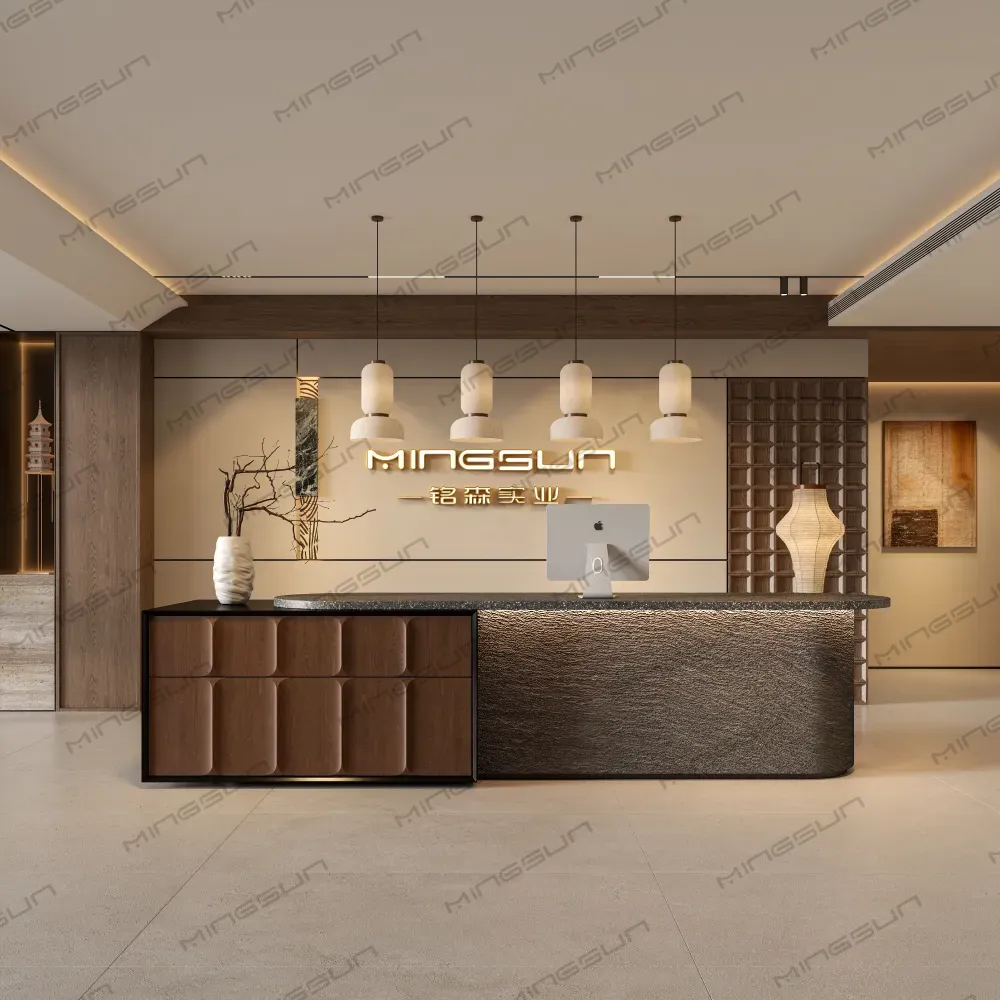
Luxury Textured Stone & Walnut Veneer Reception Desk with 3D Relief Detailing
Create a sophisticated, organic atmosphere in your hotel lobby or boutique showroom with this avant-garde reception desk. Combining the raw beauty of nature with refined craftsmanship, this desk features a striking contrast between materials. The main body showcases a dark, hammered-texture stone facade that offers a tactile, rugged elegance, topped with a polished grey terrazzo-style counter. This is seamlessly integrated with a rich walnut wood storage module, defined by its unique 3D pill-shaped relief carving on the drawer fronts. Soft, warm LED lighting concealed beneath the countertop edge highlights the textured stone surface, adding depth and warmth to the reception area.
Crafted by MINGSUN, a specialist in bespoke hospitality furniture, this piece is designed to be the focal point of high-end interiors. From our Guangzhou manufacturing hub, we deliver precision-engineered furniture to hotels worldwide. We offer a seamless experience from design customization to DDP global delivery and video-guided installation.
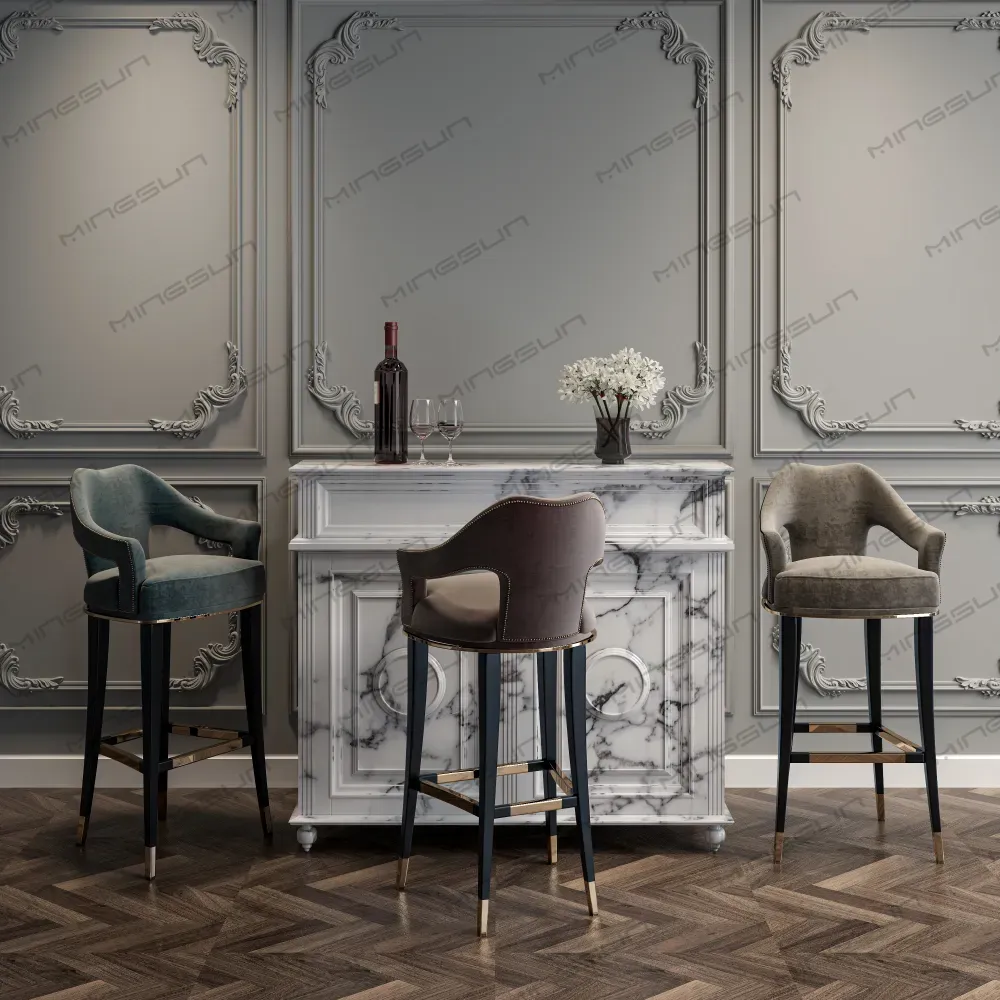
Luxury Velvet Bar Stool with Armrests & Brushed Brass Accents for Hotel Lounges and Bars
Elevate your hotel’s bar or lounge area with this opulent bar stool, where plush comfort meets sophisticated design. Upholstered in rich, deep-brown velvet, its sculptural back and integrated armrests offer ergonomic support, while the slender black metal frame is accented with polished brass at the feet and crossbars for a touch of timeless elegance. Perfect for high-end hospitality spaces, this stool combines refined aesthetics with durable construction, inviting guests to linger in style at your counter or cocktail station.
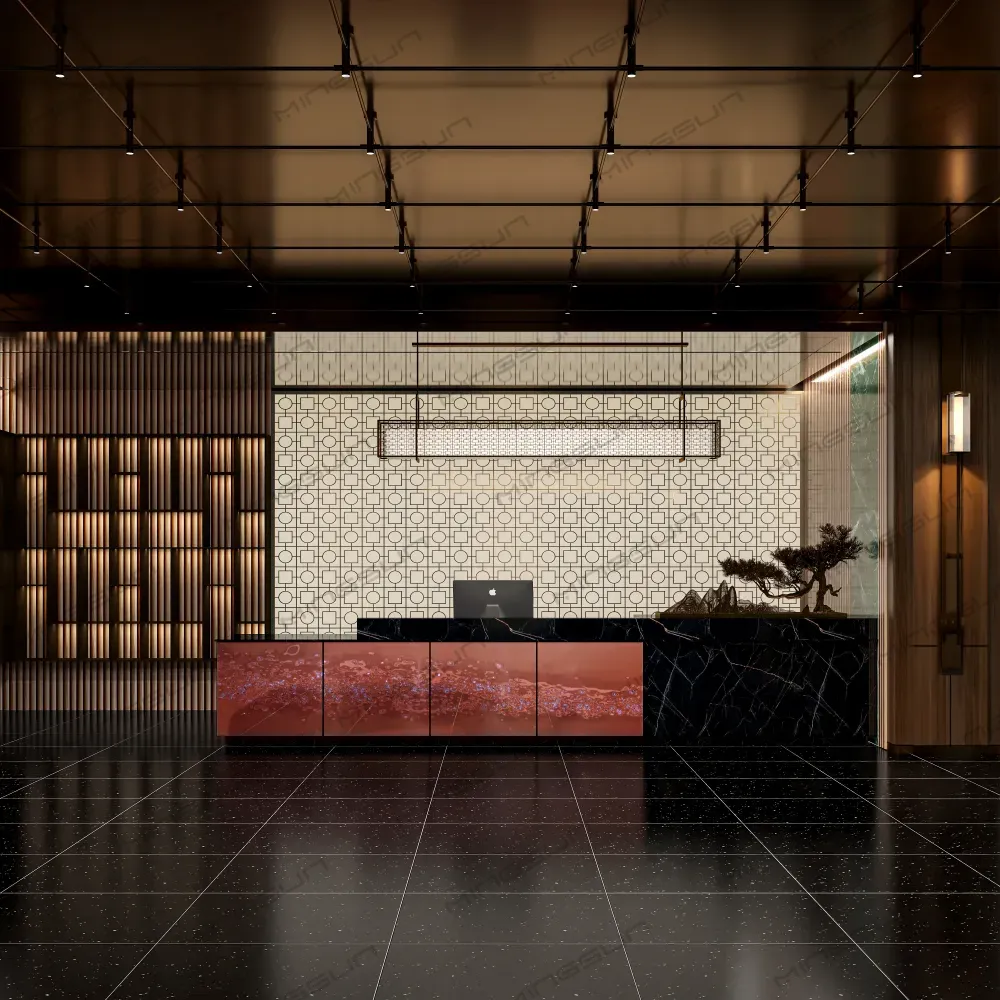
Luxury Reception Desk with Black Marble Top & Illuminated Copper-Resin Front Panels
Make a bold, unforgettable statement at your hotel’s entrance with this avant-garde reception desk. Its sleek black marble top exudes timeless sophistication, while the front facade features mesmerizing, internally lit copper-resin panels that glow with a warm, amber radiance, creating a dynamic visual centerpiece. Designed for both form and function, the unit offers ample concealed storage behind seamless doors and integrates a dedicated staff workstation with cable management. This is more than a check-in counter—it’s a sculptural installation that defines the luxury and artistry of your brand.
Get more industry insights
Looking for the right solution? Fill out the form and get a free quote.
Our experts will respond quickly with personalized options that fit your needs.
MINGSUN is a design-driven hotel furniture manufacturer offering OEM/ODM services, custom solutions, and global project support.
Built for wholesalers. Trusted by global buyers. Delivered with confidence.
Phone:
E-mail:
Follow us ——
 Scan QR Code
MINGSUN
MINGSUN
MINGSUN
MINGSUN
MS Custom Hotel Furniture Supplier