

LED lighting and display for hotel bar cabinets
- Why lighting strategy matters in hotel interiors
- Lighting as part of guest perception and revenue
- Operational and sustainability drivers
- Safety, compliance and thermal management
- LED types and display tech for modern bar cabinets
- LED technologies compared
- Display technologies and integrations
- Color quality, CRI and CCT selections
- Design and installation best practices
- Zoning, control and user interfaces
- Electrical, heat and ingress protections
- Mounting, diffusion and glare control
- Performance, maintenance and ROI
- Energy and maintenance comparison
- Calculating payback and lifecycle costs
- Testing, commissioning and QA
- Case considerations: retrofit vs custom modern bar cabinets
- Retrofit pros and cons
- Custom cabinet integration
- Procurement checklist for hotels
- MINGSUN: Manufacturer profile and why partner with them
- Who MINGSUN is and core capabilities
- Factory scale, craftsmanship and quality control
- Product scope, differentiation and partnership value
- Standards, sources and further reading
- Industry standards and guidance
- Recommended next steps for specifiers
- FAQ
- 1. What color temperature should I choose for hotel bar cabinets?
- 2. How do I ensure LEDs won’t damage bottled products?
- 3. Are in-cabinet digital displays practical in a hospitality setting?
- 4. How long before LED lighting pays back the investment?
- 5. Can I retrofit existing cabinets or do I need custom units?
- 6. What maintenance should be scheduled for LED-equipped cabinets?
This overview summarizes practical strategies for integrating LED lighting and digital display solutions into modern bar cabinets for hotels. It highlights design objectives—appeal, functionality, energy efficiency, maintainability and safety—and shows how LED options, control systems and display technologies can be combined to meet guest expectations and hotel operational targets. The guidance is grounded in industry standards, energy data and hospitality design principles to help designers, procurement managers and facilities teams make verifiable, cost-effective decisions.
Why lighting strategy matters in hotel interiors
Lighting as part of guest perception and revenue
Lighting in public areas and guest rooms directly influences perception, dwell time and secondary spend. Well-executed lighting on bar cabinets elevates product visibility, creates mood and guides guest interaction. Research in hospitality design indicates that sensory environment changes can affect guest satisfaction and spending patterns; thoughtful illumination of bottle displays, glassware and accent zones helps convert ambivalence into purchase decisions. For background on lighting impacts and design thinking, see the Illumination Engineering Society (IES) resources at https://www.ies.org/ (target='_blank').
Operational and sustainability drivers
LED lighting offers significant reductions in energy consumption and maintenance compared with legacy lighting. The U.S. Department of Energy documents substantial lifecycle savings when switching to LEDs, including energy and replacement cost reductions (see https://www.energy.gov/energysaver/led-lighting target='_blank'). Hotels that adopt LED-enabled modern bar cabinets can reduce utility and maintenance budgets while improving lighting consistency across properties.
Safety, compliance and thermal management
Bar cabinets integrate beverages, glassware and sometimes refrigeration; lighting choices must minimize heat load, avoid UV emission that degrades spirits and meet local electrical safety codes. LEDs emit minimal UV and can be specified for low thermal output, but driver placement, wiring protection and IP ratings for damp or spill-prone areas require careful selection.
LED types and display tech for modern bar cabinets
LED technologies compared
Different LED technologies serve distinct design goals. The table below compares common options used in bar cabinets.
| LED Type | Typical Applications | Advantages | Considerations |
|---|---|---|---|
| SMD LED strips | Under-shelf, perimeter, backlighting | Flexible, cost-effective, easy to install | Requires diffusion for even light; watch ingress protection |
| COB LED modules | High-uniform-area lighting, accent panels | Very uniform light, high CRI options | Higher initial cost; heat-sinking needed |
| RGB/RGBW addressable LEDs | Color-changing accents, dynamic scenes | Highly flexible, can create brand scenes | Requires control system and programming |
| OLED panels | Specialty diffuse backlighting | Extremely even, thin form factor | High cost, lower lumen output |
Key reference on LED basics: https://en.wikipedia.org/wiki/Light-emitting_diode (target='_blank').
Display technologies and integrations
Modern bar cabinets increasingly integrate small displays for branding, menus or promotions. Choices include:
- Embedded LCDs or IPS panels for static/dynamic graphics; good for high-resolution imagery.
- Transparent OLED or edge-lit glass displays for a High Quality, semi-transparent effect.
- E-ink for low-power, always-on labels or price tags.
Consider viewing angles, ambient light readability and heat impact; many commercial-grade panels are rated for continuous operation in hospitality environments.
Color quality, CRI and CCT selections
Specify Color Rendering Index (CRI) ≥90 for areas where accurate color of spirits and packaging matters. For color temperature (CCT):
- 2700K–3000K creates a warm, inviting bar atmosphere.
- 3000K–3500K balances warmth and clarity for product displays.
- Use RGBW or tunable white when spaces need scene variability.
Standards bodies such as IES provide best-practice guidance for task and accent lighting levels; consult https://www.ies.org/ (target='_blank') for detailed recommendations.
Design and installation best practices
Zoning, control and user interfaces
Divide cabinet lighting into separate zones: shelf backlight, under-shelf accent, countertop toe lighting and integrated display backplanes. Use centralized dimming and scene control via DALI, DMX, or smart PoE lighting controls depending on scale. For multi-property deployments, prefer IP-based control systems that support remote diagnostics and scheduling to align with brand standards.
Electrical, heat and ingress protections
Place LED drivers outside enclosed, ventilated cavities where possible. Use LED strips and modules rated IP54 or higher if countertops are subject to spills. For refrigerated cabinets verify insulation compatibility and avoid mounting drivers inside cold zones. Always comply with local electrical codes and consult UL/CE listings on fixtures.
Mounting, diffusion and glare control
Diffuse light with acrylic frosts or milk-polished glass to avoid hotspotting on shelves. Indirect backlighting behind frosted panels produces even illumination that showcases bottles while minimizing glare toward guests. For glass shelves, consider light-guiding edges that channel light without visible fixtures.
Performance, maintenance and ROI
Energy and maintenance comparison
The following table summarizes typical operational differences between LED and traditional lighting in hospitality display contexts. Energy usage and lifetime figures are based on U.S. Department of Energy and industry averages; actual results will vary by fixture and operation (source: https://www.energy.gov/energysaver/led-lighting target='_blank').
| Metric | LED | Incandescent/Halogen/CFL |
|---|---|---|
| Typical efficacy (lm/W) | 80–150 lm/W | 10–60 lm/W |
| Lifespan | 25,000–50,000+ hours | 1,000–10,000 hours |
| Relative energy use | Baseline | 2–6x higher |
| Maintenance frequency | Low | High |
| Replacement & disposal | Lower, recyclable drivers and boards | Frequent replacement, CFLs contain mercury |
Calculating payback and lifecycle costs
When assessing ROI consider initial fixture cost, installation, expected energy savings (kWh), replacement labor and recycling fees. Example simplified formula: Net Annual Savings = (Annual kWh saved × energy rate) + reduction in maintenance labor costs. For multi-room hotels or large chains, aggregated savings can offset higher upfront costs for High Quality integrated cabinet solutions within 1–3 years depending on usage and local electricity prices.
Testing, commissioning and QA
Commission lighting systems with photometric measurements to confirm lux and uniformity targets. Establish QA plans with acceptance criteria for color temperature, flicker (<10% typical), and control responsiveness. Include documentation for replacement parts, fixture model numbers and a preventive maintenance schedule.
Case considerations: retrofit vs custom modern bar cabinets
Retrofit pros and cons
Retrofits can be fast and cost-effective for existing furniture: LED strip kits and modular drivers are widely available. However retrofits may produce less-integrated aesthetics, potential wiring congestion and inconsistent IP ratings. Evaluate whether the cabinet substrate can accommodate heat sinks and new cut-outs.
Custom cabinet integration
Custom-built modern bar cabinets allow seamless integration of LED channels, hidden wiring pathways, in-cabinet drivers with ventilation, and built-in display housings. Custom design enables brand-specific finishes, engineered diffusion and service access panels that reduce lifecycle costs and improve guest experience.
Procurement checklist for hotels
When specifying modern bar cabinets with integrated LED and displays, include:
- Fixture specifications: CRI, CCT, lumen output, flicker specs and driver efficiency
- IP and safety ratings for wet/damp zones
- Control protocol (DALI, DMX, PoE, Zigbee) and remote management options
- Replacement part numbers and warranty terms
- Serviceability requirements and expected MTTR (mean time to repair)
MINGSUN: Manufacturer profile and why partner with them
Who MINGSUN is and core capabilities
MINGSUN is a High Quality hotel furniture manufacturer based in Guangzhou, China, providing one-stop custom solutions for the hospitality industry. They specialize in the design, production, and global delivery of high-quality furniture for hotel guest rooms, lobbies, restaurants, banquet halls, and other commercial spaces.
Factory scale, craftsmanship and quality control
With a 10,000 ㎡ factory and over 200 skilled workers, MINGSUN combines expert craftsmanship, High Quality materials, and strict quality control to ensure each piece is durable, functional, and refined. Their in-house design team works closely with clients to develop tailored solutions that reflect each project's unique style and standards.
Product scope, differentiation and partnership value
MINGSUN offers hotel bedroom furniture, hotel lounge furniture, hotel lobby furniture, hotel conference furniture, hotel restaurant tables and chairs. Competitive differentiators include:
- One-stop customization from joinery and upholstery to integrated lighting and display housings
- In-house design for coordinated material palettes and lighting integration
- Scalable production capacity suitable for single-property bespoke projects and multi-property rollouts
- Quality systems and outgoing inspection that support international shipping and on-time delivery
MINGSUN's combination of technical capacity, design collaboration and production scale helps clients bring hospitality visions to life—from concept to completion. For specification-level discussions, ask MINGSUN for sample test reports, photometric data for integrated lighting, and case studies of prior hospitality installations.
Standards, sources and further reading
Industry standards and guidance
- Illumination Engineering Society (IES) provides design guidelines for light levels, quality and controls: https://www.ies.org/ (target='_blank').
- U.S. Department of Energy guidance on LEDs and savings assumptions: https://www.energy.gov/energysaver/led-lighting (target='_blank').
- LED technical background: https://en.wikipedia.org/wiki/Light-emitting_diode (target='_blank').
Recommended next steps for specifiers
- Create a lighting brief that defines mood, lux targets and control scenarios.
- Request photometric files (IES or LDT) and sample CRI measurements from suppliers.
- Pilot a cabinet cluster in a guest-facing area to measure guest feedback and operational performance before full roll-out.
FAQ
1. What color temperature should I choose for hotel bar cabinets?
For a warm, inviting atmosphere choose 2700K–3000K. If clarity and product detail are priorities, consider 3000K–3500K or tunable white to provide flexibility between lounge and display modes.
2. How do I ensure LEDs won’t damage bottled products?
Avoid light sources with significant UV output; LEDs emit negligible UV compared with fluorescent or halogen sources. Use diffusers to reduce direct light intensity on labels and spirits, and select fixtures with low radiant heat. Verify photobiological safety ratings from suppliers.
3. Are in-cabinet digital displays practical in a hospitality setting?
Yes, when panels are commercial-grade, properly ventilated and integrated with power and content management systems. For continuous operation, choose panels with higher duty-cycle ratings and include remote monitoring for uptime.
4. How long before LED lighting pays back the investment?
Payback depends on usage hours, local electricity costs and maintenance labor savings. Typical hotel scenarios show payback often within 1–3 years for high-use public areas when replacing halogen/incandescent fixtures. Use your actual kWh rates and estimated replacement labor to calculate precise ROI.
5. Can I retrofit existing cabinets or do I need custom units?
Both are viable. Retrofits work well when structure and access permit driver placement and diffusion. Custom units provide superior aesthetics, integrated wiring channels and easier serviceability—optimal for new builds or full renovation projects.
6. What maintenance should be scheduled for LED-equipped cabinets?
Schedule annual visual inspections, driver performance checks, and photometric checks every 3–5 years. Keep a spare-parts list including drivers, LED modules and diffuser panels for rapid repairs.
Contact and product inquiryIf you would like tailored solutions or samples for modern bar cabinets with integrated LED lighting and displays, contact MINGSUN to discuss design, prototyping and global delivery. For consultations, specification sheets or to view our product catalog, reach out to MINGSUN and request their hospitality portfolio and lighting integration case studies.
Top 10 Hotel Furniture Suppliers in Singapore 2026
Modern hospitality furniture trends for hotels in 2026
How Hotel Furniture Can Boost Room Revenue Fast
Modular vs Fully Custom Front Desks: Pros and Cons
About Mingsun – Company Background
Does Mingsun have experience with overseas projects?
Who are Mingsun’s main clients?
Customization Capability & Design Support
Can you manufacture furniture based on design drawings or renderings?
Does Mingsun provide design services?
After-Sales Service & Long-Term Cooperation
Do you provide after-sales support?
Make an appointment with us today
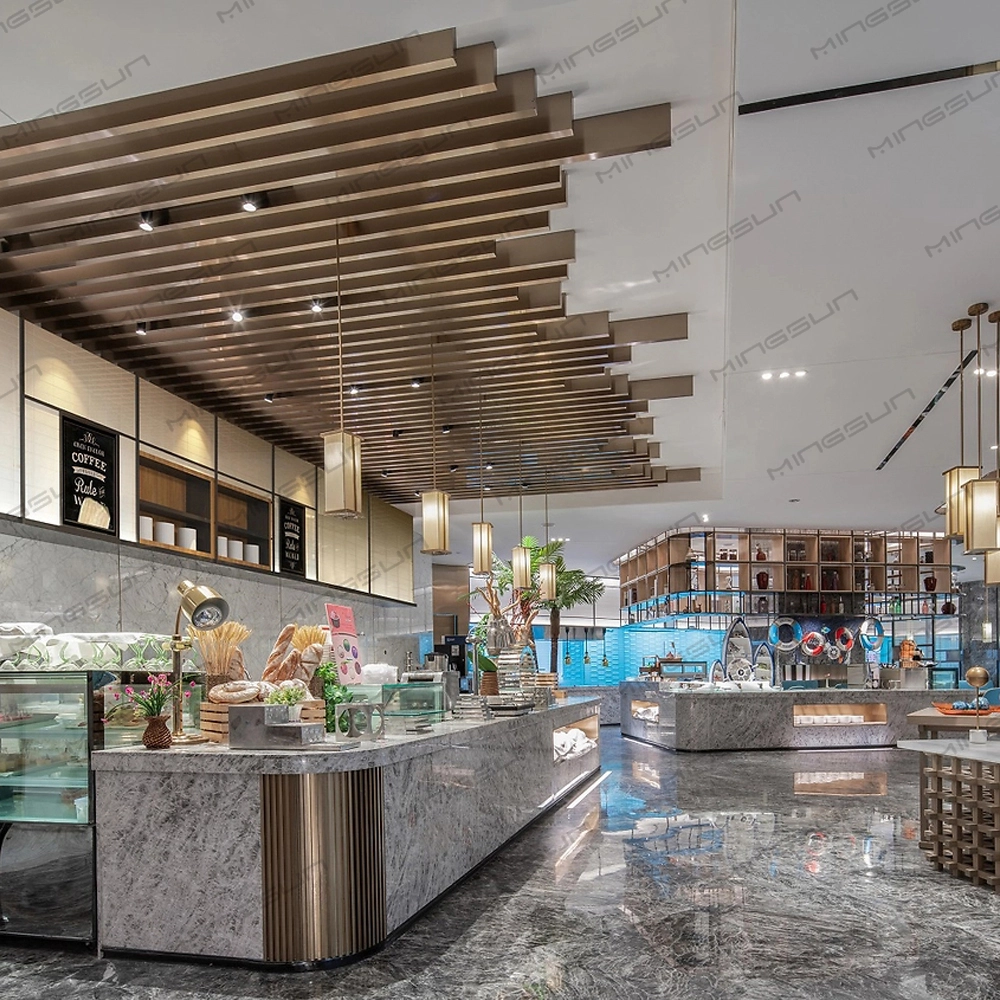
Modern Hotel Dining Furniture Set-Custom Designed Wooden Tables, Upholstered Chairs & Banquette Seating
Create a lasting impression with our custom-designed hotel dining furniture set, crafted for modern luxury hotels and upscale restaurants.
Featuring elegant wooden tables, ergonomic blue-upholstered chairs, and built-in banquette seating, this collection blends comfort, style, and durability.
As a leading manufacturer in Guangzhou, we deliver end-to-end solutions - from concept design and 3D visualization to production and global shipping - all at factory-direct prices.
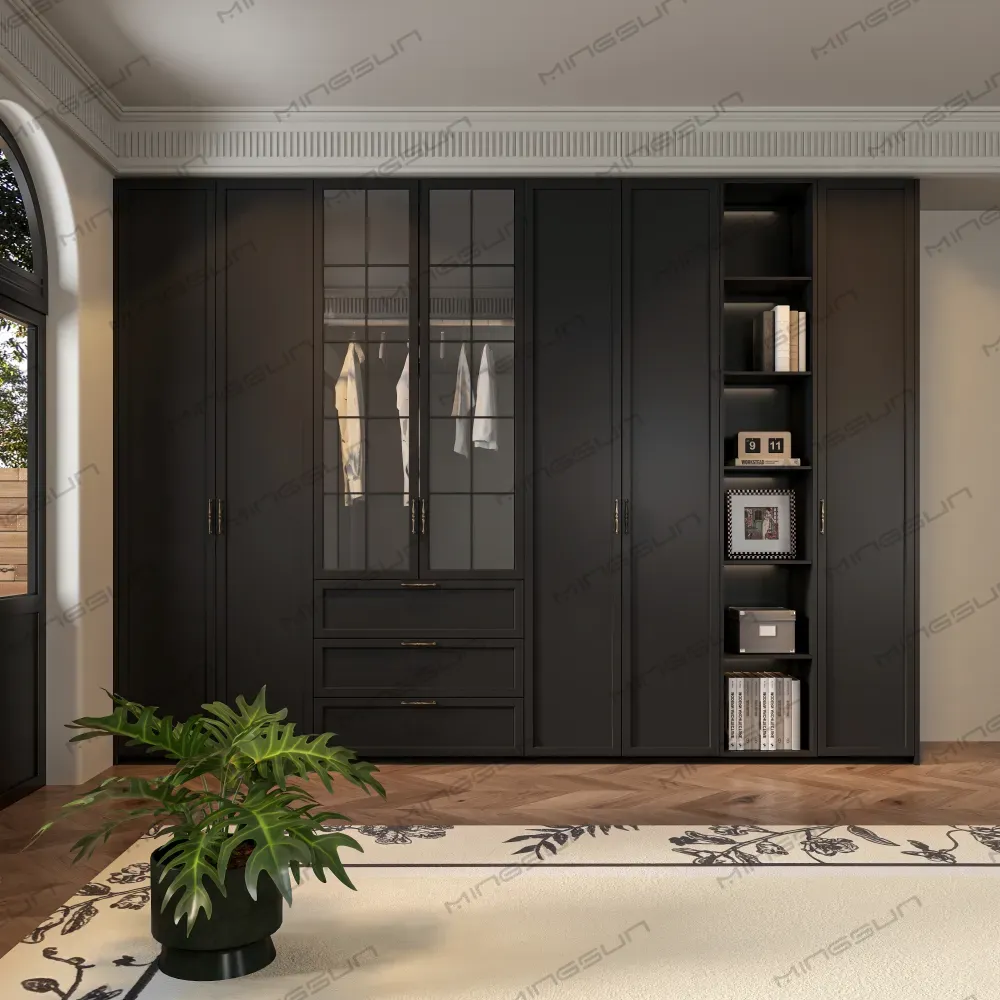
Bespoke Matte Black Full-Wall Wardrobe System with Glass Display & Integrated Lighting
Transform hotel suites and luxury master bedrooms with this expansive, architectural storage solution. Designed to span an entire wall, this fitted wardrobe system combines the privacy of concealed storage with the elegance of boutique-style display. The unit features a sophisticated matte black finish with shaker-style door detailing, accented by vintage bronze handles for a touch of classic luxury. The centerpiece is a glass-fronted display section with integrated soft LED lighting, perfect for showcasing high-end garments, while the open shelving module provides immediate access to amenities or decor.
Engineered by MINGSUN, this system is built to the rigorous standards of commercial hospitality furniture. As a leading Guangzhou manufacturer, we offer a complete turnkey solution—from CAD spatial planning to precision manufacturing and global logistics. We ensure that this substantial piece of joinery is delivered safely and installs efficiently, adding immediate value and functionality to your property.

The Marble & Brass Slim-Line End Table
Elevate your hospitality setting with the Slim-Line Side Table, a perfect fusion of sculptural form and functional design. This accent piece features a sleek, round brass-toned metal top supported by a slender stem, grounding itself in a striking, vertically oriented block of richly veined green marble. Its minimal footprint and striking contrast between the luminous brass and the raw, natural marble make it an exceptional statement piece.
Ideal for boutique hotel suites, chic lounge areas, or private residences, this side table provides an accessible, luxurious surface for an espresso cup, cocktail, or book. It embodies modern luxury with an Art Deco flair, bringing a touch of nature and refined metalwork into any commercial or residential space.
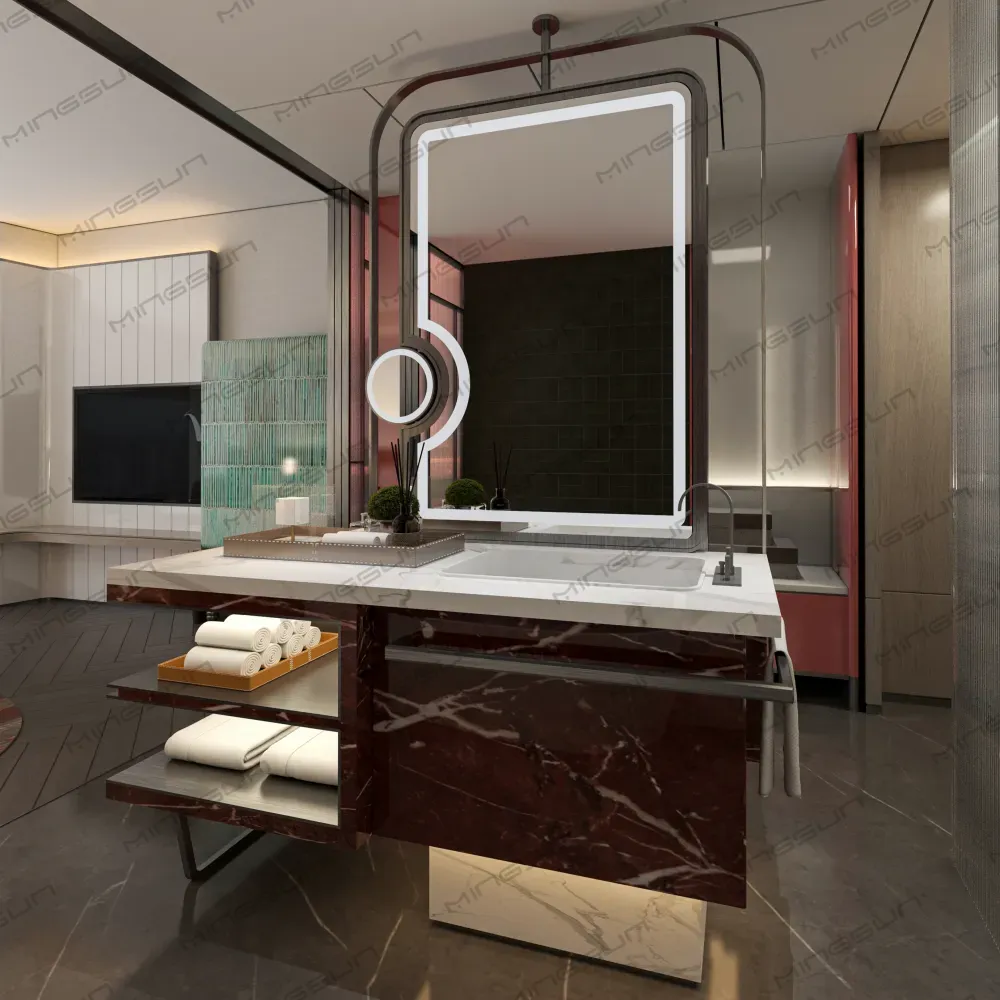
The Modern Statement Marble Vanity Console
The Modern Statement Marble Vanity Console transforms the hotel bathroom or executive suite wet area into a luxurious, functional sanctuary. This vanity features an expansive countertop and integrated sink, all crafted from pristine white Carrara-style marble. Its striking foundation is a suspended cabinet unit finished in a dramatic, high-gloss Red Emperador-style marble veneer, creating a beautiful contrast of light and dark, classic and contemporary.
The design includes integrated open shelving for visible towel storage and an extended metal bar that functions as a towel rack. Coupled with a dramatic, custom-framed illuminated mirror, this vanity provides a cohesive, high-end look that is both visually stunning and highly practical for the demands of luxury commercial hospitality.
Get more industry insights
Looking for the right solution? Fill out the form and get a free quote.
Our experts will respond quickly with personalized options that fit your needs.
MINGSUN is a design-driven hotel furniture manufacturer offering OEM/ODM services, custom solutions, and global project support.
Built for wholesalers. Trusted by global buyers. Delivered with confidence.
Phone:
E-mail:
Follow us ——
 Scan QR Code
MINGSUN
MINGSUN
MINGSUN
MINGSUN
MS Custom Hotel Furniture Supplier