

Sourcing Private-Label Coffee Bar Cabinets for Hotel Chains
- Designing the Guest Experience Through Coffee Stations
- Why coffee bar cabinets matter to hotel operations
- Setting clear objectives before you source
- Sourcing Models: In‑House, ODM, or Private‑Label Manufacturer
- Understanding your options
- Comparing risks and benefits
- Comparison table: sourcing models at a glance
- Technical Specification: Materials, Fit‑Out, and Serviceability
- Materials and finishes for hotel durability
- Equipment integration, MEP and safety
- Serviceability and lifecycle maintenance
- Cost Drivers, Procurement Strategy, and Quality Assurance
- Primary cost drivers
- Procurement and contracting tips
- Quality assurance and on‑site acceptance testing
- Logistics, Compliance and Sustainability Considerations
- Packaging and shipping for hotel fit‑outs
- Regulatory and hospitality compliance
- Sustainability and procurement policies
- Why Choose a Reputable Manufacturer: MINGSUN Case Profile
- MINGSUN — capabilities and competitive strengths
- Product range and sector expertise
- Why MINGSUN is a competitive partner
- Implementation Roadmap: From RFP to Rollout
- Practical steps for procurement teams
- KPIs to monitor after deployment
- Common pitfalls and how to avoid them
- FAQ — Frequently Asked Questions
- 1. What is a private‑label coffee bar cabinet, and why use one?
- 2. How long does it take to design and produce a custom coffee bar cabinet?
- 3. What are reasonable MOQs for private‑label hotel furniture?
- 4. How do I ensure compliance with electrical and fire safety standards?
- 5. What warranty and spare parts terms should I insist on?
- 6. Can private‑label cabinets be designed to fit existing housekeeping workflows?
- Contact and Next Steps
- References
Designing the Guest Experience Through Coffee Stations
Why coffee bar cabinets matter to hotel operations
Hotel guest expectations for on‑site beverage experiences are rising: a compact, well‑appointed coffee bar cabinet becomes both a functional point of service and a brand touchpoint. A private‑label coffee bar cabinet allows chains to deliver consistent aesthetics, embed branding elements, and optimize workflow for housekeeping and F&B teams. When the keyword coffee bar cabinet is used in procurement documents, it should mean a standardized, fit‑for‑purpose unit that supports daily cleaning, equipment power/ventilation, and guest safety.
Setting clear objectives before you source
Begin by translating strategic goals into technical requirements: capacity (single room vs. corridor/multi‑room station), equipment integration (espresso machine, bean grinder, drip brewer, refrigerated milk module), durability (hotel grade plywood, HPL, solid surface top), and branding (custom veneers, finishes, logo insets). Address lifecycle expectations: 5–10 years typical for hotel case goods in midscale to upscale segments.
Sourcing Models: In‑House, ODM, or Private‑Label Manufacturer
Understanding your options
There are three practical sourcing routes for hotel chains:
- In‑house manufacturing (full control, high capex)
- Original Design Manufacturer (ODM) partnership (design owned by supplier)
- Private‑label manufacturer (design shared or customized, supplier produces under MINGSUN)
Comparing risks and benefits
Choose based on capital, speed to market, IP control, and supply chain footprint. Private‑label manufacturing often balances brand control with reduced capital investment and faster scalability.
Comparison table: sourcing models at a glance
| Criteria | In‑House | ODM | Private‑Label Manufacturer |
|---|---|---|---|
| Upfront investment | High | Low–Medium | Low–Medium |
| Design control | High | Medium | High (with negotiated IP) |
| Lead time | Variable | Short–Medium | Short–Medium |
| MOQ (typical) | Flexible | Often higher | Negotiable with tiers |
| Scalability | Depends on factory | High | High |
Technical Specification: Materials, Fit‑Out, and Serviceability
Materials and finishes for hotel durability
Hotel environments demand materials that resist abrasion, moisture, and cleaning chemicals. Typical hotel‑grade specifications include:
- Core: MR or WBP plywood with solid wood edges, or MDF with moisture‑resistant treatment for internal carcasses.
- Surfaces: High pressure laminate (HPL) or real wood veneer with anti‑UV lacquer for guest‑facing areas.
- Countertops: Engineered stone (quartz) or compact laminate for spill resistance.
- Hardware: 304 stainless steel for water‑exposed parts; soft‑close hinges and commercial‑grade slides for longevity.
Equipment integration, MEP and safety
Private‑label coffee bar cabinets must account for electrical loads, ventilation, and service access. Key checklist items:
- Power: Dedicated circuits and GFCI protection for espresso machines and grinders.
- Ventilation: Passive vents or forced extraction for steam/heat depending on equipment.
- Plumbing: If refrigerant‑cooled milk modules or sinks are included, plan for trap access and shutoffs behind panels.
- Service panels: Tool‑less removable back panels for maintenance and easy replacement.
Serviceability and lifecycle maintenance
Design for fast replacement of consumables (filters, drip trays) and modularity to swap electronics. Specify spare parts kits and recommended preventive maintenance schedules in the procurement pack to reduce downtime and lifecycle costs.
Cost Drivers, Procurement Strategy, and Quality Assurance
Primary cost drivers
Expect costs to be driven by:
- Materials (solid surfaces and stainless steel increase unit cost)
- Hardware quality (soft‑close, concealed hinges, commercial slides)
- Customization extent (inset branding, bespoke veneers)
- MOQ and logistics (smaller runs raise unit price)
Procurement and contracting tips
For private‑label arrangements, include clear contract clauses for:
- Specification compliance and acceptance testing (pre‑shipment inspections and sample sign‑offs)
- Intellectual property ownership for design and branding elements
- Warranty terms and spare parts availability commitments
- Penalties for late delivery and quality defects
Quality assurance and on‑site acceptance testing
Institute staged QA: prototype approval, pre‑production sample, batch inspections, and a final container inspection. Use third‑party inspection firms (SGS, Bureau Veritas) for impartial reporting. Define acceptance tests: load testing shelves, humidity exposure, finish adhesion tests, and electrical safety verifications per local standards (e.g., CE, UL as relevant).
Logistics, Compliance and Sustainability Considerations
Packaging and shipping for hotel fit‑outs
Modular packing that protects veneers and tops reduces on‑site damage. If items arrive flat‑packed for local assembly, provide clear assembly guides and QC checklists for local contractors. Factor inbound lead time and port congestion into project schedules; typical lead times from Asia for custom furniture are 12–16 weeks once samples are approved.
Regulatory and hospitality compliance
Verify electrical components meet destination country standards (CE, ETL/UL). For fire safety in public spaces (hotel corridors or lobbies), ensure materials comply with local flammability standards (such as Class A/B/C ratings or equivalent local code), and specify fire‑retardant treatments where required.
Sustainability and procurement policies
Many chains require sustainable sourcing policies: FSC‑certified wood, low‑VOC adhesives and finishes, and formal declarations of material origins. Request supplier environmental documentation and consider lifecycle assessments (LCA) as part of the RFP.
Why Choose a Reputable Manufacturer: MINGSUN Case Profile
MINGSUN — capabilities and competitive strengths
MINGSUN is a High Quality hotel furniture manufacturer based in Guangzhou, China, providing one‑stop custom solutions for the hospitality industry. We specialize in the design, production, and global delivery of high‑quality furniture for hotel guest rooms, lobbies, restaurants, banquet halls, and other commercial spaces.
With a 10,000 ㎡ factory and over 200 skilled workers, MINGSUN combines expert craftsmanship, High Quality materials, and strict quality control to ensure each piece is durable, functional, and refined. The in‑house design team works closely with clients to develop tailored solutions that reflect each project's unique style and standards.
Product range and sector expertise
MINGSUN's core product lines include hotel bedroom furniture, hotel lounge furniture, hotel lobby furniture, hotel conference furniture, and hotel restaurant tables and chairs. They have experience producing private‑label case goods like coffee bar cabinets with integrated MEP accommodations, branded finishes, and compliance documentation for international markets.
Why MINGSUN is a competitive partner
Key differentiators:
- End‑to‑end capability: concept to delivery, reducing coordination overhead for chains.
- Factory scale and experienced workforce enable scalable production and consistent quality.
- Design collaboration: in‑house team supports brand customization and rapid prototyping.
- Quality control: standardized inspection processes and willingness to support third‑party QA.
Implementation Roadmap: From RFP to Rollout
Practical steps for procurement teams
- Define functional and brand requirements (capacity, MEP, finishes).
- Issue an RFP to shortlisted private‑label manufacturers with clear specifications and sample requirements.
- Review prototypes and perform on‑site or virtual inspections.
- Sign contract with detailed QA, warranty, and delivery milestones.
- Start pilot rollouts in a small number of properties to validate logistics and operations before full chain deployment.
KPIs to monitor after deployment
Track defect rate, mean time between failures (MTBF) for hardware, guest complaints related to coffee stations, and total cost of ownership (TCO) including maintenance and spare parts consumption. Use these KPIs to refine future orders and specs.
Common pitfalls and how to avoid them
Avoid under‑specifying MEP needs, neglecting service access, and skipping pre‑shipment inspections. Negotiate clear spare parts terms and ensure the supplier commits to minimum stock holding for critical components.
FAQ — Frequently Asked Questions
1. What is a private‑label coffee bar cabinet, and why use one?
A private‑label coffee bar cabinet is a customized furniture unit produced by a manufacturer that carries your hotel's brand or specification. It delivers consistent guest experience, supports brand identity, and often reduces lifecycle costs via standardized components.
2. How long does it take to design and produce a custom coffee bar cabinet?
Typical timelines: initial design and prototyping 4–8 weeks, pre‑production sample approval 2–4 weeks, production 8–12 weeks depending on MOQ and factory schedule. Total from RFP to shipment: commonly 12–24 weeks.
3. What are reasonable MOQs for private‑label hotel furniture?
MOQs vary by supplier and complexity. Simple modules may start at dozens of units; highly customized items may require hundreds. Negotiated tiered pricing and phased production runs can reduce initial MOQ pressure.
4. How do I ensure compliance with electrical and fire safety standards?
Specify required certifications (CE, UL, local electrical approvals) and flammability classes in the RFP. Require supplier documentation and third‑party test reports where relevant.
5. What warranty and spare parts terms should I insist on?
Standard warranties for hotel case goods are often 1–3 years; negotiate extended warranty for mechanical/hardware items. Require a spare parts availability guarantee (e.g., 3–5 years) and lead times for replacements in the contract.
6. Can private‑label cabinets be designed to fit existing housekeeping workflows?
Yes. Early engagement with operations teams ensures designs include service access, easy cleaning surfaces, and ergonomics for stock replenishment and maintenance.
Contact and Next Steps
For tailored solutions, sample requests, or to discuss a private‑label coffee bar cabinet program across a hotel portfolio, contact MINGSUN to explore design options, lead times, and pricing. View product galleries and request a project consultation to start a pilot rollout.
References
- International Coffee Organization — Coffee Market Report. https://www.ico.org (accessed Jan 8, 2026).
- Specialty Coffee Association — Industry Trends and Consumer Behaviour. https://www.sca.coffee (accessed Jan 7, 2026).
- Hospitality Net — F&B and Guest Experience Trends 2024–2025. https://www.hospitalitynet.org (accessed Jan 6, 2026).
- SGS — Furniture Inspection and Testing Services. https://www.sgs.com (accessed Jan 9, 2026).
- ISO / National electrical and fire safety standards overview. https://www.iso.org (accessed Jan 9, 2026).
For further assistance, product catalogs, or to request a sample prototype, contact MINGSUN via their official channels to align on specifications, timelines, and commercial terms.
How Hotel Furniture Can Boost Room Revenue Fast
Custom Hotel Display Furniture Trends for 2025
ADA-Compliant Custom Front Desks for Hotels
The latest trends for hotel furniture design and build | MINGSUN Ultimate Insights
Customization Capability & Design Support
Can you manufacture furniture based on design drawings or renderings?
What is your customization process?
Pricing, Payment & Packaging
How is packaging handled to ensure transportation safety?
How is pricing calculated? Does customization increase the cost?
After-Sales Service & Long-Term Cooperation
Do you provide after-sales support?
Make an appointment with us today
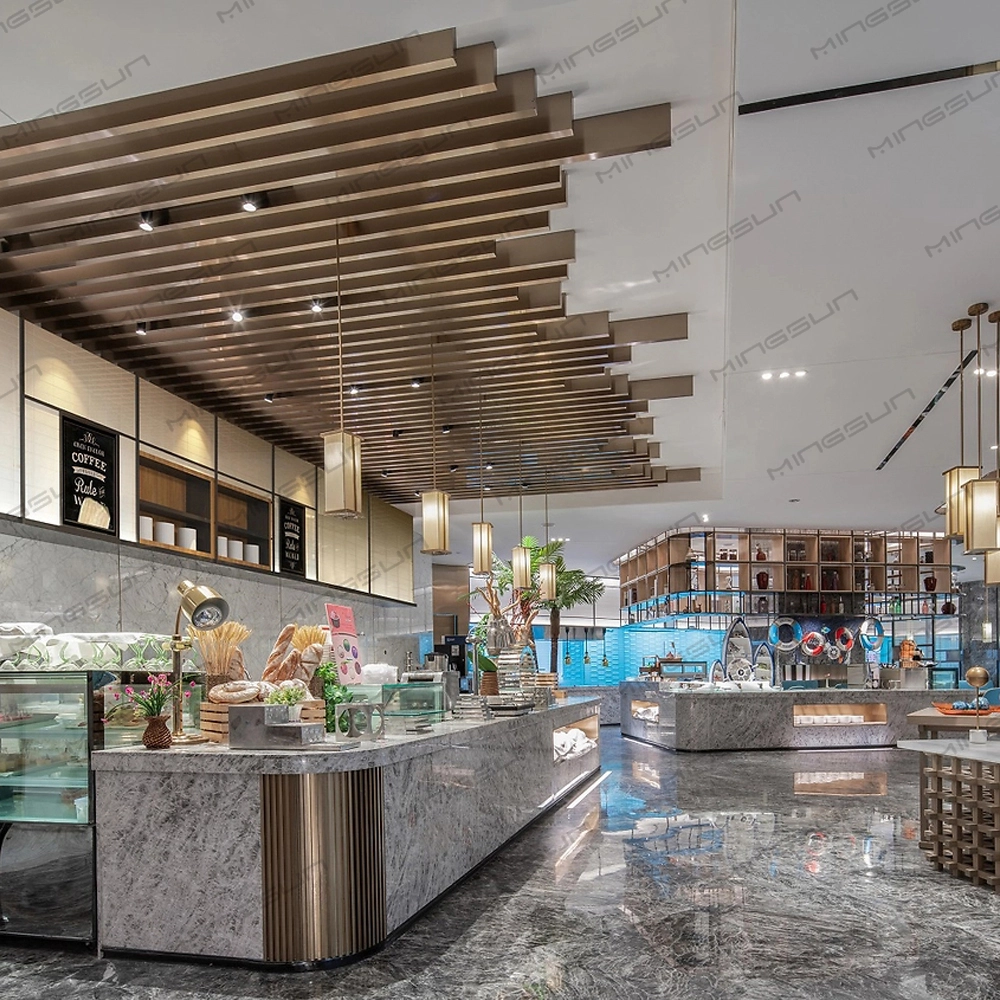
Modern Hotel Dining Furniture Set-Custom Designed Wooden Tables, Upholstered Chairs & Banquette Seating
Create a lasting impression with our custom-designed hotel dining furniture set, crafted for modern luxury hotels and upscale restaurants.
Featuring elegant wooden tables, ergonomic blue-upholstered chairs, and built-in banquette seating, this collection blends comfort, style, and durability.
As a leading manufacturer in Guangzhou, we deliver end-to-end solutions - from concept design and 3D visualization to production and global shipping - all at factory-direct prices.
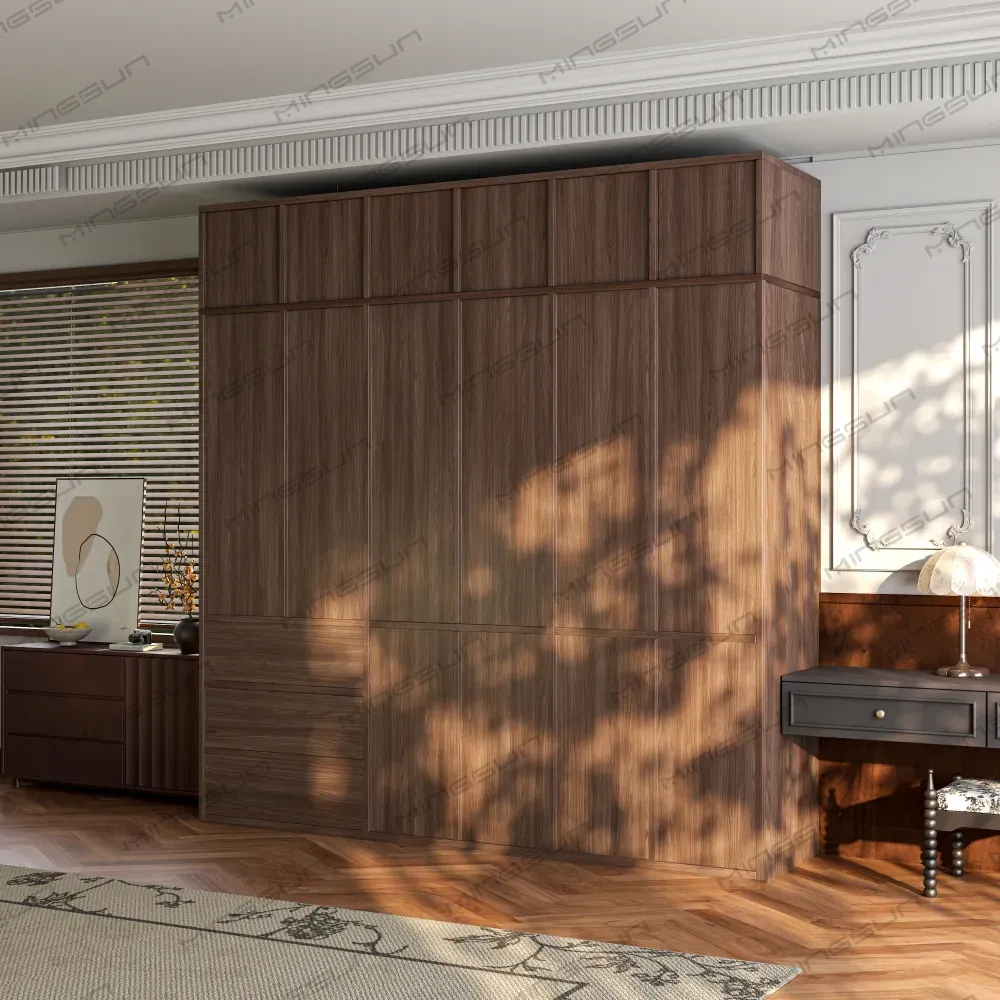
Minimalist Walnut Veneer Floor-to-Ceiling Hotel Wardrobe with Handleless Design
Maximize vertical storage in your hotel guest rooms or luxury apartments with this sleek, floor-to-ceiling wardrobe system. Defines by its warm, natural walnut wood veneer finish, the unit offers a sophisticated, handleless facade that maintains clean architectural lines, perfect for modern minimalist interiors. The intelligent layout features a bank of three external soft-close drawers for guest convenience, tall hanging sections for formal wear, and a dedicated row of top-tier cabinets specifically designed to store extra bedding, pillows, or seasonal items.
Manufactured by MINGSUN, this wardrobe is a testament to our expertise in custom hospitality joinery. We engineer these large-scale units for durability and ease of installation. From our Guangzhou factory, we provide precision-cut flat-pack solutions that reduce shipping costs while ensuring a premium built-in look upon assembly.
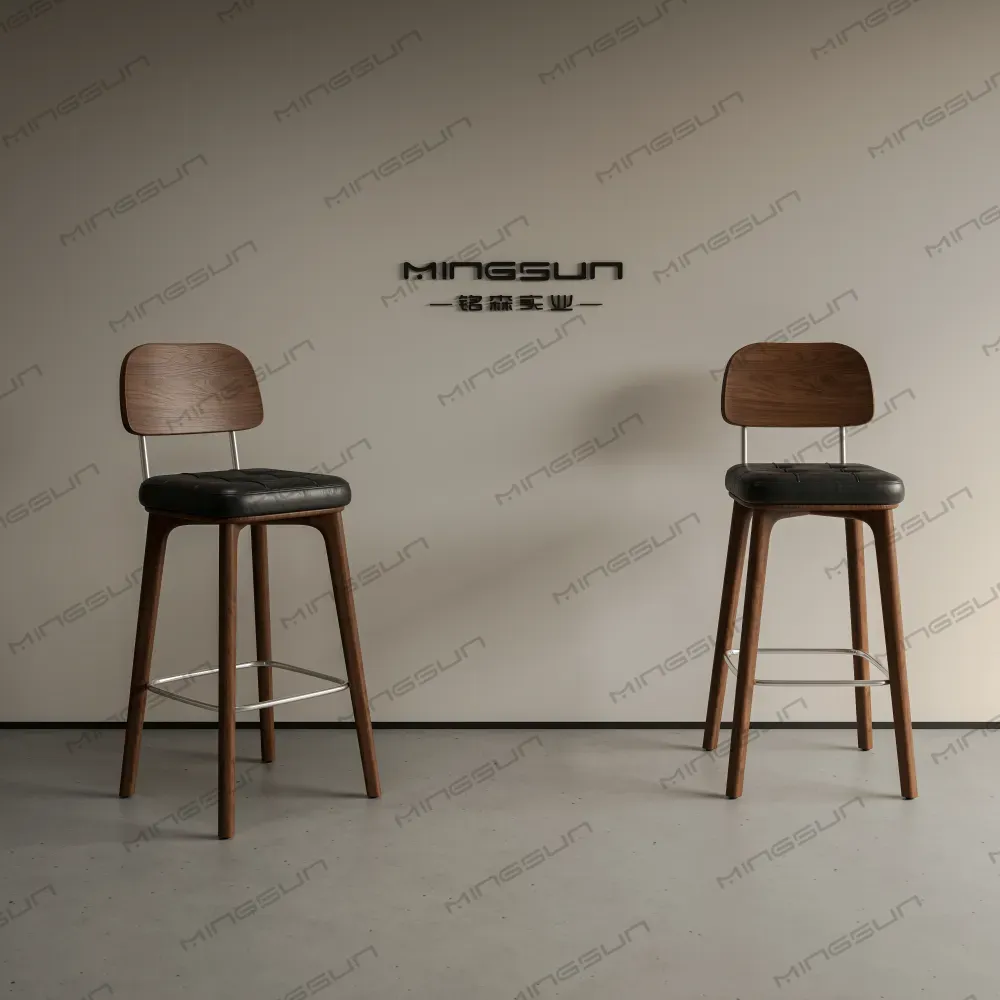
Mid-Century Modern Walnut Bar Stool with Tufted Leather Seat & Chrome Footrest for Luxury Hospitality
Elevate the aesthetic of your hotel bar, upscale restaurant, or executive lounge with this sophisticated bar stool, meticulously crafted by MINGSUN. Blending mid-century modern warmth with industrial durability, this stool features a curved, walnut-veneer backrest designed for ergonomic support and visual depth. The seat is upholstered in premium black PU leather (customizable to genuine leather) with classic button tufting, offering a refined texture that resists wear in high-traffic commercial environments.
Supported by tapered solid wood legs and reinforced with a chrome-finished steel footrest ring, this piece ensures stability and longevity. As a leading Guangzhou hotel furniture manufacturer, MINGSUN ensures that every stool meets rigorous contract-grade standards. From our 10,000㎡ factory directly to your venue, we provide a complete solution including manufacturing, global logistics, and video installation guidance to ensure a seamless project completion.
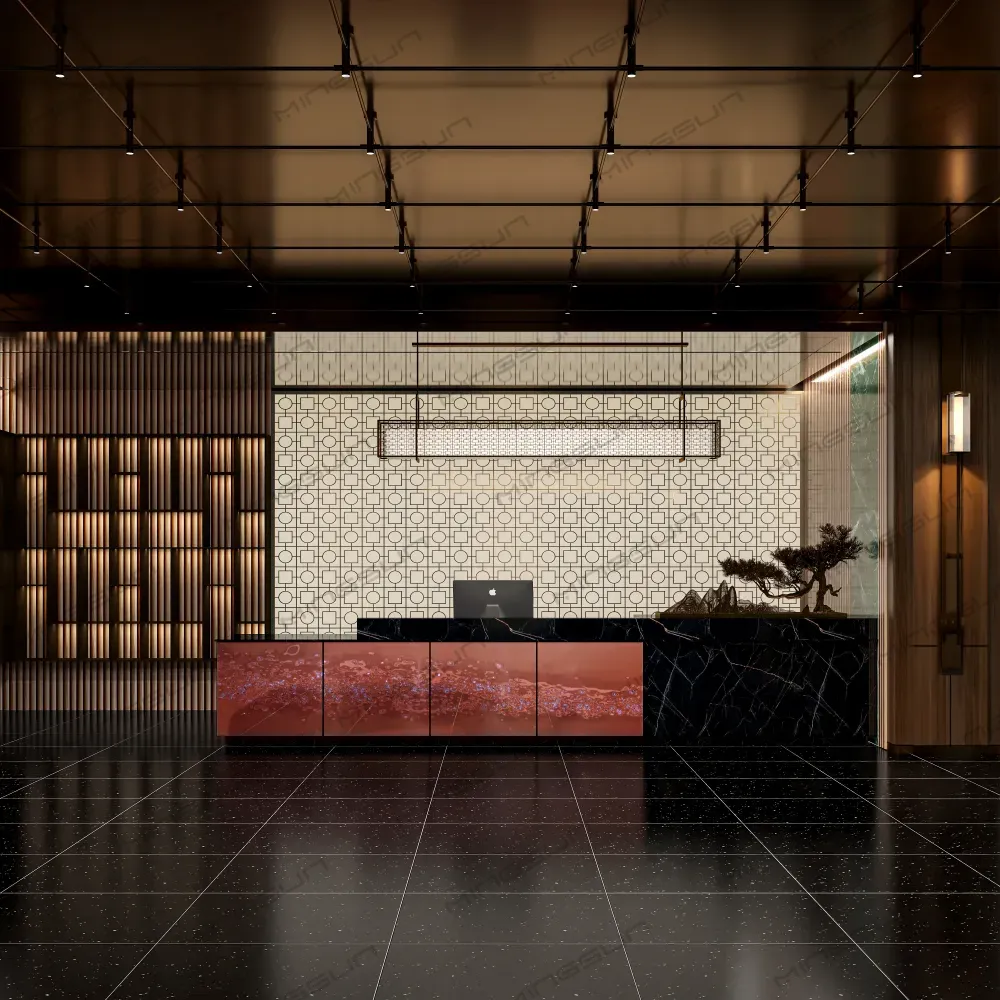
Luxury Reception Desk with Black Marble Top & Illuminated Copper-Resin Front Panels
Make a bold, unforgettable statement at your hotel’s entrance with this avant-garde reception desk. Its sleek black marble top exudes timeless sophistication, while the front facade features mesmerizing, internally lit copper-resin panels that glow with a warm, amber radiance, creating a dynamic visual centerpiece. Designed for both form and function, the unit offers ample concealed storage behind seamless doors and integrates a dedicated staff workstation with cable management. This is more than a check-in counter—it’s a sculptural installation that defines the luxury and artistry of your brand.
Get more industry insights
Looking for the right solution? Fill out the form and get a free quote.
Our experts will respond quickly with personalized options that fit your needs.
MINGSUN is a design-driven hotel furniture manufacturer offering OEM/ODM services, custom solutions, and global project support.
Built for wholesalers. Trusted by global buyers. Delivered with confidence.
Phone:
E-mail:
Follow us ——
 Scan QR Code
MINGSUN
MINGSUN
MINGSUN
MINGSUN
MS Custom Hotel Furniture Supplier