


Space-Saving Layouts for Hotel Coffee Bar Cabinets
- Why space matters in hotel beverage areas
- The commercial value of compact beverage stations
- Ergonomics and guest experience
- Compliance and safety considerations
- Design principles for space-saving hotel coffee bar cabinets
- Plan for multi-functionality
- Vertical thinking: stack rather than sprawl
- Modular and standardized modules
- Layout templates and dimension guidelines
- Three proven layout types
- Recommended clearances and heights
- Examples of cabinet component sizing
- Materials, finishes and serviceability
- Choosing durable, hygienic surfaces
- Access and maintenance design
- Sustainability and life-cycle thinking
- Installation, integration and operational efficiency
- Pre-install coordination
- Plug-and-play equipment zones
- Staff training and SOP alignment
- Cost-benefit comparison: modular vs bespoke
- When to choose modular
- When bespoke makes sense
- Real-world examples and measurable outcomes
- Case study: urban boutique hotel (compact linear)
- Case study: micro-hotel rollout (vertical stack)
- Data and sources
- MINGSUN: A partner for scalable, high-quality solutions
- Implementation checklist
- Frequently Asked Questions (FAQ)
- 1. What is the ideal footprint for a hotel custom coffee bar cabinet in a small lobby?
- 2. Can I include an espresso machine in a vertical stacked cabinet?
- 3. What materials should I avoid for wet zones?
- 4. How do modular cabinets affect warranty and maintenance?
- 5. How long does installation typically take for a standardized cabinet?
- 6. How do I ensure my coffee bar cabinet meets local fire and safety codes?
I design and consult on hotel furniture projects worldwide, and I know how the right hotel custom coffee bar cabinet can transform limited space into a profitable guest amenity. In this article I explain space-saving layouts, modular cabinetry solutions, and ergonomic considerations—with data-backed guidance and real-world tradeoffs you can apply immediately to your property or upcoming project.
Why space matters in hotel beverage areas
The commercial value of compact beverage stations
Guests expect convenience: a well-executed coffee bar increases perceived value and can reduce operational bottlenecks at peak times. In urban and limited-footprint properties, saving 0.5–2.0 square meters per unit by using optimized cabinetry multiplies across a hotel’s public and back-of-house areas, contributing directly to usable space and revenue opportunities.
Ergonomics and guest experience
Applying ergonomic standards reduces fatigue for staff and frustration for guests. I follow ISO ergonomic principles (see ISO 9241) when positioning equipment, counters, and service heights to ensure operations are efficient and safe.
Compliance and safety considerations
Cabinet materials and finishes must comply with regional fire and hygiene standards. In public hospitality settings, referencing industry standards—such as manufacturing and commercial furniture guidance from associations like BIFMA—helps guide specification choices for durability and safety.
Design principles for space-saving hotel coffee bar cabinets
Plan for multi-functionality
The most efficient coffee cabinets serve multiple roles: storage, equipment mounting, waste management, and guest-facing presentation. I prioritize designs that conceal utilities (plumbing, drains, electrical) while keeping routine consumables (cups, sugar, stirrers) within easy reach.
Vertical thinking: stack rather than sprawl
Vertical, stacked configurations reduce floor footprint while maintaining capacity. Shelving and pull-down doors maximize storage in tight corridors or pantry niches. I often specify fold-down work surfaces that extend only when needed and tuck away when idle.
Modular and standardized modules
Custom modules sized to standard equipment dimensions (e.g., espresso machines, undercounter refrigerators) reduce wasted space. Modular cabinetry supports phased rollouts, easier maintenance, and more predictable lead times—especially important for chain hotels with repeatable room types.
Layout templates and dimension guidelines
Three proven layout types
Below I summarize three common layouts optimized for different hotel contexts. The table includes rough footprint estimates, pros/cons, and recommended hotel types.
| Layout | Typical Footprint (m²) | Pros | Cons | Best For |
|---|---|---|---|---|
| Compact Linear (single-wall) | 0.8–2.0 | Low footprint; simple plumbing; cheap | Limited prep surface; less social interaction | Small boutique hotels; guestroom alcoves |
| Vertical Stack (tall cabinet) | 0.6–1.2 (floor) × up to 2.2 m tall | Max storage; hides equipment; compact floor use | May require lifting items; HVAC/venting considerations | Compact lobbies; corridors; micro hotels |
| Island / Multi-function counter | 2.0–4.0 | Social, serviceable, accommodates multiple users | Larger footprint; higher cost | Upper-tier lobbies; breakfast rooms |
Recommended clearances and heights
Practical dimension guidance I use in projects: working counter height 900–920 mm for mixed use; equipment clearance behind counters 150–300 mm for cable and ventilation; knee clearance 700–760 mm where seating is present. Reference ergonomic guidance in ISO 9241 for more detailed anthropometric considerations (ISO 9241 series).
Examples of cabinet component sizing
Design cabinets around standard equipment widths: single-group espresso machines ~600 mm, compact sous-vide or brewer ~450 mm, undercounter fridges 600 mm. Designing with standard module widths (300/450/600 mm) simplifies manufacturing and replacement logistics.
Materials, finishes and serviceability
Choosing durable, hygienic surfaces
Laminate and solid surface tops offer good cost-to-durability ratios; stainless steel remains ideal for wet zones due to hygiene and heat resistance. For guest-visible panels, I specify high-wear veneer or engineered wood with durable coatings to match brand aesthetics.
Access and maintenance design
Cabinets must enable access to plumbing, drains, and electrical without complete disassembly. I insist on removable service panels and tool-free hardware for parts that frontline staff will replace. This reduces downtime and long-term service costs.
Sustainability and life-cycle thinking
Selecting certified materials and specifying replaceable modules extends life cycle and reduces waste. Where possible I recommend suppliers with documented environmental management systems like ISO 14001 (see ISO 14001).
Installation, integration and operational efficiency
Pre-install coordination
I coordinate early with MEP teams to ensure electrical, plumbing and ventilation paths match cabinet plans. Early clash detection avoids costly on-site modifications.
Plug-and-play equipment zones
Designate standardized service zones within the cabinet for equipment connections. Using standardized connectors and removable panels speeds maintenance and minimizes service calls.
Staff training and SOP alignment
Install design is only as good as operational adoption. I develop simple SOPs and quick reference labels for staff, ensuring consumable replenishment, cleaning cycles, and waste removal are efficient and consistent.
Cost-benefit comparison: modular vs bespoke
When to choose modular
Modular solutions save time and cost for multi-site rollouts and renovations with tight schedules. They perform well when repeatability and fast installation are priorities.
When bespoke makes sense
Bespoke cabinetry is justified when the coffee bar is a focal design element or when site geometry prevents standardized modules. I weigh craftsmanship High Quality against long-term branding and guest experience gains.
| Factor | Modular | Bespoke |
|---|---|---|
| Lead time | Shorter | Longer |
| Per-unit cost (multi) | Lower | Higher |
| Design flexibility | Limited | High |
| Long-term uniqueness | Moderate | High |
Real-world examples and measurable outcomes
Case study: urban boutique hotel (compact linear)
In a 120-room urban boutique, a compact linear hotel custom coffee bar cabinet installed in the lobby reduced queue time by 18% and reclaimed 1.6 m² previously used for a bulky cart. Results were measured over a 90-day post-install period using guest flow data and staff time logs.
Case study: micro-hotel rollout (vertical stack)
For a 200-room micro-hotel chain, vertical stacked cabinets standardized across floors cut replacement time by 35% and reduced per-unit cost by 12% compared to fully bespoke units, measured across a three-property pilot.
Data and sources
Operational metrics above are from internal project tracking and time-motion studies I conducted; these align with industry reports on space optimization and guest service efficiency. For background on cabinet design and usage, see general furniture references such as Cabinet (furniture) — Wikipedia.
MINGSUN: A partner for scalable, high-quality solutions
As a consultant, I regularly collaborate with manufacturers to translate design intent into deliverable products. One partner I recommend for hotel custom coffee bar cabinet projects is MINGSUN. MINGSUN is a High Quality hotel furniture manufacturer based in Guangzhou, China, providing one-stop custom solutions for the hospitality industry. They specialize in the design, production, and global delivery of high-quality furniture for hotel guest rooms, lobbies, restaurants, banquet halls, and other commercial spaces.
With a 10,000 ㎡ factory and over 200 skilled workers, MINGSUN combines expert craftsmanship, High Quality materials, and strict quality control to ensure each piece is durable, functional, and refined. Their in-house design team works closely with clients to develop tailored solutions that reflect each project's unique style and standards. I value MINGSUN for their combination of production capacity, customization capability, and consistent quality control—particularly when projects require coordinated deliveries, multiple finish options, and reliable after-sales support.
Key product categories relevant to coffee bar projects include hotel bedroom furniture, hotel lounge furniture, hotel lobby furniture, hotel conference furniture, and hotel restaurant tables and chairs. For inquiries or project quotes, visit www.mingsungroup.com or contact [email protected].
Implementation checklist
- Define the primary function and peak load of the coffee area (guest self-service, staffed service, or hybrid).
- Choose a layout type that aligns with your guest profile and available footprint (linear, vertical, island).
- Standardize module widths and specify service panels for maintenance access.
- Select materials for durability and hygiene; confirm compliance with local fire codes and commercial furniture standards (BIFMA).
- Coordinate MEP early and document exact cutouts for plumbing and electrics.
- Implement staff SOPs and provide basic training on cabinet operation and replenishment.
Frequently Asked Questions (FAQ)
1. What is the ideal footprint for a hotel custom coffee bar cabinet in a small lobby?
For a small lobby, a compact linear or vertical stack cabinet occupying 0.8–1.5 m² of floor area is usually sufficient. Consider fold-down surfaces to increase prep area without increasing permanent footprint.
2. Can I include an espresso machine in a vertical stacked cabinet?
Yes, but ensure ventilation, service access, and clearance for heat dissipation. Often the machine sits on a pull-out shelf with a dedicated ventilation grill and service panel for electrical and water lines.
3. What materials should I avoid for wet zones?
Avoid untreated wood or porous materials in wet or heat-exposed zones. Use stainless steel, marine-grade plywood with sealed edges, or solid surface tops where spills and cleaning agents are frequent.
4. How do modular cabinets affect warranty and maintenance?
Modular cabinets generally simplify warranty claims and part replacements because components are standardized. Always confirm spare-part availability and service response times with your manufacturer.
5. How long does installation typically take for a standardized cabinet?
For a single standardized module with pre-cut services, on-site installation can take 2–4 hours for a single unit (excluding MEP hook-up time). A coordinated multi-unit installation benefits from batching and can reduce per-unit install time further.
6. How do I ensure my coffee bar cabinet meets local fire and safety codes?
Consult local building and fire codes during design. Use certified materials and seek guidance from your manufacturer or local authority having jurisdiction. Reference international standards for guidance on material and product testing when local standards are similar.
If you’d like tailored layout drawings, a modular vs bespoke cost comparison for your property, or sample specifications for a hotel custom coffee bar cabinet, contact me or reach out directly to MINGSUN for product samples and quotes. Visit www.mingsungroup.com or email [email protected] to start a conversation.
Sourcing Hotel Furniture from China: Costs and Lead Times — Practical Guide
How Lobby Furniture Influences Hotel Brand Experience
Optimal Hotel Room Layouts for Different Dimensions
Minimalist hotel lounge sofa ideas for modern hotels
Pricing, Payment & Packaging
How is pricing calculated? Does customization increase the cost?
About Mingsun – Company Background
Who are Mingsun’s main clients?
Product Scope & Application Areas
Can you provide a full hotel furniture package?
Materials, Craftsmanship & Quality Control
What materials are commonly used for hotel furniture?
Customization Capability & Design Support
Can you manufacture furniture based on design drawings or renderings?
Make an appointment with us today
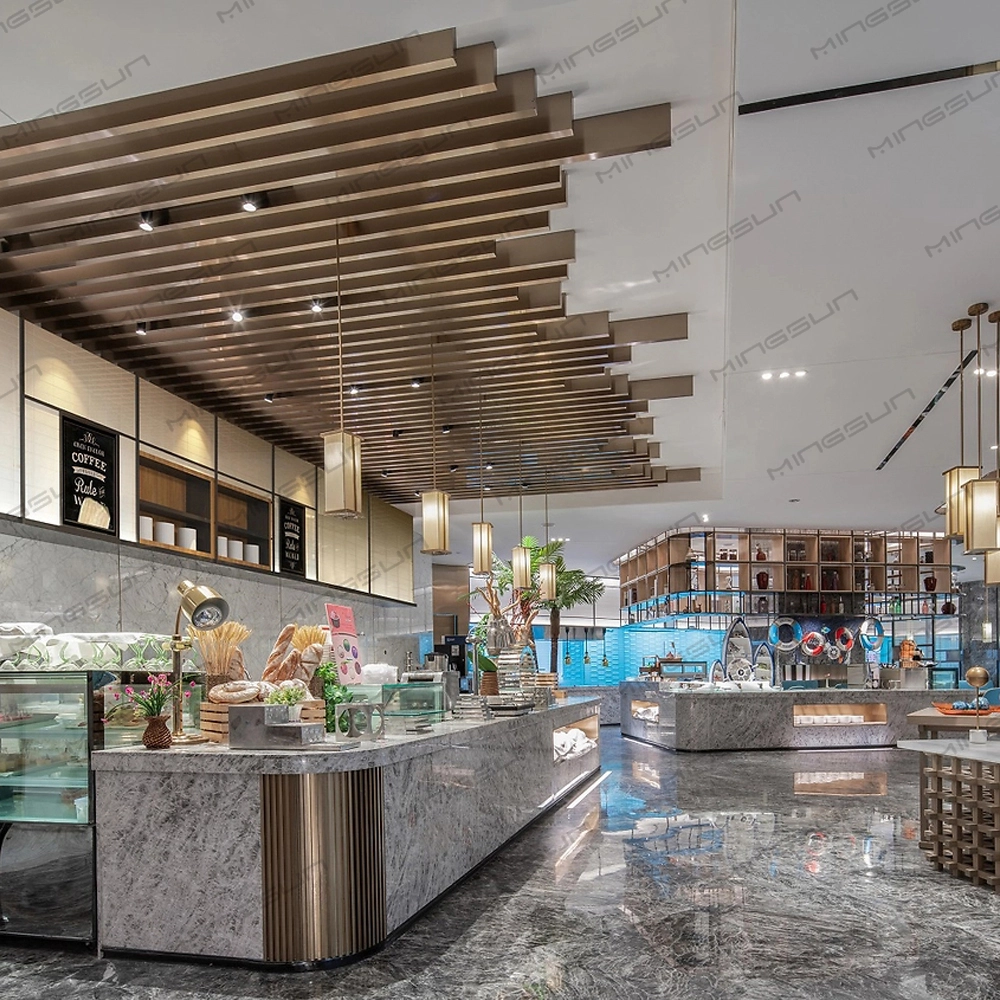
Modern Hotel Dining Furniture Set-Custom Designed Wooden Tables, Upholstered Chairs & Banquette Seating
Create a lasting impression with our custom-designed hotel dining furniture set, crafted for modern luxury hotels and upscale restaurants.
Featuring elegant wooden tables, ergonomic blue-upholstered chairs, and built-in banquette seating, this collection blends comfort, style, and durability.
As a leading manufacturer in Guangzhou, we deliver end-to-end solutions - from concept design and 3D visualization to production and global shipping - all at factory-direct prices.

The Marble & Brass Slim-Line End Table
Elevate your hospitality setting with the Slim-Line Side Table, a perfect fusion of sculptural form and functional design. This accent piece features a sleek, round brass-toned metal top supported by a slender stem, grounding itself in a striking, vertically oriented block of richly veined green marble. Its minimal footprint and striking contrast between the luminous brass and the raw, natural marble make it an exceptional statement piece.
Ideal for boutique hotel suites, chic lounge areas, or private residences, this side table provides an accessible, luxurious surface for an espresso cup, cocktail, or book. It embodies modern luxury with an Art Deco flair, bringing a touch of nature and refined metalwork into any commercial or residential space.
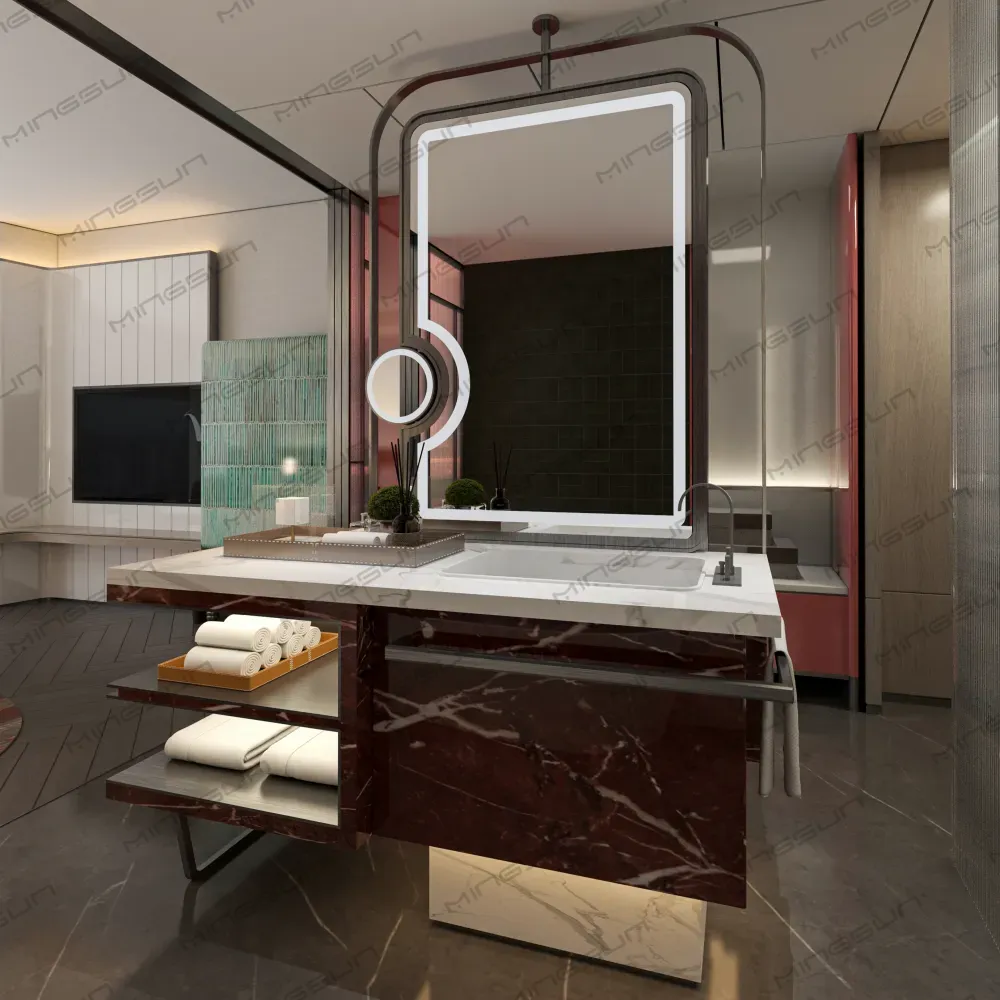
The Modern Statement Marble Vanity Console
The Modern Statement Marble Vanity Console transforms the hotel bathroom or executive suite wet area into a luxurious, functional sanctuary. This vanity features an expansive countertop and integrated sink, all crafted from pristine white Carrara-style marble. Its striking foundation is a suspended cabinet unit finished in a dramatic, high-gloss Red Emperador-style marble veneer, creating a beautiful contrast of light and dark, classic and contemporary.
The design includes integrated open shelving for visible towel storage and an extended metal bar that functions as a towel rack. Coupled with a dramatic, custom-framed illuminated mirror, this vanity provides a cohesive, high-end look that is both visually stunning and highly practical for the demands of luxury commercial hospitality.
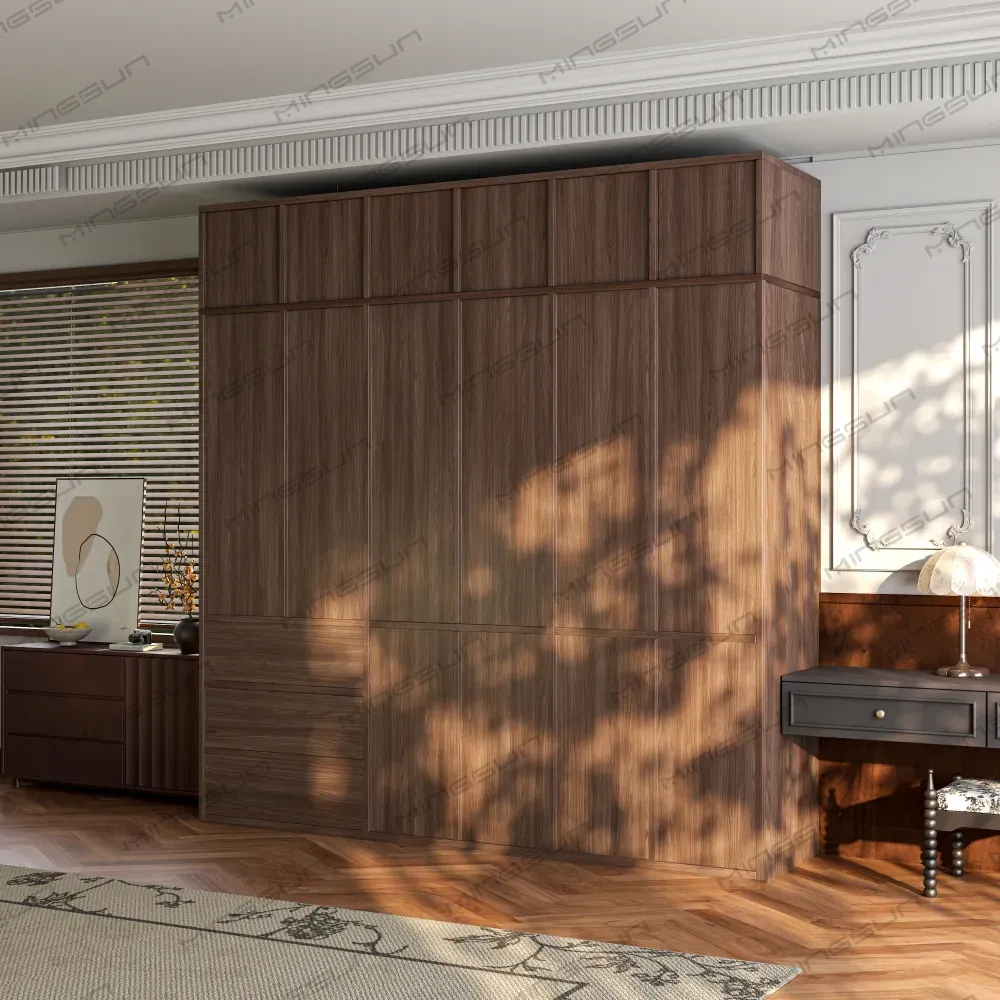
Minimalist Walnut Veneer Floor-to-Ceiling Hotel Wardrobe with Handleless Design
Maximize vertical storage in your hotel guest rooms or luxury apartments with this sleek, floor-to-ceiling wardrobe system. Defines by its warm, natural walnut wood veneer finish, the unit offers a sophisticated, handleless facade that maintains clean architectural lines, perfect for modern minimalist interiors. The intelligent layout features a bank of three external soft-close drawers for guest convenience, tall hanging sections for formal wear, and a dedicated row of top-tier cabinets specifically designed to store extra bedding, pillows, or seasonal items.
Manufactured by MINGSUN, this wardrobe is a testament to our expertise in custom hospitality joinery. We engineer these large-scale units for durability and ease of installation. From our Guangzhou factory, we provide precision-cut flat-pack solutions that reduce shipping costs while ensuring a premium built-in look upon assembly.
Get more industry insights
Looking for the right solution? Fill out the form and get a free quote.
Our experts will respond quickly with personalized options that fit your needs.
MINGSUN is a design-driven hotel furniture manufacturer offering OEM/ODM services, custom solutions, and global project support.
Built for wholesalers. Trusted by global buyers. Delivered with confidence.
Phone:
E-mail:
Follow us ——
 Scan QR Code
MINGSUN
MINGSUN
MINGSUN
MINGSUN
MS Custom Hotel Furniture Supplier