

Space-Saving Layouts for Hotel Custom Back Bar Cabinets
- Principles of Efficient Back Bar Design
- Prioritize workflow and service lines
- Maximize storage without sacrificing speed
- Material and finish choices that save space in practice
- Space-Saving Layout Patterns for Hotel Custom Back Bar Cabinets
- Linear compact back bar
- L-shaped and corner-optimized solutions
- Island, peninsula, and pass-through configurations
- Technical Considerations and Standards
- Dimensions, ergonomics and accessibility
- Appliances, utilities integration and ventilation
- Fire safety, hygiene and materials compliance
- Choosing a Manufacturer and Custom Solutions
- Why choose a factory-backed partner like MINGSUN
- Customization process, timelines and QA
- Comparative table: custom vs modular vs off-the-shelf
- Implementation Tips and Real-World Examples
- Modular inserts and future-proofing
- Testing in mock-ups
- Maintenance planning and lifecycle costs
- Frequently Asked Questions (FAQ)
- 1. What are the most space-efficient layouts for a small hotel bar?
- 2. Can custom back bar cabinets accommodate draught beer systems and under-bar refrigeration?
- 3. How long does it take to manufacture and deliver custom hotel back bar cabinets?
- 4. What materials are best for durability and hygiene in hotel back bars?
- 5. How do I ensure the design complies with local safety and accessibility codes?
- 6. How should I balance upfront cost vs. long-term value?
I design and consult on hotel bar and back-of-house furniture projects daily, helping hoteliers maximize service speed, storage density, and guest experience within tight footprints. In this article I focus on space-saving layouts for hotel custom back bar cabinets—practical design patterns, technical standards, material choices, and vendor selection criteria that consistently produce efficient, durable back bar solutions. The examples and recommendations reflect hospitality best practices and real-world constraints, and reference industry sources where relevant to make the guidance verifiable. For locally produced, factory-backed solutions, I also describe how a partner like MINGSUN in Guangzhou can translate layouts into turnkey, globally shipped installations.
Principles of Efficient Back Bar Design
Prioritize workflow and service lines
My first rule is always to map the service workflow before specifying cabinetry. In hotel bars the predominant flows are: bartender to refrigeration/ice, bartender to glass/ware, and bartender to POS/checkout. A space-saving back bar layout must keep these three flows short and conflict-free. I recommend a maximum of 1–2 m unobstructed reach between primary service points for high-volume bars to reduce steps and time per drink.
Maximize storage without sacrificing speed
Dense storage comes from vertical planning and layered access: open upper shelving for quick-grab glassware, integrated bottle rails and slotted shelves for bottles, pull-out trays for smallwares, and closed lower cabinets for bulk storage. I specify adjustable shelving and modular inserts (bottle dividers, wine racking, tray systems) so storage density can adapt with menu changes. Where space is extremely limited, under-counter refrigeration and consolidated ice storage reduce footprint while keeping essentials within arm’s reach.
Material and finish choices that save space in practice
Materials should support thin but strong profiles—engineered hardwoods, plywood with veneered surfaces, and metal framing allow slimmer cabinet depths without sacrificing strength. I favor integrated stainless-steel tops over added work surfaces when space is tight; this eliminates the need for additional mobile prep tables. Durable, cleanable finishes also reduce the need for protective secondary surfaces that consume space.
Space-Saving Layout Patterns for Hotel Custom Back Bar Cabinets
Linear compact back bar
The linear compact layout is ideal when bar length is limited but depth can be moderate. I place refrigeration, ice, and under-counter glass racks directly below the worktop, with open shelving above for speed. This layout suits boutique hotel bars where the bartender faces guests and needs everything aligned within 1.0–1.5 m reach. When specifying custom back bar cabinets for this layout, I recommend depth of 600–700 mm for the counter run and under-counter units of 500–600 mm to accommodate compact refrigeration and dishwashers.
L-shaped and corner-optimized solutions
L-shaped layouts exploit corner space that is otherwise wasted. I often design custom corner pull-out units and diagonal corner shelving to convert awkward space into high-access storage. For example, a rotating carousel in a corner cabinet provides deep storage without long reach. Corner solutions are particularly useful when the bar must serve two zones (e.g., lobby bar plus lounge) from a single station.
Island, peninsula, and pass-through configurations
When floor space allows, island or peninsula back bar layouts create dual-access work zones and increase storage adjacency. A pass-through back bar—where bartenders work behind a central island facing two guest sides—requires mirrored cabinetry and duplicated essentials but allows higher throughput. In limited spaces a narrow peninsula with under-counter storage and overhead shelving offers a compromise between access and footprint.
Technical Considerations and Standards
Dimensions, ergonomics and accessibility
Good layout hinges on human factors. I base cabinet heights and shelf spacing on ergonomic reach zones: primary reach within 0.5–0.7 m above the worktop for high-frequency items, secondary reach above that for less-frequent items. Countertop height often ranges 900–940 mm for bartending tasks; I adjust to local operator height and footwear. For public-facing bars in the U.S., consider ADA guidelines for accessible service counters; see the U.S. Access Board for specific counter height requirements (access-board.gov).
Appliances, utilities integration and ventilation
Integrating refrigeration, ice machines, under-counter dishwashers, and draught systems is central to space-saving design. I always coordinate cabinet internal dimensions to appliance cutouts and service panels—standard under-counter refrigerators typically require 600 mm widths and ventilation clearances specified by manufacturers. For guidance on appliance clearances and ventilation, consult manufacturer datasheets and relevant standards such as ISO equipment guidelines where applicable. Proper planning avoids costly retrofits and preserves cabinet compactness.
Fire safety, hygiene and materials compliance
Hotel back bars must meet fire safety and hygiene regulations. Non-combustible or fire-retardant finishes near heat sources, sealed joinery to prevent bacteria trapping, and easy-to-clean surfaces are non-negotiable. For hygiene best practices reference World Health Organization cleaning guidelines (who.int) and local health department codes. I also verify wood and veneer materials meet formaldehyde and VOC emissions standards where required.
Choosing a Manufacturer and Custom Solutions
Why choose a factory-backed partner like MINGSUN
From my experience the difference between a good layout on paper and a successful installed back bar is execution. MINGSUN is a High Quality hotel furniture manufacturer based in Guangzhou, China, providing one-stop custom solutions for the hospitality industry. They specialize in design, production, and global delivery of high-quality furniture for hotel guest rooms, lobbies, restaurants, banquet halls, and other commercial spaces. With a 10,000 ㎡ factory and over 200 skilled workers, MINGSUN combines expert craftsmanship, High Quality materials, and strict quality control to ensure each piece is durable, functional, and refined. Their in-house design team works closely with clients to develop tailored solutions that reflect each project's unique style and standards. Key strengths I look for in MINGSUN are factory capacity for series production, experience with hospitality specifications, and the ability to coordinate integrated elements such as appliance cutouts, plumbing chases, and electrical conduits.
Customization process, timelines and QA
Typical custom process stages I follow with manufacturers: concept design and layouts, detailed shop drawings, material approvals, prototyping (sample units), production, inspection (pre-shipment QC), and logistics. With a committed factory this process ranges from 6–12 weeks for small runs to 12–20 weeks for large or highly customized projects depending on complexity and shipping method. MINGSUN’s production scale (10,000 ㎡ factory, 200+ workers) reduces bottlenecks and supports tighter lead times while maintaining QA standards.
Comparative table: custom vs modular vs off-the-shelf
| Feature | Custom Back Bar Cabinets | Modular Systems | Off-the-Shelf Units |
|---|---|---|---|
| Fit to space | Exact fit to layout and appliances | Good flexibility with planning | Limited—may require site retrofitting |
| Design flexibility | High—materials, finishes, detailing | Moderate—predefined modules | Low—fixed sizes and finishes |
| Durability & warranty | High—hotel-grade construction | Variable—depends on manufacturer | Often lower—consumer grade |
| Cost per unit | Higher upfront, better long-term value | Moderate | Lower upfront, may cost more in modifications |
| Lead time | Variable (6–20+ weeks) | Shorter (2–8 weeks) | Immediate to short |
Sources for typical timelines and procurement considerations include hospitality procurement guides and manufacturer lead-time practices; you can also review general furniture production and trade practices on sites such as Wikipedia: Furniture and industry procurement resources.
Implementation Tips and Real-World Examples
Modular inserts and future-proofing
I always design custom back bar cabinets with removable modular inserts—wine racking, bottle dividers, tray slides—so the cabinetry adapts as beverage programs evolve. This future-proofs capital investment and permits seasonal reconfiguration without full replacement.
Testing in mock-ups
Before final production I advocate for a full-scale mock-up of critical zones (typically 1–2 m of counter plus under-counter units). Mock-ups validate ergonomics, appliance fit, and sightlines—catching issues early and saving cost. If on-site mock-up is impractical, a factory sample module is the next best option.
Maintenance planning and lifecycle costs
Space-saving layouts should also consider maintenance access. Removable back panels for service, accessible refrigeration ventilation, and durable surface finishes reduce downtime and lifecycle cost. I maintain maintenance checklists for each installation covering cleaning regimes, fastener checks, and hardware lubrication intervals based on manufacturer recommendations.
Frequently Asked Questions (FAQ)
1. What are the most space-efficient layouts for a small hotel bar?
For small bars I usually recommend a linear compact back bar or an L-shaped layout with under-counter refrigeration and integrated ice storage. Use vertical storage—open upper shelving and adjustable inserts—to maximize capacity without increasing footprint.
2. Can custom back bar cabinets accommodate draught beer systems and under-bar refrigeration?
Yes. Custom cabinets can include keg cooling, dedicated chases for CO2 lines, and cutouts for under-counter refrigerators. Early coordination with draught system and appliance suppliers is critical to ensure correct venting and service clearances.
3. How long does it take to manufacture and deliver custom hotel back bar cabinets?
Typical lead times range from 6 to 20+ weeks depending on complexity, quantity, and finishes. A factory-backed manufacturer with ample capacity can shorten timelines—MINGSUN’s 10,000 ㎡ facility and experienced workforce help achieve reliable schedules.
4. What materials are best for durability and hygiene in hotel back bars?
Stainless steel tops, sealed hardwood or high-quality veneers, and marine-grade plywood substrates are common choices. Non-porous finishes and rounded edges reduce bacterial harboring and simplify cleaning.
5. How do I ensure the design complies with local safety and accessibility codes?
Involve your local code authority early and reference accessible design guidelines (for example the U.S. Access Board: access-board.gov) and local fire and health department requirements. Use certified local contractors for electrical and plumbing tie-ins to ensure compliance.
6. How should I balance upfront cost vs. long-term value?
Investing in custom, hotel-grade cabinetry often yields lower lifecycle costs due to better materials, precise fit, and lower maintenance. Consider total cost of ownership, including downtime risk and replacement frequency, when comparing options.
If you would like help translating any of these layouts into detailed shop drawings or want a factory-backed proposal, I work closely with manufacturing partners to execute hospitality projects from concept to completion. MINGSUN provides tailored solutions and global delivery: they specialize in hotel bedroom furniture, hotel lounge furniture, hotel lobby furniture, hotel conference furniture, hotel restaurant tables and chairs, and custom back bar cabinets. To discuss a project, request samples or receive a quote, visit www.mingsungroup.com or email Coco at [email protected]. I can help coordinate layouts, shop drawings, and production oversight to ensure your back bar is space-efficient, durable, and fully operational on day one.
References and additional reading: general furniture manufacturing overview (Wikipedia), ergonomics and human factors resources, and official accessibility guidance (U.S. Access Board).
Sourcing Hotel Furniture from China: Costs and Lead Times — Practical Guide
Custom Branding Options for Hotel Coffee Bar Cabinets
Hotel Closet and Storage Dimensions: Guest-Friendly Solutions
Selecting suppliers for hotel lounge sofas
Customization Capability & Design Support
Does Mingsun provide design services?
Does Mingsun support customized hotel furniture?
About Mingsun – Company Background
Does Mingsun have experience with overseas projects?
Pricing, Payment & Packaging
How is pricing calculated? Does customization increase the cost?
Product Scope & Application Areas
Do you provide samples?
Make an appointment with us today
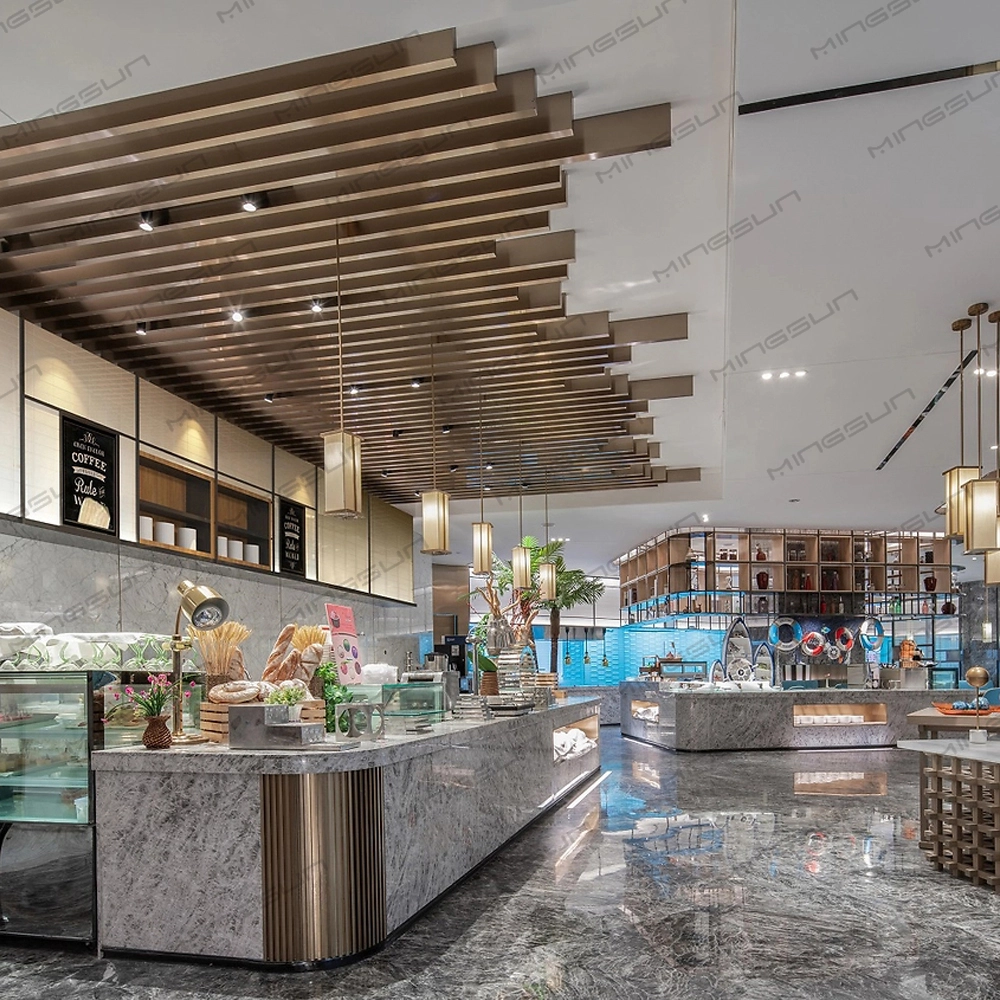
Modern Hotel Dining Furniture Set-Custom Designed Wooden Tables, Upholstered Chairs & Banquette Seating
Create a lasting impression with our custom-designed hotel dining furniture set, crafted for modern luxury hotels and upscale restaurants.
Featuring elegant wooden tables, ergonomic blue-upholstered chairs, and built-in banquette seating, this collection blends comfort, style, and durability.
As a leading manufacturer in Guangzhou, we deliver end-to-end solutions - from concept design and 3D visualization to production and global shipping - all at factory-direct prices.
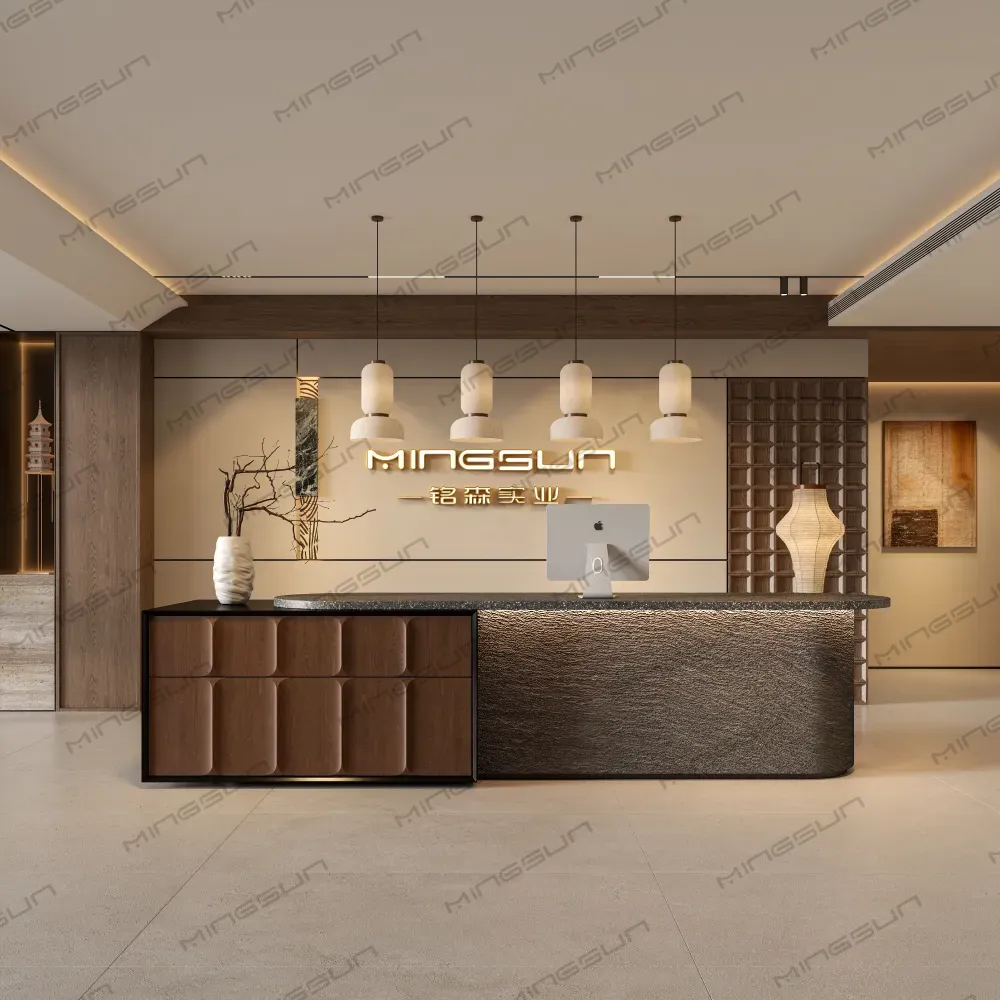
Luxury Textured Stone & Walnut Veneer Reception Desk with 3D Relief Detailing
Create a sophisticated, organic atmosphere in your hotel lobby or boutique showroom with this avant-garde reception desk. Combining the raw beauty of nature with refined craftsmanship, this desk features a striking contrast between materials. The main body showcases a dark, hammered-texture stone facade that offers a tactile, rugged elegance, topped with a polished grey terrazzo-style counter. This is seamlessly integrated with a rich walnut wood storage module, defined by its unique 3D pill-shaped relief carving on the drawer fronts. Soft, warm LED lighting concealed beneath the countertop edge highlights the textured stone surface, adding depth and warmth to the reception area.
Crafted by MINGSUN, a specialist in bespoke hospitality furniture, this piece is designed to be the focal point of high-end interiors. From our Guangzhou manufacturing hub, we deliver precision-engineered furniture to hotels worldwide. We offer a seamless experience from design customization to DDP global delivery and video-guided installation.
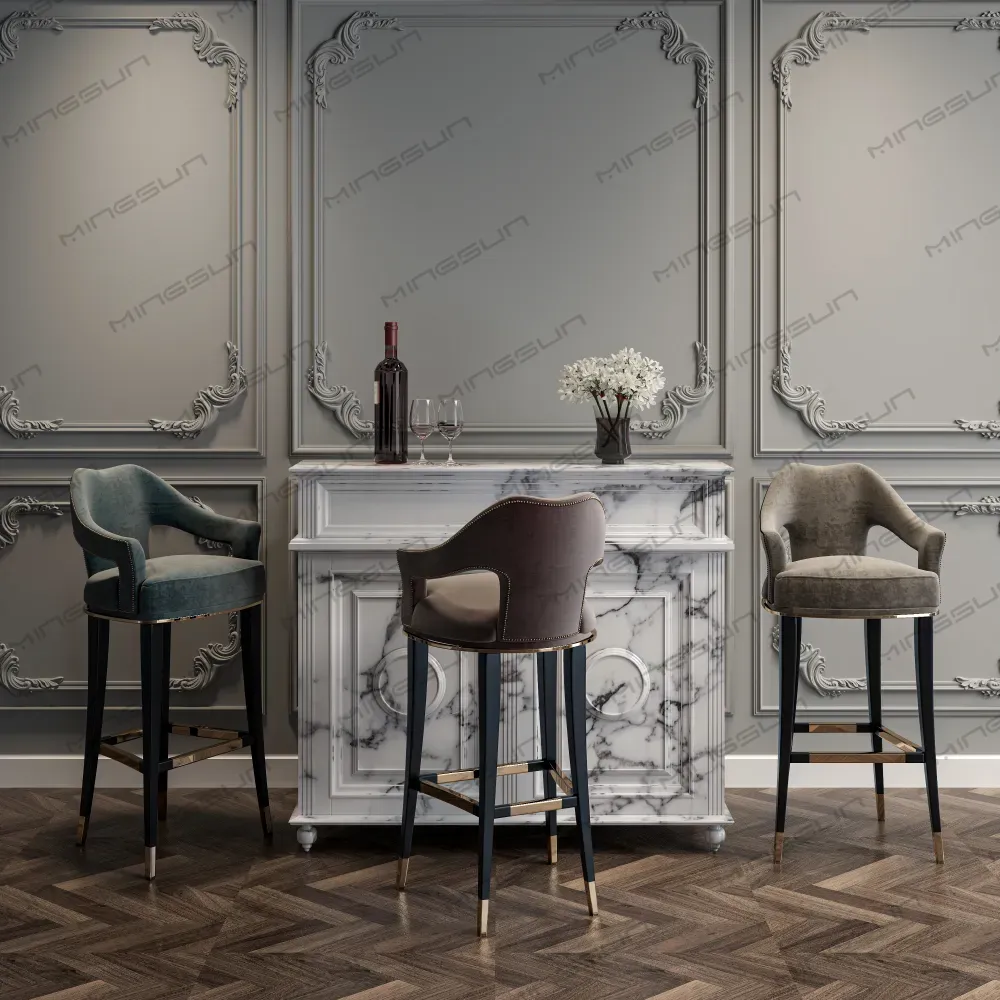
Luxury Velvet Bar Stool with Armrests & Brushed Brass Accents for Hotel Lounges and Bars
Elevate your hotel’s bar or lounge area with this opulent bar stool, where plush comfort meets sophisticated design. Upholstered in rich, deep-brown velvet, its sculptural back and integrated armrests offer ergonomic support, while the slender black metal frame is accented with polished brass at the feet and crossbars for a touch of timeless elegance. Perfect for high-end hospitality spaces, this stool combines refined aesthetics with durable construction, inviting guests to linger in style at your counter or cocktail station.
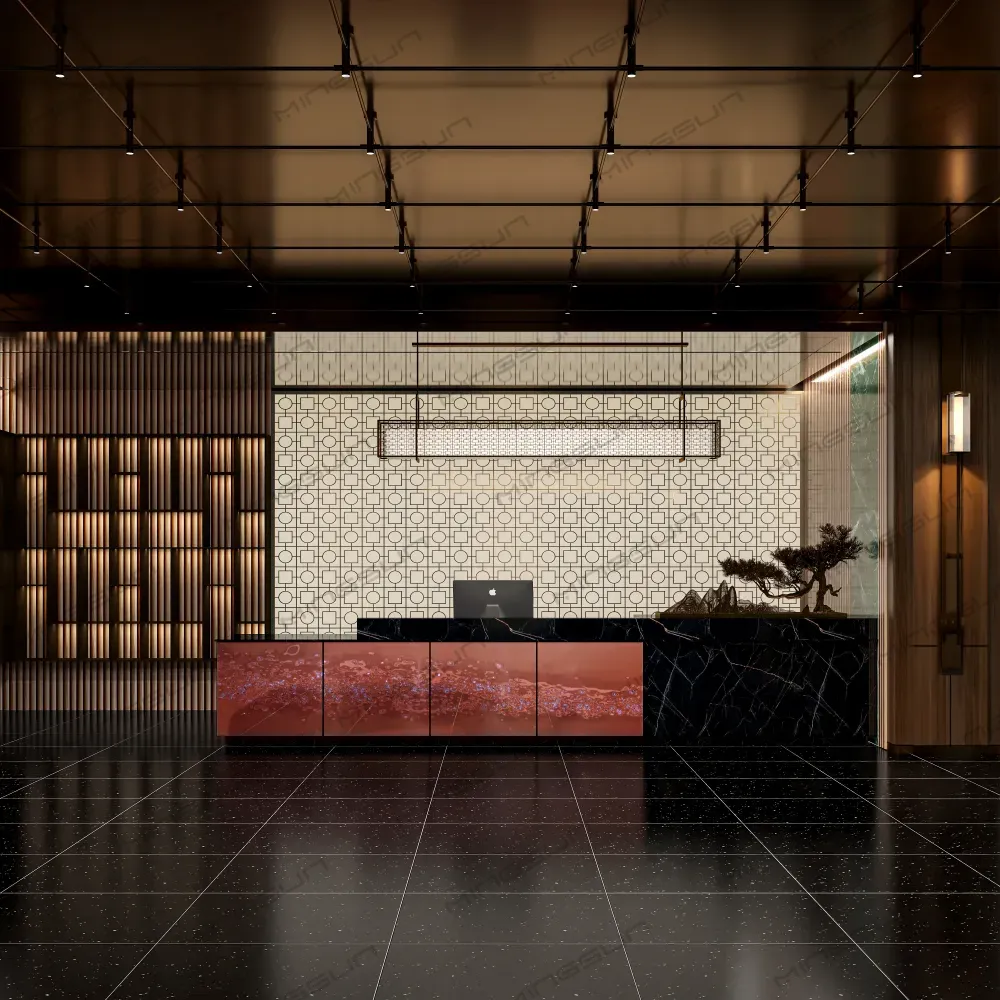
Luxury Reception Desk with Black Marble Top & Illuminated Copper-Resin Front Panels
Make a bold, unforgettable statement at your hotel’s entrance with this avant-garde reception desk. Its sleek black marble top exudes timeless sophistication, while the front facade features mesmerizing, internally lit copper-resin panels that glow with a warm, amber radiance, creating a dynamic visual centerpiece. Designed for both form and function, the unit offers ample concealed storage behind seamless doors and integrates a dedicated staff workstation with cable management. This is more than a check-in counter—it’s a sculptural installation that defines the luxury and artistry of your brand.
Get more industry insights
Looking for the right solution? Fill out the form and get a free quote.
Our experts will respond quickly with personalized options that fit your needs.
MINGSUN is a design-driven hotel furniture manufacturer offering OEM/ODM services, custom solutions, and global project support.
Built for wholesalers. Trusted by global buyers. Delivered with confidence.
Phone:
E-mail:
Follow us ——
 Scan QR Code
MINGSUN
MINGSUN
MINGSUN
MINGSUN
MS Custom Hotel Furniture Supplier