

Top Design Trends for Hotel Coffee Bar Cabinets
- Why design matters in hotel food & beverage spaces
- Guest experience and dwell time
- Brand identity and storytelling
- Operational efficiency and ergonomics
- Top design trends for hotel coffee bar cabinets
- Modularity and configurable systems
- Integrated technology and smart workflows
- Blending hospitality aesthetics with commercial durability
- Materials, hygiene and sustainability — what to choose and why
- Material comparison table
- Hygiene, cleaning and standards
- Sustainable sourcing and certifications
- Specifying a hotel custom coffee bar cabinet: practical checklist
- Dimensions, ergonomics and ADA considerations
- Plumbing, electrical and HVAC coordination
- Procurement, testing and quality control
- Case study comparisons: realistic lifecycle costs
- Working with a manufacturer: what I require from suppliers
- Clear communication and turnkey capability
- Quality control and factory capability
- Prototyping and iterative design
- MINGSUN: a partner profile for global hotel furniture projects
- Final recommendations and quick specification guide
- Quick spec checklist (my go-to)
- What I would do on your next project
- FAQs — Frequently asked questions
- 1. What is the typical lead time for a hotel custom coffee bar cabinet?
- 2. Which materials are easiest to maintain in a high-traffic hotel coffee bar?
- 3. How do I ensure my coffee bar cabinet meets hygiene and safety standards?
- 4. Can custom coffee bar cabinets be designed to be modular and relocatable?
- 5. What sustainability certifications should I ask for?
- 6. How much should I budget for a hotel custom coffee bar cabinet?
In an era where hotel F&B touchpoints shape brand perception, a well-designed hotel custom coffee bar cabinet is more than a piece of millwork — it is an operational hub, a guest experience amplifier, and a durable investment. I will walk you through the contemporary trends I see on projects worldwide, referencing industry standards and material science where relevant, so you can specify coffee bar cabinetry that meets aesthetics, hygiene, and lifecycle cost expectations.
Why design matters in hotel food & beverage spaces
Guest experience and dwell time
Guests often form first impressions of a property through small moments—grab-and-go coffee, lobby barista counters, or in-room coffee stations. A custom coffee bar cabinet integrates display, service ergonomics, and lighting to encourage dwell time and ancillary spend. Studies from hospitality associations show that well-executed F&B touchpoints increase ancillary revenue and guest satisfaction scores (see American Hotel & Lodging Association insights: ahla.com).
Brand identity and storytelling
Cabinetry is a tactile canvas for brand storytelling. Whether you specify warm walnut veneer for a boutique feel or matte powder-coated metal for an industrial brand, the coffee bar cabinet must speak the property's language while remaining practical.
Operational efficiency and ergonomics
I always prioritize workflow when designing a custom cabinet: machine placement, water and waste lines, storage for single-use items, and service ergonomics. This reduces staff fatigue and speeds service, delivering measurable ROI through efficiency.
Top design trends for hotel coffee bar cabinets
Modularity and configurable systems
Modular cabinetry allows hotels to adapt footprint and function without full rebuilds. I specify modular units that can be reconfigured for seasonal menus or relocated during renovations. Modular systems also simplify shipping and installation for global projects.
Integrated technology and smart workflows
Design trends now include embedded power management, cable channels, integrated refrigeration drawers, and touchless dispensers. For example, specifying dedicated routing for espresso machine power and plumbing in the custom cabinet prevents field rework and keeps the work surface clean.
Blending hospitality aesthetics with commercial durability
Clients want the look of fine joinery with the resilience of commercial materials. Layering a durable core (plywood or engineered substrate) with a High Quality finish (real veneer, powder-coated metal accents or solid surface tops) is the mainstream approach.
Materials, hygiene and sustainability — what to choose and why
Material comparison table
| Material | Durability | Cost (relative) | Maintenance | Best for |
|---|---|---|---|---|
| Solid hardwood (veneered units) | High (if sealed) | High | Periodic sealing; sensitive to spills | Luxury boutique aesthetics |
| Plywood core + real veneer | High | Moderate | Low–moderate; repairable | Balanced durability & appearance |
| Stainless steel | Very high | Moderate–High | Easy (wipes; resistant to chemicals) | Back-of-house, high-humidity areas |
| High-pressure laminate (HPL) | High | Low–Moderate | Easy (non-porous) | High-traffic public areas |
| Solid surface (e.g., Corian) | High | High | Repairable; non-porous | Integrated sinks and seamless tops |
Sources: manufacturer technical pages (e.g., DuPont Corian) and industry guidance (FSC sustainability references: fsc.org).
Hygiene, cleaning and standards
Non-porous surfaces (HPL, solid surface, stainless steel) are recommended for coffee bar tops and areas exposed to liquids. I reference guidance on environmental surface cleaning when specifying finishes — for example, WHO guidance on cleaning protocols is useful for establishing maintenance regimes (WHO).
Sustainable sourcing and certifications
Sustainability has moved from optional to expected. Specify FSC-certified veneers for wood products and responsibly recycled metals where possible. Ensuring traceability and certification reduces reputational risk and meets many corporate procurement requirements.
Specifying a hotel custom coffee bar cabinet: practical checklist
Dimensions, ergonomics and ADA considerations
Plan counters at 900–950mm for service, with a lowered ADA-compliant section (typically 760mm height and sufficient knee clearance). Account for equipment envelopes: espresso machine, grinder, undercounter fridge, and plumbing. I always model staff motion with a simple workflow diagram to avoid bottlenecks.
Plumbing, electrical and HVAC coordination
Include detailed MEP requirements in the millwork drawing: dedicated circuits (with GFCI where required), water inlet/outlet, and condensate/waste routing. Upfront coordination prevents costly on-site modifications and complies with local code.
Procurement, testing and quality control
For hotels I manage, I require a prototype or mocked-up module when budgets and schedules allow. This validates ergonomics, finish appearance, and integration details before full production. I also reference furniture standards such as BIFMA for endurance testing where applicable (bifma.org).
Case study comparisons: realistic lifecycle costs
Below is a simplified lifecycle cost comparison for a 5-year hotel coffee station under moderate use. Figures are estimates for illustration and should be validated with local pricing and use intensity.
| Material/Type | Initial cost | Annual maintenance | Expected lifespan | 5-year total cost (estimate) |
|---|---|---|---|---|
| Plywood + real veneer | $$ | $$ | 10–15 years | $$$ |
| HPL on MDF | $ | $ | 7–12 years | $$ |
| Stainless steel core | $$$ | $ | 15–25 years | $$$$ |
Interpretation: higher upfront investment in durable materials often yields lower total cost per year and fewer disruptions—especially in high-usage properties. For more detailed quantified data, consult lifecycle analyses from furniture manufacturers and asset managers; I often use these during client proposals.
Working with a manufacturer: what I require from suppliers
Clear communication and turnkey capability
For one-stop projects I look for manufacturers that handle design, engineering, production, and logistics. This reduces interfaces and risk during global deliveries.
Quality control and factory capability
I inspect factories or request factory reports showing capacity, workforce skill levels, and QA procedures. ISO or similar factory certifications and documented QC processes are important signals of reliability (iso.org).
Prototyping and iterative design
Prototypes allow verification of finishes, hardware operation, and ergonomics. I specify mock-ups on hospitality projects to avoid surprises and to align client expectations with delivered products.
MINGSUN: a partner profile for global hotel furniture projects
In projects where manufacturers are evaluated for global rollouts, I frequently recommend partners who combine design capability, production scale, and hospitality experience. MINGSUN is a High Quality hotel furniture manufacturer based in Guangzhou, China, providing one-stop custom solutions for the hospitality industry. We specialize in the design, production, and global delivery of high-quality furniture for hotel guest rooms, lobbies, restaurants, banquet halls, and other commercial spaces.
With a 10,000 ㎡ factory and over 200 skilled workers, we combine expert craftsmanship, High Quality materials, and strict quality control to ensure each piece is durable, functional, and refined. Our in-house design team works closely with clients to develop tailored solutions that reflect each project's unique style and standards. Committed to professionalism, reliability, and creativity, MINGSUN helps clients bring their hospitality visions to life—from concept to completion. Learn more at www.mingsungroup.com or email [email protected].
MINGSUN's core product expertise includes hotel bedroom furniture, hotel lounge furniture, hotel lobby furniture, hotel conference furniture, and hotel restaurant tables and chairs. Their competitive edge lies in combining a full-service design-to-delivery model, a sizeable skilled workforce for consistent production, and strict quality control processes that align with international hospitality standards.
Final recommendations and quick specification guide
Quick spec checklist (my go-to)
- Define guest experience goals: local/brand aesthetic, service model.
- Choose a durable core: plywood with veneer or stainless steel for wet zones.
- Specify non-porous worktops for hygiene: solid surface or HPL.
- Coordinate MEP in millwork drawings and lock in equipment envelopes.
- Require prototype/mock-up for high-value installations.
- Include sustainability requirements: FSC or recycled content percentages.
- Document warranty, spare parts availability, and installation scope.
What I would do on your next project
I start with a short audit: guest flow mapping, equipment list, and targeted finish palette. From there I create a modular cabinet layout that accounts for service ergonomics and future adaptability. If you prefer a trusted supplier, I can coordinate prototype approvals and production oversight with manufacturers like MINGSUN to ensure consistent delivery.
FAQs — Frequently asked questions
1. What is the typical lead time for a hotel custom coffee bar cabinet?
Lead time varies by complexity and whether a prototype is required. Typical production lead times range from 6–12 weeks after final approval; add shipping and on-site installation time for overseas deliveries. For large rollouts, factor in additional weeks for packing and logistics.
2. Which materials are easiest to maintain in a high-traffic hotel coffee bar?
Non-porous materials such as HPL, stainless steel, or solid surface tops are the easiest to maintain and disinfect. Veneered cabinetry with durable clear coats can also perform well if spills are managed promptly.
3. How do I ensure my coffee bar cabinet meets hygiene and safety standards?
Specify non-porous finishes in food contact areas, require GFCI-protected circuits for electrical appliances, and include adequate ventilation and drainage. Reference cleaning protocols recommended by health authorities and ensure materials are compatible with approved cleaning agents.
4. Can custom coffee bar cabinets be designed to be modular and relocatable?
Yes. Modular components with standardized connections (plumbing couplings, electrical plug-in modules) enable relocation or reconfiguration. I recommend designing modules within shipping size limits for international logistics.
5. What sustainability certifications should I ask for?
Commonly requested certifications include FSC for wood, evidence of recycled metal content, and supplier-level environmental management systems such as ISO 14001. Request material declarations and chain-of-custody documentation during procurement.
6. How much should I budget for a hotel custom coffee bar cabinet?
Budget depends on size, materials, and equipment integration. A simple HPL-front counter will be less expensive than a fully veneered, solid-surface, stainless-steel-backed service island. I recommend getting detailed quotes from experienced hospitality furniture manufacturers and including lifecycle costs in your budget analysis.
If you’d like, I can review your layout and equipment list and produce a prioritized specification and budget estimate. For direct inquiries or to view sample product ranges, contact MINGSUN at www.mingsungroup.com or email [email protected].
Ready to design a hotel custom coffee bar cabinet that balances aesthetics, hygiene, and durability? Contact MINGSUN for one-stop custom solutions—design, production and global delivery—backed by factory capacity and hospitality experience. Visit www.mingsungroup.com or email [email protected] to start your project.
Cost breakdown: Furnishing a hotel room on a tight budget
Top 10 hotel guestroom furniture Manufacturers and Supplier Brands in 2026
The latest trends for small hotel room layout with dimensions | MINGSUN Ultimate Insights
Top modern bar cabinet designs and trends 2026
About Mingsun – Company Background
What kind of company is Mingsun?
Does Mingsun have experience with overseas projects?
Materials, Craftsmanship & Quality Control
How are quality issues handled?
Customization Capability & Design Support
Can you manufacture furniture based on design drawings or renderings?
Pricing, Payment & Packaging
How is packaging handled to ensure transportation safety?
Make an appointment with us today
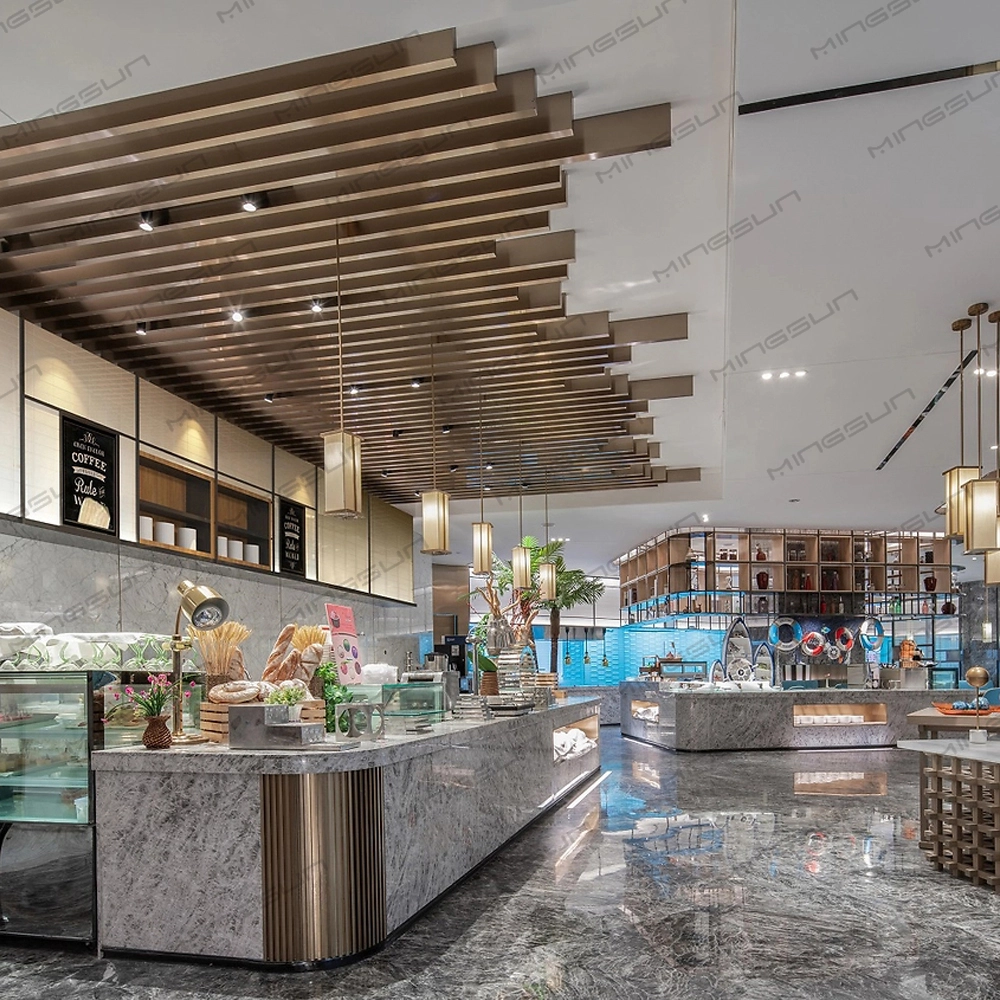
Modern Hotel Dining Furniture Set-Custom Designed Wooden Tables, Upholstered Chairs & Banquette Seating
Create a lasting impression with our custom-designed hotel dining furniture set, crafted for modern luxury hotels and upscale restaurants.
Featuring elegant wooden tables, ergonomic blue-upholstered chairs, and built-in banquette seating, this collection blends comfort, style, and durability.
As a leading manufacturer in Guangzhou, we deliver end-to-end solutions - from concept design and 3D visualization to production and global shipping - all at factory-direct prices.

The Marble & Brass Slim-Line End Table
Elevate your hospitality setting with the Slim-Line Side Table, a perfect fusion of sculptural form and functional design. This accent piece features a sleek, round brass-toned metal top supported by a slender stem, grounding itself in a striking, vertically oriented block of richly veined green marble. Its minimal footprint and striking contrast between the luminous brass and the raw, natural marble make it an exceptional statement piece.
Ideal for boutique hotel suites, chic lounge areas, or private residences, this side table provides an accessible, luxurious surface for an espresso cup, cocktail, or book. It embodies modern luxury with an Art Deco flair, bringing a touch of nature and refined metalwork into any commercial or residential space.
The Modern Statement Marble Vanity Console
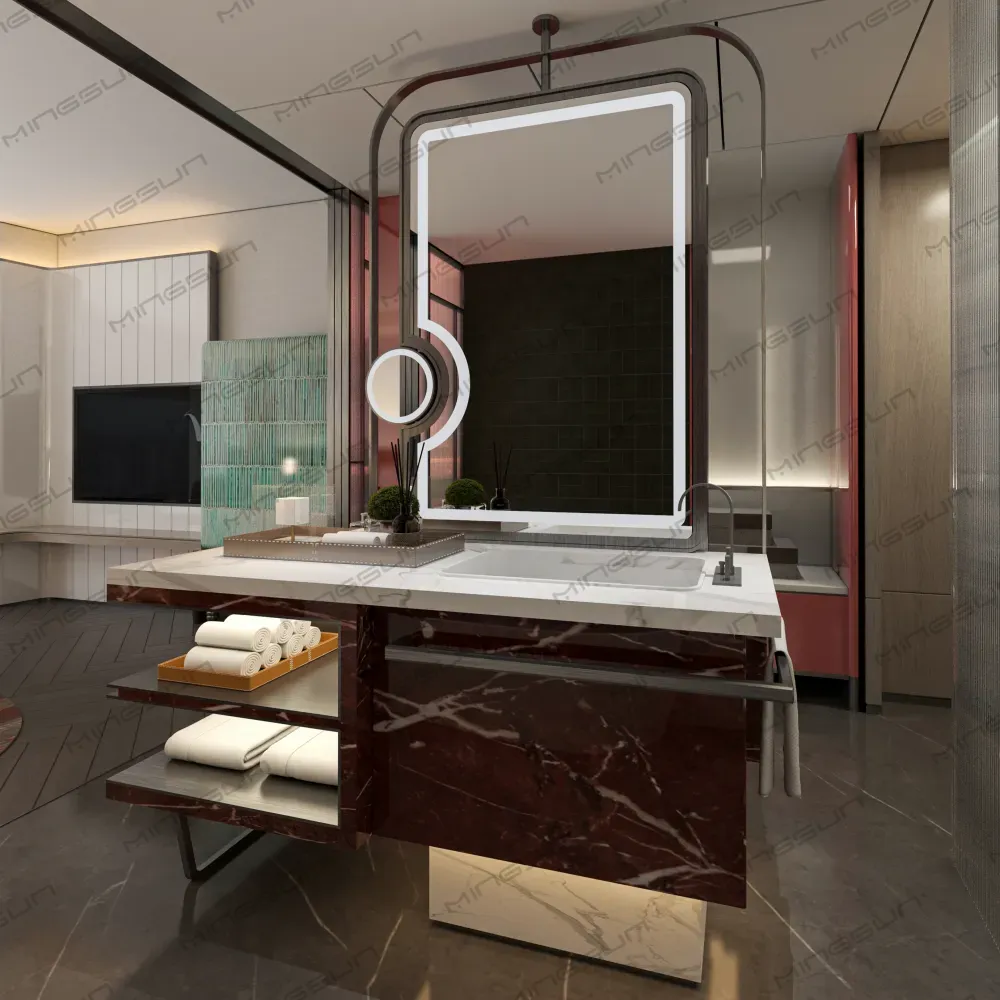
The Modern Statement Marble Vanity Console transforms the hotel bathroom or executive suite wet area into a luxurious, functional sanctuary. This vanity features an expansive countertop and integrated sink, all crafted from pristine white Carrara-style marble. Its striking foundation is a suspended cabinet unit finished in a dramatic, high-gloss Red Emperador-style marble veneer, creating a beautiful contrast of light and dark, classic and contemporary.
The design includes integrated open shelving for visible towel storage and an extended metal bar that functions as a towel rack. Coupled with a dramatic, custom-framed illuminated mirror, this vanity provides a cohesive, high-end look that is both visually stunning and highly practical for the demands of luxury commercial hospitality.
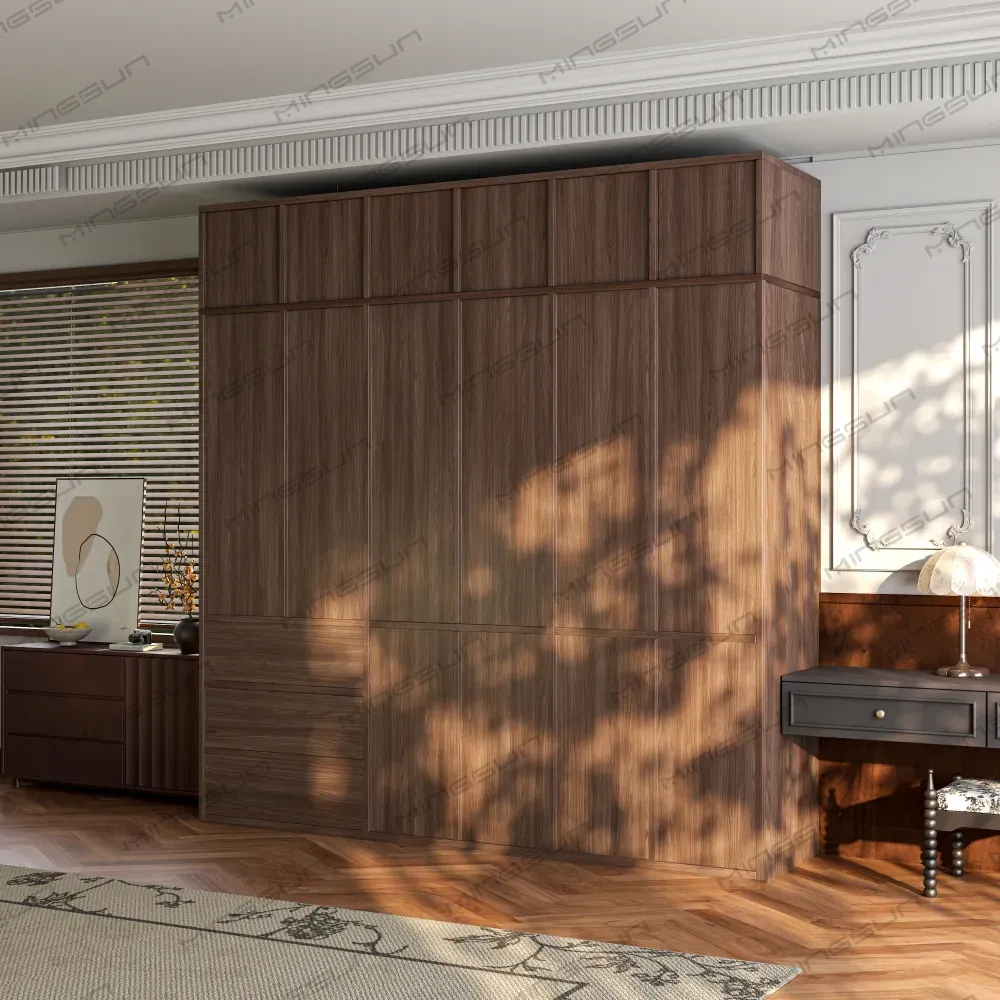
Minimalist Walnut Veneer Floor-to-Ceiling Hotel Wardrobe with Handleless Design
Maximize vertical storage in your hotel guest rooms or luxury apartments with this sleek, floor-to-ceiling wardrobe system. Defines by its warm, natural walnut wood veneer finish, the unit offers a sophisticated, handleless facade that maintains clean architectural lines, perfect for modern minimalist interiors. The intelligent layout features a bank of three external soft-close drawers for guest convenience, tall hanging sections for formal wear, and a dedicated row of top-tier cabinets specifically designed to store extra bedding, pillows, or seasonal items.
Manufactured by MINGSUN, this wardrobe is a testament to our expertise in custom hospitality joinery. We engineer these large-scale units for durability and ease of installation. From our Guangzhou factory, we provide precision-cut flat-pack solutions that reduce shipping costs while ensuring a premium built-in look upon assembly.
Get more industry insights
Looking for the right solution? Fill out the form and get a free quote.
Our experts will respond quickly with personalized options that fit your needs.
MINGSUN is a design-driven hotel furniture manufacturer offering OEM/ODM services, custom solutions, and global project support.
Built for wholesalers. Trusted by global buyers. Delivered with confidence.
Phone:
E-mail:
Follow us ——
 Scan QR Code
MINGSUN
MINGSUN
MINGSUN
MINGSUN
MS Custom Hotel Furniture Supplier