


Dining Room vs. Dinette: What’s the Difference?
Discover the key differences between a dining room and a dinette with MINGSUN. Explore dining room layouts and styles to choose the perfect space for your home. Learn what is dinette and how it fits your lifestyle for a functional, stylish dining experience.
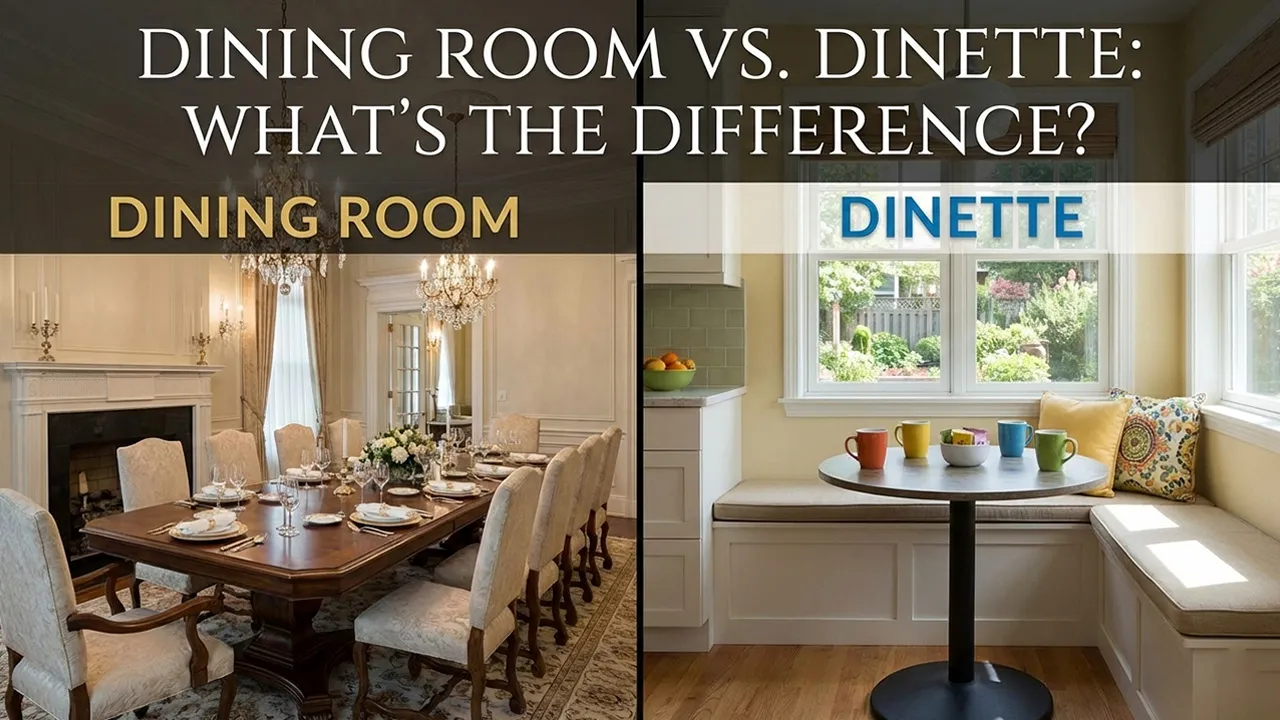
- The 3-Second Answer: Formal Room vs. Casual Corner
- Key Difference #1: It's All About Location
- Key Difference #2: Size and Formality Go Hand-in-Hand
- Are You Buying for a Space or a Set? A Common Point of Confusion
- te: What’s the Difference?
- The 3-Second Answer: Formal Room vs. Casual Corner
- Key Difference #1: It's All About Location
- Key Difference #2: Size and Formality Go Hand-in-Hand
- Are You Buying for a Space or a Set? A Common Point of Confusion
- How to Choose: A Quick Guide for Your Home
- Your Perfect Dining Space, Demystified
- FAQ
- 1. What is the main difference between a dining room and a dinette?
- 2. Is a dinette considered a separate room?
- 3. How many people does a dinette typically seat?
- 4. What is a dinette set?
- 5. How do I choose between a dining room and a dinette?
Ever seen the word “dinette” on a floor plan and figured it just meant “small dining room”? You’re not wrong, but there’s more to it. The actual difference is the key to furnishing your home perfectly, and you’re not the only one who finds the term a bit confusing.
In practice, the dining room vs. dinette distinction boils down to three simple factors: locati0n, size, and formality. One space is designed for grand holiday meals, while the other is your go-to spot for a quick weekday breakfast. Understanding what a dinette area is helps clarify whether you need a formal dining setup or something more like a breakfast nook.
The 3-Second Answer: Formal Room vs. Casual Corner
Think of it this way: a dining room is like a formal suit you wear for special occasions, while a dinette is the comfortable pair of jeans you live in every day. The core difference between a dinette and a dining room boils down to this distinction between formal and casual use.
More specifically, a dining room is a separate, dedicated room intended for hosting meals. In contrast, a dinette is not a room at all, but rather a small, informal eating area that's part of another space—almost always the kitchen. This key difference in locati0n is the most important factor in telling them apart.
Key Difference #1: It's All About Location
On a home's floor plan, a dining room is easy to spot: it has its own four walls and a doorway. This architectural separation is intentional, setting the stage for more structured meals away from the kitchen's hustle and bustle. It’s a space designed to be a destination for dining, not a pathway you walk through to get somewhere else.
In contrast, a dinette lives right inside another room, almost always the kitchen. It isn't a separate space but a designated corner or alcove, making it a key component of many eat-in kitchen design ideas. You probably know this cozy spot by its more common name: the breakfast nook. This is that perfect area for sipping morning coffee or grabbing a quick, informal meal, where convenience is the top priority.
This distinction in locati0n is more than just a blueprint detail; it directly signals the space’s intended use. A separate room implies occasion, while a kitchen-adjacent spot prioritizes everyday ease. This placement is also the primary reason they differ so much in size and formality.
Key Difference #2: Size and Formality Go Hand-in-Hand
The separate locati0n of a dining room isn't just about privacy; it’s about capacity. By design, a formal dining room is built to accommodate larger groups, typically seating six or more people for holidays and special events. This generous size also provides the necessary space for other formal dining room furniture requirements, such as a buffet or china hutch, reinforcing its role as a showpiece for hosting. The larger the space, the more formal its intended use.
A dinette, on the other hand, operates on a principle of cozy efficiency. Tucked into a corner of the kitchen, its smaller footprint is perfect for intimate, everyday meals. This is the spot for a quick breakfast for two or a casual weeknight dinner for a small family. As a result, casual dining area furniture is all you need—usually just a compact table and two to four chairs that won't disrupt the kitchen's workflow.
This relationship between size and formality is the most practical way to tell them apart and helps you decide how to choose a dining table size for your home. A large room signals formal occasions, while a small nook signals daily convenience. This often leads to a common point of confusion: are we talking about the space itself, or the furniture that goes in it?
Are You Buying for a Space or a Set? A Common Point of Confusion
That last question hits on a common mix-up, and it’s an important one when you’re shopping. The term "dinette" can refer to both the space in your home and the furniture that goes in it. This ambiguity is why knowing the difference can save you time and money.
A dinette set is simply a furniture category designed for these smaller, casual areas. It typically includes a compact table and two to four chairs, making it the perfect dinette set for a small apartment or breakfast nook. And because they use less material and have a simpler design, a dinette set is almost always cheaper than a full dining room suite.
The dinette vs. dining room set distinction is about matching furniture to its purpose. You're not just buying a table; you’re choosing a solution that fits the scale and function of your space. With this clarity, you can confidently decide what your home really needs.
te: What’s the Difference?
Ever seen the word “dinette” on a floor plan and figured it just meant “small dining room”? You’re not wrong, but there’s more to it. The actual difference is the key to furnishing your home perfectly, and you’re not the only one who finds the term a bit confusing.
In practice, the dining room vs. dinette distinction boils down to three simple factors: locati0n, size, and formality. One space is designed for grand holiday meals, while the other is your go-to spot for a quick weekday breakfast. Understanding what a dinette area is helps clarify whether you need a formal dining setup or something more like a breakfast nook.
The 3-Second Answer: Formal Room vs. Casual Corner
Think of it this way: a dining room is like a formal suit you wear for special occasions, while a dinette is the comfortable pair of jeans you live in every day. The core difference between a dinette and a dining room boils down to this distinction between formal and casual use.
More specifically, a dining room is a separate, dedicated room intended for hosting meals. In contrast, a dinette is not a room at all, but rather a small, informal eating area that's part of another space—almost always the kitchen. This key difference in locati0n is the most important factor in telling them apart.
Key Difference #1: It's All About Location
On a home's floor plan, a dining room is easy to spot: it has its own four walls and a doorway. This architectural separation is intentional, setting the stage for more structured meals away from the kitchen's hustle and bustle. It’s a space designed to be a destination for dining, not a pathway you walk through to get somewhere else.
In contrast, a dinette lives right inside another room, almost always the kitchen. It isn't a separate space but a designated corner or alcove, making it a key component of many eat-in kitchen design ideas. You probably know this cozy spot by its more common name: the breakfast nook. This is that perfect area for sipping morning coffee or grabbing a quick, informal meal, where convenience is the top priority.
This distinction in locati0n is more than just a blueprint detail; it directly signals the space’s intended use. A separate room implies occasion, while a kitchen-adjacent spot prioritizes everyday ease. This placement is also the primary reason they differ so much in size and formality.
Key Difference #2: Size and Formality Go Hand-in-Hand
The separate locati0n of a dining room isn't just about privacy; it’s about capacity. By design, a formal dining room is built to accommodate larger groups, typically seating six or more people for holidays and special events. This generous size also provides the necessary space for other formal dining room furniture requirements, such as a buffet or china hutch, reinforcing its role as a showpiece for hosting. The larger the space, the more formal its intended use.
A dinette, on the other hand, operates on a principle of cozy efficiency. Tucked into a corner of the kitchen, its smaller footprint is perfect for intimate, everyday meals. This is the spot for a quick breakfast for two or a casual weeknight dinner for a small family. As a result, casual dining area furniture is all you need—usually just a compact table and two to four chairs that won't disrupt the kitchen's workflow.
This relationship between size and formality is the most practical way to tell them apart and helps you decide how to choose a dining table size for your home. A large room signals formal occasions, while a small nook signals daily convenience. This often leads to a common point of confusion: are we talking about the space itself, or the furniture that goes in it?
Are You Buying for a Space or a Set? A Common Point of Confusion
That last question hits on a common mix-up, and it’s an important one when you’re shopping. The term "dinette" can refer to both the space in your home and the furniture that goes in it. This ambiguity is why knowing the difference can save you time and money.
A dinette set is simply a furniture category designed for these smaller, casual areas. It typically includes a compact table and two to four chairs, making it the perfect dinette set for a small apartment or breakfast nook. And because they use less material and have a simpler design, a dinette set is almost always cheaper than a full dining room suite.
The dinette vs. dining room set distinction is about matching furniture to its purpose. You're not just buying a table; you’re choosing a solution that fits the scale and function of your space. With this clarity, you can confidently decide what your home really needs.
How to Choose: A Quick Guide for Your Home
Deciding on the right setup for choosing between formal and informal dining comes down to your space and your lifestyle. To simplify the choice, this quick-reference table summarizes the key differences at a glance, helping you identify what your home is best suited for.
| Feature | Dining Room | Dinette | Location| A separate, dedicated room | An area within or near the kitchen | | Size | Larger, seats 6+ people | Smaller, seats 2-4 people | | Formality| Formal, for hosting & holidays| Informal, for everyday casual meals | | Best For| Big families, entertaining | Couples, small families, apartments |
Still on the fence? Ask yourself what you value most. Are you looking forward to hosting big holiday dinners, or is your priority finding an efficient small space dining solution for daily breakfasts? Answering these questions will quickly reveal whether a dining room or a dinette is the perfect fit for your life.
Your Perfect Dining Space, Demystified
With a clear understanding of locati0n, size, and formality, you no longer have to guess what 'dinette' means on a floor plan or furniture tag. The term is no longer a mystery—it's a practical tool for making smarter decisions for your space.
This knowledge makes all the difference when choosing furniture. You can now look at your own home and decide whether a small, casual set fits your lifestyle or if a larger table for a dedicated room is what you truly need. You have the vocabulary to find exactly what you want and create an eating space that perfectly fits your home and your life.
FAQ
1. What is the main difference between a dining room and a dinette?
The main difference lies in location, size, and formality. A dining room is a separate, dedicated room designed for formal meals and entertaining, while a dinette is a small, informal eating area usually located within or next to the kitchen.
2. Is a dinette considered a separate room?
No. A dinette is not a separate room. It is a designated eating area within another space—most commonly the kitchen—often referred to as a breakfast nook.
3. How many people does a dinette typically seat?
A dinette usually seats two to four people, making it ideal for everyday meals, quick breakfasts, and casual dining rather than large gatherings.
4. What is a dinette set?
A dinette set is a compact furniture set designed for small, casual dining areas. It typically includes a small table and two to four chairs, sized specifically for kitchens, apartments, or breakfast nooks.
5. How do I choose between a dining room and a dinette?
Choose a dining room if you frequently host guests or need seating for large gatherings. Choose a dinette if you prioritize convenience, daily use, and efficient use of space for casual meals.

OEM vs. Standard: How to Custom-Design Your Luxury Hotel Stone Tea Table Top Set

Beyond Aesthetics: How the Best Coffee Table Designs Increase Guest Satisfaction Scores

Bespoke vs. Prefab: Why Your Luxury Hotel Needs Custom Back Bar Cabinets

Bespoke vs. Modular: Why Top Designers Recommend Hotel Custom-Built Front Desks in 2026
About Mingsun – Company Background
Who are Mingsun’s main clients?
Product Scope & Application Areas
Can you provide a full hotel furniture package?
Do you provide samples?
Materials, Craftsmanship & Quality Control
What materials are commonly used for hotel furniture?
Customization Capability & Design Support
Does Mingsun provide design services?
Make an appointment with us today
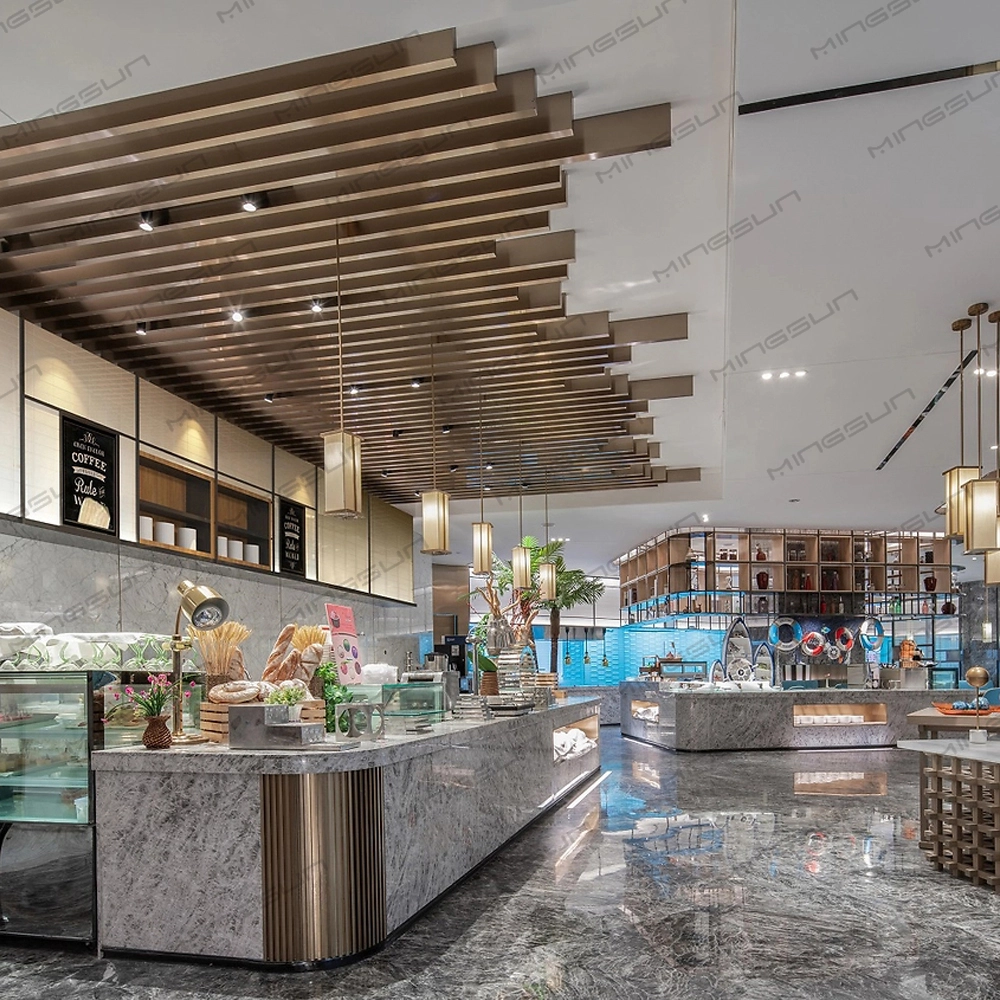
Modern Hotel Dining Furniture Set-Custom Designed Wooden Tables, Upholstered Chairs & Banquette Seating
Create a lasting impression with our custom-designed hotel dining furniture set, crafted for modern luxury hotels and upscale restaurants.
Featuring elegant wooden tables, ergonomic blue-upholstered chairs, and built-in banquette seating, this collection blends comfort, style, and durability.
As a leading manufacturer in Guangzhou, we deliver end-to-end solutions - from concept design and 3D visualization to production and global shipping - all at factory-direct prices.
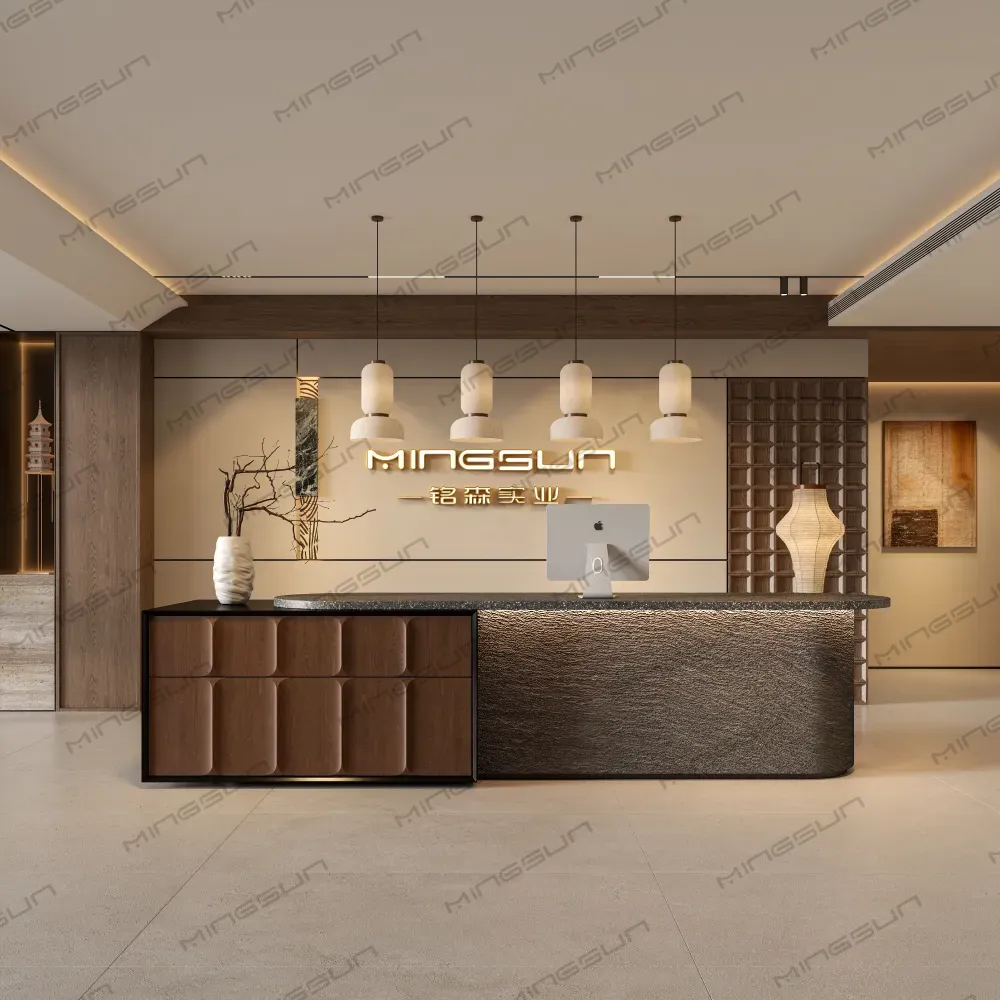
Luxury Textured Stone & Walnut Veneer Reception Desk with 3D Relief Detailing
Create a sophisticated, organic atmosphere in your hotel lobby or boutique showroom with this avant-garde reception desk. Combining the raw beauty of nature with refined craftsmanship, this desk features a striking contrast between materials. The main body showcases a dark, hammered-texture stone facade that offers a tactile, rugged elegance, topped with a polished grey terrazzo-style counter. This is seamlessly integrated with a rich walnut wood storage module, defined by its unique 3D pill-shaped relief carving on the drawer fronts. Soft, warm LED lighting concealed beneath the countertop edge highlights the textured stone surface, adding depth and warmth to the reception area.
Crafted by MINGSUN, a specialist in bespoke hospitality furniture, this piece is designed to be the focal point of high-end interiors. From our Guangzhou manufacturing hub, we deliver precision-engineered furniture to hotels worldwide. We offer a seamless experience from design customization to DDP global delivery and video-guided installation.
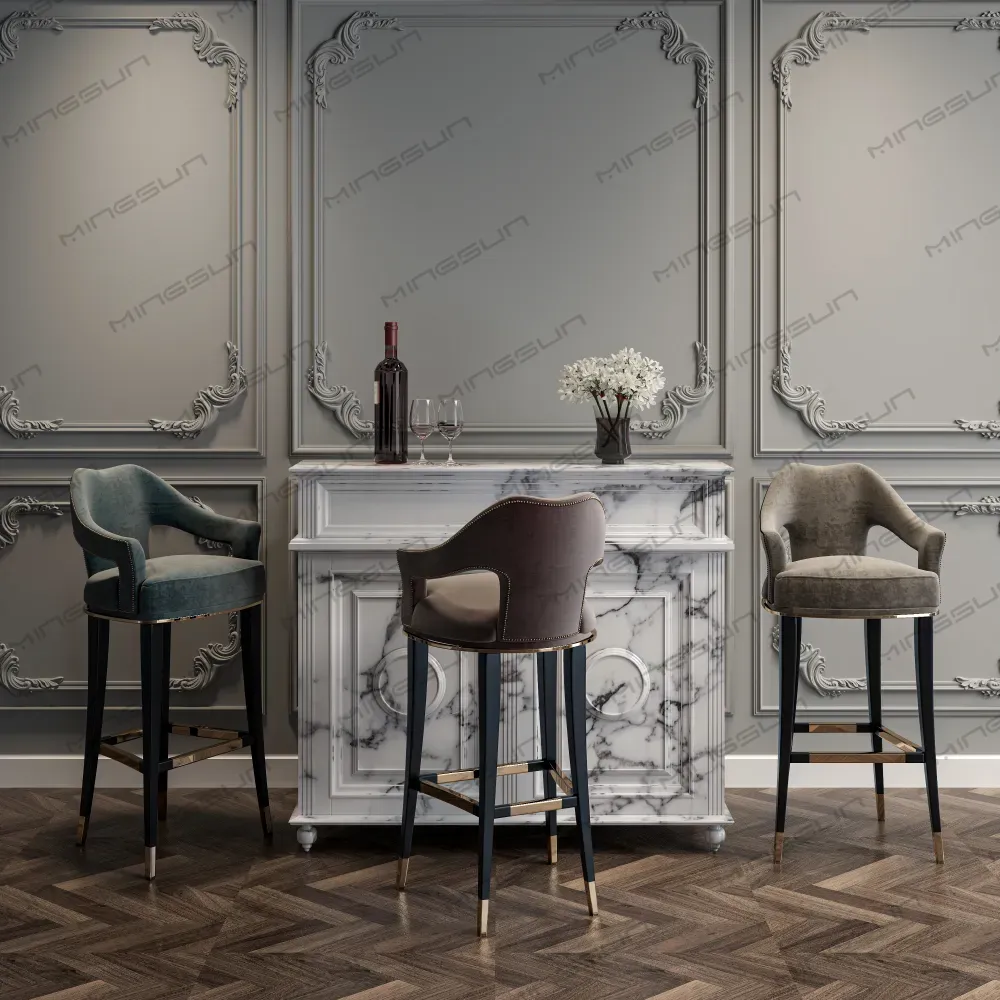
Luxury Velvet Bar Stool with Armrests & Brushed Brass Accents for Hotel Lounges and Bars
Elevate your hotel’s bar or lounge area with this opulent bar stool, where plush comfort meets sophisticated design. Upholstered in rich, deep-brown velvet, its sculptural back and integrated armrests offer ergonomic support, while the slender black metal frame is accented with polished brass at the feet and crossbars for a touch of timeless elegance. Perfect for high-end hospitality spaces, this stool combines refined aesthetics with durable construction, inviting guests to linger in style at your counter or cocktail station.
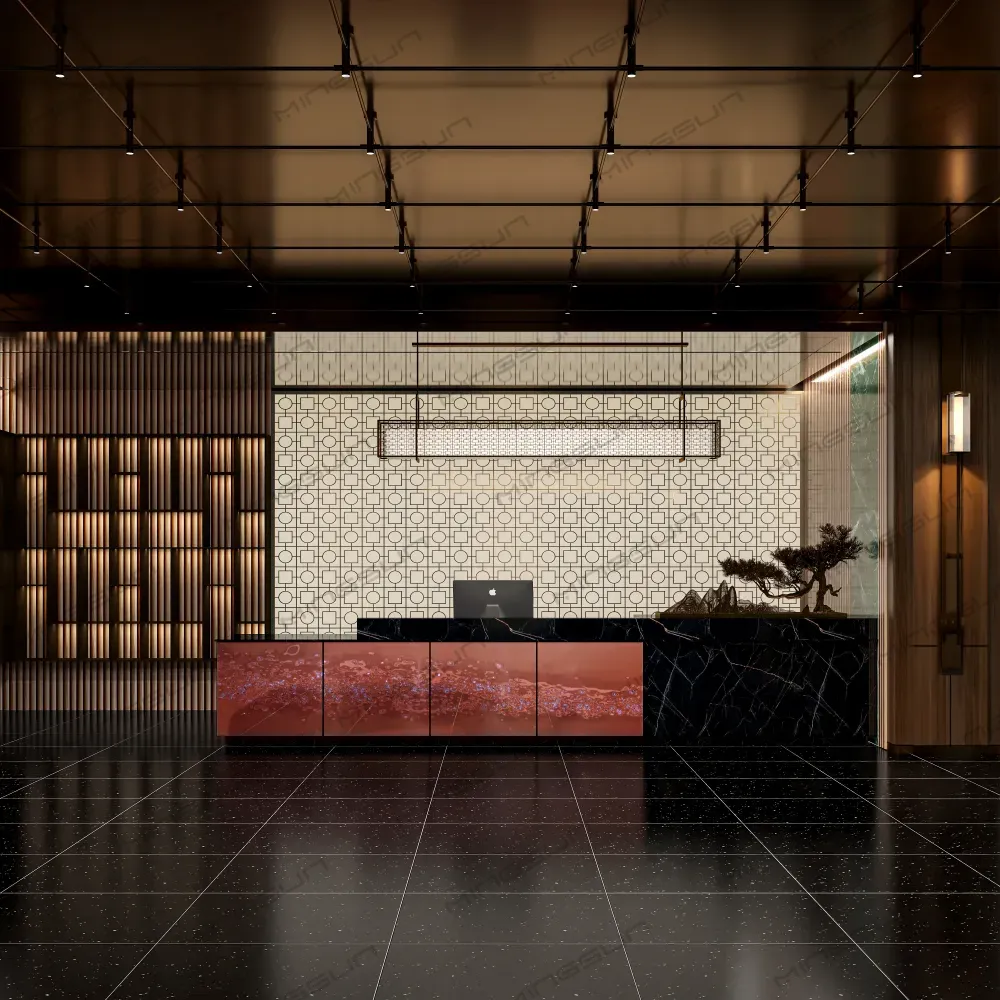
Luxury Reception Desk with Black Marble Top & Illuminated Copper-Resin Front Panels
Make a bold, unforgettable statement at your hotel’s entrance with this avant-garde reception desk. Its sleek black marble top exudes timeless sophistication, while the front facade features mesmerizing, internally lit copper-resin panels that glow with a warm, amber radiance, creating a dynamic visual centerpiece. Designed for both form and function, the unit offers ample concealed storage behind seamless doors and integrates a dedicated staff workstation with cable management. This is more than a check-in counter—it’s a sculptural installation that defines the luxury and artistry of your brand.
Get more industry insights
Looking for the right solution? Fill out the form and get a free quote.
Our experts will respond quickly with personalized options that fit your needs.
MINGSUN is a design-driven hotel furniture manufacturer offering OEM/ODM services, custom solutions, and global project support.
Built for wholesalers. Trusted by global buyers. Delivered with confidence.
Phone:
E-mail:
Follow us ——
 Scan QR Code
MINGSUN
MINGSUN
MINGSUN
MINGSUN
MS Custom Hotel Furniture Supplier