


Hotel Bedside Table Dimensions Finding the Ideal Size
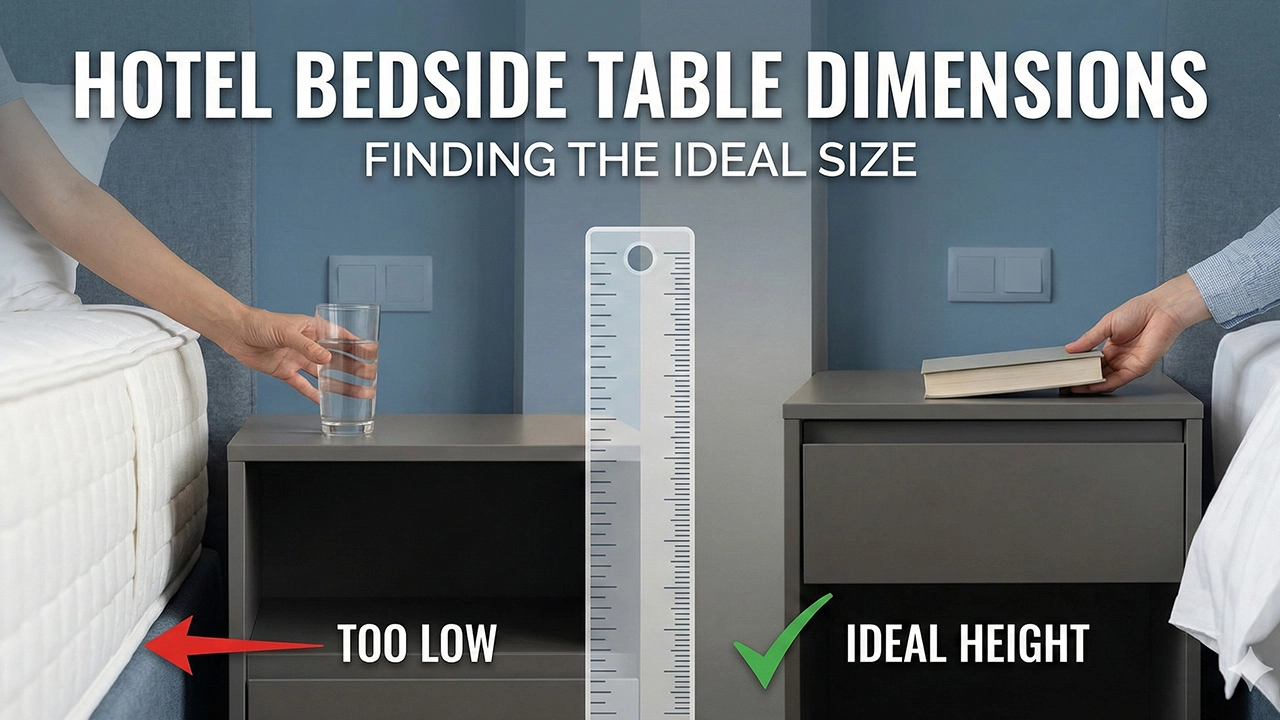
- The Golden Rule of Nightstand Height: Level With Your Mattress
- Width and Depth: The Nightstand's Surface Area Balancing Act
- From Tiny Shelf to Marble Top: What Your Nightstand Reveals About the Hotel
- Beyond Size: The Power Outlets and Smart Features You Secretly Love
- The Invisible Rule of Accessibility (ADA)
- Your 3-Step Guide to Measuring for the Perfect Nightstand at Home
- Become Your Own Room Designer: The Perfect Nightstand Checklist
- FAQ
- Why is the height of a nightstand so important?
- What is the “golden rule” for nightstand height design?
- Why are some hotel nightstands wide while others are very narrow?
- What functions should you consider besides size when choosing a nightstand?
- How can I measure and choose the perfect nightstand for my bedroom?
Ever checked into a hotel and immediately noticed the bedside table? Maybe it was so tiny your phone was one wrong move away from a three-foot drop, or perhaps it was a clunky piece of furniture with no outlets in sight. That simple table is one of the most overlooked—and most critical—parts of a great stay, but its size is never an accident.
Believe it or not, that table’s design is a calculated choice. From budget motels to five-star suites, the specific hotel bedside table dimensions are guided by a surprising set of rules that balance comfort, space, and convenience. Designers follow an industry formula that accounts for everything from mattress height to the need for walkway clearance, ensuring the table works for the room and the guest.
This guide pulls back the curtain on the industry's secret formula, from the "golden rule" for nightstand height to the balancing act of surface area. Use these tricks to choose a bedside table for your own home, creating a hotel-style experience that is both beautiful and perfectly functional.
The Golden Rule of Nightstand Height: Level With Your Mattress
When it comes to nightstand height, hotel designers follow one simple golden rule: the tabletop should be level with, or just a couple of inches taller than, the top of the mattress. This isn't an accident; it’s a deliberate choice rooted in comfort and accessibility. If a table is too low, you have to awkwardly reach down to grab your phone. If it's too high, it can feel like a wall next to your head. Getting this height just right is the first step to creating a functional and relaxing bedside setup.
The reason for this rule is all about ergonomics—a fancy word for designing things to be comfortable and easy to use. A correctly-sized nightstand means you can reach for a glass of water or turn off your alarm with a simple, natural movement, without having to sit all the way up or strain your neck and shoulder. It’s a subtle detail that makes a huge difference in how convenient and restful a room feels.
If you’re applying this lesson at home, remember to measure from the floor to the absolute top of your mattress, including any plush pillow tops or memory foam toppers. This is why a standard nightstand that looked great in the store might feel too short next to your taller modern bed. While height is crucial for reach, the table’s actual surface area is what determines its usefulness.
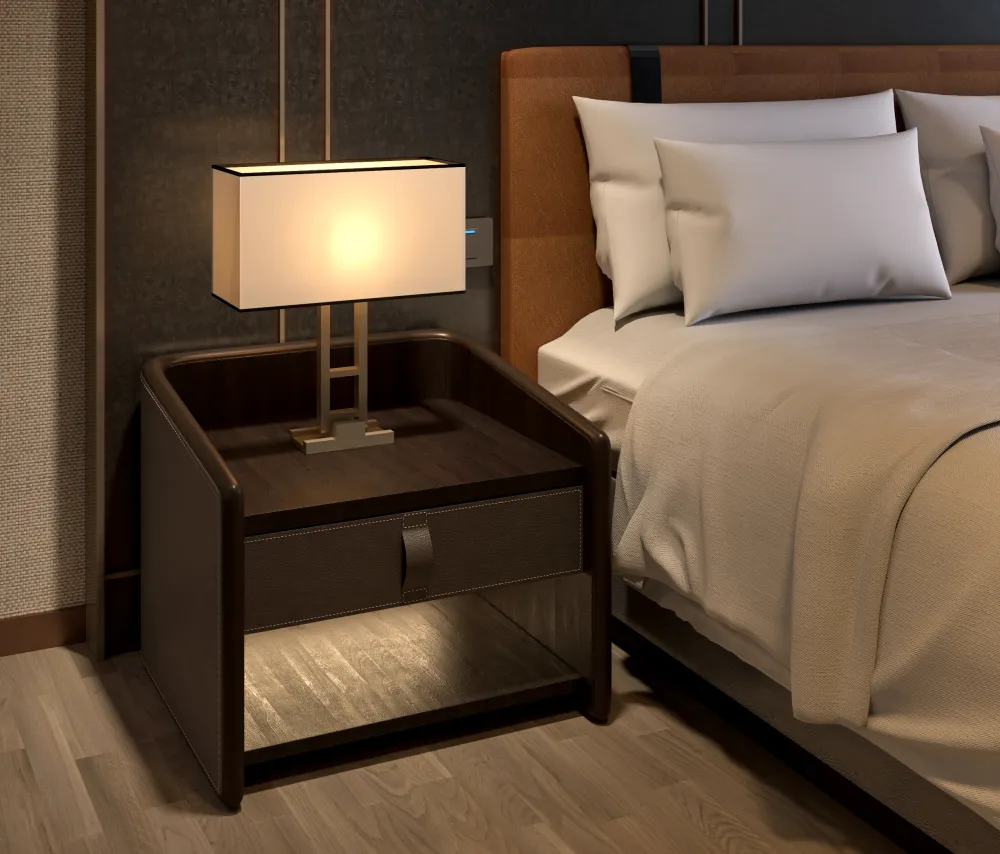
Width and Depth: The Nightstand's Surface Area Balancing Act
After getting the height right, the next consideration is a nightstand’s footprint: its width and depth. Have you ever noticed how a tiny table can look lost next to a huge king bed? That’s all about visual scale. A wider nightstand simply looks more balanced and proportional next to a larger mattress. More importantly, it provides the necessary surface area for all your essentials—a lamp, a book, your phone, and a glass of water—without everything feeling perilously cluttered.
But it's a careful balancing act, especially when it comes to depth. A deeper table offers more room, but it can quickly turn into a roadblock. Hotel designers are obsessed with making sure you have a clear, easy path around the bed. A nightstand that juts out too far is a classic design mistake, forcing you to shimmy past it every time. This is exactly why you'll often find narrow console tables or even wall-mounted floating shelves in tighter city hotel rooms; they offer a perch for your phone without stealing an inch of precious walkway.
Ultimately, this trade-off between a generous surface and open floor space is what dictates the huge variety of nightstands you encounter. A sprawling resort suite can accommodate a substantial table with drawers, while a cozy budget room prioritizes movement. This choice isn't just about furniture; it’s a clue that reveals the hotel's entire approach to luxury and space.
From Tiny Shelf to Marble Top: What Your Nightstand Reveals About the Hotel
That deliberate choice between surface area and floor space often comes down to the hotel’s price point. In a budget-friendly or mid-range hotel, the primary concerns are efficiency and durability. The small table you see isn't just a space-saver; it’s likely "contract-grade." This is an unromantic but crucial category of extra-durable furniture built to withstand the wear and tear of thousands of guests. The focus is on robust function, not high-end fashion.
In a luxury hotel, the script is flipped. Here, the bedside table is used to signal opulence and generosity. Designers will intentionally choose a substantial piece—often with real wood, a stone top, and gleaming hardware—because they can. The generous surface and high-quality materials are a quiet promise that your comfort is the top priority, reinforcing the premium experience you’re paying for. The table isn’t just holding your water bottle; it's an active part of the room’s luxurious feel.
So, the next time you check in, look at the nightstand. Is it speaking a language of pure efficiency or one of pampered indulgence? Its size and material tell a story about the hotel's entire philosophy. Of course, a beautiful table is only half the battle if you can’t find a place to charge your phone. Beyond its dimensions, the true test of a great nightstand lies in its features.
Beyond Size: The Power Outlets and Smart Features You Secretly Love
We've all done the awkward crawl behind the bed, fumbling in the dark for a free power outlet. The best hotels eliminate this frustration by building charging stations right into the furniture. These integrated features, from USB ports to standard plugs, transform a simple nightstand into a personal tech hub. A nightstand with integrated power outlets is no longer a luxury; it’s a sign that a hotel understands modern guest needs.
Beyond power, consider the storage. An open shelf is perfect for the book you're reading, but drawers are essential for stashing away clutter to keep the room looking clean and serene. The best bedside tables for small guest rooms often provide a mix, giving you quick access and tidy concealment. This balance between open and closed storage is a clever design trick for any bedroom, not just a hotel.
Finally, lighting is non-negotiable. A good bedside lamp provides focused task lighting—it’s bright enough for reading without waking a partner. The lamp and table work as a team. These ergonomic considerations for nightstands ensure that light switches and outlets are within easy reach from the bed. This focus on ease-of-use becomes even more critical when designers account for the invisible rule of accessibility.
The Invisible Rule of Accessibility (ADA)
That focus on ease-of-use is part of a bigger idea: making spaces welcoming for all. In the U.S., this is guided by the Americans with Disabilities Act (ADA), a standard that ensures hotel rooms are functional for guests with disabilities, just as they are for anyone else. It’s a powerful example of how thoughtful design can create a better experience for everybody.
This directly impacts the bedside table area. For instance, hospitality bedside table requirements in an accessible room mean there must be more clear floor space, allowing a wheelchair to easily approach the bed. The nightstand’s height is also carefully considered, ensuring items on top are easy to reach from a seated position without straining. It’s all about removing barriers, big and small.
While you might not need to follow specific ADA compliant nightstand dimensions at home, the core lesson is universal: thoughtful design makes people feel comfortable and welcome. This principle of anticipating needs is a great starting point when planning any bedroom.
Your 3-Step Guide to Measuring for the Perfect Nightstand at Home
Ready to bring that hotel design wisdom home? It's surprisingly simple. Taking a few key measurements before you shop is the secret to choosing a bedside table that looks and feels right. Here’s how to measure for a bedside table in three easy steps:
-
1、Measure Your Mattress Height. Grab a tape measure and find the distance from the floor to the top of your mattress. Your ideal nightstand will be level with the mattress or just a couple of inches taller, so you can easily reach your alarm without straining.
-
2、Map Out Your Space. Check the width between your bed and the wall. Then, use painter’s tape to mark a rectangle on the floor where the table would sit. This is a fantastic way to visualize its footprint, make sure you have enough walking room, and find the best bedside tables for small guest rooms.
-
3、List Your Personal Needs. Finally, think about function before you fall for a look. Do you need a drawer to hide clutter, an open shelf for books, or easy access to power for your devices? Jot down your non-negotiables.
-
With these three steps completed, you’ve created a personalized blueprint. Now, let’s turn that blueprint into a practical shopping list.
-
-
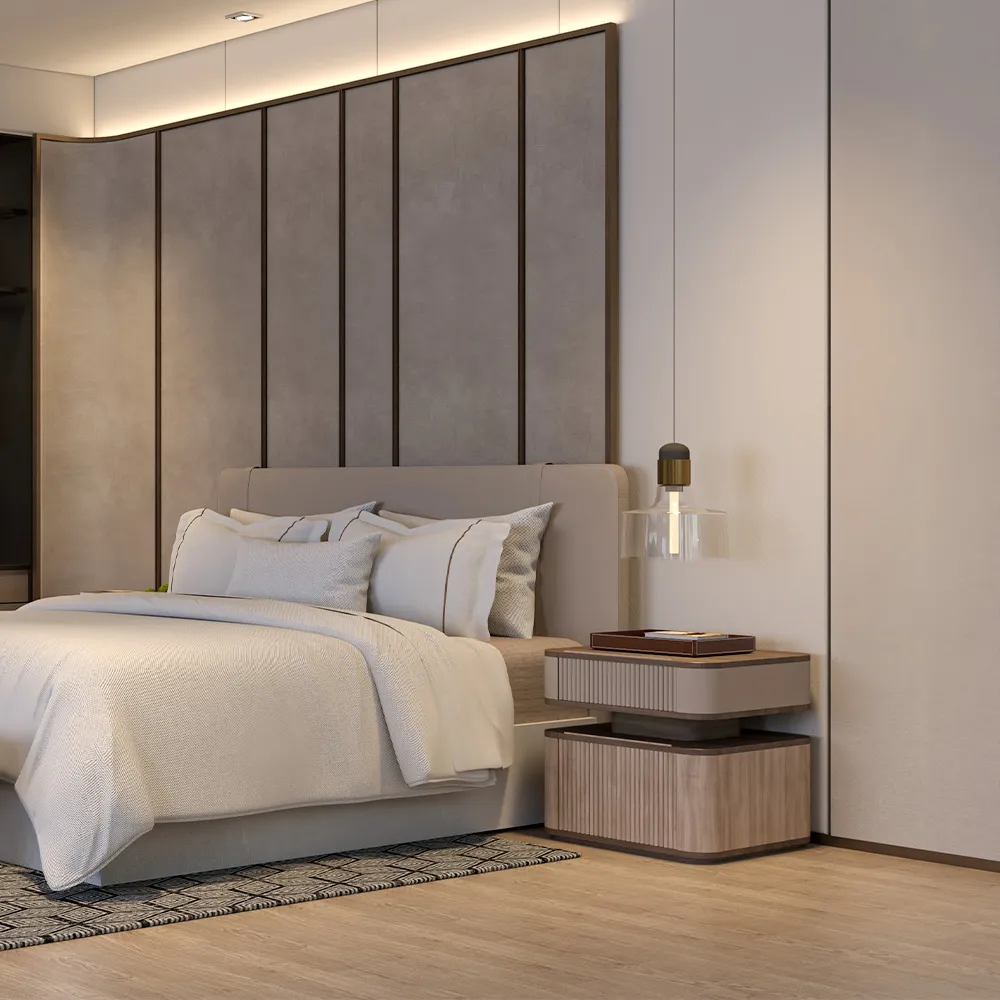
Become Your Own Room Designer: The Perfect Nightstand Checklist
What was once a hotel annoyance is now a clear design lesson. You’re equipped with the same principles professional designers use to choose a bedside table with confidence. As you create that hotel-style comfort at home, use this simple checklist to find your perfect match.
Use this checklist to find your perfect match:
-
Height: Is it level with or slightly above my mattress?
Width: Does it look balanced and in scale with my bed?
Depth: Does it leave enough room to walk by easily?
Features: Does it have the storage and outlets I actually need?
You’re no longer just shopping for furniture; you’re designing your personal comfort zone. You now have the knowledge to create that five-star feeling, one perfectly chosen detail at a time.
FAQ
Why is the height of a nightstand so important?
Because it directly affects comfort and usability. The height of a nightstand is a matter of ergonomics. If it is too low, you have to bend down awkwardly to reach your items; if it is too high, it can feel visually and physically intrusive next to the bed. The right height allows you to easily reach your phone, alarm clock, or a glass of water while lying in bed.
What is the “golden rule” for nightstand height design?
The golden rule followed by hotel designers is that the top surface of the nightstand should be level with the top of the mattress or slightly higher (by about 1–2 inches / 3–5 cm). This ensures optimal visual balance and everyday convenience.
Why are some hotel nightstands wide while others are very narrow?
This comes down to a balance between surface space and circulation. A wider nightstand offers more space for personal items but may reduce walkway clearance. Narrow tables or floating shelves are often used in compact rooms to maintain smooth movement. In addition, size and materials often reflect hotel positioning: luxury hotels favor larger nightstands made from premium materials to express quality, while economy hotels prioritize durability and space efficiency.
What functions should you consider besides size when choosing a nightstand?
Beyond proper dimensions, modern nightstands should ideally include integrated power outlets or USB ports for charging devices. Well-planned storage, such as a combination of drawers and open shelves, as well as compatibility with bedside lighting, are also key considerations.
How can I measure and choose the perfect nightstand for my bedroom?
You can follow a simple three-step approach: first, measure the height from the floor to the top of your mattress; second, plan the footprint by marking the intended area on the floor with tape to ensure clear walkways; third, define your needs—whether you require drawers, built-in power, or simply a surface for books and essentials.

Top 10 Hotel Furniture Manufacturers in China

Beyond Aesthetics: The Science of Ergonomics in High-Performance Custom Made Hotel Bar Counters

How to Choose the Right Hotel Furniture

Custom Hotel Headboard Designs vs. Ready-Made: Which One Maximizes Your ROI?
Materials, Craftsmanship & Quality Control
How are quality issues handled?
Is the furniture suitable for high-frequency hotel use?
About Mingsun – Company Background
What kind of company is Mingsun?
Pricing, Payment & Packaging
How is pricing calculated? Does customization increase the cost?
How is packaging handled to ensure transportation safety?
Make an appointment with us today
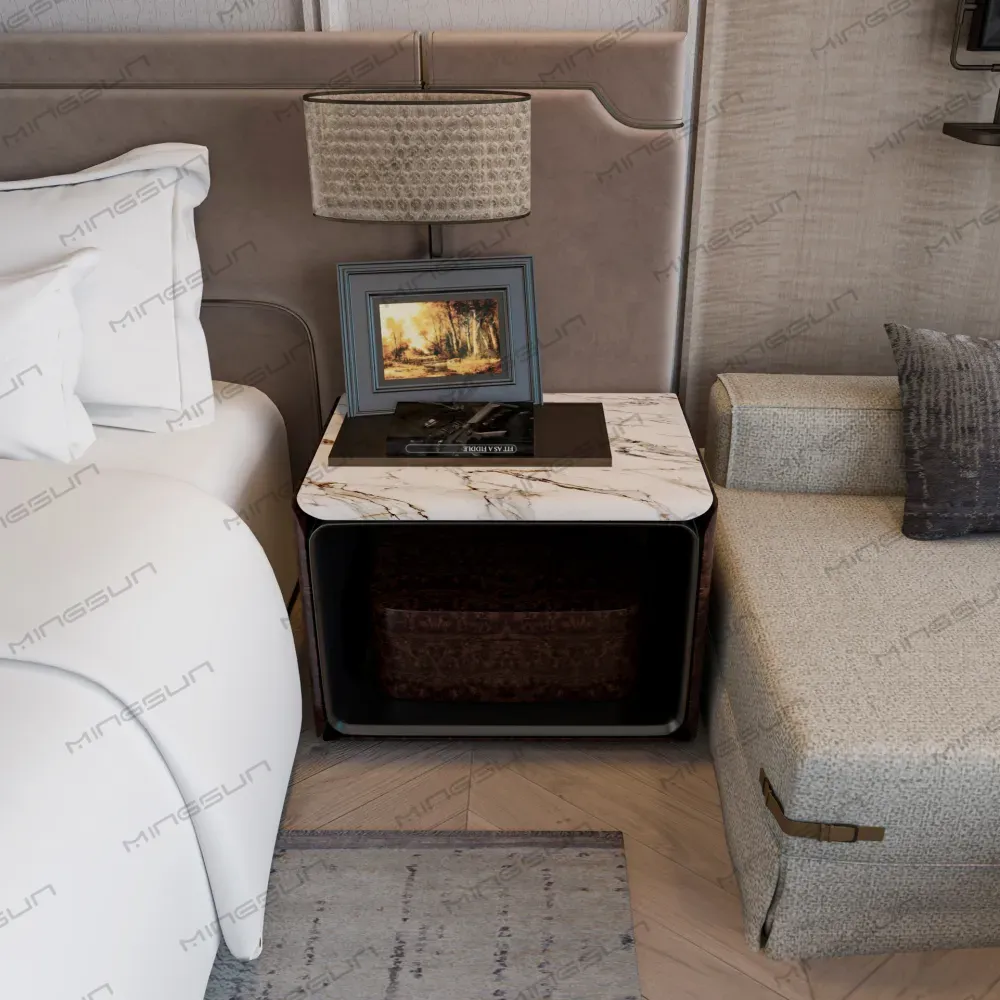
Modern Cube Nightstand with Marble Top & Open Shelf for Contemporary Hotel Rooms
Define modern elegance in your guest room with this striking cube nightstand. Its minimalist, geometric form is elevated by a luxurious marble top and a deep, open lower shelf that offers practical storage for baskets or decorative items. The sleek, dark wood finish creates a sophisticated contrast, making it a versatile accent piece that complements both contemporary and transitional interiors. Designed for functionality without sacrificing style, this compact unit provides the perfect surface for bedside lamps and personal essentials, enhancing the comfort and aesthetic of any luxury hotel suite.
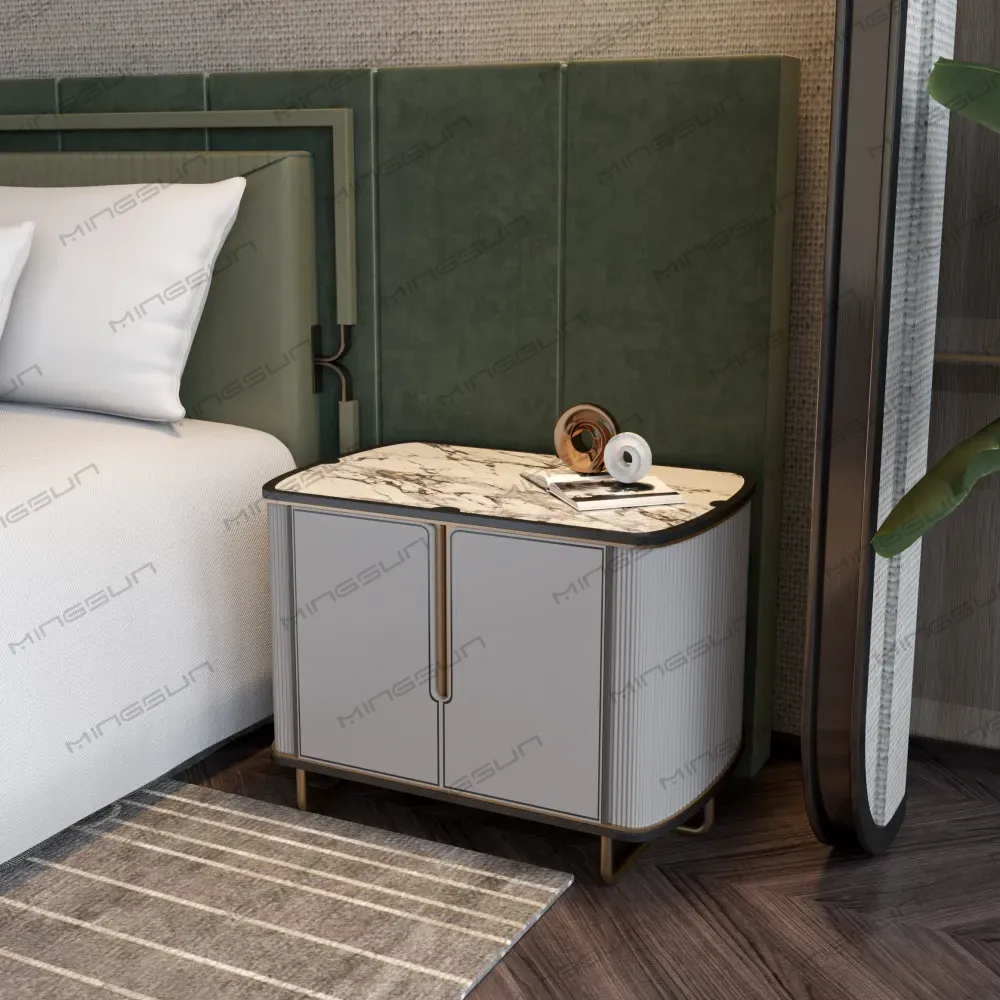
Luxury Curved Nightstand with Marble Top & Fluted Side Panels for Modern Hotel Suites
Elevate the guest experience in your luxury hotel suite with this exquisitely crafted nightstand. Its soft, curved silhouette and fluted side panels create a sculptural, Art Deco-inspired aesthetic, while the polished marble top provides a durable, elegant surface for bedside essentials. Designed for both beauty and practicality, it features two spacious, soft-close doors for concealed storage and is finished with delicate brass accents that complement any high-end interior. This is more than just a side table—it’s a refined finishing touch that completes the ambiance of a truly luxurious bedroom.
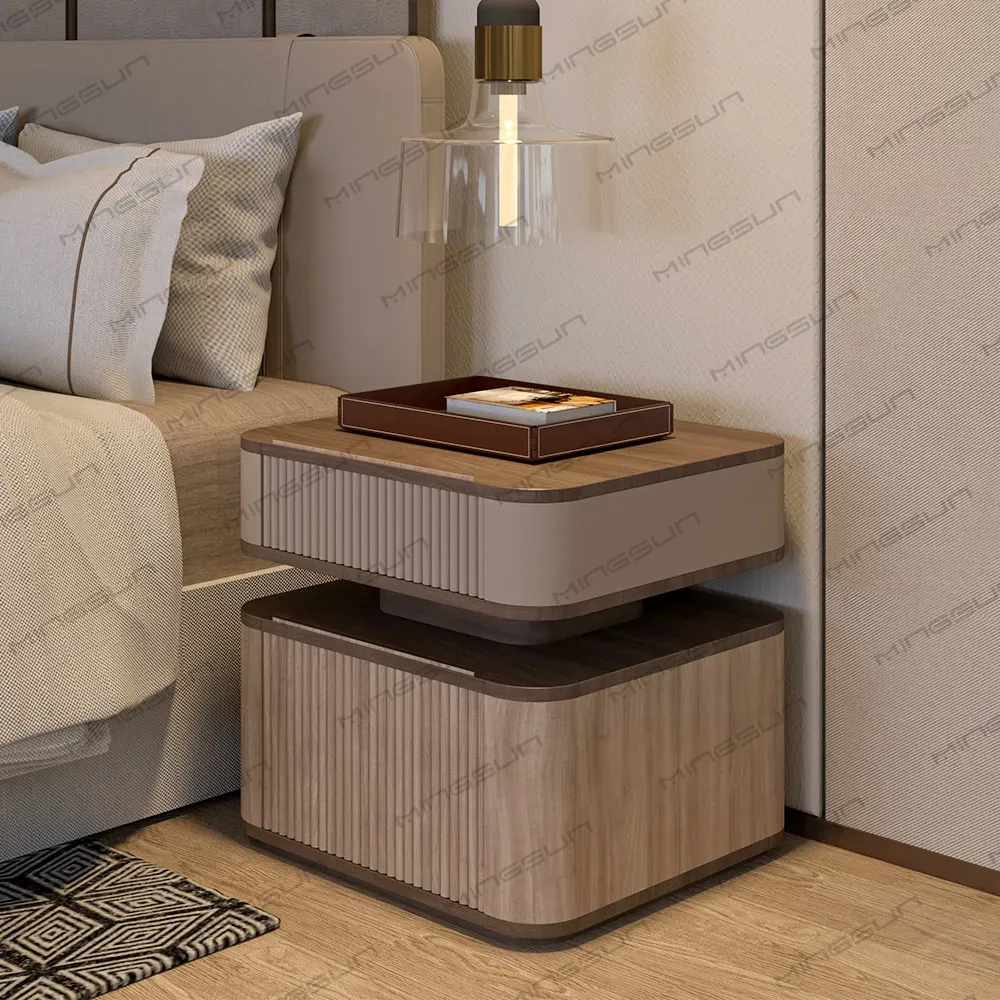
Stacked Tiered Nightstand with Fluted Panel Design & Contrasting Wood Finishes
Introduce a sculptural, modern element to your guestroom with this innovative two-tiered nightstand. Its layered design, featuring a sleek upper tray and a substantial lower storage unit, creates visual depth and functional versatility. The combination of warm wood grain on the top tier and textured fluted panels on the base adds tactile richness, while the clean lines and soft curves ensure it complements any contemporary or transitional interior. Perfect for luxury hotels seeking furniture that balances artistic expression with practical storage.
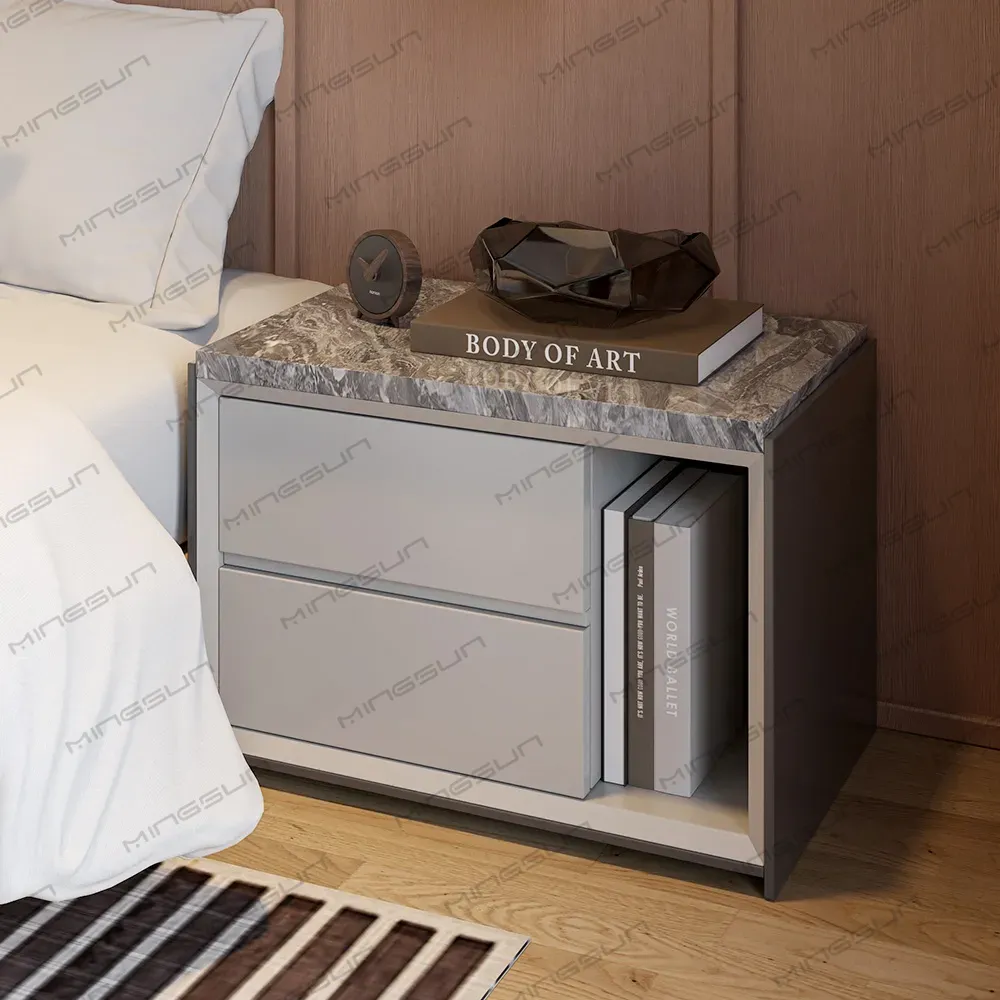
Modern Minimalist Nightstand with Marble Top & Open Shelf Storage
Refine your guestroom’s ambiance with this clean-lined, contemporary nightstand. Its striking dark veined marble top contrasts beautifully with the matte gray drawer fronts and open side shelf, offering a perfect blend of elegance and practicality. The spacious open compartment provides easy access for books or decor, while the two soft-close drawers keep essentials neatly concealed. Designed for luxury hotels and modern residences, it delivers understated sophistication without compromising on storage or style.
Get more industry insights
Looking for the right solution? Fill out the form and get a free quote.
Our experts will respond quickly with personalized options that fit your needs.
MINGSUN is a design-driven hotel furniture manufacturer offering OEM/ODM services, custom solutions, and global project support.
Built for wholesalers. Trusted by global buyers. Delivered with confidence.
Phone:
E-mail:
Follow us ——
 Scan QR Code

MINGSUN
MINGSUN
MINGSUN
MINGSUN
MS Custom Hotel Furniture Supplier