


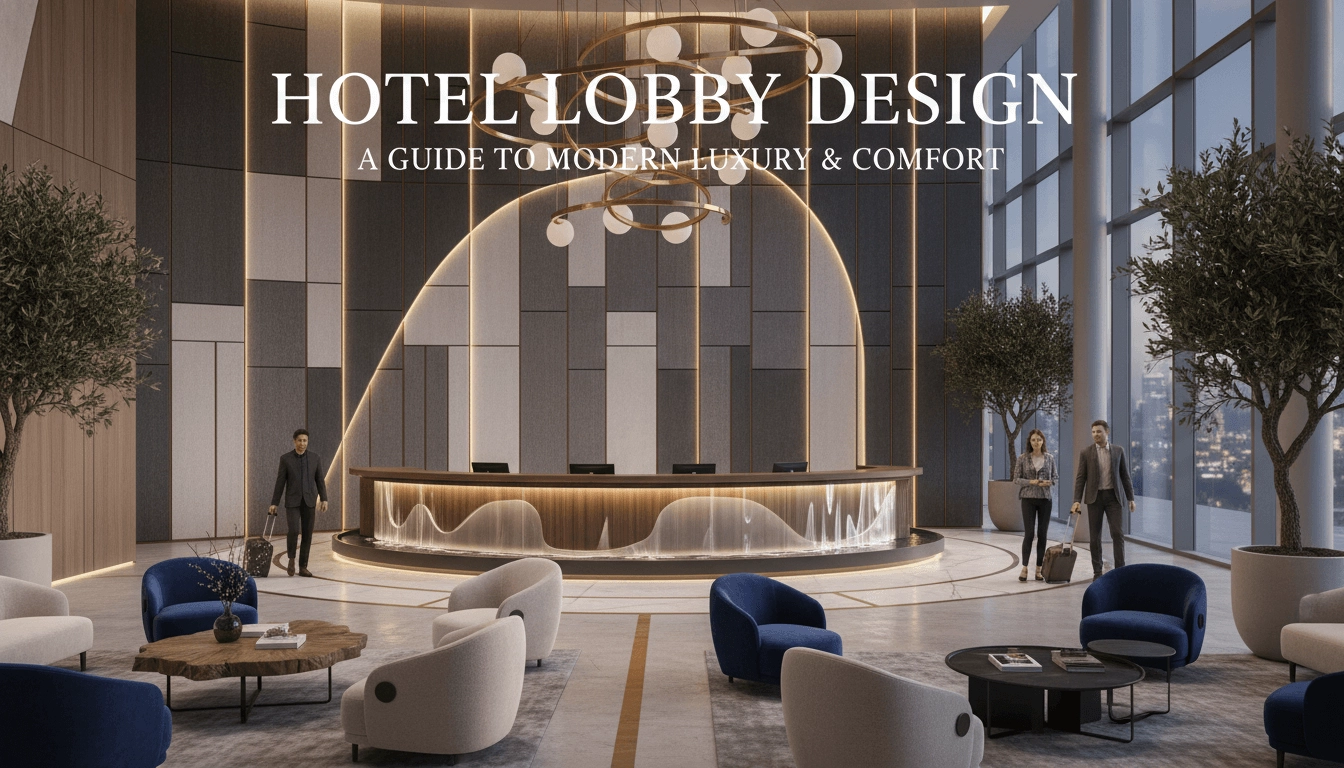
The Ultimate Guide to Hotel Lobby Design: Creating Unforgettable Guest Experiences in 2026
A comprehensive guide for hoteliers and designers on creating unforgettable hotel lobbies. Covers 2026 trends, biophilic design, smart technology, psychological impacts, and actionable ROI strategies.
- Introduction: The Heartbeat of Your Hotel
- The Psychology of Space: Crafting Emotional Connections Through Design
- Essential Elements of a World-Class Hotel Lobby Design
- The Grand Entrance & Arrival Experience
- The Reception & Check-in Area
- Seating & Lounge Zones
- Lighting Design
- Biophilic Design
- Designing for Diverse Hotel Concepts: Tailoring Your Lobby to Your Brand
- Future-Proofing Your Lobby: Modern Trends & Technological Integration
- Smart Hotel Lobby Technology
- Sustainable Hotel Lobby Design
- Wellness & Holistic Design
- Practical Planning & Implementation: From Concept to Reality
- Budgeting & ROI
- Accessibility Standards
- Acoustics & Sound Management
- Inspiring Examples of Innovative Hotel Lobby Designs
- Conclusion: The Enduring Impact of a Well-Designed Hotel Lobby
- Frequently Asked Questions
- What is the primary purpose of a hotel lobby in modern hospitality?
- How important is lighting in hotel lobby design?
- What are key considerations for designing small hotel lobbies?
- How can technology be integrated into modern hotel lobby designs?
- What are some sustainable design practices for hotel lobbies?
- How does a hotel lobby reflect its brand identity?
- What is biophilic design in a hotel lobby?
- How can a hotel lobby encourage guest interaction?
Introduction: The Heartbeat of Your Hotel
The modern hotel lobby is no longer just a transient waiting area; it is the heartbeat of the property and the anchor of the guest experience. As the first physical touchpoint, hotel lobby interior design plays a critical role in defining a brand’s narrative. It is where the journey begins, setting the tone for the entire stay within seconds of arrival.
Today's most successful lobbies are multi-functional hubs designed for connection, relaxation, and productivity. Whether you are managing a sprawling luxury resort or seeking small hotel lobby design solutions for a compact boutique property, the goal remains the same: to create a space that captivates and comforts. This guide provides comprehensive insights into creating exceptional lobbies, covering everything from the psychology of space to the cutting-edge hotel design trends 2026 promises to bring.
The Psychology of Space: Crafting Emotional Connections Through Design
Great design goes beyond aesthetics; it deeply influences human behavior and emotion. Understanding the psychology of space is essential for guest experience lobby design. According to research highlighted by the Hospitality Institute, guests form critical first impressions within the first seven seconds of entering a space. These fleeting moments dictate their perceived level of comfort, safety, and value for the rest of their stay.
Key Psychological Drivers:
· First Impressions: The subconscious mind immediately evaluates threats and comforts. A clutter-free, warmly lit entrance signals safety and hospitality.
· Color & Mood: As noted in color psychology studies, warm tones (reds, oranges) can energize a space and encourage socialization in communal areas, while cool tones (blues, greens) promote relaxation in waiting zones.
· Sensory Engagement: The most memorable lobbies engage all five senses. Visual harmony, acoustic dampening, textured materials, and a signature scent work in concert to anchor the memory of the brand in the guest's mind.
Essential Elements of a World-Class Hotel Lobby Design
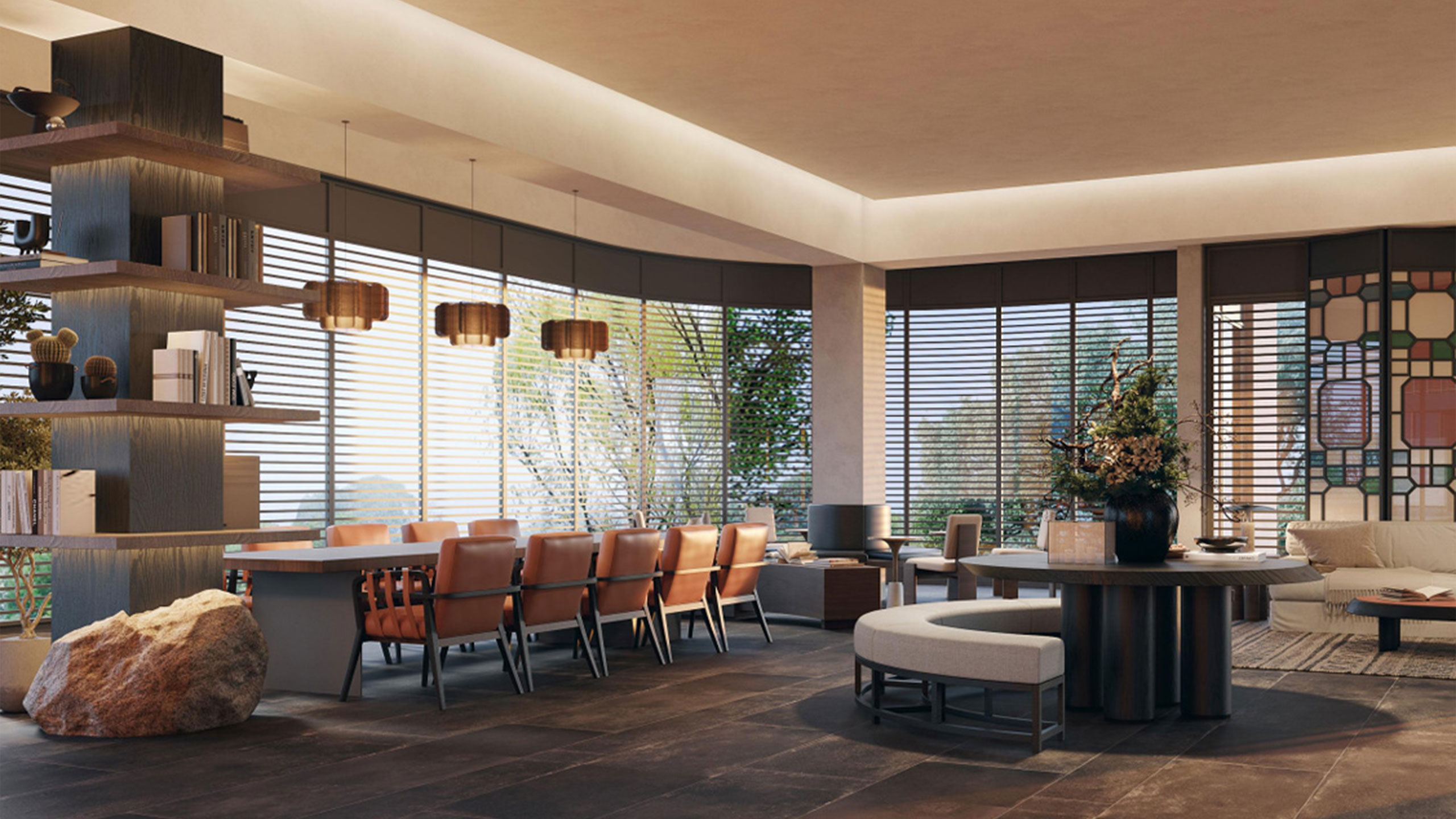
To achieve both functionality and beauty, specific elements must be masterfully integrated. These core components are the building blocks of modern hotel lobby concepts.
The Grand Entrance & Arrival Experience
The transition from the exterior to the interior should be seamless. Clear wayfinding is crucial to reduce travel anxiety. The arrival experience must promise sanctuary, effectively "decompressing" the guest from their journey.
The Reception & Check-in Area
Hotel reception area design is evolving rapidly. While aesthetics are paramount, accessibility is a legal and ethical necessity. According to ADA standards, reception counters must include a section no higher than 36 inches to accommodate guests using wheelchairs, ensuring an inclusive welcome for all. Modern designs often deconstruct the traditional barrier-like desk, opting for pods or tablet-based check-ins that remove physical barriers between staff and guests.
Seating & Lounge Zones
Flexible seating is vital. A mix of high-backed armchairs for privacy, communal tables for co-working, and soft sofas for socializing caters to the diverse needs of modern travelers.
Lighting Design
Lighting is the most powerful tool for setting ambiance. A layered approach—combining ambient, task, and accent lighting—allows the lobby to transition mood from day to night. Strategic lighting highlights architectural features and guides guests through the space intuitively.
Biophilic Design
Connecting guests with nature is more than a trend; it is a scientifically backed strategy. Reports from Terrapin Bright Green indicate that in biophilic hotel lobbies, 36% of guests were observed spending time in the space, compared to only 25% in conventional lobbies. Integrating living walls, water features, and maximizing natural light can significantly enhance guest well-being and dwell time.
Designing for Diverse Hotel Concepts: Tailoring Your Lobby to Your Brand
One size does not fit all. Your design strategy must align with your specific market segment.
· Luxury & Boutique Hotels: Luxury hotel lobby ideas often focus on exclusivity and narrative. Boutique hotel lobby inspiration can be drawn from the local neighborhood, using bespoke art and eclectic furniture to tell a unique story that big chains cannot replicate.
· Business & Conference Hotels: Efficiency is king. These lobbies require ample power outlets, high-speed connectivity, and acoustic privacy for impromptu meetings.
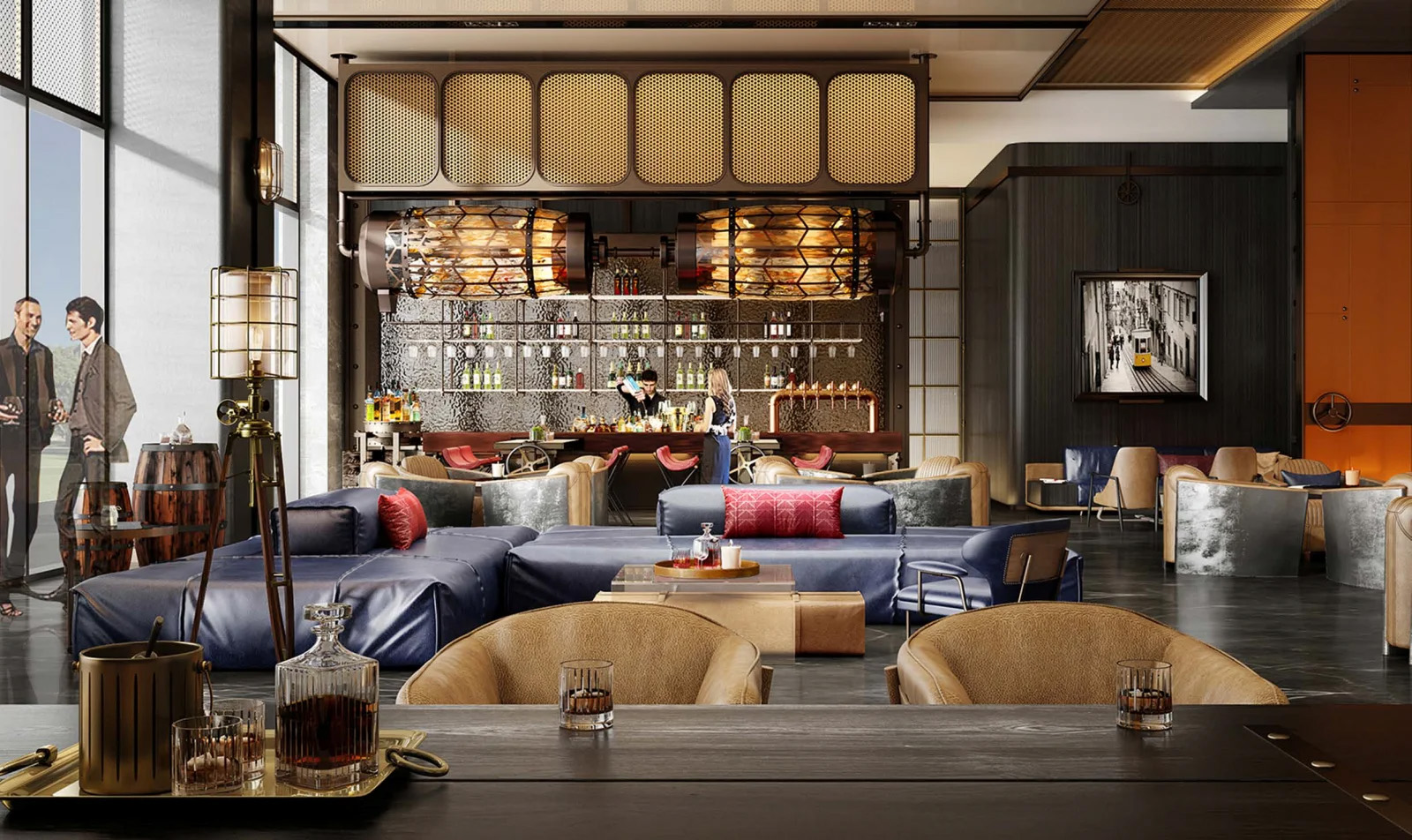
· Lifestyle & Urban Hotels: These spaces function as "public living rooms." The design should encourage locals and guests to mingle, often centering around a bar or coffee shop.
· Small & Compact Lobbies: For small hotel lobby design, every square inch matters. Vertical design strategies, such as floor-to-ceiling shelving or art, draw the eye upward, creating an illusion of space. Multi-functional furniture that serves as both seating and storage is essential.
Future-Proofing Your Lobby: Modern Trends & Technological Integration
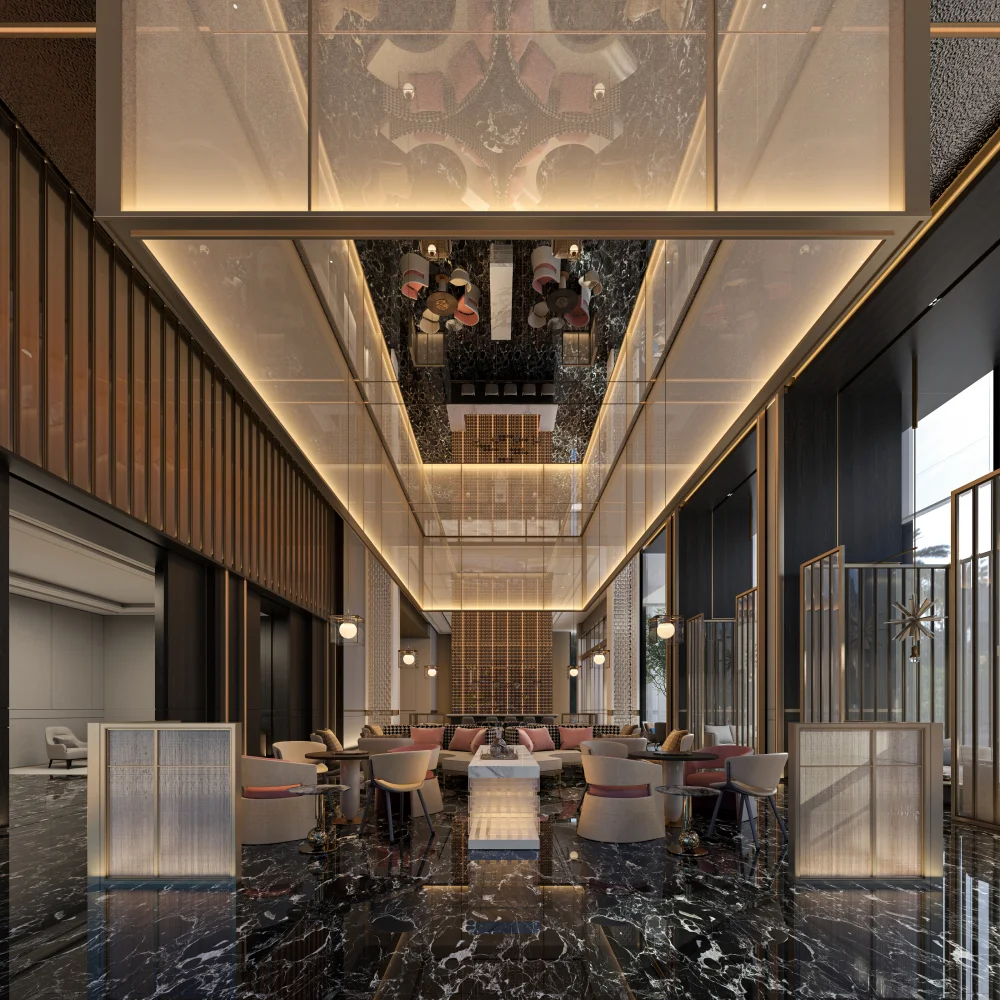
As we look toward hotel design trends 2026, the convergence of technology and sustainability will define the next generation of lobbies.
Smart Hotel Lobby Technology
The integration of smart hotel lobby technology is becoming standard. According to 2025 trends identified by industry leaders like Gensler and QloApps, we are moving toward "experience-driven" spaces supported by invisible tech. This includes:
· Digital Check-in Kiosks: Streamlining arrival to reduce queues.
· IoT Integration: Smart lighting and climate control that adjusts automatically based on occupancy and time of day.
· Virtual Concierge: AI-driven screens that provide local recommendations and hotel information 24/7.
Sustainable Hotel Lobby Design
Sustainability is now a baseline expectation. Sustainable hotel lobby design involves sourcing local materials to reduce carbon footprint, using LED lighting to lower energy consumption, and selecting durable furniture that won't need frequent replacement. As noted in Gensler's design forecast, the demand for sustainable design is supercharging innovation, with resilient buildings trading at premium values.
Wellness & Holistic Design
Wellness extends beyond the spa. Lobbies are incorporating circadian lighting systems that mimic natural daylight cycles to help guests adjust to new time zones, alongside air purification systems that ensure a healthy indoor environment.
Practical Planning & Implementation: From Concept to Reality
Budgeting & ROI
Design is an investment that must yield returns. A study on hotel renovations noted that transforming underutilized lobby space into revenue-generating areas, such as a bar or cafe, can significantly boost Net Operating Income (NOI). Furthermore, well-executed renovations can increase a property's market value enough to justify the investment within 12 months in some cases.
Accessibility Standards
Creating an inclusive environment is non-negotiable. Beyond the 36-inch reception desk height, ADA guidelines require clear pathways with a minimum width of 36 inches and turning spaces of at least 60 inches in diameter for wheelchair users. Compliance ensures all guests feel welcome and protects the hotel from liability.
Acoustics & Sound Management
A noisy lobby is a stressful lobby. High-traffic areas require acoustic treatments such as sound-absorbing ceiling baffles, heavy drapery, and upholstered furniture to manage noise levels and allow for private conversations.
Inspiring Examples of Innovative Hotel Lobby Designs
Leading hotels are already setting the bar for the future. Some properties have completely removed the reception desk, replacing it with a "living room" concept where staff check guests in via tablet while seated on a sofa. Others have transformed their lobbies into indoor gardens, leveraging the 12-16% price premium often associated with rooms and spaces that offer views of nature or water, as suggested by biophilic design research.
Conclusion: The Enduring Impact of a Well-Designed Hotel Lobby
The lobby is the physical manifestation of your brand's promise. A well-designed lobby does more than just look good; it functions as a revenue generator, a brand ambassador, and a sanctuary for guests. By embracing sustainable hotel lobby design, integrating smart hotel lobby technology, and respecting the psychological needs of your guests, you can create a space that remains relevant and impressive well into 2026 and beyond. Investing in your lobby is investing in the guest memory—and that is the most valuable asset in hospitality.
Frequently Asked Questions
What is the primary purpose of a hotel lobby in modern hospitality?
Beyond check-in, the modern hotel lobby serves as a multi-functional hub for socializing, working, dining, and experiencing the hotel's brand. It acts as the hotel's 'first impression,' setting the tone for the entire guest stay and influencing brand perception.
How important is lighting in hotel lobby design?
Lighting is crucial for creating ambiance, defining zones, highlighting architectural features, and ensuring guest comfort and safety. A combination of natural light and layered artificial lighting (ambient, task, accent) is essential for versatility and mood control.
What are key considerations for designing small hotel lobbies?
Maximize space with multi-functional furniture and vertical design elements (e.g., shelving, wall art). Utilize mirrors and strategic lighting to create an illusion of greater space. Focus on minimalist designs and clear pathways to avoid clutter and improve flow.
How can technology be integrated into modern hotel lobby designs?
Integrate digital check-in kiosks, interactive information screens, and smart lighting/climate controls. Provide ample charging stations, high-speed Wi-Fi, and potentially robot concierges or smart speakers. Leverage augmented reality or virtual reality experiences to showcase local attractions or hotel amenities.
What are some sustainable design practices for hotel lobbies?
Utilize locally sourced and recycled materials for furniture and finishes. Implement energy-efficient LED lighting and smart climate control systems. Incorporate biophilic elements and maximize natural light to reduce energy consumption. Design for durability to minimize waste and the need for frequent replacements.
How does a hotel lobby reflect its brand identity?
The lobby's aesthetic (color palette, materials, art), ambiance (music, scent), and functionality should align with the hotel's brand story and target demographic. It visually communicates the hotel's values, whether luxury, boutique, business, or budget, immediately upon arrival.
What is biophilic design in a hotel lobby?
Biophilic design integrates natural elements and processes into the built environment. In a lobby, this includes living walls, indoor plants, natural light, natural materials (wood, stone), and views of nature. It aims to enhance guest well-being, reduce stress, and create a sense of calm and connection to the outdoors.
How can a hotel lobby encourage guest interaction?
Create comfortable, varied seating arrangements that facilitate both intimate conversations and larger group gatherings. Incorporate communal tables, co-working spaces, or inviting bar/cafe areas. Design interactive art installations or local experience showcases that encourage engagement and discussion among guests.
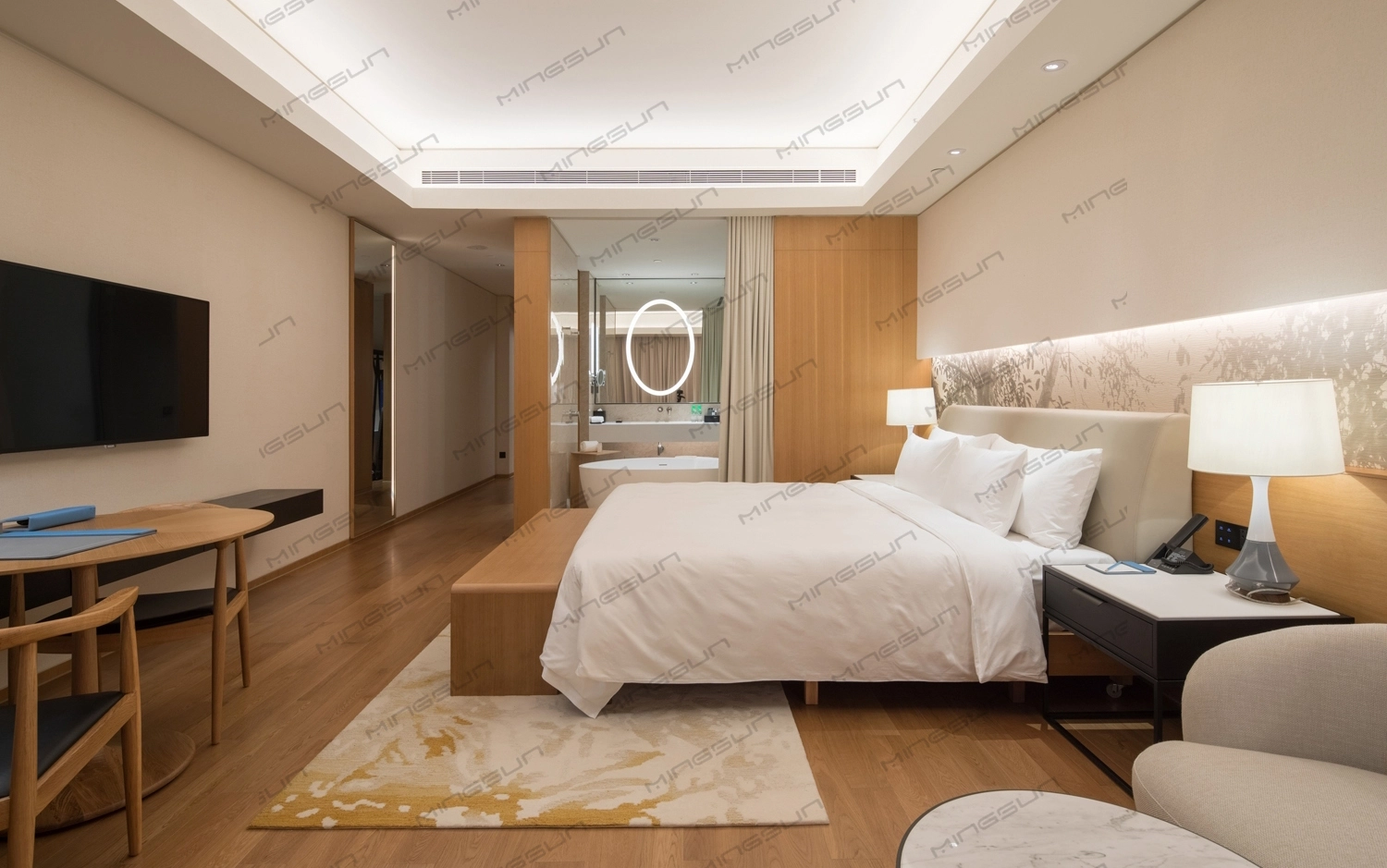
The Complete List of Hotel Guest Room Furniture for 2026

Beyond Aesthetics: How the Best Coffee Table Designs Increase Guest Satisfaction Scores

4-Star vs 5-Star Hotels Unveiling the Differences
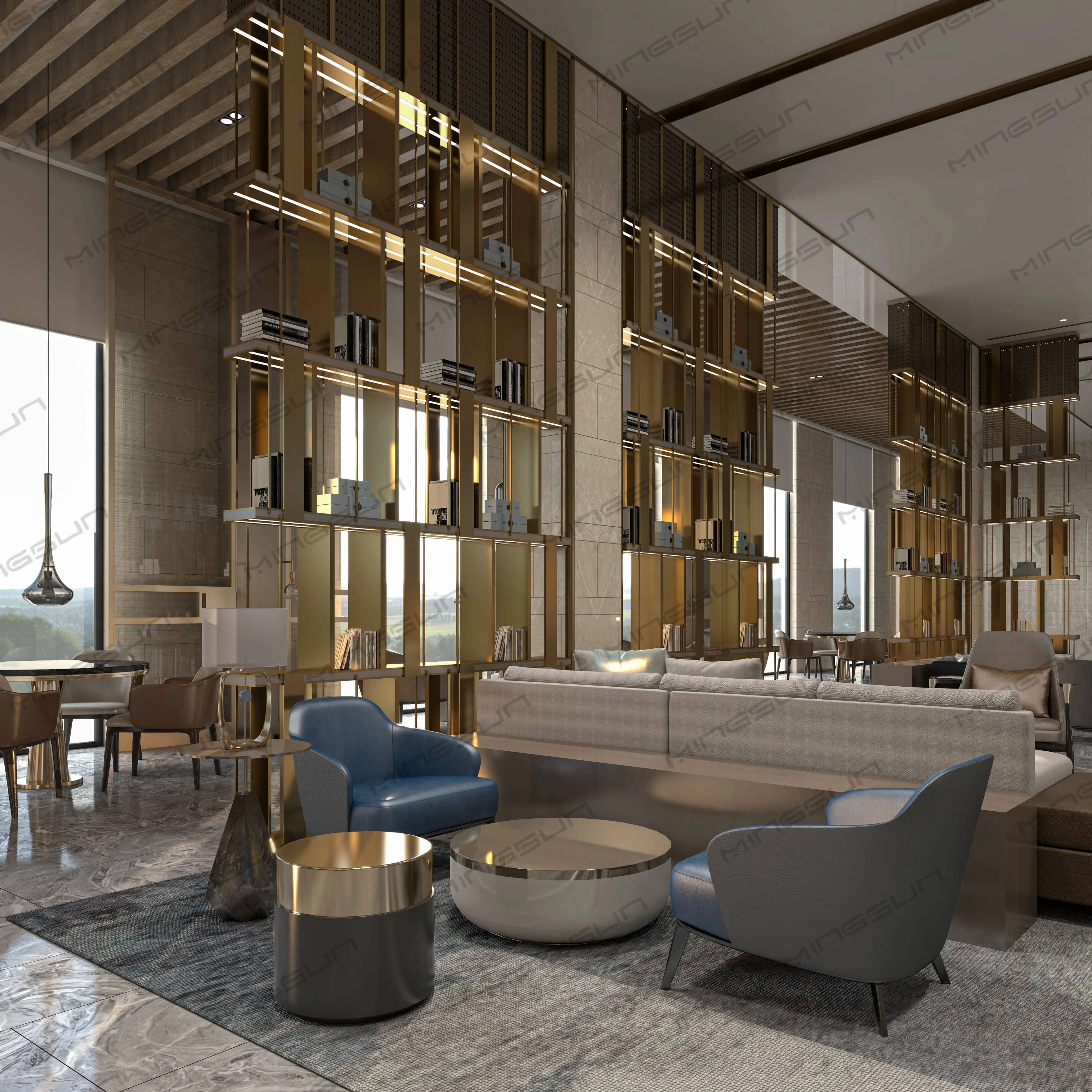
How to Grow Your Hotel Business?: 11 Sales Strategies
Customization Capability & Design Support
Does Mingsun provide design services?
Pricing, Payment & Packaging
How is pricing calculated? Does customization increase the cost?
About Mingsun – Company Background
What kind of company is Mingsun?
After-Sales Service & Long-Term Cooperation
What types of clients is Mingsun best suited for?
Do you provide after-sales support?
Make an appointment with us today
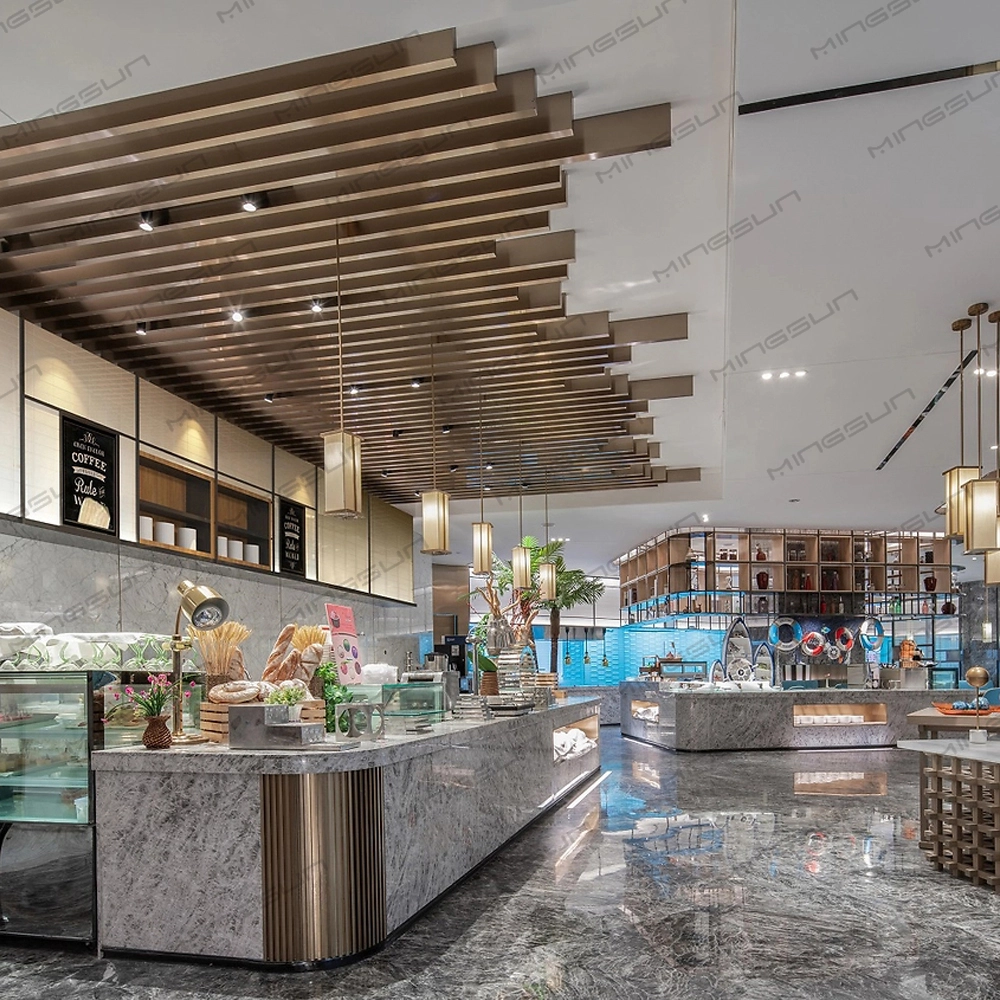
Modern Hotel Dining Furniture Set-Custom Designed Wooden Tables, Upholstered Chairs & Banquette Seating
Create a lasting impression with our custom-designed hotel dining furniture set, crafted for modern luxury hotels and upscale restaurants.
Featuring elegant wooden tables, ergonomic blue-upholstered chairs, and built-in banquette seating, this collection blends comfort, style, and durability.
As a leading manufacturer in Guangzhou, we deliver end-to-end solutions - from concept design and 3D visualization to production and global shipping - all at factory-direct prices.
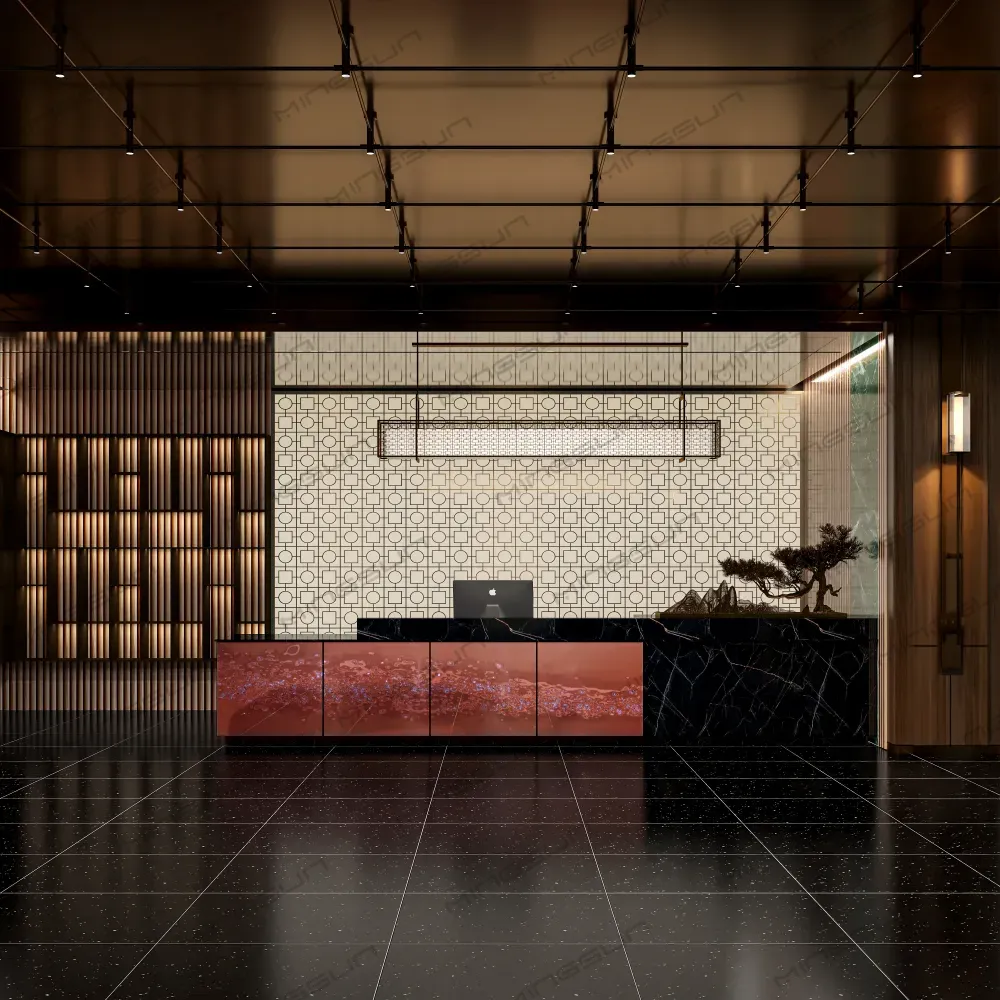
Luxury Reception Desk with Black Marble Top & Illuminated Copper-Resin Front Panels
Make a bold, unforgettable statement at your hotel’s entrance with this avant-garde reception desk. Its sleek black marble top exudes timeless sophistication, while the front facade features mesmerizing, internally lit copper-resin panels that glow with a warm, amber radiance, creating a dynamic visual centerpiece. Designed for both form and function, the unit offers ample concealed storage behind seamless doors and integrates a dedicated staff workstation with cable management. This is more than a check-in counter—it’s a sculptural installation that defines the luxury and artistry of your brand.
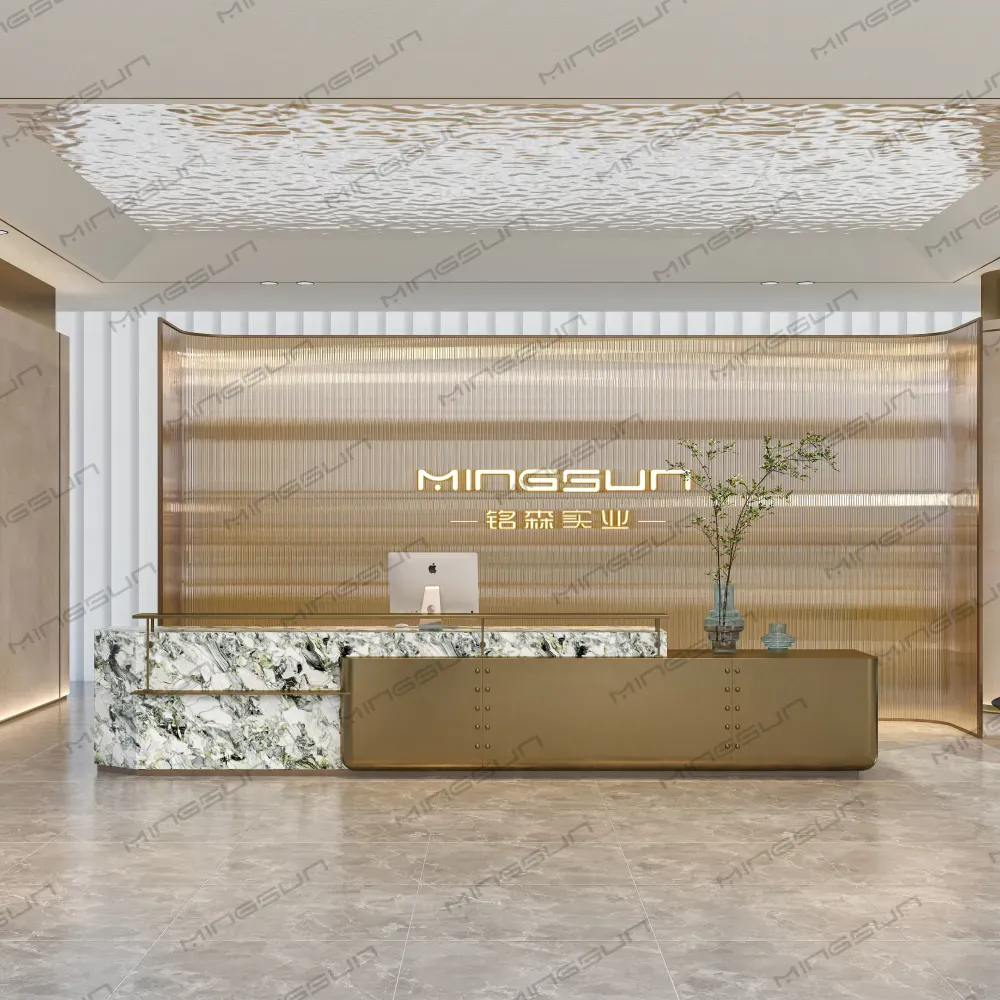
Luxury Asymmetrical Reception Desk with Green Veined Marble & Brushed Brass Panels
Command attention at your hotel’s entrance with this bold, asymmetrical reception desk, where natural artistry meets industrial chic. The dynamic green and white veined marble facade creates a dramatic, organic statement, while the sleek, brushed brass panels add a touch of refined luxury and texture. Designed for seamless guest interaction, its ergonomic layout provides dedicated space for staff workstations, complete with integrated cable management and optional power outlets. This isn’t just furniture—it’s an immersive brand experience that welcomes guests into a world of sophisticated, contemporary design.
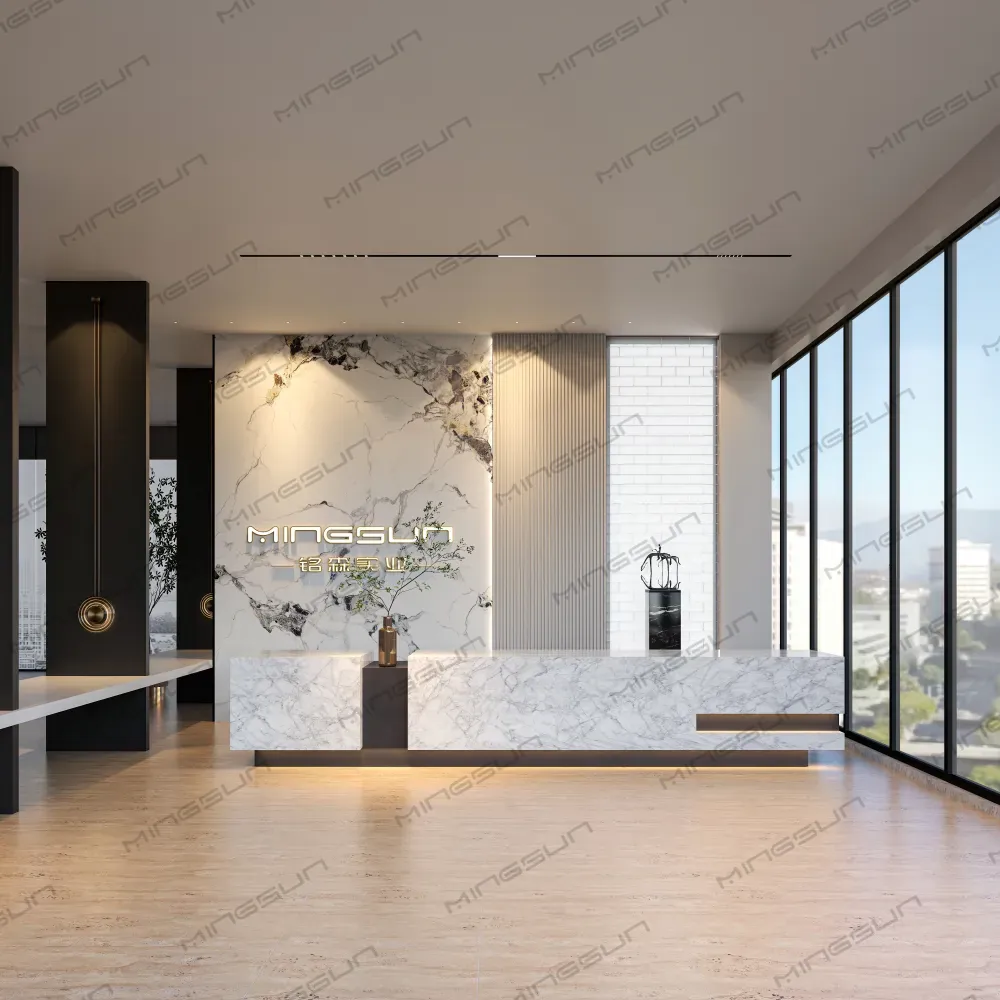
Grand Minimalist White Marble Reception Desk with Integrated LED Lighting
Make a powerful first impression in your hotel lobby or corporate headquarters with this architectural masterpiece. Designed for grand entrances, this 5-meter reception counter features a stunning white Carrara marble-look finish with distinctive grey veining, offering the opulent aesthetic of natural stone without the excessive weight or maintenance issues. The design is defined by its clean, block-geometric silhouette, interrupted by a contrasting dark matte insert that serves as both a visual break and a functional cable management zone. Subtle integrated warm LED strip lighting runs along the base and within the recessed display niche, creating a floating effect that adds lightness to the substantial structure.
Manufactured by MINGSUN, a leader in Guangzhou hospitality furniture, this desk is built to withstand the demands of high-traffic environments. We provide a complete turnkey solution—from refining the CAD drawings to precision manufacturing and global logistics—ensuring this centerpiece arrives safely and installs seamlessly in your venue.
Get more industry insights
Looking for the right solution? Fill out the form and get a free quote.
Our experts will respond quickly with personalized options that fit your needs.
MINGSUN is a design-driven hotel furniture manufacturer offering OEM/ODM services, custom solutions, and global project support.
Built for wholesalers. Trusted by global buyers. Delivered with confidence.
Phone:
E-mail:
Follow us ——
 Scan QR Code
MINGSUN
MINGSUN
MINGSUN
MINGSUN
MS Custom Hotel Furniture Supplier