


Unlocking Opulence: The Ultimate Guide to Luxury Hotel Room Layouts for 2026 & Beyond
A definitive guide to crafting world-class luxury hotel room layouts for 2026. This article explores essential dimensions, zoning strategies, smart technology integration, and sustainable design principles (WELL/LEED). It covers diverse layout types from Deluxe Rooms to Presidential Suites, emphasizing guest flow, ergonomics, and future-proof innovations.
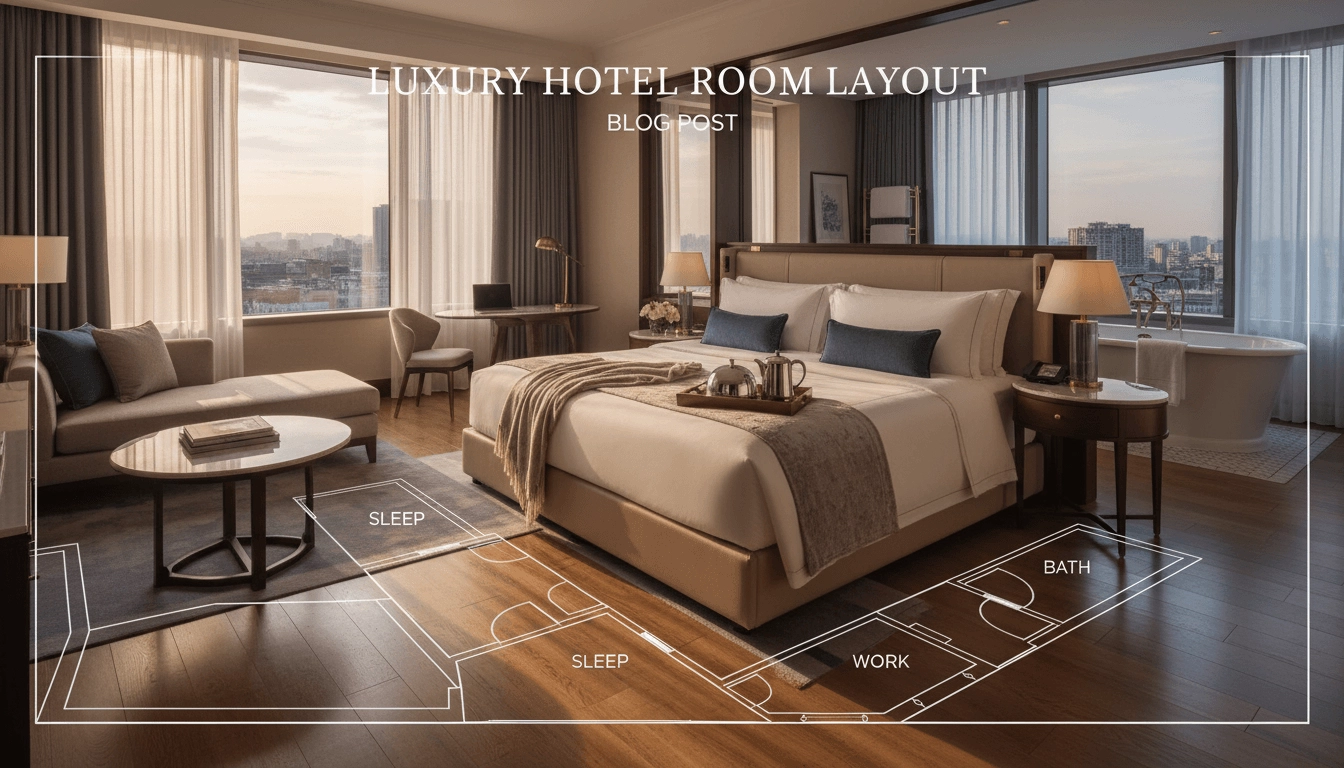
- Introduction: The Art of Crafting an Unforgettable Luxury Hotel Room Layout
- The Core Philosophy of Luxury Hotel Room Spatial Design
- Guest Journey Mapping
- Ergonomics & Comfort
- Biophilic Design & Sensory Engagement
- Architecting Opulence: Diverse Luxury Hotel Room Layout Types
- The Refined Deluxe Room Layout
- Junior Suites: Open-Concept Luxury
- Presidential & Grand Suites: Multi-Zone Extravagance
- Key Zones within a Luxury Hotel Room Layout: A Detailed Look
- The Sleep Sanctuary
- The Spa-Inspired Bathroom
- The Productive Workspace
- Optimizing Dimensions and Proportions for Unrivaled Luxury
- Seamless Technology Integration in Future-Forward Layouts
- Sustainable Luxury: Eco-Conscious Layout Design for 2026
- Common Pitfalls to Avoid in Luxury Hotel Room Layout Design
- The Future of Luxury Hotel Room Layouts: Innovations and Trends
- Conclusion: Your Blueprint for Unparalleled Luxury
- Frequently Asked Questions
- What defines a 'luxury' hotel room layout?
- How do layout dimensions differ for standard vs. luxury hotel rooms?
- What are the essential zones to include in a luxury hotel room layout?
- How can technology be integrated seamlessly into a luxury hotel room layout?
- What role does biophilic design play in luxury hotel room layouts?
- How can a small hotel room still achieve a luxury layout?
- What are common mistakes to avoid when designing a luxury hotel room layout?
- What are the future trends influencing luxury hotel room layouts?
Introduction: The Art of Crafting an Unforgettable Luxury Hotel Room Layout
True luxury in hospitality is rarely defined by gold-plated faucets or thread count alone; it is defined by space, silence, and the seamless fluidity of movement. A luxury suite floor plan is the silent concierge that guides a guest’s experience, anticipating their needs before they are even conscious of them. As we look toward 2026, the definition of opulence is shifting from pure ornamentation to intelligent spatial planning that prioritizes wellbeing, personalization, and sustainable integration.
In the high-stakes world of high-end hotel interior architecture, the layout is the foundation upon which the entire guest narrative is built. Whether it is a boutique urban sanctuary or a sprawling resort villa, the way a room is organized determines whether a guest feels merely accommodated or truly transported. This guide delves deep into the architecture of opulence, providing actionable insights into creating 5-star hotel room design standards that resonate with the sophisticated traveler of tomorrow.
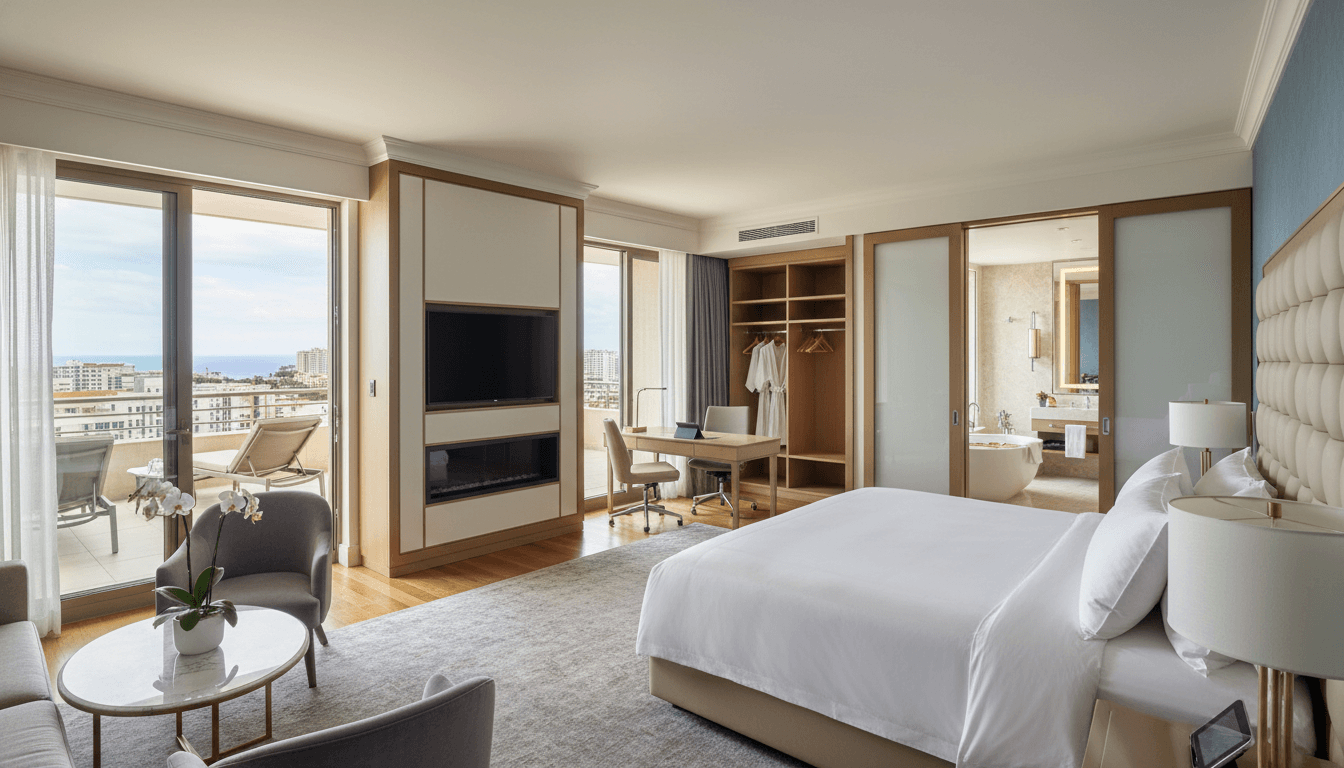
The Core Philosophy of Luxury Hotel Room Spatial Design
Designing a luxury space requires a philosophy rooted in empathy and precision. It is about optimizing luxury hotel space not just for visual impact, but for the subconscious comfort of the user.
Guest Journey Mapping
The layout must choreograph the guest's movement from the moment the door opens. The entry foyer should act as a decompression zone, offering a glimpse of the view while concealing the intimacy of the sleeping quarters. This transition is crucial for establishing a sense of arrival.
Ergonomics & Comfort
Ergonomic luxury hotel rooms go beyond comfortable chairs. They involve calculating the radius of movement around the bed (optimally 30-36 inches minimum for clearance) and ensuring that lighting controls are reachable from a reclining position. As noted by industry standards from the WELL Building Standard, physical comfort parameters like thermal control and accessible design are foundational to human health in built environments.
Biophilic Design & Sensory Engagement
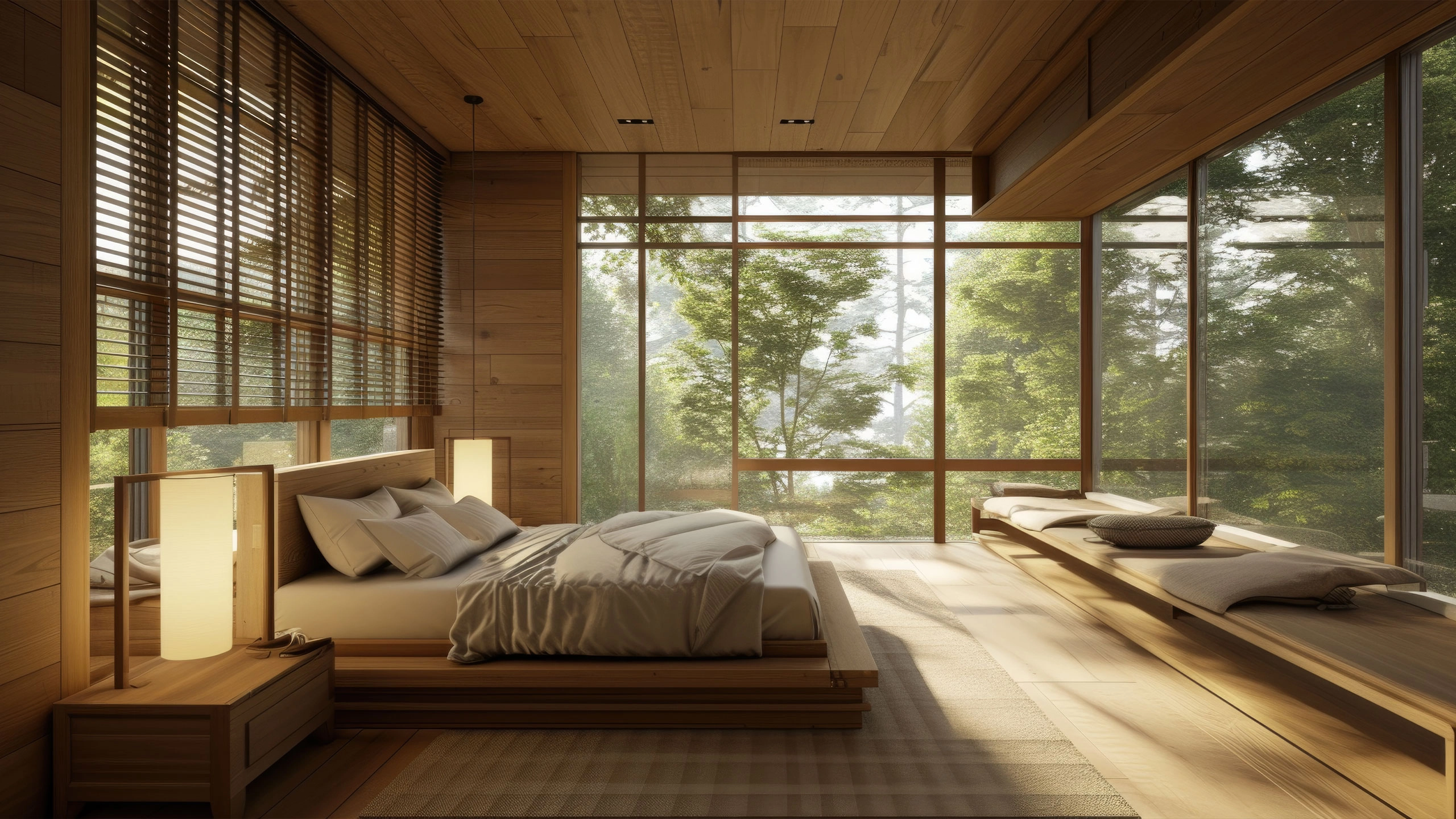
Connecting guests with nature is no longer optional. According to data cited by Terrapin Bright Green, guests are willing to pay up to 20% more for rooms with nature views. A sustainable luxury room design integrates biophilic elements—natural light, organic textures, and views of greenery—directly into the layout, reducing stress and enhancing the perception of exclusivity.
Architecting Opulence: Diverse Luxury Hotel Room Layout Types
Different tiers of luxury demand distinct spatial strategies. Here is how to approach the most critical categories.
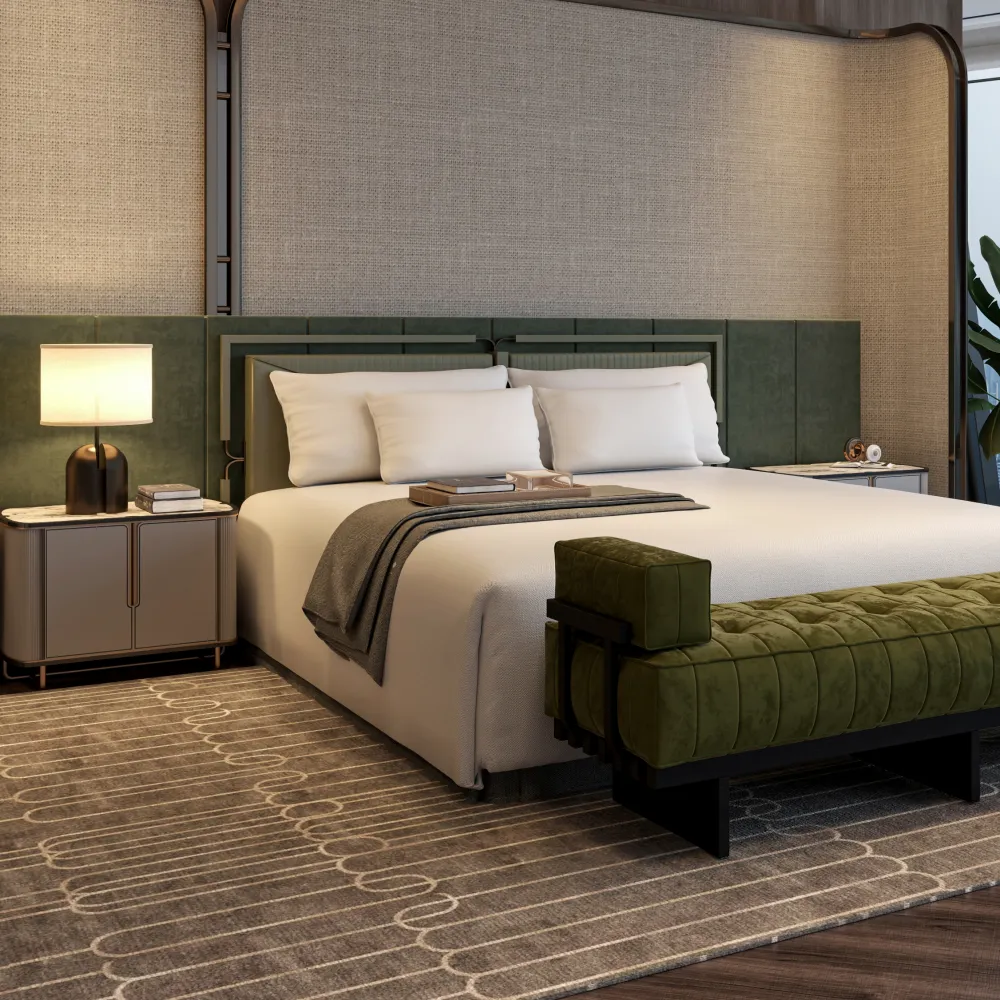
The Refined Deluxe Room Layout
In a standard 5-star context, a Deluxe Room typically ranges from 400 to 600 square feet (37-56 square meters). The challenge here is optimizing luxury hotel space without clutter.
· Strategy: Use an open-concept flow where the bathroom creates a "wet zone" distinct from the "dry zone" of the lounge and bed, often linked by sliding partitions rather than solid walls to maximize light penetration.
Junior Suites: Open-Concept Luxury
A Junior Suite serves as the bridge between a room and a full suite, often featuring boutique hotel room layout ideas that utilize vertical changes (step-down living areas) or central joinery units (housing the TV and minibar) to zone the space without blocking sightlines. The layout must distinctively separate the sleeping area from the seating area to allow for casual business meetings or in-room dining.
Presidential & Grand Suites: Multi-Zone Extravagance
For the ultra-elite, the layout expands to 1,500+ square feet. These spaces function as private residences.
· Key Feature: A dedicated service entrance is mandatory for butler service to deliver dining or handle laundry without disturbing the guest in the main living zones.
· Zoning: Distinct formal living, private study, and master sanctuary zones are required, often with acoustic buffering between them.
Key Zones within a Luxury Hotel Room Layout: A Detailed Look
The Sleep Sanctuary
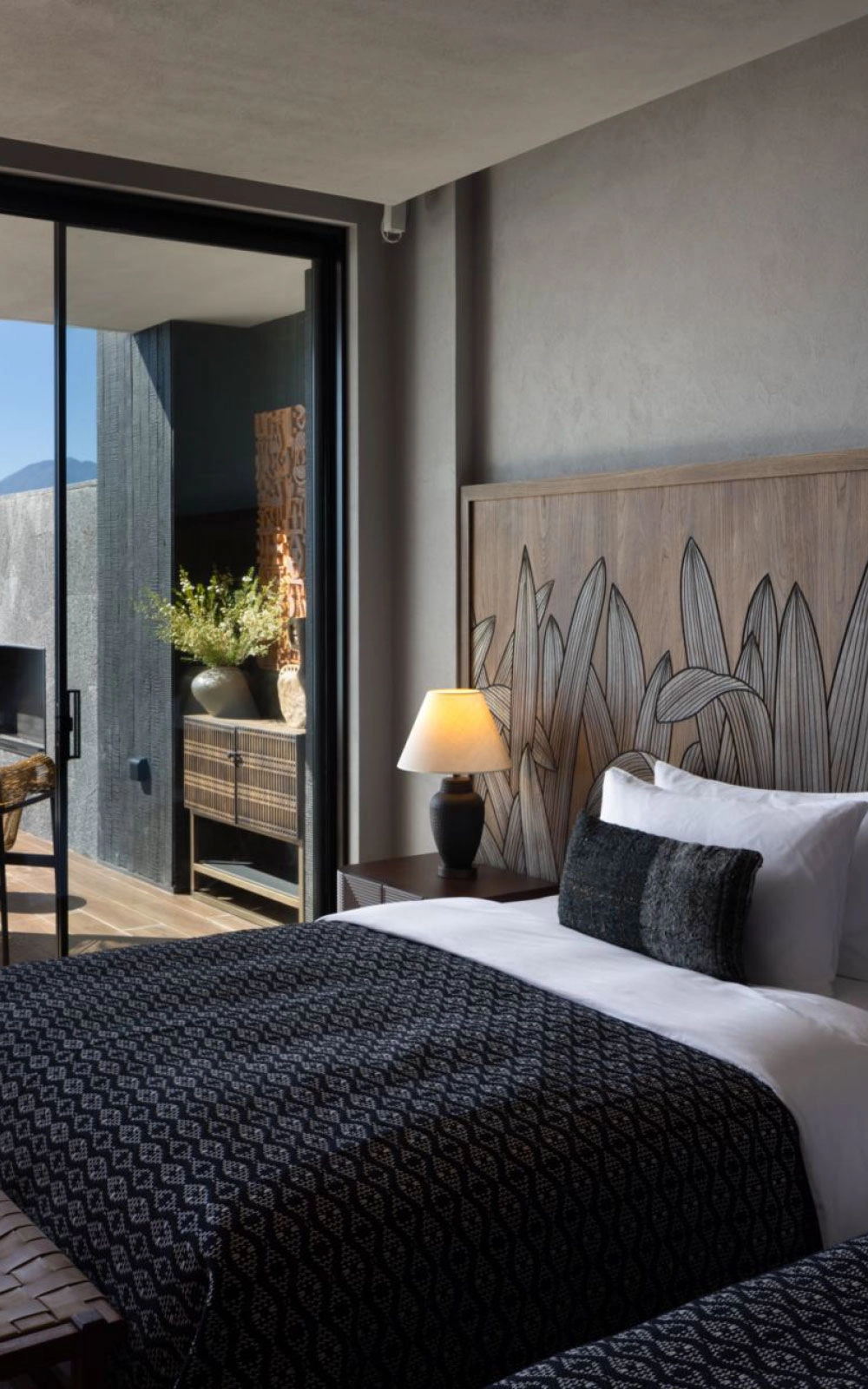
The bed is the heart of the room. In 5-star hotel room design, the bed is never placed directly facing the corridor door. It should be positioned to maximize the view while maintaining a sense of enclosure. Acoustic privacy is paramount; shared walls should be buffered by closets or bathrooms.
The Spa-Inspired Bathroom
The modern luxury bathroom is a destination in itself. Current spatial planning luxury hotels trends dictate a minimum of 5-piece setups (double vanity, WC, walk-in shower, freestanding tub). According to accessibility guidelines, a luxury suite floor plan must also accommodate a 5-foot turning radius to ensure universal design compliance without sacrificing aesthetics.
The Productive Workspace
Even in leisure resorts, the guest experience layout must include a functional workspace. However, the desk should not face a blank wall. Orienting the desk into the room or towards a view allows the guest to work without feeling isolated.
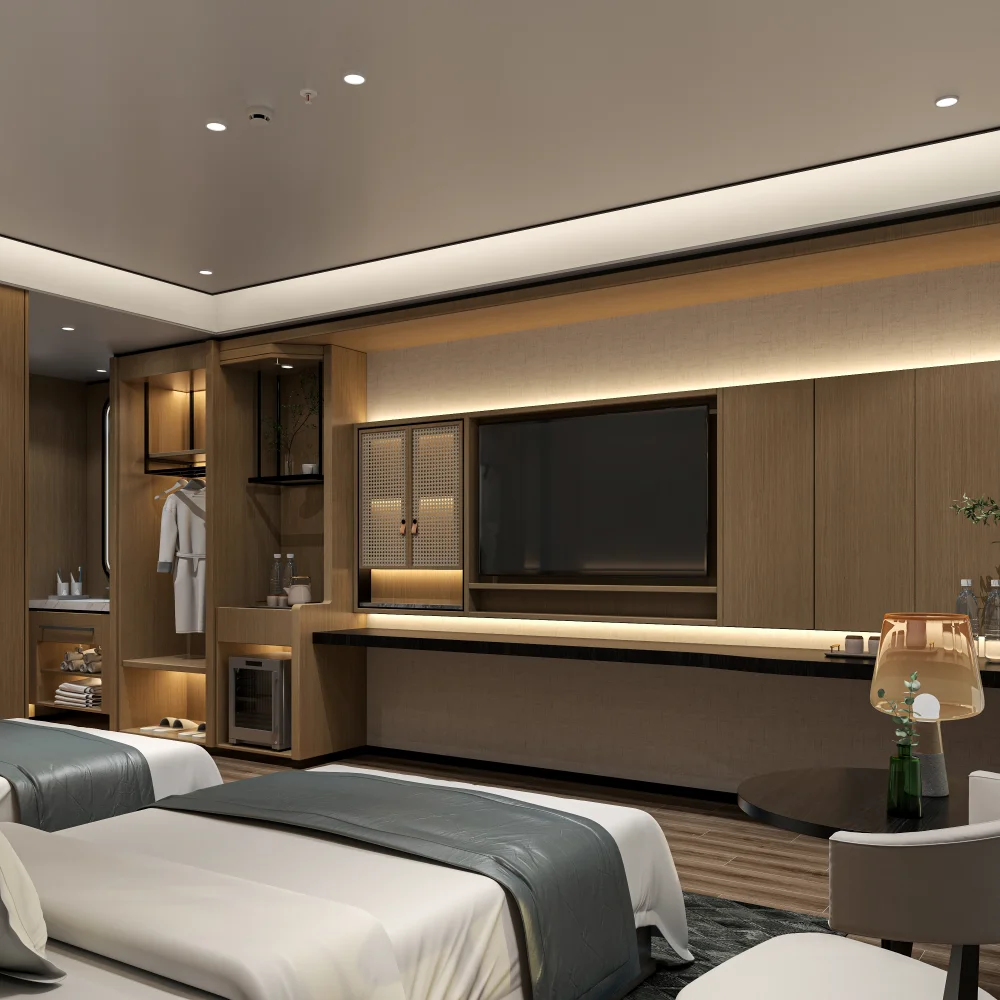
Optimizing Dimensions and Proportions for Unrivaled Luxury
Luxury is often measured in cubic volume, not just square footage.
· Ceiling Heights: A standard luxury room should aim for ceiling heights exceeding 9-10 feet (2.7-3 meters) to create a sense of grandeur.
· Corridor Widths: Internal hallways within a suite should be at least 48 inches wide, surpassing standard residential codes to allow for luggage and effortless two-way passage.
· Standard vs. Luxury: While a standard US hotel room averages 300-325 sq ft, a true luxury layout begins at 400 sq ft, with 5-star suites often exceeding 1,000 sq ft. European standards (e.g., in Italy or Spain) may have smaller minimums legally (approx. 16-22 sqm for double rooms), but international luxury expectations far surpass these statutory baselines.
Seamless Technology Integration in Future-Forward Layouts
By 2026, a smart hotel room layout will be defined by "invisible tech."
· Smart Automation: Controls for curtains, lighting, and climate should be intuitive and located at the bedside and entry.
· Circadian Lighting: Aligning with WELL Building Standard concepts, lighting layouts must mimic natural daylight progression to support guest circadian rhythms, enhancing sleep quality.
· Hidden Hardware: TVs should be integrated into motorized lifts or disguised as artwork (e.g., Samsung The Frame) to ensure they do not dominate the room's aesthetic when not in use.
Sustainable Luxury: Eco-Conscious Layout Design for 2026
Sustainable luxury room design is about efficiency baked into the blueprint.
· Orientation: Layouts should be oriented to maximize natural daylight, reducing the need for artificial lighting during the day.
· Materiality: Using locally sourced stone and reclaimed wood reduces the carbon footprint while grounding the design in its location.
· Water Conservation: Layouts should facilitate short pipe runs to hot water sources to reduce energy waste, alongside low-flow but high-pressure fixtures.
Common Pitfalls to Avoid in Luxury Hotel Room Layout Design
· Overcrowding: Including too much furniture in a Deluxe Room can make it feel like a standard room. Negative space is a luxury commodity.
· Poor Lighting Zones: Failing to layer lighting (ambient, task, accent) creates a flat, clinical atmosphere. Every zone needs dimmable control.
· Acoustic Leakage: Placing the bed headboard on a wall shared with the neighboring room’s TV or plumbing wall is a critical error in spatial planning luxury hotels.
The Future of Luxury Hotel Room Layouts: Innovations and Trends
Looking ahead, hyper-personalized layouts will become the norm. We will see increased use of modular walls that allow a suite to expand or contract based on whether the guest is a solo business traveler or a family. Furthermore, the integration of "Technobiophilia"—using digital screens to simulate nature views in windowless urban environments—will offer new ways to bring the outdoors in.
Conclusion: Your Blueprint for Unparalleled Luxury
Creating the ultimate luxury hotel room layout is a balancing act between aesthetic grandeur and functional invisibility. By adhering to 5-star hotel room design principles, integrating smart technology, and prioritizing the guest's physical and emotional journey, hoteliers can build spaces that are not just visited, but deeply felt.
Frequently Asked Questions
What defines a 'luxury' hotel room layout?
A luxury layout is characterized by thoughtful spatial planning, generous proportions (typically 400+ sq ft), intuitive guest flow, distinct functional zones, and seamless integration of high-quality materials and technology, prioritizing comfort and an elevated guest experience.
How do layout dimensions differ for standard vs. luxury hotel rooms?
Luxury hotel rooms typically feature more generous dimensions. While a standard US hotel room is ~300 sq ft, luxury rooms start at 400-600 sq ft. They feature wider entryways, larger sleeping areas (accommodating King beds with ample clearance), and expansive spa-like bathrooms.
What are the essential zones to include in a luxury hotel room layout?
Key zones include a sleep sanctuary (bed area with views), a comfortable lounge/relaxation area (seating for at least two), a functional ergonomic workspace, a spa-inspired bathroom (often with separate tub and shower), and a discreet dressing/wardrobe space.
How can technology be integrated seamlessly into a luxury hotel room layout?
Technology should be subtly integrated—"invisible tech." This includes smart lighting that adjusts to circadian rhythms, automated window treatments, hidden entertainment systems (motorized lifts), and discreet charging ports built into furniture surfaces.
What role does biophilic design play in luxury hotel room layouts?
Biophilic design connects guests with nature through elements like natural light, views of greenery, and organic materials. Studies show guests may pay up to 20% more for such views, and it contributes to a sense of calm and wellbeing essential for luxury.
How can a small hotel room still achieve a luxury layout?
Luxury in smaller spaces (e.g., boutique hotels) is achieved through open-concept zoning, multi-functional furniture, mirrors to expand perceived space, and high-quality finishes. The focus shifts to "micro-luxury" details and efficient flow.
What are common mistakes to avoid when designing a luxury hotel room layout?
Common mistakes include overcrowding the space with furniture, neglecting guest flow (awkward paths), poor lighting design (lack of dimming), insufficient acoustic privacy between zones, and underestimating storage needs for luggage.
What are the future trends influencing luxury hotel room layouts?
Future trends include AI-driven adaptable environments, wellness-centric features (air purification, circadian lighting aligned with WELL standards), seamless indoor-outdoor living, and modular designs that allow rooms to be reconfigured for different guest needs.

AAA Five-Diamond Luxury Hotel Evaluation Guide
Can I Customise the Hospitality Furniture? Essential Guide to Bespoke Design | Insights by MINGSUN

MINGSUN: Your Premier Partner for Wholesale Hotel Furniture & Custom Solutions

What is Contract Grade Furniture? A Complete Guide
After-Sales Service & Long-Term Cooperation
What types of clients is Mingsun best suited for?
Is long-term cooperation or repeat ordering supported?
Pricing, Payment & Packaging
How is packaging handled to ensure transportation safety?
Materials, Craftsmanship & Quality Control
How are quality issues handled?
About Mingsun – Company Background
Who are Mingsun’s main clients?
Make an appointment with us today
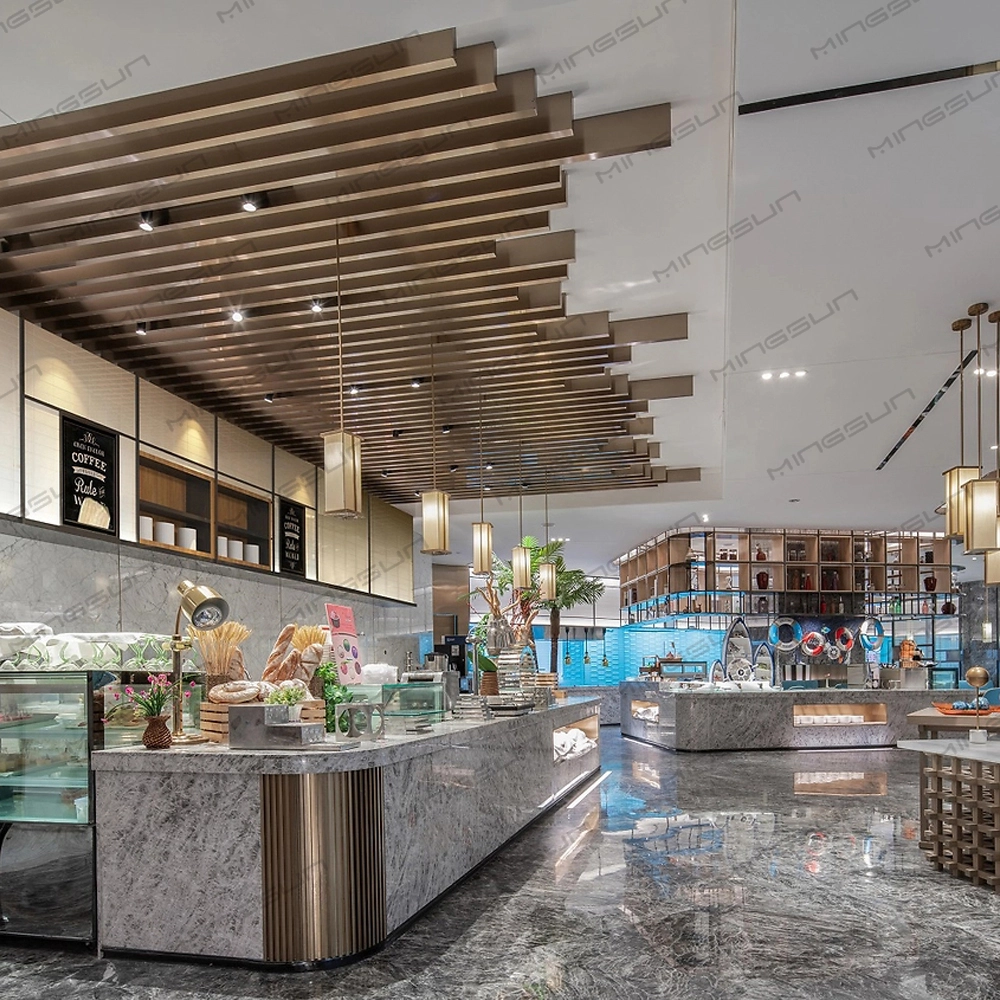
Modern Hotel Dining Furniture Set-Custom Designed Wooden Tables, Upholstered Chairs & Banquette Seating
Create a lasting impression with our custom-designed hotel dining furniture set, crafted for modern luxury hotels and upscale restaurants.
Featuring elegant wooden tables, ergonomic blue-upholstered chairs, and built-in banquette seating, this collection blends comfort, style, and durability.
As a leading manufacturer in Guangzhou, we deliver end-to-end solutions - from concept design and 3D visualization to production and global shipping - all at factory-direct prices.
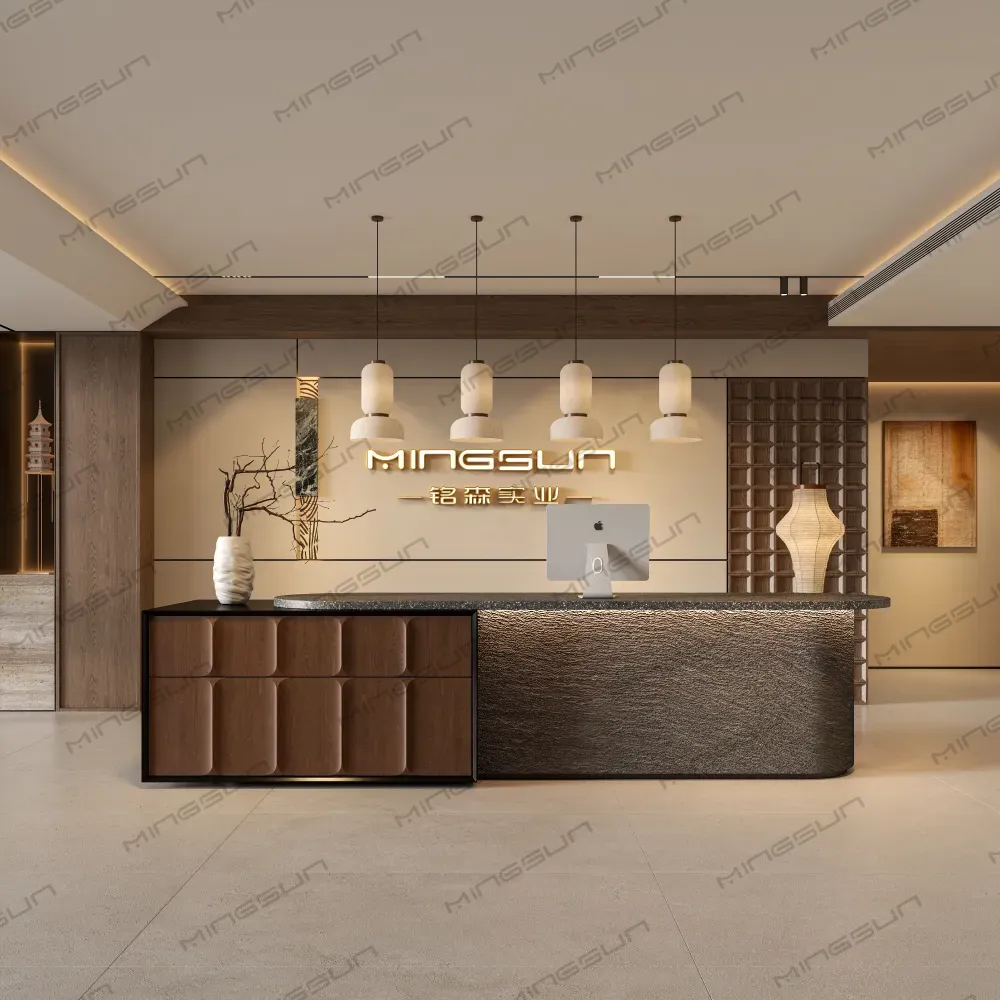
Luxury Textured Stone & Walnut Veneer Reception Desk with 3D Relief Detailing
Create a sophisticated, organic atmosphere in your hotel lobby or boutique showroom with this avant-garde reception desk. Combining the raw beauty of nature with refined craftsmanship, this desk features a striking contrast between materials. The main body showcases a dark, hammered-texture stone facade that offers a tactile, rugged elegance, topped with a polished grey terrazzo-style counter. This is seamlessly integrated with a rich walnut wood storage module, defined by its unique 3D pill-shaped relief carving on the drawer fronts. Soft, warm LED lighting concealed beneath the countertop edge highlights the textured stone surface, adding depth and warmth to the reception area.
Crafted by MINGSUN, a specialist in bespoke hospitality furniture, this piece is designed to be the focal point of high-end interiors. From our Guangzhou manufacturing hub, we deliver precision-engineered furniture to hotels worldwide. We offer a seamless experience from design customization to DDP global delivery and video-guided installation.
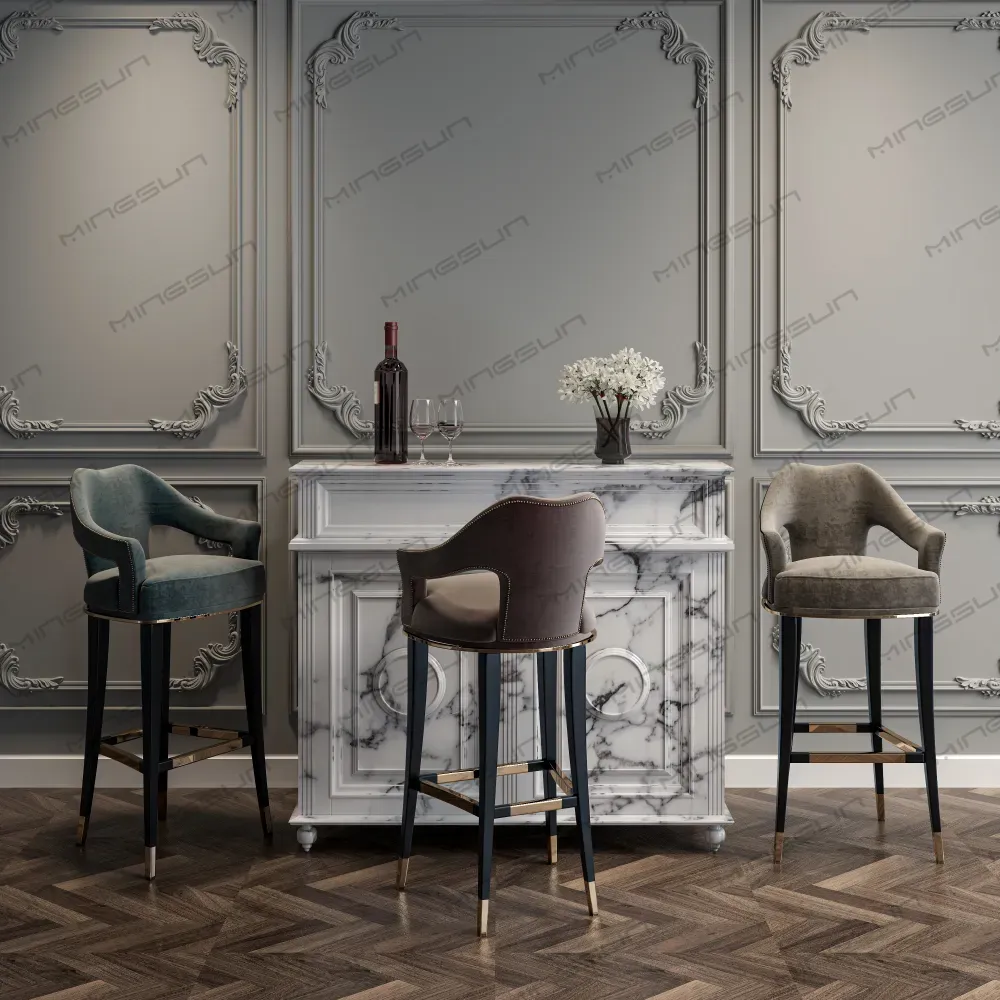
Luxury Velvet Bar Stool with Armrests & Brushed Brass Accents for Hotel Lounges and Bars
Elevate your hotel’s bar or lounge area with this opulent bar stool, where plush comfort meets sophisticated design. Upholstered in rich, deep-brown velvet, its sculptural back and integrated armrests offer ergonomic support, while the slender black metal frame is accented with polished brass at the feet and crossbars for a touch of timeless elegance. Perfect for high-end hospitality spaces, this stool combines refined aesthetics with durable construction, inviting guests to linger in style at your counter or cocktail station.
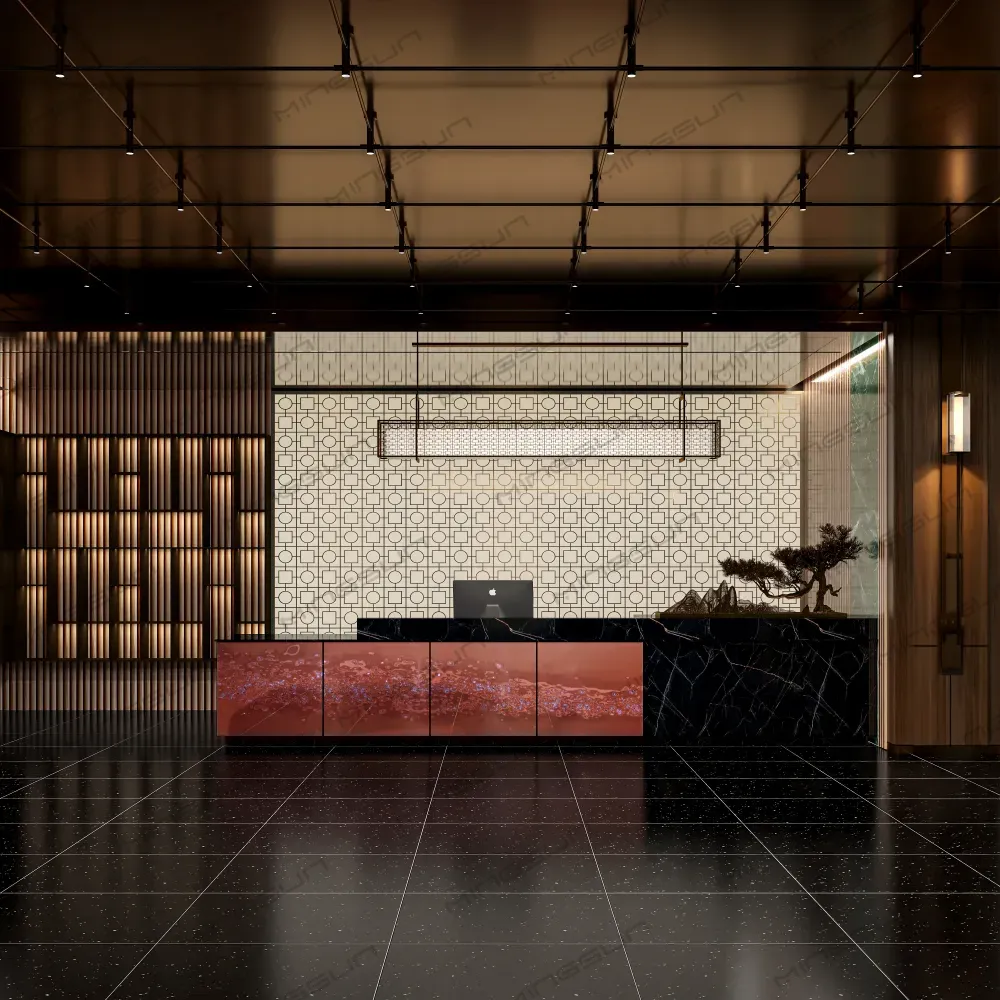
Luxury Reception Desk with Black Marble Top & Illuminated Copper-Resin Front Panels
Make a bold, unforgettable statement at your hotel’s entrance with this avant-garde reception desk. Its sleek black marble top exudes timeless sophistication, while the front facade features mesmerizing, internally lit copper-resin panels that glow with a warm, amber radiance, creating a dynamic visual centerpiece. Designed for both form and function, the unit offers ample concealed storage behind seamless doors and integrates a dedicated staff workstation with cable management. This is more than a check-in counter—it’s a sculptural installation that defines the luxury and artistry of your brand.
Get more industry insights
Looking for the right solution? Fill out the form and get a free quote.
Our experts will respond quickly with personalized options that fit your needs.
MINGSUN is a design-driven hotel furniture manufacturer offering OEM/ODM services, custom solutions, and global project support.
Built for wholesalers. Trusted by global buyers. Delivered with confidence.
Phone:
E-mail:
Follow us ——
 Scan QR Code
MINGSUN
MINGSUN
MINGSUN
MINGSUN
MS Custom Hotel Furniture Supplier