


what is a standard hotel room size | MINGSUN Guide
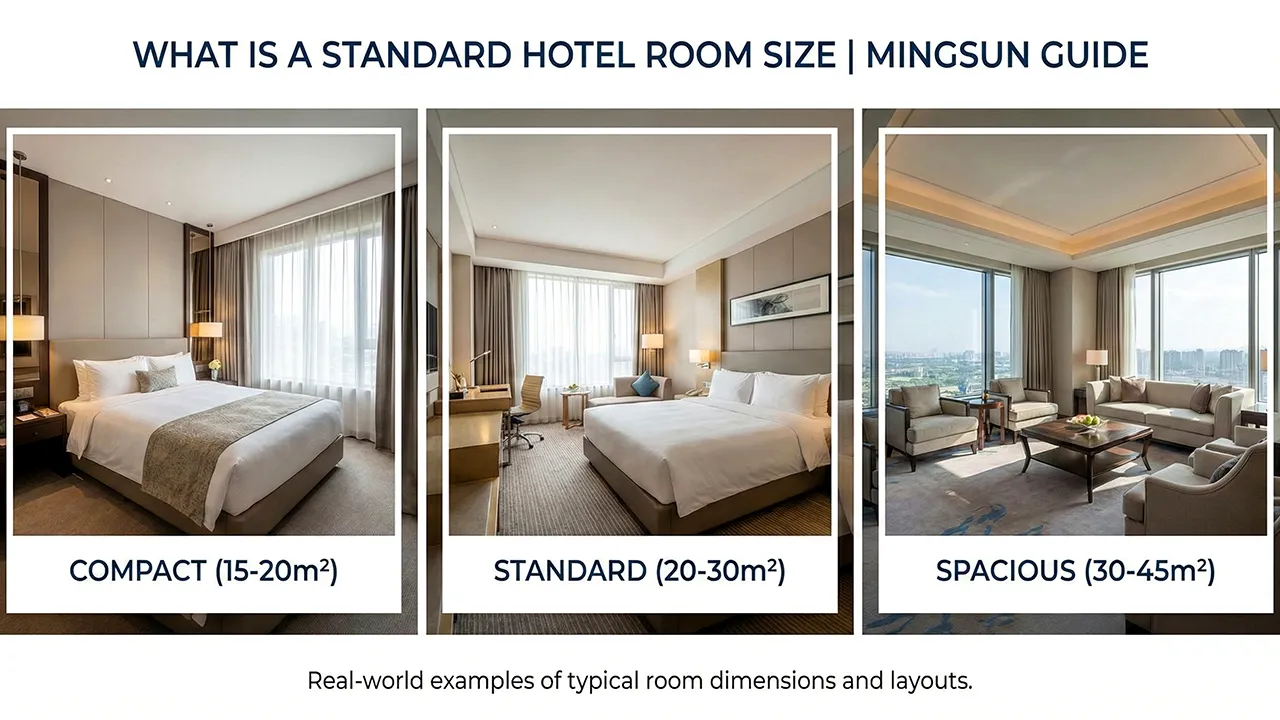
- What is a Standard Hotel Room Size?
- 1. Introduction: Defining "Standard"
- 2. Room Size Variations by Hotel Class
- Budget / Economy (1-2 Star)
- Mid-Scale / Business (3-4 Star)
- Luxury / Upscale (5 Star)
- 3. Room Type and Size Impact
- 4. International Differences
- 5. Impact on Hotel Design and Operations
- The "60-Centimeter Rule"
- Cleaning Efficiency
- Frequently Asked Questions: Standard Hotel Room Size
- What is considered a standard hotel room size?
- Does room size include the bathroom and closet?
- How does bed configuration affect room size requirements?
- Do hotel room sizes differ by region?
- How does room size impact furniture selection?
What is a Standard Hotel Room Size?
A MINGSUN Guide for Hoteliers and Interior Designers
When planning a new hotel project or renovation, one of the most critical questions dictates your entire budget, layout, and furniture procurement strategy: What is the standard hotel room size?
There is no single global answer. However, understanding the industry averages is essential for ensuring your guest experience meets expectations while maximizing your revenue per square meter.
1. Introduction: Defining "Standard"
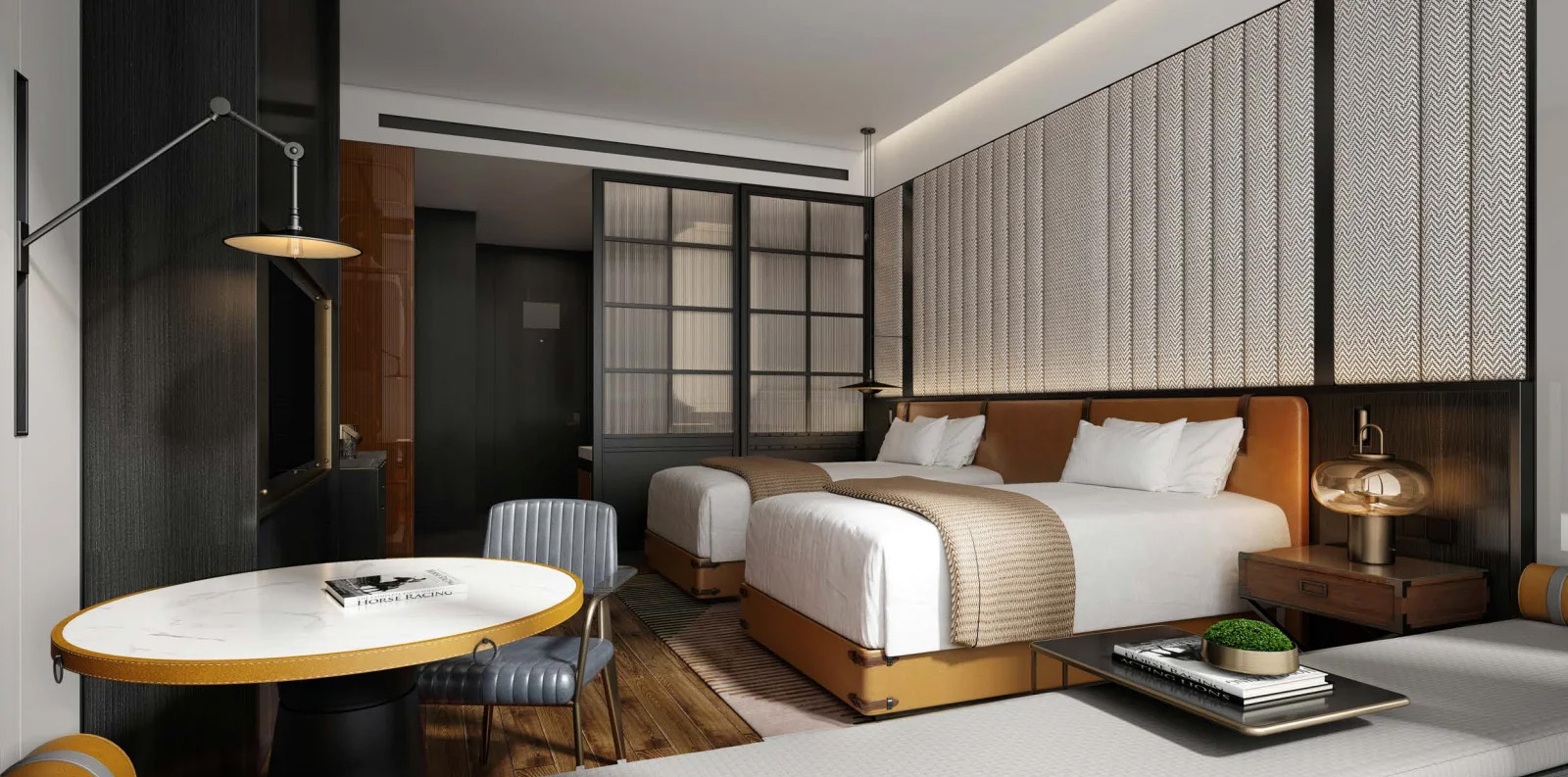
In the hospitality industry, a "standard" room typically refers to the entry-level category—often labeled as a King Standard or Double Standard. When architects and hoteliers discuss room size, they are referring to the Gross Area.
This measurement includes not just the sleeping area, but also the entryway (vestibule), the bathroom, and the closet space. It is a common misconception to measure only the carpeted living area.
2. Room Size Variations by Hotel Class
The star rating of a hotel is the primary driver of room size. Guests paying premium rates expect premium space.
Budget / Economy (1-2 Star)
Average Size: 14–23 m² (150–250 sq ft)
In this category, efficiency is everything. Furniture must be compact and often multi-functional. We recommend open-concept wardrobes (metal racks instead of bulky cabinets) and wall-mounted desks to keep the floor area visible, which makes the room feel larger.
Mid-Scale / Business (3-4 Star)
Average Size: 26–33 m² (275–350 sq ft)
This is the most common standard for business travelers. The room must accommodate a dedicated work desk, a luggage bench, and a standard closet. Comfort is prioritized, and there is usually space for a lounge chair.
Luxury / Upscale (5 Star)
Average Size: >37 m² (400–500+ sq ft)
Luxury is defined by excess space. These rooms often feature separate seating areas with sofas, large vanity units with dual sinks, and walk-in closet systems. Furniture here acts as a statement piece rather than just a functional utility.
3. Room Type and Size Impact
The bed configuration significantly alters the floor plan and the furniture layout.
- King Room: Typically requires about 30m². The single bed placement allows for wider nightstands (600mm+) and more generous circulation paths.
- Double/Queen Room: To accommodate two beds, the room often needs to be slightly wider (32-35m²). Nightstands often shrink to a single shared central unit to save space.
- ADA / Accessible Rooms: These rooms are strictly regulated and are often larger to accommodate a 1.5m (60-inch) wheelchair turning radius. Furniture must be designed with specific height clearances (e.g., desks at min 685mm height).
4. International Differences
If you are developing a property for international markets, be aware of regional expectations:
- North America (USA/Canada): "Bigger is better." The standard is roughly 30m² (325 sq ft). Guests expect large King beds and full-size dressers.
- Europe: Due to historical building constraints, rooms are smaller, averaging 17–20 m² (180–215 sq ft). Smart, space-saving furniture is mandatory.
- Asia: The market is polarized. City centers like Tokyo or Hong Kong feature micro-rooms (<15m²), while luxury hotels in mainland China (Guangzhou, Shanghai) often exceed US standards with lavish room dimensions.
-
5. Impact on Hotel Design and Operations
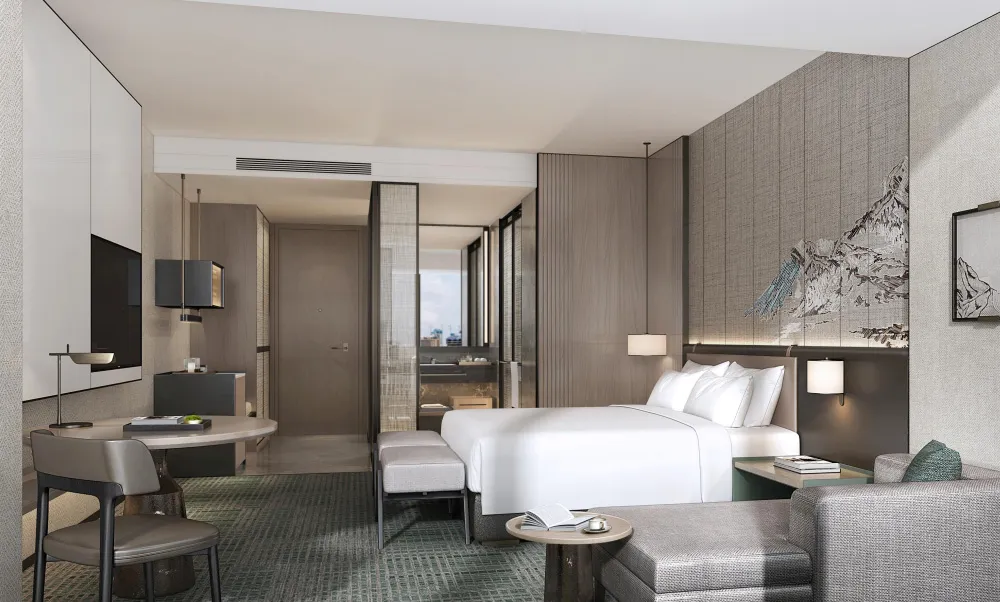
Room size doesn't just affect construction costs; it dictates your FF&E (Furniture, Fixtures, and Equipment) strategy.
The "60-Centimeter Rule"
At Mingsun, we advise clients to maintain a minimum clearance of 60cm between the foot of the bed and the TV unit. If your room depth is shallow, we recommend slim-profile TV panels (depth <400mm) instead of deep dresser units.
Cleaning Efficiency
Room size impacts housekeeping speed. Small rooms benefit from integrated furniture (e.g., headboards connected to nightstands) to reduce dust traps. Larger rooms with freestanding heavy furniture require more time to vacuum and maintain.
Frequently Asked Questions: Standard Hotel Room Size
What is considered a standard hotel room size?
There’s no universal standard, but industry averages vary by hotel class: Budget (14–23 m²), Mid-Scale (26–33 m²), and Luxury (37+ m²). The “standard room” typically refers to the entry-level category and includes the sleeping area, bathroom, closet, and vestibule in its gross area measurement.
Does room size include the bathroom and closet?
Yes. In hospitality planning, “room size” refers to the Gross Area—encompassing the sleeping zone, entryway, bathroom, and built-in closet. Measuring only the carpeted living area is a common misconception that can lead to poor furniture fit.
How does bed configuration affect room size requirements?
A King room typically needs around 30 m² for comfortable circulation, while Double/Queen rooms often require 32–35 m² to accommodate two beds. Accessible (ADA) rooms must be larger to allow for a 1.5m wheelchair turning radius and specific furniture clearances.
Do hotel room sizes differ by region?
Yes. North American guests expect ~30 m² rooms with large beds and full dressers. European rooms are smaller (17–20 m²) due to historic building constraints. In Asia, city centers like Tokyo feature micro-rooms (<15 m²), while luxury properties in mainland China often exceed global standards.
How does room size impact furniture selection?
Furniture must scale with the space. At Mingsun, we apply the “60-Centimeter Rule”—maintaining at least 60cm clearance between bed and TV unit. In compact rooms, we recommend wall-mounted desks, slim-profile casegoods, and integrated designs to preserve flow and ease of cleaning.

Fixed vs. Loose Furniture: Which Is Best for Your Hotel Design?

Designing Dream Stays: Your Complete Guide to Hotel Bedroom Furniture

How High Does a Reception Desk Have to Be to Be Accessible?
Can I Customise the Hospitality Furniture? Essential Guide to Bespoke Design | Insights by MINGSUN
Materials, Craftsmanship & Quality Control
Is the furniture suitable for high-frequency hotel use?
About Mingsun – Company Background
Who are Mingsun’s main clients?
Product Scope & Application Areas
Can you provide a full hotel furniture package?
What types of hotel furniture can Mingsun provide?
After-Sales Service & Long-Term Cooperation
Do you provide after-sales support?
Make an appointment with us today

Modern Hotel Room Nightstand with Integrated Power & Open Shelf
Enhance your guest room’s functionality and style with this sleek, modern nightstand. Its warm wood grain finish and minimalist design create a sophisticated, contemporary aesthetic, while the integrated power outlet and open shelf offer practical convenience for guests. Designed for luxury hotels and serviced apartments, it provides both visual appeal and essential utility. As a direct Guangzhou manufacturer, we deliver custom, precision-crafted furniture that elevates the guest experience.

Luxury Hotel Suite Furniture Collection: Vanity, Desk, Wardrobe & Chaise Lounge
Curate a sophisticated and cohesive guest experience with this curated collection of luxury hotel suite furniture. Featuring a sleek vanity with marble top, a stylish desk with leather accents, a spacious wardrobe with textured panels, and a plush chaise lounge, this ensemble is designed for comfort, durability, and high-impact visual appeal. The pieces are engineered to seamlessly integrate into any modern luxury hospitality space, from five-star suites to boutique residences. As a direct Guangzhou manufacturer, we offer fully customizable solutions to match your brand’s unique identity and spatial requirements.
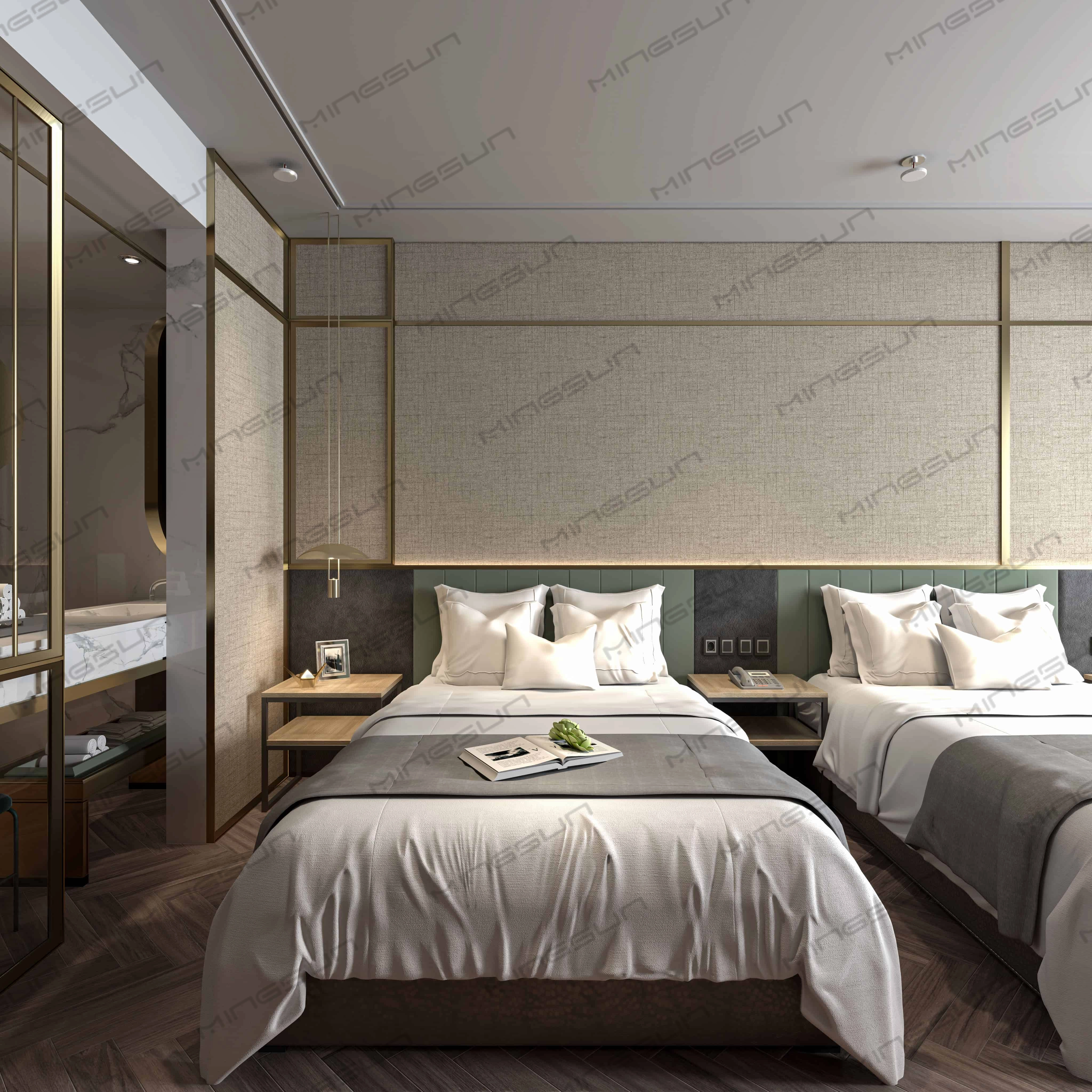
Mingsun Luxury Custom Hotel Guestroom Furniture Collection – Modern Neo-Luxury Full-Suite Solutions
Based in Guangzhou, China, Mingsun specializes in delivering bespoke hotel furniture design and manufacturing solutions for premium hotels, boutique resorts, and luxury residences worldwide.
This guestroom collection blends modern aesthetics with subtle oriental inspirations, featuring dark wood grains, sleek metal trims, soft green accents, and smart lighting systems. From beds, sofa banquettes, and minibars to bathroom partitions and walk-in wardrobes, we provide a comprehensive one-stop service — from concept design and 3D rendering to global shipping and video-guided installation.
Our mission is to transform your hospitality project into a signature brand experience, combining functionality, artistry, and timeless elegance.
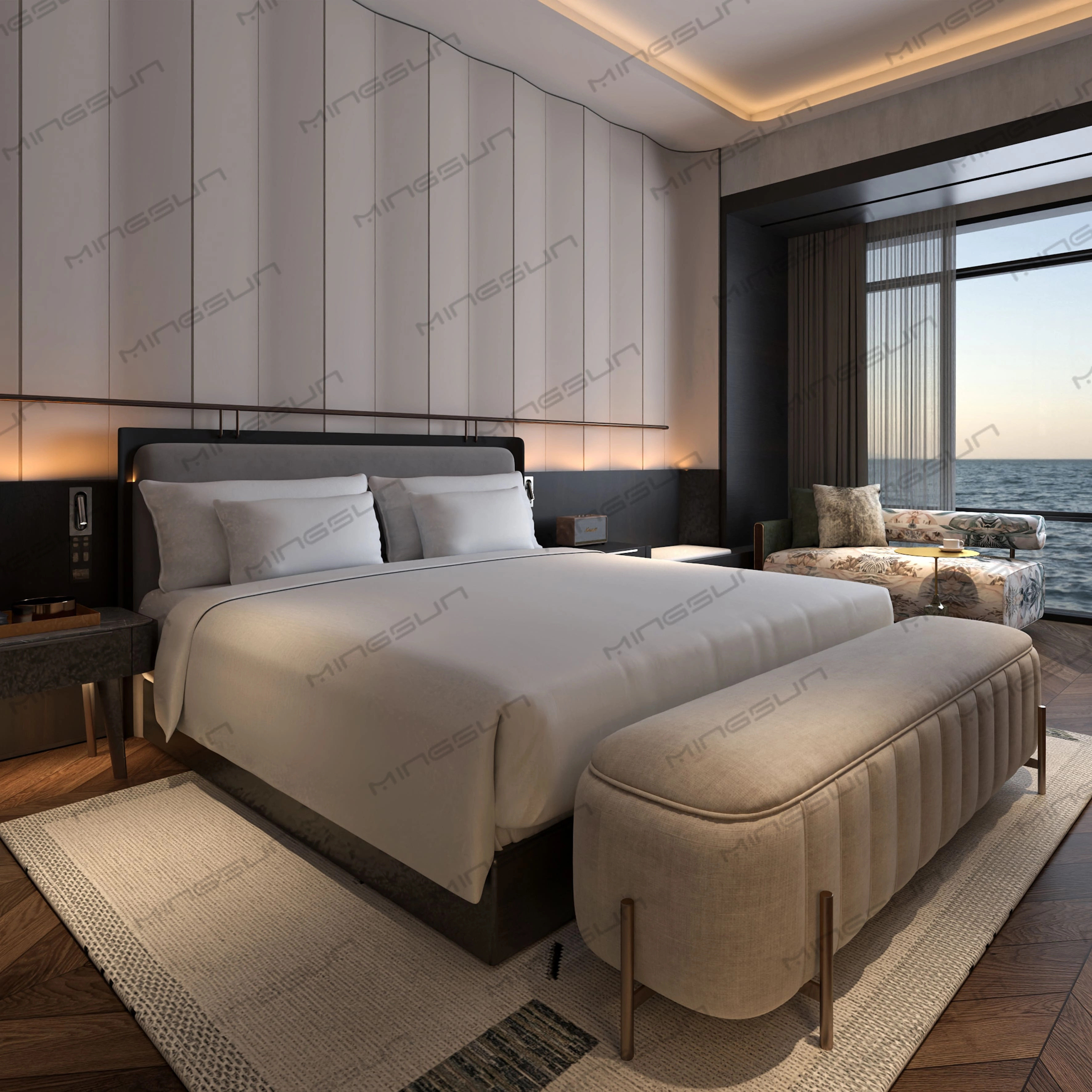
Mingsun Modern Luxury Hotel Room Furniture Series
Elevate your hospitality experience with Mingsun’s Modern Luxury Hotel Room Collection, a thoughtfully designed, high-end furniture system tailored for boutique hotels, luxury resorts, and premium accommodations.
This design blends minimalist aesthetics, organic textures, and smart technology to create a serene yet sophisticated guest environment.
Featuring a sculptural bed frame, integrated ambient lighting, custom nightstands, and an elegant work station, this suite redefines comfort and style.
With attention to every detail—from the herringbone wood flooring to the artful partition between bedroom and bathroom—this collection delivers a bespoke, immersive stay that guests will remember.
Get more industry insights
Looking for the right solution? Fill out the form and get a free quote.
Our experts will respond quickly with personalized options that fit your needs.
MINGSUN is a design-driven hotel furniture manufacturer offering OEM/ODM services, custom solutions, and global project support.
Built for wholesalers. Trusted by global buyers. Delivered with confidence.
Phone:
E-mail:
Follow us ——
 Scan QR Code
MINGSUN
MINGSUN
MINGSUN
MINGSUN
MS Custom Hotel Furniture Supplier