

OEM vs ODM: Working with Chinese Hotel Furniture Makers
- OEM vs ODM: Working with Chinese Hotel Furniture Makers
- Introduction — What users searching “OEM vs ODM: Working with Chinese Hotel Furniture Makers” want
- Why work with Chinese hotel furniture makers — and strategic benefits
- Defining OEM and ODM — clear definitions for hotel furniture procurement
- Side-by-side comparison: OEM vs ODM for hotel furniture
- Quality control and certifications — reduce risk when sourcing hotel furniture from China
- Cost, lead time and logistics — what procurement teams must plan
- How to decide: OEM or ODM for your hotel project
- Working process with MINGSUN — practical steps for hotel procurement
- Common pitfalls and how to avoid them when working with Chinese manufacturers
- Real-world checklist before you sign with a hotel furniture maker
- Conclusion — choosing the best path for your hotel furniture procurement
- Frequently Asked Questions
OEM vs ODM: Working with Chinese Hotel Furniture Makers
Introduction — What users searching “OEM vs ODM: Working with Chinese Hotel Furniture Makers” want
When a hotel project team searches OEM vs ODM: Working with Chinese Hotel Furniture Makers, they want practical, procurement-focused advice: which model reduces risk, shortens lead time, protects IP, and controls cost while delivering high-quality hotel furniture. This guide explains both models, compares them for hospitality projects, and shows how to work successfully with a Chinese manufacturer like MINGSUN, a High Quality hotel furniture supplier based in Guangzhou offering one-stop custom solutions.
Why work with Chinese hotel furniture makers — and strategic benefits
Many hotel chains, owners, and procurement managers choose Chinese hotel furniture makers for competitive pricing, manufacturing scale, and integrated supply chains. China remains the world’s largest furniture manufacturer and exporter, and manufacturing hubs such as Guangzhou combine material suppliers, skilled labor, and logistics advantages. For commercial projects, working with a reliable Chinese partner can reduce unit cost, simplify multi-SKU orders, and speed delivery—especially if the partner provides design, prototyping, and global shipping solutions.
Defining OEM and ODM — clear definitions for hotel furniture procurement
OEM (Original Equipment Manufacturer): You supply detailed designs, specifications, and brand requirements; the Chinese furniture maker manufactures to your drawings and quality standards. This model gives you maximum design control—ideal for owners who want a unique guestroom aesthetic or to protect a brand design.ODM (Original Design Manufacturer): The supplier provides existing designs and may adapt them to your needs. ODM is faster and often cheaper because tooling and design work are already done. It's suitable for budget-conscious projects or repeatable concepts across multiple properties.
Side-by-side comparison: OEM vs ODM for hotel furniture
Below is a practical comparison tailored to hotel furniture procurement, helping you weigh trade-offs like IP, customization, MOQ, and cost.
| Feature | OEM (Custom hotel furniture) | ODM (Adapted existing designs) |
|---|---|---|
| Definition | Manufacture to buyer’s detailed drawings/specs | Supplier provides own designs, adapted to buyer |
| Design control | High — buyer owns design decisions | Medium — customization limited to finishes/size |
| IP ownership | Typically owned by buyer (with agreement) | Often retained by manufacturer unless contracted |
| Customization level | Very high — unique guestroom items | Moderate — efficient for repeatable ranges |
| Typical MOQ | Varies by SKU and complexity; project-based | Lower — using existing tooling and parts |
| Lead time | Longer — design, tooling, samples | Shorter — fewer development steps |
| Cost | Higher upfront (design + tooling); competitive unit costs at scale | Lower upfront; predictable unit cost |
| Best for | Branded hotels, signature pieces, high-end custom projects | Standard guestrooms, quick rollouts, prototype testing |
Quality control and certifications — reduce risk when sourcing hotel furniture from China
Quality is decisive in hospitality. For working with Chinese hotel furniture manufacturers, require clear QC steps: material certificates (e.g., FSC for wood where requested), fire-retardant treatments for upholstery in line with local regulations, and factory quality systems like ISO 9001. Ask for third-party inspections (pre-shipment, during production), test reports for durability (e.g., EN 15373 for strength and durability of domestic contract seating), and documented finishing standards. MINGSUN combines in-house quality control and third-party inspections to ensure hotel-ready durability.
Cost, lead time and logistics — what procurement teams must plan
For OEM projects you should budget time and cost for design, samples, and tooling. Typical process milestones include: concept (1–2 weeks), detailed design (2–4 weeks), prototyping (2–6 weeks), and production (depending on scale). ODM projects can cut development time because designs exist and can be adapted quickly. Factor shipping lead times from Guangzhou ports and customs handling into delivery schedules. Payment terms commonly used are 30% deposit, 40% on production milestones, and 30% balance before shipment—negotiate terms to suit your cashflow and risk appetite.
How to decide: OEM or ODM for your hotel project
Choose OEM when brand differentiation, IP control, or unique ergonomics matter. Choose ODM when speed, lower development cost, or smaller budgets are the priority. Hybrid approaches also work: start with an ODM range for interim deliveries and move to OEM for signature items—this balances cost, speed, and branding needs. Evaluate suppliers on manufacturing capacity, past hospitality projects, references, and their willingness to sign clear IP and quality agreements.
Working process with MINGSUN — practical steps for hotel procurement
MINGSUN is positioned to support both OEM and ODM projects. Typical engagement steps include:
- Project kick-off: brief, budget, room set and styles.
- Concept & design: MINGSUN’s in-house design team develops drawings or adapts ODM ranges.
- Sampling & approval: physical samples for client review and testing.
- Production & quality control: full-scale production in MINGSUN’s 10,000 ㎡ factory with over 200 skilled workers and multiple QC checkpoints.
- Packing & logistics: export packing tested for international shipping and coordination of sea/air freight.
Common pitfalls and how to avoid them when working with Chinese manufacturers
Common issues include unclear specifications, weak IP protection, and poor communication. Mitigation steps: provide clear technical drawings, request nondisclosure and IP assignment clauses, use stage-gate approvals (design sign-off, pre-production sample approval), and schedule regular project calls with visual progress updates. Insist on material samples and lab test reports for fire safety and durability before mass production.
Real-world checklist before you sign with a hotel furniture maker
Use this quick procurement checklist: verify factory capacity and references; review sample quality; require clear lead times and penalties for late delivery in the contract; confirm warranties and after-sales policy; and agree payment terms aligned to production milestones. Including these items reduces surprises and protects project timelines.
Conclusion — choosing the best path for your hotel furniture procurement
OEM vs ODM decisions depend on priorities: IP and unique design call for OEM; speed and cost-efficiency often favor ODM. Partnering with an experienced Chinese hotel furniture maker like MINGSUN—who offers in-house design, a 10,000 ㎡ factory, and over 200 skilled workers—can combine craftsmanship, quality control, and global logistics to meet your hospitality project goals. Use clear contracts, stage approvals, and third-party inspections to protect quality and timelines, and choose the model that aligns with your hotel’s brand and rollout schedule.
Frequently Asked Questions
What is the main difference between OEM and ODM for hotel furniture?OEM means you provide the design and the factory manufactures to your specs; ODM means the factory provides a design that you adapt. OEM offers more design control; ODM is faster and often cheaper.
How long does a typical hotel furniture OEM project take?Timeline varies by scope. Concept to production for fully custom OEM items typically takes 8–16 weeks (design, samples, tooling, production), but project scale and approvals can extend this. Plan buffer time for approvals and shipping.
Will a Chinese supplier protect my intellectual property?Yes, reputable suppliers will sign NDAs and IP clauses. For stronger protection, include design ownership, confidentiality, and non-compete clauses in contracts and manage critical elements centrally (e.g., source proprietary components yourself).
What quality standards should I request for hotel furniture?Request supplier quality systems (ISO 9001), fire-safety compliance for upholstery per local regulations, durability tests (e.g., EN 15373 or applicable local standards), and material certificates (e.g., FSC for timber if required).
Can I mix OEM and ODM items in one project?Yes. Many hotel projects use ODM for standard guestroom ranges and OEM for signature pieces or custom lobby furniture. This hybrid approach balances cost, lead time, and branding.
Do Chinese suppliers handle global logistics and installation?Many experienced suppliers, including MINGSUN, coordinate export packing, sea/air freight, and can recommend local fit-out partners or provide installation instructions. Confirm scope in the contract.
Sources
- China National Furniture Association (industry overview and manufacturing concentration)
- ISO (ISO 9001 Quality Management standard information)
- EN Standards for furniture durability and safety (e.g., EN 15373)
- World Trade statistical resources and UN Comtrade (China’s furniture export leadership and trade data)
- Company data: MINGSUN internal profile (factory size: 10,000 ㎡; workforce: over 200 skilled workers)
Budget-Friendly Custom Display Furniture Options for Hotels
Design Tips for Custom Hotel Furniture That Converts
Smart TV Cabinet Solutions for Modern Hotel Rooms
Small Lobby? Strategies for Luxury Look in Compact Spaces
Product Scope & Application Areas
Can you provide a full hotel furniture package?
Materials, Craftsmanship & Quality Control
How are quality issues handled?
After-Sales Service & Long-Term Cooperation
Is long-term cooperation or repeat ordering supported?
Customization Capability & Design Support
Does Mingsun provide design services?
About Mingsun – Company Background
Does Mingsun have experience with overseas projects?
Make an appointment with us today
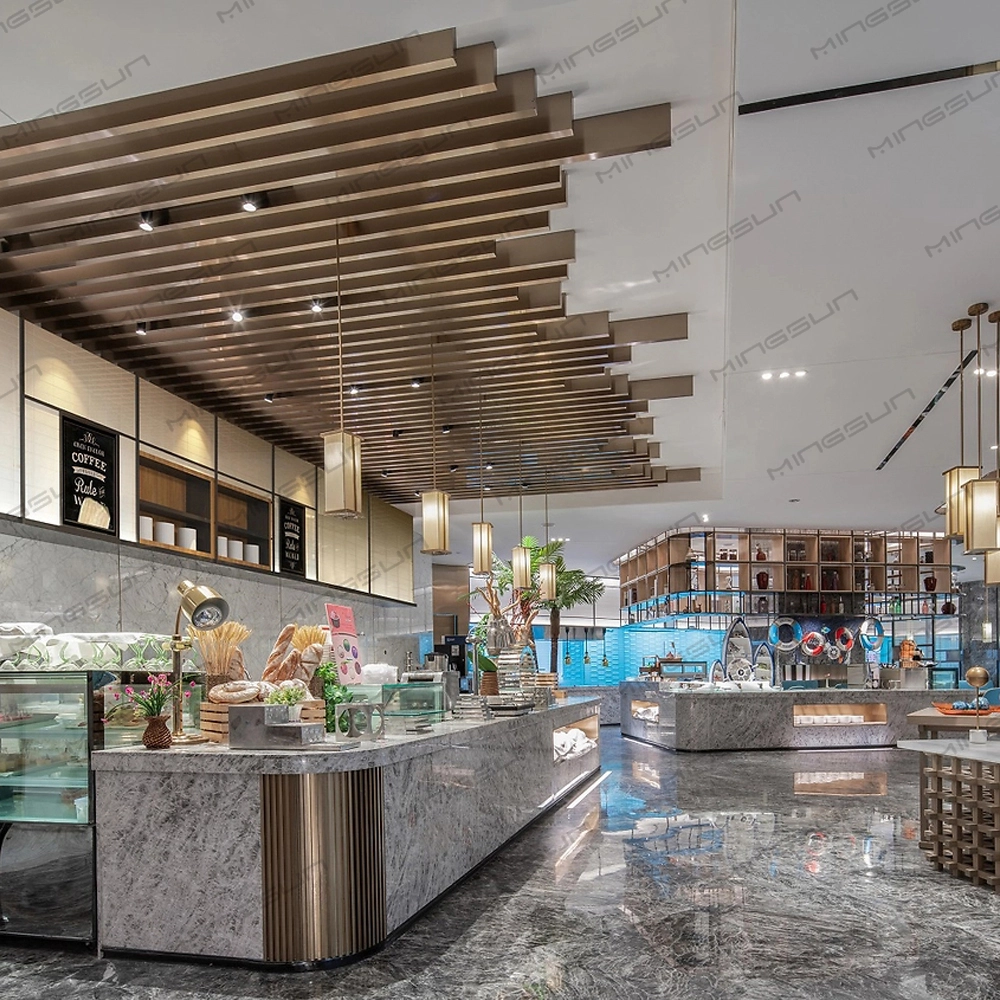
Modern Hotel Dining Furniture Set-Custom Designed Wooden Tables, Upholstered Chairs & Banquette Seating
Create a lasting impression with our custom-designed hotel dining furniture set, crafted for modern luxury hotels and upscale restaurants.
Featuring elegant wooden tables, ergonomic blue-upholstered chairs, and built-in banquette seating, this collection blends comfort, style, and durability.
As a leading manufacturer in Guangzhou, we deliver end-to-end solutions - from concept design and 3D visualization to production and global shipping - all at factory-direct prices.
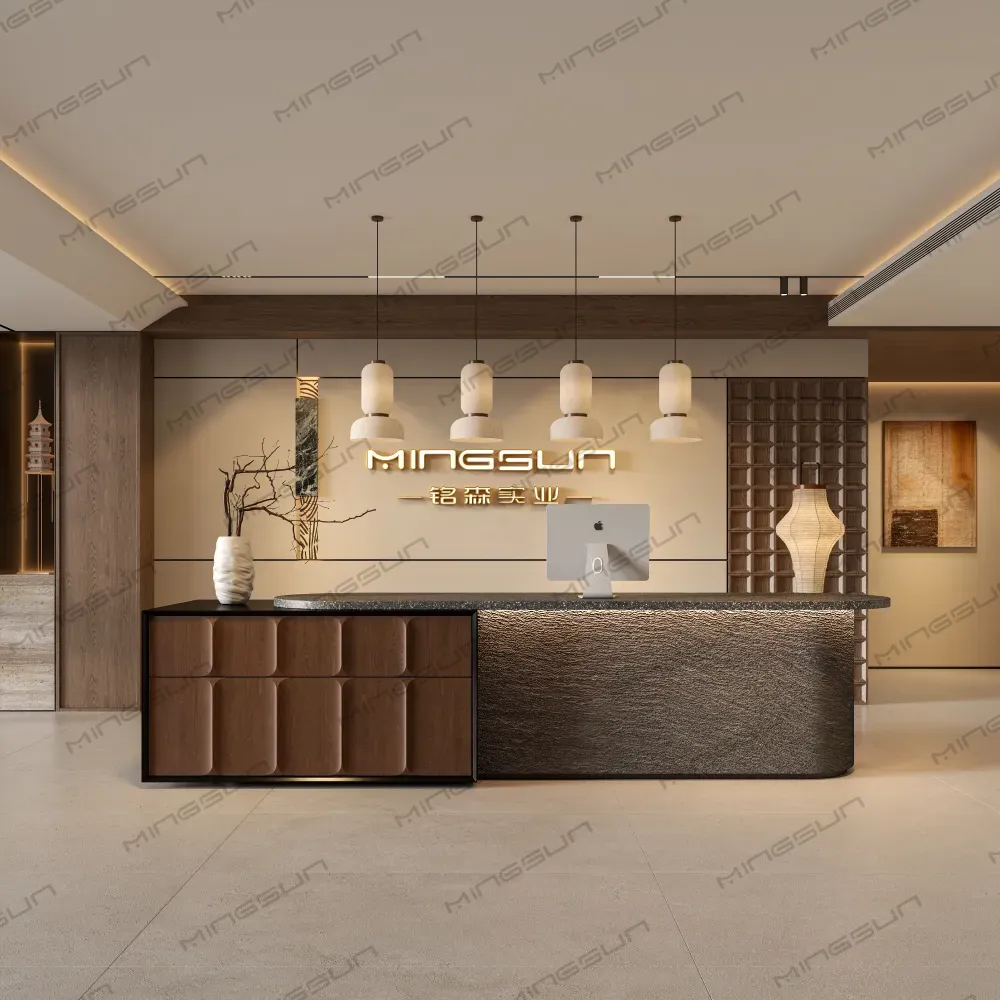
Luxury Textured Stone & Walnut Veneer Reception Desk with 3D Relief Detailing
Create a sophisticated, organic atmosphere in your hotel lobby or boutique showroom with this avant-garde reception desk. Combining the raw beauty of nature with refined craftsmanship, this desk features a striking contrast between materials. The main body showcases a dark, hammered-texture stone facade that offers a tactile, rugged elegance, topped with a polished grey terrazzo-style counter. This is seamlessly integrated with a rich walnut wood storage module, defined by its unique 3D pill-shaped relief carving on the drawer fronts. Soft, warm LED lighting concealed beneath the countertop edge highlights the textured stone surface, adding depth and warmth to the reception area.
Crafted by MINGSUN, a specialist in bespoke hospitality furniture, this piece is designed to be the focal point of high-end interiors. From our Guangzhou manufacturing hub, we deliver precision-engineered furniture to hotels worldwide. We offer a seamless experience from design customization to DDP global delivery and video-guided installation.
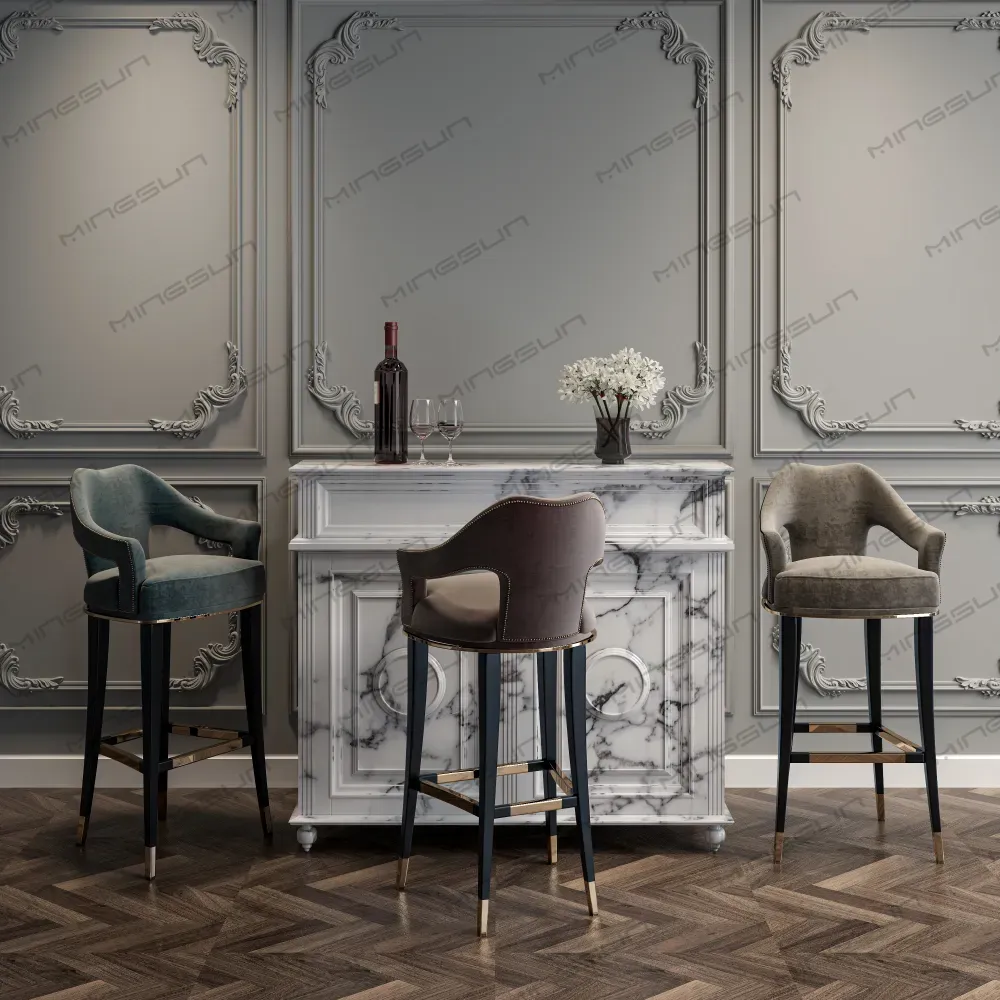
Luxury Velvet Bar Stool with Armrests & Brushed Brass Accents for Hotel Lounges and Bars
Elevate your hotel’s bar or lounge area with this opulent bar stool, where plush comfort meets sophisticated design. Upholstered in rich, deep-brown velvet, its sculptural back and integrated armrests offer ergonomic support, while the slender black metal frame is accented with polished brass at the feet and crossbars for a touch of timeless elegance. Perfect for high-end hospitality spaces, this stool combines refined aesthetics with durable construction, inviting guests to linger in style at your counter or cocktail station.
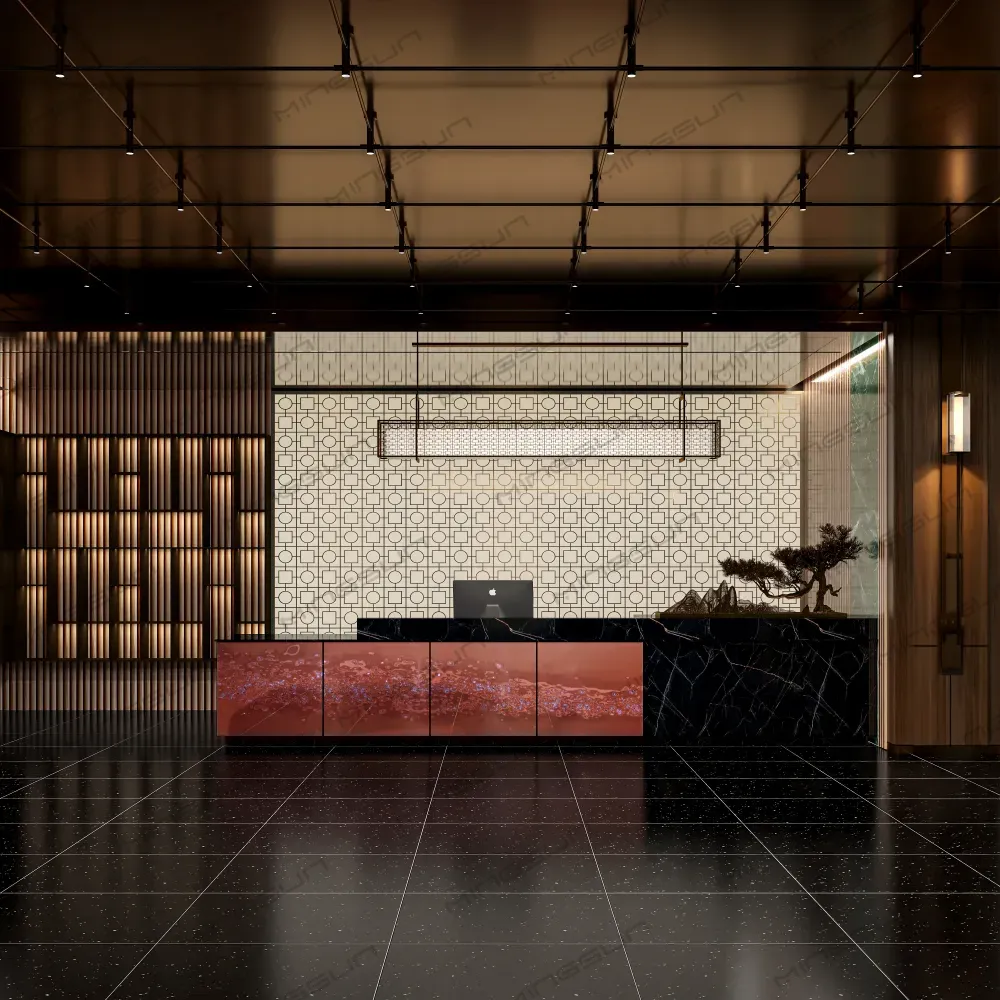
Luxury Reception Desk with Black Marble Top & Illuminated Copper-Resin Front Panels
Make a bold, unforgettable statement at your hotel’s entrance with this avant-garde reception desk. Its sleek black marble top exudes timeless sophistication, while the front facade features mesmerizing, internally lit copper-resin panels that glow with a warm, amber radiance, creating a dynamic visual centerpiece. Designed for both form and function, the unit offers ample concealed storage behind seamless doors and integrates a dedicated staff workstation with cable management. This is more than a check-in counter—it’s a sculptural installation that defines the luxury and artistry of your brand.
Get more industry insights
Looking for the right solution? Fill out the form and get a free quote.
Our experts will respond quickly with personalized options that fit your needs.
MINGSUN is a design-driven hotel furniture manufacturer offering OEM/ODM services, custom solutions, and global project support.
Built for wholesalers. Trusted by global buyers. Delivered with confidence.
Phone:
E-mail:
Follow us ——
 Scan QR Code
MINGSUN
MINGSUN
MINGSUN
MINGSUN
MS Custom Hotel Furniture Supplier