


Luxury Coffee Table Designs to Elevate Hotel Lobbies
- Why the Coffee Table Choice Matters in Hotel Lobbies
- First impressions and guest perception
- Operational impact: durability, safety, and maintenance
- Brand storytelling through furniture
- Design Styles and How to Choose One
- Classic luxury: marble, brass, and rich woods
- Contemporary minimalism: clean lines and mixed materials
- Local craft and artisanal details
- Materials, Construction & Maintenance (Performance Factors)
- Material trade-offs: aesthetics vs. durability
- Construction details that extend lifespan
- Cleaning and housekeeping guidance
- Scale, Layout and Human Factors
- Proper sizing for seating groups
- Multiple tables vs. single statement piece
- Safety and accessibility considerations
- Procurement, Customization and Supplier Selection
- Specifying for long-term value
- Comparing suppliers — what I evaluate
- Why I often recommend working with a one-stop manufacturer
- MINGSUN: Custom Hotel Furniture Partner (Capabilities & Advantage)
- Case Examples and Practical Recommendations
- Scenario A: Luxury urban hotel lobby
- Scenario B: Boutique resort with local craft focus
- Scenario C: Flexible multi-use public area
- References and Standards
- FAQ
- 1. What are the ideal dimensions for a hotel coffee table?
- 2. Which materials are best for high-traffic lobbies?
- 3. Should hotels buy custom or standard coffee tables?
- 4. How do I ensure the coffee table complies with safety and accessibility standards?
- 5. What questions should I ask potential manufacturers?
- 6. How often should coffee tables in lobbies be maintained or refinished?
I have worked with international hotel brands and independent operators to specify furniture that performs under heavy use while delivering a distinct design signature. In hotel lobbies, the coffee table is rarely just a functional surface: it anchors seating groups, defines circulation, and communicates brand values. Choosing the best coffee table designs hotel projects hinges on proportion, material performance, maintenance strategy and how the piece supports guest behavior.
Why the Coffee Table Choice Matters in Hotel Lobbies
First impressions and guest perception
Lobby furnishings form part of a guest's first sensory encounter with a property. Studies in hospitality design show that attractive, well-proportioned public areas increase perceived value and encourage longer dwell times; a carefully selected coffee table contributes to that perception by reinforcing style and usability. For context on the function of lobbies in public buildings, see the overview on lobbies and their roles: Wikipedia: Lobby (room).
Operational impact: durability, safety, and maintenance
A coffee table in a hotel is subject to spills, luggage, heavy books, and continuous guest interaction. Choosing materials and construction that resist abrasion, staining, and tipping directly reduces life-cycle costs and protects brand reputation. Aligning product selection with a property's operational capacity—housekeeping frequency, on-site repair, and replacement budgets—turns an aesthetic choice into an operational advantage.
Brand storytelling through furniture
When I specify pieces, I look for opportunities to communicate a hotel's story—local craft, sustainability claims, or luxury finishes. The coffee table can be a subtle signature (custom inlay, curated materials) or a bold statement (sculptural metalwork). This is why I always include a materials board and usability study with our selections.
Design Styles and How to Choose One
Classic luxury: marble, brass, and rich woods
Classic luxury tables use dense natural materials—marble tops, walnut or mahogany bases, and brass accents. They read as timeless and durable. I recommend honed or sealed stone finishes to reduce visible wear and choose solid-wood bases with reinforced joinery for high-traffic lobbies.
Contemporary minimalism: clean lines and mixed materials
Minimal designs often combine engineered stone or composite surfaces with thin metal frames—appealing to modern brands for their light visual weight and flexibility. For a hotel aiming for contemporary luxury, the best coffee table designs hotel-wide will balance slender silhouettes with robust assemblies to avoid wobble and ensure longevity.
Local craft and artisanal details
Integrating locally made pieces or referencing regional materials (e.g., local stone, woven rattan, hand-finished metalwork) elevates the guest experience and supports a narrative of authenticity. I typically work with in-house or partner designers to translate local craft into hotel-grade construction that meets fire and durability codes.
Materials, Construction & Maintenance (Performance Factors)
Material trade-offs: aesthetics vs. durability
Material selection determines how a coffee table will look and age. Below I summarize common materials I specify and how they perform in hotel environments:
| Material | Durability | Maintenance | Cost (relative) | Style Fit |
|---|---|---|---|---|
| Marble / Natural stone | High (when sealed) | Medium (requires periodic sealing; stain risk) | High | Luxury / Classic |
| Engineered stone (quartz) | Very High | Low (stain resistant) | Medium–High | Contemporary Luxury |
| Solid wood (walnut, oak) | High (with protective finish) | Medium (scratch repair possible) | Medium–High | Warm / Traditional |
| Metal (steel, brass) | Very High | Low (polishing may be needed) | Medium | Industrial / Modern |
| Glass | Medium (chip risk) | Low (cleaning) but fragile | Medium | Light / Modern |
When durability data are needed for procurement specifications, I recommend asking manufacturers for test reports on abrasion resistance and joint strength. For broader quality-system expectations, ISO 9001 provides a framework for consistent manufacturing practices: ISO 9001 — Quality management systems.
Construction details that extend lifespan
Key construction decisions include core substrates (plywood vs MDF), edge treatments, reinforcement at load-bearing points, and protective surface coatings. For example, for marble-topped tables I specify plywood substrates and metal brackets to prevent top sag over time. For wood tables, multi-stage finishes with UV inhibitors reduce color shift under lobby lighting.
Cleaning and housekeeping guidance
Design choices should be accompanied by clear maintenance protocols I provide to clients: recommended cleaners, frequency of sealing, and approved repair procedures. These reduce confusion and save on long-term restoration costs. Training housekeeping teams on handling (e.g., not dragging luggage across tabletops) reduces accidental damage.
Scale, Layout and Human Factors
Proper sizing for seating groups
Proportion is critical. Coffee table height is typically 40–50 mm lower than sofa seat height; common range is 350–450 mm. Width and depth should allow 300–450 mm clear circulation between table edges and seating. I use these rules of thumb when arranging groups so staff and guests can move freely while maintaining a cohesive visual zone.
Multiple tables vs. single statement piece
In large lobbies, a cluster of multiple smaller coffee tables offers flexibility—can be rearranged for events and reduces risk from concentrated wear. Single statement pieces read luxurious but can create bottlenecks or limit functionality. My recommendation depends on the lobby program: check-in flow, planned events, and expected guest behaviors.
Safety and accessibility considerations
Rounded edges, stable bases, and slip-resistant feet are essential to reduce accidents and to meet accessibility expectations. I also ensure that table heights and clear floor areas comply with local accessibility guidelines; where seating is adjacent to circulation routes, I specify protective edge profiles or clear signaling through lighting and rugs.
Procurement, Customization and Supplier Selection
Specifying for long-term value
When I write specifications, I include material standards, finish tolerances, dimensional drawings, and performance testing expectations. This reduces substitution risk and ensures bids are comparable. Requesting samples and mock-ups before full production is a small up-front investment that avoids costly on-site revisions.
Comparing suppliers — what I evaluate
My supplier evaluation checklist includes factory capacity, quality-control systems, material traceability, lead time reliability, warranty terms, and proven hospitality references. For manufacturers claiming consistent quality, evidence of quality management (e.g., ISO 9001) and factory photos or virtual tours are strong indicators of reliability.
Why I often recommend working with a one-stop manufacturer
Using a one-stop partner reduces coordination risks—single lead time, unified warranty, and integrated design-to-delivery workflows. In the next section I describe MINGSUN, a manufacturer I trust for hotel furniture solutions and explain how their capabilities align with the needs described above.
MINGSUN: Custom Hotel Furniture Partner (Capabilities & Advantage)
MINGSUN is a High Quality hotel furniture manufacturer based in Guangzhou, China, providing one-stop custom solutions for the hospitality industry. We specialize in the design, production, and global delivery of high-quality furniture for hotel guest rooms, lobbies, restaurants, banquet halls, and other commercial spaces. With a 10,000 ㎡ factory and over 200 skilled workers, MINGSUN combines expert craftsmanship, High Quality materials, and strict quality control to ensure each piece is durable, functional, and refined.
Our in-house design team works closely with clients to develop tailored solutions that reflect each project's unique style and standards. Committed to professionalism, reliability, and creativity, MINGSUN helps clients bring their hospitality visions to life—from concept to completion. Visit the company website at www.mingsungroup.com or contact Coco at [email protected].
MINGSUN's primary product categories include hotel bedroom furniture, hotel lounge furniture, hotel lobby furniture, hotel conference furniture, and hotel restaurant tables and chairs. What differentiates MINGSUN is:
- Integrated workflow: in-house design, prototyping, and large-scale production that shortens lead times and reduces change-order friction.
- Quality control and craftsmanship: experienced craftsmen and QC checkpoints to ensure consistency across large orders.
- Customization capability: tailored finishes, dimensions, and mixed-material constructions to realize unique coffee table designs for any brand position.
For projects where I have recommended MINGSUN, their responsiveness on samples and detailed shop drawings has been a decisive factor. Their capacity—10,000 ㎡ and 200+ workers—supports both boutique projects and larger rollout programs with predictable quality. Learn more at MINGSUN or email [email protected] for a tailored quote.
Case Examples and Practical Recommendations
Scenario A: Luxury urban hotel lobby
Recommendation: central marble-top coffee table with brass detailing and reinforced steel subframe. Rationale: high perceived value, solid tactile experience, and long service life with proper sealing.
Scenario B: Boutique resort with local craft focus
Recommendation: locally-sourced hardwood table with woven rattan insets and protective lacquer. Rationale: conveys authenticity while using finishes that meet hospitality durability standards.
Scenario C: Flexible multi-use public area
Recommendation: cluster of small engineered-stone or metal-top tables with a modular base. Rationale: easy to rearrange for events, cost-effective replacement, and low maintenance.
References and Standards
For foundational context on furniture types and history, see the coffee table overview: Wikipedia: Coffee table. For quality management frameworks that manufacturers should demonstrate, see the ISO 9001 overview: ISO 9001 — Quality management systems. Where academic insights into hospitality design are needed, I frequently consult publications from the Cornell University Center for Hospitality Research and industry trade journals such as Hospitality Design for applied case studies: Cornell CHR Publications and Hospitality Design.
FAQ
1. What are the ideal dimensions for a hotel coffee table?
Generally, height should be 40–50 mm lower than adjacent seating; common heights are 350–450 mm. Leave 300–450 mm clearance between the table edge and seating to allow comfortable movement. I always create a scaled plan to verify circulation and sightlines for each lobby.
2. Which materials are best for high-traffic lobbies?
Engineered stone (quartz) and metal offer excellent durability and low maintenance. Well-finished solid wood is also durable if protected with an appropriate commercial-grade finish. For a luxury finish with long-term value, sealed natural stone is an option if you budget for resealing over time.
3. Should hotels buy custom or standard coffee tables?
Custom tables allow you to express brand identity and solve unique spatial challenges, but they require longer lead times and higher unit costs. Standard models are faster and cheaper. I typically recommend a hybrid approach: custom statement pieces complemented by standard, high-quality supporting tables.
4. How do I ensure the coffee table complies with safety and accessibility standards?
Specify rounded edges, stable bases, slip-resistant feet, and maintain clear circulation paths. Confirm local accessibility codes; I include compliance checks in my design review to avoid rework at installation.
5. What questions should I ask potential manufacturers?
Ask about factory capacity, sample and mock-up policies, quality-control processes, lead times, warranty terms, and hospitality references. Request photos of past projects and ask for material test reports where available.
6. How often should coffee tables in lobbies be maintained or refinished?
Light cleaning is daily or as-needed; inspect for wear weekly. Depending on material, resealing (stone) or refinishing (wood) every 2–5 years keeps pieces looking High Quality in heavy-use environments. Your maintenance plan should align with occupancy and cleaning frequency.
If you'd like help selecting the best coffee table designs for your hotel project, or want a customized proposal, contact MINGSUN at [email protected] or visit www.mingsungroup.com. I can assist with design criteria, sample reviews, and supplier coordination to ensure your lobby furniture performs to both brand and operational expectations.
Maintenance tips for hospitality furniture
Case Study: Boost Hotel Retail Sales with Custom Displays
Modern hotel lobby furniture design ideas
Bar Design ROI: Measuring Revenue Impact of Layout
After-Sales Service & Long-Term Cooperation
What types of clients is Mingsun best suited for?
Customization Capability & Design Support
Does Mingsun provide design services?
What is your customization process?
About Mingsun – Company Background
Who are Mingsun’s main clients?
Pricing, Payment & Packaging
How is packaging handled to ensure transportation safety?
Make an appointment with us today
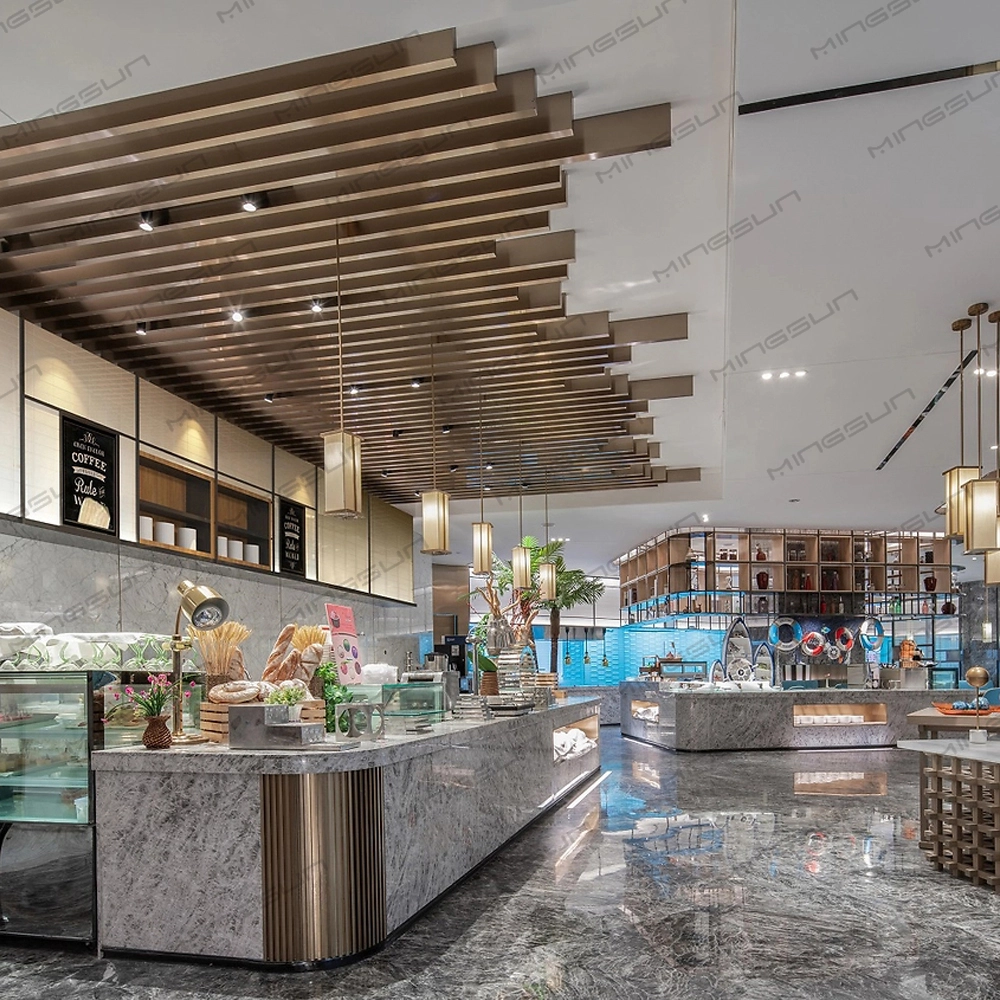
Modern Hotel Dining Furniture Set-Custom Designed Wooden Tables, Upholstered Chairs & Banquette Seating
Create a lasting impression with our custom-designed hotel dining furniture set, crafted for modern luxury hotels and upscale restaurants.
Featuring elegant wooden tables, ergonomic blue-upholstered chairs, and built-in banquette seating, this collection blends comfort, style, and durability.
As a leading manufacturer in Guangzhou, we deliver end-to-end solutions - from concept design and 3D visualization to production and global shipping - all at factory-direct prices.
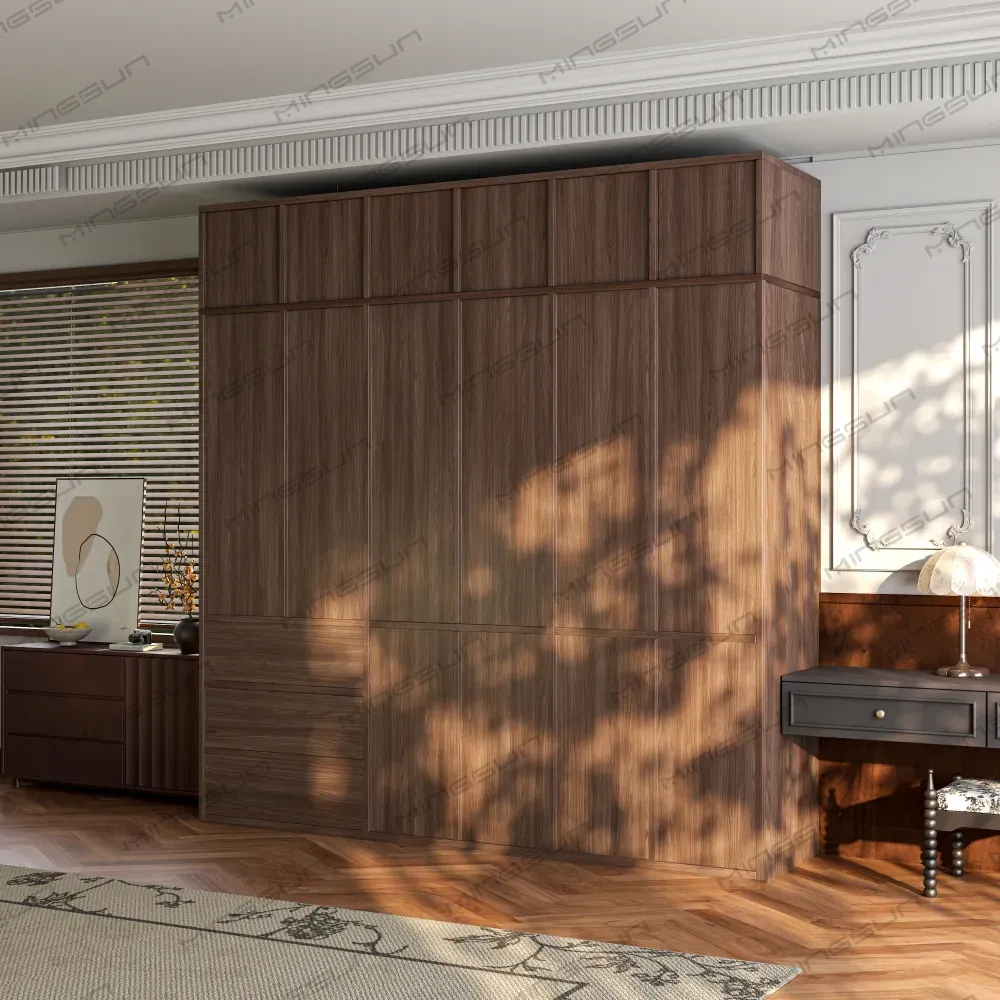
Minimalist Walnut Veneer Floor-to-Ceiling Hotel Wardrobe with Handleless Design
Maximize vertical storage in your hotel guest rooms or luxury apartments with this sleek, floor-to-ceiling wardrobe system. Defines by its warm, natural walnut wood veneer finish, the unit offers a sophisticated, handleless facade that maintains clean architectural lines, perfect for modern minimalist interiors. The intelligent layout features a bank of three external soft-close drawers for guest convenience, tall hanging sections for formal wear, and a dedicated row of top-tier cabinets specifically designed to store extra bedding, pillows, or seasonal items.
Manufactured by MINGSUN, this wardrobe is a testament to our expertise in custom hospitality joinery. We engineer these large-scale units for durability and ease of installation. From our Guangzhou factory, we provide precision-cut flat-pack solutions that reduce shipping costs while ensuring a premium built-in look upon assembly.
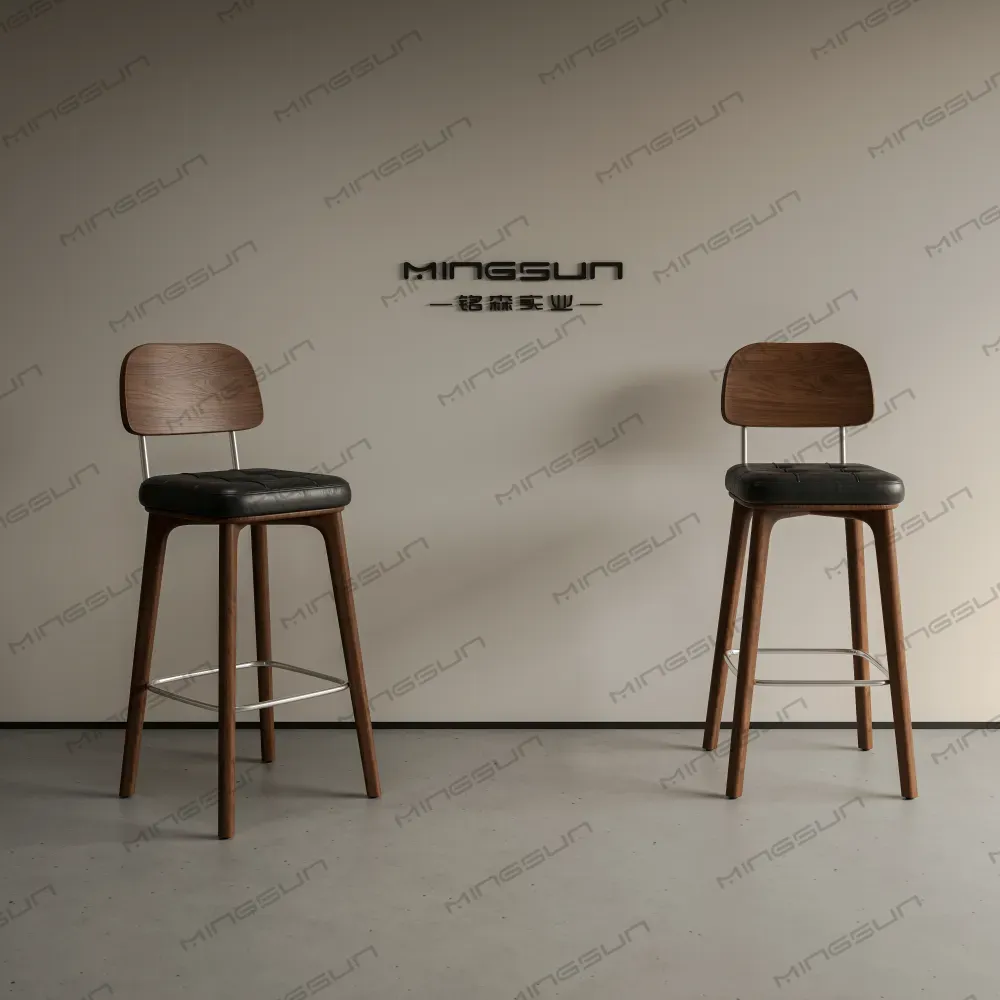
Mid-Century Modern Walnut Bar Stool with Tufted Leather Seat & Chrome Footrest for Luxury Hospitality
Elevate the aesthetic of your hotel bar, upscale restaurant, or executive lounge with this sophisticated bar stool, meticulously crafted by MINGSUN. Blending mid-century modern warmth with industrial durability, this stool features a curved, walnut-veneer backrest designed for ergonomic support and visual depth. The seat is upholstered in premium black PU leather (customizable to genuine leather) with classic button tufting, offering a refined texture that resists wear in high-traffic commercial environments.
Supported by tapered solid wood legs and reinforced with a chrome-finished steel footrest ring, this piece ensures stability and longevity. As a leading Guangzhou hotel furniture manufacturer, MINGSUN ensures that every stool meets rigorous contract-grade standards. From our 10,000㎡ factory directly to your venue, we provide a complete solution including manufacturing, global logistics, and video installation guidance to ensure a seamless project completion.
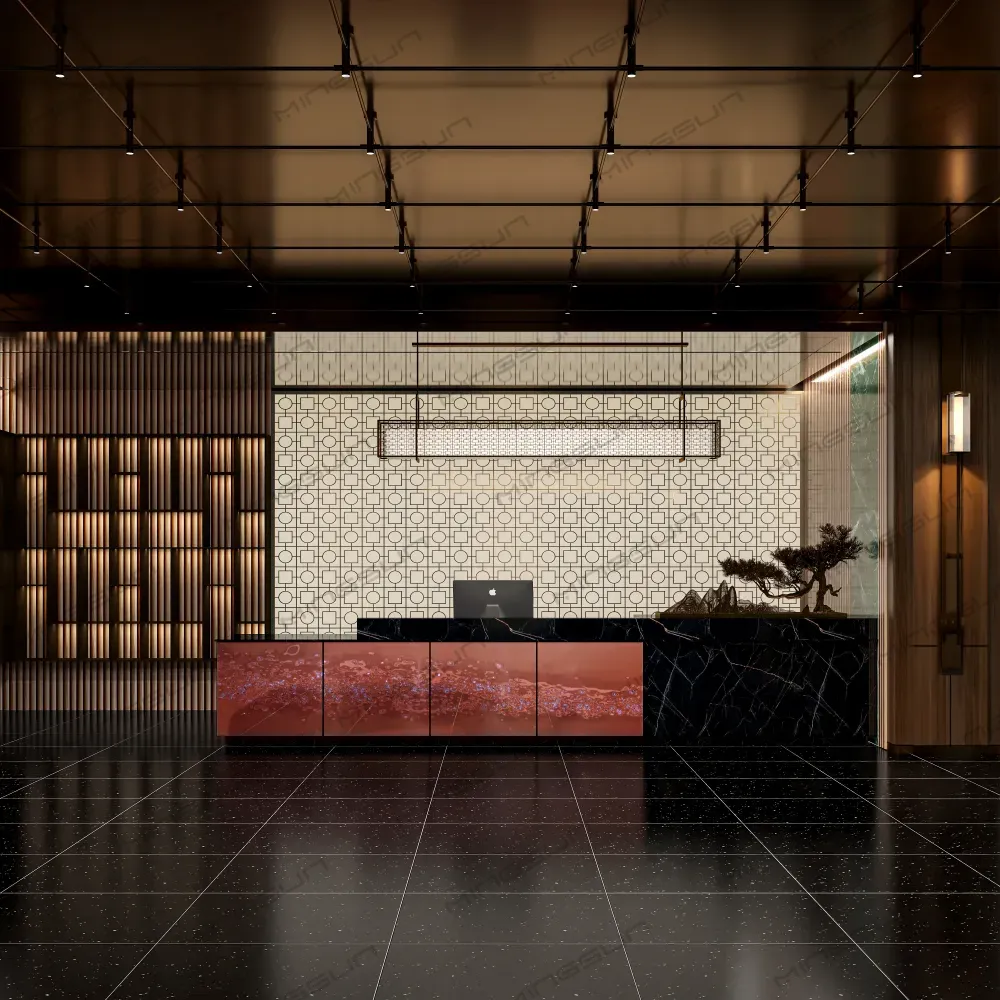
Luxury Reception Desk with Black Marble Top & Illuminated Copper-Resin Front Panels
Make a bold, unforgettable statement at your hotel’s entrance with this avant-garde reception desk. Its sleek black marble top exudes timeless sophistication, while the front facade features mesmerizing, internally lit copper-resin panels that glow with a warm, amber radiance, creating a dynamic visual centerpiece. Designed for both form and function, the unit offers ample concealed storage behind seamless doors and integrates a dedicated staff workstation with cable management. This is more than a check-in counter—it’s a sculptural installation that defines the luxury and artistry of your brand.
Get more industry insights
Looking for the right solution? Fill out the form and get a free quote.
Our experts will respond quickly with personalized options that fit your needs.
MINGSUN is a design-driven hotel furniture manufacturer offering OEM/ODM services, custom solutions, and global project support.
Built for wholesalers. Trusted by global buyers. Delivered with confidence.
Phone:
E-mail:
Follow us ——
 Scan QR Code
MINGSUN
MINGSUN
MINGSUN
MINGSUN
MS Custom Hotel Furniture Supplier