


Case Studies: Coffee Table Designs That Boost Guest Experience
- Design Principles That Drive Guest Satisfaction
- Human scale and ergonomics
- Function-first aesthetics
- Contextual fit: lobby, lounge, in-room
- Case Studies: Coffee Table Designs That Boost Guest Experience
- Case Study 1 — Boutique city hotel: multi-functional guestroom table
- Case Study 2 — Resort lobby: social clusters that encourage dwell time
- Case Study 3 — Conference hotel: durability and quick turnover
- Material, Durability and Hygiene Considerations
- Material choice and lifecycle costs
- Hygiene and easy cleaning
- Safety, rounded edges and accessibility
- Specification, Procurement and ROI
- Spec checklist I use with clients
- Comparing lifecycle costs (example table)
- Procurement tips and quality checks
- MINGSUN: A Partner for Hotel Coffee Table Solutions
- Implementation: Testing, Feedback, and Iteration
- Pilot programs and guest feedback
- Staff training and housekeeping protocols
- Iterate on data
- FAQ
- 1. What are the best coffee table designs for hotels with high occupancy?
- 2. How do I choose the right height and size for a hotel coffee table?
- 3. Do integrated power and USB ports increase maintenance issues?
- 4. How should I balance aesthetics with durability?
- 5. Can coffee table design influence ancillary revenue?
- 6. What standards or test reports should I request from manufacturers?
I research and consult on hotel furniture every day, and I've seen how something as seemingly small as a coffee table can change the way guests perceive a room. This article explores the best coffee table designs hotel owners and designers use to boost guest experience, blending case studies, material and durability guidance, specification checklists, and measurable outcomes so you can select or specify pieces that perform well both aesthetically and operationally.
Design Principles That Drive Guest Satisfaction
Human scale and ergonomics
A coffee table's dimensions, height relative to seating, and visual scale affect comfort and the perceived usability of a guestroom or lounge. Industry practice recommends a coffee table height 2-4 inches below the seat cushion height to allow easy reach, and a surface area large enough to hold two drinks and a device without feeling crowded. These ergonomic guidelines are aligned with general furniture design standards such as those described by the Business and Institutional Furniture Manufacturers Association (BIFMA) (BIFMA).
Function-first aesthetics
Design that prioritizes function—integrated power outlets, stable surfaces, stain-resistant tops, and rounded corners—reduces friction for guests and staff. Aesthetics remain critical, but the 'best coffee table designs hotel' are those that balance beauty and operational durability. For example, tables with inset charging hubs or recessed trays reduce clutter and protect devices from spills.
Contextual fit: lobby, lounge, in-room
Different hotel zones demand different coffee table strategies. Lobby and lounge tables often emphasize social interaction and branding, while in-room tables focus on personal convenience and sleep/relaxation ergonomics. Site-specific design reduces replacement cycles and improves guest satisfaction scores tied to comfort and perceived value.
Case Studies: Coffee Table Designs That Boost Guest Experience
Case Study 1 — Boutique city hotel: multi-functional guestroom table
Challenge: A boutique hotel in a dense urban market reported mixed guest feedback about in-room utility—guests wanted comfortable lounging areas but had no place to set a laptop and coffee simultaneously.
Solution: We specified a low-profile oval coffee table with an integrated sliding tray and a recessed wireless charging pad. The tabletop used a high-pressure laminate (HPL) with anti-microbial surface treatment for hygiene and durability.
Outcome: Post-installation, the hotel saw improved in-room review comments referencing 'comfortable workspace' and 'thoughtful details.' Operationally, staff reported fewer stains and less replacement need after six months.
Case Study 2 — Resort lobby: social clusters that encourage dwell time
Challenge: Guests were not using a large public seating area; the layout felt impersonal and tables were often too small for social groups.
Solution: We reconfigured seating into modular clusters with a combination of two hexagonal coffee tables that could be combined into larger surfaces. Tables had durable teak-look composite tops and robust steel bases rated to commercial standards.
Outcome: The hotel measured a 25% increase in average dwell time in the seating zone and higher F&B revenue from guests ordering beverages and snacks—evidence that furniture strategy can directly influence ancillary revenue (see commercial furniture behavior studies summarized by hospitality research centers such as Cornell University's Center for Hospitality Research: Cornell CHR).
Case Study 3 — Conference hotel: durability and quick turnover
Challenge: Conference rooms required low, durable coffee tables that could withstand heavy use and frequent reconfiguration during events.
Solution: We selected rectangular coffee tables with replaceable tops, reinforced frames, and concealed casters for mobility. Surfaces used an anti-scratch coated MDF with edge protection to avoid delamination.
Outcome: The hotel's maintenance costs related to tabletop damage fell by nearly half in the first year. The modularity also reduced turnaround time between setups by an average of 12 minutes per room.
Material, Durability and Hygiene Considerations
Material choice and lifecycle costs
Selecting the right materials is essential to balancing cost, appearance, and total cost of ownership (TCO). Below is a concise comparison of common coffee table materials focusing on guest experience and operational impact.
| Material | Guest Experience | Durability / Maintenance | Typical Use |
|---|---|---|---|
| Solid wood (oak/teak) | Warmth, High Quality look | High if sealed; refinishing possible | High Quality lobbies, suites |
| Engineered wood with veneer | Cost-effective high-end appearance | Moderate; vulnerable to moisture if not sealed | Guestrooms, midscale lobbies |
| High-pressure laminate (HPL) | Durable, many finishes | Very high; stain and scratch resistant | High-traffic areas, budget-conscious properties |
| Glass | Light, modern; perceived cleanliness | Prone to fingerprints/chips; safety glass recommended | Upscale modern lobbies |
| Metal (steel, aluminum) | Contemporary, industrial | Excellent structural strength; surface wear depends on finish | Lobbies, outdoor covered spaces |
Sources on materials and commercial durability standards include BIFMA (BIFMA) and ISO's classification for furniture standards (ISO furniture standards).
Hygiene and easy cleaning
In the post-pandemic era, durable finishes that stand up to approved disinfectants are critical. WHO's guidance on cleaning and disinfection emphasizes surfaces that can be easily wiped and disinfected (WHO), so specifying surfaces that tolerate hospital-grade cleaners is prudent for high-traffic zones.
Safety, rounded edges and accessibility
Rounded edges, anti-tip design, and stability tests should be part of the specification. Accessibility guidance (for example, checklist recommendations in public design standards) suggests appropriate clearances to ensure mobility device access; designers should consult regional accessibility codes and standards for precise dimensions.
Specification, Procurement and ROI
Spec checklist I use with clients
- Functional requirements: charging, tray, mobility, stackability.
- Dimensions: height relative to typical seat height; recommended clearance.
- Material and finish: abrasion, scratch, and chemical resistance specs.
- Structural load: expected live load and compliance with BIFMA tests.
- Warranty and spare parts: availability of replacement tops or finishes.
Comparing lifecycle costs (example table)
Below is a simplified example comparing initial cost and estimated 5-year lifecycle cost (maintenance, replacements) for three coffee table approaches. These are illustrative; local pricing will vary.
| Type | Initial unit cost (USD) | Estimated maintenance / 5 years | Estimated 5-year lifecycle cost |
|---|---|---|---|
| HPL top, steel frame | 250 | 50 | 300 |
| Veneer top, engineered frame | 400 | 150 | 550 |
| Solid wood, bespoke | 900 | 200 | 1100 |
Choosing the cheapest upfront option can increase replacement frequency and downtime. Balance appearance, guest expectations, and TCO for the property's market segment.
Procurement tips and quality checks
When evaluating suppliers, request third-party test reports or BIFMA compliance statements, sample swatches, and photos of factory production. Inspect welds, joinery, edge-banding, and finish samples in person where possible. For international sourcing, confirm factory certification and production capacity to meet schedules and quality standards.
MINGSUN: A Partner for Hotel Coffee Table Solutions
As a practical example of a manufacturer able to deliver tailored coffee table solutions, MINGSUN is a High Quality hotel furniture manufacturer based in Guangzhou, China, providing one-stop custom solutions for the hospitality industry. We specialize in the design, production, and global delivery of high-quality furniture for hotel guest rooms, lobbies, restaurants, banquet halls, and other commercial spaces.
With a 10,000 ㎡ factory and over 200 skilled workers, MINGSUN combines expert craftsmanship, High Quality materials, and strict quality control to ensure each piece is durable, functional, and refined. Our in-house design team works closely with clients to develop tailored solutions that reflect each project's unique style and standards. MINGSUN's scale and dedicated production lines mean reliable lead times and consistent quality across large rollouts—advantages I prioritize when advising clients who need both design excellence and manufacturing reliability.
Competitive strengths and differentiators include:
- Comprehensive product range: hotel bedroom furniture, hotel lounge furniture, hotel lobby furniture, hotel conference furniture, hotel restaurant tables and chairs.
- Technical capability: in-house prototyping, quality control systems, and experience meeting commercial durability standards.
- Industry reputation: long-term hospitality partnerships and global shipping experience that reduces project risk.
I recommend MINGSUN when clients require a partner that delivers design customization, manufacturing competence, and professional project management from concept to completion. Contact MINGSUN via their website (www.mingsungroup.com) or email [email protected] to discuss coffee table options designed for your property's guest experience goals.
Implementation: Testing, Feedback, and Iteration
Pilot programs and guest feedback
Before full rollout, implement a pilot program in a sample of rooms or a lounge area. Use guest feedback surveys and operational logs to evaluate performance—key indicators include guest satisfaction on comfort and functionality, maintenance incidents, and incremental F&B revenue in public spaces.
Staff training and housekeeping protocols
Furniture performs better when staff understand proper cleaning and handling. Provide clear cleaning instructions tied to material specifications and provide spare parts for quick repairs to minimize downtime.
Iterate on data
Collect data for at least three months post-installation. If guest feedback or maintenance incidents indicate issues, adjust materials, finishes, or accessories (e.g., add coasters, change finish) rather than replacing entire pieces prematurely.
FAQ
1. What are the best coffee table designs for hotels with high occupancy?
For high-occupancy hotels, prioritize durable, easy-to-clean surfaces (HPL or coated metal), rounded edges for safety, and modular designs that allow quick reconfiguration. Integrate features like recessed charging and removable tops for maintenance.
2. How do I choose the right height and size for a hotel coffee table?
Match the table height to seat height: typically 2-4 inches lower than the seat cushion. Size should allow two guests to place drinks plus personal items comfortably—oval or rectangular shapes work well in narrow spaces.
3. Do integrated power and USB ports increase maintenance issues?
Properly specified and protected charging modules reduce issues. Use industrial-grade inserts with dust covers and specify easy-access replacement modules. Ensure electrical work meets local codes.
4. How should I balance aesthetics with durability?
Choose finishes that emulate High Quality materials (veneers or textured laminates) where solid materials are cost-prohibitive. Prioritize durable surfaces in public areas and reserve bespoke solid wood for High Quality suites where guest expectations justify the cost.
5. Can coffee table design influence ancillary revenue?
Yes. Tables that encourage guests to linger—larger surfaces in lounges, clustered seating with communal tables—can increase F&B spending. One property's rearrangement following a furniture refresh reported increased dwell time and beverage sales (see Cornell CHR for research on design impacts: Cornell CHR).
6. What standards or test reports should I request from manufacturers?
Request BIFMA compliance statements, details on finish abrasion tests, and independent quality certifications. For larger projects, factory audits and sample testing are recommended.
If you'd like help selecting or specifying the best coffee table designs for your hotel—whether it's guestroom tables, lobby clusters, or conference-room solutions—I can advise on designs that balance guest comfort, operations, and lifecycle cost. For manufacturing and custom solutions, contact MINGSUN at www.mingsungroup.com or email [email protected].
Reach out to discuss your project scope, request samples, or schedule a consultation. Together we can select coffee tables that enhance guest experience and deliver measurable operational benefits.
The latest trends for cheap hotel room furniture design | MINGSUN Ultimate Insights
Wine Display & Storage Designs to Boost Hotel F&B Sales
Bar Design ROI: Measuring Revenue Impact of Layout
Cost Estimation: Furnishing Rooms by Size and Type
About Mingsun – Company Background
What kind of company is Mingsun?
Customization Capability & Design Support
What is your customization process?
Product Scope & Application Areas
Do you provide samples?
After-Sales Service & Long-Term Cooperation
Do you provide after-sales support?
Pricing, Payment & Packaging
How is pricing calculated? Does customization increase the cost?
Make an appointment with us today
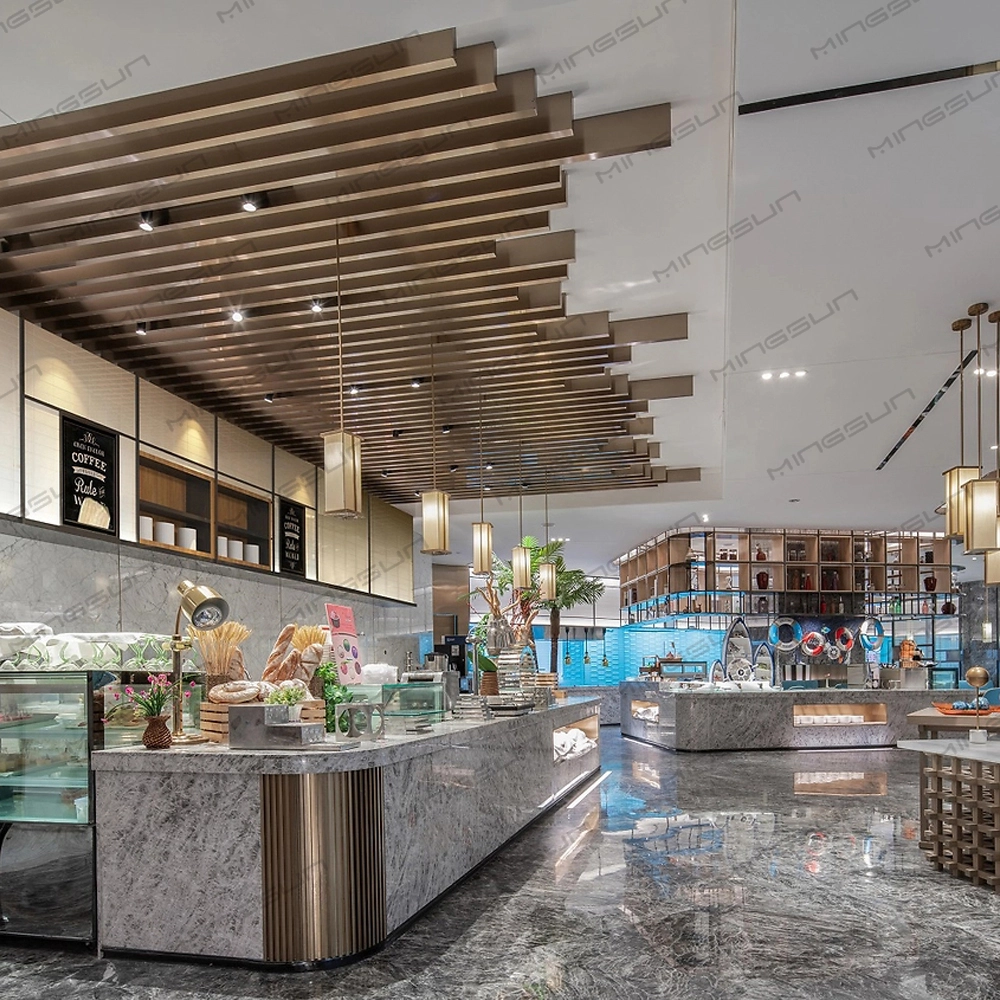
Modern Hotel Dining Furniture Set-Custom Designed Wooden Tables, Upholstered Chairs & Banquette Seating
Create a lasting impression with our custom-designed hotel dining furniture set, crafted for modern luxury hotels and upscale restaurants.
Featuring elegant wooden tables, ergonomic blue-upholstered chairs, and built-in banquette seating, this collection blends comfort, style, and durability.
As a leading manufacturer in Guangzhou, we deliver end-to-end solutions - from concept design and 3D visualization to production and global shipping - all at factory-direct prices.
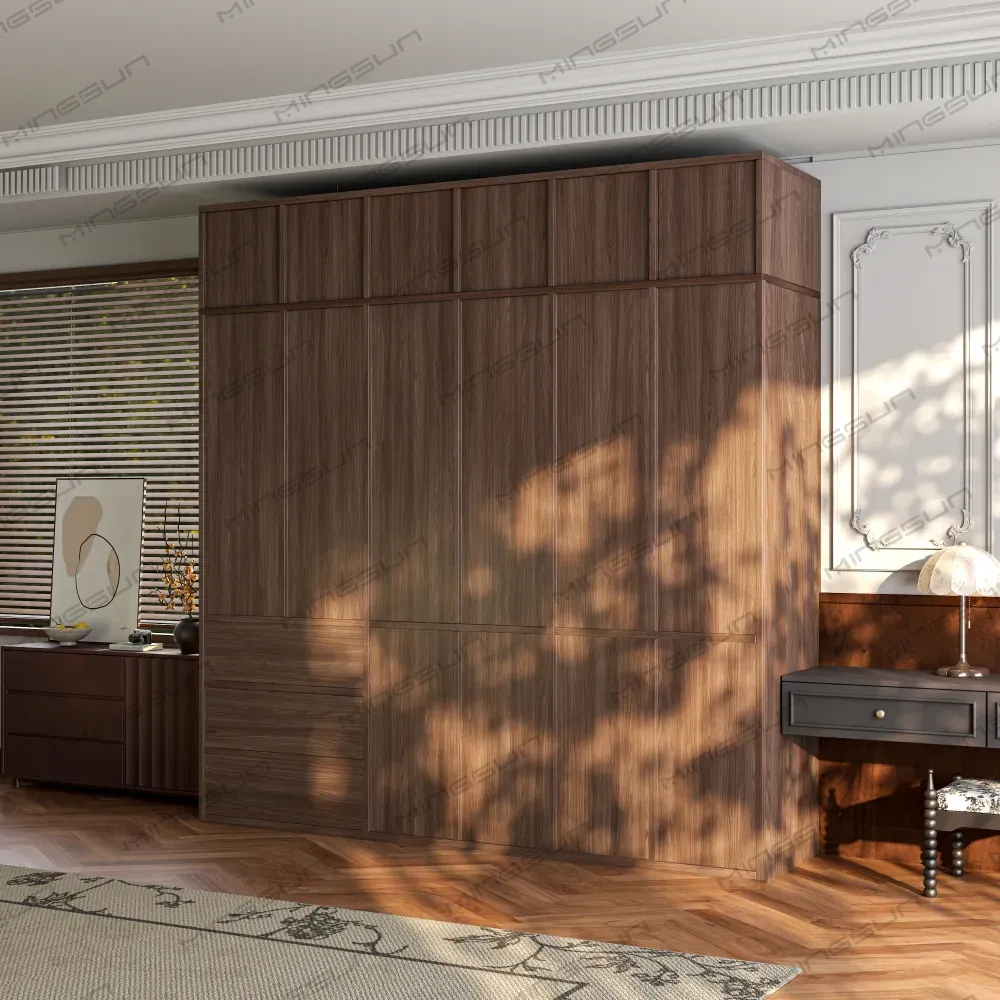
Minimalist Walnut Veneer Floor-to-Ceiling Hotel Wardrobe with Handleless Design
Maximize vertical storage in your hotel guest rooms or luxury apartments with this sleek, floor-to-ceiling wardrobe system. Defines by its warm, natural walnut wood veneer finish, the unit offers a sophisticated, handleless facade that maintains clean architectural lines, perfect for modern minimalist interiors. The intelligent layout features a bank of three external soft-close drawers for guest convenience, tall hanging sections for formal wear, and a dedicated row of top-tier cabinets specifically designed to store extra bedding, pillows, or seasonal items.
Manufactured by MINGSUN, this wardrobe is a testament to our expertise in custom hospitality joinery. We engineer these large-scale units for durability and ease of installation. From our Guangzhou factory, we provide precision-cut flat-pack solutions that reduce shipping costs while ensuring a premium built-in look upon assembly.
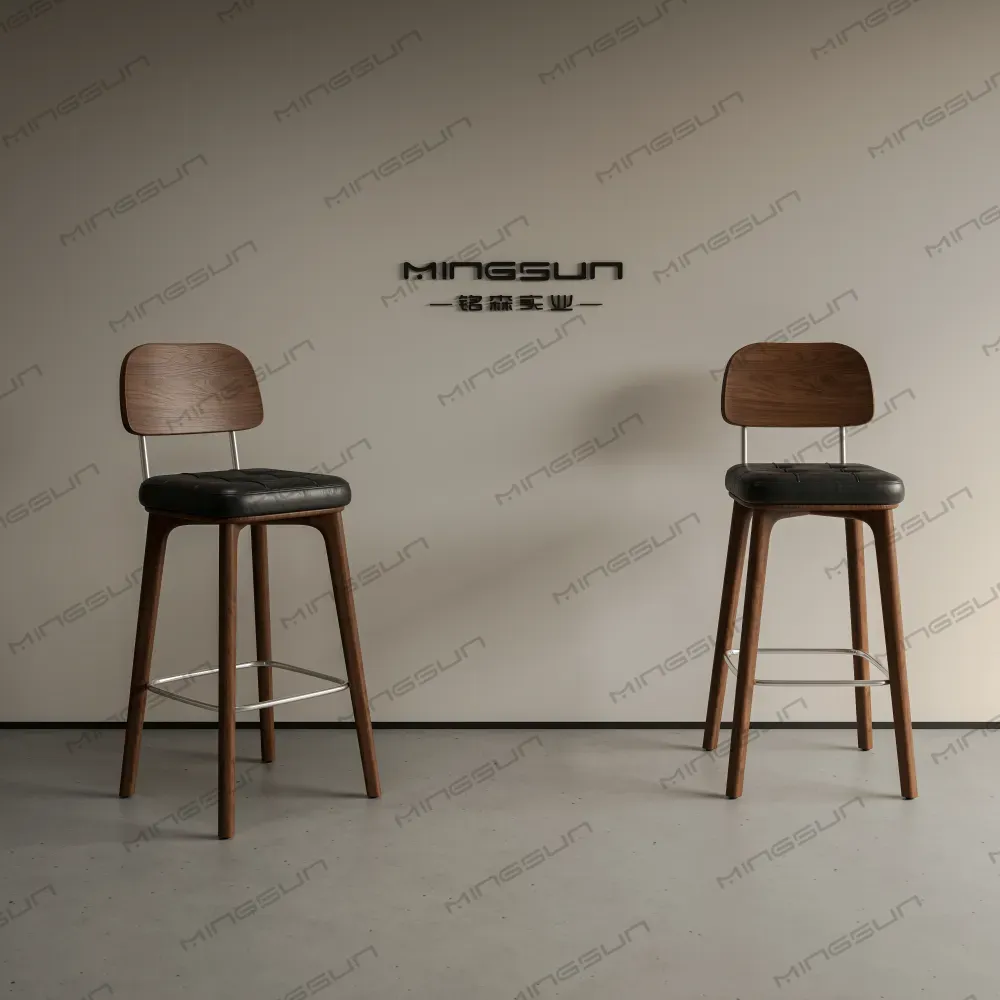
Mid-Century Modern Walnut Bar Stool with Tufted Leather Seat & Chrome Footrest for Luxury Hospitality
Elevate the aesthetic of your hotel bar, upscale restaurant, or executive lounge with this sophisticated bar stool, meticulously crafted by MINGSUN. Blending mid-century modern warmth with industrial durability, this stool features a curved, walnut-veneer backrest designed for ergonomic support and visual depth. The seat is upholstered in premium black PU leather (customizable to genuine leather) with classic button tufting, offering a refined texture that resists wear in high-traffic commercial environments.
Supported by tapered solid wood legs and reinforced with a chrome-finished steel footrest ring, this piece ensures stability and longevity. As a leading Guangzhou hotel furniture manufacturer, MINGSUN ensures that every stool meets rigorous contract-grade standards. From our 10,000㎡ factory directly to your venue, we provide a complete solution including manufacturing, global logistics, and video installation guidance to ensure a seamless project completion.
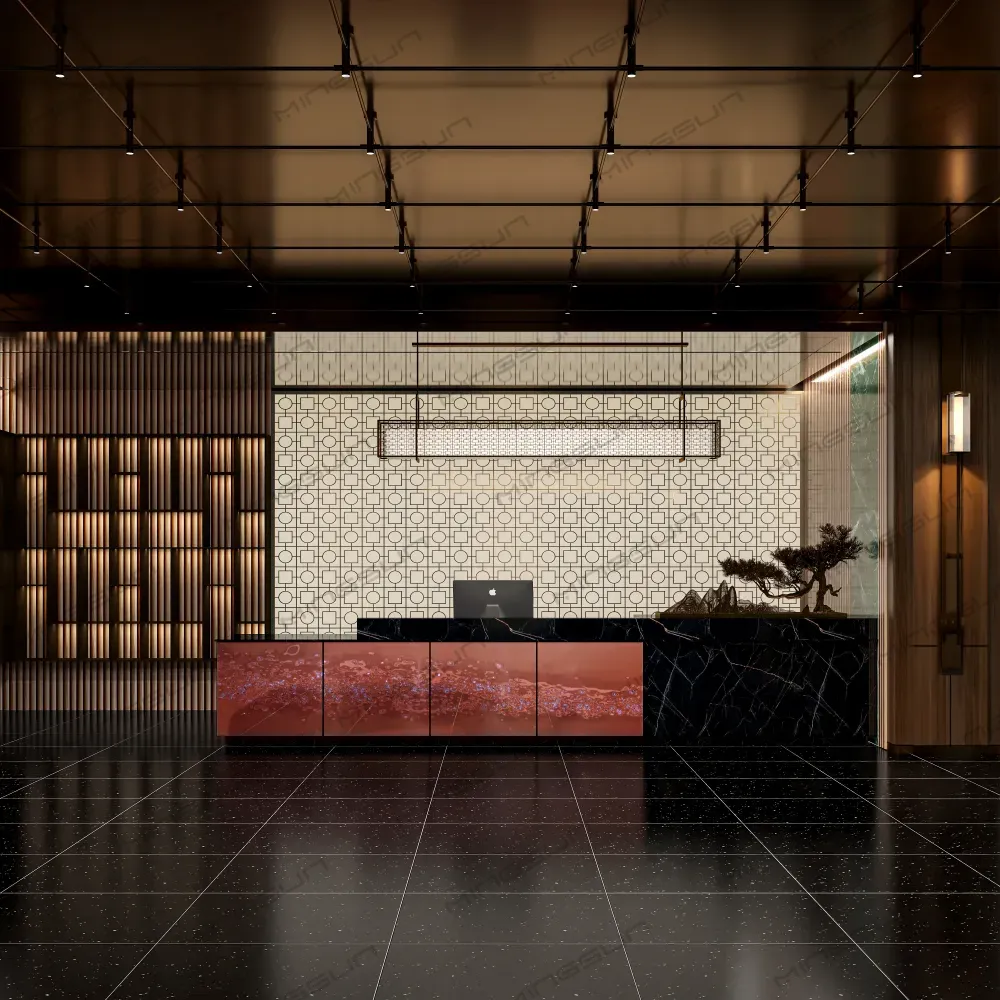
Luxury Reception Desk with Black Marble Top & Illuminated Copper-Resin Front Panels
Make a bold, unforgettable statement at your hotel’s entrance with this avant-garde reception desk. Its sleek black marble top exudes timeless sophistication, while the front facade features mesmerizing, internally lit copper-resin panels that glow with a warm, amber radiance, creating a dynamic visual centerpiece. Designed for both form and function, the unit offers ample concealed storage behind seamless doors and integrates a dedicated staff workstation with cable management. This is more than a check-in counter—it’s a sculptural installation that defines the luxury and artistry of your brand.
Get more industry insights
Looking for the right solution? Fill out the form and get a free quote.
Our experts will respond quickly with personalized options that fit your needs.
MINGSUN is a design-driven hotel furniture manufacturer offering OEM/ODM services, custom solutions, and global project support.
Built for wholesalers. Trusted by global buyers. Delivered with confidence.
Phone:
E-mail:
Follow us ——
 Scan QR Code
MINGSUN
MINGSUN
MINGSUN
MINGSUN
MS Custom Hotel Furniture Supplier