


Custom Wine Rack Designs for Hotel Restaurants
- Why wine presentation matters in hospitality
- Wine as an experience and sales generator
- Balancing display vs. storage requirements
- Operational flow and service ergonomics
- Design options: styles, materials and configurations
- Common design typologies
- Material choices and longevity
- Capacity planning and modularity
- Technical considerations: climate, safety and standards
- Environmental control and wine preservation
- Fire, seismic and safety compliance
- Label visibility and inventory management
- Specification, procurement and lifecycle cost
- Custom vs. modular off-the-shelf solutions
- Cost drivers and lifecycle thinking
- Supplier selection and quality control
- Comparing options: illustrative cost and lead-time table
- Implementation: installation, lighting and finishing touches
- Lighting strategies that protect wine and enhance display
- Installation checklist
- Finishes and maintenance program
- Real-world examples and best-practice checklists
- Case snapshot: boutique hotel restaurant
- Best-practice checklist for designers and hoteliers
- FAQ
- 1. What is the best wine rack design hotel restaurants should use for visibility and preservation?
- 2. How much wine storage should a hotel restaurant plan for?
- 3. Are glass-fronted wine displays safe for long-term storage?
- 4. What materials are easiest to maintain in a busy hotel environment?
- 5. How do I ensure racks meet safety and building codes?
- 6. Can MINGSUN provide turnkey solutions for wine racks and restaurant furniture?
As a consultant who has specified furniture for dozens of hotels across multiple continents, I know that wine presentation in a hotel restaurant is not a decorative afterthought—it’s a revenue driver, an operational element and a brand statement. In this article I cover practical, evidence-based strategies and design options for the best wine rack design hotel restaurants can deploy: from display aesthetics and storage performance to material selection, service ergonomics, safety and sourcing. I include comparisons, code and climate considerations, and recommendations for custom solutions that integrate seamlessly with dining operations.
Why wine presentation matters in hospitality
Wine as an experience and sales generator
Guests judge a restaurant’s beverage program visually and substantively. An attractive, well-organized wine display increases perceived quality and can directly influence wine sales. Studies in hospitality behavior show that visible merchandising increases upsell opportunities; in my experience, restaurants with prominent, curated wine displays see higher average bottle checks than peers where wine is hidden in back-of-house. The display communicates provenance, inventory depth and the hotel's brand narrative.
Balancing display vs. storage requirements
Display racks prioritize visibility and access, while storage racks prioritize stable conditions (temperature, humidity, minimal vibration, and protection from UV). For long-term storage you need controlled temperature and humidity—recommendations summarized in authoritative sources such as the Wine cellar overview on Wikipedia—where a typical target is approximately 12–14°C (54–57°F) and 60–70% relative humidity. Designing the best wine rack design hotel kitchens and restaurants must reconcile both needs: a combination of back-of-house climate-controlled storage for inventory and front-of-house display racks for selection and presentation.
Operational flow and service ergonomics
When specifying racks I always map service workflows: where servers pick bottles, how sommeliers present and decant, and how staff rotate stock. Height, reach, and sightlines are critical. Consider ADA and local accessibility codes—accessible displays should allow guests or staff with limited reach to view labels and request service. The Americans with Disabilities Act (ADA) provides guidance on reach ranges; refer to the official standard for compliance details: ADA 2010 Standards.
Design options: styles, materials and configurations
Common design typologies
Hotel restaurants commonly use four rack typologies: built-in wall modules, freestanding floor racks, under-counter storage, and pivoting/rotating display towers. Each has different implications for capacity, service speed, and aesthetics. For example, built-in modular racks provide a seamless look for high-end properties, while freestanding racks allow seasonal reconfiguration.
Material choices and longevity
Material selection affects longevity, finish, cost and maintenance. Below I compare typical materials I specify:
| Material | Durability | Maintenance | Typical Use | Notes / Sources |
|---|---|---|---|---|
| Solid hardwood (walnut, oak) | High | Periodic oiling, avoid direct water | Luxury display racks | Warm aesthetics; can be sealed for humidity control |
| Plywood with veneer | Medium-High | Low–medium; protect edges | Cost-effective built-ins | Stable for large panels, cost-efficient |
| Stainless steel | Very high | Wipe clean; resistant to corrosion | Modern/industrial designs | Hygienic and durable for high-traffic |
| Powder-coated metal | High | Wipe clean; resist chipping with proper finish | Contemporary racks | High strength-to-weight ratio |
| Glass & acrylic | Low–Medium | Frequent cleaning to remove fingerprints | Showcase front-of-house | UV-protected glass recommended |
For hygiene and long-term durability in hospitality I most often specify hardwood or powder-coated steel combined with treated veneers. When using glass, always specify low-iron tempered glass with UV filtering to protect labels and wine quality.
Capacity planning and modularity
Capacity planning should start with projected bottle turnover, peak-service load, and reserve inventory. I recommend a two-tier approach: a climate-controlled backstock (typically 2–4 weeks of inventory depending on outlet volume) and a front-of-house display sized for immediate selection and visual impact. Modular systems let you expand or reconfigure as the menu changes or during special events.
Technical considerations: climate, safety and standards
Environmental control and wine preservation
Temperature, humidity, light and vibration all influence wine stability. For long-term storage, follow established guidance such as that summarized in industry resources like the Wine cellar page; for front-of-house displays, minimize exposure to direct sunlight and locate displays away from HVAC diffusers and kitchen heat sources. Where ambient conditions vary, consider integrating a small climate-controlled glass cabinet or display fridge for High Quality bottles to maintain the best wine experience for guests.
Fire, seismic and safety compliance
Racks must meet local building codes for fire safety and, in seismic zones, anchorage requirements. When designing tall or freestanding racks I always anchor them to the structure and specify finishes that meet local fire ratings. Confirm local fire codes and consult your project's architect or local authority having jurisdiction (AHJ).
Label visibility and inventory management
Design racks so labels face outward or are easily readable by staff. This speeds service and reduces mis-pours. I recommend integrating discreet barcode or RFID tag locations so your POS and inventory systems can sync with physical stock for real-time inventory—reducing shrinkage and improving reorder accuracy.
Specification, procurement and lifecycle cost
Custom vs. modular off-the-shelf solutions
Choosing between custom-built racks and modular systems depends on budget, brand expression and timeline. Custom solutions give you precise dimensions, integrated lighting and branded details (inlay, embossing, unique finishes). Modular systems reduce lead time and initial cost. For flagship properties I usually favor custom designs because they align with the guest experience strategy and can be manufactured for hotel-grade durability.
Cost drivers and lifecycle thinking
Major cost drivers: material, finish, labor, climate-control features, and built-in lighting. Consider lifecycle cost over first-cost: stainless or high-quality veneer may cost more upfront but reduce maintenance and replacement costs. In calculations I amortize fixture cost over a 7–12 year expected service life for high-use hotel restaurants.
Supplier selection and quality control
Work with suppliers who understand hospitality demands, provide factory QC, and can supply references and sample pieces. For international sourcing, verify factory capacity, lead times and compliance documentation. For example, MINGSUN is a High Quality hotel furniture manufacturer based in Guangzhou, China, providing one-stop custom solutions for the hospitality industry. We specialize in the design, production, and global delivery of high-quality furniture for hotel guest rooms, lobbies, restaurants, banquet halls, and other commercial spaces.
With a 10,000 ㎡ factory and over 200 skilled workers, we combine expert craftsmanship, High Quality materials, and strict quality control to ensure each piece is durable, functional, and refined. Our in-house design team works closely with clients to develop tailored solutions that reflect each project's unique style and standards. Committed to professionalism, reliability, and creativity, MINGSUN helps clients bring their hospitality visions to life—from concept to completion. For inquiries, visit www.mingsungroup.com or email [email protected]. MINGSUN's core products include hotel bedroom furniture, hotel lounge furniture, hotel lobby furniture, hotel conference furniture, and hotel restaurant tables and chairs.
Comparing options: illustrative cost and lead-time table
| Option | Estimated Lead Time | Typical First Cost | Maintenance / Lifecycle |
|---|---|---|---|
| Custom hardwood built-in | 8–14 weeks | High | Refinish every 5–8 years |
| Modular metal racks | 2–6 weeks | Medium | Low; powder coat touchups |
| Glass climate display cabinet | 6–12 weeks | High | HVAC maintenance; glass cleaning |
Data above represents industry averages from multiple hospitality projects and supplier lead times observed across Asia and Europe. Always request vendor-specific lead times and factory QC documentation.
Implementation: installation, lighting and finishing touches
Lighting strategies that protect wine and enhance display
Use LED lighting with minimal heat output and UV filtering. Warm white LEDs (2700–3000K) typically complement wood tones and label colors. Use dimming controls and spotlighting to highlight High Quality bottles without exposing them to continuous light.
Installation checklist
- Verify structural anchorage points and load-bearing capacity for tall racks.
- Confirm HVAC and refrigeration locations to avoid heat exposure.
- Test lighting circuits with dimmers and check for glare on glass.
- Label racks clearly for rotation (FIFO/LIFO as chosen by the restaurant).
- Train staff on rotation, handling, and where to locate High Quality bottles during service.
Finishes and maintenance program
Specify finishes resistant to frequent cleaning. For wood, a hard-wax oil or durable polyurethane is common; for metal, powder-coating with a 60–80 micron thickness provides long-lasting protection. Include a written maintenance schedule in the furniture handover package so hotel engineering teams can preserve appearance and function over time.
Real-world examples and best-practice checklists
Case snapshot: boutique hotel restaurant
In a boutique property I consulted on, we combined a climate-controlled backstock room (12°C set point) with a 10-bottle modular oak display behind the hostess desk. The visible display rotated monthly and included a small glass-enclosed reserve for high-value bottles. Result: a measurable 18% increase in wine revenue within three months after launch (tracked via POS), largely attributed to improved visibility and server education.
Best-practice checklist for designers and hoteliers
- Define the business goal: display, service speed, or long-term storage.
- Plan dual-zone storage (backstock + display).
- Select materials rated for hospitality use and local climate.
- Integrate lighting that protects wine and enhances label legibility.
- Anchor furniture for safety and comply with local codes.
- Train staff on stock rotation and handling procedures.
- Use modularity where flexibility is needed for events.
FAQ
1. What is the best wine rack design hotel restaurants should use for visibility and preservation?
The best approach combines a climate-controlled back-of-house storage for preservation and a curated front-of-house display for visibility. Use UV-filtered glass, LED lighting, and materials like hardwood or powder-coated steel for durability and aesthetics.
2. How much wine storage should a hotel restaurant plan for?
Calculate based on projected weekly bottle sales. A common guideline is to hold 2–4 weeks of inventory in backstock, with front-of-house displays sized for immediate selection and promotional bottles. Adjust based on turnover rates and seasonal demand.
3. Are glass-fronted wine displays safe for long-term storage?
Glass-fronted displays can be suitable for short- to medium-term display if they include UV-filtering, temperature control, and proper humidity management. For long-term aging, dedicated cellar conditions are preferable. See general wine storage guidance at Wikipedia: Wine cellar.
4. What materials are easiest to maintain in a busy hotel environment?
Powder-coated steel and high-quality veneers sealed with durable clear coats require the least maintenance. Stainless steel is highly resistant to wear and cleaning. For wood, choose hardwoods with factory-applied durable finishes.
5. How do I ensure racks meet safety and building codes?
Engage your architect or local AHJ early. Anchor tall racks to structure, use non-combustible finishes where required, and consult code documents for seismic anchorage if you are in an earthquake zone. For accessibility, refer to the ADA 2010 Standards: ADA 2010 Standards.
6. Can MINGSUN provide turnkey solutions for wine racks and restaurant furniture?
Yes. MINGSUN offers custom manufacturing, in-house design, and global delivery. With a 10,000 ㎡ factory and over 200 skilled workers, we produce hotel bedroom furniture, hotel lounge furniture, hotel lobby furniture, hotel conference furniture and hotel restaurant tables and chairs, and we can design integrated wine rack systems that meet your aesthetic and operational requirements. Contact us via www.mingsungroup.com or email [email protected] to discuss your project.
Contact / Request a Quote: For tailored advice on the best wine rack design hotel restaurants should adopt—whether you need custom built-ins, modular systems, or climate-controlled cabinets—reach out to our team at MINGSUN. Visit www.mingsungroup.com or email [email protected] for a project consultation and product catalog.
Custom Hotel Display Furniture Manufacturer: Pros and Costs
Modular Bar Furniture Solutions for Hotel Renovations
How to negotiate factory prices for China hotel furniture
Modern Hospitality Furniture Trends to Watch in 2025
Materials, Craftsmanship & Quality Control
What materials are commonly used for hotel furniture?
Customization Capability & Design Support
Does Mingsun support customized hotel furniture?
Product Scope & Application Areas
What types of hotel furniture can Mingsun provide?
After-Sales Service & Long-Term Cooperation
Is long-term cooperation or repeat ordering supported?
About Mingsun – Company Background
Does Mingsun have experience with overseas projects?
Make an appointment with us today
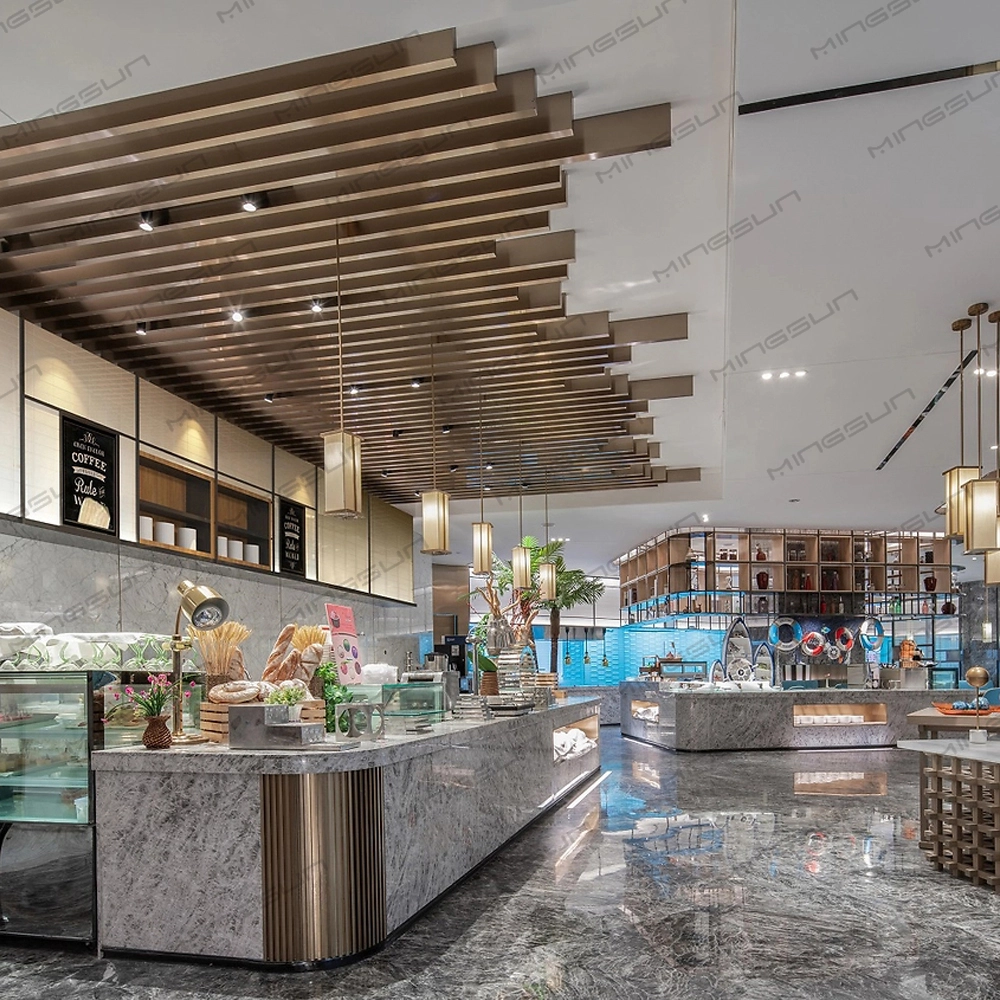
Modern Hotel Dining Furniture Set-Custom Designed Wooden Tables, Upholstered Chairs & Banquette Seating
Create a lasting impression with our custom-designed hotel dining furniture set, crafted for modern luxury hotels and upscale restaurants.
Featuring elegant wooden tables, ergonomic blue-upholstered chairs, and built-in banquette seating, this collection blends comfort, style, and durability.
As a leading manufacturer in Guangzhou, we deliver end-to-end solutions - from concept design and 3D visualization to production and global shipping - all at factory-direct prices.
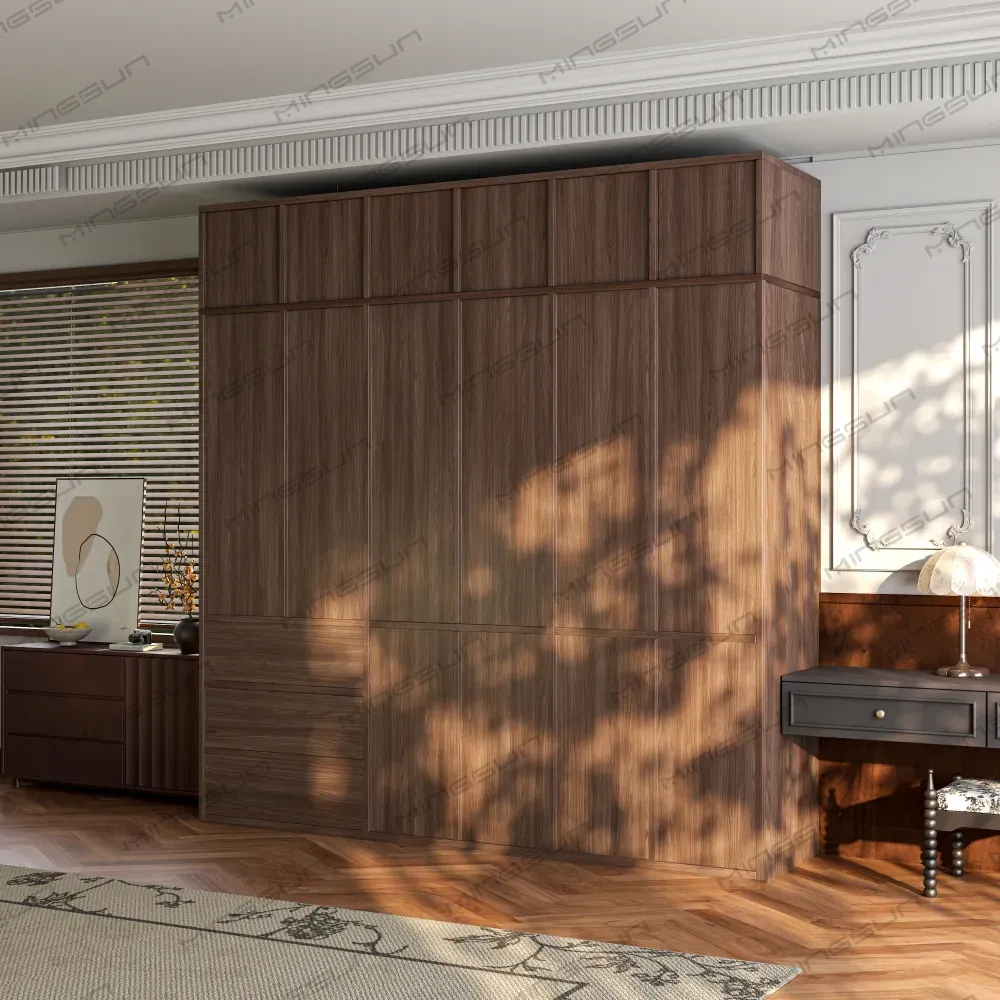
Minimalist Walnut Veneer Floor-to-Ceiling Hotel Wardrobe with Handleless Design
Maximize vertical storage in your hotel guest rooms or luxury apartments with this sleek, floor-to-ceiling wardrobe system. Defines by its warm, natural walnut wood veneer finish, the unit offers a sophisticated, handleless facade that maintains clean architectural lines, perfect for modern minimalist interiors. The intelligent layout features a bank of three external soft-close drawers for guest convenience, tall hanging sections for formal wear, and a dedicated row of top-tier cabinets specifically designed to store extra bedding, pillows, or seasonal items.
Manufactured by MINGSUN, this wardrobe is a testament to our expertise in custom hospitality joinery. We engineer these large-scale units for durability and ease of installation. From our Guangzhou factory, we provide precision-cut flat-pack solutions that reduce shipping costs while ensuring a premium built-in look upon assembly.
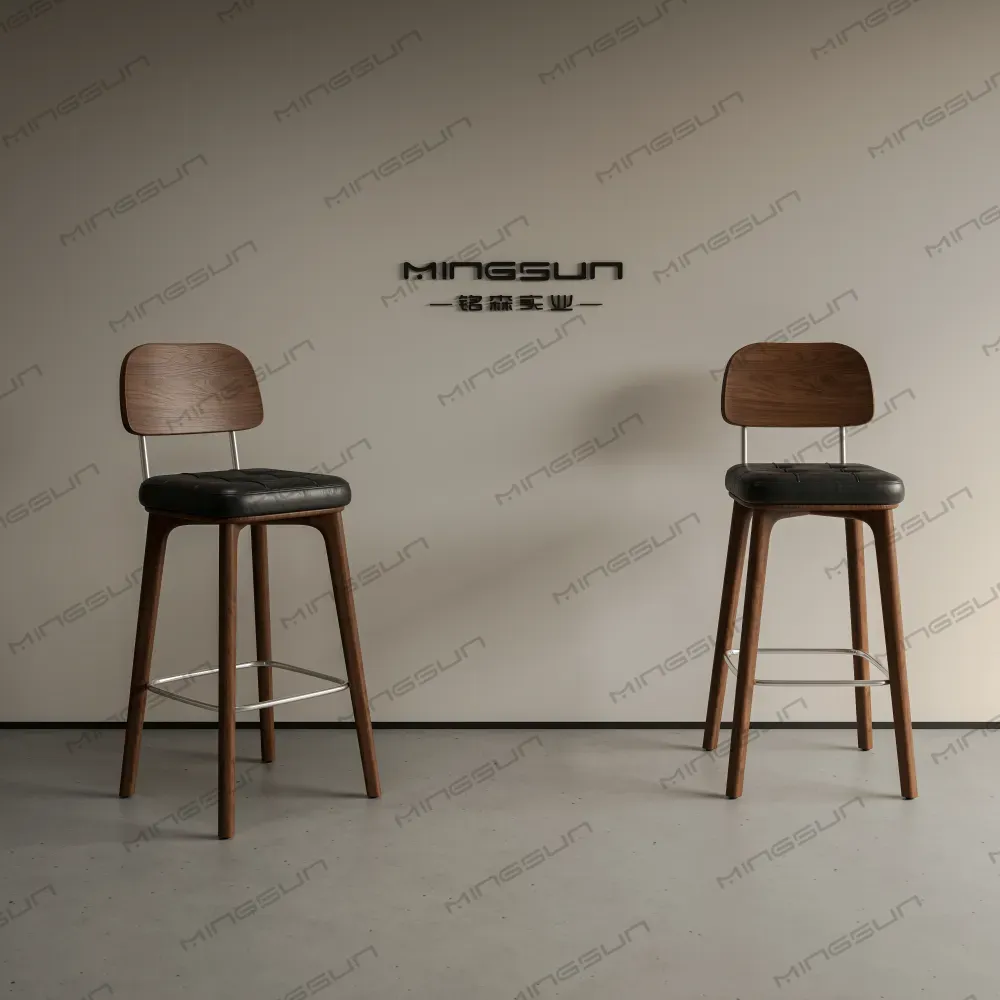
Mid-Century Modern Walnut Bar Stool with Tufted Leather Seat & Chrome Footrest for Luxury Hospitality
Elevate the aesthetic of your hotel bar, upscale restaurant, or executive lounge with this sophisticated bar stool, meticulously crafted by MINGSUN. Blending mid-century modern warmth with industrial durability, this stool features a curved, walnut-veneer backrest designed for ergonomic support and visual depth. The seat is upholstered in premium black PU leather (customizable to genuine leather) with classic button tufting, offering a refined texture that resists wear in high-traffic commercial environments.
Supported by tapered solid wood legs and reinforced with a chrome-finished steel footrest ring, this piece ensures stability and longevity. As a leading Guangzhou hotel furniture manufacturer, MINGSUN ensures that every stool meets rigorous contract-grade standards. From our 10,000㎡ factory directly to your venue, we provide a complete solution including manufacturing, global logistics, and video installation guidance to ensure a seamless project completion.
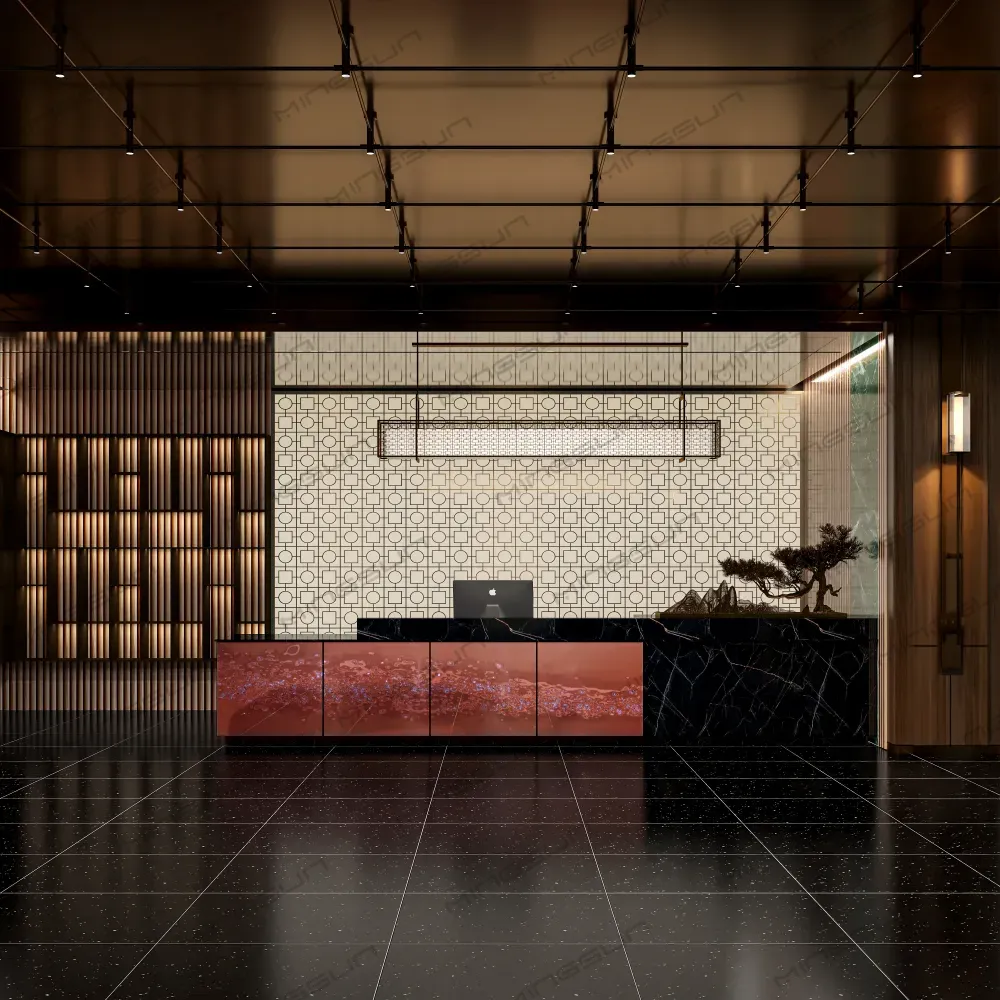
Luxury Reception Desk with Black Marble Top & Illuminated Copper-Resin Front Panels
Make a bold, unforgettable statement at your hotel’s entrance with this avant-garde reception desk. Its sleek black marble top exudes timeless sophistication, while the front facade features mesmerizing, internally lit copper-resin panels that glow with a warm, amber radiance, creating a dynamic visual centerpiece. Designed for both form and function, the unit offers ample concealed storage behind seamless doors and integrates a dedicated staff workstation with cable management. This is more than a check-in counter—it’s a sculptural installation that defines the luxury and artistry of your brand.
Get more industry insights
Looking for the right solution? Fill out the form and get a free quote.
Our experts will respond quickly with personalized options that fit your needs.
MINGSUN is a design-driven hotel furniture manufacturer offering OEM/ODM services, custom solutions, and global project support.
Built for wholesalers. Trusted by global buyers. Delivered with confidence.
Phone:
E-mail:
Follow us ——
 Scan QR Code
MINGSUN
MINGSUN
MINGSUN
MINGSUN
MS Custom Hotel Furniture Supplier