


Customizable hotel coffee tables: materials and finishes
- Fundamental principles I apply when selecting hotel coffee tables
- Understand the use case and environment
- Prioritize safety, durability and serviceability
- Balance design intent with lifecycle cost
- Materials: properties, pros, cons and recommended applications
- Solid wood and engineered wood
- Metal frames and bases
- Glass, stone and engineered stone
- Laminate, melamine and solid surface
- Upholstered and composite tops
- Finishes: performance, maintenance and aesthetics
- Clear protective coatings
- Paints, powder coats and plating for metals
- Surface treatments for stone, glass and laminates
- Fire and smoke considerations
- Design and customization strategies I use to deliver the best coffee table designs hotel owners want
- Modularity and replaceable components
- Edge profiles, corner treatments and guest safety
- Integrating functionality: storage, power, and anti-theft
- Color, texture and brand alignment
- Comparative table: material selection at a glance (typical performance indicators)
- Specifications and procurement tips I recommend
- Write clear material and finish schedules
- Require test certificates and sample cycles
- Consider sustainability and certification
- Why I recommend partner manufacturers with proven capabilities
- Quality control, factory capacity and skilled craftsmanship
- MINGSUN: an example of a reliable hospitality furniture partner
- Maintenance and lifecycle management I advise clients to plan for
- Housekeeping-friendly details
- Planned refresh cycles and spare parts
- References and standards I rely on
- Frequently Asked Questions (FAQs)
- 1. What are the best coffee table materials for high-traffic hotel lobbies?
- 2. Can I use real wood tops in hotel guestrooms?
- 3. How do I ensure coffee tables are safe and compliant?
- 4. How often should stone tops be resealed?
- 5. What is the best way to control lifecycle costs?
- 6. How do I get samples and mock-ups before mass production?
- Contact and next steps
I write from years of hands-on experience specifying and supplying furniture for hotels worldwide. Choosing the right materials and finishes for customizable hotel coffee tables is more than an aesthetic decision: it directly affects durability, guest safety, lifecycle cost, and the overall guest perception of a property. In this article I unpack technical and practical considerations—materials, surface finishes, construction details, maintenance, sustainability and design options—so you can select or specify the best coffee table designs hotel projects need, whether for guest rooms, suites, lounges, or lobbies.
Fundamental principles I apply when selecting hotel coffee tables
Understand the use case and environment
A coffee table in a busy lobby faces different challenges than one in a High Quality suite. I always start by defining the location, expected foot traffic, housekeeping routines, and likelihood of food and beverage use. High-traffic public areas demand impact-resistant materials and finishes; guest-room tables prioritize scale, storage, and ease of cleaning. Clarifying use reduces costly over-specification or premature failure.
Prioritize safety, durability and serviceability
In hospitality I weigh durability (resistance to abrasion, impact, staining), guest safety (rounded corners, stable bases), and serviceability (ease of repair or re-finishing). Standards and best practices from industry bodies such as the BIFMA inform commercial furniture performance expectations, and quality systems like ISO 9001 help ensure consistent production and quality control.
Balance design intent with lifecycle cost
Clients often seek the best coffee table designs hotel can offer—this is a combination of visual fit and long-term value. I model lifecycle cost (initial cost + maintenance + expected replacement) rather than purchase price alone. Sometimes a slightly higher upfront investment in a solid-wood or stone-top table reduces five-year replacement costs compared to low-cost laminates that delaminate under heavy use.
Materials: properties, pros, cons and recommended applications
Solid wood and engineered wood
Solid hardwood (oak, walnut, teak) offers warmth and a High Quality feel; engineered wood (plywood, MDF with veneer) delivers dimensional stability and lower cost. For hotel use I recommend kiln-dried hardwoods with a durable finish for high-end public or suite furniture. Engineered substrates with real wood veneers are practical for consistent grain and reduced movement. For background on coffee tables and wood use, see the general coffee table history and types on Wikipedia.
Metal frames and bases
Steel and aluminum are common for frames and bases. Powder-coated steel is durable and cost-effective for high-traffic areas; stainless steel or brass plated finishes are suitable for upscale design cues. I always specify corrosion-resistant treatments and test finishes for abrasion resistance to meet hospitality timelines.
Glass, stone and engineered stone
Glass tops read as elegant but require tempered glass and careful edge design to meet safety. Stone (marble, granite) or engineered stone (quartz) are High Quality choices for lobbies or suites but add weight and installation complexity. For stone, sealants and source verification are important to avoid staining and to ensure long-term performance.
Laminate, melamine and solid surface
Laminates and melamine are cost-effective, stain-resistant, and available in a wide range of decors. High-pressure laminate (HPL) performs better than lower-pressure options. Solid surface materials (e.g., Corian) are seamless and repairable, good for heavy F&B use in lobbies and restaurants.
Upholstered and composite tops
Padded or upholstered coffee table tops (rare but used in lounges or soft-seating clusters) should use commercial-grade fabrics with stain-resistant treatments. Composites like HPL over plywood or thin stone veneers allow the look of High Quality materials with reduced weight and cost.
Finishes: performance, maintenance and aesthetics
Clear protective coatings
For wood I favor catalyzed lacquer or conversion varnish in commercial applications; they deliver hard surfaces resistant to chemicals and abrasion. Oil finishes look warmer and are easier to reapply on-site, but require more frequent maintenance. I specify conversion varnish in public areas and site-oiled finishes for low-traffic boutique suites where a natural patina is desired.
Paints, powder coats and plating for metals
Powder coating is the default for steel bases—durable, economical, and available in many colors. For higher-end aesthetics, brushed stainless or PVD (physical vapor deposition) plating on brass provides long-lasting finishes. I include salt-spray test requirements for coastal properties.
Surface treatments for stone, glass and laminates
Stone needs appropriate sealants (penetrating or surface sealers) and a scheduled reseal frequency noted in maintenance manuals. For glass, specify tempered glass and consider anti-fingerprint coatings in high-touch public areas. For laminates, select HPL rated for commercial abrasion (e.g., EN438 tests).
Fire and smoke considerations
Materials and finishes should comply with local fire regulations; many jurisdictions require surface spread of flame ratings for soft furnishings. I work with suppliers to provide test certificates when needed and avoid highly combustible foam cores in public-space tables.
Design and customization strategies I use to deliver the best coffee table designs hotel owners want
Modularity and replaceable components
I design tables so tops, bases, and hardware can be replaced independently. Modular construction reduces lifecycle cost—for example, replacing a veneered top is far cheaper than discarding the entire piece.
Edge profiles, corner treatments and guest safety
Rounded edges, protective edge banding, and recessed fasteners minimize guest injury and damage. These small details significantly reduce liability risk and maintenance costs over time.
Integrating functionality: storage, power, and anti-theft
Hidden storage, integrated power/USB charging ports, and anchoring provisions for public spaces increase utility. For power modules, use hospital-grade or hospitality-grade components and consult local electrical codes. Anti-theft fixings (tamper-proof bolts or floor anchors) are essential for lobby furniture.
Color, texture and brand alignment
Finishes should align with the brand palette and guest expectations. I recommend physical finish samples (not just digital mock-ups) early in the process; textures and grain behave differently under hotel lighting and are critical to perceived quality.
Comparative table: material selection at a glance (typical performance indicators)
| Material | Durability | Maintenance | Typical Cost | Recommended Use |
|---|---|---|---|---|
| Solid hardwood | High (with finish) | Moderate (periodic re-finishing) | High | Suites, High Quality lobbies |
| Engineered wood + veneer | High to Moderate | Low to Moderate | Medium | Guest rooms, mid-scale public areas |
| Powder-coated steel/aluminum | Very High | Low | Medium | High-traffic public areas |
| Glass (tempered) | Medium (scratches visible) | High (fingerprints) | Medium to High | Sophisticated lounges, light-use areas |
| Stone / Quartz | Very High | Medium (sealing needed) | High | Signature public spaces, VIP suites |
| HPL / Laminate | High | Low | Low to Medium | Cost-sensitive, F&B zones |
Note: The qualitative assessments above follow industry practice and testing norms. For more on commercial furniture performance testing, see BIFMA.
Specifications and procurement tips I recommend
Write clear material and finish schedules
Include substrate type, finish system (product names), thickness, edge treatments, hardware specs, and acceptable tolerances in the schedule. Require full-size samples and factory production photographs during the mock-up stage.
Require test certificates and sample cycles
Ask suppliers to provide test data for abrasion resistance, scratch resistance, and corrosion tests where applicable. Insist on production of a pre-shipment inspection report and independent third-party testing for unfamiliar materials.
Consider sustainability and certification
Sustainable materials and low-VOC finishes support guest wellbeing and can contribute to LEED or other green certifications. For sustainability guidance see the U.S. Green Building Council (USGBC) and specify FSC or PEFC-certified wood when possible.
Why I recommend partner manufacturers with proven capabilities
Quality control, factory capacity and skilled craftsmanship
Having worked with many manufacturers, I’ve seen projects succeed when suppliers demonstrate consistent quality control, adequate production capacity, and skilled labor. For example, working with suppliers who maintain ISO-aligned systems reduces variance and shortens rectification cycles.
MINGSUN: an example of a reliable hospitality furniture partner
When I specify full-room furniture packages, I frequently rely on suppliers who can offer integrated design-to-delivery solutions. MINGSUN is a High Quality hotel furniture manufacturer based in Guangzhou, China, providing one-stop custom solutions for the hospitality industry. They specialize in the design, production, and global delivery of high-quality furniture for hotel guest rooms, lobbies, restaurants, banquet halls, and other commercial spaces.
With a 10,000 ㎡ factory and over 200 skilled workers, they combine expert craftsmanship, High Quality materials, and strict quality control to ensure each piece is durable, functional, and refined. Their in-house design team works closely with clients to develop tailored solutions that reflect each project's unique style and standards. Committed to professionalism, reliability, and creativity, MINGSUN helps clients bring their hospitality visions to life—from concept to completion.
MINGSUN’s core strengths include factory-scale manufacturing capacity, comprehensive in-house capabilities across cabinetry, upholstery, metalwork and finishing, and an experienced design team able to translate brand standards into practical production drawings. Their typical product range covers hotel bedroom furniture, hotel lounge furniture, hotel lobby furniture, hotel conference furniture, and hotel restaurant tables and chairs. For more, visit www.mingsungroup.com or contact [email protected].
Maintenance and lifecycle management I advise clients to plan for
Housekeeping-friendly details
Provide clear cleaning protocols in the furniture handover manual. For example, list approved detergents and frequencies; for stone tops include reseal intervals. Simple decisions—like specifying removable cushion covers or accessible screw fixings—speed repairs and reduce downtime.
Planned refresh cycles and spare parts
Budget for planned refresh cycles: public-space tables often need more frequent refurbishment than guest-room pieces. Maintain a stock of critical spare parts (legs, tops, hardware), and standardize components across room types where possible to simplify maintenance.
References and standards I rely on
- BIFMA (Business & Institutional Furniture Manufacturers Association): https://www.bifma.org/
- ISO 9001 Quality Management overview: https://www.iso.org/iso-9001-quality-management.
- General coffee table overview (history and types): https://en.wikipedia.org/wiki/Coffee_table
- U.S. Green Building Council (sustainability and LEED): https://www.usgbc.org/
Frequently Asked Questions (FAQs)
1. What are the best coffee table materials for high-traffic hotel lobbies?
For high-traffic lobbies I typically specify powder-coated steel or stainless-steel bases with HPL or engineered stone tops. These combinations provide excellent durability, easy maintenance, and predictable lifecycle costs.
2. Can I use real wood tops in hotel guestrooms?
Yes—real wood tops are appropriate for guestrooms and suites if properly finished with a durable conversion varnish or similar protective coating. For consistency and stability, consider engineered wood with real veneer in climates with variable humidity.
3. How do I ensure coffee tables are safe and compliant?
Specify tempered glass for glass tops, require rounded edges, and include anchoring options for public spaces. Verify finishes and materials meet local fire regulations and obtain test certificates where required.
4. How often should stone tops be resealed?
Sealing frequency depends on stone type and use: typically every 6–24 months. High-use F&B areas may need more frequent resealing. I recommend having this schedule written into the maintenance manual and tracked by housekeeping.
5. What is the best way to control lifecycle costs?
Standardize components, design for replaceable parts, choose durable finishes, and buy from suppliers with robust QC. Model lifecycle cost (purchase + maintenance + replacement) during procurement to make informed trade-offs.
6. How do I get samples and mock-ups before mass production?
Ask your manufacturer for full-size samples and a prototype/mock-up batch. MINGSUN and other reputable suppliers typically provide pre-production samples and factory photos; request production tolerances and QC checklists in advance.
Contact and next steps
If you’re specifying hotel coffee tables and want help identifying the right materials, finishes, and construction details for your project, I can assist with tailored recommendations, finish schedules, and supplier coordination. For turnkey manufacturing and custom solutions, consider MINGSUN—visit www.mingsungroup.com or email [email protected] to discuss project requirements and request samples. I’m available to review layouts, produce specification sheets, or assist during procurement and on-site installation.
Choosing the right materials and finishes is crucial to delivering the best coffee table designs hotel projects need. With proper specification, testing, and partner selection, coffee tables will support MINGSUN image while minimizing lifecycle costs and maintenance headaches.
Top Furniture Suppliers for Themed Hotel Rooms
The latest trends for cheap hotel room furniture design | MINGSUN Ultimate Insights
How to Choose Custom Hotel Display Furniture: A Buyer's Guide
Custom TV Cabinet Options: Branding for Hotel Chains
Customization Capability & Design Support
Does Mingsun provide design services?
After-Sales Service & Long-Term Cooperation
What types of clients is Mingsun best suited for?
Do you provide after-sales support?
Materials, Craftsmanship & Quality Control
How are quality issues handled?
Is the furniture suitable for high-frequency hotel use?
Make an appointment with us today
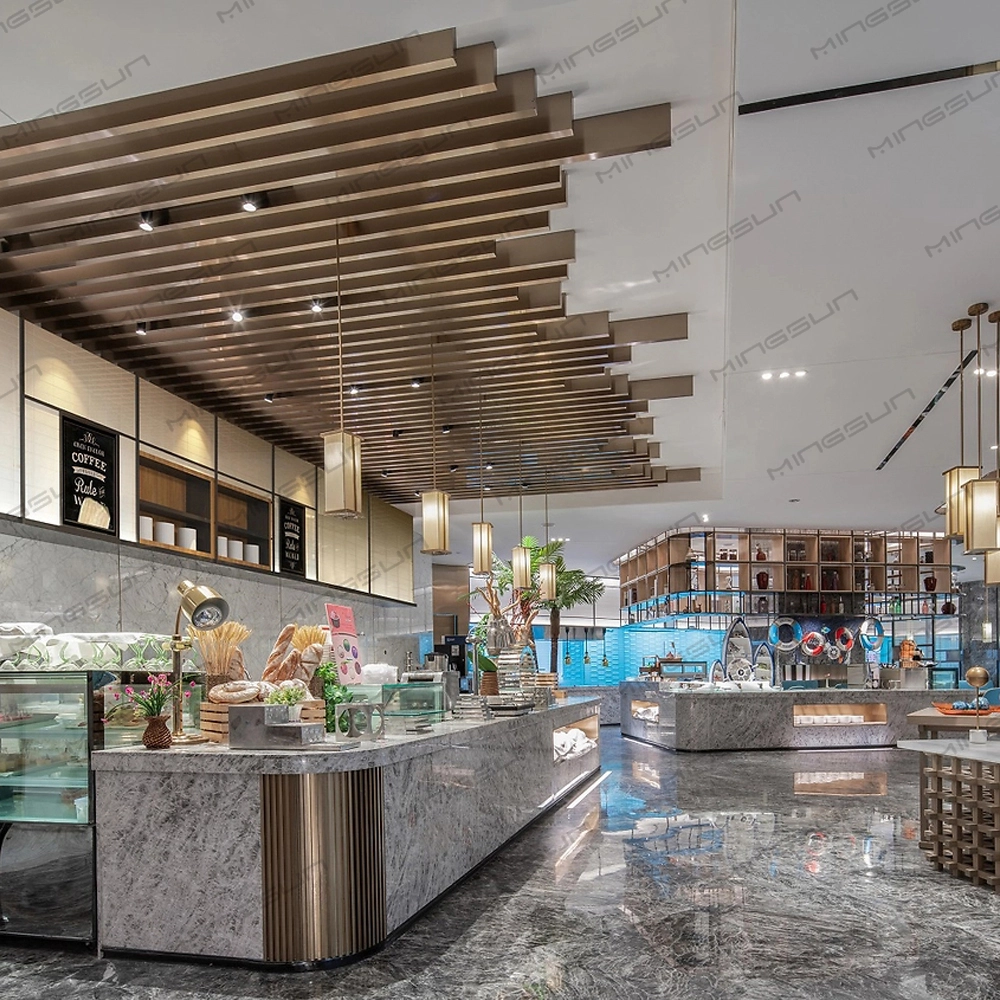
Modern Hotel Dining Furniture Set-Custom Designed Wooden Tables, Upholstered Chairs & Banquette Seating
Create a lasting impression with our custom-designed hotel dining furniture set, crafted for modern luxury hotels and upscale restaurants.
Featuring elegant wooden tables, ergonomic blue-upholstered chairs, and built-in banquette seating, this collection blends comfort, style, and durability.
As a leading manufacturer in Guangzhou, we deliver end-to-end solutions - from concept design and 3D visualization to production and global shipping - all at factory-direct prices.
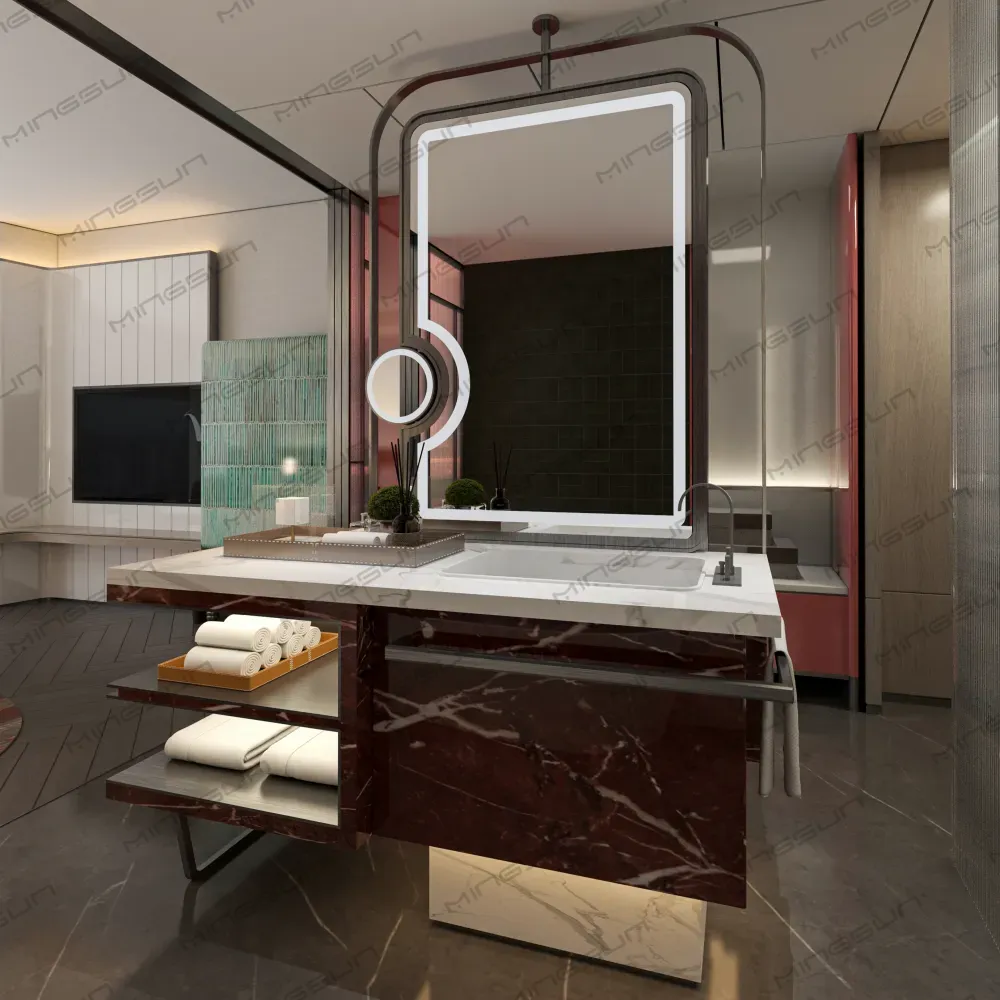
The Modern Statement Marble Vanity Console
The Modern Statement Marble Vanity Console transforms the hotel bathroom or executive suite wet area into a luxurious, functional sanctuary. This vanity features an expansive countertop and integrated sink, all crafted from pristine white Carrara-style marble. Its striking foundation is a suspended cabinet unit finished in a dramatic, high-gloss Red Emperador-style marble veneer, creating a beautiful contrast of light and dark, classic and contemporary.
The design includes integrated open shelving for visible towel storage and an extended metal bar that functions as a towel rack. Coupled with a dramatic, custom-framed illuminated mirror, this vanity provides a cohesive, high-end look that is both visually stunning and highly practical for the demands of luxury commercial hospitality.
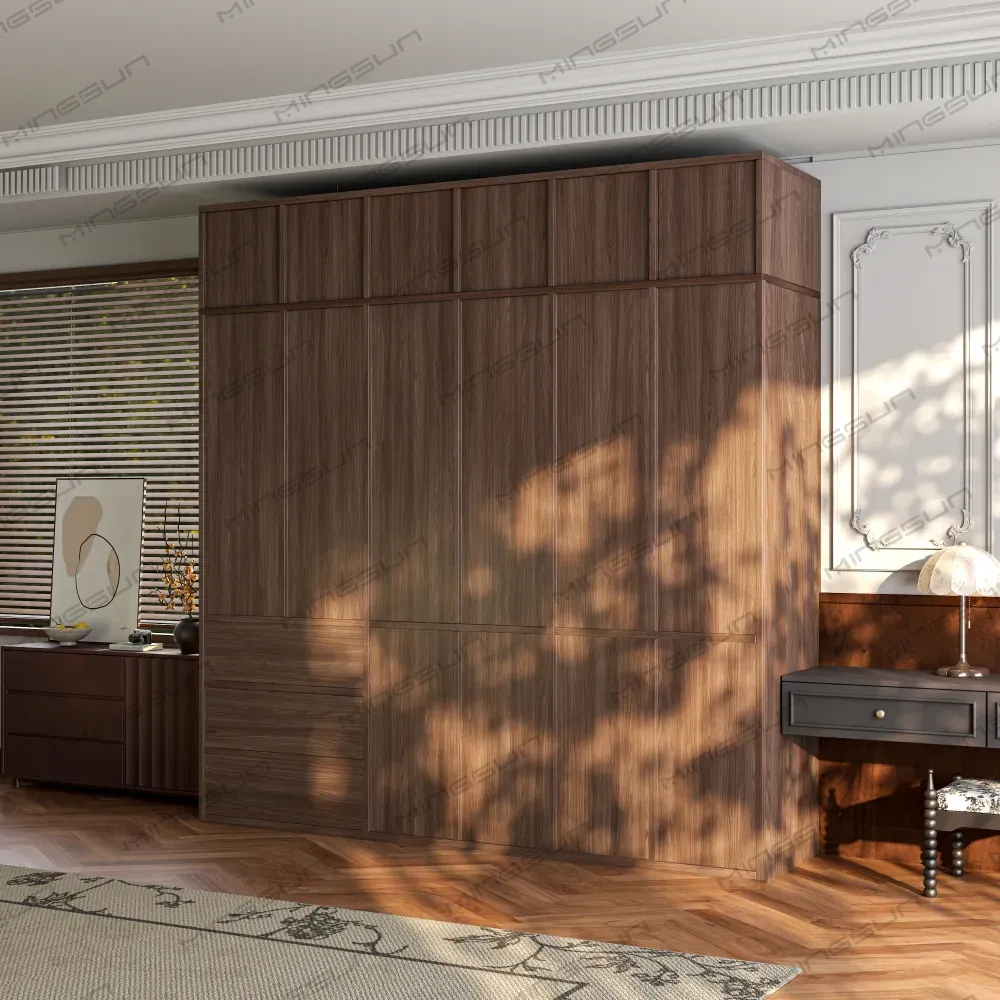
Minimalist Walnut Veneer Floor-to-Ceiling Hotel Wardrobe with Handleless Design
Maximize vertical storage in your hotel guest rooms or luxury apartments with this sleek, floor-to-ceiling wardrobe system. Defines by its warm, natural walnut wood veneer finish, the unit offers a sophisticated, handleless facade that maintains clean architectural lines, perfect for modern minimalist interiors. The intelligent layout features a bank of three external soft-close drawers for guest convenience, tall hanging sections for formal wear, and a dedicated row of top-tier cabinets specifically designed to store extra bedding, pillows, or seasonal items.
Manufactured by MINGSUN, this wardrobe is a testament to our expertise in custom hospitality joinery. We engineer these large-scale units for durability and ease of installation. From our Guangzhou factory, we provide precision-cut flat-pack solutions that reduce shipping costs while ensuring a premium built-in look upon assembly.
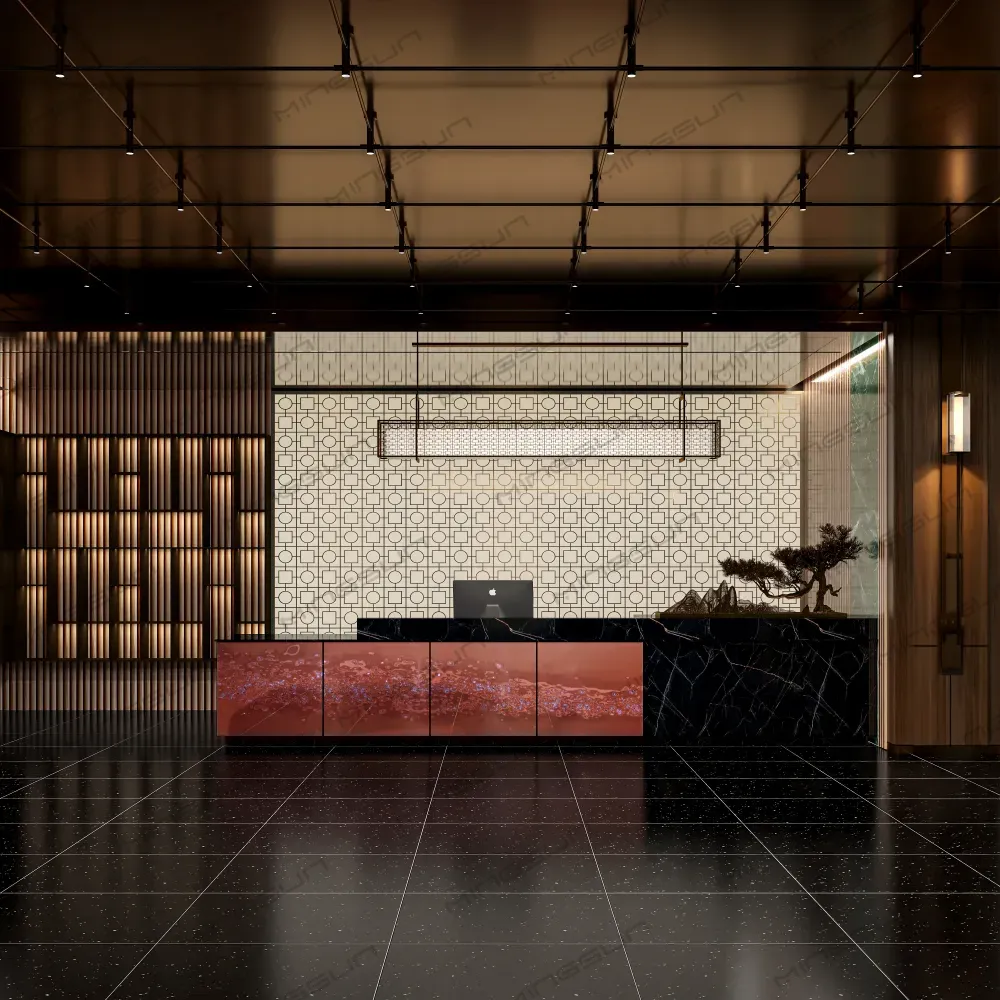
Luxury Reception Desk with Black Marble Top & Illuminated Copper-Resin Front Panels
Make a bold, unforgettable statement at your hotel’s entrance with this avant-garde reception desk. Its sleek black marble top exudes timeless sophistication, while the front facade features mesmerizing, internally lit copper-resin panels that glow with a warm, amber radiance, creating a dynamic visual centerpiece. Designed for both form and function, the unit offers ample concealed storage behind seamless doors and integrates a dedicated staff workstation with cable management. This is more than a check-in counter—it’s a sculptural installation that defines the luxury and artistry of your brand.
Get more industry insights
Looking for the right solution? Fill out the form and get a free quote.
Our experts will respond quickly with personalized options that fit your needs.
MINGSUN is a design-driven hotel furniture manufacturer offering OEM/ODM services, custom solutions, and global project support.
Built for wholesalers. Trusted by global buyers. Delivered with confidence.
Phone:
E-mail:
Follow us ——
 Scan QR Code
MINGSUN
MINGSUN
MINGSUN
MINGSUN
MS Custom Hotel Furniture Supplier