


Designing Coffee Cabinets for Small-Boutique Hotels
- Compact, guest-focused coffee bar cabinet solutions for boutique hospitality
- Understanding guest needs and
- Types of coffee experiences boutique guests expect
- User intent and operational impact
- Regulatory and accessibility considerations
- Designing the coffee bar cabinet: architecture and ergonomics
- Space planning and standard dimensions
- Ergonomics and guest flow
- Integration of plumbing and electrical
- Materials, hardware, and durability for hospitality use
- Material selection: cores, faces, and countertops
- Hardware and serviceability
- Cleaning, hygiene, and sustainability
- Equipment integration, operations, and lifecycle costs
- Choosing equipment: pods, grinders, or fully integrated espresso
- Serviceability, maintenance schedule, and total cost of ownership
- Security, theft reduction, and inventory
- Case studies, retrofits, and sustainability strategies
- Retrofit checklist for older properties
- Measurable sustainability moves
- MINGSUN: partner capabilities for high-quality hospitality cabinetry
- Implementation checklist and procurement tips
- Specification checklist
- Procurement and warranty negotiation
- KPIs to monitor after installation
- FAQ
- 1. What is the ideal size for a coffee bar cabinet in a boutique hotel room?
- 2. Should I plumb coffee cabinets or use refillable water containers?
- 3. What materials resist moisture and coffee staining best?
- 4. How do I ensure the coffee cabinet meets accessibility rules?
- 5. How can a hotel reduce operating costs for in-room coffee cabinets?
- 6. Can MINGSUN deliver customized coffee cabinet solutions and global shipping?
Compact, guest-focused coffee bar cabinet solutions for boutique hospitality
Small boutique hotels need coffee bar cabinets that balance aesthetics, functionality, and operational durability. This guide explains how to design compact coffee stations—whether in guestrooms, corridors, or lobby niches—by matching user intent (grab-and-go, in-room espresso, or self-service pour-over) with cabinetry layout, material selection, plumbing/electrical integration, and service workflows. The recommendations below are grounded in hospitality practice, cabinetry standards, and accessibility considerations to ensure reliable guest experience, efficient housekeeping, and long-term value.
Understanding guest needs and
Types of coffee experiences boutique guests expect
Before selecting a coffee bar cabinet, clarify the hospitality concept: in-room coffee station vs. centralized lobby coffee bar vs. compact corridor coffee niche. Boutique guests often search for High Quality espresso, single-origin pour-over, or convenient pod systems. Each expectation maps to different cabinetry needs—e.g., in-room minibar cabinet that also houses a capsule machine requires ventilation and spill management; a lobby built-in coffee niche demands higher throughput and durable surfaces.
User intent and operational impact
Search queries such as in-room espresso cabinet, compact hospitality cabinetry, or integrated coffee station for hotels indicate either procurement, design inspiration, or retrofit needs. Design decisions affect housekeeping time, maintenance costs, and guest safety. Mapping guest intent to durable finishes (moisture-resistant cores, abrasion-resistant veneers) and hospitality-grade hardware reduces lifecycle costs and improves guest satisfaction metrics.
Regulatory and accessibility considerations
Even small-boutique hotels must consider accessible use. Refer to the ADA Standards for Accessible Design for clearances and reachable controls. For counter heights and working surfaces, standard cabinetry guidance such as the kitchen countertop reference (typically ~36 in / 91–92 cm) helps when designing bar-height vs. standard-height stations. Compliance influences drawer placement, knee clearances, and switch locations for espresso machines.
Designing the coffee bar cabinet: architecture and ergonomics
Space planning and standard dimensions
Start with the program (equipment list) and circulation. Typical components: espresso machine (or pod machine), water supply/boiler or refillable water carafe, under-counter waste, refrigeration for milk/juice (optional), storage for cups/condiments, and integrated trash. Use the following guideline dimensions as a baseline—adjust for machine footprint and service clearances.
| Component | Typical Width (mm / in) | Depth (mm / in) | Notes |
|---|---|---|---|
| Single-group espresso machine footprint | 350–600 mm / 14–24 in | 500–700 mm / 20–28 in | Allow service clearance behind and above |
| Compact undercounter fridge | 450–600 mm / 18–24 in | 450–600 mm / 18–24 in | Prefer front-venting models for cabinetry |
| Countertop / service height | 915–920 mm / 36 in | 600 mm / 24 in | Standard countertop height; use bar-height for standing stations |
Sources: kitchen countertop standards and equipment specification sheets from major manufacturers.
Ergonomics and guest flow
Design for right-handed and left-handed users when possible: position grinders and knockboxes so baristas or staff can access without crossing guest flow. For in-room units, arrange cups, sugar, and spoons in an intuitive left-to-right sequence matching the machine orientation to reduce fumbling. Include a removable drip tray and integrated waste chute to simplify housekeeping.
Integration of plumbing and electrical
Decide early between plumbed-in water for espresso boilers and refill systems. Plumbed systems demand access panels and shutoff valves behind cabinets; refill systems require splash-proof storage and guidance for safe hot-water handling. Ensure GFCI-protected circuits for all equipment and specify ventilation or heat-dissipating open backs for sealed cabinetry around heat-producing machines.
Materials, hardware, and durability for hospitality use
Material selection: cores, faces, and countertops
Small-boutique hotels must balance aesthetics and maintenance. Recommended assemblies include moisture-resistant MDF or marine-grade plywood cores, high-pressure laminates (HPL) or real-wood veneers with protective UV-cured finishes for faces, and quartz or compact laminate counters for spill resistance. Use the term durable veneers and moisture-resistant cores to guide procurement specifications.
Hardware and serviceability
Choose hospitality-grade soft-close hinges and drawer slides rated for high cycles (e.g., 50,000+ cycles). Concealed slides with integrated dampers reduce noise in guestrooms. For integrated minibar cabinets, specify lockable slides or tamper-evident seals and front-venting refrigeration to prevent overheating inside enclosed cases.
Cleaning, hygiene, and sustainability
Specify non-porous countertops and sealed edges for easy sanitization. Consider antimicrobial surface treatments where suitable, and choose materials with environmental certifications (FSC for wood veneers, low-VOC finishes). Sustainable choices reduce long-term environmental impact and align with guest expectations for eco-conscious boutique brands.
Equipment integration, operations, and lifecycle costs
Choosing equipment: pods, grinders, or fully integrated espresso
Match equipment to throughput and staff availability. Pod or single-serve machines minimize barista skill and reduce mess, while grinder-plus-group machines deliver higher quality but require staff or training. For small boutique hotels focusing on High Quality experience, a dedicated single-group espresso with automatic dosing can be a good compromise.
Serviceability, maintenance schedule, and total cost of ownership
Design cabinets with removable panels and front-access plumbing/electrical for quick servicing. Create a scheduled maintenance plan (descaling, gasket replacement, refrigeration cleaning). Consider the following cost drivers in procurement: initial cabinetry fabrication, equipment integration labor, warranty terms, and replacement parts availability.
| Option | Guest Experience | Operational Complexity | Estimated Lifecycle Cost (relative) |
|---|---|---|---|
| Pod / capsule machine | Consistent, predictable | Low | Low |
| Automatic single-group espresso | High-quality espresso | Medium (training required) | Medium |
| Manual commercial espresso | Barista-grade | High (skilled staff) | High |
Data synthesis based on typical equipment lifespans and hospitality service models. For industry context on boutique hotel trends see boutique hotels.
Security, theft reduction, and inventory
For in-room coffee cabinets that double as minibar cabinets, use discreet locking or telemetry-enabled inventory systems. Track consumables to optimize housekeeping restocking and reduce shrinkage. For shared lobby coffee stations, design merchandising that reduces breakage—secure containers for beans and sealed condiment dispensers.
Case studies, retrofits, and sustainability strategies
Retrofit checklist for older properties
When retrofitting, inspect existing electrical capacity, ventilation paths, and water lines. Prioritize front-venting refrigeration and easily removable splashbacks. Retrofits often require reinforcing countertops for heavy espresso groups and adding dedicated circuits—factor these into budget and timeline.
Measurable sustainability moves
Small changes yield measurable impact: replace single-use pods with compostable alternatives or bulk-brew options; specify LED task lighting and auto-off sensors; choose low-VOC finishes. Track savings via energy meters and reduced waste tonnage to validate ROI.
MINGSUN: partner capabilities for high-quality hospitality cabinetry
MINGSUN is a High Quality hotel furniture manufacturer based in Guangzhou, China, providing one-stop custom solutions for the hospitality industry. We specialize in the design, production, and global delivery of high-quality furniture for hotel guest rooms, lobbies, restaurants, banquet halls, and other commercial spaces.
With a 10,000 ㎡ factory and over 200 skilled workers, MINGSUN combines expert craftsmanship, High Quality materials, and strict quality control to ensure each piece is durable, functional, and refined. Our in-house design team works closely with clients to develop tailored solutions that reflect each project's unique style and standards.
For coffee bar cabinets, MINGSUN offers tailored options for: hotel bedroom furniture, hotel lounge furniture, hotel lobby furniture, hotel conference furniture, and hotel restaurant tables and chairs. Competitive advantages include:
- Custom engineering for integrated equipment (plumbing/electrical/access panels) to simplify installation and maintenance.
- Use of hospitality-grade materials—moisture-resistant cores, durable veneers, HPL and quartz counters—to extend lifecycle in high-use environments.
- Strict QC and factory acceptance testing to ensure unit-level functionality (ventilation, front-vent refrigeration, door clearances) prior to shipping.
- Turnkey project support from concept through global delivery, reducing coordination overhead for design teams and owners.
Partnering with an experienced manufacturer like MINGSUN reduces risk in both new builds and retrofits—ensuring the coffee bar cabinet meets guest expectations while minimizing operational headaches.
Implementation checklist and procurement tips
Specification checklist
- Define coffee program (equipment list and throughput).
- Confirm electrical, plumbing, and ventilation requirements from equipment manufacturers.
- Specify materials: moisture-resistant core, HPL/quartz counters, hospitality-grade hardware.
- Include removable service panels and front access for refrigeration and plumbing.
- Plan housekeeping access and restocking workflow.
- Confirm ADA reach ranges and clearances where applicable (ADA standards).
Procurement and warranty negotiation
Negotiate clear warranty coverage for cabinetry and integrated equipment, including shipping damage, fixtures, and electrical cutouts. Request factory acceptance photos and test reports for integrated systems. Where possible, use local service partners for equipment maintenance to minimize downtime.
KPIs to monitor after installation
Track guest satisfaction scores related to F&B, maintenance tickets for the coffee station, restocking time per room/station, and energy/waste metrics. These KPIs will validate material and equipment choices and guide future rollouts.
FAQ
1. What is the ideal size for a coffee bar cabinet in a boutique hotel room?
For in-room cabinets, allow at minimum 600 mm (24 in) depth and 900–1200 mm (36–48 in) width for a pod machine plus storage; increase to 1200–1500 mm (48–60 in) for an espresso machine with a grinder. Always confirm equipment footprint and service clearances.
2. Should I plumb coffee cabinets or use refillable water containers?
Plumbed systems offer convenience and consistency but require plumbing access, shutoffs, and potential maintenance. Refillable containers reduce installation cost and complexity but increase housekeeping workload and risk of spills. Choose based on throughput and staffing.
3. What materials resist moisture and coffee staining best?
Quartz and compact laminate countertops with sealed edges perform well against stains. For cabinet faces, HPL or UV-cured veneers over moisture-resistant cores (marine plywood or MR-MDF) balance aesthetics and durability.
4. How do I ensure the coffee cabinet meets accessibility rules?
Use ADA reach ranges and knee clearances when the station is intended for guest self-service. Place controls within 48 in (1220 mm) vertical reach for forward reach, and provide 30 x 48 (760 mm x 1220 mm) clear floor space where required. Consult the ADA standards for project-specific compliance.
5. How can a hotel reduce operating costs for in-room coffee cabinets?
Choose low-maintenance equipment (pod or automatic dosing machines), specify durable, low-maintenance surfaces, design for easy housekeeping access, and implement inventory controls. Regular preventive maintenance reduces costly repairs.
6. Can MINGSUN deliver customized coffee cabinet solutions and global shipping?
Yes. MINGSUN provides custom hospitality furniture solutions from design to global delivery, backed by a 10,000 ㎡ factory and over 200 skilled workers. Their in-house design and QC processes ensure cabinets meet project specifications and quality standards.
Need help designing or sourcing coffee bar cabinets for your boutique property? Contact MINGSUN to review custom options, request samples, or get a project estimate—reach out to discuss your layout, equipment list, and finish preferences. View MINGSUN’s product range and request a quote to start your hospitality cabinetry project.
Maintenance Plans for Themed Hotel Room Furnishings
Customizable Coffee Tables: Branding & Function for Hotels
How Modern Guestroom Furniture Increases Revenue for Hotels
The latest trends for hotel design ideas | MINGSUN Ultimate Insights
After-Sales Service & Long-Term Cooperation
Is long-term cooperation or repeat ordering supported?
Pricing, Payment & Packaging
What payment terms do you offer?
How is pricing calculated? Does customization increase the cost?
Customization Capability & Design Support
Can you manufacture furniture based on design drawings or renderings?
About Mingsun – Company Background
Who are Mingsun’s main clients?
Make an appointment with us today
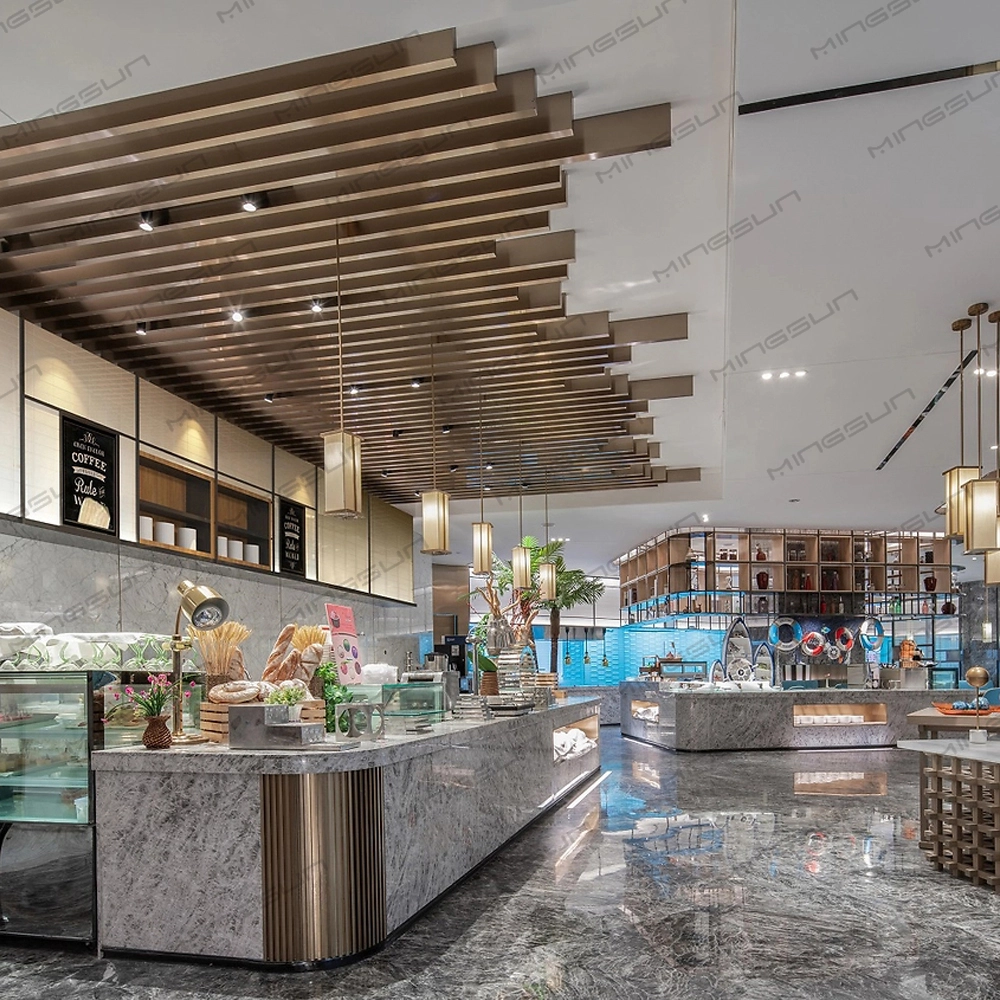
Modern Hotel Dining Furniture Set-Custom Designed Wooden Tables, Upholstered Chairs & Banquette Seating
Create a lasting impression with our custom-designed hotel dining furniture set, crafted for modern luxury hotels and upscale restaurants.
Featuring elegant wooden tables, ergonomic blue-upholstered chairs, and built-in banquette seating, this collection blends comfort, style, and durability.
As a leading manufacturer in Guangzhou, we deliver end-to-end solutions - from concept design and 3D visualization to production and global shipping - all at factory-direct prices.
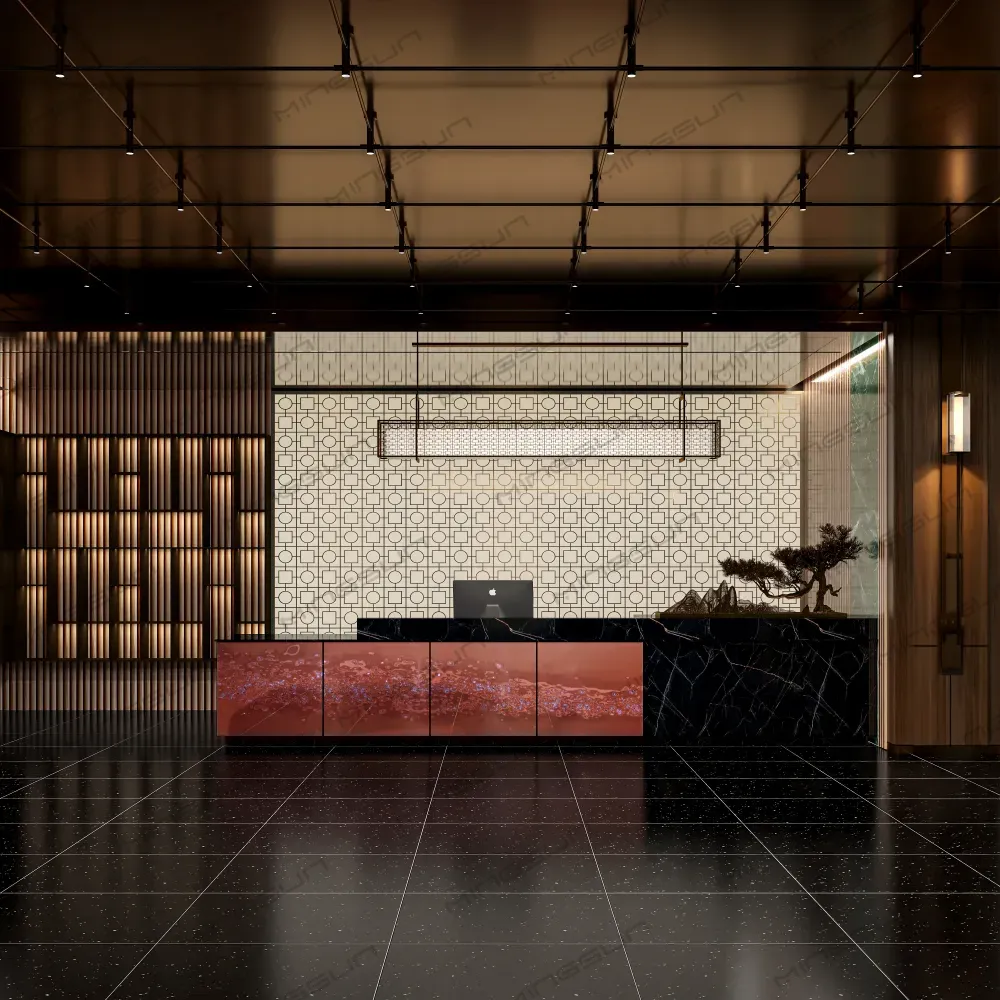
Luxury Reception Desk with Black Marble Top & Illuminated Copper-Resin Front Panels
Make a bold, unforgettable statement at your hotel’s entrance with this avant-garde reception desk. Its sleek black marble top exudes timeless sophistication, while the front facade features mesmerizing, internally lit copper-resin panels that glow with a warm, amber radiance, creating a dynamic visual centerpiece. Designed for both form and function, the unit offers ample concealed storage behind seamless doors and integrates a dedicated staff workstation with cable management. This is more than a check-in counter—it’s a sculptural installation that defines the luxury and artistry of your brand.
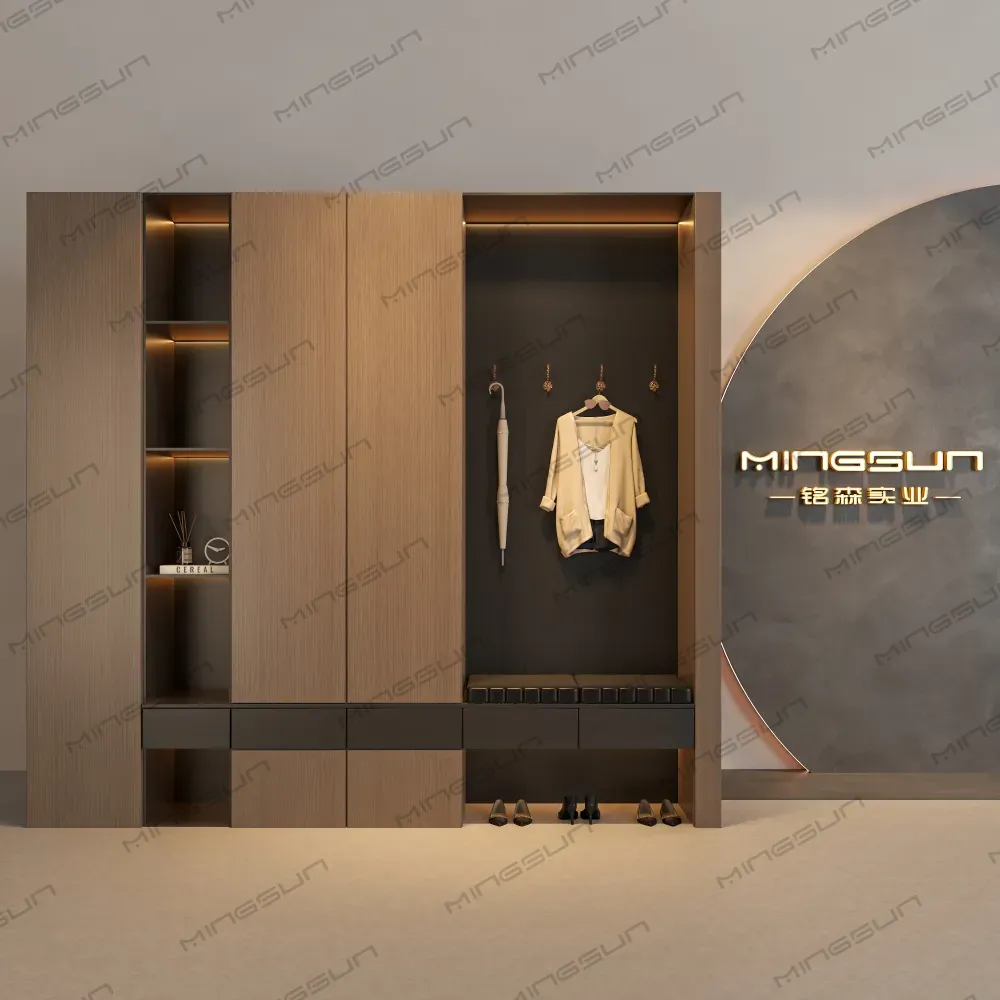
Modern Luxury Hotel Foyer Wardrobe with Integrated Seating & LED Shelving
Maximize functionality and style in your hotel suites or luxury apartment entryways with this comprehensive joinery solution. Designed to serve as a complete foyer station, this unit seamlessly combines an open wardrobe, closed storage cabinetry, display shelving, and a comfortable upholstered bench seat. The rich, warm wood veneer finish creates an inviting atmosphere the moment guests step inside, while the integrated vertical LED strip lighting highlights the open shelves, adding a layer of sophisticated ambiance. The design features dedicated zones for hanging coats, storing shoes in soft-close drawers, and displaying curated art or amenities.
Manufactured by MINGSUN, your expert Guangzhou hospitality furniture factory, this unit is engineered for both aesthetic appeal and rigorous commercial use. We provide a full one-stop solution, including precise site measurement support (via CAD), custom manufacturing to fit your specific niche dimensions, and global shipping with video-guided installation instructions.
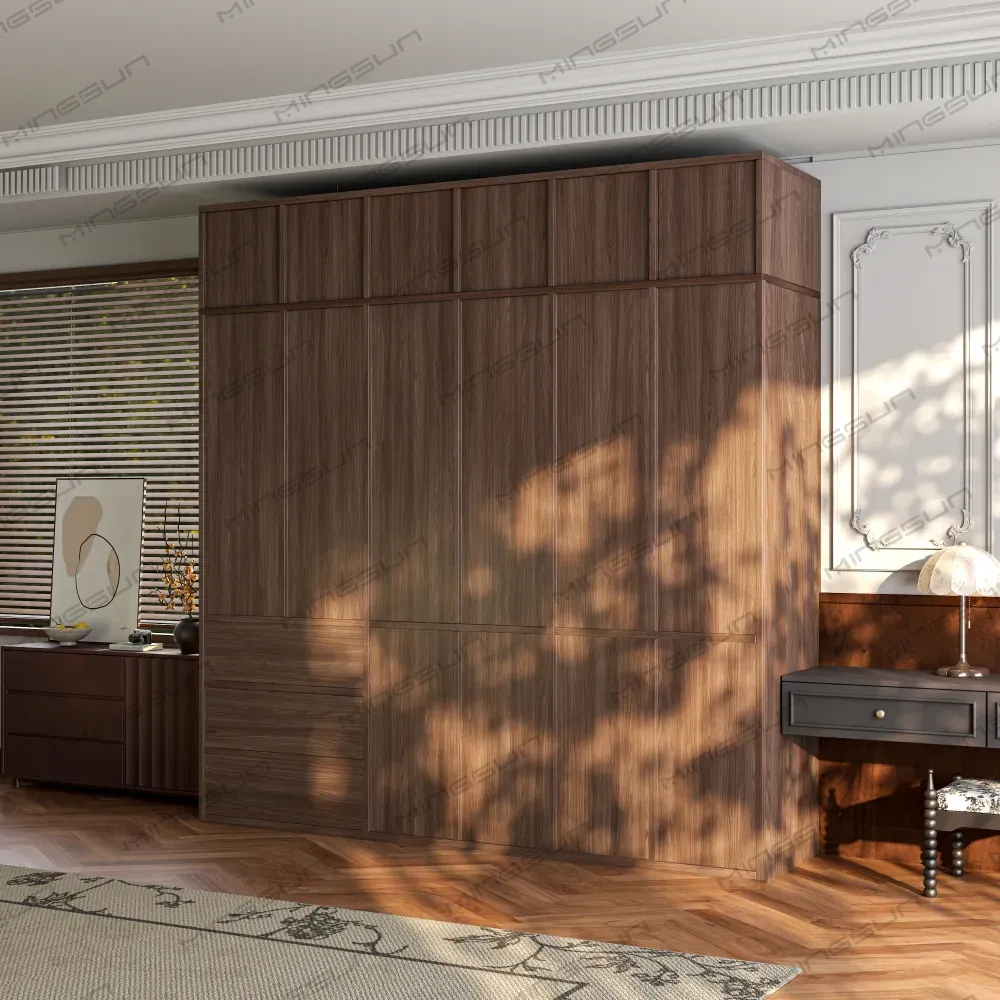
Minimalist Walnut Veneer Floor-to-Ceiling Hotel Wardrobe with Handleless Design
Maximize vertical storage in your hotel guest rooms or luxury apartments with this sleek, floor-to-ceiling wardrobe system. Defines by its warm, natural walnut wood veneer finish, the unit offers a sophisticated, handleless facade that maintains clean architectural lines, perfect for modern minimalist interiors. The intelligent layout features a bank of three external soft-close drawers for guest convenience, tall hanging sections for formal wear, and a dedicated row of top-tier cabinets specifically designed to store extra bedding, pillows, or seasonal items.
Manufactured by MINGSUN, this wardrobe is a testament to our expertise in custom hospitality joinery. We engineer these large-scale units for durability and ease of installation. From our Guangzhou factory, we provide precision-cut flat-pack solutions that reduce shipping costs while ensuring a premium built-in look upon assembly.
Get more industry insights
Looking for the right solution? Fill out the form and get a free quote.
Our experts will respond quickly with personalized options that fit your needs.
MINGSUN is a design-driven hotel furniture manufacturer offering OEM/ODM services, custom solutions, and global project support.
Built for wholesalers. Trusted by global buyers. Delivered with confidence.
Phone:
E-mail:
Follow us ——
 Scan QR Code
MINGSUN
MINGSUN
MINGSUN
MINGSUN
MS Custom Hotel Furniture Supplier