


Hotel Bathroom Dimensions and Fixture Placement Guide
- Optimizing Bathroom Space: Why hotel room dimensions matter
- Why bathroom planning is critical for hotel room dimensions and guest experience
- Typical bathroom size ranges by hotel class (embed: hotel room dimensions)
- Market-based size expectations for planning and programming
- Core clearances and fixture placement rules (useful for all hotel room dimensions)
- Minimum and recommended clearances to balance comfort and maintenance
- Fixture-by-fixture placement guide for efficient hotel bathrooms (keyword: hotel room dimensions)
- Toilet, vanity, shower/tub sequence strategies
- Accessibility and universal design considerations (reference hotel room dimensions and ADA)
- Balancing brand standards and inclusive design
- Plumbing, ventilation, and waterproofing allowances tied to hotel room dimensions
- Operational and maintenance implications
- Furnishings, finishes and hardware selection affecting perceived space (: hotel furniture)
- How furniture and fixture selection interacts with hotel room dimensions
- MINGSUN: Custom hotel furniture solutions aligned with bathroom and room dimensions
- How an integrated furniture partner supports hotel bathroom and room dimension challenges
- MINGSUN advantages and main product lines (hotel bedroom furniture, hotel lounge furniture, hotel lobby furniture)
- Practical layout examples and quick checks before construction (include hotel room dimensions checks)
- Checklist for architects, designers, and procurement
- FAQ — Frequently Asked Questions about hotel room dimensions and bathroom layout
- 1. What is the minimum bathroom size for a standard hotel room?
- 2. How do ADA requirements change bathroom layout and hotel room dimensions?
- 3. Is a curbless shower better for hotels?
- 4. Should vanities be wall-mounted or floor-mounted in hotel rooms?
- 5. How can I work with furniture manufacturers to match bathroom dimensions?
- Contact & Next Steps — Get tailored solutions for your hotel project
- Discuss custom hotel furniture and bathroom-fit solutions
- References
Optimizing Bathroom Space: Why hotel room dimensions matter
Why bathroom planning is critical for hotel room dimensions and guest experience
Bathroom layout is a disproportionate driver of guest satisfaction, operational efficiency, and lifecycle cost in hospitality design. Even when the overall hotel room dimensions are constrained, smart fixture placement, appropriate clearances, and a focus on accessibility can improve perceived space, cleaning turnaround, and durability. This guide provides practical dimension ranges, fixture placement principles, accessibility checkpoints, and construction considerations tailored to hotel projects of various star ratings.
Typical bathroom size ranges by hotel class (embed: hotel room dimensions)
Market-based size expectations for planning and programming
Design teams and operators use target bathroom sizes to set expectations for finish selections, ventilation, and housekeeping workflows. The table below shows typical net bathroom areas and common fixture packages by hotel class—these are market norms, not prescriptive code requirements. Actual sizes should be confirmed with local codes and brand standards.
| Hotel Class | Typical Bathroom Area (sq ft / m²) | Typical Fixtures | Design Notes (hotel room dimensions context) |
|---|---|---|---|
| Economy / Budget | 25–40 sq ft (2.3–3.7 m²) | Toilet, pedestal or small vanity, shower-tub combo | Compact layout prioritizes efficient plumbing wall; often single entry door; limited floor clearance. |
| Midscale / Select | 40–60 sq ft (3.7–5.6 m²) | Toilet, 24–30 vanity, separate shower (36×36 / 36×48) or tub | Allows for better vanity storage and more generous clearances—common in 28–35 m² rooms. |
| Upscale / Full Service | 60–90 sq ft (5.6–8.4 m²) | Toilet, double vanity or larger single, spacious shower (48×36+), sometimes soaking tub | Often integrated into room circulation for a luxurious feel; hotel room dimensions permit separate water closet. |
| Suites / Luxury | 90–200+ sq ft (8.4–18.6+ m²) | Separate water closet, freestanding tub, large walk-in shower, double vanities | Allows zoned plumbing and high-end finishes; plumbing chases and drainage capacity must be planned early. |
Core clearances and fixture placement rules (useful for all hotel room dimensions)
Minimum and recommended clearances to balance comfort and maintenance
Below are practical clearance rules widely used in hospitality design. These guidelines reflect a balance of guest comfort, accessibility, and housekeeping needs. For legal compliance in your jurisdiction, refer to local building and accessibility codes.
- Door clear width: Provide at least 32 clear for guest doors; 32–36 preferred for comfort and housekeeping carts.
- Toilet centerline: Locate the toilet center 16–18 from an adjacent side wall or partition for standard comfort (ADA reference: 16–18).
- Toilet clearance: Minimum 15 clear from centerline to nearest obstruction on the other side; 18 is more comfortable.
- Lavatory clearance: 30 wide clear floor space in front of sink; counter rim typically 31–36 above finished floor; accessible rim max 34 (ADA).
- Shower clearances: Typical minimum footprint for a comfortable shower is 36×36; a more luxurious walk-in is 36×60 or larger.
- Turning space: Allow 60 (1525 mm) diameter or equivalent T-shaped clear turning space for wheelchair access where required (ADA).
Fixture-by-fixture placement guide for efficient hotel bathrooms (keyword: hotel room dimensions)
Toilet, vanity, shower/tub sequence strategies
Arrange fixtures to optimize plumbing runs and create clear circulation paths. Preferred strategies include:
- Stack wet wall: Place toilet, vanity, and shower on a single structural wall to reduce piping and long-term maintenance costs.
- Water closet partitioning: In midscale and upscale rooms, provide a separate water closet partition to increase perceived privacy and allow simultaneous use.
- Vanity placement: Position the vanity near the bathroom entry or adjacent to the room for morning routines; ensure mirror and lighting placement consider average user heights and task lighting (vanity mirrors, 300–500 lux recommended at mirror plane).
- Shower orientation: For windowed bathrooms, consider orienting the shower against exterior walls for drainage and waterproofing convenience; use curbless or low-threshold showers where accessible design is desired.
Accessibility and universal design considerations (reference hotel room dimensions and ADA)
Balancing brand standards and inclusive design
Accessibility is both a legal requirement and an operational asset. Provide at least a portion of rooms that meet accessible standards. Key verifiable requirements include:
- Wheelchair clear floor space: 30×48 (762×1220 mm) minimum at fixtures; 60 turning circle where required (source: ADA 2010 Standards).
- Accessible lavatory: Maximum rim height 34 above floor and clear knee space beneath (source: ADA).
- Accessible routes: Minimum 32 clear width through doorways; hardware operable with one hand and without tight grasping.
Design for conversion: Where full accessibility is not possible in every room, design many standard bathrooms with plumbed-in locations and extra clearances so they can be modified to accessible rooms without major demolition.
Plumbing, ventilation, and waterproofing allowances tied to hotel room dimensions
Operational and maintenance implications
Early coordination between design, MEP, and furniture suppliers reduces rework. Considerations include:
- Drain pitch and common plumbing stacks: Stack wet fixtures vertically whenever possible; this reduces riser runs and simplifies future repairs.
- Ventilation: Provide minimum of 50 CFM intermittent or 20 L/s continuous exhaust for bath areas; check local code and mechanical engineer guidance for exact rates.
- Waterproofing: Use continuous waterproof membranes in shower areas with appropriate curb details. For curbless showers, ensure floor slopes and bonded membranes meet local waterproofing standards.
Furnishings, finishes and hardware selection affecting perceived space (: hotel furniture)
How furniture and fixture selection interacts with hotel room dimensions
Choosing the right vanity size, storage solutions, and wall-mounted fixtures can add perceived depth to small bathrooms. Recommendations:
- Wall-hung vanities: Free up visible floor area, simplify cleaning, and create a lighter visual feel—ideal when hotel room dimensions are tight.
- Recessed medicine cabinets and niches: Reduce clutter and support housekeeping efficiency.
- Durable hardware: Choose heavy-duty hinges, concealed fasteners, and solid-surface countertops for longevity in high-turnover hospitality settings.
MINGSUN: Custom hotel furniture solutions aligned with bathroom and room dimensions
How an integrated furniture partner supports hotel bathroom and room dimension challenges
MINGSUN is a High Quality hotel furniture manufacturer based in Guangzhou, China, providing one-stop custom solutions for the hospitality industry. We specialize in the design, production, and global delivery of high-quality furniture for hotel guest rooms, lobbies, restaurants, banquet halls, and other commercial spaces.
With a 10,000 ㎡ factory and over 200 skilled workers, MINGSUN combines expert craftsmanship, High Quality materials, and strict quality control to ensure each piece is durable, functional, and refined. Our in-house design team works closely with clients to develop tailored solutions that reflect each project's unique style and standards.
Committed to professionalism, reliability, and creativity, MINGSUN helps clients bring their hospitality visions to life—from concept to completion.
MINGSUN advantages and main product lines (hotel bedroom furniture, hotel lounge furniture, hotel lobby furniture)
MINGSUN’s competitive strengths include:
- Turnkey capability: Concept, custom design, prototyping, volume production, and global logistics.
- Quality control: Factory-based QC teams and durable hospitality-grade materials that stand up to high turnover.
- Customizability: Tailored dimensions to match hotel room dimensions and bathroom layout constraints—wall-hung vanities, built-in niches, and integrated furniture-plumbing solutions.
- Experience: Deliveries to international projects with consistent lead times and compliance documentation.
Main product categories include hotel bedroom furniture, hotel lounge furniture, hotel lobby furniture, hotel conference furniture, and hotel restaurant tables and chairs. These lines can be specified to fit tight bathroom or room footprints and meet brand standards for durability and aesthetics.
Practical layout examples and quick checks before construction (include hotel room dimensions checks)
Checklist for architects, designers, and procurement
Before finalizing drawings or ordering custom furniture from suppliers like MINGSUN, run this checklist:
- Confirm net bathroom area against brand standard and verify door swing clearance on a plan at full scale.
- Verify plumbing stack locations and confirm distances for lavatory trap and shower drains relative to risers.
- Confirm mechanical ventilation CFM and ensure duct routing does not conflict with furniture backers or vanities.
- Check ADA and local accessibility requirements and allocate at least one accessible or convertible room per floor as required.
- Coordinate finish transitions and waterproofing plane with custom furniture backers or millwork installations.
FAQ — Frequently Asked Questions about hotel room dimensions and bathroom layout
1. What is the minimum bathroom size for a standard hotel room?
Typical minimums for economy hotel bathrooms are about 25–30 sq ft (2.3–2.8 m²), enough for a toilet, small vanity, and shower-tub combo. For guest comfort and housekeeping efficiency, 40+ sq ft is preferred for midscale properties.
2. How do ADA requirements change bathroom layout and hotel room dimensions?
ADA and equivalent accessibility standards require specific clear floor spaces (e.g., 30×48 clear spaces) and turning spaces (60 diameter) for accessible routes and fixtures. These requirements can increase bathroom footprints—plan at least one accessible room per floor and consider convertible layouts for future adaptability. See the ADA Standards (2010) for exact provisions.
3. Is a curbless shower better for hotels?
Curbless showers offer a modern look and easy access (good for accessible rooms) but require precise floor slopes, robust waterproofing, and careful HVAC/humidity control. They can increase initial waterproofing complexity but improve long-term usability and guest satisfaction when executed properly.
4. Should vanities be wall-mounted or floor-mounted in hotel rooms?
Wall-mounted vanities visually open small bathrooms and simplify cleaning and maintenance; floor-mounted units provide more concealed storage and are often more robust for high-traffic scenarios. The choice depends on hotel room dimensions, brand aesthetics, and housekeeping preferences.
5. How can I work with furniture manufacturers to match bathroom dimensions?
Provide manufacturers like MINGSUN with full plan drawings, elevation heights, plumbing riser locations, and brand finish standards. Collaborative prototyping and mock-ups are recommended so that vanities, backer panels, and integrated millwork align precisely with plumbing and waterproofing details.
Contact & Next Steps — Get tailored solutions for your hotel project
Discuss custom hotel furniture and bathroom-fit solutions
If you’re designing or renovating hotel rooms and need furniture and millwork sized to your specific hotel room dimensions, contact MINGSUN to discuss custom vanities, integrated bathroom millwork, and full-room furniture packages. We provide drawings, samples, and production timelines to fit project schedules and brand standards.
For a consultation, request product catalogs or a custom quote to see how tailored furniture can optimize your bathroom layouts and improve guest satisfaction.
References
- ADA Standards for Accessible Design — U.S. Department of Justice (2010). https://www.ada.gov/2010ADAstandards_index.htm (accessed 2025-11-27)
- International Building Code (IBC) — International Code Council. https://codes.iccsafe.org/ (accessed 2025-11-27)
- NKBA (National Kitchen & Bath Association) guidelines and typical clearances — https://nkba.org/ (accessed 2025-11-27)
- Hospitality Design and Planning Guides — industry articles and best practices (example resources: Hospitality Design Magazine, ArchDaily project case studies) — https://www.archdaily.com/ (accessed 2025-11-27)
How to Increase Hotel Business Through Lobby Furniture Design
Showroom Design Tips from Hotel Display Furniture Manufacturers
Sourcing Hotel Furniture from China: Costs and Lead Times — Practical Guide
Sustainable Hotel Display Furniture Manufacturer Practices
About Mingsun – Company Background
What kind of company is Mingsun?
Who are Mingsun’s main clients?
Customization Capability & Design Support
Does Mingsun support customized hotel furniture?
Does Mingsun provide design services?
Materials, Craftsmanship & Quality Control
How are quality issues handled?
Make an appointment with us today
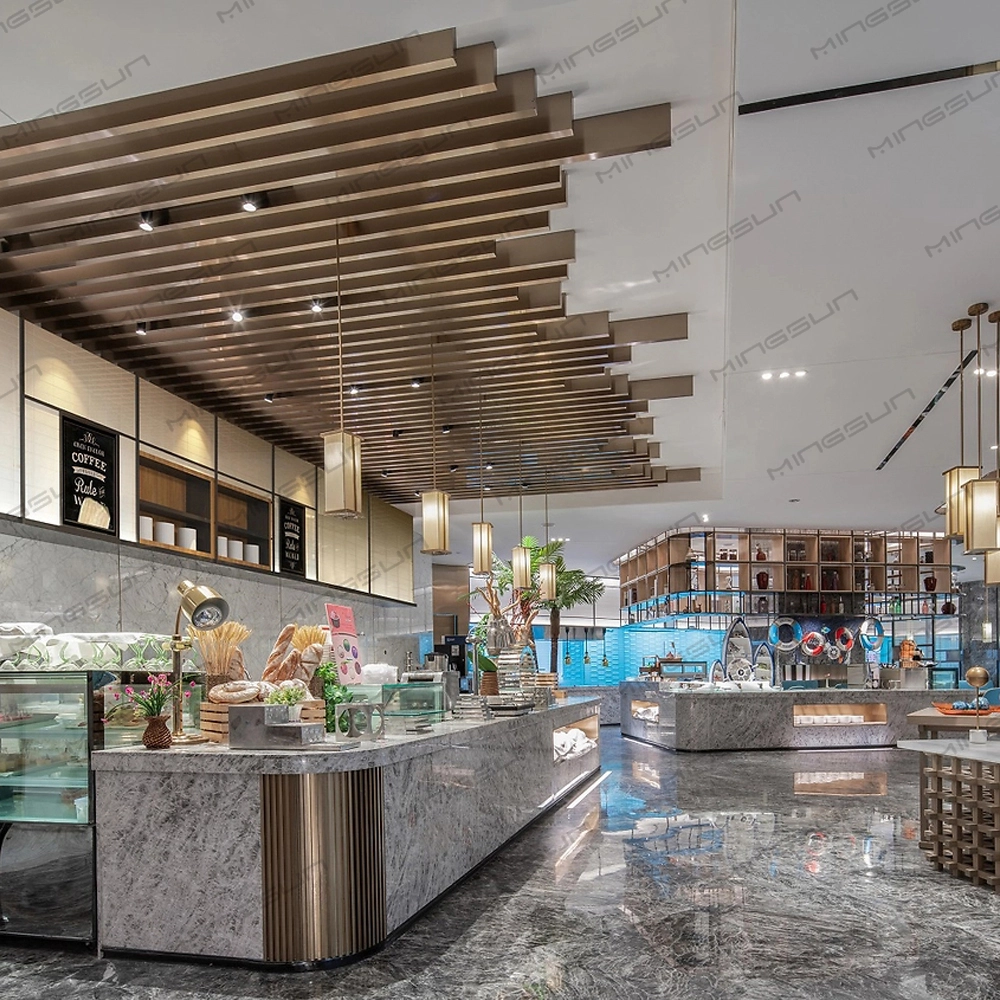
Modern Hotel Dining Furniture Set-Custom Designed Wooden Tables, Upholstered Chairs & Banquette Seating
Create a lasting impression with our custom-designed hotel dining furniture set, crafted for modern luxury hotels and upscale restaurants.
Featuring elegant wooden tables, ergonomic blue-upholstered chairs, and built-in banquette seating, this collection blends comfort, style, and durability.
As a leading manufacturer in Guangzhou, we deliver end-to-end solutions - from concept design and 3D visualization to production and global shipping - all at factory-direct prices.
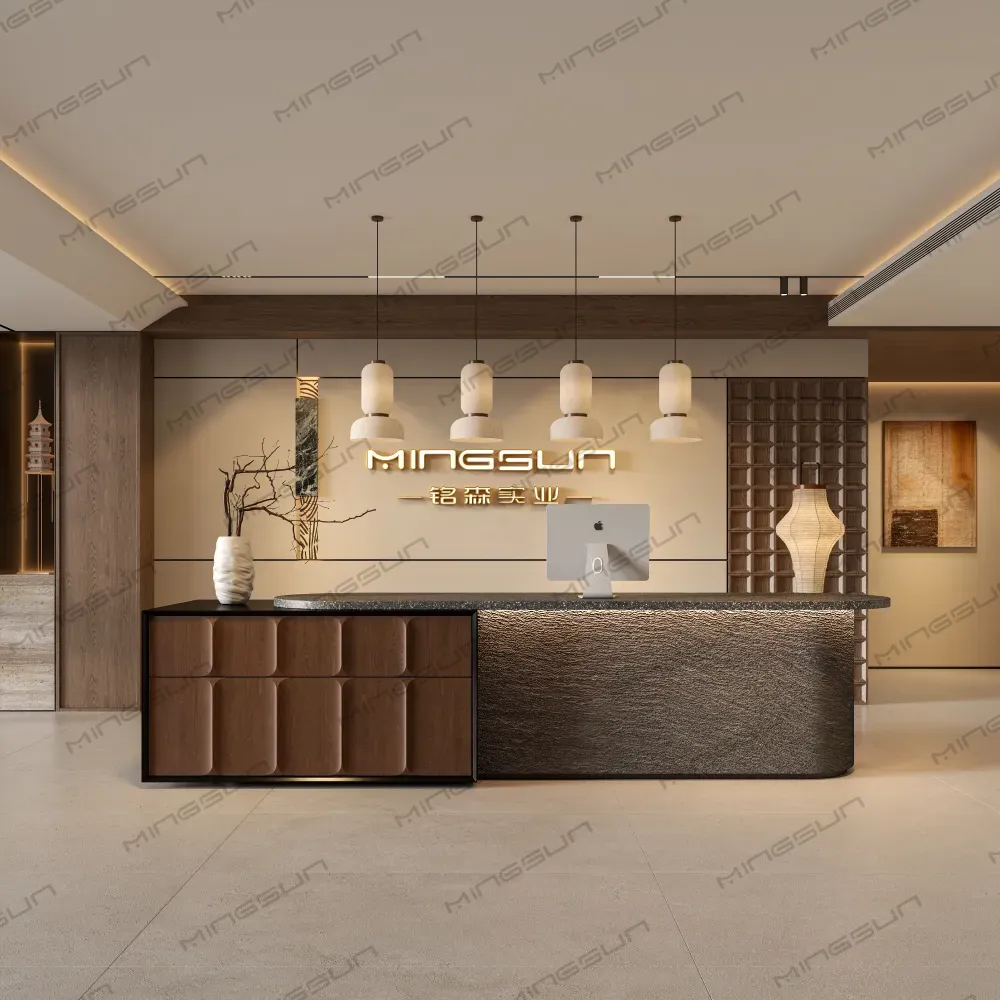
Luxury Textured Stone & Walnut Veneer Reception Desk with 3D Relief Detailing
Create a sophisticated, organic atmosphere in your hotel lobby or boutique showroom with this avant-garde reception desk. Combining the raw beauty of nature with refined craftsmanship, this desk features a striking contrast between materials. The main body showcases a dark, hammered-texture stone facade that offers a tactile, rugged elegance, topped with a polished grey terrazzo-style counter. This is seamlessly integrated with a rich walnut wood storage module, defined by its unique 3D pill-shaped relief carving on the drawer fronts. Soft, warm LED lighting concealed beneath the countertop edge highlights the textured stone surface, adding depth and warmth to the reception area.
Crafted by MINGSUN, a specialist in bespoke hospitality furniture, this piece is designed to be the focal point of high-end interiors. From our Guangzhou manufacturing hub, we deliver precision-engineered furniture to hotels worldwide. We offer a seamless experience from design customization to DDP global delivery and video-guided installation.
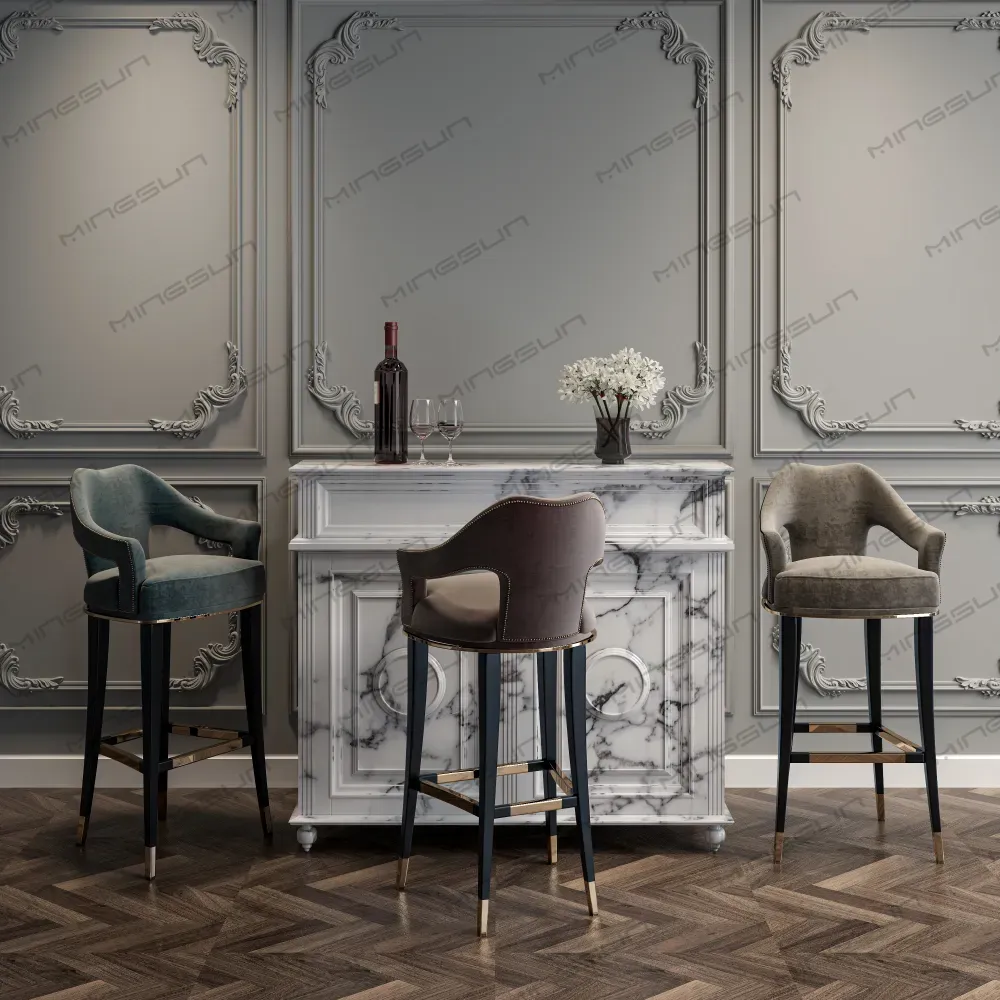
Luxury Velvet Bar Stool with Armrests & Brushed Brass Accents for Hotel Lounges and Bars
Elevate your hotel’s bar or lounge area with this opulent bar stool, where plush comfort meets sophisticated design. Upholstered in rich, deep-brown velvet, its sculptural back and integrated armrests offer ergonomic support, while the slender black metal frame is accented with polished brass at the feet and crossbars for a touch of timeless elegance. Perfect for high-end hospitality spaces, this stool combines refined aesthetics with durable construction, inviting guests to linger in style at your counter or cocktail station.
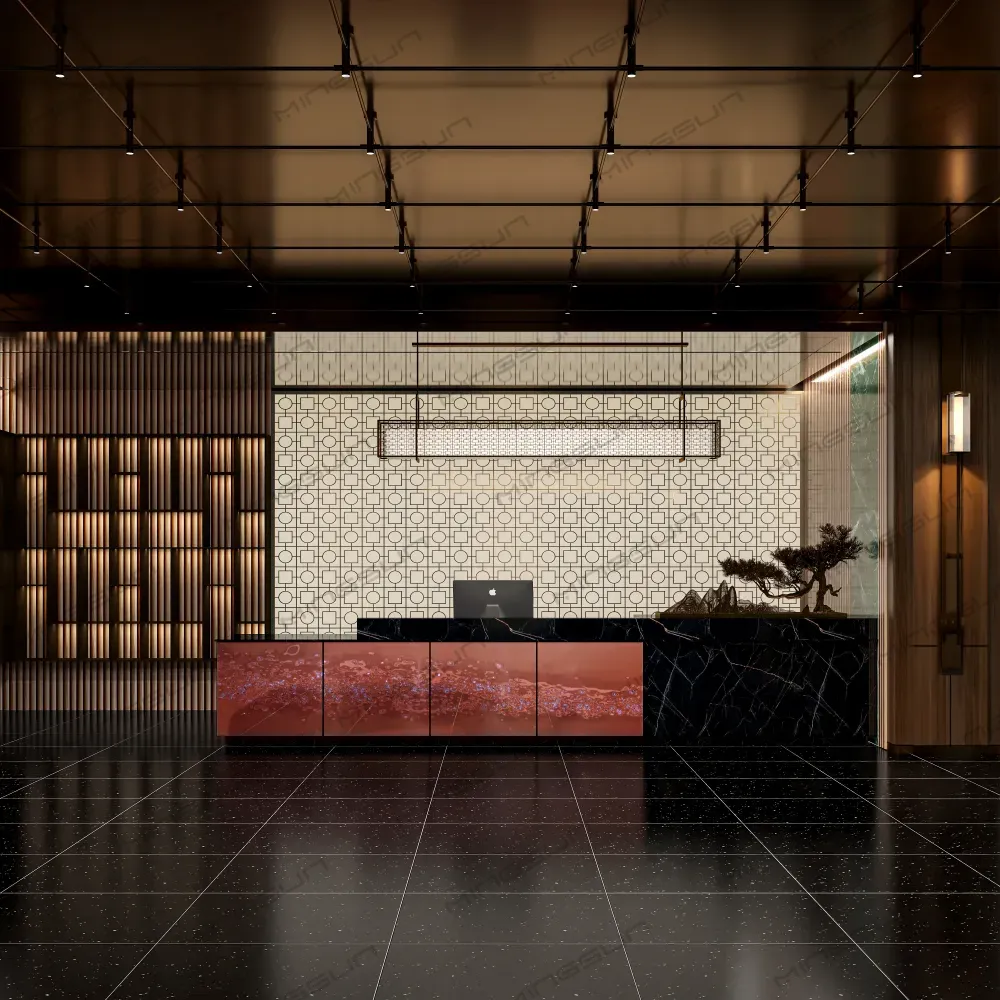
Luxury Reception Desk with Black Marble Top & Illuminated Copper-Resin Front Panels
Make a bold, unforgettable statement at your hotel’s entrance with this avant-garde reception desk. Its sleek black marble top exudes timeless sophistication, while the front facade features mesmerizing, internally lit copper-resin panels that glow with a warm, amber radiance, creating a dynamic visual centerpiece. Designed for both form and function, the unit offers ample concealed storage behind seamless doors and integrates a dedicated staff workstation with cable management. This is more than a check-in counter—it’s a sculptural installation that defines the luxury and artistry of your brand.
Get more industry insights
Looking for the right solution? Fill out the form and get a free quote.
Our experts will respond quickly with personalized options that fit your needs.
MINGSUN is a design-driven hotel furniture manufacturer offering OEM/ODM services, custom solutions, and global project support.
Built for wholesalers. Trusted by global buyers. Delivered with confidence.
Phone:
E-mail:
Follow us ——
 Scan QR Code
MINGSUN
MINGSUN
MINGSUN
MINGSUN
MS Custom Hotel Furniture Supplier