


How to Build a TV Wall Niche: The Ultimate Step-by-Step DIY Guide [2026 Update]
- Quick Summary: Key Takeaways for DIY TV Niches
- What is a TV Wall Niche and Why Build One?
- Benefits of a Recessed Media Wall
- Phase 1: Planning and Dimensions (The 'Future-Proof' Method)
- The Golden Rules of Sizing
- Structural Assessment: Load-Bearing vs. Bump-Out
- Phase 2: Materials and Tools Checklist for 2026
- Essential Materials List
- Safety Citation: Fire-Rated Cabling
- Phase 3: Step-by-Step Construction Guide
- Step 1: Frame the Opening
- Step 2: Run Electrical & AV
- Step 3: Blocking for Support
- Step 4: Drywall and Corner Beads
- Step 5: Mudding and Sanding
- Expert Tips: Airflow, Acoustics, and Smart Integration
- The Heat Trap Problem
- Acoustic Treatment
- Smart Lighting
- Common Mistakes to Avoid (Gap Analysis)
- Cost Breakdown and Budgeting (2026 Estimates)
- Conclusion
- FAQ
- How deep should a TV niche be?
- Do I need to frame a niche with wood or metal studs?
- Can I build a TV niche on a load-bearing wall?
- How much bigger should the niche be than the TV?
- How do I hide the cables in a TV niche?
- Does a recessed TV overheat?
- What is the best height for a TV niche?
- How much does it cost to build a TV wall niche?
Quick Summary: Key Takeaways for DIY TV Niches
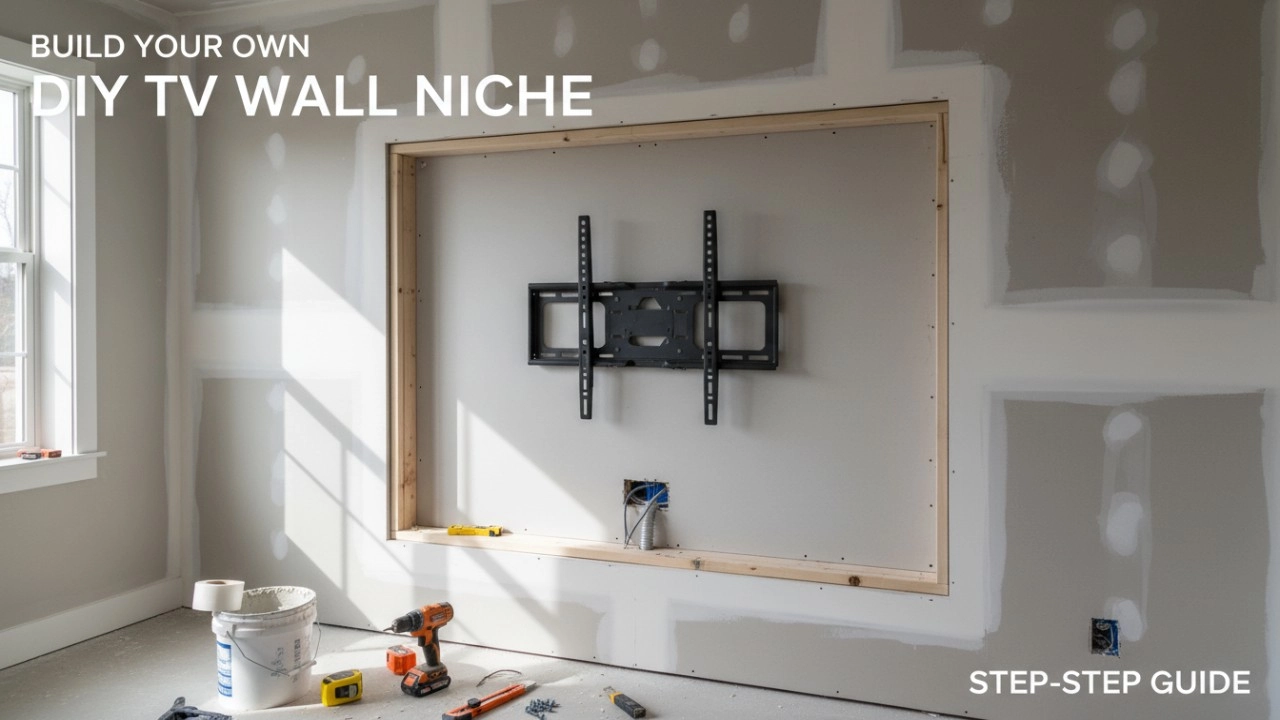
A TV wall niche is a recessed architectural feature that allows your television and electronics to sit flush with the wall surface.
To ensure a successful build that adds value and functionality to your home, keep these core principles in mind:
- Time & Cost: Expect to spend 2-3 weekends and between $500–$1,500, depending on materials like shiplap or acoustic panels.
- Critical Clearance: You must frame the niche at least 6-8 inches deep to accommodate tilting mounts and cable bend radii.
- Airflow: Overheating is the #1 cause of TV failure in niches; always leave 2+ inches of clearance.
- Materials: Standard 2x4 lumber or metal studs combined with 5/8" drywall are the industry standard for framing.
What is a TV Wall Niche and Why Build One?
A TV wall niche (often called a media wall) is a framed recess or "bump-out" designed to house audio-visual equipment so it doesn't protrude into the living space.
Beyond the sleek aesthetic, building a niche solves several practical problems inherent to modern flat screens. It completely hides the side profile of the TV, conceals the mounting bracket, and provides a dedicated cavity for managing messy cables. For homeowners looking to build wall niche for tv setups that rival luxury hotels, this approach offers a custom, high-end architectural look that standard mounts cannot achieve.
At MINGSUN, we have spent years designing custom furniture solutions for premium hotels worldwide. We know that the difference between a "DIY project" and a "professional finish" lies in the details—specifically, how seamlessly the technology integrates with the joinery. A well-constructed niche mimics the bespoke cabinetry found in 5-star suites, elevating the perceived value of your entire room.
Benefits of a Recessed Media Wall
- Visual decluttering: Hides wires and bulky mounts.
- Space saving: Reclaims floor space by eliminating media consoles.
- Ambient lighting: Perfect for integrating hidden LED channels.
- Soundbar integration: Allows for flush-mounting audio equipment under the screen.
Phase 1: Planning and Dimensions (The 'Future-Proof' Method)
Planning the dimensions involves measuring your current TV and adding a specific buffer zone to accommodate future upgrades and essential ventilation.
One of the most common mistakes is framing the niche to fit only the current TV. If you upgrade from a 65-inch to an 85-inch screen in two years, a tight niche will require a complete demolition. Instead, follow these TV niche dimensions guide rules to future-proof your wall.
The Golden Rules of Sizing
- Width & Height: Add 4-6 inches to the total width and height of your current TV. This gap is crucial for reaching behind the screen to adjust cables and allows for passive airflow.
- Depth: Build the niche 6-8 inches deep. Most tilting mounts require 3-4 inches, and the TV itself is 2 inches thick. Additional depth prevents HDMI cables from being crushed against the back wall.
- Viewing Height: Position the center of the niche 42-48 inches from the floor. This aligns with the average eye level when seated.
Structural Assessment: Load-Bearing vs. Bump-Out
Before cutting into any drywall, you must determine if your wall is load-bearing. A load-bearing wall supports the weight of the roof or floor above it.
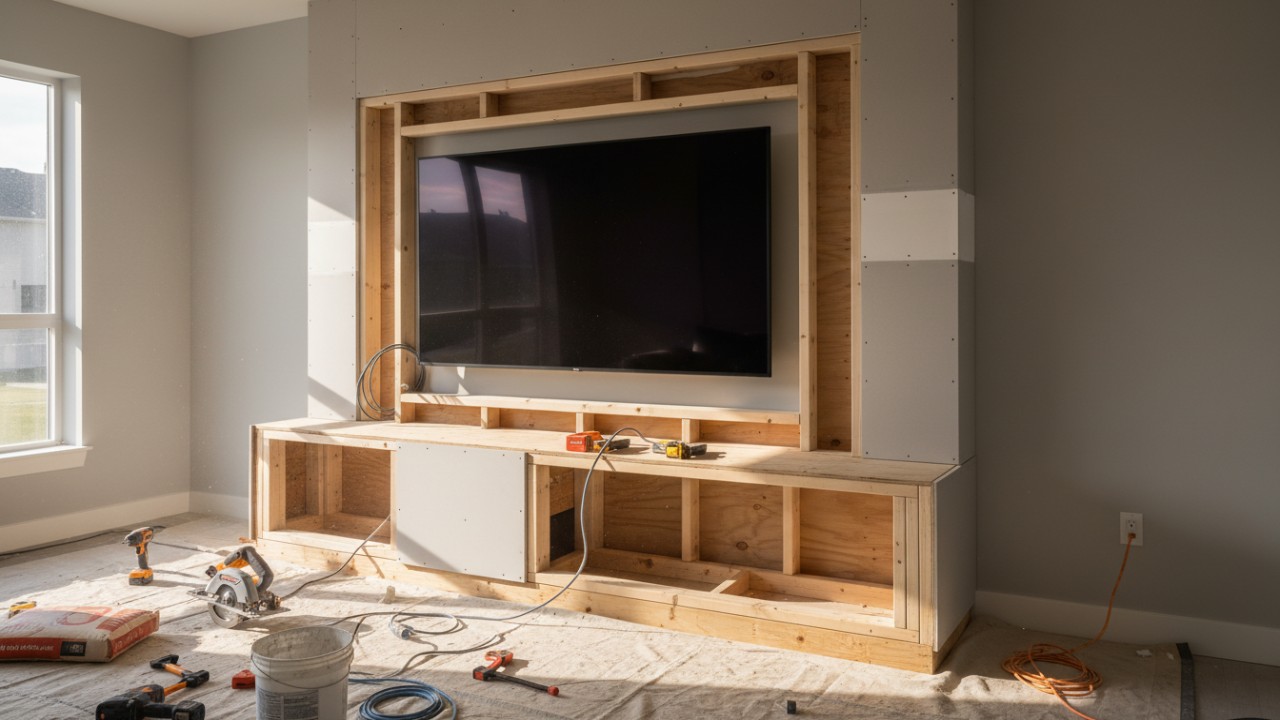
- The Bump-Out Method (Safest): Construct a false wall (a DIY entertainment center bump out) in front of the existing wall. This requires no structural engineering and allows for deeper recesses.
- Recessing into Studs: If cutting into an existing wall, use a stud finder. If the wall is load-bearing, you must install a structural header to support the weight. As noted by experts at Dunn Lumber, identifying these walls often involves checking if they run perpendicular to floor joists. Warning: If you are unsure, consult a structural engineer before cutting studs.
Phase 2: Materials and Tools Checklist for 2026
To build a safe and durable niche, you need materials that meet fire safety codes and provide rigid structural support for heavy displays.
Using the wrong cables or framing can create fire hazards or sagging drywall. Ensure you have the following before starting construction.
Essential Materials List
- Framing: 2x4 KD Lumber (Kiln Dried) for wood framing or 25-gauge metal studs for lightweight non-load-bearing bump-outs.
- Sheathing: 5/8" Drywall is recommended over 1/2" for better sound dampening and fire resistance, especially if a fireplace is involved.
- Cabling: In-wall rated HDMI 2.1 cables (CL2 or CL3 rated). Standard cables are not jacketed to prevent fire spread inside walls.
- Mount: An articulating (full-motion) TV mount. This is non-negotiable for niches; you need to pull the TV forward to access the ports.
Safety Citation: Fire-Rated Cabling
When running cables inside a wall or bump-out, you cannot use standard patch cords. According to Security Sales & Integration, the National Electrical Code (NEC) requires low-voltage cables installed in walls to carry a CL2 or CL3 fire rating. These jackets are designed to self-extinguish and prevent flames from traveling through the wall cavity.
Phase 3: Step-by-Step Construction Guide
Construction involves framing a box within the wall, running electrical rough-ins, and finishing with drywall for a seamless appearance.
Follow this strict sequence to ensure your recessed media wall framing is square and secure.
Step 1: Frame the Opening
If building a bump-out, construct your frame on the floor and lift it into place. If cutting into a wall, cut the drywall and remove the studs (after supporting the structure if load-bearing). Install a header (top) and sill (bottom) plate to define the niche box. Use jack studs on the sides to support the header.
Step 2: Run Electrical & AV
Hidden cable management for wall mounted TV setups is the hallmark of a pro installation.
- Install a recessed media outlet box (which sits flush inside the wall) directly behind the intended TV position.
- Run a conduit or "smurf tube" from the niche to the bottom of the wall where your media components (PlayStation, cable box) will live.
- Pull your CL3-rated HDMI cables through the conduit before drywalling.
Step 3: Blocking for Support
Do not skip this step. Your TV mount will likely not align perfectly with the vertical studs. Install horizontal 2x4 blocking (also called noggins) between the studs exactly where the mount lag bolts will go. This provides a solid wood surface for anchoring the heavy TV mount.
Step 4: Drywall and Corner Beads
Apply drywall to the frame. For the inside corners of the niche, use metal or vinyl corner beads to ensure crisp, durable 90-degree edges. This is crucial for soundbar recess ideas where the shelf needs to look perfectly rectangular.
Step 5: Mudding and Sanding
Apply three coats of joint compound, feathering out the edges. Sand between coats. For a MINGSUN-quality finish, aim for a Level 4 drywall finish, which ensures no tool marks are visible under paint.
Expert Tips: Airflow, Acoustics, and Smart Integration
Proper airflow management is the single most overlooked aspect of TV niche design and is critical for preventing electronics failure.
The Heat Trap Problem
TVs generate significant heat. If you enclose a TV tightly in a niche, that heat has nowhere to escape, cooking the internal capacitors. According to support guidelines from Sony, you should maintain at least 2-6 inches of clearance behind the TV and 4 inches on the sides for ventilation. If your design is tighter, install silent USB cooling fans at the top of the niche to exhaust hot air.
Acoustic Treatment
A niche can act as an echo chamber, muddying the sound from your TV speakers. To counter this, consider lining the back of the niche with acoustic felt panels or wooden slats. This not only dampens sound reflections but also adds a textured, premium aesthetic.
Smart Lighting
Instead of sticking LED strips directly onto the drywall (which often peel off), use a router to cut a shallow channel into the drywall edge or use an aluminum LED profile. This creates a diffused, neon-like glow that highlights the floating nature of the TV.
Common Mistakes to Avoid (Gap Analysis)
Avoid these frequent pitfalls to ensure your project doesn't require expensive rework later.
- Ignoring Cable Bend Radius: Stiff high-speed HDMI cables can break if bent at a sharp 90-degree angle. Ensure your niche depth allows for a gentle curve.
- Tight Fits: Building the niche exactly to the TV's dimensions leaves no room for your hands to reach the locking mechanism on the mount.
- Forgetting Power: Never run a standard TV power cord inside the wall; it violates code. Always install a dedicated electrical outlet inside the niche.
Cost Breakdown and Budgeting (2026 Estimates)
Budgeting for a TV niche varies widely based on whether you are doing a simple drywall recess or a full media wall with cabinetry.
- Basic DIY (Drywall only): $400 - $600. Includes lumber, sheetrock, screws, paint, and basic electrical boxes.
- Mid-Range (Added Electric + Mount): $700 - $1,200. Includes recessed outlets, high-quality full-motion mount, and in-wall rated cables.
- High-End (Shiplap, LED, Soundbar Niche): $1,500+. Includes decorative finishes, acoustic paneling, and smart lighting integration.
Pro Tip: Purchasing bulk materials from local timber yards often saves 15% compared to big-box hardware stores.
Conclusion
Building a TV wall niche is a manageable DIY project that transforms a living room from basic to bespoke.
By following the "measure twice, cut once" philosophy—specifically regarding depth and future TV sizing—you can create a stunning focal point that is both safe and functional. Whether you opt for a simple drywall recess or a complex bump-out with soundbar integration, the key is strictly adhering to framing and ventilation standards.
Contact us today to optimize your custom furniture and media wall strategy with MINGSUN's expert solutions.
FAQ
How deep should a TV niche be?
A standard TV niche should be 6 to 8 inches deep. This depth accommodates the thickness of modern televisions (approx. 2 inches), the full-motion mount (2-3 inches), and necessary airflow space to prevent overheating and cable strain.
Do I need to frame a niche with wood or metal studs?
Wood (2x4) studs are generally easier for beginners to work with and provide solid blocking for heavy mounts. However, metal studs are lighter, perfectly straight, and fire-resistant, making them ideal for non-load-bearing bump-out walls.
Can I build a TV niche on a load-bearing wall?
Yes, but it is more complex. You must install a structural header to support the weight of the house above the opening. To avoid structural risks and engineering costs, it is often safer and easier to build a "bump-out" false wall in front of the load-bearing wall.
How much bigger should the niche be than the TV?
Ideally, you should leave 2-3 inches of clearance on all four sides of the TV. This "shadow gap" allows for ventilation, easier mounting access, and ensures you can upgrade to a slightly larger screen size in the future without rebuilding the wall.
How do I hide the cables in a TV niche?
To hide cables effectively, install a recessed outlet and brush plate directly behind where the TV will sit. Run all HDMI and audio cables through the wall cavity (using a conduit) to a lower opening where your media components are stored.
Does a recessed TV overheat?
A recessed TV can overheat if the fit is too tight. To prevent this, ensure at least 2 inches of clearance around the perimeter for passive airflow, or install active cooling fans to exhaust hot air from the niche.
What is the best height for a TV niche?
The center of the screen should be at eye level when you are seated. Typically, this places the center of the niche 42 to 48 inches from the floor, though this can vary based on your furniture height.
How much does it cost to build a TV wall niche?
A DIY TV niche project typically costs between $500 and $1,200, depending on finishes like lighting and wood paneling. If you hire a professional carpenter, the cost may range from $2,500 to $4,500 due to labor and specialized finishing.
Space-Saving Coffee Tables for Hotel Rooms: Smart Designs
Furniture Layouts That Increase Occupancy Rates
Choosing suppliers for hotel modern bar cabinets
Case Studies: Coffee Table Designs That Boost Guest Experience
Pricing, Payment & Packaging
How is packaging handled to ensure transportation safety?
Materials, Craftsmanship & Quality Control
Is the furniture suitable for high-frequency hotel use?
Customization Capability & Design Support
Can you manufacture furniture based on design drawings or renderings?
After-Sales Service & Long-Term Cooperation
What types of clients is Mingsun best suited for?
Product Scope & Application Areas
What types of hotel furniture can Mingsun provide?
Make an appointment with us today
Modern Hotel Dining Furniture Set-Custom Designed Wooden Tables, Upholstered Chairs & Banquette Seating
Create a lasting impression with our custom-designed hotel dining furniture set, crafted for modern luxury hotels and upscale restaurants.
Featuring elegant wooden tables, ergonomic blue-upholstered chairs, and built-in banquette seating, this collection blends comfort, style, and durability.
As a leading manufacturer in Guangzhou, we deliver end-to-end solutions - from concept design and 3D visualization to production and global shipping - all at factory-direct prices.
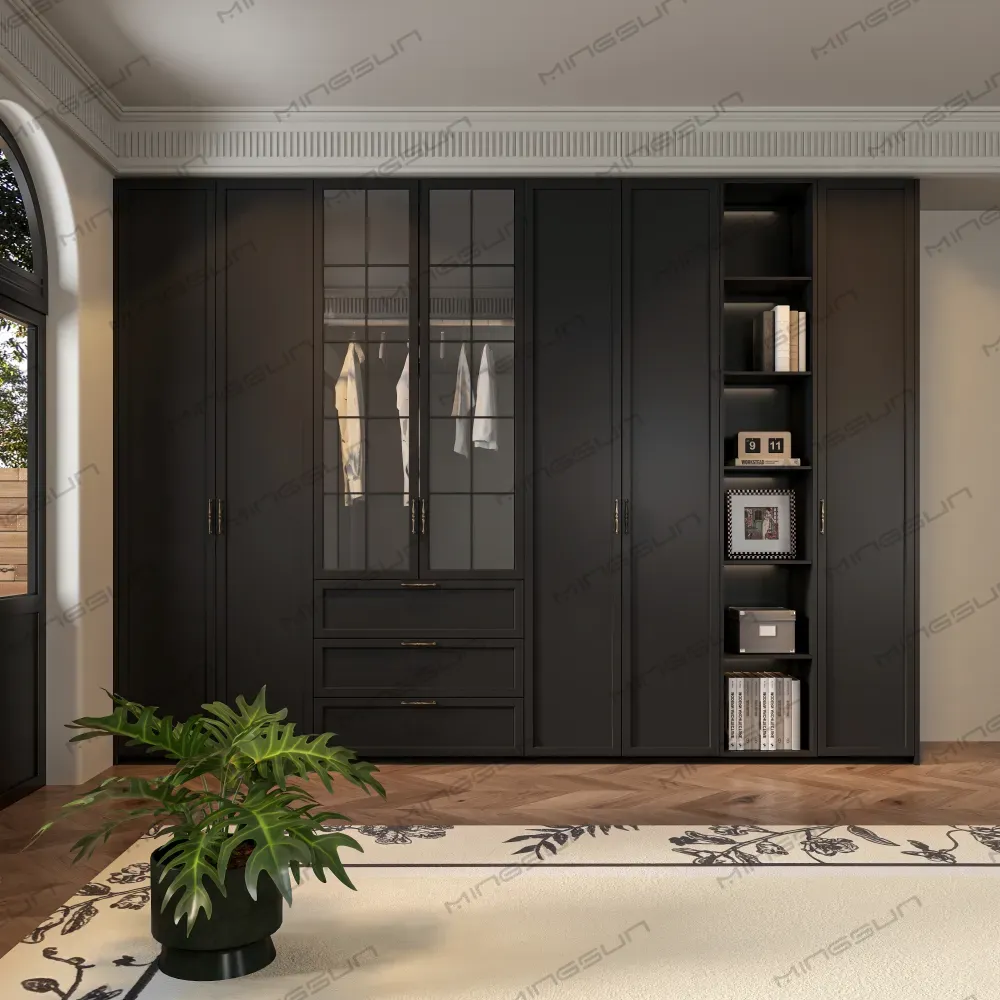
Bespoke Matte Black Full-Wall Wardrobe System with Glass Display & Integrated Lighting
Transform hotel suites and luxury master bedrooms with this expansive, architectural storage solution. Designed to span an entire wall, this fitted wardrobe system combines the privacy of concealed storage with the elegance of boutique-style display. The unit features a sophisticated matte black finish with shaker-style door detailing, accented by vintage bronze handles for a touch of classic luxury. The centerpiece is a glass-fronted display section with integrated soft LED lighting, perfect for showcasing high-end garments, while the open shelving module provides immediate access to amenities or decor.
Engineered by MINGSUN, this system is built to the rigorous standards of commercial hospitality furniture. As a leading Guangzhou manufacturer, we offer a complete turnkey solution—from CAD spatial planning to precision manufacturing and global logistics. We ensure that this substantial piece of joinery is delivered safely and installs efficiently, adding immediate value and functionality to your property.
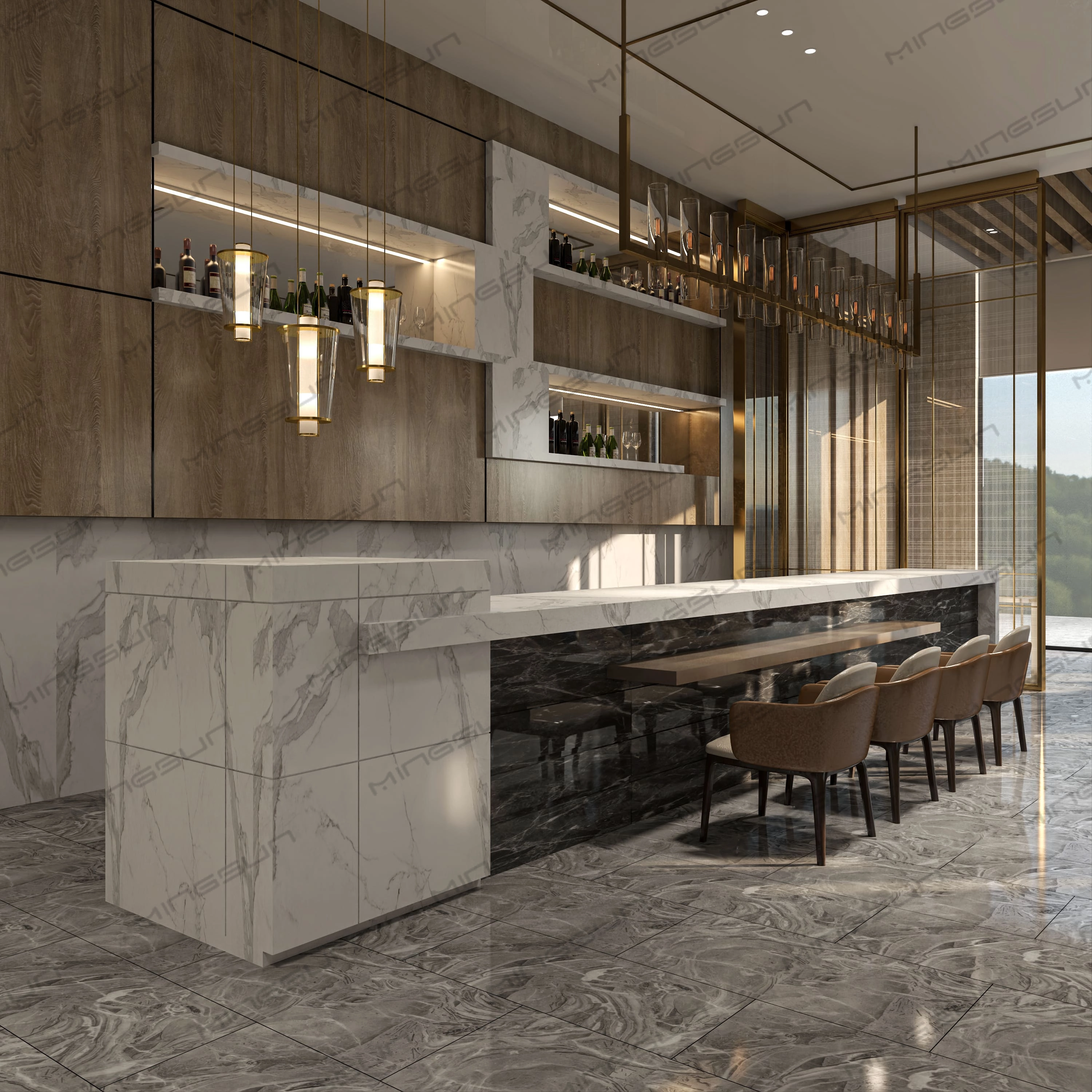
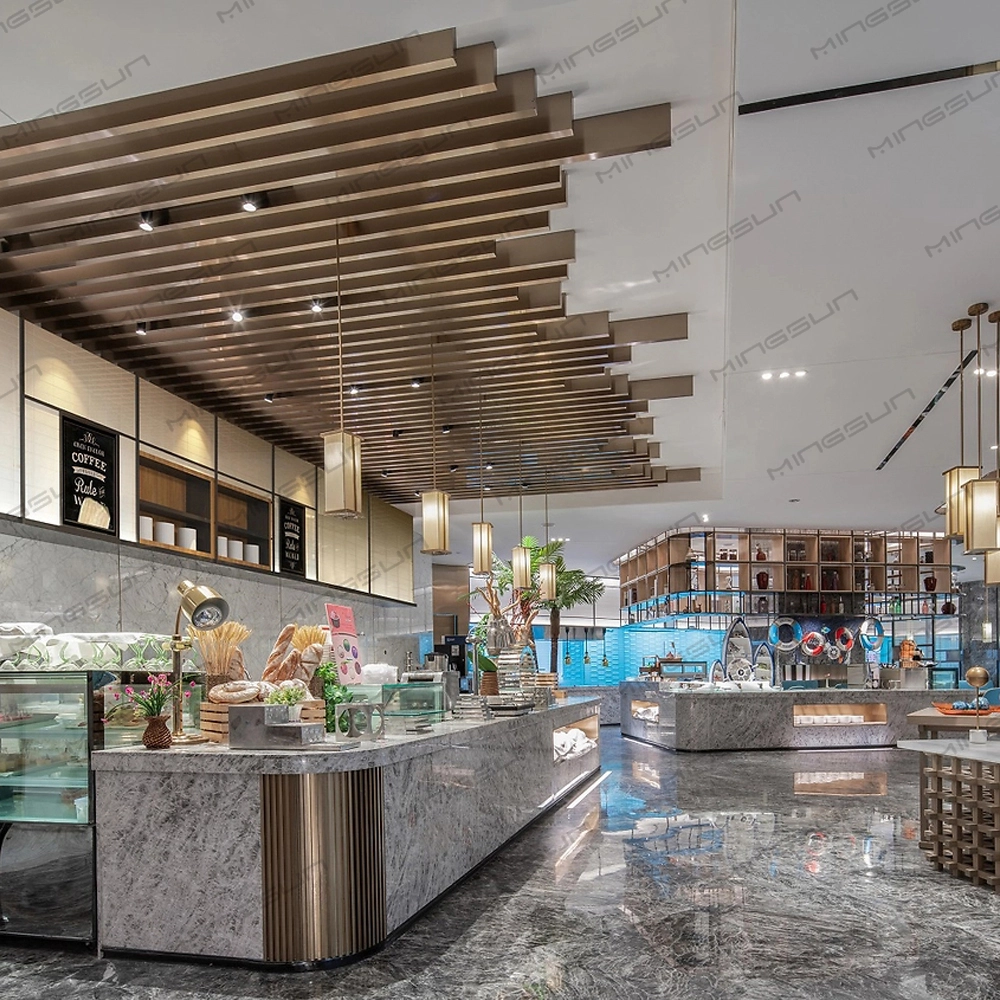
Luxury Hotel Lobby Furniture System – Custom Modular Gold Bookshelf, Marble Bar Counter, Sofa & Coffee Table Set
Transform your hotel lobby into a sanctuary of elegance and sophistication with our premium interior furniture system, designed for luxury hotels, boutique resorts, and high-end residential lobbies. Featuring a modular golden bookshelf wall, marble-clad bar counter, and contemporary lounge furniture, this complete solution blends Eastern aesthetics with Western minimalism. As a leading manufacturer in Guangzhou, we offer full customization, global shipping, and remote video guidance for installation, ensuring seamless delivery and setup worldwide.
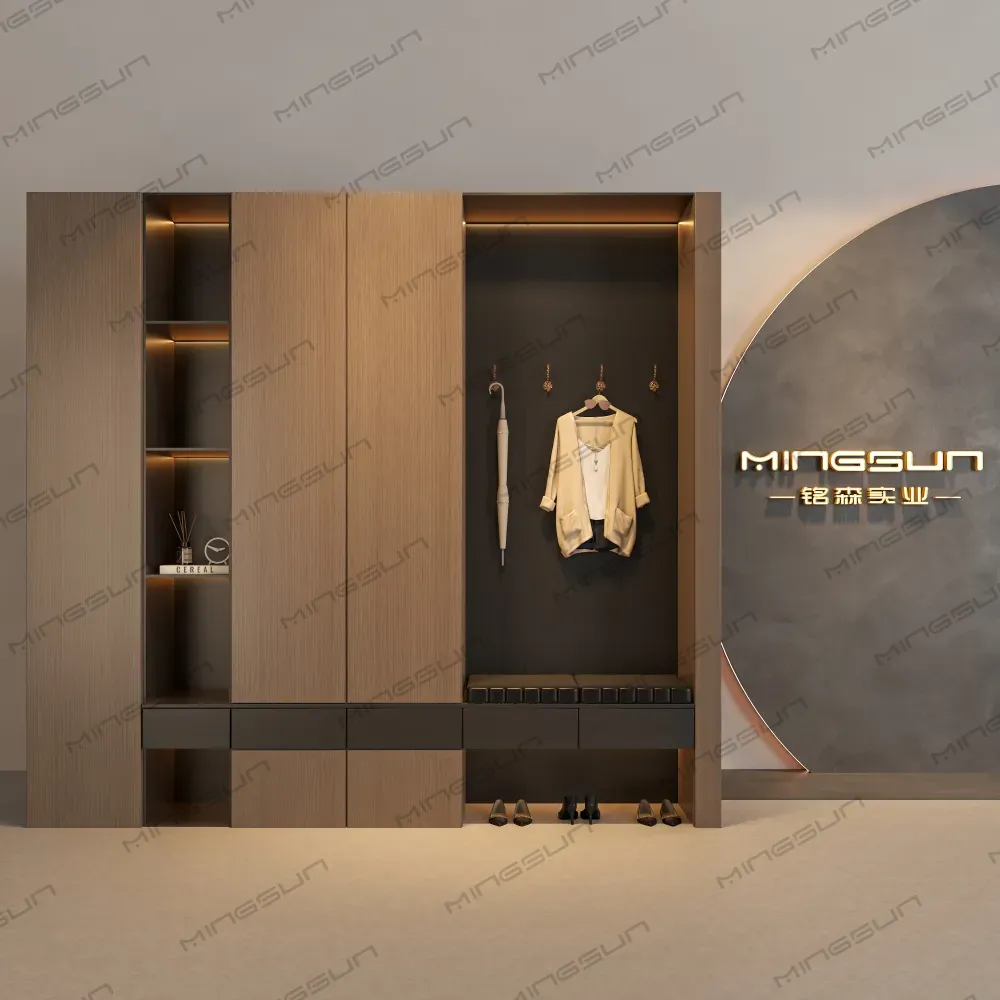
Modern Luxury Hotel Foyer Wardrobe with Integrated Seating & LED Shelving
Maximize functionality and style in your hotel suites or luxury apartment entryways with this comprehensive joinery solution. Designed to serve as a complete foyer station, this unit seamlessly combines an open wardrobe, closed storage cabinetry, display shelving, and a comfortable upholstered bench seat. The rich, warm wood veneer finish creates an inviting atmosphere the moment guests step inside, while the integrated vertical LED strip lighting highlights the open shelves, adding a layer of sophisticated ambiance. The design features dedicated zones for hanging coats, storing shoes in soft-close drawers, and displaying curated art or amenities.
Manufactured by MINGSUN, your expert Guangzhou hospitality furniture factory, this unit is engineered for both aesthetic appeal and rigorous commercial use. We provide a full one-stop solution, including precise site measurement support (via CAD), custom manufacturing to fit your specific niche dimensions, and global shipping with video-guided installation instructions.
Get more industry insights
Looking for the right solution? Fill out the form and get a free quote.
Our experts will respond quickly with personalized options that fit your needs.
MINGSUN is a design-driven hotel furniture manufacturer offering OEM/ODM services, custom solutions, and global project support.
Built for wholesalers. Trusted by global buyers. Delivered with confidence.
Phone:
E-mail:
Follow us ——
 Scan QR Code
MINGSUN
MINGSUN
MINGSUN
MINGSUN
MS Custom Hotel Furniture Supplier