


Negotiation Tips with Hotel Furniture Suppliers for Buyers
- Practical Negotiation Strategies for Hotel Buyers
- Understand Total Cost, Not Just Unit Price
- Prepare a Clear Scope and Prioritized Wish List
- Use Benchmarks and Market Data
- Preparing and Structuring Your Hotel Furniture Budget
- Build a Line-Item Budget by Room Type
- Allocate Contingency and Lifecycle Funds
- Define Acceptable Alternatives and Value Engineering Rules
- Supplier Selection, Contracts and Quality Control
- Pre-Qualification and Site Visits
- Negotiation Levers: Volume, Lead Time, Payment Terms
- Contract Clauses to Protect Your Budget
- Negotiation Tactics and Operational Controls
- Request Detailed Bills of Materials and Samples
- Leverage Third-Party Inspections and Staged Payments
- Use Comparative Bidding and Split Packages
- MINGSUN: Partnering for Value and Reliability
- Why Consider a Manufacturer Like MINGSUN?
- Factory Capacity, Design Capability and Product Range
- Core Products and Competitive Advantages
- How to Negotiate Effectively with Manufacturers like MINGSUN
- FAQ — Common Buyer Questions
- 1. How much should I allocate in my hotel furniture budget per room?
- 2. Can I get factory direct prices and still protect design IP?
- 3. Should I choose DDP or FOB for international shipments?
- 4. How do I evaluate long-term durability vs. upfront cost?
- 5. What warranty terms are reasonable to request?
- 6. How should I handle late deliveries that affect opening dates?
- Contact & Next Steps
- References
Practical Negotiation Strategies for Hotel Buyers
Understand Total Cost, Not Just Unit Price
When preparing a hotel furniture budget, many buyers fixate on unit price. Effective negotiation requires shifting focus to total cost of ownership (TCO): shipping, customs, installation, warranty, maintenance, finishes, and lifecycle replacement. Suppliers that appear cheapest per item may add higher lead times, inconsistent quality, or nonstandard spare parts that increase TCO by 15–40% over a project lifecycle.
Prepare a Clear Scope and Prioritized Wish List
Before entering talks, document a room-by-room schedule of quantities, preferred materials, finish options, and budget tiers (A/B/C). Provide suppliers with a prioritized list: items with strict design or durability specifications, versus those open to cost-optimized alternatives. Clear scope reduces ambiguity — a primary source of cost creep and post-order disputes.
Use Benchmarks and Market Data
Bring benchmark rates (per-room furniture budgets, freight cost averages, lead-time expectations) to the table. For example, industry guides and procurement studies indicate typical hotel furniture budgets vary considerably by hotel class, region and product specification; using such data strengthens your negotiation position and helps distinguish genuine value offerings from inflated quotes. (See References.)
Preparing and Structuring Your Hotel Furniture Budget
Build a Line-Item Budget by Room Type
Create a detailed line-item budget for guest rooms, public spaces, F&B, back-of-house and FF&E installation. A simple example (illustrative ranges):
| Item | Typical Range (USD) | Notes |
|---|---|---|
| Guest room bedroom set (bed, nightstands, wardrobe, desk) | $2,000–$8,000 per room | Range depends on star level & materials |
| Public area seating & lounge furniture | $50–$400 per seat | Custom upholstery or contract-grade fabrics cost more |
| Lobby & reception / decorative fixtures | $10,000–$100,000 total | Highly variable by design complexity |
| Restaurant tables & chairs | $100–$600 per place setting | Includes commercial-grade finishes |
| Shipping & customs | Varies — typically 5–15% of FOB value | Negotiate INCOTERMS and consolidate shipments |
Note: numbers are illustrative ranges compiled from industry procurement guides and supplier data — use them as negotiation benchmarks and adjust to your market and project scope. (See References.)
Allocate Contingency and Lifecycle Funds
Set aside design and procurement contingency (typically 5–10%) and a lifecycle/maintenance reserve (3–7% annually of FF&E replacement value). Suppliers can sometimes offer extended warranties or spare-parts kits that reduce long-term maintenance risk; value those offers in TCO calculations.
Define Acceptable Alternatives and Value Engineering Rules
Agree in writing which items are fixed-spec and which can be value-engineered. For negotiators this is powerful: you can trade modest material changes for lower lead times or improved warranty terms. Include a simple points/scorecard for substitutions to quantify impact on cost, durability and aesthetics.
Supplier Selection, Contracts and Quality Control
Pre-Qualification and Site Visits
Shortlist suppliers using objective criteria: factory capacity, relevant hospitality experience, QA certifications (ISO 9001, etc.), sample lead times, and financial stability. When possible, visit factories or request third-party audits — these uncover production constraints that impact lead time and consistency. For overseas manufacturers, request virtual tours and recent quality inspection reports.
Negotiation Levers: Volume, Lead Time, Payment Terms
Key levers beyond price include:
- Order volume and repeat business commitments (bulk discounts)
- Lead-time flexibility — partial shipments or phased delivery
- Payment terms — staggered payments tied to milestones or LC (letter of credit)
- Inclusion of spare parts and assembly labor in the quote
Example strategy: offer an initial smaller PO to qualify quality and then commit to a larger follow-up PO at a pre-agreed discount if the first batch meets standards.
Contract Clauses to Protect Your Budget
Include clear acceptance criteria, inspection points, penalties for missed deadlines, warranty language (length, on-site repair responsibilities), spare parts availability, and intellectual property protections for custom designs. Use INCOTERMS that suit your logistics leadership (e.g., DDP if you want supplier-managed import and customs) and define risk transfer points precisely.
Negotiation Tactics and Operational Controls
Request Detailed Bills of Materials and Samples
Ask for itemized BOMs and certified material data sheets. Request full-size prototype samples (or production samples) for critical items before bulk production. Samples are the best lever — once approved, the supplier has a benchmark and you significantly reduce later disputes.
Leverage Third-Party Inspections and Staged Payments
Structure payments to align with production milestones and independent inspections (pre-shipment inspection, loading supervision). Third-party inspectors (SGS, Bureau Veritas) protect buyers and are often worth their fee by preventing costly rework or delays.
Use Comparative Bidding and Split Packages
Issue an RFP with clear award criteria (price, lead time, warranty, references) and invite at least 3 qualified suppliers. Consider splitting the order across two suppliers to reduce vendor risk — one primary and one backup for long lead items — but balance this against lost volume discounts.
MINGSUN: Partnering for Value and Reliability
Why Consider a Manufacturer Like MINGSUN?
MINGSUN is a High Quality hotel furniture manufacturer based in Guangzhou, China, providing one-stop custom solutions for the hospitality industry. We specialize in the design, production, and global delivery of high-quality furniture for hotel guest rooms, lobbies, restaurants, banquet halls, and other commercial spaces.
Factory Capacity, Design Capability and Product Range
With a 10,000 ㎡ factory and over 200 skilled workers, MINGSUN combines expert craftsmanship, High Quality materials, and strict quality control to ensure each piece is durable, functional, and refined. Their in-house design team works closely with clients to develop tailored solutions that reflect each project's unique style and standards.
Core Products and Competitive Advantages
MINGSUN's main hotel product lines include:
- Hotel bedroom furniture (beds, wardrobes, desks)
- Hotel lounge furniture (sofas, armchairs)
- Hotel lobby furniture (reception desks, seating clusters)
- Hotel conference furniture (tables, modular seating)
- Hotel restaurant tables and chairs (contract-grade finishes)
Competitive differentiators: direct-manufacturer pricing, custom design services, in-house quality control, and project management for logistics and installation. For buyers focused on balancing hotel furniture budget with long-term durability, an integrated partner like MINGSUN can reduce coordination costs and delivery risks.
How to Negotiate Effectively with Manufacturers like MINGSUN
When negotiating with a factory partner, emphasize:
- Clear, staged production milestones and acceptance testing
- Consolidated shipments to optimize freight costs and customs
- Longer-term commitments in exchange for improved pricing or priority production slots
- Mutual KPIs: on-time delivery %, defect rates, and spare-parts lead times
FAQ — Common Buyer Questions
1. How much should I allocate in my hotel furniture budget per room?
Typical ranges vary by hotel class and region. As an initial benchmark: select-service properties often budget lower (e.g., $1,500–$3,500/room), while upscale/luxury properties may budget $4,000–$12,000+/room. Always refine by specifying materials, FF&E scope and local installation costs.
2. Can I get factory direct prices and still protect design IP?
Yes — many factories sign confidentiality agreements and accept escrow of design files. Clarify IP ownership and reproduction rights in your contract, and keep master patterns or digital designs under license terms to prevent unauthorized resale.
3. Should I choose DDP or FOB for international shipments?
DDP (Delivered Duty Paid) shifts customs and import risk to the supplier and can simplify logistics for buyers unfamiliar with import processes — often at a High Quality. FOB (Free On Board) gives buyers control of freight and customs but requires experienced logistics handling. Choose based on your procurement capability and desire to control shipping costs.
4. How do I evaluate long-term durability vs. upfront cost?
Prioritize contract-grade materials and test certifications (e.g., CAL TB-117-2013 for upholstery in some markets). Evaluate expected lifecycle and maintenance costs; sometimes spending 10–20% more upfront reduces replacement and repair costs and total budget pressure over 5–10 years.
5. What warranty terms are reasonable to request?
Typical warranties: structural (5–10 years), finishes (2–5 years), upholstery (1–3 years). Ask for on-site repair obligations, spare-part kits for 1–3 years, and expedited replacement procedures for critical items.
6. How should I handle late deliveries that affect opening dates?
Include liquidated damages or milestone incentives in contracts. Negotiate priority production windows, airfreight options for critical items, and phased occupancy plans that allow partial openings while remaining items are delivered.
Contact & Next Steps
If you need tailored assistance with supplier negotiation, cost modeling for your hotel furniture budget, or custom hospitality furniture solutions, contact MINGSUN to request a catalog, factory tour, or project quotation. MINGSUN can provide sample boards, full BOMs, lead-time projections and reference projects to support your procurement decisions.
References
- UNWTO — World Tourism Barometer and statistics. https://www.unwto.org/ (accessed 2025-12-31)
- Statista — Hotels & lodging industry overview. https://www.statista.com/topics/1101/hotels/ (accessed 2025-12-31)
- Grand View Research — Hospitality Furniture Market Analysis. https://www.grandviewresearch.com/industry-analysis/hospitality-furniture-market (accessed 2025-12-31)
- HVS — Hotel asset & FF&E advisory resources. https://www.hvs.com/ (accessed 2025-12-31)
- JLL / CBRE — Hospitality capital expenditure and procurement guides. https://www.jll.com/ and https://www.cbre.com/ (accessed 2025-12-31)
- SGS — Pre-shipment inspection services. https://www.sgs.com/ (accessed 2025-12-31)
Trends in Coffee Bar Cabinet Design for 2026 Hotels
Sustainable Options for Custom Hotel Back Bar Cabinets
Hotel Room Furniture Layouts That Increase Occupancy
The latest trends for best hotel interior design | MINGSUN Ultimate Insights
Product Scope & Application Areas
Can you provide a full hotel furniture package?
Customization Capability & Design Support
What is your customization process?
After-Sales Service & Long-Term Cooperation
What types of clients is Mingsun best suited for?
Do you provide after-sales support?
Materials, Craftsmanship & Quality Control
How are quality issues handled?
Make an appointment with us today
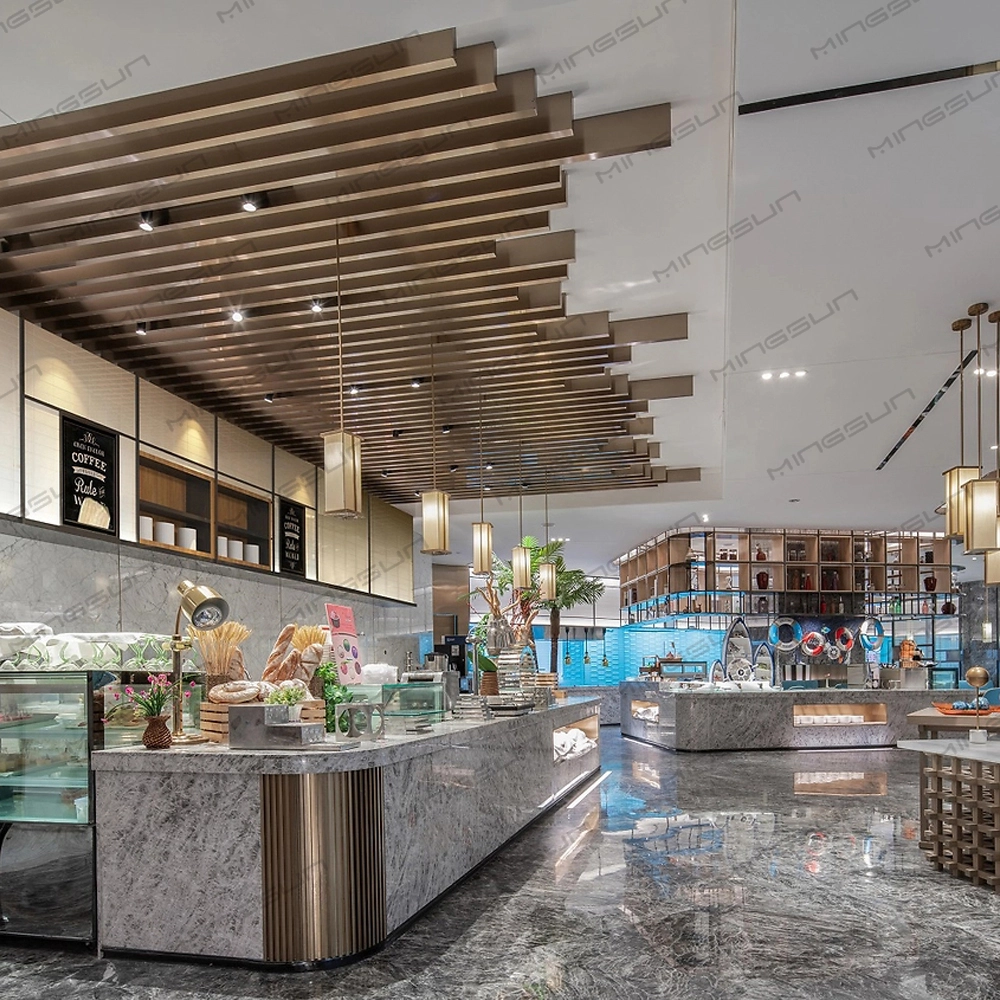
Modern Hotel Dining Furniture Set-Custom Designed Wooden Tables, Upholstered Chairs & Banquette Seating
Create a lasting impression with our custom-designed hotel dining furniture set, crafted for modern luxury hotels and upscale restaurants.
Featuring elegant wooden tables, ergonomic blue-upholstered chairs, and built-in banquette seating, this collection blends comfort, style, and durability.
As a leading manufacturer in Guangzhou, we deliver end-to-end solutions - from concept design and 3D visualization to production and global shipping - all at factory-direct prices.
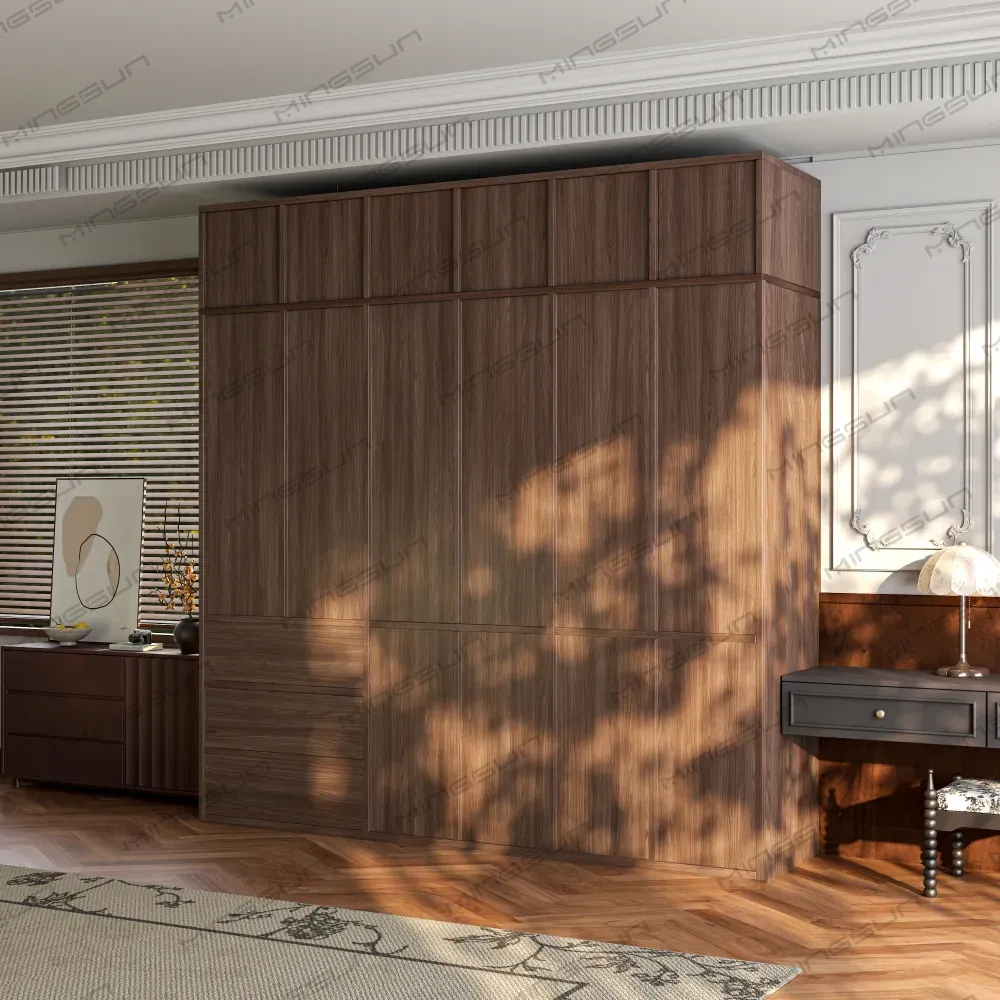
Minimalist Walnut Veneer Floor-to-Ceiling Hotel Wardrobe with Handleless Design
Maximize vertical storage in your hotel guest rooms or luxury apartments with this sleek, floor-to-ceiling wardrobe system. Defines by its warm, natural walnut wood veneer finish, the unit offers a sophisticated, handleless facade that maintains clean architectural lines, perfect for modern minimalist interiors. The intelligent layout features a bank of three external soft-close drawers for guest convenience, tall hanging sections for formal wear, and a dedicated row of top-tier cabinets specifically designed to store extra bedding, pillows, or seasonal items.
Manufactured by MINGSUN, this wardrobe is a testament to our expertise in custom hospitality joinery. We engineer these large-scale units for durability and ease of installation. From our Guangzhou factory, we provide precision-cut flat-pack solutions that reduce shipping costs while ensuring a premium built-in look upon assembly.
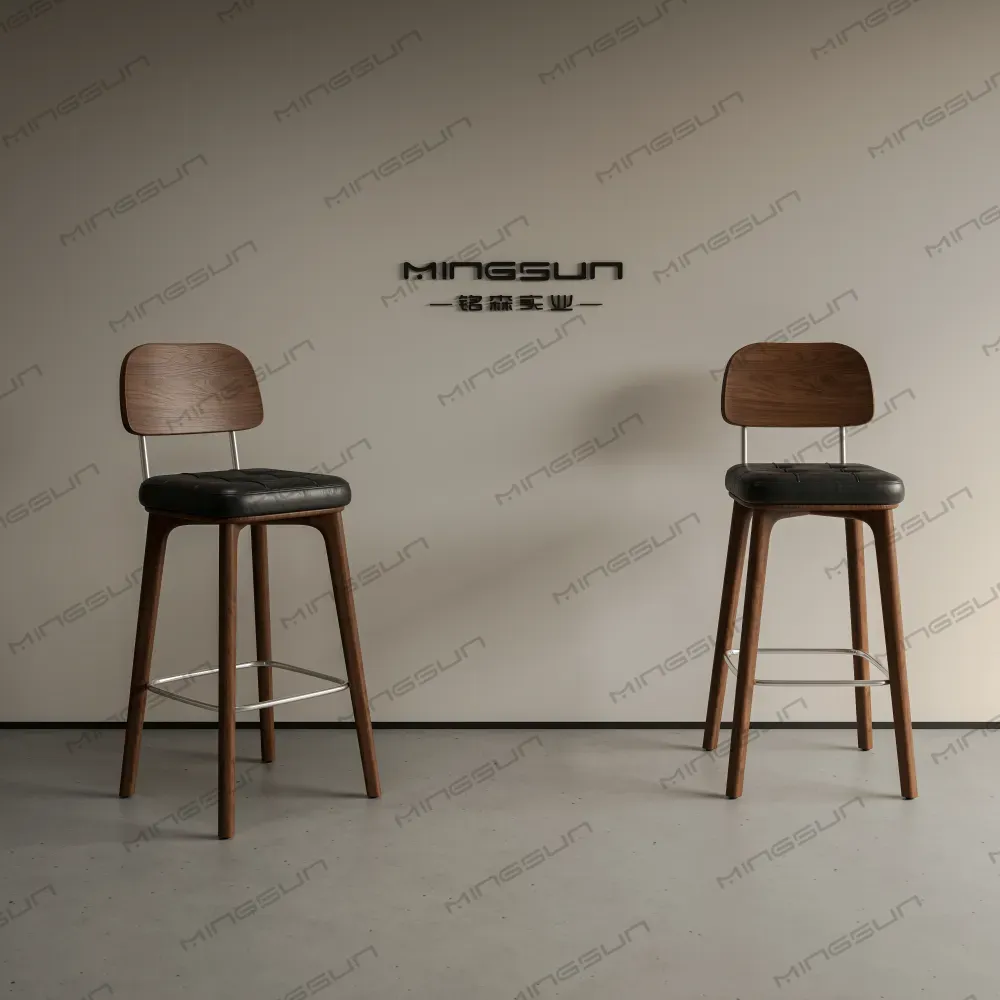
Mid-Century Modern Walnut Bar Stool with Tufted Leather Seat & Chrome Footrest for Luxury Hospitality
Elevate the aesthetic of your hotel bar, upscale restaurant, or executive lounge with this sophisticated bar stool, meticulously crafted by MINGSUN. Blending mid-century modern warmth with industrial durability, this stool features a curved, walnut-veneer backrest designed for ergonomic support and visual depth. The seat is upholstered in premium black PU leather (customizable to genuine leather) with classic button tufting, offering a refined texture that resists wear in high-traffic commercial environments.
Supported by tapered solid wood legs and reinforced with a chrome-finished steel footrest ring, this piece ensures stability and longevity. As a leading Guangzhou hotel furniture manufacturer, MINGSUN ensures that every stool meets rigorous contract-grade standards. From our 10,000㎡ factory directly to your venue, we provide a complete solution including manufacturing, global logistics, and video installation guidance to ensure a seamless project completion.
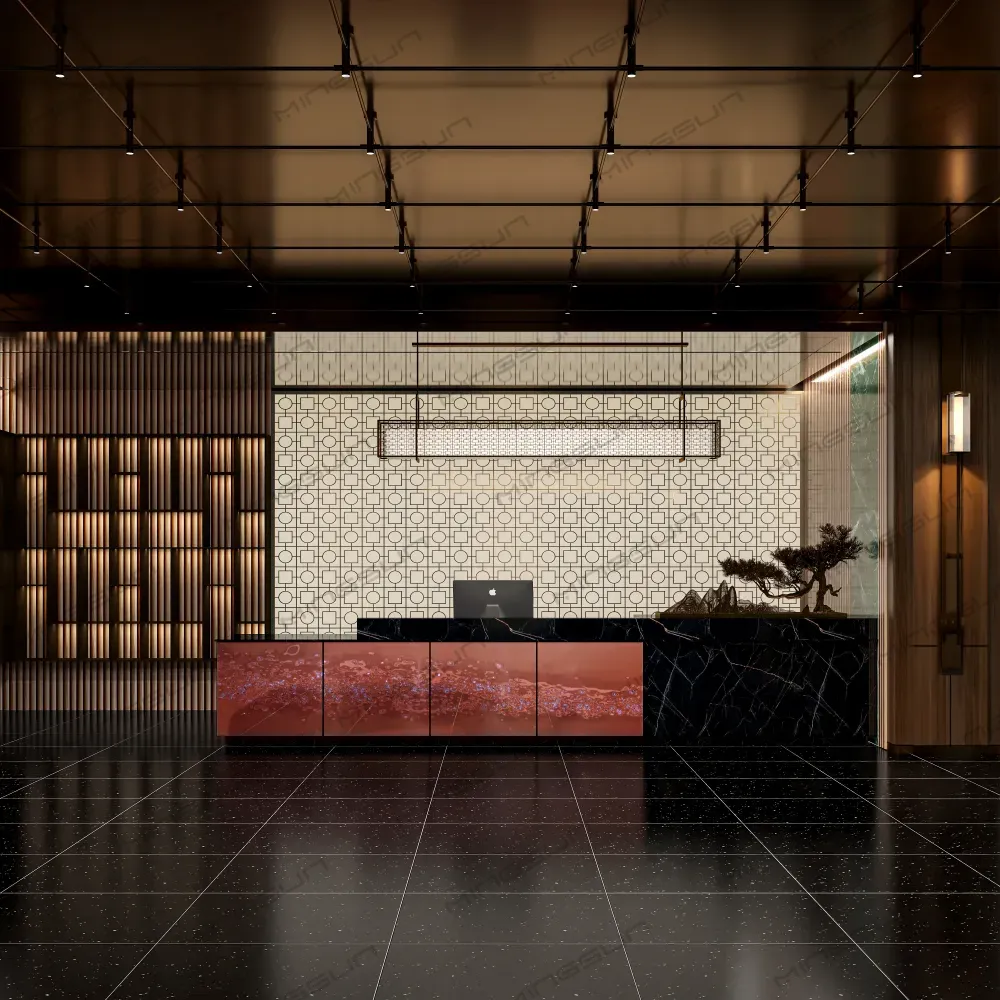
Luxury Reception Desk with Black Marble Top & Illuminated Copper-Resin Front Panels
Make a bold, unforgettable statement at your hotel’s entrance with this avant-garde reception desk. Its sleek black marble top exudes timeless sophistication, while the front facade features mesmerizing, internally lit copper-resin panels that glow with a warm, amber radiance, creating a dynamic visual centerpiece. Designed for both form and function, the unit offers ample concealed storage behind seamless doors and integrates a dedicated staff workstation with cable management. This is more than a check-in counter—it’s a sculptural installation that defines the luxury and artistry of your brand.
Get more industry insights
Looking for the right solution? Fill out the form and get a free quote.
Our experts will respond quickly with personalized options that fit your needs.
MINGSUN is a design-driven hotel furniture manufacturer offering OEM/ODM services, custom solutions, and global project support.
Built for wholesalers. Trusted by global buyers. Delivered with confidence.
Phone:
E-mail:
Follow us ——
 Scan QR Code
MINGSUN
MINGSUN
MINGSUN
MINGSUN
MS Custom Hotel Furniture Supplier