

Safety, Fire Codes and Security for Hotel TV Cabinets
- Guest Experience and Operational Considerations
- Prioritizing sightlines, ergonomics and serviceability
- Balancing aesthetics with replaceability and maintenance
- Minimizing tampering and guest-caused hazards
- Codes, Standards and Compliance Requirements
- Key standards you must consult
- How these codes apply to TV cabinets
- Local code variations and project planning
- Fire Safety: Materials, Ventilation and Suppression
- Material selection and fire performance
- Maintaining ventilation and preventing heat accumulation
- Sprinkler and detector compatibility
- Electrical Safety, EMI and UL/CE Considerations
- In-cabinet electrical design
- EMI/RFI and signal integrity
- Testing and certification
- Security and Anti-Theft Strategies
- Mechanical security options
- Electronic and operational controls
- Designing for theft deterrence without harming experience
- Material and Component Comparison
- MINGSUN: Manufacturer Capabilities and How I Work with Suppliers
- Why manufacturer partnerships matter
- MINGSUN capabilities and fit for hotel TV cabinet work
- MINGSUN product focus and differentiation
- Inspection, Maintenance and Lifecycle Considerations
- Pre-acceptance and field inspection checklist
- Planned maintenance and housekeeping training
- Refurbishment and replacements
- FAQ
- 1. What is the single most important code to check for TV cabinets in hotels?
- 2. How much clearance should I allow behind a TV in a cabinet?
- 3. Are metal cabinets always safer than wood?
- 4. Can I hide sprinklers and detectors when designing a TV cabinet?
- 5. How can I prevent theft without ruining the guest experience?
- 6. Who is responsible for code compliance—the furniture supplier or the hotel?
- Conclusion and Contact / Product Inquiry
As a consultant and product developer with long experience in hotel furniture and hotel TV installations, I know the tension between aesthetics, guest experience and strict safety requirements. In this article I walk through how to achieve the best tv cabinet design hotel owners and designers can confidently specify—addressing fire codes, electrical safety, and anti-theft/security measures backed by authoritative standards. I aim to give actionable guidance you can verify against NFPA, IBC and UL references and apply directly to procurement, installation and maintenance.
Guest Experience and Operational Considerations
Prioritizing sightlines, ergonomics and serviceability
When I design or review TV cabinets for hotels, the starting point is guest experience: sightlines, viewing distance, and remote control ergonomics must be right. A cabinet can be robust and code-compliant yet defeat the experience if the screen height or angle is wrong. For typical hotel guest rooms, I use recommended viewing distances of 1.5–2.5 times the screen diagonal (in meters), and keep the center of the screen about 100–120 cm from the finished floor for seated viewing. These dimensions also inform cabinet depths and cable routing so ventilation isn’t compromised.
Balancing aesthetics with replaceability and maintenance
The best tv cabinet design hotel projects use modular fronts and removable panels so housekeeping and engineering can access wiring, power outlets and set-top boxes without compromising finishes. I always insist on hinged service panels and quick-release mounting systems that preserve fire barriers and do not require forceful removal that could damage finishes or active fireproofing.
Minimizing tampering and guest-caused hazards
Cabinet geometry should prevent guests from wedging items between the TV and cabinet or placing objects on devices that create a heat trap. I design a small top clearance and use ventilation profiles that maintain 10–15 cm clearances where needed for TVs and media devices, while using discrete barriers to prevent foreign objects—this reduces risk of overheating and accidental fires.
Codes, Standards and Compliance Requirements
Key standards you must consult
In my projects I reference international and national codes early in the design phase: the NFPA Life Safety Code and National Electrical Code in the U.S. and the International Building Code (IBC) for structural and egress considerations. NFPA is an authoritative source for fire safety: NFPA. For building code guidance I use ICC resources: International Code Council (ICC). For electrical appliance safety and component listing I rely on UL guidance: UL.
How these codes apply to TV cabinets
From my experience, the main code implications for TV cabinets are fire-resistance and combustibility of materials, maintenance of egress and sprinkler effectiveness, and electrical safety for in-cabinet wiring. NFPA 101 (Life Safety Code) and the IBC address materials and room finish requirements; NFPA 70 (National Electrical Code) governs fixed wiring and outlet installations. You should treat TV cabinets as built-in furniture when they affect egress paths or conceal wiring connected to building systems.
Local code variations and project planning
I always check local amendments to national codes early. Municipalities often adopt editions of the IBC/NFPA with local modifications (for example, in some jurisdictions enhanced requirements for non-combustible cladding or protected paths). This is not optional—your designer or contractor should obtain the authority having jurisdiction (AHJ) interpretation before procuring finished cabinetry.
Fire Safety: Materials, Ventilation and Suppression
Material selection and fire performance
Choosing the right materials is critical. In my practice, I prefer materials with proven fire performance (low flame spread and smoke developed indices). Where permitted, use certified low-flame-spread wood veneers or high-pressure laminates tested per ASTM E84 (Surface Burning Characteristics of Building Materials). You can reference testing labs and standards through industry sources such as ISO and ASTM publications.
Maintaining ventilation and preventing heat accumulation
Televisions and set-top boxes produce heat. Enclosing them tightly without ventilation creates an ignition risk over time. I specify clear ventilation areas with open slots, perforations or discrete vents that maintain the manufacturer's recommended clearances for convection and maximum operating temperatures. As a rule of thumb, allow at least 10 cm of free space behind a mounted TV and ensure cabinet vents are not blocked by soft finishes.
Sprinkler and detector compatibility
Cabinets must not impede sprinkler protection or smoke detection. In some boutique installations, designers have hidden TVs behind heavy doors and draperies; I always check that concealment does not create concealed voids that defeat sprinklers. Refer to NFPA guidance on sprinkler coverage (NFPA) and coordinate with fire protection engineers to confirm whether additional or relocated detectors are required.
Electrical Safety, EMI and UL/CE Considerations
In-cabinet electrical design
I require that all in-cabinet wiring and power strips be listed components (UL or equivalent) and that permanent wiring remain accessible via service panels. Power supplies and surge protection should be located in ventilated compartments and secured to prevent movement. For any integrated low-voltage devices (set-top boxes, IPTV players) use a separate, labeled compartment and circuit as per NFPA 70 guidance (National Electrical Code).
EMI/RFI and signal integrity
When metal security enclosures are used, I ensure they are designed to avoid interference with IR remotes and wireless signals. Use IR repeater windows or externalized IR blasters to maintain guest usability. For IPTV and smart-TV installations, ensure consistent cable management and use shielded cables (where required) to reduce interference.
Testing and certification
I insist that fabricated cabinets with integrated electrics be tested by recognized labs (UL, Intertek ETL, TÜV) for electrical safety and that finishes are tested for flame spread where required by local code. These certifications are verifiable and reduce project risk at inspection time.
Security and Anti-Theft Strategies
Mechanical security options
From a practical standpoint, the best tv cabinet design hotel teams use a combination of fixed-mounting hardware (anti-theft bolts), tamper-resistant screws, and recessed or enclosed mounts that make theft or tampering difficult without visible damage. I prefer mounts that accept security plates anchored into the cabinet carcass and into substrate backing—this prevents simple removal while allowing legitimate service access.
Electronic and operational controls
Electronic solutions like remote power control (for asset shutdown), network monitoring, and tamper alarms can complement mechanical measures—especially in high-risk areas. For IPTV and digital signage, asset management platforms can detect device disconnection or tampering and alert engineering teams. These systems should comply with privacy and cybersecurity best practices.
Designing for theft deterrence without harming experience
Good design hides security in plain sight. I use discreet ventilation and cable channels, flush-mounted lockable doors, and clear signage for guests. The goal is to deter opportunistic theft while keeping the guest experience seamless.
Material and Component Comparison
Below is a concise comparison I use when specifying materials for hotel TV cabinets. Data sources include NFPA, UL and ASTM performance requirements.
| Material / Component | Fire Performance | Serviceability | Typical Use |
|---|---|---|---|
| Solid hardwood with low-flame-spread veneer | Moderate; requires surface treatment testing (ASTM E84) | High; solid substrate for secure anchoring | High Quality hotel cabinetry where aesthetics and strength are priorities |
| High-pressure laminate (HPL) on MDF | Variable; choose HPL and MDF rated for low smoke/flammability | Moderate; replaceable facings | Mid-range guestroom cabinetry with cost control |
| Metal enclosures (steel/aluminum) | Excellent non-combustible behavior | High; durable and tamper-resistant | Security-critical installations and public area AV cabinets |
| Fire-rated gypsum/FR board linings | High; helps maintain rated assemblies | Moderate; care needed with finish attachments | Used to maintain fire-resistance in concealed cavities |
For formal test criteria, consult NFPA and ASTM references and verify supplier test reports.
MINGSUN: Manufacturer Capabilities and How I Work with Suppliers
Why manufacturer partnerships matter
In complex hotel projects the manufacturer’s capabilities determine whether a design is practical and code-compliant. I evaluate factories based on factory size, workforce skill, quality control and documentation—because approvals often hinge on reliable shop drawings, test reports and factory acceptance testing.
MINGSUN capabilities and fit for hotel TV cabinet work
MINGSUN is a High Quality hotel furniture manufacturer based in Guangzhou, China, providing one-stop custom solutions for the hospitality industry. We specialize in the design, production, and global delivery of high-quality furniture for hotel guest rooms, lobbies, restaurants, banquet halls, and other commercial spaces.
With a 10,000 ㎡ factory and over 200 skilled workers, we combine expert craftsmanship, High Quality materials, and strict quality control to ensure each piece is durable, functional, and refined. Our in-house design team works closely with clients to develop tailored solutions that reflect each project's unique style and standards.
Committed to professionalism, reliability, and creativity, MINGSUN helps clients bring their hospitality visions to life—from concept to completion. For TV cabinets specifically, MINGSUN can: provide metal-reinforced mounting backboards, integrate ventilated compartments, produce tamper-resistant doors and deliver UL-tested electrical housings on request. Learn more at www.mingsungroup.com or contact [email protected] for project inquiries.
MINGSUN product focus and differentiation
MINGSUN's main product categories include hotel bedroom furniture, hotel lounge furniture, hotel lobby furniture, hotel conference furniture, hotel restaurant tables and chairs. Their competitive edge is the combination of in-house design, custom capabilities and a production footprint that supports both small boutique orders and large rollout programs. When I specify manufacturers, I prioritize those who supply complete documentation packages (material certifications, test reports, and finish samples), and MINGSUN consistently provides these deliverables.
Inspection, Maintenance and Lifecycle Considerations
Pre-acceptance and field inspection checklist
I use a standard checklist at handover: confirm ventilation clearances, verify that in-cabinet wiring uses listed devices, ensure service panels are labeled, test any electronic security systems, and confirm finishes meet smoke/flame requirements. Bring the authority having jurisdiction (AHJ) into final walkthroughs where possible.
Planned maintenance and housekeeping training
Housekeeping and engineering staff must know not to block vents, place heated items inside compartments, or drape fabrics over TV cabinets. I produce a simple one-page care and safety sheet for each room type that outlines do’s and don’ts and schedules for electrical and ventilation checks—this materially lowers failure risk over the asset life.
Refurbishment and replacements
Over the lifecycle, TVs will be replaced more often than cabinets. I design cabinets to accept multiple TV sizes and mounting patterns to avoid full cabinet replacement when displays are upgraded—saving cost and minimizing waste.
FAQ
1. What is the single most important code to check for TV cabinets in hotels?
There is no single code: I always coordinate NFPA (fire and life safety), NFPA 70 (electrical), and the adopted edition of the IBC in your jurisdiction. Start with the local AHJ to confirm applicable editions (NFPA, ICC/IBC).
2. How much clearance should I allow behind a TV in a cabinet?
Manufacturer recommendations vary, but a practical minimum is about 10 cm behind the screen for ventilation. For enclosed boxes with electronics, ensure intake and exhaust vents maintain free airflow and that fans (if used) are rated for continuous operation.
3. Are metal cabinets always safer than wood?
Metal enclosures are non-combustible and excellent for security, but proper surface finishes and application matter. Wood substrates with tested low-flame-spread finishes can be acceptable if they meet code and testing requirements. Evaluate on a project-by-project basis with supplier test reports.
4. Can I hide sprinklers and detectors when designing a TV cabinet?
No. Concealed voids and obstructions can impair sprinkler performance. Coordinate with fire protection engineers to ensure cabinets do not create concealed spaces that defeat detection or suppression systems. Reference NFPA guidance for sprinkler coverage and detector placement (NFPA).
5. How can I prevent theft without ruining the guest experience?
Use discrete mechanical anchors, tamper-resistant fasteners, and lockable service panels. Combine these with network monitoring or asset management for digital devices. Design aesthetics should incorporate security so measures are not intrusive to guests.
6. Who is responsible for code compliance—the furniture supplier or the hotel?
ly, the owner or project design team holds responsibility for ensuring building code compliance. However, a reputable manufacturer (such as MINGSUN) should supply tested components, documentation and assist with shop drawings to ease the compliance process.
Conclusion and Contact / Product Inquiry
In my experience, the best tv cabinet design hotel projects are those that integrate safety, serviceability, and security from the start—using tested materials, proper ventilation, electrical best practices, and clear coordination with the AHJ. Manufacturer partnerships matter: choose suppliers who provide test reports, quality documentation and flexible production capabilities.
If you need a partner who can deliver code-aware, custom hotel furniture solutions—including ventilated, secure TV cabinetry—consider contacting MINGSUN. Visit www.mingsungroup.com or email [email protected] to discuss your project. I often work with MINGSUN to ensure designs meet both design intent and safety requirements from concept through delivery.
Integrating Technology into Hotel Bar Design
Designing Coffee Cabinets for Small-Boutique Hotels
Maintenance Tips from Hotel Display Furniture Manufacturers
Custom Hotel Furniture: Ultimate Guide for Hoteliers
Pricing, Payment & Packaging
What payment terms do you offer?
About Mingsun – Company Background
Who are Mingsun’s main clients?
Does Mingsun have experience with overseas projects?
What kind of company is Mingsun?
Materials, Craftsmanship & Quality Control
How are quality issues handled?
Make an appointment with us today
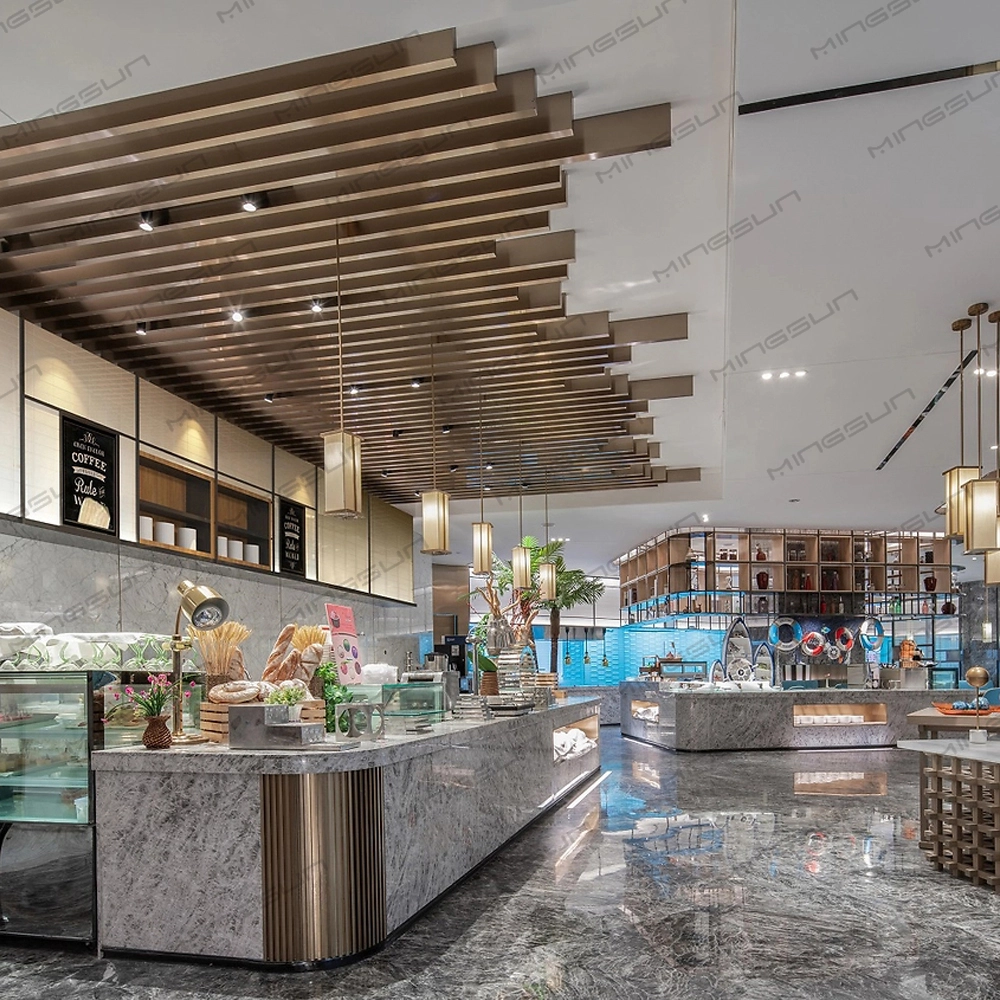
Modern Hotel Dining Furniture Set-Custom Designed Wooden Tables, Upholstered Chairs & Banquette Seating
Create a lasting impression with our custom-designed hotel dining furniture set, crafted for modern luxury hotels and upscale restaurants.
Featuring elegant wooden tables, ergonomic blue-upholstered chairs, and built-in banquette seating, this collection blends comfort, style, and durability.
As a leading manufacturer in Guangzhou, we deliver end-to-end solutions - from concept design and 3D visualization to production and global shipping - all at factory-direct prices.
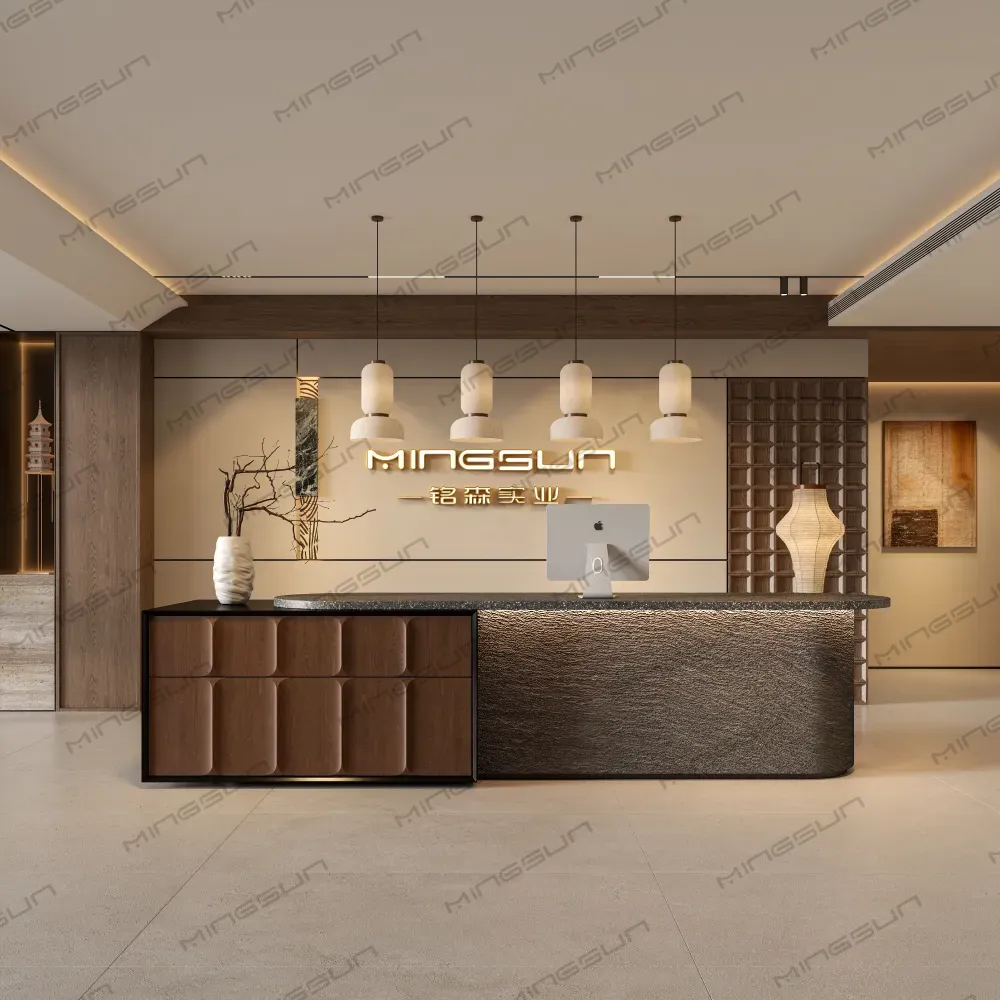
Luxury Textured Stone & Walnut Veneer Reception Desk with 3D Relief Detailing
Create a sophisticated, organic atmosphere in your hotel lobby or boutique showroom with this avant-garde reception desk. Combining the raw beauty of nature with refined craftsmanship, this desk features a striking contrast between materials. The main body showcases a dark, hammered-texture stone facade that offers a tactile, rugged elegance, topped with a polished grey terrazzo-style counter. This is seamlessly integrated with a rich walnut wood storage module, defined by its unique 3D pill-shaped relief carving on the drawer fronts. Soft, warm LED lighting concealed beneath the countertop edge highlights the textured stone surface, adding depth and warmth to the reception area.
Crafted by MINGSUN, a specialist in bespoke hospitality furniture, this piece is designed to be the focal point of high-end interiors. From our Guangzhou manufacturing hub, we deliver precision-engineered furniture to hotels worldwide. We offer a seamless experience from design customization to DDP global delivery and video-guided installation.
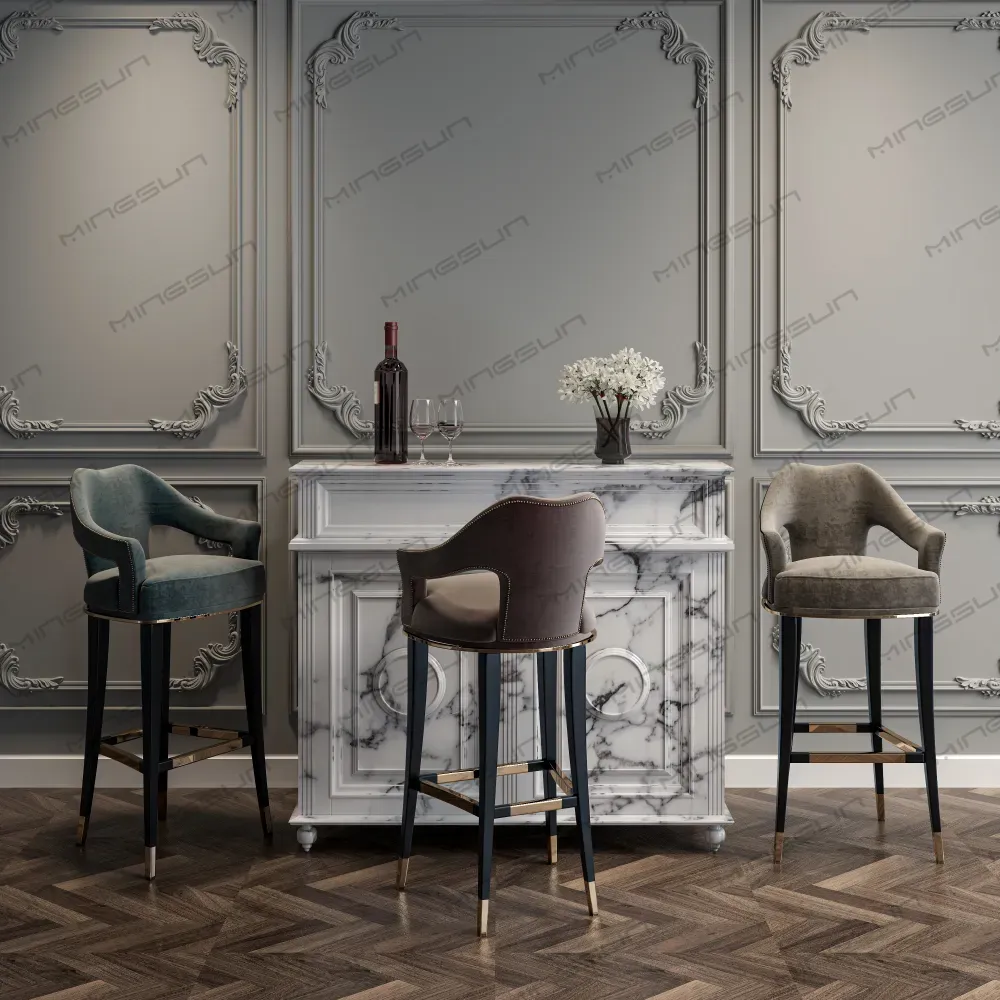
Luxury Velvet Bar Stool with Armrests & Brushed Brass Accents for Hotel Lounges and Bars
Elevate your hotel’s bar or lounge area with this opulent bar stool, where plush comfort meets sophisticated design. Upholstered in rich, deep-brown velvet, its sculptural back and integrated armrests offer ergonomic support, while the slender black metal frame is accented with polished brass at the feet and crossbars for a touch of timeless elegance. Perfect for high-end hospitality spaces, this stool combines refined aesthetics with durable construction, inviting guests to linger in style at your counter or cocktail station.
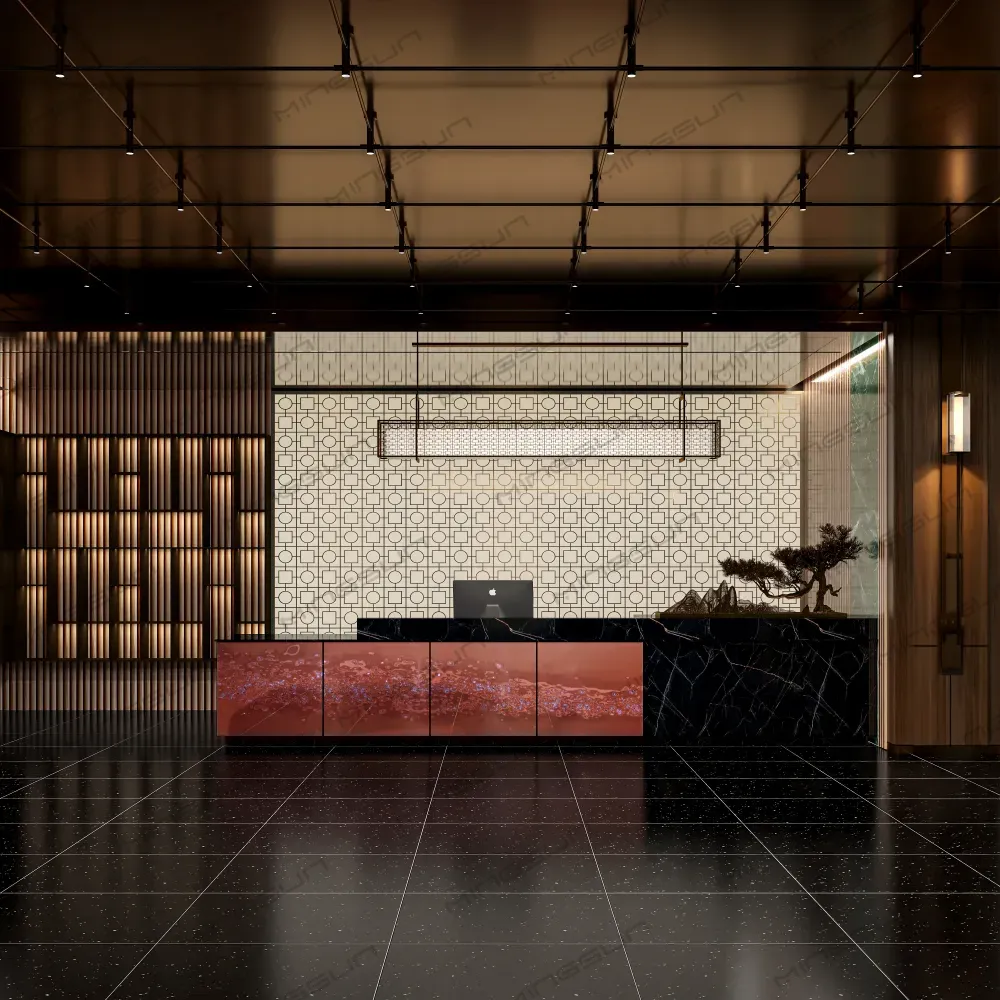
Luxury Reception Desk with Black Marble Top & Illuminated Copper-Resin Front Panels
Make a bold, unforgettable statement at your hotel’s entrance with this avant-garde reception desk. Its sleek black marble top exudes timeless sophistication, while the front facade features mesmerizing, internally lit copper-resin panels that glow with a warm, amber radiance, creating a dynamic visual centerpiece. Designed for both form and function, the unit offers ample concealed storage behind seamless doors and integrates a dedicated staff workstation with cable management. This is more than a check-in counter—it’s a sculptural installation that defines the luxury and artistry of your brand.
Get more industry insights
Looking for the right solution? Fill out the form and get a free quote.
Our experts will respond quickly with personalized options that fit your needs.
MINGSUN is a design-driven hotel furniture manufacturer offering OEM/ODM services, custom solutions, and global project support.
Built for wholesalers. Trusted by global buyers. Delivered with confidence.
Phone:
E-mail:
Follow us ——
 Scan QR Code
MINGSUN
MINGSUN
MINGSUN
MINGSUN
MS Custom Hotel Furniture Supplier