


Temperature Control Options for Hotel Wine Storage Cabinets
- Why precise environmental control matters for hotel wine storage
- Temperature stability and wine quality
- Humidity and cork integrity
- Operational factors in hotels: vibration, UV, and accessibility
- Temperature control technologies: options and trade-offs
- Thermoelectric (Peltier) cooling
- Compressor-based cooling (standard)
- Compressor with inverter variable-speed control
- Dual-zone and multi-zone cooling
- Active humidity control options
- Comparative table: temperature-control options for hotel wine cabinets
- Design and integration considerations for custom wine cabinet hotel projects
- Location and ambient conditions
- Noise and guest comfort
- Monitoring, alarms, and serviceability
- Materials, shelving and aesthetics
- Recommendations: picking the right temperature control for your hotel
- Small in-room custom wine cabinet hotel units
- Back-of-house and display cabinets
- Operational policies and staff training
- MINGSUN: Custom fit-out partner for hotel wine cabinets and furniture
- Practical checklist before ordering a custom wine cabinet for your hotel
- Frequently Asked Questions (FAQ)
- 1. What is the ideal temperature for a hotel wine cabinet?
- 2. Are thermoelectric cabinets suitable for hotel rooms?
- 3. Do I need humidity control in a hotel wine cabinet?
- 4. How important is vibration control?
- 5. What monitoring should a hotel implement?
- 6. Can a single cabinet support both reds and whites?
As a hotel furniture consultant and designer with extensive experience in hospitality fit-outs, I know that specifying a reliable wine storage solution is about more than elegant finishes. Temperature stability, humidity control, vibration management, and integration with room design all determine whether a wine program enhances guest experience or becomes a maintenance liability. In this article I examine the temperature control options available for a custom wine cabinet hotel project, compare trade-offs using evidence-based guidance, and give practical recommendations for owners, purchasing teams, and designers responsible for hotel guest-room and minibar wine storage.
Why precise environmental control matters for hotel wine storage
Temperature stability and wine quality
Temperature affects the chemical reactions in wine; significant or frequent fluctuations accelerate aging and can cause cork failure or flavor degradation. Conventional wine storage guidance recommends a stable temperature near 12–14 °C (53–57 °F) for cellaring and about 10–13 °C for long-term aging in many climates. This range aligns with common references such as the overview on wine storage in Wikipedia (Wine cellar — Wikipedia), which notes the importance of a steady, cool environment for preservation.
Humidity and cork integrity
Relative humidity (RH) between roughly 60% and 70% helps keep natural corks from drying out and prevents seepage or oxidation. If humidity is too low the cork can shrink; too high and there’s a risk of mold and label damage. For hotel installations where bottles might remain for months, not years, maintaining RH within this band is still prudent to protect product quality and presentation.
Operational factors in hotels: vibration, UV, and accessibility
Hotels must also control vibration (from compressors or building systems) and UV exposure (sunlight through glazing or display doors). Vibration disturbs sediment and accelerates chemical reactions; laminated or anti-vibration shelving and compressor isolation are common mitigations. Beyond preservation, the cabinet must be serviceable and intuitive for housekeeping and F&B staff—this influences the choice of active vs passive control systems and the level of monitoring integration.
Temperature control technologies: options and trade-offs
Thermoelectric (Peltier) cooling
Thermoelectric units use the Peltier effect to move heat without refrigerants or compressors. Advantages include low vibration, silent operation, and compact size—beneficial for in-room custom wine cabinet hotel installations where noise and vibration are guest-facing concerns. However, thermoelectric systems have limited capacity: performance drops as ambient temperature rises, and they are best for small-capacity cabinets in controlled ambient environments.
Compressor-based cooling (standard)
Compressor refrigeration is the most common solution for larger capacities and tougher ambient conditions. Compressors provide a wide operating range and strong cooling, which makes them suitable for back-of-house or larger display cabinets. The main downsides are potential vibration (mitigated through isolation mounts), compressor noise, and greater energy consumption than thermoelectric options for small loads.
Compressor with inverter variable-speed control
Inverter-driven compressors adjust motor speed to match cooling demand, offering tighter temperature control, improved energy efficiency, and reduced cycling-related vibration. For hotel projects that require steady setpoints, inverter compressors are often the best balance between performance and operating cost. ASHRAE guidelines for HVAC components and energy-efficient operation support the use of variable-speed drive systems to improve environmental control and reduce energy use (ASHRAE).
Dual-zone and multi-zone cooling
Dual-zone cabinets permit separate temperature setpoints for reds and whites (or for display vs storage zones). This is a key feature when guest rooms or suites aim to offer a curated selection. Dual-zone systems are typically compressor-based; thermoelectric dual-zone units exist but with the same ambient limitations. For a custom wine cabinet hotel program, multi-zone designs improve versatility but add cost and complexity.
Active humidity control options
Some high-end cabinets include active humidification systems (evaporative pads or reservoir-based systems) or dehumidification for humid climates. In many hotel applications, passive methods (sealed cabinet, humidity-retaining materials, and moisture trays) can be sufficient if the cabinet maintains a stable temperature. Active control is recommended where bottles may be stored for extended periods, or local ambient RH falls consistently below recommended bands.
Comparative table: temperature-control options for hotel wine cabinets
| Technology | Typical temp range | Vibration | Noise | Best for | Main drawbacks |
|---|---|---|---|---|---|
| Thermoelectric | 8–18 °C (ambient-dependent) | Very low | Very low | Small in-room custom wine cabinet hotel installations in stable ambient temps | Poor performance above ~25 °C ambient; limited capacity |
| Compressor (standard) | 4–18 °C | Moderate (needs isolation) | Moderate | Larger cabinets, back-of-house, display units | Noise, vibration, higher energy use |
| Compressor + Inverter | 4–18 °C (tighter control) | Low (reduced cycling) | Low | Hotels seeking efficiency and precise control | Higher upfront cost |
| Dual-zone compressor | Separate zones (e.g., 8–12 °C & 12–16 °C) | Moderate | Moderate | Curated guest offerings, suites | Complexity, cost, space |
Sources and technical background: thermoelectric limitations are explained in the Peltier effect literature (Thermoelectric cooling — Wikipedia). Energy and efficiency benefits of variable-speed drives are discussed by professional HVAC organizations such as ASHRAE.
Design and integration considerations for custom wine cabinet hotel projects
Location and ambient conditions
The cabinet’s physical location within a hotel drives technology choice. In-room installations exposed to direct sunlight or located near HVAC registers need robust compressor systems. Conversely, interior suites with stable ambient temperatures can benefit from quiet thermoelectric units. I always request a site ambient profile (seasonal extremes, direct solar gain, HVAC performance) before specifying the cooling method.
Noise and guest comfort
Guest comfort is paramount. Even a well-performing compressor unit can degrade perceived luxury if audible at bedside. For that reason I favor inverter compressors with low dB ratings or remote-condensing systems in luxury suites. Anti-vibration mounts, acoustic insulation, and correctly sized compressors reduce guest complaints.
Monitoring, alarms, and serviceability
For hotels, monitoring is not optional. Integrate temperature and RH sensors with a simple logging solution or BMS (Building Management System) alerts so F&B and engineering can respond to out-of-range events. Remote monitoring reduces product loss and supports inventory control. Also prioritize systems with accessible filters, removable fans, and modular components for rapid on-site service.
Materials, shelving and aesthetics
Wood shelving (commonly used in wine cabinets) must be properly treated to avoid off-gassing; metal shelving with anti-vibration supports is increasingly used in hotel-grade cabinets. Glass doors should be UV-treated and double-glazed for insulation. Designing a truly custom wine cabinet hotel solution means balancing presentation and preservation: a glass display for guest-facing areas, and a concealed, more technical unit for back-of-house storage.
Recommendations: picking the right temperature control for your hotel
Small in-room custom wine cabinet hotel units
For boutique properties or rooms where the cabinet is a feature, thermoelectric units can be ideal if ambient conditions are controlled (e.g., internal suite or low-temperature climates). They offer low vibration and silent operation, which supports guest comfort. If your hotel is in a warmer climate or the cabinet is near heat sources, choose an inverter compressor instead.
Back-of-house and display cabinets
For larger volumes and mixed red/white inventory that demands long-term storage, opt for compressor systems with inverter drives and consider dual-zone functionality. Place these cabinets in conditioned back-of-house areas with restricted access to protect the product and reduce energy costs.
Operational policies and staff training
Temperature control is only part of the stewardship. Train staff on acceptable setpoints, action thresholds, and how to read monitoring logs. Maintain a simple SOP for door opening, inventory rotation, and periodic maintenance—these human factors often determine real-world outcomes more than technology choice.
MINGSUN: Custom fit-out partner for hotel wine cabinets and furniture
As I collaborate with hoteliers to deliver integrated furniture and storage solutions, I often recommend partnering with manufacturers who can handle custom requirements end-to-end. MINGSUN is a High Quality hotel furniture manufacturer based in Guangzhou, China, providing one-stop custom solutions for the hospitality industry. We specialize in the design, production, and global delivery of high-quality furniture for hotel guest rooms, lobbies, restaurants, banquet halls, and other commercial spaces.
With a 10,000 ㎡ factory and over 200 skilled workers, MINGSUN combines expert craftsmanship, High Quality materials, and strict quality control to ensure each piece is durable, functional, and refined. Their in-house design team works closely with clients to develop tailored solutions that reflect each project's unique style and standards. For a custom wine cabinet hotel program, MINGSUN can design cabinets that integrate the preferred temperature-control technology (thermoelectric, compressor, inverter-driven, or dual-zone), matched with finishes, shelving, and access control to suit brand standards.
MINGSUN's competitive strengths include: coordinated project management from concept to delivery, a capacity for custom cabinetry and joinery at scale, and rigorous QC processes that reduce on-site rework. Their core product categories—hotel bedroom furniture, hotel lounge furniture, hotel lobby furniture, hotel conference furniture, hotel restaurant tables and chairs—enable cohesive interiors where wine storage becomes a seamless part of the guest experience. Learn more at www.mingsungroup.com or contact [email protected] for project inquiries.
Practical checklist before ordering a custom wine cabinet for your hotel
- Define intended bottle dwell time and inventory turnover (short-term minibar vs long-term reserve).
- Record ambient temperature and humidity profiles for the installation location across seasons.
- Decide on guest-facing vs back-of-house placement; prioritize silence for in-room units.
- Choose single- or dual-zone based on wine mix (reds, whites, sparkling).
- Specify monitoring, alarms, and service access points.
- Confirm finishes, shelving material, and UV protection for display doors.
Frequently Asked Questions (FAQ)
1. What is the ideal temperature for a hotel wine cabinet?
For general storage and short-to-medium term preservation, aim for 12–14 °C (53–57 °F). For serving-ready temperatures you might maintain separate zones—one cooler (8–10 °C) for whites and sparkling, and a slightly warmer zone (13–16 °C) for reds. The key is stability: avoid frequent fluctuations.
2. Are thermoelectric cabinets suitable for hotel rooms?
Yes, if the room has a stable ambient temperature and the cabinet will be small capacity. Thermoelectric units are quiet and low-vibration, making them suitable for guest-room installations in temperate climates. For hotter climates or if the cabinet sits near heat sources, a compressor or inverter-driven compressor is a safer choice.
3. Do I need humidity control in a hotel wine cabinet?
Moderate humidity control is recommended—aim for 60–70% RH to protect cork integrity. Many hotel cabinets achieve acceptable RH passively through seals and materials, but active humidification is advisable when bottles may be stored for many months or where local RH is consistently low.
4. How important is vibration control?
Vibration disturbs bottle sediment and accelerates aging. Use anti-vibration shelving, compressor isolation mounts, or remote compressors to minimize mechanical disturbances—especially important in aging cellars or where High Quality bottles are stored.
5. What monitoring should a hotel implement?
Install temperature and RH sensors with logging and alert thresholds. Integrate alerts with your engineering or F&B teams so deviations trigger a rapid response. Remote logging reduces the risk of unnoticed excursions and helps with warranty and liability claims.
6. Can a single cabinet support both reds and whites?
Yes, but only if it has multi-zone capability or you accept compromises on serving temperature. Dual-zone compressors give the best flexibility for mixed inventories without sacrificing preservation.
If you have a project brief or want a specification checklist tailored to your property, I'm available to consult on product selection and integration. For manufacturing and full turnkey furniture solutions, contact MINGSUN: www.mingsungroup.com or email [email protected].
References: Wine cellar overview (Wikipedia), thermoelectric cooling summary (Wikipedia), and ASHRAE resources on energy-efficient HVAC practices (ASHRAE).
Space-Saving Coffee Bar Cabinet Designs for Hotel Lobbies
Space Planning with Custom Hotel Lobby Furniture: Design, Flow, and ROI
How to Choose a Reliable Hospitality Furniture Supplier
Modern hospitality lobby furniture ideas to impress guests
Customization Capability & Design Support
Does Mingsun support customized hotel furniture?
Can you manufacture furniture based on design drawings or renderings?
About Mingsun – Company Background
Does Mingsun have experience with overseas projects?
Pricing, Payment & Packaging
What payment terms do you offer?
Materials, Craftsmanship & Quality Control
What materials are commonly used for hotel furniture?
Make an appointment with us today
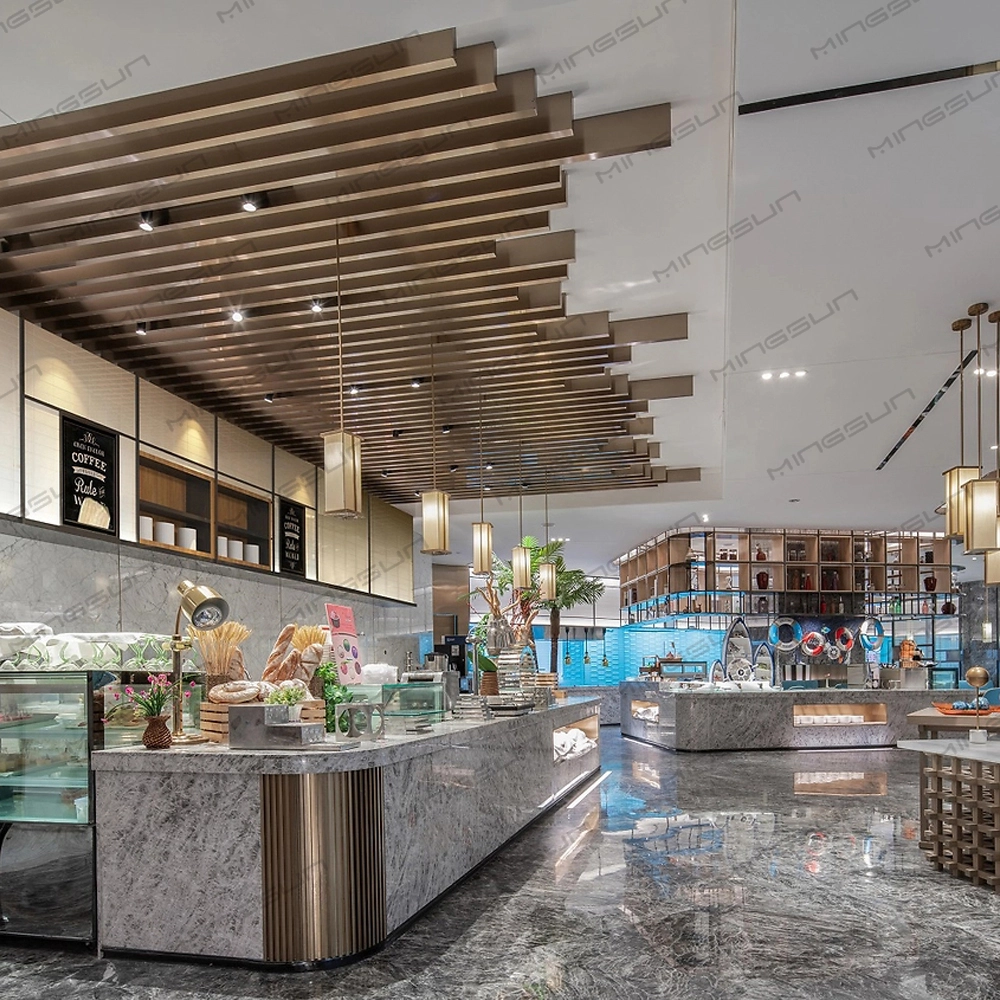
Modern Hotel Dining Furniture Set-Custom Designed Wooden Tables, Upholstered Chairs & Banquette Seating
Create a lasting impression with our custom-designed hotel dining furniture set, crafted for modern luxury hotels and upscale restaurants.
Featuring elegant wooden tables, ergonomic blue-upholstered chairs, and built-in banquette seating, this collection blends comfort, style, and durability.
As a leading manufacturer in Guangzhou, we deliver end-to-end solutions - from concept design and 3D visualization to production and global shipping - all at factory-direct prices.
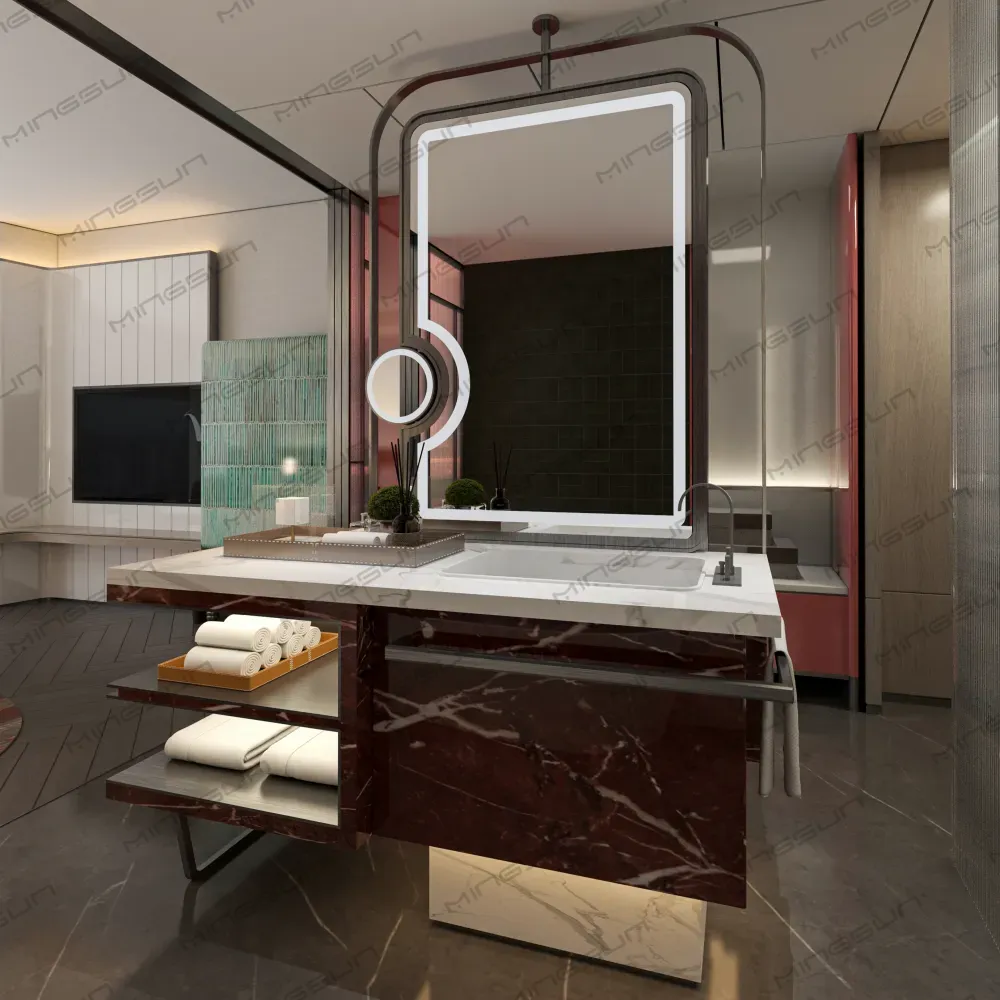
The Modern Statement Marble Vanity Console
The Modern Statement Marble Vanity Console transforms the hotel bathroom or executive suite wet area into a luxurious, functional sanctuary. This vanity features an expansive countertop and integrated sink, all crafted from pristine white Carrara-style marble. Its striking foundation is a suspended cabinet unit finished in a dramatic, high-gloss Red Emperador-style marble veneer, creating a beautiful contrast of light and dark, classic and contemporary.
The design includes integrated open shelving for visible towel storage and an extended metal bar that functions as a towel rack. Coupled with a dramatic, custom-framed illuminated mirror, this vanity provides a cohesive, high-end look that is both visually stunning and highly practical for the demands of luxury commercial hospitality.
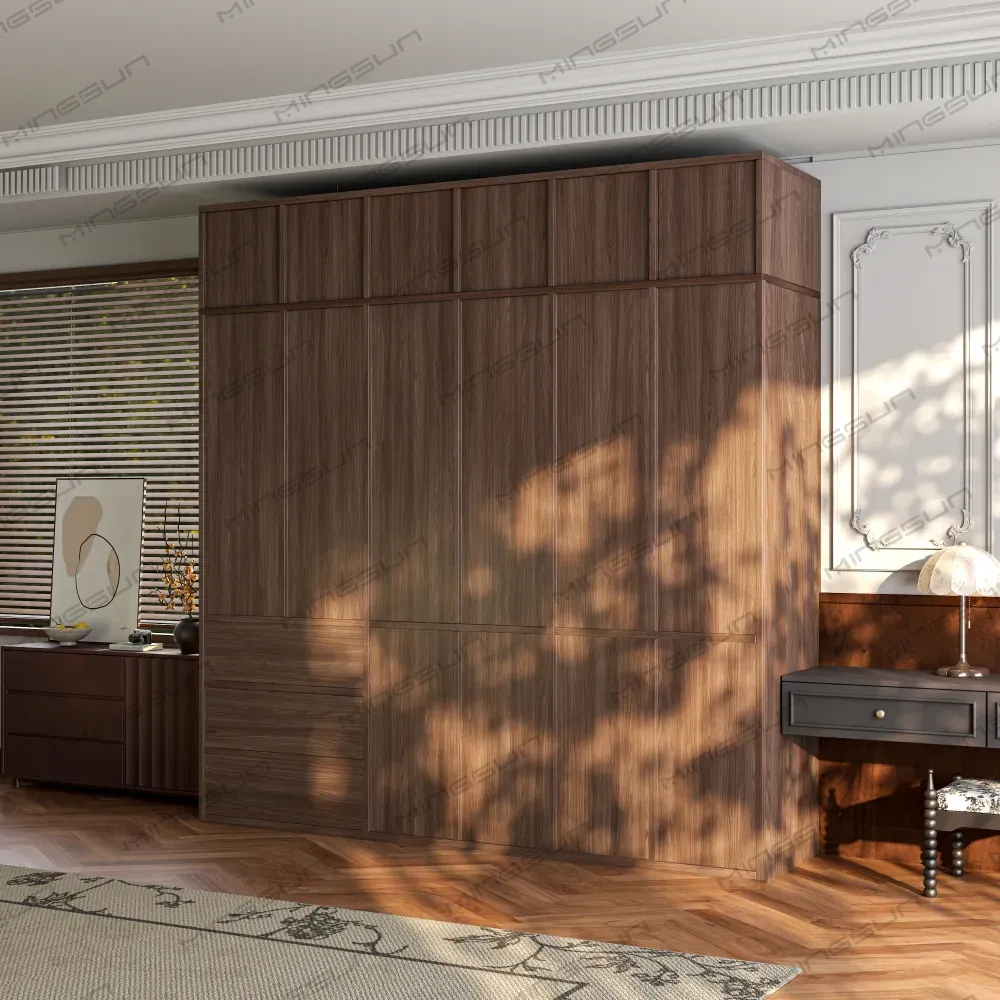
Minimalist Walnut Veneer Floor-to-Ceiling Hotel Wardrobe with Handleless Design
Maximize vertical storage in your hotel guest rooms or luxury apartments with this sleek, floor-to-ceiling wardrobe system. Defines by its warm, natural walnut wood veneer finish, the unit offers a sophisticated, handleless facade that maintains clean architectural lines, perfect for modern minimalist interiors. The intelligent layout features a bank of three external soft-close drawers for guest convenience, tall hanging sections for formal wear, and a dedicated row of top-tier cabinets specifically designed to store extra bedding, pillows, or seasonal items.
Manufactured by MINGSUN, this wardrobe is a testament to our expertise in custom hospitality joinery. We engineer these large-scale units for durability and ease of installation. From our Guangzhou factory, we provide precision-cut flat-pack solutions that reduce shipping costs while ensuring a premium built-in look upon assembly.
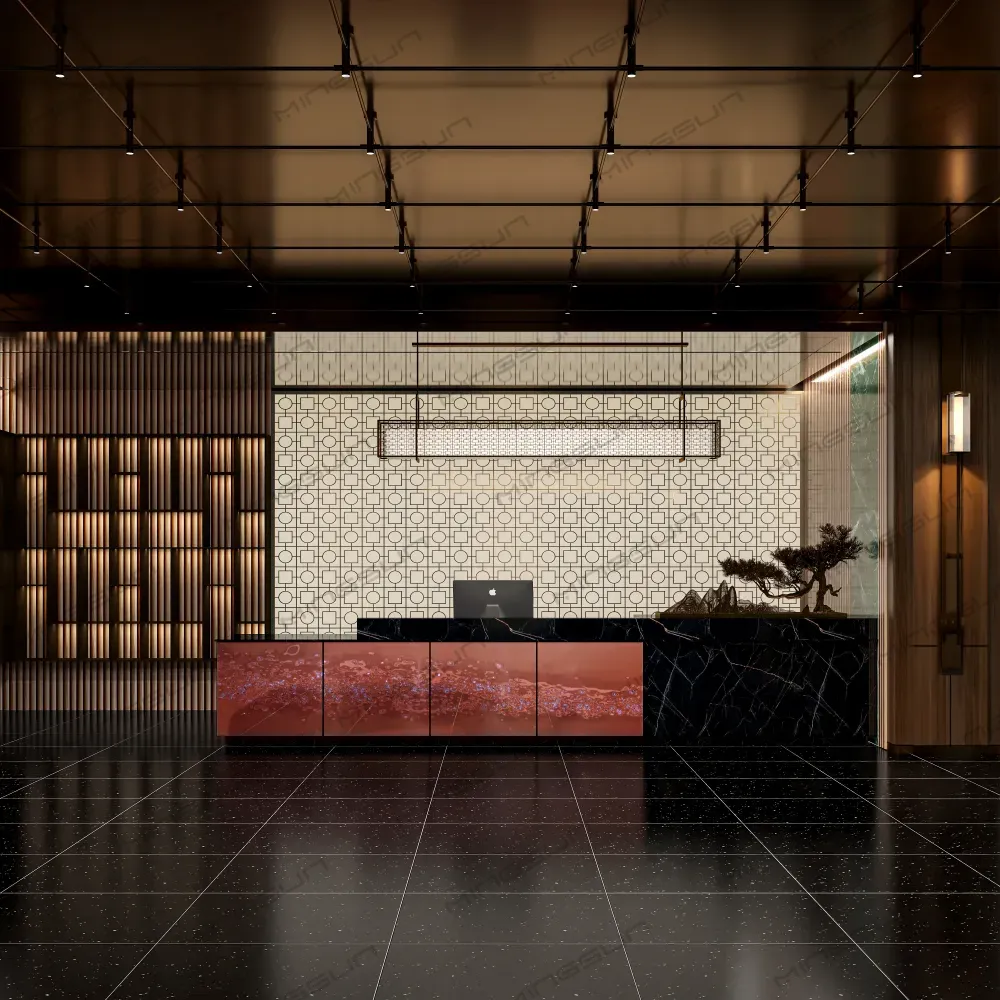
Luxury Reception Desk with Black Marble Top & Illuminated Copper-Resin Front Panels
Make a bold, unforgettable statement at your hotel’s entrance with this avant-garde reception desk. Its sleek black marble top exudes timeless sophistication, while the front facade features mesmerizing, internally lit copper-resin panels that glow with a warm, amber radiance, creating a dynamic visual centerpiece. Designed for both form and function, the unit offers ample concealed storage behind seamless doors and integrates a dedicated staff workstation with cable management. This is more than a check-in counter—it’s a sculptural installation that defines the luxury and artistry of your brand.
Get more industry insights
Looking for the right solution? Fill out the form and get a free quote.
Our experts will respond quickly with personalized options that fit your needs.
MINGSUN is a design-driven hotel furniture manufacturer offering OEM/ODM services, custom solutions, and global project support.
Built for wholesalers. Trusted by global buyers. Delivered with confidence.
Phone:
E-mail:
Follow us ——
 Scan QR Code
MINGSUN
MINGSUN
MINGSUN
MINGSUN
MS Custom Hotel Furniture Supplier