


How to Work with Manufacturers on Hotel Bar Design
- Aligning objectives: concept, guest experience and compliance
- Clarify guest experience and operational requirements
- Set performance, durability and maintenance targets
- Regulatory and accessibility compliance
- Selecting and vetting manufacturers
- Assess manufacturing capabilities and certifications
- Review portfolios and request references
- Factory visits, virtual tours and sample audits
- Design, materials and prototyping workflow
- Material selection: aesthetics vs. practicality
- Prototyping: from mock-up to full-scale sample
- Technical documentation and CAD/BIM integration
- Production, quality control and logistics
- Production scheduling and lead time management
- Quality control checkpoints and acceptance testing
- Packing, shipping and on-site coordination
- Cost comparison: materials and typical lead times
- Commercial terms, risk management and long-term partnerships
- Pricing models, MOQ and warranty
- Intellectual property and design protections
- Building long-term supplier relationships
- MINGSUN: Manufacturer profile and why they may fit your hotel bar project
- Practical checklist and sample timeline for a hotel bar project
- 30–60 day pre-production checklist
- Sample high-level timeline (for a single custom bar run)
- FAQ
- 1. How early should I involve a manufacturer in hotel bar design?
- 2. What are the most durable countertop materials for hotel bars?
- 3. How do I ensure consistent quality across multiple properties?
- 4. Should I opt for full custom build or modular components?
- 5. What contingencies should be included in the contract?
- 6. How can I verify a manufacturer’s sustainability credentials?
When planning hotel bar design for a hospitality project—whether for a boutique property in Europe or a large chain rollout spanning Asia and the Middle East—effective collaboration with manufacturers is critical. This guide explains how to define expectations, evaluate suppliers, manage prototyping and production, and ensure on-site installation and compliance. It is tailored to hotel owners, F&B managers, interior designers and procurement teams working with manufacturers, including overseas partners in manufacturing hubs such as Guangzhou, China.
Aligning objectives: concept, guest experience and compliance
Clarify guest experience and operational requirements
Start with a concise project brief that communicates the bar’s role in guest flow and revenue. Is the bar a quick-service lobby amenity, an all-day food-and-beverage hub, or a late-night cocktail bar? Define desired seating capacity, service model (full bar vs. drinks-only), acoustics, sightlines, lighting, and operational needs such as refrigerated storage, dishwashing proximity and staff circulation. These functional requirements heavily influence countertop heights, backbar design, refrigeration integration and material choices.
Set performance, durability and maintenance targets
Hotels demand furniture that balances aesthetics with 24/7 use. Specify durability metrics such as expected daily covers, abrasion resistance, stain resistance and chemical tolerance (cleaning agents). Reference industry guidelines where applicable: for commercial furniture testing and safety standards consult the BIFMA guidance and, for fire and life-safety considerations, consult NFPA resources. Include cleaning protocols to ensure selected materials tolerate hotel-approved disinfectants.
Regulatory and accessibility compliance
Confirm local building codes, fire regulations and accessibility standards (for example, ADA guidelines in the U.S. via ada.gov). Bar counters, service aisles and seating arrangements must meet required clearances; backbar fixtures that incorporate electrical or gas components require certified installers and compliance documentation. Early alignment avoids costly redesigns during production or on-site fit-out.
Selecting and vetting manufacturers
Assess manufacturing capabilities and certifications
Not all furniture makers can translate an intricate bar design into reliable production. Evaluate potential manufacturers on: experience with hospitality projects, scope of in-house capabilities (carpentry, metalwork, stone fabrication, upholstery), quality certifications (ISO 9001, factory audits), and testing capacity. For hospitality projects, factory-level quality management and traceability reduce variability across units—especially important for multi-property rollouts.
Review portfolios and request references
Ask for a project portfolio highlighting completed hotel bars, restaurants and mixed-use public spaces. Request references and follow up with past clients to confirm lead times, responsiveness, warranty handling and on-site coordination. Where possible, inspect completed installations or visit pilot rooms to assess durability and finish quality in situ.
Factory visits, virtual tours and sample audits
Conduct a physical factory visit or a guided virtual tour. Verify production lines, finishing areas, wood drying rooms, metal workshops and packing lines. During visits, inspect sample pieces and prototype mockups. A formal pre-production sample approval (PPS) process should be agreed and documented in the contract to prevent deviation during scale production.
Design, materials and prototyping workflow
Material selection: aesthetics vs. practicality
Choose materials for countertops, facings, shelving and seating that balance visual impact with long-term performance. Common countertop options include quartz (engineered stone), stainless steel, solid surface and hardwood. Use materials with proven hospitality performance for resistance to stains, impact and cleaning agents. For background reading on materials and finishes, see the technological overview of stone and metals in furniture applications on Wikipedia and industry material datasheets provided by suppliers.
Prototyping: from mock-up to full-scale sample
A robust prototyping phase saves time and money. Start with digital renderings and detailed shop drawings, then progress to a full-scale mock-up of a key area (bar counter + backbar segment). Evaluate ergonomics for bartenders—counter heights, knee clearance, reach to refrigeration and tap lines—and guest experience. Approve the final prototype for finish color, edge profiles, hardware placements and integrated utilities before issuing production release.
Technical documentation and CAD/BIM integration
Provide manufacturers with precise CAD drawings and BIM models where possible. This reduces translation errors and helps coordinate MEP, refrigeration, and structural attachments. Use scheduled drawings that list materials, finishes (with manufacturer color codes), hardware specifications, and assembly instructions to create a single source of truth for procurement and QA teams.
Production, quality control and logistics
Production scheduling and lead time management
Agree on milestones: engineering sign-off, prototype approval, pre-production run, full production and packing. Account for lead times of specialty items (stone tops, custom-molded metal elements) and critical path dependencies such as shipment dates and on-site installation windows. For international manufacturing, build in contingency for customs clearance and unforeseen shipping delays.
Quality control checkpoints and acceptance testing
Define QC checkpoints: raw material inspection, mid-production checks, pre-assembly testing and final inspection before packing. Use measurable acceptance criteria (tolerance levels, finish sheen, hardware torque specs). For example, require a documented inspection report and photos for each shipment batch. Where feasible, third-party inspection services can provide added confidence for large or multi-site projects.
Packing, shipping and on-site coordination
Ensure packing protects delicate finishes and integrated services (plumbing/electrical). For international shipments, specify palletization, crate standards, and shock/tilt indicators. Coordinate with installation teams to sequence deliveries based on room availability; pre-assembly of modular components can reduce on-site labor time. For guidance on international freight and logistics best practices, consult resources such as the International shipping overview.
Cost comparison: materials and typical lead times
| Material | Pros | Cons | Typical lead time |
|---|---|---|---|
| Engineered quartz | Durable, stain-resistant, wide color range | Heavy, higher cost, seam visibility | 4–8 weeks (fabrication included) |
| Stainless steel | Hygienic, impact-resistant, modern look | Shows scratches, limited color options | 3–6 weeks |
| Solid wood | Warm, custom profiles, repairable | Requires sealing, susceptible to moisture | 6–10 weeks (seasoning/finishing) |
| Solid surface (e.g., Corian) | Seamless look, repairable, thermoformable | Not as heat resistant as stone | 4–7 weeks |
Lead times depend on manufacturer workload and custom requirements. Always verify current production schedules when issuing PO.
Commercial terms, risk management and long-term partnerships
Pricing models, MOQ and warranty
Understand pricing breakdowns: tooling/setup costs, per-unit manufacturing, finishing, packaging and freight. Negotiate minimum order quantities (MOQs) aligned to project scope—suppliers may offer price breaks for larger quantities or repeat business. Insist on clear warranty terms for structural defects, finishes and hardware, and document remedies and RMA processes.
Intellectual property and design protections
When commissioning custom bars or proprietary fixtures, include IP clauses in contracts to define ownership of drawings, molds and samples. Use non-disclosure agreements (NDAs) during early conceptual stages if designs incorporate signature elements or brand-proprietary solutions.
Building long-term supplier relationships
Turn successful pilot projects into strategic partnerships. Suppliers who understand brand standards can streamline subsequent orders and improve unit consistency. Establish key performance indicators (KPIs) for delivery, quality and responsiveness, and conduct periodic business reviews to align expectations.
MINGSUN: Manufacturer profile and why they may fit your hotel bar project
MINGSUN is a High Quality hotel furniture manufacturer based in Guangzhou, China, providing one-stop custom solutions for the hospitality industry. We specialize in the design, production, and global delivery of high-quality furniture for hotel guest rooms, lobbies, restaurants, banquet halls, and other commercial spaces.
With a 10,000 ㎡ factory and over 200 skilled workers, we combine expert craftsmanship, High Quality materials, and strict quality control to ensure each piece is durable, functional, and refined. Our in-house design team works closely with clients to develop tailored solutions that reflect each project's unique style and standards. Committed to professionalism, reliability, and creativity, MINGSUN helps clients bring their hospitality visions to life—from concept to completion.
MINGSUN advantages and core products:
- Competitive strengths: integrated design-to-delivery service, strong project management for international shipping, and experience with multi-site hotel rollouts.
- Technical capabilities: in-house carpentry, metalwork, upholstery workshops, and a controlled finishing environment that ensures consistent color and surface quality across batches.
- Quality & reputation: factory audits, standardized QC procedures and client references from global hospitality projects.
- Main products: hotel bedroom furniture, hotel lounge furniture, hotel lobby furniture, hotel conference furniture, hotel restaurant tables and chairs.
For inquiries, portfolio requests or to discuss a custom hotel bar design project, visit www.mingsungroup.com or contact [email protected].
Practical checklist and sample timeline for a hotel bar project
30–60 day pre-production checklist
- Complete project brief and guest flow diagram.
- Confirm local codes, fire and accessibility requirements.
- Finalize A/V, refrigeration and plumbing interfaces.
- Select materials and request initial samples.
- Schedule factory visit or virtual audit; agree on QC checkpoints.
Sample high-level timeline (for a single custom bar run)
| Phase | Duration | Key milestones |
|---|---|---|
| Design & engineering | 2–4 weeks | Drawings, material selection, mock-up approval |
| Prototype & sample approval | 2–6 weeks | Full-scale mock-up, finish and utility integration testing |
| Production | 4–10 weeks | Batch manufacturing, mid-production QC |
| Packing & shipping | 2–6 weeks (varies by destination) | Crating, customs documentation, freight |
| On-site install | 1–3 weeks | Assembly, MEP tie-in, commissioning |
Timings vary by project scale, custom complexity and destination country. For chain programs, parallelize design and local permit processing to save time.
FAQ
1. How early should I involve a manufacturer in hotel bar design?
Involve your chosen manufacturer as early as possible—ideally during schematic design. Early engagement ensures feasibility of custom details, accurate budgeting for materials and lead times, and reduces the risk of late-stage design changes that inflate costs.
2. What are the most durable countertop materials for hotel bars?
Engineered quartz, stainless steel and solid surface are widely used in hotels for durability and maintenance. Each has trade-offs in appearance, heat resistance and repairability—select based on use case and maintenance capabilities.
3. How do I ensure consistent quality across multiple properties?
Standardize detailed drawings, finish specifications with color codes, and a strict sample approval process. Use factory audits and periodic third-party inspections. Creating a detailed specification workbook and training local installation teams also improves consistency.
4. Should I opt for full custom build or modular components?
Modular systems reduce on-site labor and are cost-effective for repeat deployments, while full custom allows unique signature designs. Consider a hybrid approach: custom key features (e.g., front-of-house facades) combined with modular sub-assemblies for utilities and backbar components.
5. What contingencies should be included in the contract?
Include agreed lead-time buffers, remedies for defective goods, clear warranty terms, IP ownership, payment milestones tied to production milestones and dispute resolution clauses. Also include acceptance criteria for pre-shipment inspections.
6. How can I verify a manufacturer’s sustainability credentials?
Request documentation on material sourcing, FSC certification for wood products, VOC emission levels for finishes, and corporate sustainability reports. Factory visits can validate green practices like waste management and energy efficiency.
Ready to start your hotel bar project? For tailored design and manufacturing support, sample requests, or a factory audit, contact MINGSUN at www.mingsungroup.com or email [email protected]. View our hotel furniture portfolio and discuss custom solutions for hotel bedroom furniture, hotel lounge furniture, hotel lobby furniture, hotel conference furniture and hotel restaurant tables and chairs.
Cost per square meter: furniture budgeting for hotels
How to choose durable hospitality furniture
Hotel lobby vs lounge sofas: key differences
Choosing Modular Furniture for Variable Hotel Room Sizes
Materials, Craftsmanship & Quality Control
How are quality issues handled?
Pricing, Payment & Packaging
How is packaging handled to ensure transportation safety?
What payment terms do you offer?
Customization Capability & Design Support
Can you manufacture furniture based on design drawings or renderings?
After-Sales Service & Long-Term Cooperation
Do you provide after-sales support?
Make an appointment with us today
Modern Hotel Dining Furniture Set-Custom Designed Wooden Tables, Upholstered Chairs & Banquette Seating
Create a lasting impression with our custom-designed hotel dining furniture set, crafted for modern luxury hotels and upscale restaurants.
Featuring elegant wooden tables, ergonomic blue-upholstered chairs, and built-in banquette seating, this collection blends comfort, style, and durability.
As a leading manufacturer in Guangzhou, we deliver end-to-end solutions - from concept design and 3D visualization to production and global shipping - all at factory-direct prices.
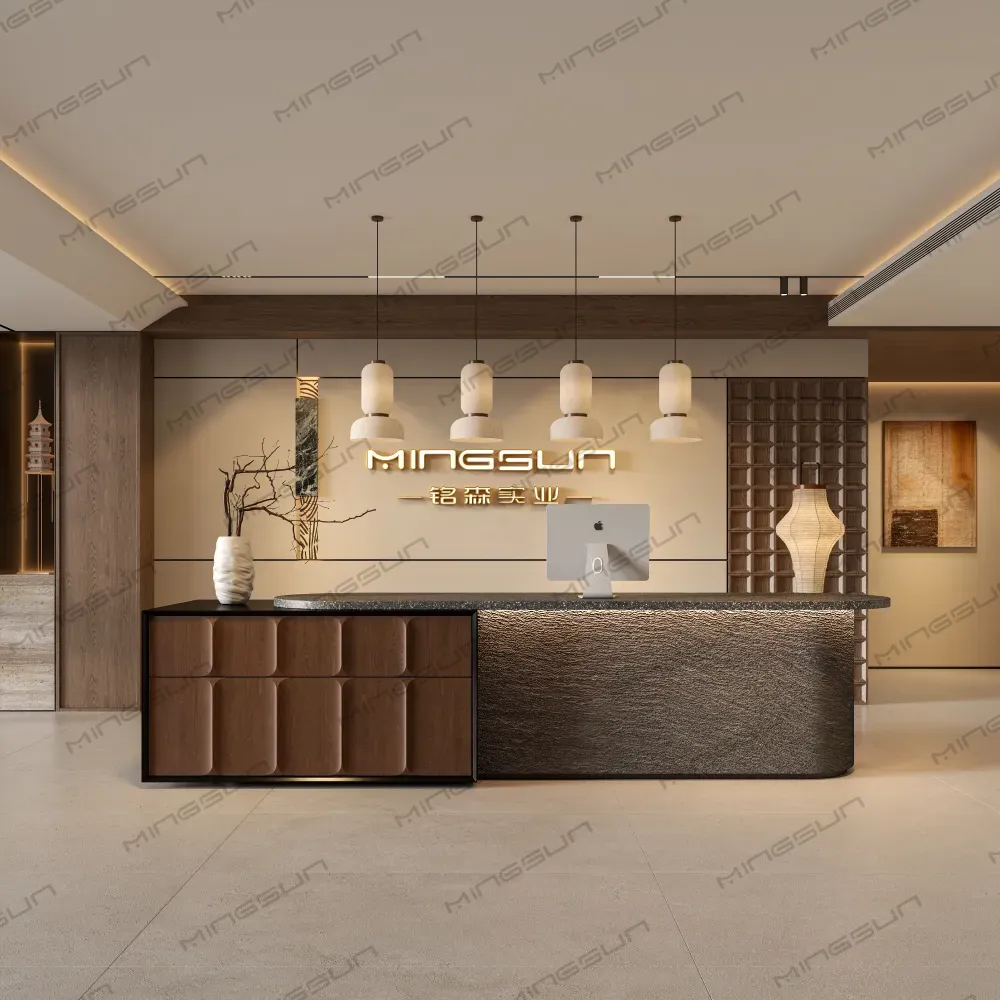
Luxury Textured Stone & Walnut Veneer Reception Desk with 3D Relief Detailing
Create a sophisticated, organic atmosphere in your hotel lobby or boutique showroom with this avant-garde reception desk. Combining the raw beauty of nature with refined craftsmanship, this desk features a striking contrast between materials. The main body showcases a dark, hammered-texture stone facade that offers a tactile, rugged elegance, topped with a polished grey terrazzo-style counter. This is seamlessly integrated with a rich walnut wood storage module, defined by its unique 3D pill-shaped relief carving on the drawer fronts. Soft, warm LED lighting concealed beneath the countertop edge highlights the textured stone surface, adding depth and warmth to the reception area.
Crafted by MINGSUN, a specialist in bespoke hospitality furniture, this piece is designed to be the focal point of high-end interiors. From our Guangzhou manufacturing hub, we deliver precision-engineered furniture to hotels worldwide. We offer a seamless experience from design customization to DDP global delivery and video-guided installation.
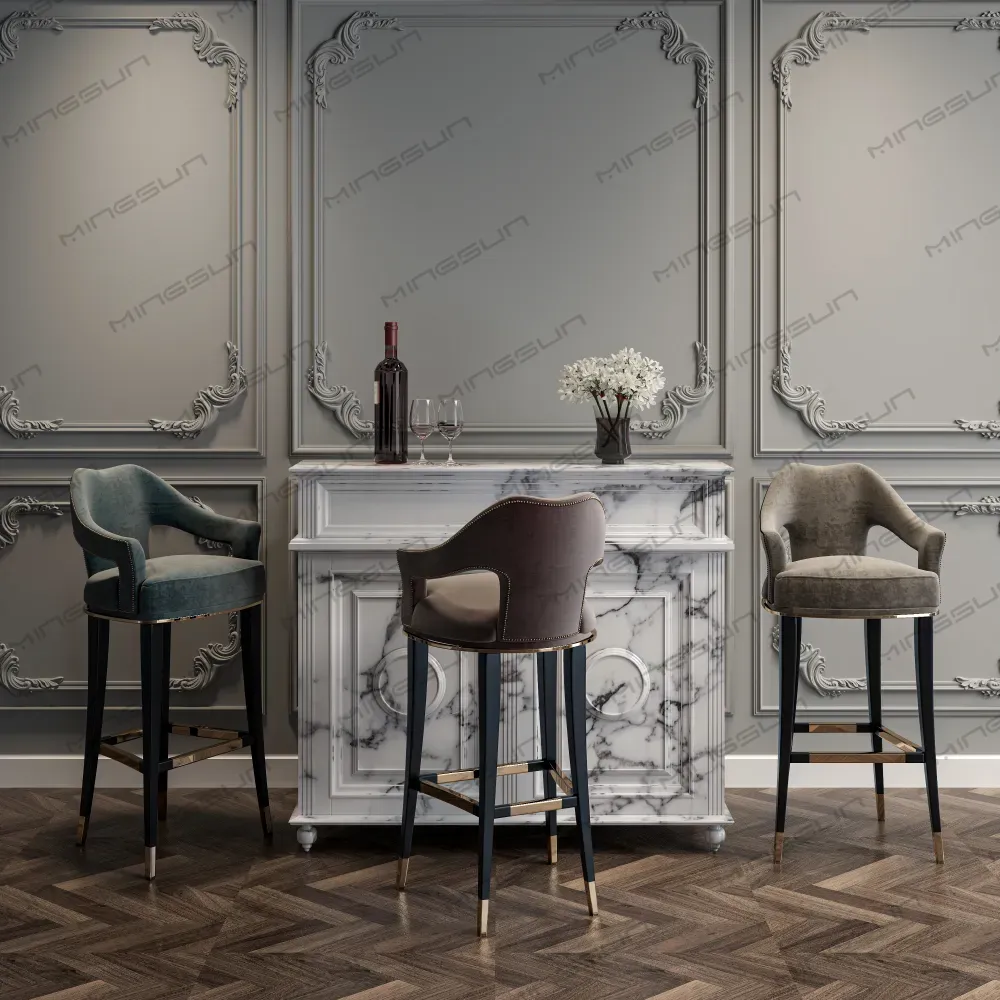
Luxury Velvet Bar Stool with Armrests & Brushed Brass Accents for Hotel Lounges and Bars
Elevate your hotel’s bar or lounge area with this opulent bar stool, where plush comfort meets sophisticated design. Upholstered in rich, deep-brown velvet, its sculptural back and integrated armrests offer ergonomic support, while the slender black metal frame is accented with polished brass at the feet and crossbars for a touch of timeless elegance. Perfect for high-end hospitality spaces, this stool combines refined aesthetics with durable construction, inviting guests to linger in style at your counter or cocktail station.
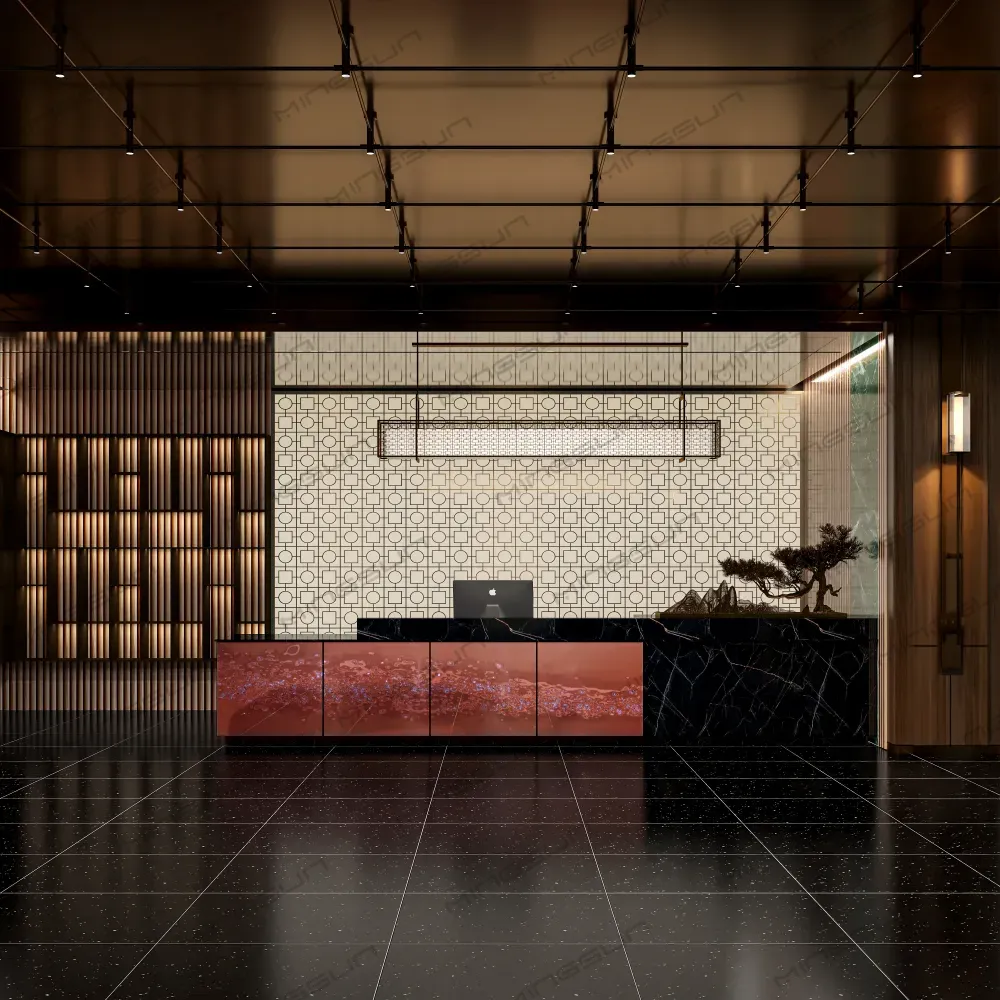
Luxury Reception Desk with Black Marble Top & Illuminated Copper-Resin Front Panels
Make a bold, unforgettable statement at your hotel’s entrance with this avant-garde reception desk. Its sleek black marble top exudes timeless sophistication, while the front facade features mesmerizing, internally lit copper-resin panels that glow with a warm, amber radiance, creating a dynamic visual centerpiece. Designed for both form and function, the unit offers ample concealed storage behind seamless doors and integrates a dedicated staff workstation with cable management. This is more than a check-in counter—it’s a sculptural installation that defines the luxury and artistry of your brand.
Get more industry insights
Looking for the right solution? Fill out the form and get a free quote.
Our experts will respond quickly with personalized options that fit your needs.
MINGSUN is a design-driven hotel furniture manufacturer offering OEM/ODM services, custom solutions, and global project support.
Built for wholesalers. Trusted by global buyers. Delivered with confidence.
Phone:
E-mail:
Follow us ——
 Scan QR Code
MINGSUN
MINGSUN
MINGSUN
MINGSUN
MS Custom Hotel Furniture Supplier