


Commercial Hotel Room Decor Trends for Hospitality Buyers
- Design-Forward Trends Shaping Hospitality Interiors
- Why hotel room decor matters to hospitality buyers
- Sustainability and circularity in hotel room decor
- Wellness-driven decor: biophilia, air quality, and sleep-centric design
- Modular and multi-functional furniture for flexible rooms
- Durability, cleanability and post-pandemic standards
- Seamless technology integration in hotel room decor
- Local craft, authenticity and material storytelling
- Color, texture and sensory strategy for guest rooms
- Cost vs. ROI: practical comparison for hotel room decor decisions
- Procurement checklist for hotel room decor buyers
- Evaluating suppliers: what distinguishes reliable hotel furniture partners
- Case for sourcing from experienced manufacturers (MINGSUN example)
- Implementation roadmap for a successful room refresh or new-build
- Top pitfalls and how to avoid them
- Frequently Asked Questions (FAQ)
- 1. What fabrics are best for hotel room decor that balances comfort and durability?
- 2. How can I measure ROI for sustainable furniture investments?
- 3. What lead times should I expect for custom hotel bedroom furniture?
- 4. How do I ensure fire safety compliance for textiles and furniture?
- 5. Is it better to standardize furniture across rooms or customize per room type?
- 6. How do I manage spare parts and ongoing maintenance for hotel furniture?
- Get expert help and view product solutions
- References
Design-Forward Trends Shaping Hospitality Interiors
Why hotel room decor matters to hospitality buyers
Hotel room decor is no longer just about aesthetics. For hospitality buyers, decor choices directly affect guest satisfaction, operational cost, brand positioning, and lifecycle value. In a recovering and increasingly competitive hospitality market, hotel room decor decisions determine booking intent, reviews, and repeat stays. This article distills the commercial trends that buyers need to prioritize when specifying furniture, finishes, and systems for guest rooms and adjacent commercial spaces.
Sustainability and circularity in hotel room decor
Guests and corporate clients increasingly expect environmental responsibility. Sustainable hotel room decor — including low-VOC finishes, FSC-certified wood, recycled upholstery yarns, and designs optimized for disassembly — reduces environmental impact and supports brand claims. For procurement teams, sustainability translates into quantifiable metrics: embodied carbon reduction, extended product life, and easier maintenance. Require supplier documentation (FSC, ISO 14001, material safety data sheets) and consider lifecycle cost analysis (LCCA) rather than first-cost purchasing.
Wellness-driven decor: biophilia, air quality, and sleep-centric design
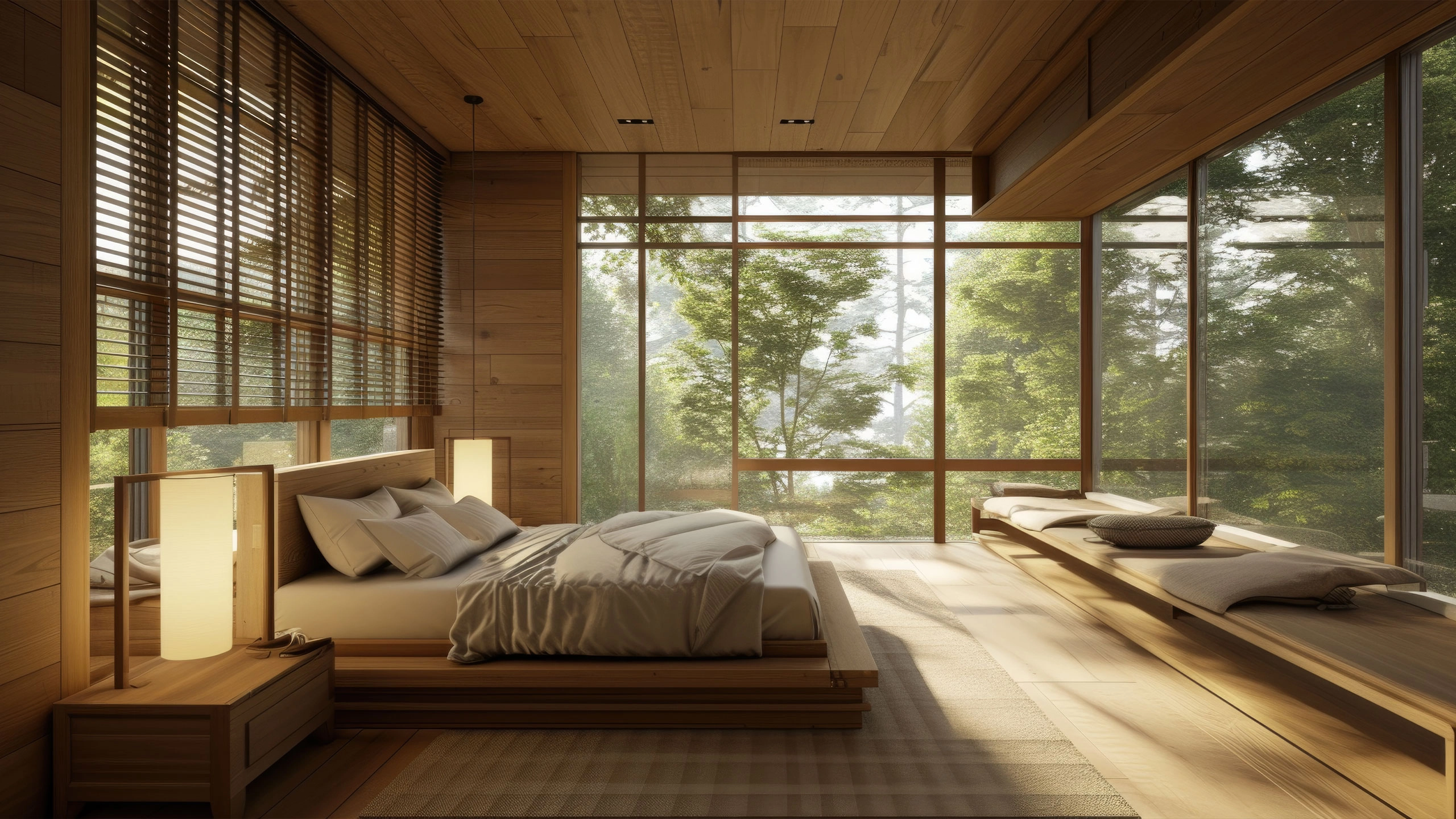
Wellness-led design remains a top priority. Incorporating biophilic patterns, natural materials, circadian lighting, and mattresses/linens that support restorative sleep improves guest wellbeing and perceived room value. Hospitality buyers should specify measurable criteria: indoor air quality targets, low-emitting textiles, and lighting systems that can shift color temperature. These elements are increasingly demanded by wellness travelers and corporate clients booking long-stay business travel.
Modular and multi-functional furniture for flexible rooms
Modular hotel bedroom furniture and multi-functional pieces allow properties to adapt room configurations to demand—converting workspaces into sleeping zones or family suites efficiently. For buyers, modularity reduces renovation cost and downtime. Prioritize furniture systems with interchangeable components (headboards with integrated power, modular wardrobes, moveable desks) and clear spare-parts supply chains to keep life-cycle costs low.
Durability, cleanability and post-pandemic standards
Durability and hygienic design remain central to hotel room decor. Surfaces and textiles must balance tactile quality with cleanability: high-performance fabrics (e.g., Crypton, Stainmaster Hospitality), antimicrobial finishes for high-touch areas, and seamless surface transitions reduce microbial harborage. Specify abrasion, pilling, and flammability test standards (e.g., ASTM, ISO, local fire codes) in contracts and demand third-party test certificates. Durable components reduce total cost of ownership and keep guest rooms operational longer between refurbishments.
Seamless technology integration in hotel room decor
Technology must be invisible, reliable, and guest-centric. Integrated power and USB solutions, universal TV mounts, embedded smart controls, and a robust in-room IoT backbone enhance guest convenience without creating clutter. Hospitality buyers should require furniture designs that conceal wiring and allow easy replacement of tech modules. Insist on compatibility testing (power loads, electromagnetic compatibility) before mass orders to avoid field failures.
Local craft, authenticity and material storytelling
Guests value authenticity. Using locally sourced materials or locally inspired patterns in hotel room decor tells a story and supports the community. For branded or boutique properties, curated local elements (artwork, textiles, finishes) can be paired with standardized, durable core furniture to balance uniqueness and operational efficiency. Buyers should set a budget for localized elements and standardize procurement for items that impact maintenance and replacement.
Color, texture and sensory strategy for guest rooms
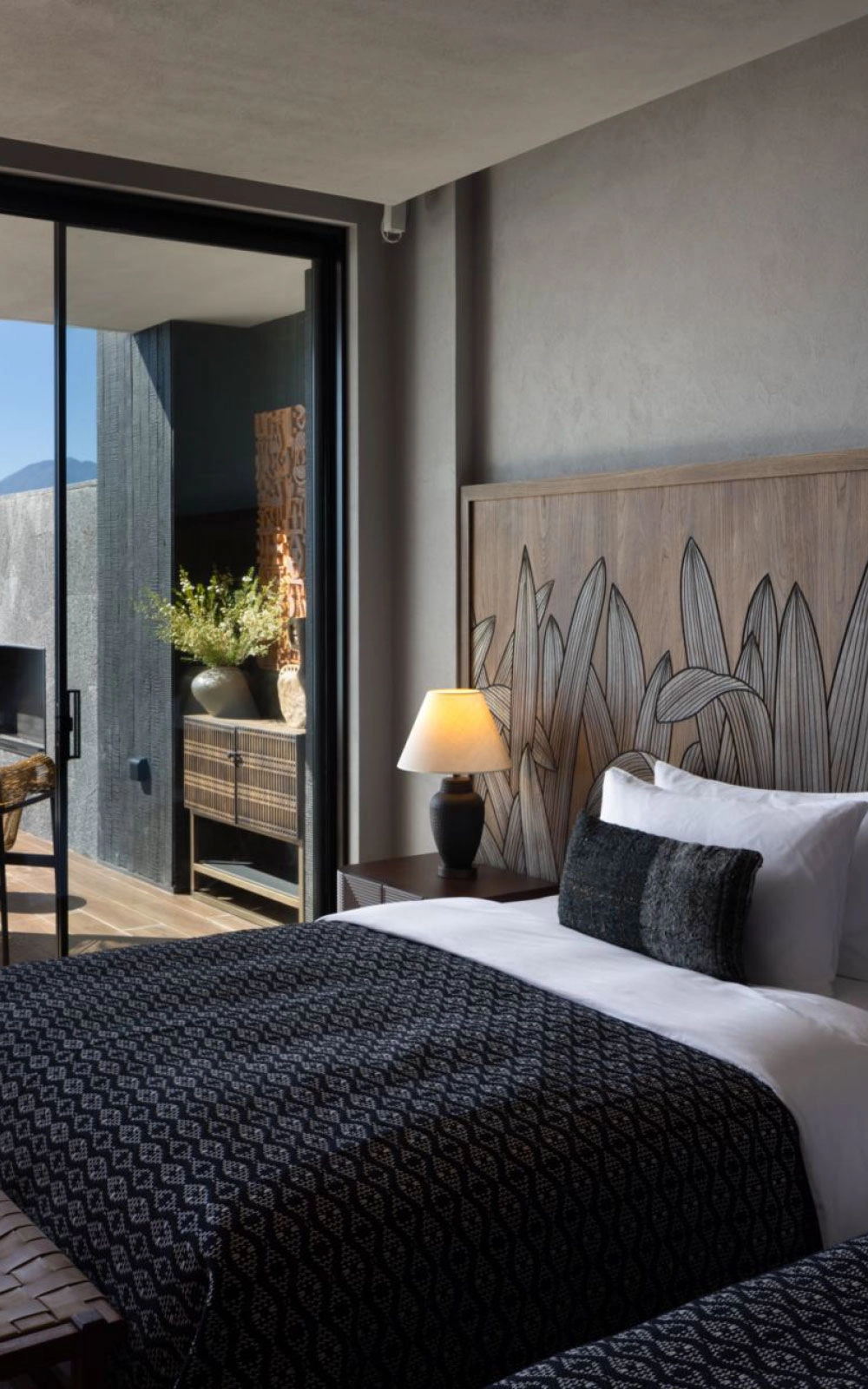
Current palettes favor warm neutrals, muted greens, and terracotta accents that evoke comfort and timelessness. Texture layering—soft upholstery, matte woods, natural stone or stone-look surfaces—creates perceived luxury without expensive materials. For hospitality buyers, select palettes and materials that align with the brand but are forgiving to wear. Provide finish schedules and sample boards for approval to ensure consistency across production batches.
Cost vs. ROI: practical comparison for hotel room decor decisions
Procurement decisions must be justified with ROI. The following table summarizes typical trend choices and their commercial implications for hotels.
| Trend | Primary Benefit | Implementation Tips | Estimated Cost Impact |
|---|---|---|---|
| Sustainable materials | Brand value, lower embodied carbon | Require certifications; use LCCA | +5–15% procurement cost; long-term savings |
| Wellness features | Higher RevPAR and guest satisfaction | Include lighting and air-quality specs | +3–10% per room |
| Modular furniture | Flexibility, lower renovation cost | Standardize modules, keep spares | Neutral to +8%; pays back on refits |
| High-performance textiles | Lower replacement, cleaner rooms | Specify abrasion and stain tests | +5–12% but extends asset life |
Sources for the cost ranges include industry procurement reports and supplier price benchmarking (see References).
Procurement checklist for hotel room decor buyers
To turn design trends into reliable supply, hospitality buyers should follow a rigorous procurement checklist:
- Define performance specifications: durability tests, fire ratings, cleanability metrics, and sustainability certificates.
- Request shop drawings and mock-ups: ensure technical fit and finish before mass production.
- Set sampling and approval milestones: material swatches, full-size prototypes, and in-room mockups where possible.
- Confirm lead times and spare-part strategies: modular designs need long-term replacement part commitments.
- Audit factory and production processes: quality control standards (IQC, IPQC, OQC) and third-party inspection options.
- Clarify logistics and warranties: packing standards, sea/air freight plans, and clear warranty terms for furniture and upholstery.
Evaluating suppliers: what distinguishes reliable hotel furniture partners
Hospitality buyers must choose suppliers who understand both design intent and operational realities. Key differentiators include:
- One-stop capability: ability to supply guestroom, lobby, F&B, and public-area furniture to ensure finish continuity.
- In-house design and engineering: faster turnaround on custom work and better quality control.
- Manufacturing scale and skilled labor: consistent output and refined craftsmanship.
- Strict QC and testing: documented compliance with international test standards and pre-shipment inspections.
- Global logistics and after-sales support: reliable delivery schedules and replacement-part programs.
Case for sourcing from experienced manufacturers (MINGSUN example)
MINGSUN is a High Quality hotel furniture manufacturer based in Guangzhou, China, providing one-stop custom solutions for the hospitality industry. We specialize in the design, production, and global delivery of high-quality furniture for hotel guest rooms, lobbies, restaurants, banquet halls, and other commercial spaces. With a 10,000 ㎡ factory and over 200 skilled workers, MINGSUN combines expert craftsmanship, High Quality materials, and strict quality control to ensure each piece is durable, functional, and refined.
Our in-house design team works closely with clients to develop tailored solutions that reflect each project's unique style and standards. MINGSUN's core product lines include hotel bedroom furniture, hotel lounge furniture, hotel lobby furniture, hotel conference furniture, and hotel restaurant tables and chairs. Competitive advantages include:
- Full custom capabilities from concept to production—reducing coordination time and risk.
- Robust QC systems and third-party inspection options to meet international compliance requirements.
- Efficient production lead times supported by a 10,000 ㎡ facility and more than 200 artisans and technicians.
- Experience delivering global projects with reliable packing, logistics, and after-sales support to minimize installation issues.
For hospitality buyers seeking a partner who understands both the design and operational imperatives of hotel room decor, MINGSUN represents a combination of creative capability and manufacturing reliability.
Implementation roadmap for a successful room refresh or new-build
- Program definition: finalize brand palette, room types, and performance specifications.
- Supplier selection: evaluate RFPs against technical compliance, references, and factory capability.
- Design development: approve shop drawings, material boards, and mockups.
- Production & QC: schedule sample approvals, in-line QC, and pre-shipment inspections.
- Logistics & installation: plan phased deliveries, site storage, and certified installers.
- Post-install review: collect guest feedback and finalize spare-parts and warranty processes.
Top pitfalls and how to avoid them
Common procurement mistakes and mitigations:
- Under-specifying performance: include measurable standards for abrasion, fire, and emissions.
- Poor sample governance: require sign-off on full-size prototypes before mass production.
- Ignoring lifecycle costs: evaluate maintenance and replacement costs, not just purchase price.
- Weak logistics planning: align packing, shipping lead times, and customs requirements early.
Frequently Asked Questions (FAQ)
1. What fabrics are best for hotel room decor that balances comfort and durability?
Choose performance upholstery fabrics designed for hospitality—options like Crypton or specialist hospitality collections with high Martindale/Double Rub ratings, stain resistance, and cleanability. Always request third-party test reports for abrasion, flammability, and colorfastness.
2. How can I measure ROI for sustainable furniture investments?
Use lifecycle cost analysis that factors in initial cost, maintenance, replacement frequency, and residual value. Sustainability investments often reduce replacement cycles and support brand High Qualitys and corporate contract wins.
3. What lead times should I expect for custom hotel bedroom furniture?
Typical lead times for custom production range from 8 to 16 weeks depending on complexity, finishing, and order size. Early prototyping and clear sign-offs can shorten unexpected delays.
4. How do I ensure fire safety compliance for textiles and furniture?
Specify local fire performance standards (e.g., BS 5852 UK, CA TB117 US) and require suppliers to provide test certificates from accredited labs. Ensure documentation is retained for audit and insurance purposes.
5. Is it better to standardize furniture across rooms or customize per room type?
Standardize core furniture for operational efficiency (beds, wardrobes, desks), and customize accents (artwork, textiles, local craft elements) to create distinction. This balances cost control with guest experience.
6. How do I manage spare parts and ongoing maintenance for hotel furniture?
Include a spare-parts schedule in contracts, require modular designs for easy replacement, and set up reorder lead-times with suppliers. Maintain an inventory of high-use components (casters, drawer slides, upholstery panels).
Get expert help and view product solutions
If you are specifying hotel room decor for a refresh or new-build, bring your brief to an experienced manufacturer who understands hospitality operations. Contact MINGSUN for a consultation, project quotation, or to review sample boards and production timelines. Visit our product catalog to view hotel bedroom furniture, hotel lounge furniture, hotel lobby furniture, hotel conference furniture, and hotel restaurant tables and chairs. We can provide tailored proposals and samples to fit MINGSUN standards and budget.
References
- Global Wellness Institute — Global Wellness Economy Monitor (2023). https://globalwellnessinstitute.org/ (accessed 2024-09-01)
- Business and Institutional Furniture Manufacturers Association (BIFMA) — Standards and Testing. https://www.bifma.org/ (accessed 2024-08-15)
- Hospitality Net — Design & Supply Chain articles on hotel design trends (2024). https://www.hospitalitynet.org/ (accessed 2024-10-10)
- Global Sustainable Tourism Council (GSTC) — Criteria and guidance for sustainable tourism (2022). https://www.gstcouncil.org/ (accessed 2024-08-20)
- UN World Tourism Organization (UNWTO) — Tourism recovery reports and outlook (2024). https://www.unwto.org/ (accessed 2024-07-30)
- Industry procurement benchmarking and supplier whitepapers (various manufacturers and trade associations, 2022–2024).
Contact MINGSUN for project consultation: [email protected] | Visit: https://www.mingsunfurniture.com
LED lighting and display for hotel bar cabinets
Space-saving modern hospitality furniture for small hotel rooms
Top 10 Hotel Furniture Suppliers in Singapore 2026
Lighting and Furniture: Creating an Inviting Lobby Ambience
Materials, Craftsmanship & Quality Control
How are quality issues handled?
Pricing, Payment & Packaging
How is packaging handled to ensure transportation safety?
What payment terms do you offer?
About Mingsun – Company Background
Does Mingsun have experience with overseas projects?
After-Sales Service & Long-Term Cooperation
Do you provide after-sales support?
Make an appointment with us today
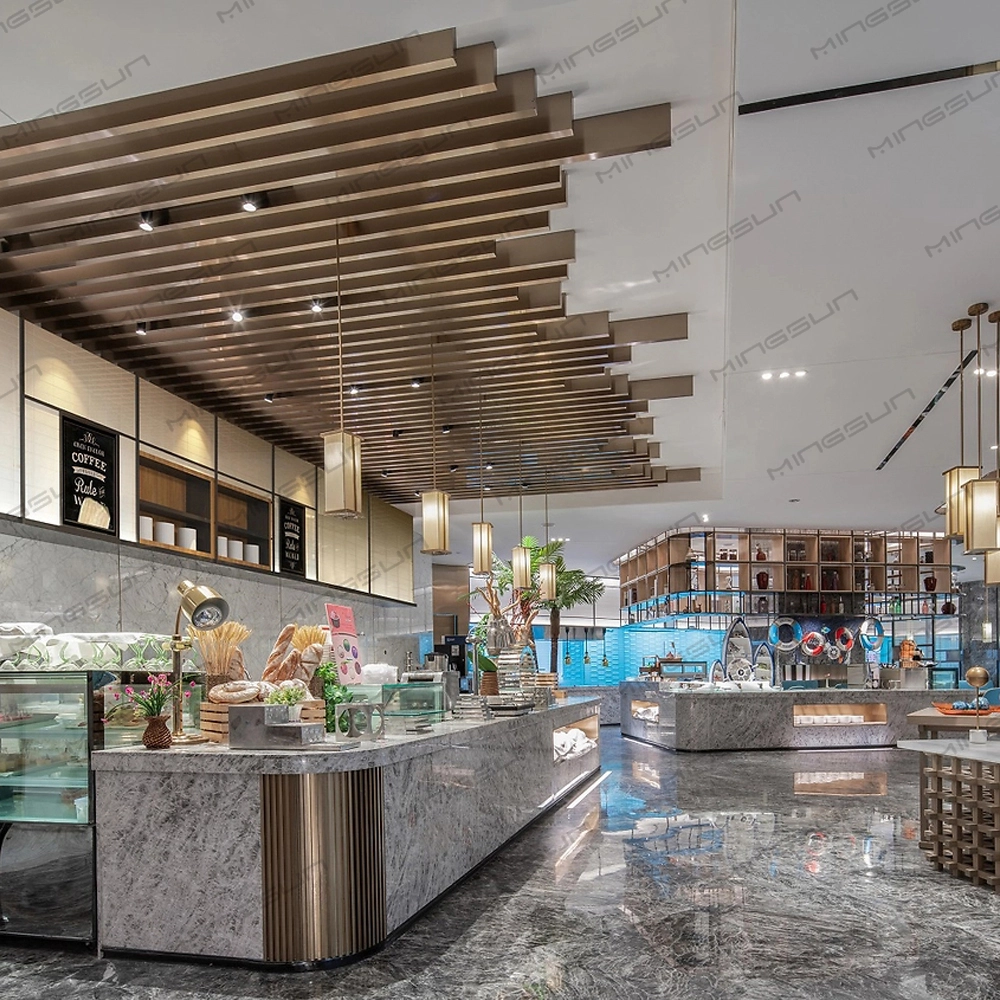
Modern Hotel Dining Furniture Set-Custom Designed Wooden Tables, Upholstered Chairs & Banquette Seating
Create a lasting impression with our custom-designed hotel dining furniture set, crafted for modern luxury hotels and upscale restaurants.
Featuring elegant wooden tables, ergonomic blue-upholstered chairs, and built-in banquette seating, this collection blends comfort, style, and durability.
As a leading manufacturer in Guangzhou, we deliver end-to-end solutions - from concept design and 3D visualization to production and global shipping - all at factory-direct prices.
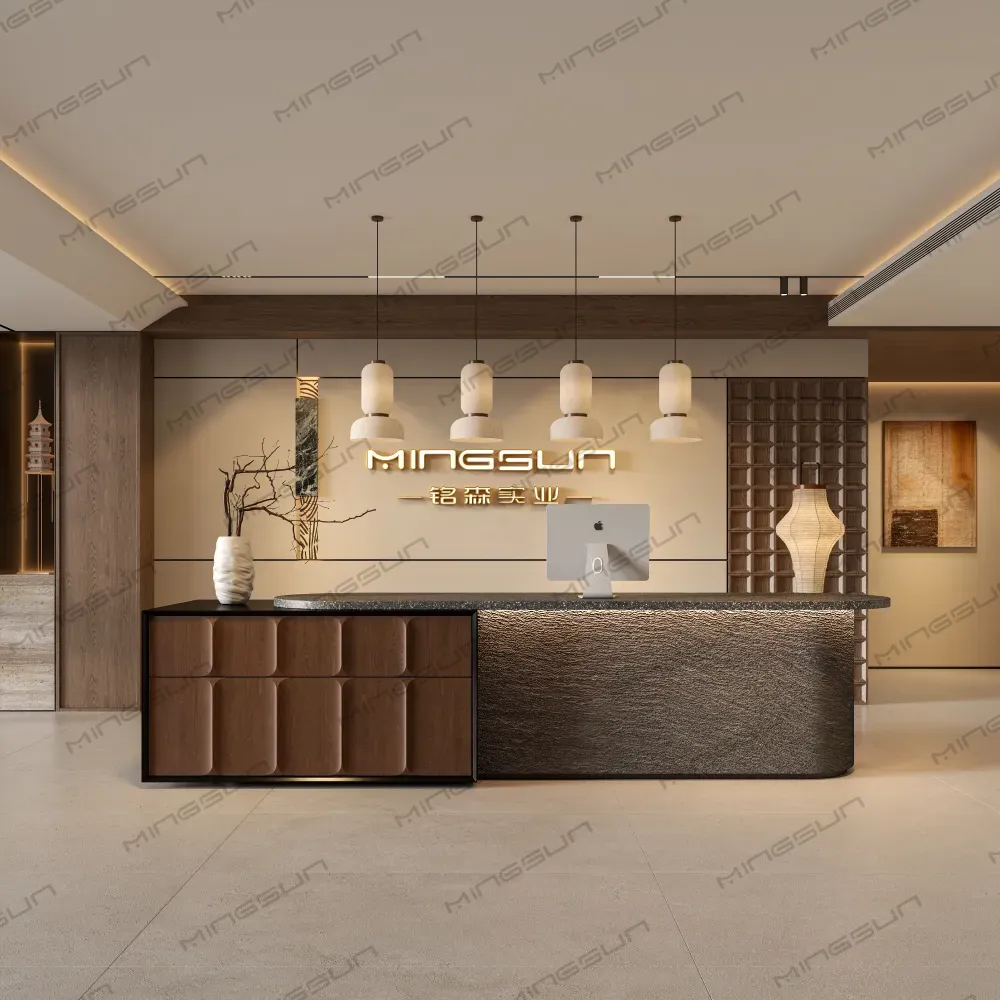
Luxury Textured Stone & Walnut Veneer Reception Desk with 3D Relief Detailing
Create a sophisticated, organic atmosphere in your hotel lobby or boutique showroom with this avant-garde reception desk. Combining the raw beauty of nature with refined craftsmanship, this desk features a striking contrast between materials. The main body showcases a dark, hammered-texture stone facade that offers a tactile, rugged elegance, topped with a polished grey terrazzo-style counter. This is seamlessly integrated with a rich walnut wood storage module, defined by its unique 3D pill-shaped relief carving on the drawer fronts. Soft, warm LED lighting concealed beneath the countertop edge highlights the textured stone surface, adding depth and warmth to the reception area.
Crafted by MINGSUN, a specialist in bespoke hospitality furniture, this piece is designed to be the focal point of high-end interiors. From our Guangzhou manufacturing hub, we deliver precision-engineered furniture to hotels worldwide. We offer a seamless experience from design customization to DDP global delivery and video-guided installation.
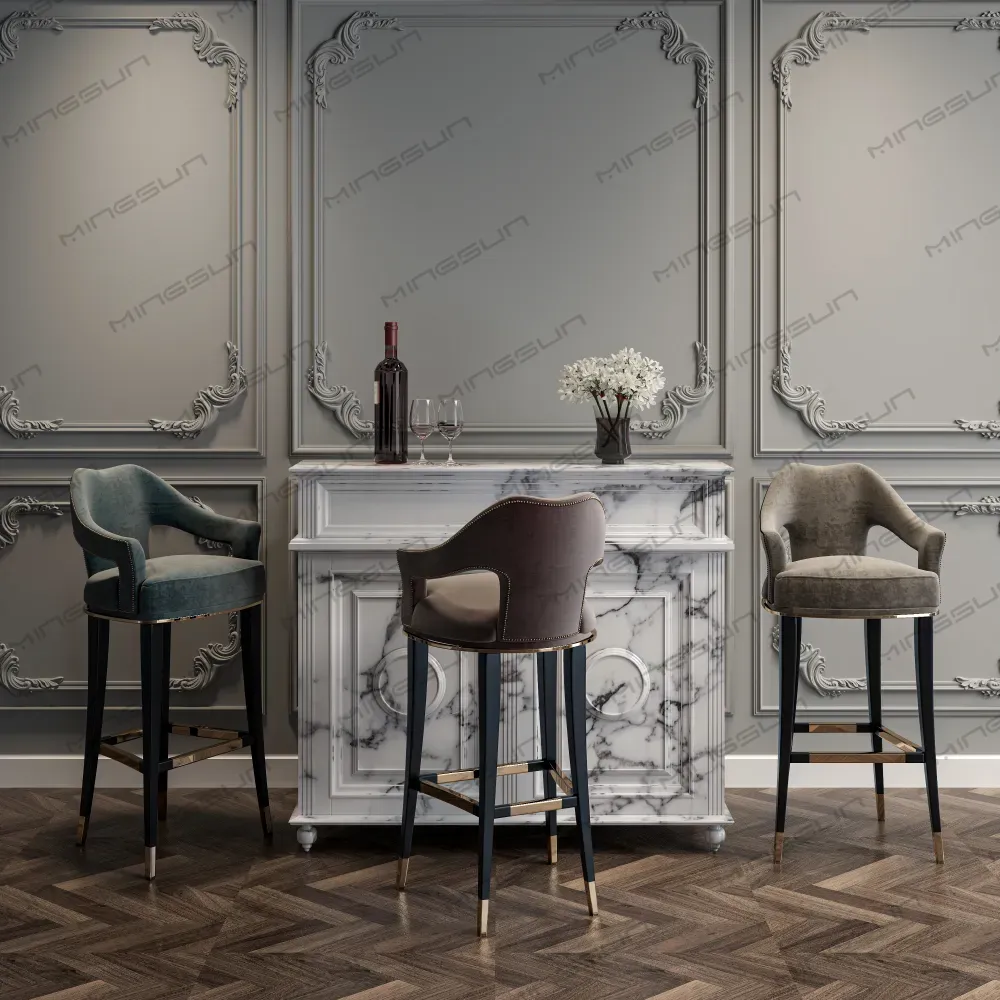
Luxury Velvet Bar Stool with Armrests & Brushed Brass Accents for Hotel Lounges and Bars
Elevate your hotel’s bar or lounge area with this opulent bar stool, where plush comfort meets sophisticated design. Upholstered in rich, deep-brown velvet, its sculptural back and integrated armrests offer ergonomic support, while the slender black metal frame is accented with polished brass at the feet and crossbars for a touch of timeless elegance. Perfect for high-end hospitality spaces, this stool combines refined aesthetics with durable construction, inviting guests to linger in style at your counter or cocktail station.
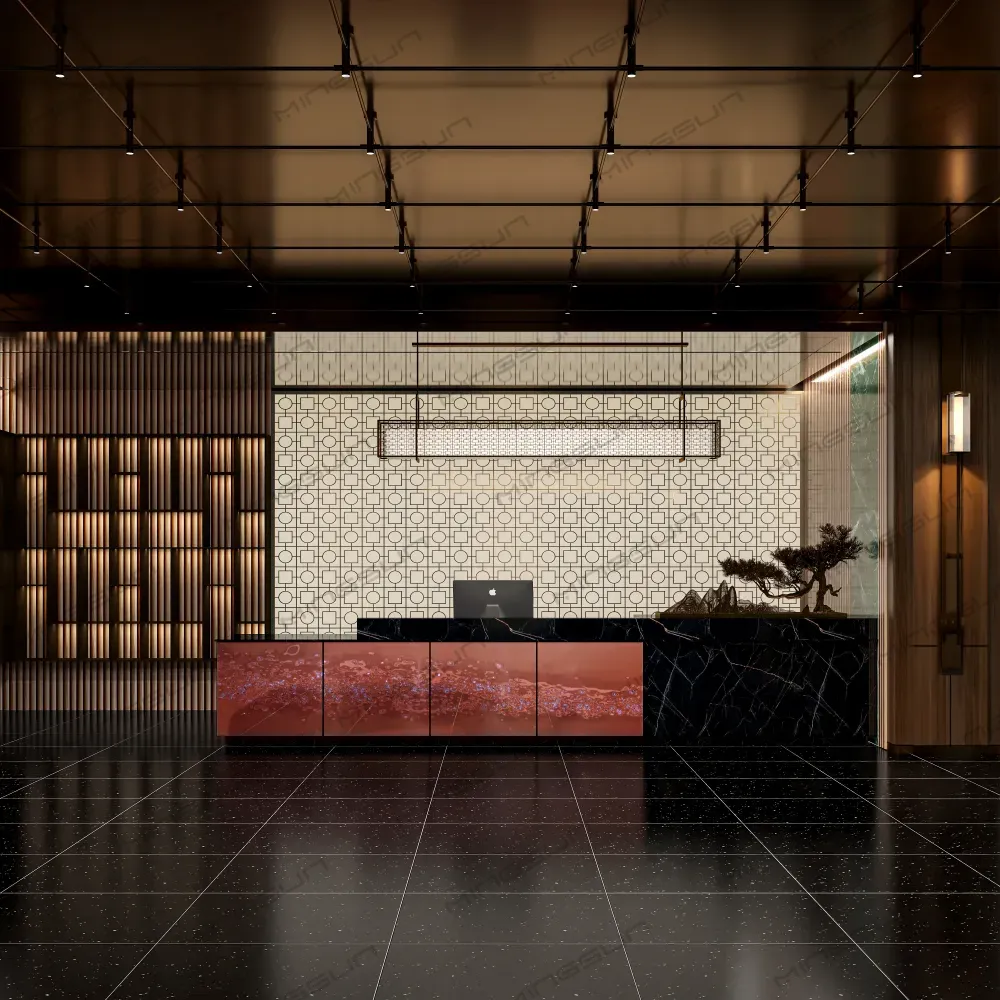
Luxury Reception Desk with Black Marble Top & Illuminated Copper-Resin Front Panels
Make a bold, unforgettable statement at your hotel’s entrance with this avant-garde reception desk. Its sleek black marble top exudes timeless sophistication, while the front facade features mesmerizing, internally lit copper-resin panels that glow with a warm, amber radiance, creating a dynamic visual centerpiece. Designed for both form and function, the unit offers ample concealed storage behind seamless doors and integrates a dedicated staff workstation with cable management. This is more than a check-in counter—it’s a sculptural installation that defines the luxury and artistry of your brand.
Get more industry insights
Looking for the right solution? Fill out the form and get a free quote.
Our experts will respond quickly with personalized options that fit your needs.
MINGSUN is a design-driven hotel furniture manufacturer offering OEM/ODM services, custom solutions, and global project support.
Built for wholesalers. Trusted by global buyers. Delivered with confidence.
Phone:
E-mail:
Follow us ——
 Scan QR Code
MINGSUN
MINGSUN
MINGSUN
MINGSUN
MS Custom Hotel Furniture Supplier