


Hotel Wine Cabinet Design Ideas for Luxury Guest Rooms
- Why the In-Room Beverage Experience Matters
- Guest expectations and brand differentiation
- Revenue, upsell and operational considerations
- Accessibility and guest safety
- Design Principles for Custom Wine Cabinet Hotel Installations
- Temperature control and preservation
- Materials, finishes and longevity
- Size, capacity and spatial planning
- Styles and Configurations
- Built-in cabinets and integrated solutions
- Freestanding and modular units
- Display cabinets and experiential solutions
- Specification, Installation and Maintenance
- Cooling technology and energy efficiency
- Security, inventory control and guest access
- Maintenance, service life and warranty
- Partnering with a Manufacturer and Procurement Tips
- What I look for in a supplier
- Lead times, MOQ and logistics
- Warranty, spare parts and lifecycle planning
- Manufacturer Spotlight: MINGSUN — A Partner for Hospitality Projects
- Case Studies and Proven Approaches
- Boutique urban hotel: integrated display and hospitality cooler
- Resort property: remote serviceability and modular replacement
- Luxury suite program: personalization and security
- Standards and References
- FAQ
- 1. What is the ideal temperature for an in-room wine cabinet?
- 2. Can I use a standard minibar fridge as a wine cabinet?
- 3. How do I prevent wine spoilage from light and vibration?
- 4. What security measures should hotels use for high-value wine?
- 5. How long does a custom wine cabinet hotel program take from design to installation?
- 6. What maintenance is required for in-room wine cabinets?
In my work designing and specifying furniture for luxury hotels around the world, I've seen how thoughtful in-room amenities—like a well-designed wine cabinet—can elevate guest perception, increase incidental revenue, and reinforce a property's brand promise. This article synthesizes practical design strategies, technical requirements, and procurement advice for creating custom wine cabinet hotel installations that meet guest expectations while complying with hospitality durability and safety standards.
Why the In-Room Beverage Experience Matters
Guest expectations and brand differentiation
Luxury guests expect curated experiences. A bespoke wine cabinet in the guest room signals attention to detail and an elevated stay. Whether you're outfitting a boutique hotel in Paris or a resort in Guangzhou, an integrated wine display or temperature-controlled cabinet becomes part of the guest journey—visible proof of a hotel’s commitment to quality. In my projects, I emphasize that design should echo the room’s material palette and the brand's story, not appear as an afterthought.
Revenue, upsell and operational considerations
From an operating perspective, in-room wine cabinets can increase mini-bar and on-premise wine sales, especially when paired with digital menus or on-demand sommelier services. However, I always balance upsell potential with maintenance cost, theft risk, and energy consumption. Controlled access, inventory tracking (RFID or lock-and-report systems), and clear service protocols are essential to protect revenue and reduce shrinkage.
Accessibility and guest safety
Designing for safety means considering ventilation, electrical protection, and location in relation to escape routes and fire suppression systems. Cabinets with cooling equipment must comply with local electrical codes and hotel fire-safety regulations. When I specify custom wine cabinet hotel units, I work closely with engineering and facilities teams to confirm clearances and ensure serviceability without impacting guest comfort.
Design Principles for Custom Wine Cabinet Hotel Installations
Temperature control and preservation
Proper storage temperatures and humidity are crucial for preserving wine quality. For long-term storage, wine cellars target 10–14°C and 50–70% relative humidity; for in-room cabinets intended for short-term chilling and presentation, a dual-zone cooler with 6–12°C for white and 12–18°C for red can be appropriate. (See general storage guidance: Wikipedia: Wine cellar.) When I specify climate-controlled cabinets, I insist on thermostatic systems with accurate digital controls, vibration minimization, and independent zones where the hotel’s service model requires both chilled whites and cellar-temperature reds.
Materials, finishes and longevity
Hospitality-grade cabinetry must withstand frequent use and cleaning. I prefer engineered hardwoods or FSC-certified veneers over cheap laminates for visible fronts, paired with moisture-resistant core boards in internal structures. Hardware (hinges, runners, locks) should meet commercial cycles—look for specs rated for tens of thousands of cycles. For visual cohesion, integrate details like recessed lighting, anti-fingerprint stainless finishes for metal trims, and glass options with UV protection to limit light damage to the wine.
Size, capacity and spatial planning
Define capacity by the intended guest experience: a two-bottle display for turn-down service differs from a 12-bottle hospitality cooler meant to be a mini-bar. I use three planning categories: display (2–6 bottles), hospitality cooler (6–24 bottles), and mini-cellar (24+ bottles). Consider door swing or pocket doors, ventilation grills for cooling units, and service access panels. For properties that rotate stock frequently, smaller capacity units reduce energy usage while maintaining variety.
Styles and Configurations
Built-in cabinets and integrated solutions
Built-in custom wine cabinet hotel units deliver a seamless look with the room’s millwork. I often specify fully integrated refrigeration systems with concealed ventilation routed to service chases to maintain aesthetic continuity. Built-ins are ideal for luxury suites where the cabinet can echo bedroom cabinetry or a minibar niche.
Freestanding and modular units
Freestanding cabinets and modular systems offer flexibility for hotels with mixed room types or phased rollouts. They reduce installation time and are easier to replace or upgrade. When I recommend freestanding units, I require anti-tip anchoring and specified power cords with hospital-grade plugs for reliability.
Display cabinets and experiential solutions
Glass-front display cabinets showcase curated selections and double as in-room branding. I often combine display shelving with lockable, climate-controlled compartments. For ultra-luxury rooms, consider curated wine lockers with individual temperature control and personalized guest access via RFID or digital keys.
Specification, Installation and Maintenance
Cooling technology and energy efficiency
Options include thermoelectric coolers (quiet, vibration-free, suitable for small loads) and compressor-based systems (more efficient for larger capacities). I match technology to capacity and duty cycle: thermoelectric for display and small hospitality coolers; compressors for larger mini-cellars. Wherever possible, select units with inverter compressors, low-GWP refrigerants, and Energy Star-level performance. For reference on quality management practices often required by procurement teams, see ISO 9001 quality management.
Security, inventory control and guest access
Security choices range from mechanical locks to electronic locks linked to the property management system. For high-value cellars or wine lockers, I specify audit-capable locks that log access. Integration with POS and mini-bar management systems reduces manual inventory tasks and disputes at check-out.
Maintenance, service life and warranty
Establish clear service agreements: preventive maintenance every 6–12 months for cooling systems, gasket and seal inspections, and periodic glass and hardware checks. When I negotiate with manufacturers, I prioritize extended parts availability, on-site service capability, and warranties that cover compressors and sealed systems for at least two years.
| Type | Typical Capacity | Pros | Cons |
|---|---|---|---|
| Built-in integrated | 2–24 bottles | Seamless aesthetic; concealed ventilation; custom finishes | Higher installation complexity; less flexible |
| Freestanding modular | 2–48 bottles | Flexible, replaceable, faster install | May require visible ventilation; less bespoke |
| Display glass cabinets | 2–12 bottles (visible) | Branding & visual impact; guest engagement | Light exposure risks; needs UV glass |
Note: Capacities are typical ranges used in hospitality planning and will vary by bottle orientation and shelf configuration.
Partnering with a Manufacturer and Procurement Tips
What I look for in a supplier
When selecting a manufacturer for a custom wine cabinet hotel program, I evaluate: production capacity, quality control procedures, material traceability, prototyping capability, and experience with hospitality projects. Ask for factory audits, sample builds, and references from previous hotel installations. Verify whether the manufacturer understands local codes for electrical and fire safety in your operating regions.
Lead times, MOQ and logistics
Custom work requires realistic lead times—typically 8–16 weeks depending on complexity and finishing. Minimum order quantities (MOQs) vary; modular designs can reduce MOQ by standardizing components. For international projects, confirm packing standards for sea freight and any import compliance documentation. I insist on protective packaging and stress testing of fully assembled cabinets prior to shipment.
Warranty, spare parts and lifecycle planning
Plan for a 5–10 year furniture lifecycle. Secure spare parts kits (hinges, gaskets, compressor modules) and document maintenance schedules. I negotiate spare-part retention clauses to ensure the supplier keeps parts available for the lifecycle window of the hotel program.
Manufacturer Spotlight: MINGSUN — A Partner for Hospitality Projects
MINGSUN is a High Quality hotel furniture manufacturer based in Guangzhou, China, providing one-stop custom solutions for the hospitality industry. We specialize in the design, production, and global delivery of high-quality furniture for hotel guest rooms, lobbies, restaurants, banquet halls, and other commercial spaces.
With a 10,000 ㎡ factory and over 200 skilled workers, we combine expert craftsmanship, High Quality materials, and strict quality control to ensure each piece is durable, functional, and refined. Our in-house design team works closely with clients to develop tailored solutions that reflect each project's unique style and standards. Committed to professionalism, reliability, and creativity, MINGSUN helps clients bring their hospitality visions to life—from concept to completion.
Key advantages I’ve relied on when partnering with MINGSUN include:
- Comprehensive production capability across hotel bedroom furniture, hotel lounge furniture, hotel lobby furniture, hotel conference furniture, and hotel restaurant tables and chairs.
- In-house design and prototyping that reduces iterations and shortens time-to-sample for custom wine cabinet hotel projects.
- Strict quality control processes and the factory scale to meet larger rollouts, backed by pragmatic warranty and spare-parts planning.
If you want to evaluate custom wine cabinet hotel options or request samples, visit www.mingsungroup.com or email [email protected] for direct consultation.
Case Studies and Proven Approaches
Boutique urban hotel: integrated display and hospitality cooler
For a 120-room boutique hotel I consulted on, we installed built-in 6-bottle display cabinets in suites plus a 12-bottle hospitality cooler in High Quality rooms. The cabinets used low-vibration thermoelectric units for quiet operation and UV-coated glass to protect wine from light. The hotel reported a measurable increase in in-room beverage sales and stronger positive sentiment in guest surveys.
Resort property: remote serviceability and modular replacement
At a coastal resort with high humidity, we specified raised cabinetry with moisture-resistant cores, sealed finishes, and compressor-based units with serviceable condensers accessible from a service corridor. Modular elements allowed the operations team to swap failing modules quickly during high season, minimizing downtime.
Luxury suite program: personalization and security
For a luxury brand’s flagship property, we designed personalized wine lockers with individual temperature control and electronic access tied to the guest folio. This solution supported private collections and delivered differentiated guest experiences while protecting high-value inventory.
Standards and References
When defining technical requirements, I consult international references such as ISO quality guidelines (ISO 9001) and general wine storage guidance (Wikipedia: Wine cellar) for temperature and humidity considerations. For local electrical and fire codes, coordinate with your engineering team and local authorities having jurisdiction.
FAQ
1. What is the ideal temperature for an in-room wine cabinet?
The ideal temperature depends on purpose: short-term chilling uses 6–12°C for whites and 12–18°C for reds. For longer-term preservation, a single-zone target around 10–14°C is commonly recommended. Choose dual-zone units if you need to serve both chilled whites and cellar-temperature reds in the same cabinet.
2. Can I use a standard minibar fridge as a wine cabinet?
Not recommended. Standard minibar fridges are optimized for general beverage storage and often exhibit vibration and temperature fluctuation that can degrade wine. Use purpose-built wine cooling systems with low vibration and stable temperature control for best results.
3. How do I prevent wine spoilage from light and vibration?
Specify UV-filtering glass and reduce exposure to direct light. Use cooling systems designed to minimize vibration (thermoelectric or inverter compressors with vibration isolation). Position cabinets away from noisy mechanical equipment when possible.
4. What security measures should hotels use for high-value wine?
For high-value bottles or lockers, use electronic locks with audit trails, integrate access control with the PMS, and consider camera coverage in service areas. For collections stored on-site, maintain clear inventory procedures and periodic reconciliation.
5. How long does a custom wine cabinet hotel program take from design to installation?
Typical lead times range from 8 to 16 weeks for custom designs, depending on complexity, finishing, and factory workload. Prototype and approval phases can add time, so plan accordingly for seasonal openings.
6. What maintenance is required for in-room wine cabinets?
Routine maintenance includes gasket checks, condenser cleaning, temperature calibration, and periodic service of cooling components. Preventive maintenance every 6–12 months reduces failures and extends service life.
If you have additional questions or want a tailored specification for your property, I can help evaluate needs, produce detailed drawings, and connect you with reliable manufacturers. For product inquiries, samples, or to request a project quote, contact MINGSUN at www.mingsungroup.com or email [email protected].
Ready to specify a custom wine cabinet hotel solution that combines luxury, durability, and operational efficiency? Reach out and let’s design an in-room beverage experience that reinforces MINGSUN and delights your guests.
Lead Times and Production: Ordering Custom Bar Counters
Cost Analysis: Total Cost of Ownership for Hotel Bar Counters
Commercial Hotel Room Decor Trends for Hospitality Buyers
Hotel Bathroom Dimensions and Fixture Placement Guide
About Mingsun – Company Background
What kind of company is Mingsun?
Does Mingsun have experience with overseas projects?
Pricing, Payment & Packaging
What payment terms do you offer?
Materials, Craftsmanship & Quality Control
How are quality issues handled?
Customization Capability & Design Support
Does Mingsun support customized hotel furniture?
Make an appointment with us today
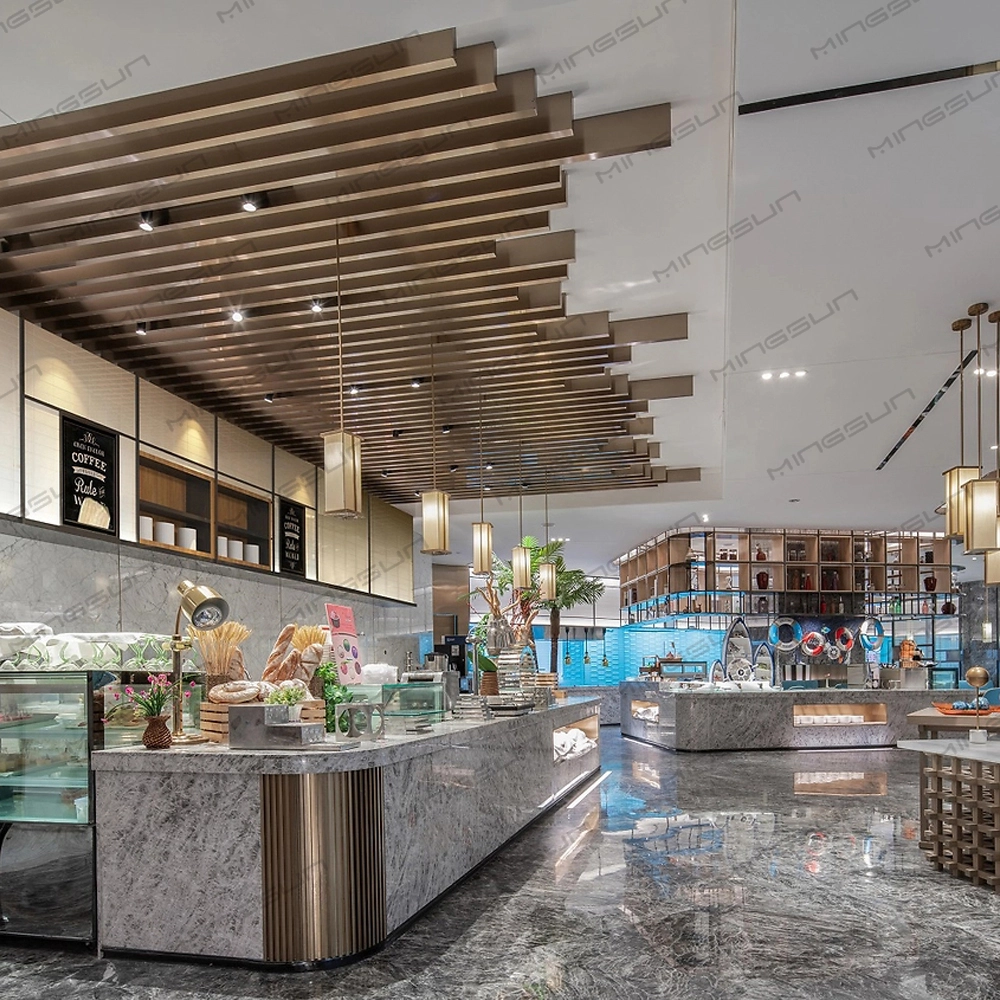
Modern Hotel Dining Furniture Set-Custom Designed Wooden Tables, Upholstered Chairs & Banquette Seating
Create a lasting impression with our custom-designed hotel dining furniture set, crafted for modern luxury hotels and upscale restaurants.
Featuring elegant wooden tables, ergonomic blue-upholstered chairs, and built-in banquette seating, this collection blends comfort, style, and durability.
As a leading manufacturer in Guangzhou, we deliver end-to-end solutions - from concept design and 3D visualization to production and global shipping - all at factory-direct prices.
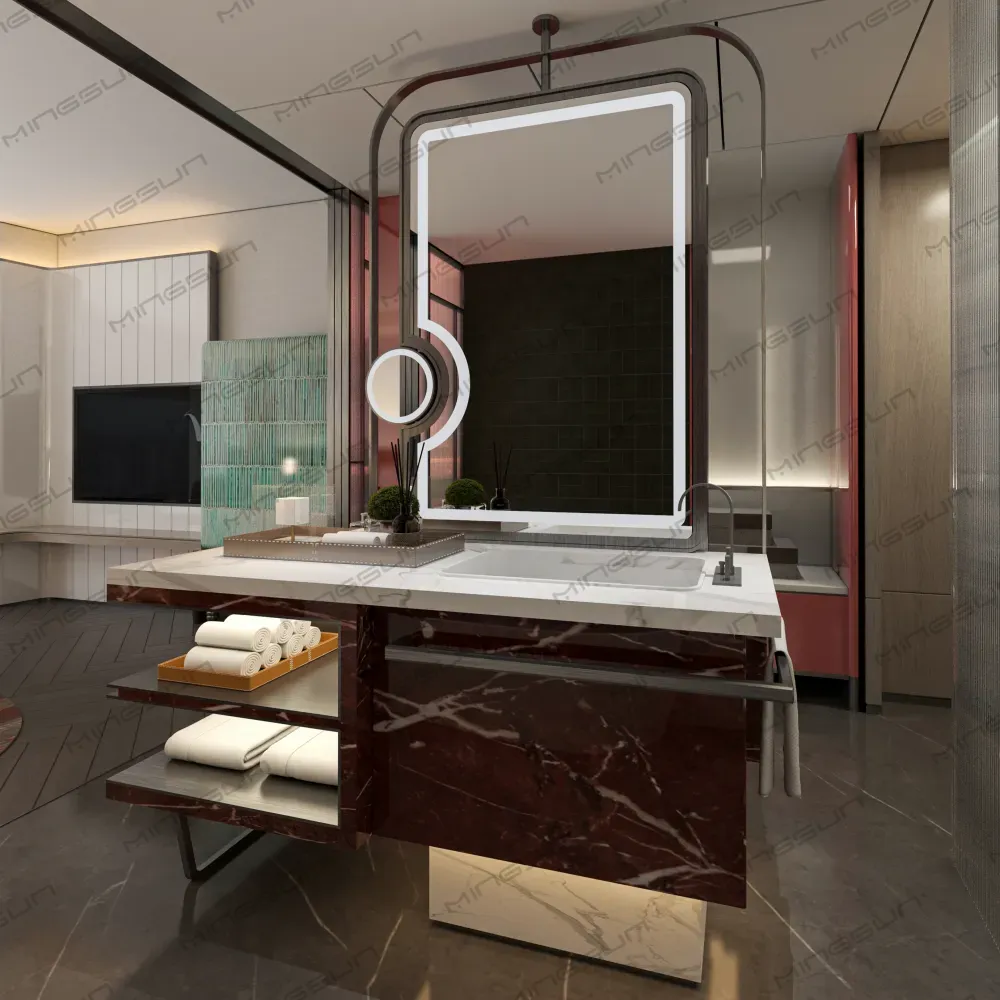
The Modern Statement Marble Vanity Console
The Modern Statement Marble Vanity Console transforms the hotel bathroom or executive suite wet area into a luxurious, functional sanctuary. This vanity features an expansive countertop and integrated sink, all crafted from pristine white Carrara-style marble. Its striking foundation is a suspended cabinet unit finished in a dramatic, high-gloss Red Emperador-style marble veneer, creating a beautiful contrast of light and dark, classic and contemporary.
The design includes integrated open shelving for visible towel storage and an extended metal bar that functions as a towel rack. Coupled with a dramatic, custom-framed illuminated mirror, this vanity provides a cohesive, high-end look that is both visually stunning and highly practical for the demands of luxury commercial hospitality.
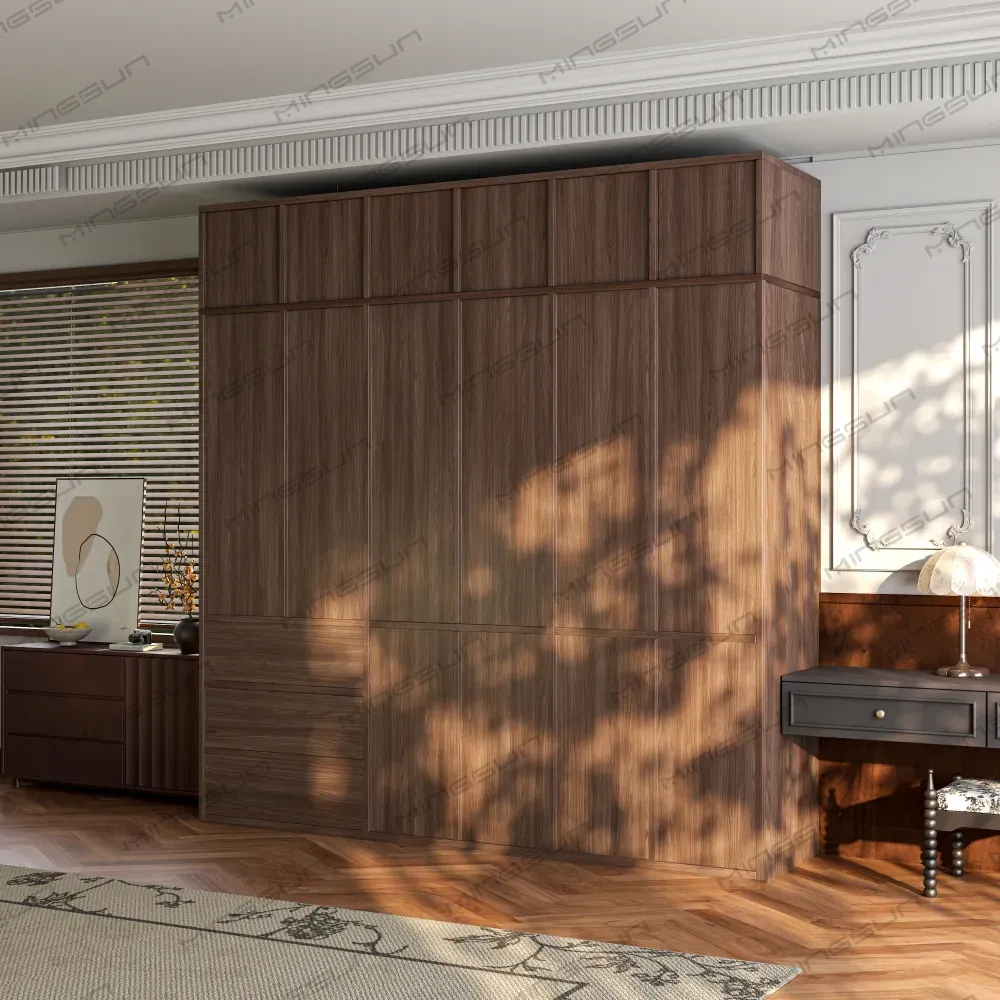
Minimalist Walnut Veneer Floor-to-Ceiling Hotel Wardrobe with Handleless Design
Maximize vertical storage in your hotel guest rooms or luxury apartments with this sleek, floor-to-ceiling wardrobe system. Defines by its warm, natural walnut wood veneer finish, the unit offers a sophisticated, handleless facade that maintains clean architectural lines, perfect for modern minimalist interiors. The intelligent layout features a bank of three external soft-close drawers for guest convenience, tall hanging sections for formal wear, and a dedicated row of top-tier cabinets specifically designed to store extra bedding, pillows, or seasonal items.
Manufactured by MINGSUN, this wardrobe is a testament to our expertise in custom hospitality joinery. We engineer these large-scale units for durability and ease of installation. From our Guangzhou factory, we provide precision-cut flat-pack solutions that reduce shipping costs while ensuring a premium built-in look upon assembly.
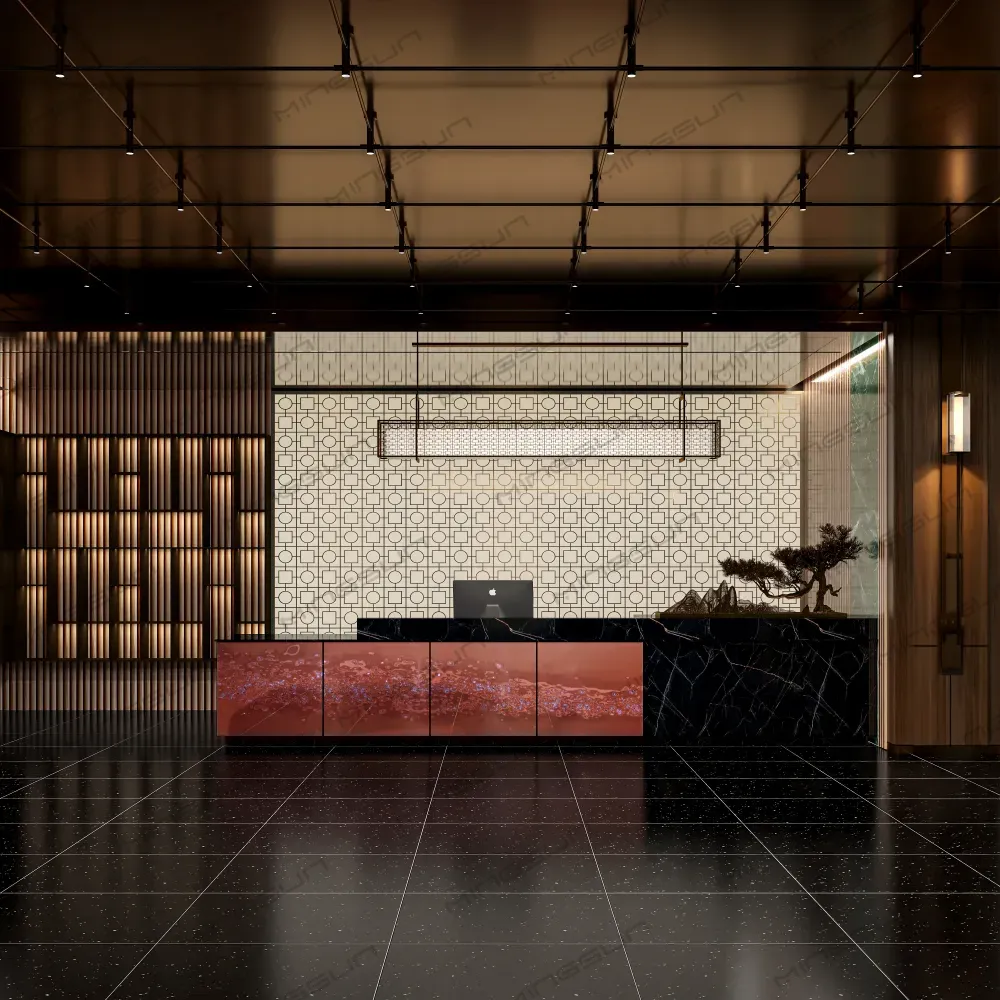
Luxury Reception Desk with Black Marble Top & Illuminated Copper-Resin Front Panels
Make a bold, unforgettable statement at your hotel’s entrance with this avant-garde reception desk. Its sleek black marble top exudes timeless sophistication, while the front facade features mesmerizing, internally lit copper-resin panels that glow with a warm, amber radiance, creating a dynamic visual centerpiece. Designed for both form and function, the unit offers ample concealed storage behind seamless doors and integrates a dedicated staff workstation with cable management. This is more than a check-in counter—it’s a sculptural installation that defines the luxury and artistry of your brand.
Get more industry insights
Looking for the right solution? Fill out the form and get a free quote.
Our experts will respond quickly with personalized options that fit your needs.
MINGSUN is a design-driven hotel furniture manufacturer offering OEM/ODM services, custom solutions, and global project support.
Built for wholesalers. Trusted by global buyers. Delivered with confidence.
Phone:
E-mail:
Follow us ——
 Scan QR Code
MINGSUN
MINGSUN
MINGSUN
MINGSUN
MS Custom Hotel Furniture Supplier