


Space-Efficient Hotel Bar Layouts for High Occupancy
- Maximizing Service Flow in Compact Hotel Bars
- Understanding the performance goals
- Key constraints: code, accessibility and safety
- Translating occupancy forecasts into space requirements
- Space-Efficient Layout Types and When to Use Them
- Common compact layout typologies
- Comparing layouts: suitability and capacity
- Choosing by guest profile and service model
- Design Principles: Furniture, Circulation, and Operations
- Furniture choices that save space without reducing comfort
- Circulation and workstation zoning — what to prioritize
- Practical space allowances and ergonomics
- Implementation, Specifications, and Manufacturer Considerations
- Operational checklists before finalizing layout
- MINGSUN: custom furniture and production advantages for compact bars
- Procurement and lifecycle considerations
- FAQs (Common questions about space-efficient hotel bar design)
- Q1: How much space per guest is realistic for a high-traffic hotel bar?
- Q2: Can accessibility and high density coexist in a compact bar?
- Q3: What layout provides the fastest service during peak periods?
- Q4: How important is furniture modularity for operational flexibility?
- Q5: What are quick wins to increase capacity without major construction?
- Q6: How to select a furniture manufacturer for a compact hotel bar?
- Contact & next steps
- References
Maximizing Service Flow in Compact Hotel Bars
Understanding the performance goals
Designing a hotel bar for high occupancy starts by defining measurable performance goals: peak covers per hour, average dwell time, turnover target, and service level (e.g., wait time for first drink). These targets drive decisions about bar counter length, backbar setup, workstation zoning, and seating density. When the hotel bar design is aligned to operational KPIs, even a small footprint can support a high volume of guests without service breakdowns.
Key constraints: code, accessibility and safety
Compact bars must still meet building and accessibility codes. Minimum clearances for accessible routes and egress, as specified by ADA and the International Building Code (IBC), determine aisle widths and exit paths. Plan for continuous clear routes (typically ≥ 36 inches/915 mm) and adequate egress capacity tied to occupancy load — these constraints are non-negotiable and affect achievable seating density.
Translating occupancy forecasts into space requirements
Start the design with realistic occupancy forecasts (peak guests per hour and average simultaneous bar users). Convert those numbers into required service positions (bar servers, bartender stations), bar-counter linear feet/meters, and standing space. This demand-driven approach avoids overestimating required area and leads to more space-efficient layouts.
Space-Efficient Layout Types and When to Use Them
Common compact layout typologies
Four layout types are most effective for high-occupancy, space-constrained hotel bars: linear bar (single long counter), island bar (centralized, 360° service), L-shaped bar (corner solution), and standing/leaning bar (high turnover, minimal seating). Selection depends on guest behavior, service model, and available footprint.
Comparing layouts: suitability and capacity
The following table summarizes relative footprints, best-use scenarios, and typical capacity indicators. Capacity figures are indicative ranges; actual capacity must be validated against local codes and operational staffing.
| Layout Type | Typical Footprint | Best For | Indicative Capacity per sqm | Pros / Cons |
|---|---|---|---|---|
| Linear Bar | Small to medium | High visibility, service speed | 6–12 guests / 10 sqm | Pro: Efficient serving line. Con: Limited access behind counter. |
| Island Bar | Medium | Social focal point, high turnover | 8–14 guests / 10 sqm | Pro: Multiple service faces. Con: Higher circulation zone required. |
| L-shaped Bar | Small corner spaces | Two service zones, mixed seating | 6–10 guests / 10 sqm | Pro: Flexible. Con: Can create bottlenecks at corner. |
| Standing / Leaning Bar | Very small | Pre-function flow, late-night crowds | 10–18 guests / 10 sqm | Pro: Maximizes capacity. Con: Lower perceived comfort. |
Choosing by guest profile and service model
Upscale hotel bars prioritizing comfort and cocktail service should favor more seating space per guest and island or linear forms with lounge adjacencies. Bars aimed at high turnover (e.g., lobby bar serving travelers) may use standing/leaning configurations and banquette-backed linear seating to increase covers during peaks.
Design Principles: Furniture, Circulation, and Operations
Furniture choices that save space without reducing comfort
Choose furniture with slim profiles and stacked or modular options. Narrow-bar stools (seat width 16–18 inches / 400–460 mm) and benches with integrated storage reduce footprint. Fixed banquettes along walls reclaim aisle space, while multi-height tabletops accommodate both seated guests and standing guests during peak times. Durable, easy-to-clean surfaces reduce maintenance downtime and improve turnover.
Circulation and workstation zoning — what to prioritize
Efficient layout separates guest circulation from service circulation. Prioritize: (1) a clear service corridor behind the bar for bartenders and service staff; (2) direct access to cold storage, ice, and glasswashing; (3) short service paths from kitchen or pantry. Aim to minimize cross-traffic between guests and staff to reduce service delays.
Practical space allowances and ergonomics
Below are practical dimensional guidelines frequently used in hospitality design. Always check local codes and ADA requirements for mandatory dimensions.
| Item | Recommended Dimension (metric / imperial) | Notes / Source |
|---|---|---|
| Bar seat width | 450–600 mm (18–24 in) | Depends on stool style and guest comfort |
| Bar counter depth | 400–600 mm (16–24 in) for service ledge; 600–750 mm (24–30 in) with seating | Allow clear knee space and tray area |
| Behind-bar work aisle | 1200–1500 mm (48–60 in) | Space for bartender movement and equipment access |
| Guest circulation (main aisles) | 900–1200 mm (36–48 in) min; 1100–1500 mm (44–60 in) preferred in high traffic | ADA/IBC and operational comfort |
Sources for these dimensions include accessibility standards and hospitality planning guides. See the references section for links to ADA and industry resources.
Implementation, Specifications, and Manufacturer Considerations
Operational checklists before finalizing layout
Before committing to finishes and furniture, validate the layout against an operational checklist: peak service flow simulation, staff circulation paths, sightlines to hostess/entrance, service access to storage and cold chain, waste/disposal routing, and compliance with fire and health codes. Run a simple mock service during design review — staff walking through drink assembly, plating, and trash removal will reveal pinch points that drawings can miss.
MINGSUN: custom furniture and production advantages for compact bars
MINGSUN is a High Quality hotel furniture manufacturer based in Guangzhou, China, providing one-stop custom solutions for the hospitality industry. We specialize in the design, production, and global delivery of high-quality furniture for hotel guest rooms, lobbies, restaurants, banquet halls, and other commercial spaces.
With a 10,000 ㎡ factory and over 200 skilled workers, MINGSUN combines expert craftsmanship, High Quality materials, and strict quality control to ensure each piece is durable, functional, and refined. Our in-house design team collaborates with clients to develop tailored furniture that matches tight footprints and operational requirements. Typical product categories that support space-efficient hotel bar design include:
- Hotel bedroom furniture (for integrated minibar and backbar needs)
- Hotel lounge furniture (compact sofas, modular seating, ottomans)
- Hotel lobby furniture (banquettes, cocktail tables, benches)
- Hotel conference furniture (stackable seating, convertible tables)
- Hotel restaurant tables and chairs (folding/stackable and mixed-height tables)
MINGSUN's competitive advantages: end-to-end project management (concept to delivery), scalable production capacity, customizable modular solutions for tight spaces, and rigorous QC protocols. For hotels aiming to maximize capacity while retaining brand quality, a manufacturer that can tailor dimensions, finishes, and integrated storage/equipment housings is a key differentiator.
Procurement and lifecycle considerations
Specify materials and finishes with lifecycle costs in mind: stain-resistant fabrics, anti-microbial finishes, and replaceable seat components reduce total cost of ownership. Request manufacturer CAD files and sample mock-ups to ensure tolerances and clearances function as intended. Specify warranties and spare-part policies; for high-use bar furniture, fast access to replacement seat cushions or stools reduces operational disruption.
FAQs (Common questions about space-efficient hotel bar design)
Q1: How much space per guest is realistic for a high-traffic hotel bar?
A1: There is no one-size-fits-all number; typical planning ranges from 0.6–1.2 sqm (6.5–13 sqft) per guest in high-density standing areas to 1.2–2.0 sqm (13–22 sqft) per guest for seated cocktail bars emphasizing comfort. Always validate against local codes and your service model.
Q2: Can accessibility and high density coexist in a compact bar?
A2: Yes. Maintain required accessible routes (typically ≥36 inches / 915 mm) and provide at least one accessible seating area. Use compact furniture and clear circulation zoning to balance density with ADA compliance.
Q3: What layout provides the fastest service during peak periods?
A3: Linear bars with dedicated service lanes and multiple bartender positions often yield the fastest throughput. Island bars can match this when staffed appropriately because they offer service on multiple faces — but they require more circulation space.
Q4: How important is furniture modularity for operational flexibility?
A4: Highly important. Stackable stools, foldable tables, and modular banquettes allow reconfiguration between peak and off-peak times and support events or banquets in adjacent spaces.
Q5: What are quick wins to increase capacity without major construction?
A5: Introduce standing/leaning ledges during peak times, replace bulky chairs with stools or benches, optimize backbar storage to reduce restocking trips, and use portable service islands for temporary increases in service positions.
Q6: How to select a furniture manufacturer for a compact hotel bar?
A6: Choose a manufacturer that provides custom sizes, fast prototyping (samples/mock-ups), clear QC processes, and an after-sales parts policy. Verify factory capacity and lead times against your project schedule.
Contact & next steps
For design assistance, custom furniture solutions, or to request product specifications and samples, contact MINGSUN. Our team can provide detailed CAD layouts, material samples, and production timelines tailored to your hotel's bar program. Transform your compact bar into a high-performing hospitality asset with purpose-built furniture and operationally informed design.
References
- ADA Standards for Accessible Design — U.S. Department of Justice. https://www.ada.gov/2010ADAstandards_index.htm (accessed 2026-01-07)
- International Building Code (IBC) — International Code Council. https://codes.iccsafe.org (accessed 2026-01-07)
- National Restaurant Association — operational planning and space guidelines. https://restaurant.org (accessed 2026-01-07)
- CBRE Hotels Research — market trends and occupancy reports. https://www.cbrehotels.com (accessed 2026-01-07)
- Hospitality Design & Planning resources — industry best practices articles and case studies. https://www.hospitalitynet.org (accessed 2026-01-07)
Need help with custom hotel bar furniture or a space-efficient layout review? Contact MINGSUN today to request a consultation, CAD-ready layouts, and product samples tailored to your project.
Maintenance Tips to Extend Hotel Bar Furniture Life
Top Design Trends for Custom Hotel Back Bar Cabinets
Best Wine Rack Designs for Boutique Hotels
Custom Wine Rack Designs for Hotel Restaurants
Customization Capability & Design Support
Does Mingsun support customized hotel furniture?
Pricing, Payment & Packaging
What payment terms do you offer?
How is pricing calculated? Does customization increase the cost?
How is packaging handled to ensure transportation safety?
About Mingsun – Company Background
What kind of company is Mingsun?
Make an appointment with us today
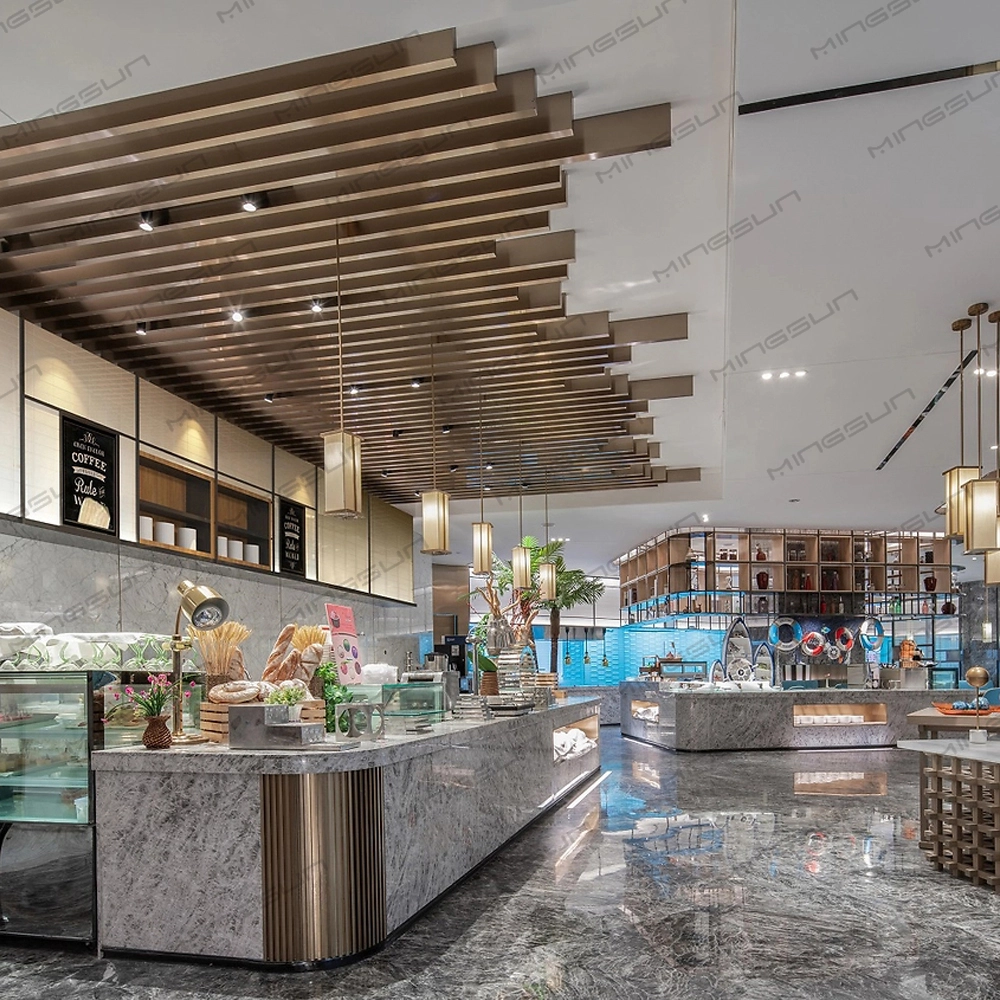
Modern Hotel Dining Furniture Set-Custom Designed Wooden Tables, Upholstered Chairs & Banquette Seating
Create a lasting impression with our custom-designed hotel dining furniture set, crafted for modern luxury hotels and upscale restaurants.
Featuring elegant wooden tables, ergonomic blue-upholstered chairs, and built-in banquette seating, this collection blends comfort, style, and durability.
As a leading manufacturer in Guangzhou, we deliver end-to-end solutions - from concept design and 3D visualization to production and global shipping - all at factory-direct prices.
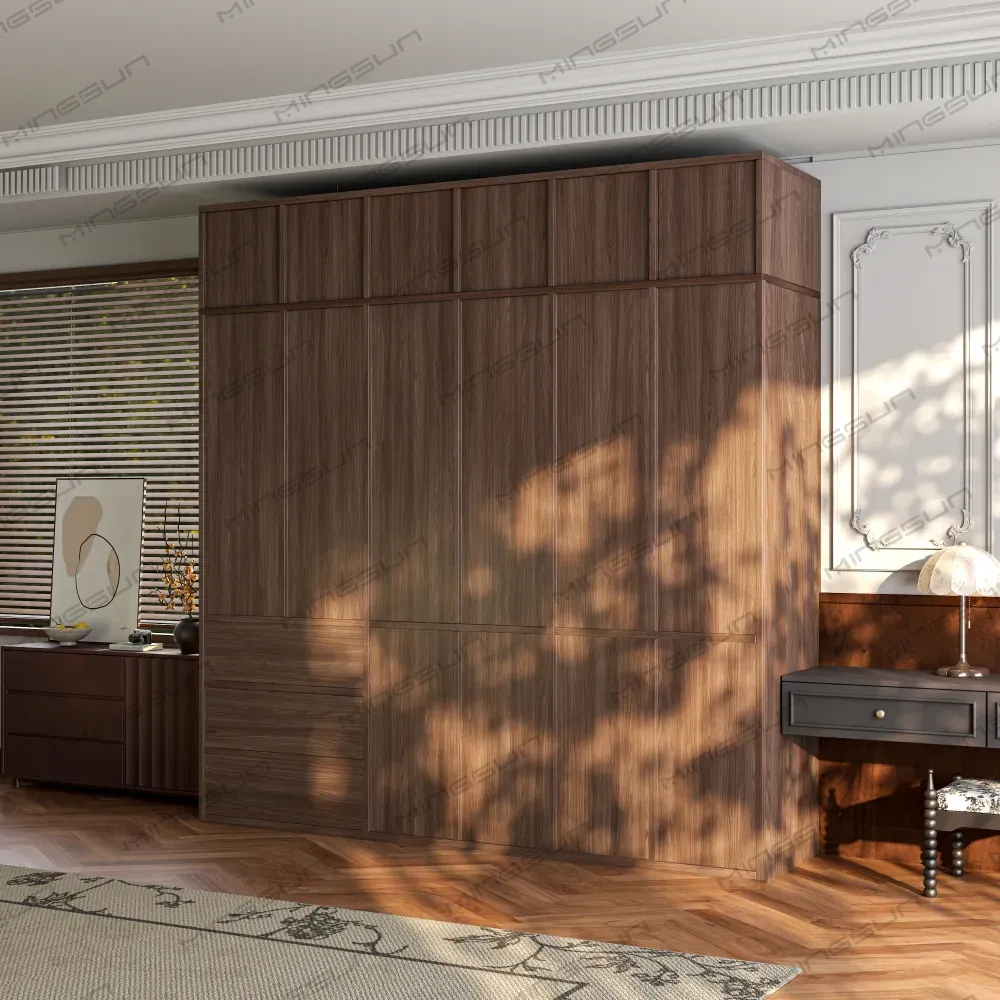
Minimalist Walnut Veneer Floor-to-Ceiling Hotel Wardrobe with Handleless Design
Maximize vertical storage in your hotel guest rooms or luxury apartments with this sleek, floor-to-ceiling wardrobe system. Defines by its warm, natural walnut wood veneer finish, the unit offers a sophisticated, handleless facade that maintains clean architectural lines, perfect for modern minimalist interiors. The intelligent layout features a bank of three external soft-close drawers for guest convenience, tall hanging sections for formal wear, and a dedicated row of top-tier cabinets specifically designed to store extra bedding, pillows, or seasonal items.
Manufactured by MINGSUN, this wardrobe is a testament to our expertise in custom hospitality joinery. We engineer these large-scale units for durability and ease of installation. From our Guangzhou factory, we provide precision-cut flat-pack solutions that reduce shipping costs while ensuring a premium built-in look upon assembly.
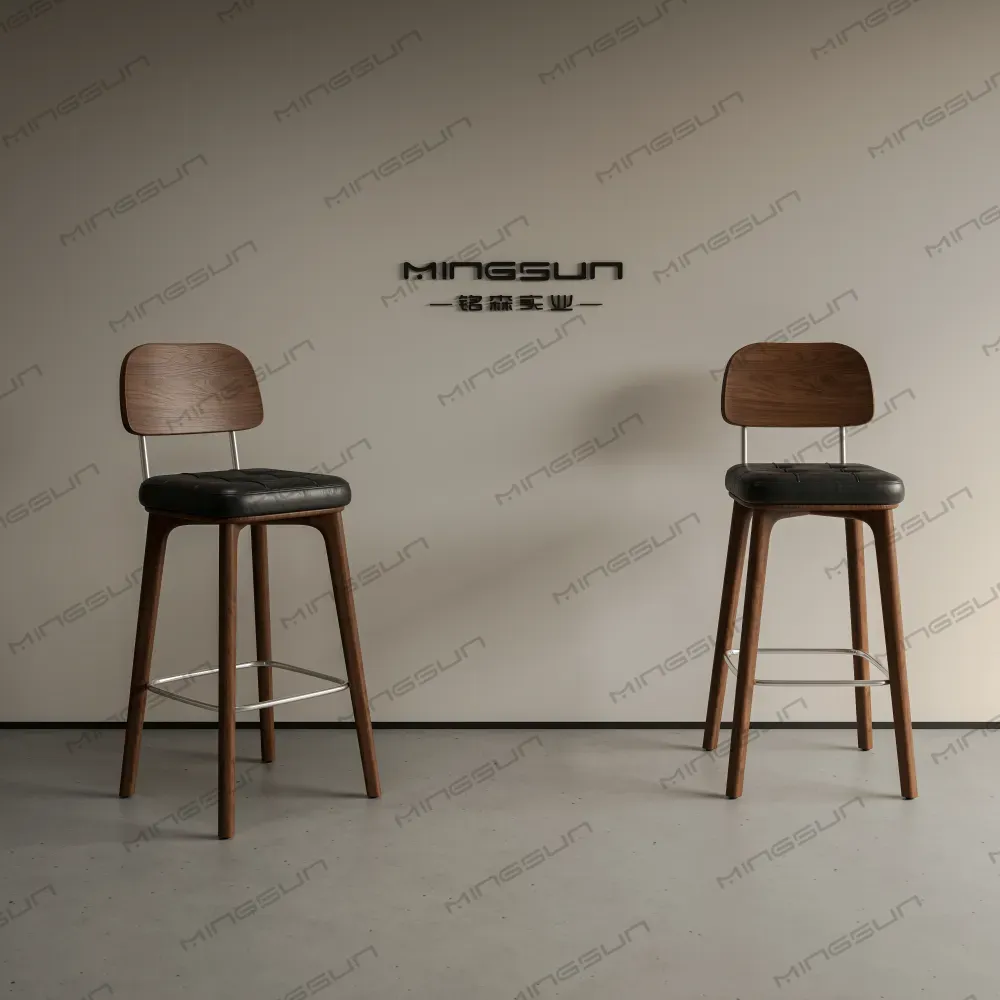
Mid-Century Modern Walnut Bar Stool with Tufted Leather Seat & Chrome Footrest for Luxury Hospitality
Elevate the aesthetic of your hotel bar, upscale restaurant, or executive lounge with this sophisticated bar stool, meticulously crafted by MINGSUN. Blending mid-century modern warmth with industrial durability, this stool features a curved, walnut-veneer backrest designed for ergonomic support and visual depth. The seat is upholstered in premium black PU leather (customizable to genuine leather) with classic button tufting, offering a refined texture that resists wear in high-traffic commercial environments.
Supported by tapered solid wood legs and reinforced with a chrome-finished steel footrest ring, this piece ensures stability and longevity. As a leading Guangzhou hotel furniture manufacturer, MINGSUN ensures that every stool meets rigorous contract-grade standards. From our 10,000㎡ factory directly to your venue, we provide a complete solution including manufacturing, global logistics, and video installation guidance to ensure a seamless project completion.
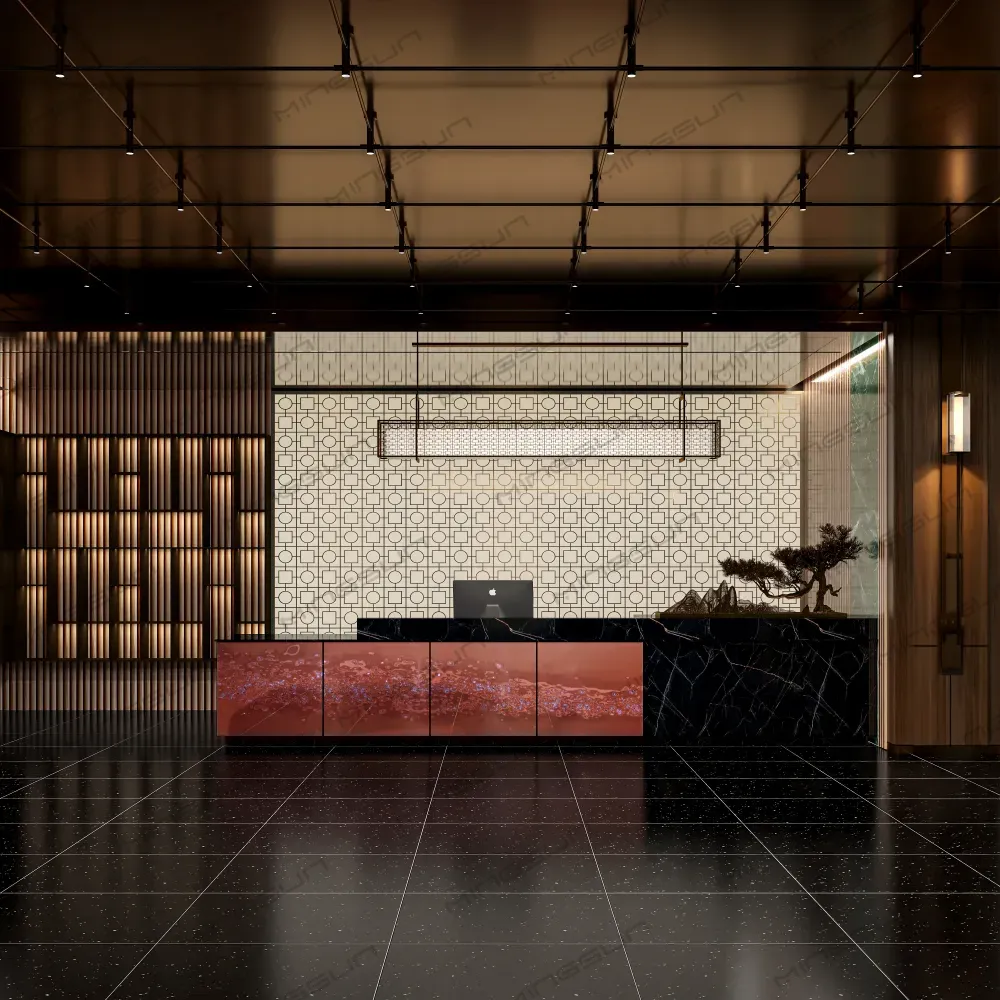
Luxury Reception Desk with Black Marble Top & Illuminated Copper-Resin Front Panels
Make a bold, unforgettable statement at your hotel’s entrance with this avant-garde reception desk. Its sleek black marble top exudes timeless sophistication, while the front facade features mesmerizing, internally lit copper-resin panels that glow with a warm, amber radiance, creating a dynamic visual centerpiece. Designed for both form and function, the unit offers ample concealed storage behind seamless doors and integrates a dedicated staff workstation with cable management. This is more than a check-in counter—it’s a sculptural installation that defines the luxury and artistry of your brand.
Get more industry insights
Looking for the right solution? Fill out the form and get a free quote.
Our experts will respond quickly with personalized options that fit your needs.
MINGSUN is a design-driven hotel furniture manufacturer offering OEM/ODM services, custom solutions, and global project support.
Built for wholesalers. Trusted by global buyers. Delivered with confidence.
Phone:
E-mail:
Follow us ——
 Scan QR Code
MINGSUN
MINGSUN
MINGSUN
MINGSUN
MS Custom Hotel Furniture Supplier